Film Review: Rustin (dir by George C. Wolfe)


In Netflix’s Rustin, Colman Domingo plays Bayard Rustin.

A Quaker, a pacifist, a leader of the civil rights movement, and a former communist, Bayard Rustin was an early advisor to Martin Luther King, Jr.  Rustin commitment to non-violent protest was a huge influence on King’s own activism and Rustin helped King to organize the Southern Christian Leadership Council.  Rustin was one of King’s closest advisors but he was distrusted by other leaders of the movement because of both his independent nature and the fact that he was a gay man at a time when homophobia was the law of the land.  In fact, Rustin opens with Rustin’s rivals, the NAACP’s Roy Wilkins (Chris Rock) and U.S. Rep. Adam Clayton Powell, Jr. (Jeffrey Wright), letting King know that it would be in his best interest not to be associated with someone like Bayard Rustin.  Rustin, thinking that King will stand with him, offers to resign from the SCLC and is stunned when King (Aml Ameen) accepts his resignation.

After spending three years in relative obscurity and watching as younger civil rights activists start to reject the non-violence that is at the core of his philosophy, Rustin comes up with the idea that will become the 1963 March on Washington.  Putting aside his hurt feelings, Rustin works with King and several other civil rights leaders to organize the March and, at the same time, he once again finds himself being attacked for being both gay and a former member of the Communist Party.  Even while organizing the march, Rustin pursues a doomed relationship with a deeply closeted clergyman (Johnny Ramey).

It’s an important story but the film itself is sabotaged by both its script and its direction.  The script, which was co-written by Dustin Lance Black, is heavy on exposition and monologues but there’s few moments in which the characters really get to come alive.  Meanwhile, George C. Wolfe’s direction is stagey and stodgy.  Visually, the film has the aesthetic of a well-produced made-for-TV movie.  For all the time that is spent on the planning of the March of Washington, the event itself is recreated in a rushed and rather flat matter.  One could argue that the filmmakers felt that the real event is so iconic that there would no way to really do it justice and perhaps the filmmakers were correct in that.  Still, one can’t help but feel that Wolfe should have at least tried to capture some of the event’s electricity.  The film, to its credit, captures the hard work that went on behind-the-scenes of the civil rights movement but there are very few moments that feel spontaneous or as if they have a spark of life actually being lived in front of the camera.

Fortunately, the film is blessed to feature Colman Domingo in the title role.  Playing a larger-than-life figure, Domingo gives a performance that is big, charismatic, flamboyant, and sensitive.  As played by Domingo, Rustin is a collection of seemingly conflicting traits.  At times, he’s confident to the point of being arrogant but, when he finds himself shunned by the other leaders of the civil rights movement, he reveals the insecurity hiding underneath the surface.  Rustin is hyperactive yet focused, angry yet forgiving, and self-absorbed yet compassionate.  One of the film’s best moments comes when Rustin responds to an innuendo-filled attack on him by throwing himself into planning every detail of the March.  Rustin is surrounded by people telling him that, as a black man and a gay man, he will always be a second-class citizen and an outsider.  Rustin refuses to accept that and Domingo captures the intelligence, wit, and determination that allowed Rustin to continue to fight, against amazing odds, for equality.

The film doesn’t tell us much about Rustin’s life after the March on Washington.  In later years, Rustin, while remaining a socialist, became a strong anti-Communist and was also an outspoken supporter of Israel.  Today’s Left would probably not have much use for the moderate Bayard Rustin and, with his commitment to non-violence, it’s doubtful that Rustin would have much use for many of them.  Despite his prominence in the Civil Rights movement and the importance of his work, Rustin is still not as well-known as he should be.  Perhaps this movie, despite its flaws, will change that.

Retro Television Reviews: The Last Angry Man (dir by Jerrold Freedman)


Welcome to Retro Television Reviews, a feature where we review some of our favorite and least favorite shows of the past!  On Sundays, I will be reviewing the made-for-television movies that used to be a primetime mainstay.  Today’s film is 1974’s The Last Angry Man!  It  can be viewed on YouTube.

During the Great Depression, Dr. Sam Abelman (Pat Hingle) is a doctor who works in the slums of Brooklyn.  Dr. Abelman can be gruff.  Dr. Abelman can be crotchety.  Dr. Abelman can be, as the title suggests, a little bit angry.  He can’t help but get annoyed at how difficult it is to get his patients to pay him.  He gets easily annoyed with red tape and bureaucracy.  Dr. Abelman is an angry man.  In his eyes, he’s the last angry man.

But that doesn’t mean that Dr. Abelman doesn’t care about his patients or the community in which he lives.  Underneath his gruff exterior, Dr. Abelman is truly a man who wants to make the world a better place.  Sam Abelman is especially angry at the doctors who have abandoned the neighborhood that once supported them and who now work at hospitals that have little room for the poor.

The film focuses on Dr. Abelman’s attempts to help Frankie Parelli (Michael Margotta), a troubled teenager who has a reputation for being a bully and a petty criminal.  When Frankie starts to suffer from frequent seizures, Dr. Abelman comes to be convinced that Frankie is suffering from a brain tumor.  Dr. Abelman wants to get Frankie seen by a specialist and a surgeon but it’s difficult because of Frankie’s own bad reputation and also the fact that Frankie’s family doesn’t have much money.  Dr. Abelman uses a combination of shaming and outrage to finally get Frankie examined.  But, when it become apparent that Frankie is going to need an operation, is Dr. Abelman going to be able to get him under the knife?

The Last Angry Man was loosely based on a novel by Gerald Green.  The novel was previously adapted into a 1959 film, which starred the great actor Paul Muni in his final role.  (Muni received an Oscar nomination for his performance.)  If the novel and the 1959 film emphasized the grittiness of the neighborhood in which Dr. Abelman worked, the 1974 made-for-TV version takes place in a remarkably clean version of Brooklyn.  It’s a very pleasant slum.  There’s no trash to be seen.  The apartment buildings and the streets have the crisp look that only comes from shooting on a studio backlot.  Everyone in the neighborhood is remarkably friendly.  Even Frankie is a rather mild-mannered delinquent.  Dr. Abelman may be angry but everyone’s so nice that it sometimes seems like he’s going a little bit overboard.

The Last Angry Man was clearly meant to be a pilot for a television series and, as such, the movie’s action doesn’t really seem to build up to any sort of grand climax.  Instead, the film is more about introducing Dr. Abelman and all the quirky people in the neighborhood.  Pat Hingle was a good actor but, as Dr. Abelman, he’s all bluster with little depth.  It’s hard not to feel that both the film and the potential show would have been well-served by having Pat Hingle and Sorrell Brooke (who plays Abelman’s best friend, Dr. Vogel) switch roles.  When Sorrell Brooke gets annoyed and angry in this film, you have no doubt that the feeling is genuine.

Unfortunately, The Last Angry Man just isn’t angry enough.

Film Review: Cop (dir by James B. Harris)


First released in 1988, Cop stars James Woods as Lloyd Hopkins, a homicide detective who does not …. wait for it …. GO BY THE BOOK!

Actually, has there ever been a movie about a homicide detective who always made sure to go by the book?  I’m sure there has been but I really can’t think of any off the top of my head.  Whenever a homicide detective shows up as the main character of a movie, you can be sure that he’s going to drink too much, carouse too much, and get yelled at by his superiors.  If the movie involves a serial killer, you can be sure that the detective and the killer are going to be mirror images of each other, two renegades who have found differing ways to work out their issues with the world.

As much as we talk about the cliché of the cop who does it his way, would we really want to see a movie about a cop who plays by the rules?  I mean, most people dread having to deal with cops.  It’s not just that cops usually bring bad news.  It’s also that dealing with a cop means having to spend a lot of time while they slowly and methodically go through all of their procedures.  There have been so many times that I’ve been pulled over speeding and I’ve just wanted to yell, “Just write the ticket!”  Most people agree that we need some sort of police force, regardless of what the Defund folks say.  But most people also hate following the rules, especially when those rules feel rather arbitrary.  That’s the appeal of the renegade cop.  The renegade cop fills a purpose in society but, at the same time, he dislikes dealing with all of the usual cop nonsense as much as the rest of us.

As for Lloyd Hopkins, he’s hyperactive, jittery, sleazy, and a terrible father and husband.  He cheats on his wife.  He tells his daughter all about the gory details of his job.  (His daughter, it should be noted, seems to enjoy hearing them.)  He obsesses on the crimes that he investigates and he pursues murderers with a fanaticism that suggests that Lloyd knows that he’s just one bad life choice away from becoming one of them himself.  (And, indeed, Lloyd kills quite a few people over the course of Cop, even allowing one person to get into another room and get a shotgun just so Lloyd will have an excuse to shoot him.)  Lloyd is someone who is dangerous to know but, at the same time, he’s also probably the only person who can stop the killer who is seemingly committing random murders in Los Angeles.

The plot is typical of films about obsessive detectives pursuing faceless killers but Cop stands out due to the director of James B. Harris and the lead performance of James Woods.  Harris creates an atmosphere of continual unease, one in which the viewers gets the feeling that anyone could become the killer’s next victim at any moment.  James Woods, meanwhile, plays Lloyd as being a live wire, someone who simply cannot stop thinking and talking because he knows that the minute he does, he’s going to have to take a serious look at the wreck of his life and his own less-than-stable behavior.  Lloyd may be a self-destructive bastard but he’s a compelling self-destructive bastard and, in this film’s version of Los Angeles, he’s about as close as one can get to avenging angel.  The film is full of good actors, like Charles Durning, Lesley Ann Warren, and Raymond J. Barry, but it is ultimately James Woods’s show.  Lloyd gets the film’s final line and it’s a killer but it works because, by the time he utters it, the viewer feels as if they have gotten to know Lloyd.

Cop is based on Blood on the Moon, a novel by James Ellroy.  I have not read that novel so I don’t know how closely Cop sticks to Ellroy’s original plot.  Nor do I know how James Ellroy felt about Cop, which was the first movie to be based on his work.  That said, Ellroy’s writing and Harris’s film share a dark vision of humanity and a subversive sense of humor.  Ellroy has often declared himself to be the world’s great crime novelist and, from what I’ve read of his work, I would tend to agree.  Cop is certainly not the greatest crime movie ever made (nor is it the best film to ever be adapted from Ellroy’s writing) but it’s still pretty damn good.

Film Review: Evil Dead Rise (dir by Lee Cronin)


In the latest Evil Dead film, an earthquake hits Los Angeles, shaking an apartment complex, destroying the fire escape, and screwing up the elevators.  It also leads to a part of the basement parking lot collapsing, revealing a previously concealed chamber.  Three siblings — teenagers Danny (Morgan Davies) and Bridget (Gabrielle Echols) and their younger sister, Kassie (Nell Fisher) — enter the  chamber.  Danny finds several vinyl records and a book that is bound in human skin.

Now, personally, if I found a book that was bound in human skin, I would not pick it up.  I mean, that’s just creepy!  Honestly, the only reason why someone would bound a book in human skin would be to let the world know that the book is something evil.  But Dany is stupid, so he takes the book back to the apartment where he and his siblings live with their mother, Ellie (Alyssa Sutherland).  Danny not only opens the book but he also plays the records.  The second record features a priest reciting an incantation and soon, all Hell breaks lose.  It doesn’t take long before Ellie is dead and then possessed by the Deadites.  Soon, the entire building is full of possessed people and it falls to Ellie’s wayward sister, a “groupie” named Beth (Lily Sullivan), to protect the children from the demon that is inhabiting their mother’s body.

Evil Dead Rise has been described as being the “second Evil Dead film without Bruce Campbell” but that’s not quite true.  Along with Sam Raimi, Bruce Campbell served as an executive producer on the film and he also provided the voice of one of the people heard on the vinyl record.  As Campbell is heard telling the priest not to read the incantation, it’s totally probable that the voice on the record is meant to be belong to Ash Williams.  Evil Dead Rise definitely takes place in the same cinematic universe as the previous Evil Dead films.  This isn’t like one of David Gordon Green’s snooty Halloween films.  Evil Dead Rise is not ashamed of its heritage and, indeed, it’s full of visual references to the previous Evil Dead films.  Yes, an eyeball is swallowed.  Yes, there is a huge amount of blood spilled in the film, with the film’s main characters literally getting drenched in it.  Yes, a boomstick is fired.  And yes, there is some chainsaw action towards the end of the film.  Beth says, “Come get some,” at one point and it’s a crowed-pleasing moment.  The characters are all named after people who were involved in the previous films.  At a time when so many sequels and reboots seem to resent the films that came before, Evil Dead Rise does not hide its heritage.

That said, while watching Evil Dead Rise, it was hard not to miss the slapstick anarchy that Raimi and Campbell brought to Evil Dead II and Army of DarknessEvil Dead Rise plays up the horror of the Deadites and it is one of the rare horror films where you truly do come to feel like any character, regardless of how innocent or likable, could die at any moment.  But, to be honest, the Deadites aren’t that interesting without Sam Raimi’s hyperactive visuals and Ash’s over-the-top mix of machismo and stupidity.  Without the humor and the destructive glee of Raimi and Campbell, the Deadites are just another group of mean-spirited demons.  Without Ash and Raimi’s kinetic camerawork, the film focuses on the Deadites and the film sometimes feels a bit generic as a result.

Which is not to say that Evil Dead Rise is not an effective survival horror film.  The apartment building is an appropriately claustrophobic location and the sibling rivalry between Ellie and Beth brings an interesting subtext to the film’s story.  When the possessed Ellie taunts Beth, it’s obvious that Beth is hearing everything that she’s always suspected her sister thought about her.  Defeating her possessed sister is as much about Beth conquering her own insecurities as it is about defending Ellie’s children.  Even if it’s not quite to the level of Raimi’s films, the blood-drenched finale achieves a horrific grandeur that bring to mind the best of Lamberto Bava’s Demons films.  Evil Dead Rise is a well-made if occasionally generic chapter in the Evil Dead saga, though it’s impossible not to miss Rami and Campbell while watching the film.

Retro Television Reviews: Blood Sport (dir by Jerrold Freedman)


Welcome to Retro Television Reviews, a feature where we review some of our favorite and least favorite shows of the past!  On Sundays, I will be reviewing the made-for-television movies that used to be a primetime mainstay.  Today’s film is 1973’s Blood Sport!  It  can be viewed on YouTube.

David Birdsong (played by Gary Busey, who was 29 at the time) is a high school senior with a potentially bright future ahead of him.  He’s the quarterback of his high school’s football team and it looks like he’s on the verge of leading his team to an undefeated season.  He’s getting recruited by all the big schools.  Scouts are coming to his games to watch him play.  He also has one of the highest GPAs at his school, though it’s suggested that might have more to do with his importance to the football team than his actual study skills.

“Don’t you have anything else you want to do with your life?” his high school principal (David Doyle) asks him and David’s reaction indicates that he’s never really given it much thought.  From the time he was born, David’s father, Dwayne (Ben Johnson), has been shaping his son to become a star athlete.  Dwayne is happiest when he’s watching David play, whether on the field or in the highlight reels that he keeps down in the basement.  When Dwayne sees that his son isn’t on the field, he’s the type of father who will get out of the stands and argue with the coach on the sidelines.  Dwayne continually tells David not to stay out too late.  The one time that David does, Dwayne slaps him hard enough to send his son to the floor.

Coach Marshall (Larry Hagman) is determined to get his undefeated season, no matter how hard he has to push his players.  The coach is the type who is convinced that his players respect him for his stern ways and his long-winded speeches but little does he realize that they all secretly despise him.  When one of his players drop dead of a heart attack during practice, Coach Marshall demands that the player stop being lazy and get up.  When he realizes that the player is never going to get up, Coach Marshall angrily asks, “Why did this have to happen now!?”  Later, at a pep rally, Coach Marshall announces that his team had a private meeting and agreed that they would win the final game in the player’s memory.  The team is disgusted but the rest of the town loves their coach.

David is never happier than when he’s on the field, playing football and being cheered by both the crowd and his team.  But, through it all, he sees reminders that the future in uncertain.  On the sidelines, David spots an injured player, watching the game with the knowledge that his dreams of getting a scholarship have ended.  When David visits a college, he’s reminded that being the best high school player doesn’t mean much in college and when he says that he’s a quarterback, he is told that his coach will ultimately decide who he is and David will accept the coach’s decision because David isn’t being offered a scholarship to think for himself.

When the film originally aired in 1973, it was called Birdsong but the title was changed to Blood Sport for both subsequent showings and for a European theatrical release.  Blood Sport is the more appropriate title because, even though the main character is named David Birdsong, the film is ultimately about all of the athletes who are expected to put their health at risk for the people on the sidelines.  It’s not just football that’s a blood sport, the film suggests.  It’s the entire culture that has sprung up around it, the one that cheers when players are at their best but which also looks away at the times when the players need the most help.

At 29 years of age, Gary Busey is a bit too old to be totally convincing as a high school senior but he still does a good job of capturing David’s gradual realization that he’s never really had any control over his own life.  Ben Johnson and especially Larry Hagman also give good performances as the two men who are living vicariously through David’s accomplishments.  Hagman is so believably obnoxious as the coach that you’ll want to cheer when someone finally finds the guts to stand up to him and tell him to just shut up for a minute.

The film ends on an ambiguous note, leaving many questions open about David’s future.  One hopes that he’s started to find the strength necessary to live his own life but it’s ultimately hard to say.  In the end, nothing is guaranteed, no matter how far you can throw a football.

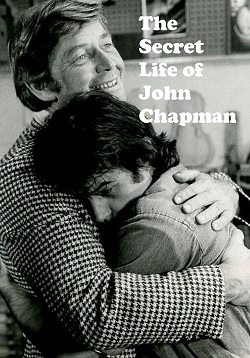
Retro Television Reviews: The Secret Life of John Chapman (dir by David Lowell Rich)


Welcome to Retro Television Reviews, a feature where we review some of our favorite and least favorite shows of the past!  On Sundays, I will be reviewing the made-for-television movies that used to be a primetime mainstay.  Today’s film is 1976’s The Secret Life of John Chapman!  It  can be viewed on Tubi.

John Chapman (Ralph Waite) is a mild-mannered college president and a recent widower.  Everyone tends to assume that John grew up wealthy but John is actually the son of a bricklayer.  As he puts it, his father literally helped to build the college of which John is now president.  John has felt lost and directionless ever since the passing of his wife.  When his rebellious son (Brad Davis) announces that he’s going to drop out of college and pursue a career as a laborer, John is at first outraged but soon, he’s wondering if perhaps his son has a point.  Has John spent so much time cocooned in his college that he’s lost touch with the rest of the world?

John takes a sabbatical and pursues a career as a blue collar worker.  He discovers that it’s not as easy as he assumed.  Because John doesn’t want to reveal that he’s an academic, John doesn’t really have any references to offer up to potential employers.  Because he’s nearly 50, John is continually told that he’s too old for most of the jobs that he applies for.  When he goes into a bar and attempts to order a dry martini, he quickly realizes that he has no idea what it’s like to be blue collar.

John eventually does get a job, helping to lay water pipes.  His boss is the gruff Gus Reed (Pat Hingle), who John eventually discovers is not quite as fearsome a figure as he originally appears.  Once the pipe job is done, John gets a job in a diner and even pursues a tentative romance with a waitress (Susan Anspach) who, as she points out,  comes from a totally different world than him.  And yet, despite John’s efforts, his son remains unimpressed.  According to his son, John is just slumming.  He has the freedom to quit and return to the college whenever he wants.

Yikes!  John’s son is a bit judgmental and it doesn’t help that he’s played by Brad Davis, who was never a particularly likable actor.  (Davis later starred in Midnight Express, in which director Alan Parker used his lack of likability to good effect.)  Yet, watching the film, you can’t help but feel that John’s son has a point.  At times, it seems like John wants a lot of credit for spending a week working in the type of job that most people take because they don’t have any other option.  Indeed, you could argue that John’s project is basically keeping someone who really needs the money from finding a job.  It’s not like John gives up any of his money when he goes to work.  It doesn’t help that John Chapman narrates his story and his voice-over often feels like a parody of liberal noblesse oblige.

Fortunately, Ralph Waite was a likable actor and he plays John Chapman as being well-intentioned if occasionally a bit condescending.  The made-for-TV movie plays like a pilot and it’s easy to imagine a series in which John Chapman would have worked a different job every week.  It’s a slight but pleasant-enough made-for-TV movie.  Seen today, it works best as a time capsule, a portrait of a society still trying to find its identity in the wake of the turbulence of the 60s.

Retro Television Review: Fallen Angel (dir by Robert Michael Lewis)


Welcome to Retro Television Reviews, a feature where we review some of our favorite and least favorite shows of the past!  On Sundays, I will be reviewing the made-for-television movies that used to be a primetime mainstay.  Today’s film is 1981’s Fallen Angel!  It  can be viewed on Tubi.

Jennifer Phillips (Dana Hill) is 12 years old and struggling to find her place in the world.  Sometimes, she wants to be a gymnast.  Sometimes, she wants to be an actress.  She misses her late father.  She has a difficult time communicating with her mother, an often-exhausted waitress named Sherry (Melinda Dillon).  She is definitely not happy that Sherry is dating the well-meaning but rather dorky Frank Dawson (Ronny Cox).  Jennifer wants to watch an awards show.  Frank changes the channel to a baseball game.  That pretty much sums up their relationship.

One night, Jennifer escapes the unhappiness of her home life by going to an arcade.  That’s where she is approached by Howard Nichols (Richard Masur), a seemingly friendly older man who takes her picture and then tells her that she’s just as beautiful as Farrah Fawcett and Olivia Newton-John.  Jennifer replies that she doesn’t think that she should talk to Howard because he’s a stranger.  Howard tells her that’s very smart of her and then explains that he coaches the local girls softball team and that he thinks Jennifer would make a great shortstop.

You can probably guess where this is going and you’re absolutely right.  Soon, Jennifer is spending all of her time with Howard, who tells her that he understands what she’s going through even if her parents don’t.  Howard’s an amateur photographer and he’s constantly asking Jennifer to pose for him.  He tells Jennifer that she probably shouldn’t tell any adults about their “special friendship” because they just wouldn’t understand.  He even buys Jennifer a puppy, one that he threatens to take back to the pound whenever it appears that Jennifer is trying to step away from him.  

Howard is not only a pedophile but he also works for a pornography ring and, as Jennifer soon finds out, he’s actually got several young people living with him and posing for pictures.  Jennifer’s mother eventually becomes concerned about what Jennifer is doing when she leaves the house and she even comes to suspect that friendly old Howard is not quite as friendly as he pretends to be.  But is it too late?

Yikes!  I watched this film on Tubi and I cringed through the whole thing.  Of course, that’s the reaction that Fallen Angel was going for.  This is a film that was made to encourage parents to maybe be a little concerned about with whom their children are spending their free time.  Jennifer is fortunate that her mom eventually figures out what is going on but, as the film makes clear, a lot of victims are not so lucky.  This film is pure paranoia fuel but in the best way possible.  There are some things that every parent should be paranoid about and the adult who only spends time with people 20 years younger than him is definitely one of those things.  The film is well-made, well-written, and well-acted.  Richard Masur, with his friendly manner and his manipulate tone, will give you nightmares.

Film Review: The Killer (dir by David Fincher)


The Killer open with the film’s title character (played by Michael Fassbender) in an abandoned office in Paris.

He spends every day sitting in front of a window, watching the the luxury hotel across the street from him.  As is evident from the film’s title and the character’s voice-over narration, the man is a professional killer.  Sometimes, he kills up close-and-personal.  Sometimes, he kills in a way that makes the death look like it occurred naturally.  In Paris, he’s just waiting in an abandoned WeWork office with a sniper rifle.  The Killer informs us that a good deal of his time is spent waiting and getting bored.  Sometimes, he passes the time by listening to the Smiths.  Sometimes, he takes a moment or two to glance at all of the “normies” living their lives with no idea about what’s happening in the otherwise empty office above their heads.  The Killer spends a lot of time thinking about his philosophy of life and how that effects the way he does his job.  Through his voice-over narration, he talks about the huge amount of people in the world.  He talks about how an assassin should never improvise and how an assassin should never allow any feelings of empathy for other people.

That may sound like the beginning of a rather grim movie and certainly, there have been a lot of recent assassin films that have taken themselves way too seriously.  Indeed, when the movie started with the Killer going on and on and on about how he prepares for a job, I started to have unwelcome flashbacks to Andrew Dominik’s mind-numbingly pretentious Killing Them Softly.  (Really, I can only assume that everyone who was shocked by the mean-spirited ugliness of Blonde must have previously blocked Killing Them Softly from their memory.)

I need not have worried.  Fortunately, The Killer is directed by David Fincher and Fincher is far too clever a director to take any the character’s nonsense seriously.  The Killer may be obsessed with his inner monologue but Fincher clearly is not.  From the start, Fincher pokes fun at the Killer’s self-importance by having him do things like use the names of sitcom characters whenever he has to buy a plane ticket.  More often than not, the Killer’s narration is interrupted by someone proving that, despite what he may believe, the Killer does not have complete control over every situation.  All of the character’s philosophizing is ultimately his way of denying that, just like the people that he is hired to kill, he is also subject to the whims of fate.

For instance, in Paris, the job gets botched.  The Killer does not kill his target and, when he calls his handler (Charles Parnell), he’s informed that there probably will be consequences for his failure.  When the Killer returns to his home in South America, he discovers that his girlfriend has been assaulted and left near death by two other assassins.  The Killer heads to America, to confront the people that he holds responsible.  Some of those people are professionals who have offices and who live in the suburbs.  Some of them live on the fringes of society.  But all of them, like the Killer, exist in a shadowy and amoral world that makes sense to only them and which is invisible to most of the people around them.

It’s a revenge plot, the type that has been popular for decades.  (Indeed, one could easily imagine The Killer being made in the 70s with Charles Bronson playing the title role.)  The story may not be unique but the action plays out with Fincher’s signature visual style and a welcome amount of wit.  The Killer travels from Paris to South America to New Orleans to Florida to New York and eventually Chicago and each location has its own unique feel.  As always, Fincher has a terrific eye for detail and this film is at its strongest when it captures the feel of everyone else’s life going forward while The Killer remains focused on his mission.  Even the worst characters are allowed moments that humanize them.  Meanwhile, The Killer is so coldly determined that he often becomes as frightening as the people that he is pursuing.

The film is dominated by Fassbender, who is in every scene and who brings a feral intensity to the character.  The Killer may have a friendly smile but the viewer only has to look at his eyes to see just how shut off from any sort of human warmth that he actually is.  (Indeed, the Killer only seems to genuinely care about his girlfriend and, even then, we don’t learn much about his relationship with her.)  Over the course of the film, Fassbender shares scenes with Tilda Swinton, Charles Parnell, Arliss Howard, and an actress named Kerry O’Malley, who gives a sympathetic performance as a secretary who knows too much.  Everyone makes a strong impression, bringing the world of The Killer to life.

The Killer can be viewed on Netflix.  It’s a triumphant exercise in pure style.

Film Review: Unseen (dir by Yoko Okumura)


Up in Michigan, Emily (Midori Francis) is a doctor who has been kidnapped by her psychotic ex-boyfriend, Charlie (Michael Patrick Lane).  Charlie takes her to a cabin in the woods, where he ties her up and brags about the revenge that he’s going to take on her.  Emily manages to break free and temporarily incapacitate Charlie but, in the process, she breaks her glasses.  Nearly blind, Emily stumbles out into the wilderness.  Despite not knowing where she is and not being able to see more than a few inches in front of her, Emily has to find her way back to civilization before Charlie finds her.

Down in Florida, Sam (Jolene Purdy) arrives for another day of work at a gas station where she spends most of her time dealing with a broken Slurpee machine.  From the start, it’s not a good day, with a rich woman named Carol (Missi Pyle) demanding a refund just because she accidentally put the cheapest brand of fuel into her BMW.  Sam finds herself looking down at the card that she has from the suicide prevention hotline and we immediately know that Sam is not happy with her life.  Then, suddenly, her phone rings.

Emily and Sam don’t know each other but when Emily tries to use her phone to call for help, Sam is the one who ends up getting the call.  Once Sam realizes that Emily is being stalked by her murderous ex, Sam agrees to become Emily’s eyes through video call.  Sam guides Emily through the woods, keeping her informed of whether or not Charlie is nearby.  Along the way, they talk about their different lives and how they came to be in their current situations.  Sam gives Emily the strength to keep fighting for her survival while Emily gives Sam a reason to keep on living.  And while Emily is having to constantly deal with Charlie and his attempts to re-capture her, Sam has to deal with things like exploding slushee machines, a dying phone battery, and eventually Carol and an apparently insane (and heavily armed) man who appears to be her husband.

Unseen is a bit of a disjointed film.  The scenes in Michigan are very serious and very intense, with Emily suffering serious injury as she flees from Charlie.  At one point, Emily begs Sam to call her mom so that Emily can say goodbye to her and it’s a genuinely emotional scene.  At the same time, the scenes in Florida are often broadly comedic, with Sam sliding across the floor and, at one point, locking herself behind bullet-proof glass while Carol and her husband, who is dressed like a yacht captain, scream at her to come out.  The tonal shifts between the two locations can be a bit jarring but the film is still effective, largely due to the sincerity of the performances of Midori Francis and Jolene Purdy.  Their friendship feels real and it’s hard not to get a little misty-eyed at the film’s final moments.

Unseen deserves a lot of credit for only being 76 minutes long.  It tells its story quickly and without any unnecessary padding.  This is a film that does not waste any time getting to the point and, in this time when even the simplest of genre films will often run for more than two hours, it’s hard not appreciate the nicely paced efficiency of Unseen.

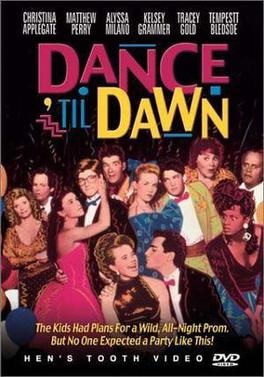
Retro Television Review: Dance ‘Til Dawn (dir by Paul Schneider)


Welcome to Retro Television Reviews, a feature where we review some of our favorite and least favorite shows of the past!  On Sundays, I will be reviewing the made-for-television movies that used to be a primetime mainstay.  Today’s film is 1988’s Dance ‘Til Dawn!  It  can be viewed on YouTube.

It’s prom time and the seniors at Herbert Hoover High School are excited!  Patrice Johnson (Christina Applegate) is especially excited because not only did she organize the prom but she’s also the leading  contender to be elected prom queen.  She’s looking forward to having a wonderful night with her boyfriend, Roger (Matthew Perry).

Patrice is especially excited because her only real competition for prom queen, Shelley (Alyssa Milano), has broken up with her jock boyfriend, Kevin (Brian Bloom).  Shelley has declared that she will instead be attending a very mature and very fun college fraternity party.  Meanwhile, Kevin will be attending prom but he will be coming with Angela (Tracey Gold), who has a reputation for being a bit nerdy.  Kevin only asked Angela to prom because he was under the false impression that she’s easy but he soon finds himself falling for her for real.

Meanwhile, Shelley doesn’t really have a party to attend.  Instead, she decides to spend prom night avoiding her friends and watching an old movie at the town’s movie theater.  Shelley is convinced that no one from school will be at the theater.  Instead, she runs into nerdy Dan (Chris Young), who also came to the theater because he didn’t have a prom date.  Dan and Shelley end up having a fun time hanging out together.

While this is going on, all of the parents are having dramas of their own.  Patrice’s embarrassing parents (Cliff de Young and Mary Frann) relive their own youth.  Dan’s father (Alan Thicke) is convinced that Dan is not only the most popular kid at school but that Dan is also having a wonderful prom.  And Angela’s parents (Edie McClurg and Kelsey Grammer) are so paranoid about the idea of Kevin trying to sleep with their daughter that they actually sneak into the prom to try to keep them from getting too close.  Of course, they are mistaken for waiters and are immediately put to work.

I watched this two weeks ago, when I was still struggling to process the shock of Matthew Perry’s passing.  Unfortunately, Matthew Perry is not in much of the film and it’s not really until the end of the film that he really gets a chance to show any of the sardonic wit for which he was best known.  That said, Christina Applegate appears to be having fun as the snooty mean girl and she and Perry do make for a cute couple.  Actually, all of the couples in the film are cute, with Alyssa Milano and Chris Young especially making for an adorable couple.  This is a pleasant and, for many, nostalgic diversion, as long as you’re willing to accept that there is absolutely nothing go on beneath the film’s slick and occasionally colorful surface.  The humor is broad, the messages are obvious, and, as always, it’s amusing to watch Kelsey Grammer running around in a panic.

Dance Til Dawn doesn’t really bring anything new to the high school genre but it’s still worthy of the name of Herbert Hoover.