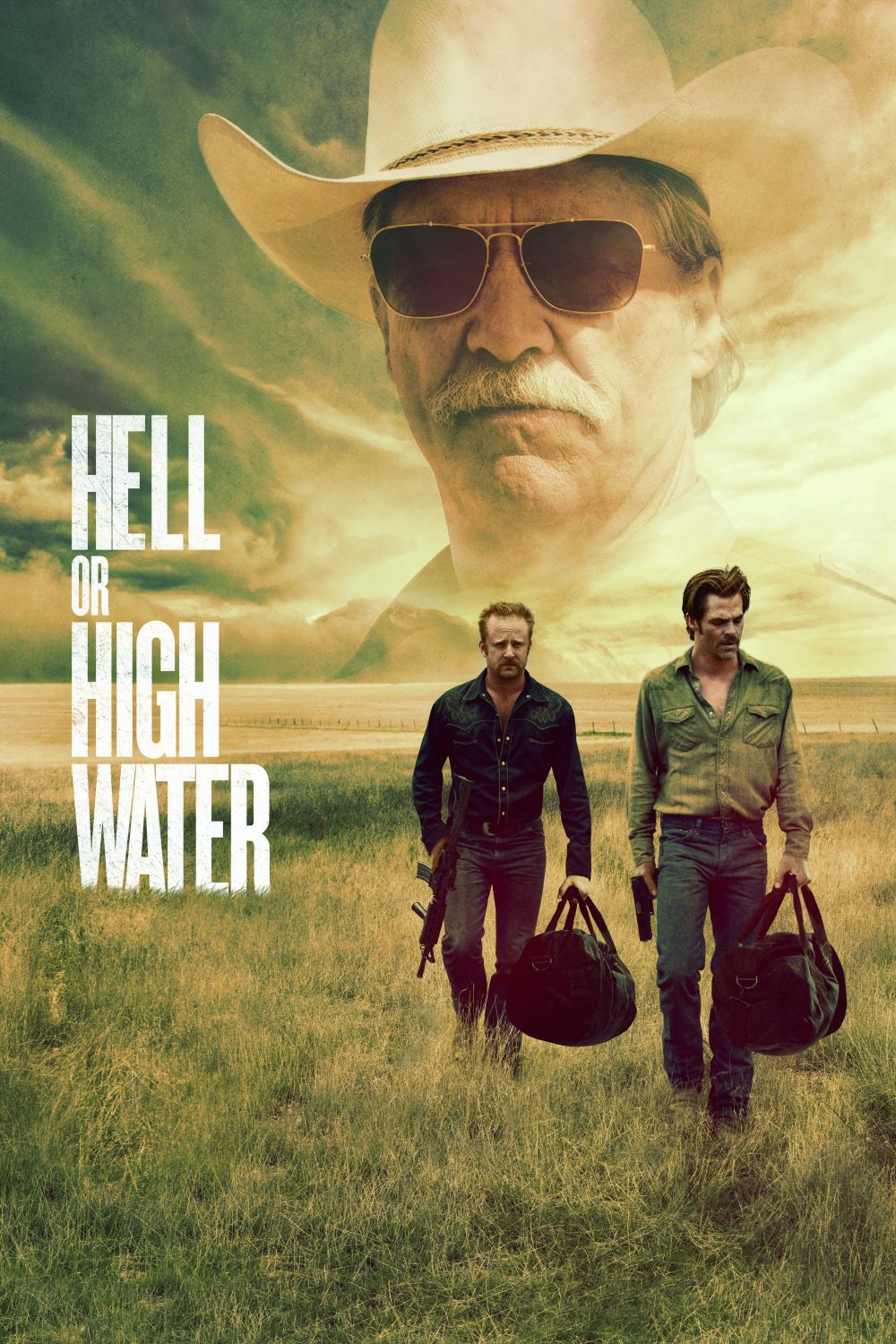
Review: Hell of High Water (dir. by David MacKenzie)


“I’ve been poor my whole life… like a disease passing from generation to generation. But not my boys, not anymore.” == Toby Howard

Hell or High Water is a gritty neo-Western that captures the desperation of rural America with sharp dialogue and tense heists. Directed by David Mackenzie and written by Taylor Sheridan, it stars Chris Pine and Ben Foster as brothers robbing banks across West Texas to save their family ranch. As the second film in Sheridan’s American Frontier Trilogy, it dives deep into economic despair on the fraying edges of modern America, carving out a raw, personal tale of survival amid systemic rot.

The story kicks off with Toby Howard (Pine), a quiet divorced dad scraping by at a casino, teaming up with his wild older brother Tanner (Foster), fresh out of prison and itching for chaos, for a string of quick bank jobs. They’re targeting branches of the Texas Midlands Bank, the same predatory outfit that’s been bleeding their late mother’s ranch dry with reverse mortgages that ballooned after her death. Toby’s motive is pure and heartbreaking: he wants to pay off the debt and hand the property—now sitting on untapped oil reserves—to his estranged kids, breaking a multi-generational cycle of poverty that’s crushed their family under debt, divorce, and dead-end jobs. It’s not about greed; it’s survival, wrapped in a fierce code of brotherly loyalty that feels timeless, echoing the blood oaths of classic Westerns like The Searchers or Unforgiven. Sheridan builds this setup methodically, letting the brothers’ quiet desperation simmer before the first robbery, making their partnership feel inevitable and doomed from the start. You get these early glimpses of their bond—Toby’s measured calm clashing with Tanner’s explosive energy—over shared meals or late-night drives, hinting at the fractures that prison and hardship have carved into their lives.

What stands out right away is how the film paints West Texas as its own brutal character—dusty highways stretching into infinity, faded diners serving coffee and Whataburger breakfast tacos, ghost towns where the only new construction is more banks or payday loan shacks preying on the broke. Giles Nuttgens’ cinematography turns the landscape into a vast, unforgiving canvas, with wide shots of endless plains, shimmering heat haze, and abandoned oil pumps that mirror the characters’ isolation and the weight of their choices. The visuals aren’t flashy; they’re oppressive, framing lone figures against horizons that swallow them whole, emphasizing how small these men feel against the indifferent sprawl. Nick Cave and Warren Ellis’ score adds a haunting twang—sparse piano notes, eerie strings, and subtle guitar plucks that build tension without ever overpowering the dialogue or action. It’s masterfully subtle, letting the silence between robberies speak volumes about the boredom, hopelessness, and fleeting camaraderie of these small, overlooked lives in flyover country. Even the sound design nails it: the rumble of getaway trucks, the click of slot machines in casinos, the distant wail of sirens—all weaving a sonic tapestry of gritty realism.

Chris Pine shines as Toby, completely shedding his action-hero polish for a layered everyman performance full of bottled-up resolve and quiet pain. You see the weight of his failures—a loveless marriage shattered, kids he barely knows living hours away—in every furrowed glance, every deliberate pause before he pulls a mask down. He’s the planner, the reluctant criminal whose moral compass wavers just enough to justify the heists in his mind, but you sense the toll it’s taking, like a man grinding his teeth through every moral compromise. Ben Foster, though, steals every scene he’s in as Tanner, the hothead ex-con with a wolfish grin that barely masks his pent-up rage and damage. His unhinged energy explodes during the heists—like firing warning shots at terrified tellers or flipping off pursuing cops mid-chase—but it’s always undercut by real pathos; years in prison have broken something fundamental in him, turning brotherly love into a volatile lifeline. Their dynamic is the beating heart of the film—casual banter over stolen cars, casino poker games, or roadside Whataburger runs feels achingly genuine, a brief respite from the doom that’s closing in. Moments like Tanner teasing Toby about his ex-wife or the brothers sharing a rare laugh humanize them, making their inevitable collision with fate hit that much harder.

Then there’s the pursuit side of the equation: Texas Rangers Marcus Hamilton (Jeff Bridges) and his partner Alberto Parker (Gil Birmingham), who provide the perfect counterpoint to the brothers’ frenzy. Bridges chews the scenery with gleeful abandon as the grizzled vet nearing retirement, obsessed with cracking one last big case before hanging it up. His folksy drawl delivers casual racist jabs at his Native American partner—not out of outright malice, but as a form of twisted, old-school affection that reveals Marcus’s own deep-seated insecurities about aging and obsolescence. It’s uncomfortable, authentic, and played with such charm that it lands as character revelation rather than cheap shock. Birmingham matches him beat for beat with deadpan comebacks that land like quiet thunder, turning their stakeouts into a buddy-cop routine laced with sharp cultural commentary. Chats about diner waitresses’ curves, Comanche history, or the ethics of bank robbery add unexpected levity and depth, transforming the cat-and-mouse chase into something richer, almost philosophical, amid the choking West Texas dust. Bridges’ Marcus isn’t just hunting criminals; he’s confronting his own mortality, piecing together the brothers’ pattern like a puzzle that might define his legacy.

Taylor Sheridan’s script nails modern American malaise without ever slipping into preachiness or melodrama. Poverty isn’t some abstract talking point; it’s visceral—Toby’s trailer-park existence with its peeling paint and flickering lights, the single mom’s quiet despair over her mortgage payments, the rusted oil rigs promising riches that never trickle down to anyone local. The banks emerge as the true villains, plastering billboards with false salvation (“Texas Midlands: Your Friend in Need”) while gobbling up ranches through fine-print loopholes and aggressive collections. Sheridan weaves in these details organically—no info-dumps, just overheard conversations at diners or glimpses of foreclosure signs dotting the highway—that build a world where desperation breeds crime. Violence erupts organically from this pressure cooker—robbers improvise with stolen cars and sawn-off shotguns, rangers swap hunches over lukewarm diner coffee—not in overblown Hollywood set pieces, but in raw, consequential bursts that leave real scars. A botched heist introduces innocent blood on their hands, forcing you to grapple with whether Toby’s noble ends can ever justify Tanner’s reckless means, a moral tightrope Sheridan walks with unflinching precision. It’s this nuance that elevates the film: no one’s purely good or evil, just products of their environment, clawing for a scrap of dignity.

The film’s slow burn pays off in spades. Early jobs are clinical and methodical: masks on, small bills only from the tellers’ drawers, in-and-out in under two minutes to avoid dye packs or alarms, always hitting small branches mid-morning when staff is light. Tension simmers in the mundane details—laundering dirty cash at Native casinos amid blinking lights and cigarette smoke, dodging security cams with cheap disguises, or holing up in cheap motels with peeling wallpaper—building inexorably to a final showdown that’s as brutal as it is poetic. No heroes ride off into the sunset unscathed; justice twists unpredictably like the West Texas wind, leaving you questioning who’s really won in this rigged game. It’s balanced too—no glorifying crime without consequences. Toby’s noble intent constantly clashes with Tanner’s powder-keg recklessness, while Marcus’s dogged pursuit peels back layers of his own regrets about a life spent chasing ghosts. Everyone’s deeply flawed, chasing some form of redemption in a system that’s stacked against the little guy from the jump, and Sheridan lets those contradictions breathe without forcing resolutions.

Pacing does drag a tad in the middle, with those ranger stakeouts testing patience at times, but it masterfully mirrors the tedious grind of real low-level crime—the waiting, the watching, the endless coffee refills—making the climaxes land with twice the force. Character depth is rock-solid across the board, though side players like the waitress (Katy Mixon) or the casino manager get a bit short shrift in the script’s tight focus. Still, the core quartet carries the weight effortlessly, with Bridges delivering a masterclass in weathered charm—part crusty mentor, part comic relief, all heart. Even smaller beats, like a teller’s trembling hands or a deputy’s split-second choice, add texture without stealing focus.

Hell or High Water revives the Western genre for the 21st century—less six-guns and saloons, more economic gunslinging and ATM skimmers. At its core, it’s about family ties that bind even as they strangle, personal failures that haunt like ghosts on the plains, and faceless corporations devouring the heartland one foreclosure at a time. Toby’s final call to his ex-wife, hinting at a freer future for his boys on the now-clear-titled ranch, lands with bittersweet punch, his voice cracking just enough to sell the lie he tells himself. Marcus, surveying the bloodied aftermath from a ridge, mutters about Comanches losing their land centuries ago—a stark reminder that history’s cycles of loss and revenge remain unbroken, no matter who holds the deed. No tidy Hollywood bows, just hard-earned truth staring you down from the screen.

In a landscape clogged with summer blockbusters, this indie gem—backed by bold financiers—proves that small-scale stories pack the biggest emotional wallop. Watch it for the immersive vibes and regional flavor, from the twangy accents to the sun-bleached pickups; stay for the soul-stirring performances and themes that linger long after the credits. If you dug the Coens’ No Country for Old Men, this slots right in—tense as a taut wire, thoughtful without pontificating, unflinching in its gaze at America’s underbelly. Hell yeah, it’s absolutely worth your time.
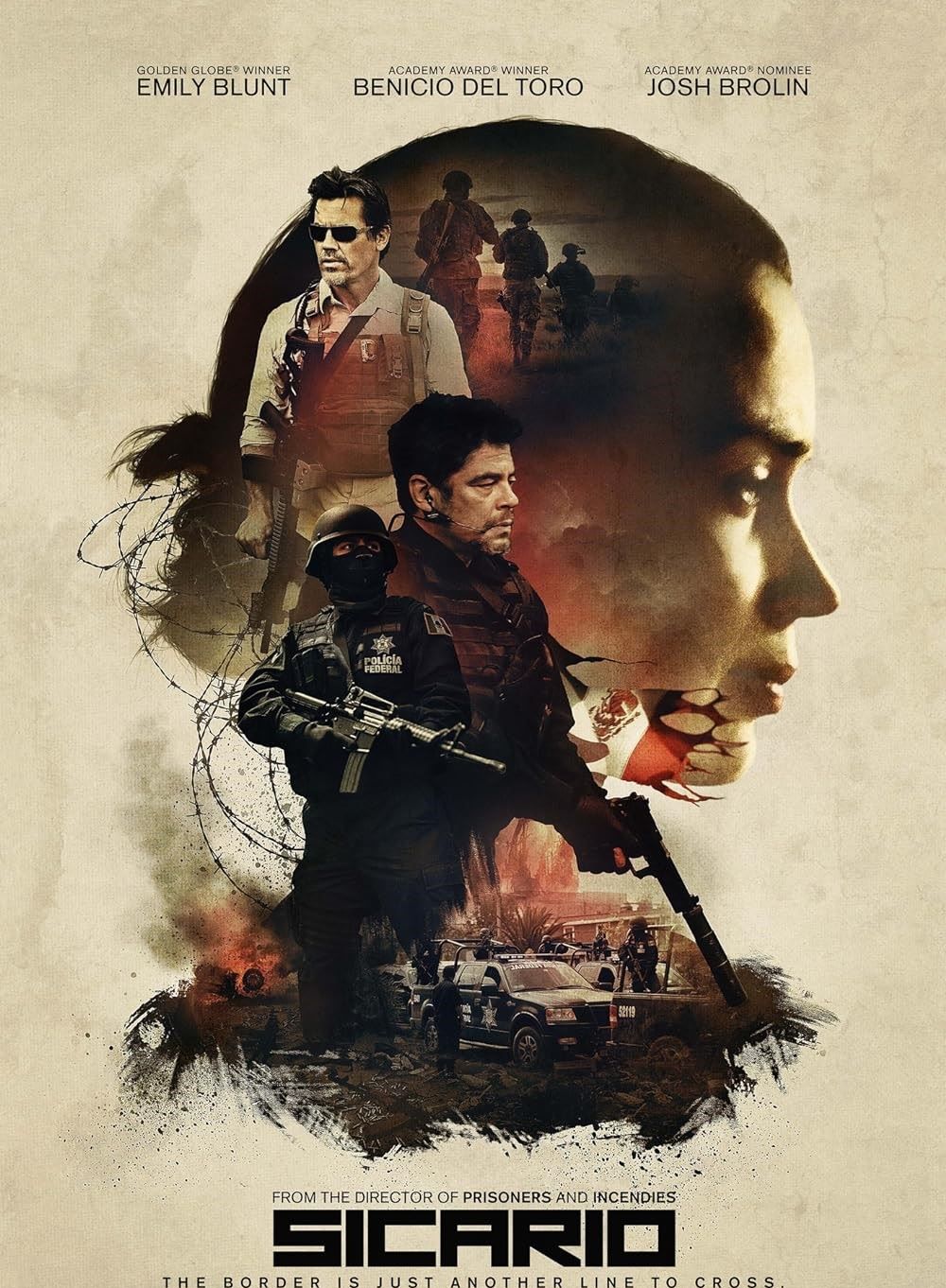
Review: Sicario (dir. by Denis Villeneuve)


“You should move to a small town where the rule of law still exists. You will not survive here. You are not a wolf. And this is the land of wolves now.” — Alejandro

Sicario is one of those thrillers that doesn’t just try to get your pulse up; it wants to leave you sitting there afterward, uncomfortable and a little hollowed out. Set in the murky world of the U.S.–Mexico drug war, it follows an idealistic FBI agent pulled into a “by any means necessary” operation and slowly realizing she’s basically a pawn in a much bigger, much uglier game. It’s not a movie about slick heroes taking down bad guys so much as a slow, grim spiral into the realization that the system is rigged on every level, and that’s where the film is both at its most impressive and its most uncompromising. Overall, it leans heavily positive as a piece of craft—beautifully shot, superbly acted, tightly directed—and its refusal to blink at where its story logically leads is a big part of what gives it power.

The basic setup is simple enough: Kate Macer, played by Emily Blunt, is an FBI agent used to doing things by the book, raiding cartel safe houses in Arizona with her partner Reggie. After a grisly opening operation that turns up corpses hidden in the walls and a deadly booby trap, she’s recruited into a joint task force helmed by Josh Brolin’s Matt Graver, a flip‑flop‑wearing CIA type who treats international borders and legal constraints as suggestions. The team’s official mission is to go after a cartel lieutenant, Manuel Díaz, but very quickly Kate realizes she’s only being told a fraction of what’s really going on. The more she pushes for answers, the more obvious it becomes that Matt and his mysterious associate Alejandro (Benicio Del Toro) are running their own agenda and using her badge and presence as cover.

From the start, Denis Villeneuve frames this story as a descent, and he does it by locking us into Kate’s perspective for most of the film. We’re as confused and kept in the dark as she is: we don’t fully know why the team is crossing into Juárez, why everyone is so tense at the border, or what the deeper objective is besides “disrupt the cartel.” That choice pays off in a huge way during the film’s standout sequences, whether it’s the convoy inching through traffic surrounded by armed federales or the nighttime tunnel infiltration lit by thermal and night‑vision photography. Those scenes aren’t just “cool action beats”; they’re engineered to make you feel boxed in and outmatched, like violence could erupt at any second and no one really has control. Even when nothing is technically happening, you can feel the nerves jangling under the surface.

One of the most striking things about Sicario is how it weaponizes space. The way the film uses its wide, open desert vistas isn’t just pretty scenery—it adds this creeping, suffocating dread to everything, as if the characters are tiny figures swallowed up by forces they can’t hope to understand or control. Those long shots of trucks threading their way across the landscape, or helicopters gliding over seemingly endless scrub, make the world feel vast, ancient, and totally indifferent to whoever’s spilling blood on it today. In those moments, the movie almost channels a kind of Lovecraftian horror, the same cosmic, indifferent menace that Cormac McCarthy managed to weave through his Westerns, where the land itself feels old, hostile, and utterly unmoved by human morality or suffering. It’s not supernatural, but that sense of something bigger, colder, and permanent presses down on every decision these characters make.

Roger Deakins’ cinematography is a huge part of why that dread lands so well. The desert is captured in these wide, ominous skyline shots with tiny vehicles creeping along the horizon, giving Sicario a sense of menace that feels baked into the environment. Even the daylight scenes feel threatening, all washed‑out heat and harsh sun flattening everything into a kind of moral no‑man’s‑land. Then the movie flips into night, and suddenly you’re plunged into infrared and silhouettes, which fits perfectly with the story’s obsession with secrecy and invisible lines being crossed. This is one of those films where you could watch with the sound off and still feel the tension just from how the images are composed, but the use of space and light also nudges the movie into that McCarthy‑adjacent territory where the West is less a backdrop and more a silent, malevolent presence.

The performances match that level of craft. Emily Blunt plays Kate as tough and competent, but not in a superhero way—she’s brave, but she’s also human, constantly trying to reconcile what she’s seeing with what she believes law enforcement is supposed to be. You can see the frustration mounting as she keeps demanding clarity and hitting a wall of smirks, deflections, and “you’ll understand later.” Benicio Del Toro, meanwhile, walks off with the film as Alejandro, this quiet, haunted figure who initially seems like just another operative but reveals layers of trauma and ruthlessness as the story goes on. The script is smart about keeping his backstory mostly hinted at until late in the film, which makes it all the more chilling when you finally see what he’s really there to do. Josh Brolin is the third pillar, playing Matt as casually flippant on the surface but utterly cold about collateral damage, the kind of guy who laughs through briefings because he already knows the moral lines are going to be erased.

On a thematic level, Sicario is very much about complicity and the idea that in this particular “war,” there are no clean hands. Kate comes in thinking she’s going to help nail cartel leadership through some kind of legal, targeted operation; what she slowly figures out is that the task force is really trying to destabilize one cartel to empower another, consolidating power into a more “manageable” single organization. That logic—“create one devil we can deal with instead of many we can’t”—is chilling, and the movie doesn’t really offer a comforting counterargument. Instead of pulling back or softening that stance, it commits to showing what that philosophy looks like in practice, all the way to the bitter end. By the time Alejandro reaches his personal endgame and we see what “justice” looks like in this world, any illusions about moral clarity are gone, and the film refuses to apologize for following that line through.

Where some films might hedge their bets or try to inject a last‑minute note of optimism, Sicario is deliberately straight‑backed about where its story logically leads. The CIA needs Kate’s FBI status to legitimize their operation on U.S. soil, but they don’t actually want her input; she’s there to sign off and be lied to, not to shape policy. Every time she pushes back—like when she tries to build a traditional case after the task force raids a cartel‑connected bank—she’s shut down because “that’s not what this mission is.” Even the brief subplot with the corrupt local cop Silvio is there to underline how the drug war trickles down: this isn’t just cartel bosses and shadowy agents, it’s working‑class people pulling double duty as mules because they’re desperate, and they end up as expendable as anyone else. Rather than treating that as background noise, the movie leans into the bleak implications and lets them sit with you.

The same goes for Kate’s arc. Some viewers see the film as sidelining its female lead in the third act, shifting the narrative fully over to Alejandro just when things are coming to a head. Structurally, that is what happens: the viewpoint tilts from Kate’s confused horror to Alejandro’s mission, and she becomes more of a witness than an active participant. But that shift feels of a piece with the movie’s overall approach—she has been outmaneuvered and used from the start, and Sicario isn’t interested in pretending otherwise just to deliver a more empowering or conventionally satisfying ending. There’s something bracing about the way the film sticks to its guns here; it says, “this is the world we’ve shown you for two hours, and this is how someone like Kate gets treated in it,” and then follows through.

All of this could have tipped into empty cynicism if the film didn’t feel so precise and purposeful. Jóhann Jóhannsson’s score, all pounding, low‑end rumble and ominous strings, practically turns the highway scenes into horror set‑pieces; it feels like the sound of something massive grinding forward that you can’t stop. Villeneuve keeps the pacing deliberate but never sluggish, using long stretches of quiet to make the explosions of violence feel random and brutal instead of exciting. Even small scenes, like Kate’s attempted hookup with a local cop who turns out to be on the cartel payroll, are staged to underline how deeply compromised everything is. There’s no safe space, no “off the clock” moment where the larger conflict doesn’t intrude, and the movie doesn’t pretend there is just to make you feel better walking out.

If you go into Sicario looking for a clean, cathartic crime thriller where the good guys outsmart the bad guys, you’ll probably come away irritated or even angry. The movie’s whole point is that those categories don’t really apply in this corner of the world, and it’s committed enough to that idea that it never gives you an easy out. But if you’re up for something more sobering—an incredibly well‑crafted, morally grim look at the drug war with standout work from Blunt, Del Toro, Brolin, Deakins, and Villeneuve—it’s a pretty exceptional ride. Its worldview is harsh, but it’s also coherent and honestly pursued, and that level of conviction is a big part of why the film lingers. It may not be the kind of movie you “enjoy” in a traditional sense, but it’s one that sticks with you, and in this genre, that counts for a lot.

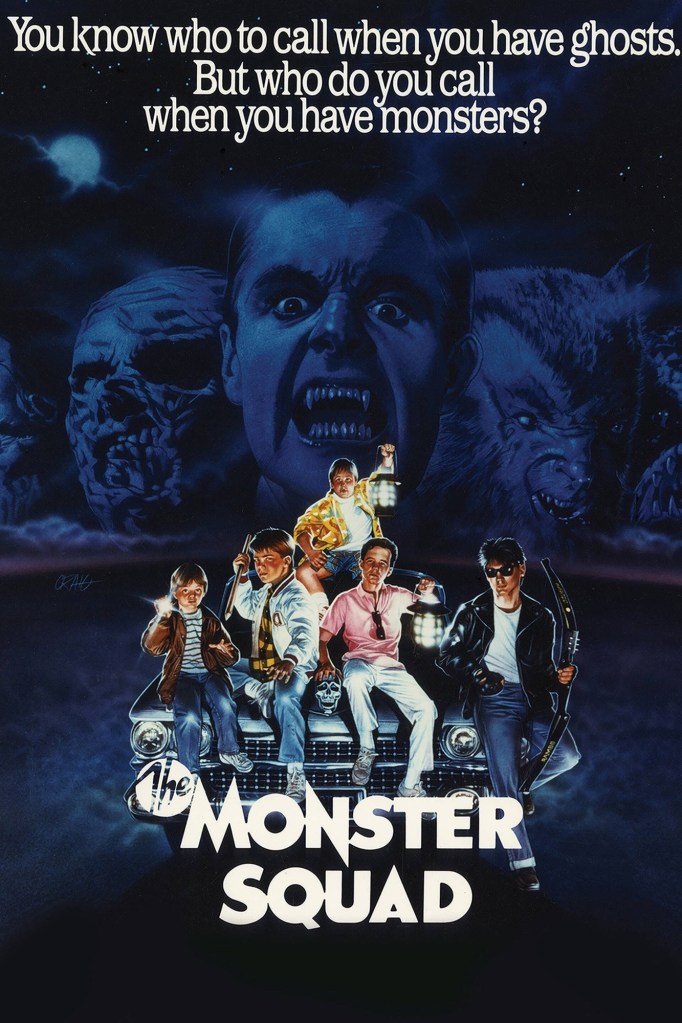
Review: The Monster Squad (dir. by Fred Dekker)


“Creature stole my Twinkie.” – Eugene

Released in 1987, The Monster Squad has lived one of those strange afterlives that cult films sometimes enjoy—ignored or even ridiculed upon release, only to become a beloved artifact for the generation that found it later on VHS. Directed by Fred Dekker and co-written with Shane Black, the movie occupies an awkward but endearing space between horror, comedy, and kids’ adventure. It never fully settles into one tone, and that’s part of both its charm and its problem. Watching it today, the film feels like The Goonies took a detour through a drive-in double feature of Dracula and The Wolf Man. It’s clunky, funny, occasionally mean-spirited, and loaded with enthusiasm—qualities that make it a thoroughly guilty pleasure for fans of ’80s genre mashups.

The story wastes no time getting into its madcap premise. A group of suburban preteens calling themselves “The Monster Squad” find that the classic Universal-style monsters are real, and worse, they’ve come to town. Count Dracula has a plan to plunge the world into darkness using an ancient amulet, and to succeed he enlists a roster of familiar faces: Frankenstein’s Monster, the Mummy, the Gill-Man, and the Wolf Man. This roster is fan-service before fan-service was a marketing term—a kid’s monster toybox brought to life. The squad, of course, must stop them, armed with comic-book knowledge, wooden stakes, and a blend of reckless courage and youthful sarcasm.

Dekker’s direction and tone play like a movie made for kids but smuggled in some heavy teenage energy. There’s violence, crude jokes, and occasional language that Hollywood would never let slip into a PG-friendly franchise today. Yet that rough edge is part of why The Monster Squad aged into cult status. It’s unapologetically of its time, operating on the belief that kids can handle scares as long as they’re fun and that suburban fantasy can, for a while at least, coexist with real danger. The movie’s depiction of childhood feels filtered through a stack of comic books and Creepshow issues—hyper absurd but still emotionally grounded in a way only ’80s adventure films seemed to pull off.

The kids themselves are a mixed bunch of believable archetypes. There’s Sean (André Gower), the de facto leader with a bedroom plastered in monster movie posters; Patrick (Robby Kiger), his wisecracking sidekick; Rudy (Ryan Lambert), the too-cool-for-school older kid who smokes, rides a bike, and somehow becomes the squad’s weapons specialist; and Eugene (Michael Faustino), the youngest, who still sleeps with his dog and writes letters to the Army for backup. They’re joined by Horace, nicknamed “Fat Kid,” played with surprising vulnerability by Brent Chalem. Each character is drawn broadly but memorably, and even when the dialogue veers into dated humor, there’s an underlying sincerity. You can tell Dekker and Black really liked these kids. They might use slingshots and one-liners, but what unites them is their intense sense of loyalty to one another—the kind of friendship that survives both bullies and broomstick-wielding vampires.

If there’s an emotional anchor, oddly enough, it’s the relationship between the squad and Frankenstein’s Monster, played by Tom Noonan in an unexpectedly gentle performance. When the creature befriends the kids, particularly little Phoebe (Ashley Bank), the film shifts momentarily from wisecracks to something close to tenderness. Noonan gives the character a shy uncertainty, a weary loneliness that offsets the visual absurdity of the rubbery monsters around him. There’s even a tinge of tragedy in his final act, which echoes Frankenstein’s literary roots—a moment of real feeling buried inside an otherwise loud and gleefully messy creature romp.

The monsters themselves, created by legendary effects artist Stan Winston, are among the film’s biggest draws. Each design feels like a loving upgrade to the old Universal look—recognizable but more feral, angular, and rooted in late-’80s aesthetics. The Wolf Man, for example, looks simultaneously comic and menacing, while the Gill-Man costume still impresses for its texture and movement decades later. The decision not to rely on stop motion or heavy opticals gives the monsters a tactile presence that CGI could never capture. There’s something about watching full-bodied suits and prosthetics move in real space that makes the threats feel tangible even when the stakes are goofy. These creatures are fun to look at, even when the script doesn’t give them much to do beyond roar and stalk across smoke-filled sets.

Shane Black’s fingerprints are all over the dialogue—the sardonic banter, the genre in-jokes, the affection for both pulp tropes and subverting them. But perhaps because the film was marketed partly as family adventure and partly as horror spoof, it often can’t decide whether to play sincere or ironic. Some scenes lean heavily on nostalgic affection for monster movies, while others feel almost mean in their mockery of small-town innocence. The tone whiplash means The Monster Squad doesn’t build much consistent momentum; one minute it’s heartfelt, the next it’s a barrage of sarcastic one-liners. Still, its rough tonal juggling has a ragtag energy that keeps it lively, and the sheer commitment to blending genres is endearing.

When it comes to pacing, the movie flies by in under 80 minutes, which turns out to be both blessing and curse. On one hand, there’s no filler—every scene moves briskly to the next piece of monster mayhem. On the other, the movie’s emotional beats and mythology barely have time to breathe. We get glimmers of backstory (like Dracula’s cryptic hunt for the amulet and Van Helsing’s prologue battle) that hint at a larger world that the film never really explores. You sense that Dekker and Black were operating under the fantasy logic of childlike storytelling: don’t explain too much, just move fast enough that no one questions it. It works, more or less, because of the film’s sheer enthusiasm, but it leaves you imagining a richer version of this story that never quite made it onscreen.

Looking back from today’s lens, some parts of The Monster Squad show their age more harshly. Certain lines and stereotypes that went unnoticed in the ’80s now feel jarring, even uncomfortable, and the film’s cavalier tone sometimes undercuts moments that should feel more innocent. Yet despite that, most viewers who revisit it with awareness of its era find themselves disarmed by its sense of fun. There’s no cynicism driving it—it’s pure genre love, messy and sincere, like a handmade Halloween costume that’s somehow cooler precisely because it’s imperfect. The film represents a time when kids’ movies were allowed to have teeth, blood, and a few scary moments, trusting that a young audience could handle being spooked without needing everything smoothed over.

For many fans, The Monster Squad works less as a polished film and more as an experience—a flashback to VHS sleepovers, bad pizza, and rewinding favorite scenes. The movie’s newfound appreciation, fueled by screenings and documentaries like Wolfman’s Got Nards, speaks to that nostalgic bond. It’s less about objective greatness and more about the feeling it preserves. Sure, some of the jokes fall flat, and the plot functions mostly as connective tissue between monster gags, but few movies embody the gleeful chaos of late-’80s pop horror as affectionately as this one does.

The Monster Squad earns its title. It’s not a flawless film, nor even a particularly coherent one, but it’s deeply fun, carried by the conviction that monsters—real or imaginary—are made to be fought with courage, humor, and friends who have your back. Watching it now is like flipping through an old comic book you used to love: you can see every crease and faded color, but that doesn’t make it any less special. And in a cinematic era saturated with irony and nostalgia pastiche, The Monster Squad still feels refreshingly earnest about its own weirdness. Maybe that’s its secret power.

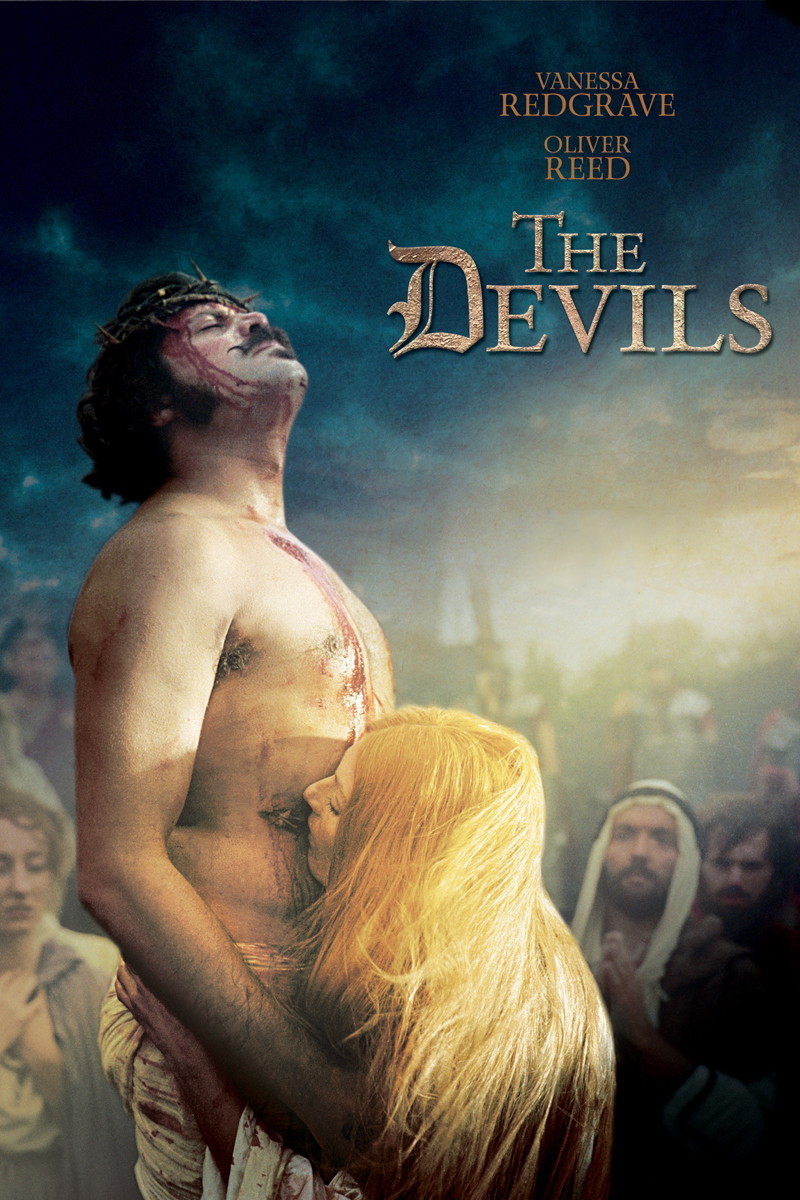
Review: The Devils (dir. by Ken Russell)


“I have been a man. I have loved women. I have enjoyed power.” — Father Urbain Grandier

Ken Russell’s The Devils (1971) stands as one of the most provocative and polarizing films in cinema history, a visceral plunge into the hysteria of religious fanaticism and political intrigue set against the backdrop of 17th-century France. Adapted loosely from Aldous Huxley’s historical account The Devils of Loudun and John Whiting’s play The Devils, the film dramatizes the real-life case of Father Urbain Grandier, a charismatic priest accused of witchcraft amid a scandal of supposed demonic possessions at a Loudun convent. Directed with unbridled fervor by Russell, who infuses every frame with operatic excess, the movie challenges viewers to confront the grotesque intersections of faith, sexuality, power, and repression. While its boldness earns admiration for unflinching social commentary, its stylistic indulgences can overwhelm, making it a work that demands both endurance and reflection.

The story unfolds in the walled city of Loudun, a Protestant stronghold under threat from Catholic forces led by the cunning Cardinal Richelieu. Oliver Reed delivers a towering performance as Grandier, portraying him not as a saintly martyr but as a flawed, hedonistic figure—a womanizer who preaches liberty while bedding Madeleine (Gemma Jones), a young Protestant whose quiet devotion contrasts sharply with the surrounding debauchery. Grandier’s defiance of Richelieu’s edict to demolish the city’s walls marks him as a target, but his downfall accelerates through the hysterical claims of Sister Jeanne (Vanessa Redgrave), the hunchbacked prioress of the Ursuline convent. Twisted by unrequited lust for Grandier, Jeanne accuses him of sorcery, sparking a wave of mass possession among the nuns that spirals into public spectacle. Russell draws from historical records to depict these events, emphasizing how personal pathologies fueled institutional corruption.

Visually, The Devils is a tour de force of baroque horror, with production designer Derek Jarman crafting sets that evoke a pristine white monastery defiled by filth and frenzy. Cinematographer David Watkin employs distorted wide-angle lenses and frenetic camera movements to mirror the characters’ unraveling psyches, turning sacred spaces into nightmarish arenas. The infamous “nunsploitation” sequences—where possessed sisters writhe in orgiastic fits, desecrate crucifixes, and simulate blasphemous acts—remain shocking even today, not merely for their explicitness but for their raw psychological intensity. These scenes serve Russell’s thesis: repressed desires, when twisted by authority figures like the witch-hunting Father Barre and Father Mignon, erupt into collective madness. Fairly assessed, these choices underscore Russell’s intent: to expose how power structures weaponize female hysteria, a theme resonant in historical witch hunts and modern reckonings with abuse.

Russell’s direction amplifies this through rhythmic editing and a pounding score by Peter Maxwell Davies, which blends liturgical chants with dissonant percussion to evoke a descent into hell. The film’s opening, with its ritualistic execution of a wise woman amid fireworks and folk rituals, sets a tone of pagan vitality clashing against ecclesiastical oppression. Midway, hallucinatory visions plague Grandier, blurring reality and delusion in a style reminiscent of Russell’s later explorations of ecstatic breakdown. The film unflinchingly depicts torture scenes—a burning at the stake, an afternoon in the rack, headscrews, a douche with boiling water—highlighting its raw confrontation with human cruelty. However, this excess risks tipping into self-parody; moments like the nuns’ simulated levitations or Jeanne’s contortions can strain credulity, prompting questions of balance between provocation and restraint.

Performances anchor the chaos, with Reed’s Grandier embodying defiant charisma undercut by hubris. His courtroom defiance and final quartering—nailed alive to a burning cross—culminate in a crucifixion scene of harrowing power, rivaling traditional passion narratives in emotional weight. Redgrave’s Jeanne is a revelation, her physical deformity symbolizing inner torment; she veers from pitiable to monstrous without caricature. Supporting turns shine too: Dudley Sutton as the impish Baron de Laubardemont, scheming for Richelieu; Max Adrian as the syphilitic priest whose decaying face mirrors moral rot; and Christopher Logue as the predatory Cardinal, whose urbane cruelty chills. The ensemble’s conviction elevates the material, ensuring characters feel flesh-and-blood rather than allegorical pawns.

Thematically, The Devils indicts institutional religion not as anti-faith but as a critique of its perversion by human ambition. Russell draws parallels to scandals where church power intertwines with politics, arguing that true devilry lies in hypocrisy. The film posits sexuality as a battleground: Grandier’s libertinism versus Jeanne’s repression, with the church exploiting both for control. This aligns with Huxley’s original thesis, expanded by Russell into a broader assault on authoritarianism. Politically, it skewers absolutism; Richelieu’s agents manipulate “possessions” for territorial gain, much as witchfinders historically profited from purges. Balanced against this, the film acknowledges Grandier’s flaws—he fathers a child out of wedlock and mocks piety—preventing hagiography. Upon release, it faced cuts in various countries, its controversial rating reflecting discomfort with its uncompromised vision.

Stylistically, Russell risks the “ridiculous” for the sublime. The white-tiled convent, pristine yet prone to vomit and excrement, symbolizes false purity; smashing it in the finale cathartically liberates Loudun from fanaticism. Influences from montage masters appear in crowd scenes, synthesized into a singular fever dream. Pacing falters in the trial’s verbosity, and some anachronistic flourishes—like Louis XIII’s cross-dressing ballet—inject campy levity, diluting gravity at times. Yet these quirks humanize the director’s bombast, reminding us of cinema’s power to provoke laughter amid horror. Compared to Russell’s Women in Love or TommyThe Devils stands as his most structurally coherent assault on repression.

Historically contextualized, the Loudun possessions of 1634 involved Urbain Grandier, executed for allegedly bewitching Ursuline nuns via a pact with Satan. Huxley documented the hysteria, linking it to political machinations under Richelieu, who sought to crush Huguenot resistance. Russell amplifies the carnality for dramatic effect, prioritizing emotional truth over literalism. Restored versions reveal its full ferocity, influencing not just cinema but broader media, including comics like Argentinian artist Ignacio Noé’s The Convent of Hell, which echoes its themes of convent-based depravity and demonic intrigue in vivid, explicit sequential art.

Ultimately, The Devils endures as a lightning rod: a moral film cloaked in immorality, pro-religion by exposing its distortions. Its ugliness—filth-smeared faces, ruptured bodies—serves illumination, urging viewers toward wisdom. For every viewer repulsed by its excesses, another finds genius in its candor. Russell’s gamble pays off; in risking the absurd, he achieves a sublime confrontation with our shadowed souls. At around 109 minutes in its uncut form, it repays multiple viewings, rewarding the brave with insights into faith’s fragility and power’s perils. Not flawless—its hysteria occasionally exhausts—yet undeniably vital, The Devils remains essential cinema, a shattered lens on humanity’s eternal dance with darkness.

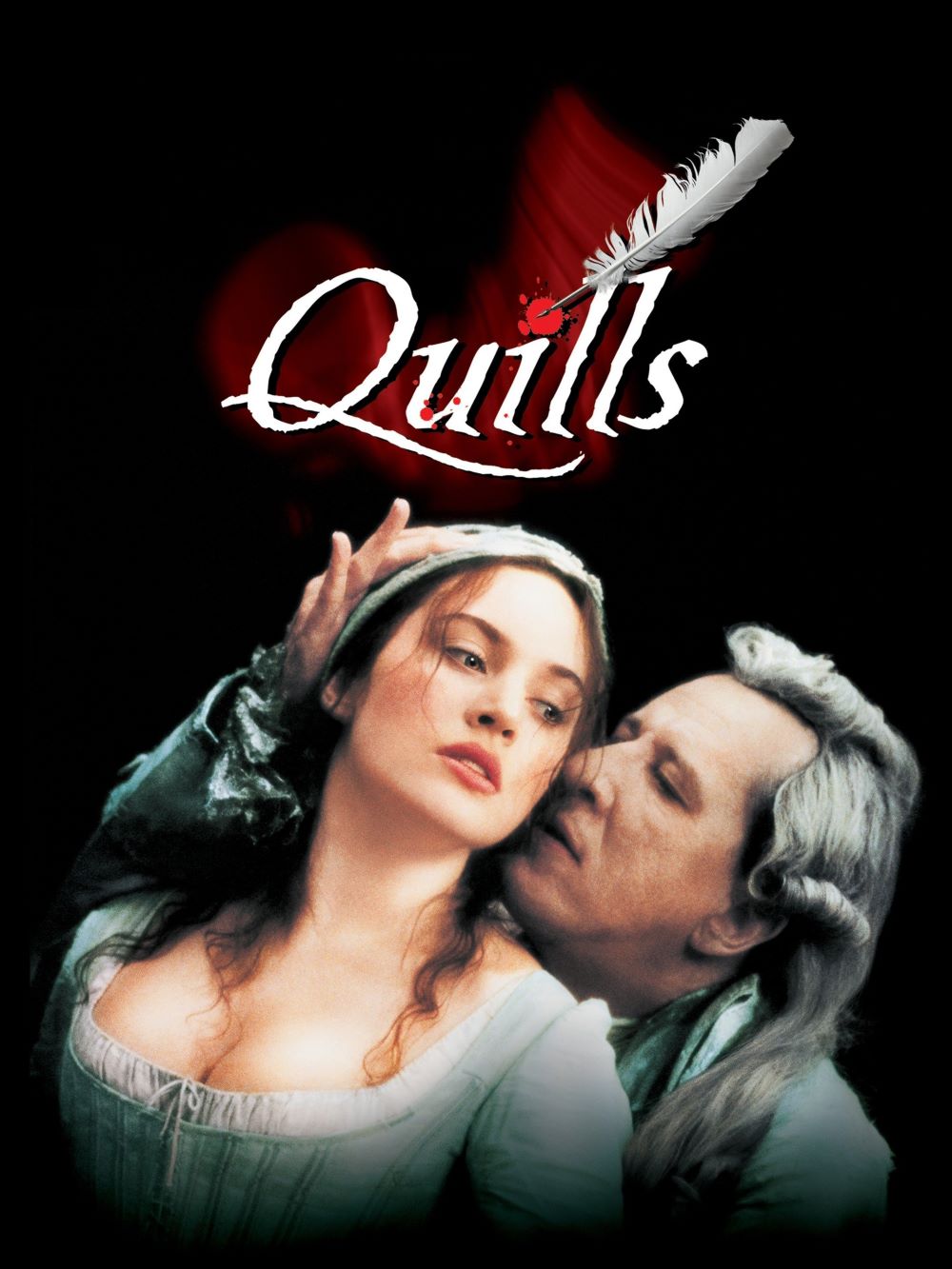
Review: Quills (dir. by Philip Kaufmann)


“In order to know virtue, we must acquaint ourselves with vice. Only then can we know the true measure of a man.” — Marquis de Sade

Quills, Philip Kaufman’s 2000 take on the infamous Marquis de Sade, dives headfirst into the messy clash between artistic freedom and societal repression. It’s a film that doesn’t shy away from the dark, provocative world of its subject, blending historical drama with a touch of theatrical flair. While it takes liberties with the facts, it captures the spirit of de Sade’s defiance in a way that’s both entertaining and thought-provoking.

Right from the start, Quills sets up its world inside the Charenton Asylum for the Insane, where the aging Marquis de Sade, played with gleeful abandon by Geoffrey Rush, is holed up under the watch of the kindly Abbé de Coulmier (Joaquin Phoenix). De Sade’s been churning out his scandalous writings—think Justine and other works that shocked 18th-century France—and smuggling them out via laundry baskets to a young laundress named Madeleine LeClerc (Kate Winslet). Napoleon’s regime isn’t thrilled, so they dispatch the stern Dr. Royer-Collard (Michael Caine) to tighten the screws and silence the madman once and for all. The stage is set for a battle of wills, with de Sade’s pen as his weapon against the forces of censorship.

Geoffrey Rush owns the screen as de Sade, turning what could have been a one-note villain into a complex, charismatic force of nature. He’s sly, unrepentant, and hilariously vulgar, spitting barbs that cut deep into hypocrisy and piety. Rush balances the man’s depravity with a genuine passion for expression, making you root for him even as his ideas repulse. It’s a performance that’s equal parts showman and philosopher, and it anchors the film’s energy. Joaquin Phoenix brings a quiet intensity to the Abbé, a man torn between his faith, his compassion, and the stirrings of forbidden desire—especially toward Madeleine. Phoenix nails the internal conflict, his wide eyes conveying a soul on the brink.

Kate Winslet shines as Madeleine, the innocent conduit for de Sade’s words, whose curiosity pulls her into his orbit. She’s got that Winslet spark—earnest yet fiery—and her scenes smuggling manuscripts or reading aloud add a layer of warmth to the asylum’s chill. Michael Caine, meanwhile, chews scenery as the pompous doctor, a hypocritical sadist in his own right, obsessed with his young bride Simone (Amelia Warner). Caine’s Royer-Collard is deliciously smarmy, a foil to de Sade who mirrors his cruelty under the guise of order. The ensemble clicks, with supporting turns like Tony Berthaud as the asylum’s rougemont adding comic relief amid the tension.

Kaufman’s direction keeps things visually striking without overwhelming the story. The asylum feels alive—claustrophobic cells contrast with grand halls where inmates stage de Sade’s plays under the Abbé’s misguided therapy. Cinematographer Rogier Stoffers bathes everything in earthy tones, with candlelit shadows that amp up the gothic vibe. The score by Angelo Badalamenti weaves eerie strings and harpsichord flourishes, underscoring the film’s blend of horror and humor. It’s not afraid to get graphic: scenes of self-mutilation and bodily fluids as writing tools push boundaries, but they’re more about desperation than shock value.

Thematically, Quills grapples with freedom of speech in a way that’s timeless. De Sade isn’t portrayed as a hero—his writings celebrate excess and cruelty—but as an indomitable spirit who won’t be silenced. Even stripped of paper, ink, clothes, and eventually his voice, he finds ways to provoke, dictating stories through inmates or scratching words into his skin. It’s a middle finger to censorship, questioning who the real monsters are: the libertine or the repressors enforcing “morality.” The Abbé represents liberal tolerance stretched to breaking, Royer-Collard conservative control gone tyrannical. Madeleine embodies the allure of forbidden ideas, her tragic arc highlighting how words can liberate or destroy.

That said, the film isn’t perfect—it’s a fictionalized riff on history, not a biopic. The real de Sade spent years at Charenton, but the timeline compresses events, amps up the drama, and softens his edges for modern tastes. He wasn’t quite the defiant artist Kaufman paints; his later years were more pathetic than poetic. Critics have noted it sanitizes Justine‘s true extremity—no orgies or murders here, just innuendo. Some see it as romanticizing a monster, turning him into a free-speech martyr rather than the predator he was. Fair point; the movie sympathizes more with his pen than his philosophy. Still, as entertainment, it works because it doesn’t pretend to be a documentary.

Humor peppers the darkness, keeping Quills from wallowing in gloom. De Sade’s quips land like punches—”There’s no sin in writing!”—and absurd moments, like inmates reenacting his tales or the doctor’s failed inventions, add levity. One standout sequence has de Sade dictating a racy novel through a chain of whispering patients, turning the asylum into a underground press. It’s One Flew Over the Cuckoo’s Nest meets Dangerous Liaisons, with inmates running wild in a riot of liberation gone wrong. The film’s pace builds masterfully to its brutal climax, where de Sade’s final “victory” leaves you unsettled, pondering if ideas can truly be killed.

Performances aside, the script by Doug Wright (adapted from his play) crackles with wit and insight. Dialogue zings without feeling stagey, and it probes hypocrisy head-on: the pious Abbé lusting after Madeleine, Royer-Collard bedding his teen bride while torturing others. Christianity takes hits—de Sade devours a crucifix, mocks scripture—but it’s broad satire, not preachy atheism. The ending, with its ironic twist on legacy, sticks with you, echoing how de Sade’s name endures despite efforts to erase him.

For fans of period dramas with bite, Quills delivers. It’s provocative without being pornographic, smart without being stuffy. At 124 minutes, it never drags, balancing spectacle and substance. Sure, it glamorizes a controversial figure, and history buffs might nitpick inaccuracies—like the Abbé’s real-life tolerance or Charenton’s theater program. But Kaufman’s track record (The Right StuffThe Unbearable Lightness of Being) shows he knows how to humanize extremes. Rated R for good reason—nudity, violence, profanity—it’s adult fare that rewards attention.

Visually, the costumes pop: de Sade’s velvet robes give way to rags, symbolizing his fall, while Madeleine’s simple smocks highlight her purity amid corruption. Production design nails early 19th-century France, from ornate asylum architecture to the doctor’s sterile gadgets. Badalamenti’s music swells during key confrontations, heightening emotional stakes without overpowering.

In the end, Quills asks tough questions about art’s power and limits. Does provocation justify excess? Can society silence dangerous minds without becoming monstrous itself? It doesn’t provide easy answers, which is its strength. Rush’s tour-de-force makes de Sade magnetic, flaws and all, while the supporting cast elevates the ensemble. Not for the faint-hearted, but if you appreciate bold cinema that stirs debate, it’s a gem. Rewatch value is high—themes resonate in our cancel-culture age. Philip Kaufman crafted a film that’s as unruly as its protagonist: unapologetic, alive, and impossible to ignore.

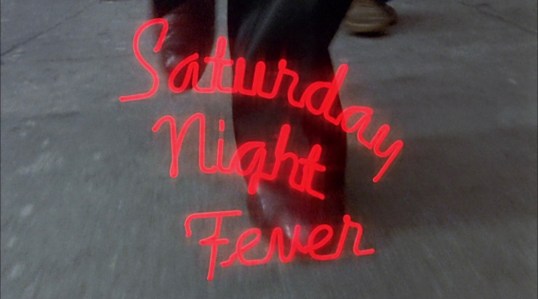
Scenes That I Love: The Opening Credits of Saturday Night Fever


Saturday Night Fever (1977, dir. John Badham)

Today is John Travolta’s birthday!

In honor of this day, here’s a scene that I love, the opening credits of Saturday Night Fever.  Watch as John Travolta, playing the role of Tony Manero, walks down the streets of Brooklyn, not letting the fact that he’s carrying two cans of paint do anything to lessen his strut.  Watch as Tony puts a down payment on a pair of shoes!  Thrill as Tony buys two slices of pizza!  Cringe as Tony bothers a woman who wants absolutely nothing to do with him!

This is one of the greatest introductions in film history.  Not only does it set Tony up as an exemplar of cool but it also subverts our expectations by revealing just how little being an exemplar of cool really means.  I always relate to the woman who gets annoyed with Tony and tells him to go away.  I know exactly how she feels, as does any woman who has ever been stopped in the middle of the street by some guy who thinks she has an obligation to talk him.  It doesn’t matter how handsome he is or how much time he obviously spent working on his hair.  He’s still just some guy carrying two buckets of paint and acting like she should be flattered that he spent half a minute staring at her ass before chasing after her.  For all of his carefully constructed attitude, Tony comes across as being a rather ludicrous figure in this introduction.  He carries those cans of paint like he’s going to war and you secretly get the feeling that he knows how silly he looks carrying them but he’s not going to allow anything to get in the way of his strut.  And yet, as ridiculous as Tony sometimes seems and as bad as behavior does get, you can’t help but want the best for him.  That’s the power of Travolta’s performance.  He shows us who Tony could be if he only had the courage.

Happy birthday to John Travolta!  And here is today’s scene that I love:

I Watched Heart Of The Country (2013, Dir. by John Ward)


After her husband is arrested for financial fraud, country singer Faith (Jana Kramer) returns home to North Carolina and reconnects with her estranged family.  Her father (Gerald McRaney) is there to offer support and small-town, no-nonense wisdom and she’s going to need all of it when she has to choose between the hot local doctor and her repentant husband.

Because Faith’s father was dying of a brain tumor, I assumed this was a Nicholas Sparks movie but it wasn’t.  It was just a close copy.  Heart of the Country was a movie about the importance of keeping your marriage together, even if your husband was involved in a Ponzi scheme!  Faith’s husband (Randy Wayne) didn’t have anything to do with the scheme but he knew it was going on at his firm and he didn’t say anything.  When he thinks about rejecting a plea deal that would keep him out of prison because it would mean admitting his guilt and embarrassing his old money family, Faith’s father tells him to be a man and admit that he knew what was going going on at his firm.

Other than some mild language, Heart of the Country could have easily passed for a Hallmark movie.  I didn’t agree with Faith’s decision at the end but I did like the way the movie portrayed the relationship between her and her father.  Gerald McRaney was really good in the role.  It was the last movie that I watched yesterday and I’ll give it a mild recommendation just because of McRaney and some of the music on the soundtrack.  If you’re into Hallmark-style movies, this one was okay.

I Watched A Walk To Remember (2002, Dir. by Adam Shankman)


After popular high school student Landon Carter (Shane West) gets busted for drinking on school property and pulling a prank that nearly killed another student, he’s given a choice.  He can either be expelled or he can tutor other students and take part in the school play.  At both tutoring and play rehearsals, he gets to know Jamie Sullivan (Mandy Moore), the daughter of the local reverend (Peter Coyote).  Even though Jamie doesn’t wear makeup and only owns one sweater, Landon falls in love with her.  Too bad she’s dying.

A Walk To Remember is a movie that I can remember walking down to the movie theater to see with my friends.  Shane West was so handsome.  Mandy Moore was so beautiful, even if she did only own one sweater.  The film taught us all that there’s nothing more romantic than falling in love when you only have a year to live.  (At least, that’s what it taught us girls.  The boys just learned that they could nearly kill someone and their only punishment would be having to appear in a school play.)  I loved it when I first saw it and I still enjoyed it when I rewatched it yesterday, even if I now realize that it never made sense that Mandy Moore would only own one sweater.  There’s a lot about the movie that doesn’t make any sense but Shane West and Mandy Moore had that irresistible chemistry.  Early on, when Jamie warns Landon not to fall in love with her and Landon says it will never happen, that’s when everyone knows that they’re destined to be together.

The movie still made me cry, even though I now know that someone has to die in every Nicholas Sparks story.  Getting married right out of high school makes sense when one of you is going to be dead before college reopens for the fall.  Did Landon ever remarry?  He better not have.  I will never forget A Walk To Remember.

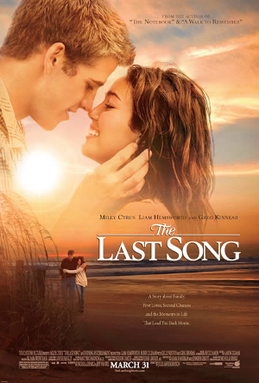
So, I Watched The Last Song (2010, Dir. by Julie Anne Robinson)


Ronnie Miller (Miley Cyrus), who is 17 and way too rebellious to be likable, travels to Georgia to spend the summer with her father, a former concert pianist named Steve (Greg Kinnear).  Ronnie is a sarcastic brat up until she discovers that a racoon is trying to eat a nest of turtle eggs.  She tries to protect the turtles.  The aquarium sends over a volunteer named Will (Liam Hemsworth) to watch over the turtle eggs and he and Ronnie fall in love over the course of several nights on the beach.  Ronnie starts to straighten out her life but then she learns that her father has cancer and that the reason he invited her and her brother to Georgia was so he could have one last summer with her.

This is a Nicholas Sparks story so, of course, someone has to die.  I always tell myself that I’m not going to cry whenever I watch a Nicholas Sparks movie and then I do.  Greg Kinnear was really likable as Steve and Liam Hemsworth was really cute as Will and I know I would have fallen in love with him too if we were protecting turtle eggs together.  When the eggs hatched, the baby turtles were adorable.

It’s too bad Miley Cyrus can’t act because her performance was so bad that it ruined the movie.  Even the racoon that tried to steal the turtle eggs outacted her.  I got tired of Ronnie and her attitude.  No matter what happened, Ronnie had to be sarcastic about it.  Even when she finally realized that the world didn’t revolve around her, Miley still delivered all of her lines in the same flat, smartass tone of voice so I didn’t buy her change of heart at all.

I’m glad the turtles made it back to the ocean.

I Watched The Lucky One (2012, Dir. by Scott Hicks)


I told a friend that I was going to watch The Lucky One and she said that I better make sure that I had a lot of water onhand to make sure I wasn’t dehydrated by the end of the movie.  That’s some of the best advice I’ve ever received.

It’s a Nicholas Sparks adaptation.  Zac Efron plays a Marine who finds a picture of Taylor Schilling in Iraq.  He survives an attack that wipes out all of his friends and he feels as if it was because he was destined to find the woman in the picture.  She tracks her down to Louisiana, where she’s living with her mother (Blythe Danner) and her sensitive son (Riley Thomas Stewart) and where she’s still struggling to accept the death of her brother in Iraq.  Zac Efron could have avoided a lot of drama by showing her the picture as soon as he arrived at her beautiful home but instead, he takes a job as a handyman around the house.  If he had avoided the drama, there would be no movie!

It’s really overdramatic because, of course, Taylor Schilling’s ex-husband (Jay R. Ferguson) is the son of the most powerful man in town and he keeps threatening to take away his son.  It doesn’t matter though because Zac Efron plays a sweet man with a damaged soul, a man who never yells and who encourages Taylor’s son to play the violin and who serves as a strong male role model while all the other men in town are too busy sucking up to Ferguson’s father.  Zac Efron loves dogs and long walks.  He plays chess.  He plays the piano.  He’s served his country.  And he says, “You should be kissed every day, every hour, every minute.”  Don’t bother me with reality, I’m too busy over here swooning.

The Lucky One is a good movie for Valentine’s Day.  Any other day, maybe it wouldn’t be so good.  But for Valentine’s Day, it’s great!