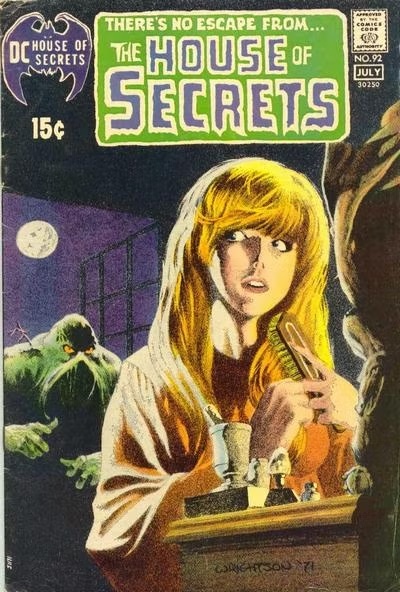
Swamp Thing made his first appearance in DC’s House of Secrets #92 (July, 1971). It was a stand-alone story that was set in the early 20th century. It did not have much in common with the Swamp Thing that was all know today but the issue will always be remembered for its cover, which was drawn by Bernie Wrightson. The girl who is coming her hair while Swamp Thing approaches was modeled on Louise Jones, who would later be known as Louise Simonson and would become an important comic book writer in her own right.
Now that we are halfway to October, I decided to share my personal favorite cover from The Tomb of Dracula.
The Tomb of Dracula was a comic book that ran for 70 issues, from 1972 to 1979. It was published by Marvel and it’s generally considered to be one of the best of the horror comics. It was also the first comic book to feature the character of Blade, who was later brought to life by Wesley Snipes in one of the first successful films to be based on a Marvel comic.
I’m a Tomb of Dracula fan and a collector. I’ve got nearly every issue of Tomb of Dracula and it’s companion magazine, Dracula Lives. Below is my favorite cover:
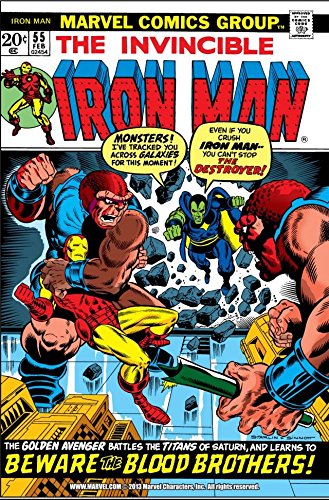
50 years ago, in Iron Man #55, both Drax the Destroyer and Thanos made their first appearances.
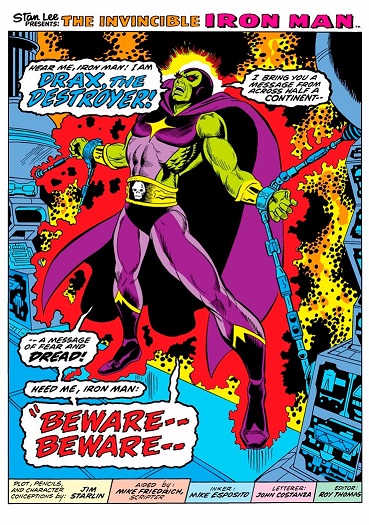
Iron Man #55 opens with Drax the Destroyer being held prisoner on Thanos’s mobile prison planet. This Drax is far different from the Drax who became famous as a result of being a part of the MCU. This Drax is a former Earthling who was killed by Thanos but then resurrected and given one mission, to kill Thanos. There’s nothing funny, not even unintentionally, about his Drax. Knowing that Drax will not stop until he has destroyed him, Thanos has chained Drax up and spends his spare time taunting him. Just because Thanos is evil, that doesn’t make him smart.
Drax sends out a mental message to Iron Man, despite the fact that he and Iron Man have never met. Tony Stark agrees to help Drax because Drax’s messages are so powerful that Tony can’t even attend a business meeting. After suiting up as Iron Man, Stark flies out to Thanos’s prison planet. Along the way, Drax tells him the abbreviated details of Thanos’s origin and Thanos’s love of death.
Iron Man’s fist meeting with Thanos is not particularly auspicious.
Thanos thinks so little of Iron Man that he assigns the moronic aliens known as the Blood Brothers to battle Iron Man. Iron Man is able to free Drax, the Blood Brothers are easily defeated, and Thanos makes a hasty retreat. Drax thanks Iron Man, shakes his hand, and then heads after Thanos. And I suppose Iron Man gets back to Earth somehow.
Thanos and Drax were created by Jim Starlin, who wasn’t even Iron Man’s regular writer. When the planned story for Iron Man #55 ended up running behind schedule, Starlin was assigned to create a filler story. Thanos and Drax were both characters that Starlin had invented for a planned-but-never-written sci-fi epic in college. Starlin reused them and their origins in Iron Man #55.
Though thrown together at the last minute, Iron Man #55 predicted the future of Marvel in a way that, even at the time, few realized. When Starlin took over Captain Marvel, he reused both Drax and Thanos and crafted an epic space opera that was later reused during phase one of the MCU. For all the credit that was given to Kevin Feige, the Russo brothers, Stan Lee, and countless others, the MCU owes much of its success to Jim Starlin.
And it all began with Iron Man #55 running behind schedule.
IRON MAN #55 (October, 1972) Writer: Jim Starlin/Mike Friedrich Penciler: Jim Starlin Inker: Mike Esposito Letterer: John Costanza Editor: Roy Thomas
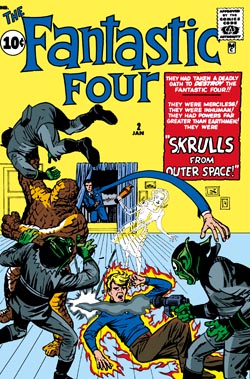
Just a few months after introducing themselves to the world, the Fantastic Four appear to be on a crime rampage! The Thing swims out to an oil rig and knocks it over with one punch. The Human Torch melts a memorial. The Invisible Girl steals jewelry. And when New York suffers a huge blackout, witnesses report seeing an arm stretching it’s way into a powerplant and flipping the off switch!
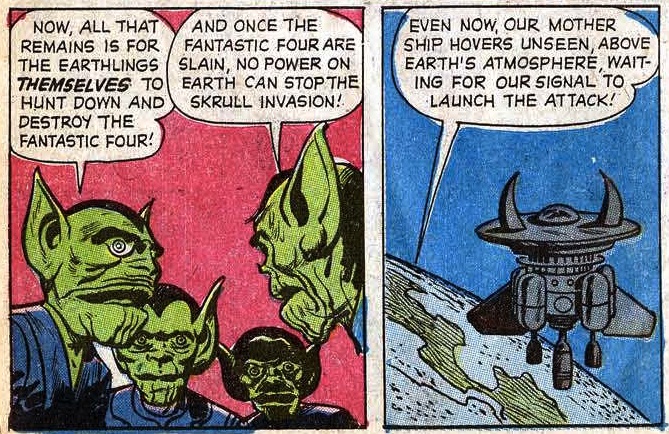
The Fantastic Four claim that they’re innocent and it turns out that they are. Four shape-shifting aliens, known as the Skrulls, have traveled to Earth and are pretending to be the Fantastic Four so that the government will turn on them and it will be easier for the Skrulls to take over the planet. Fortunately, Mr. Fantastic figures out what’s going on. Not only does he fool the Skrull commanders by showing them back issues of Journey Into Mystery and Strange Tales and saying that they’re actual newspapers about the monsters that exist on earth but he also hypnotizes three of the Skrulls on Earth and convinces them that they are cows.
I’ve always liked the Skrulls and it’s always bothered me that they seemed to lose almost every war that they got involved in. How could the Kree defeat the Skrulls? And was it necessary to add insult to injury by having Galactus eat their homeworld? The Skrulls just could not catch a break and I think that’s one reason why they’ve always been popular. With their ability to change their shape and adopt the powers of the heroes that they’re imitating, the Skrulls should have been unstoppable. They should have conquered this planet a long time ago. But the Skrulls, for all of their powers, could just never seem to get it together. To paraphrase Uncle Ben, with great power comes truly rotten luck.
Fantastic Four #2 was not only the first appearance of the Skrulls but it was also the first instance of a Marvel super hero team thwarting an invasion of Earth. (Eventually, Earth being invaded would become a monthly occurrence in the Marvel Universe.) The issue also introduced a major Marvel theme. The Fantastic Four may have saved the world from Mole Man just a few weeks before the Skrulls arrived but it didn’t take long for the general public to turn on them. It was a lesson that would later also be learned by Spider-Man and the X-Men. The general public is extremely fickle when it comes to its super heroes.
And it all started with four shape-shifters coming to Earth. The Skrulls may never win but Marvel still owes much to them.
Fantastic Four Vol. 1 No. 2
(September, 1962)
“The Fantastic Four Meets The Skrulls From Outer Space”
Script: Stan Lee Pencils: Jack Kirby Inks: George Klein Letters: John Duffy
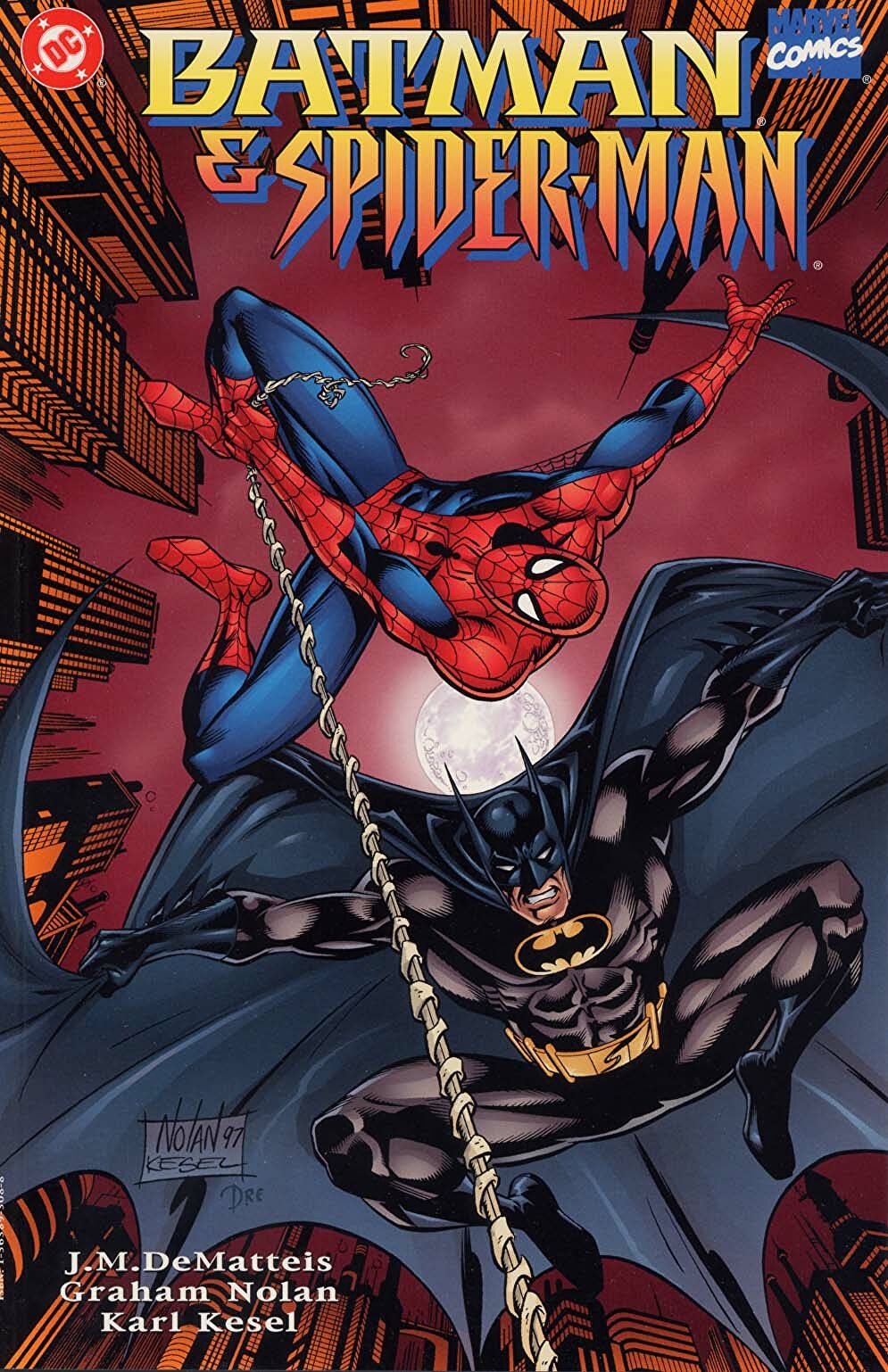
It’s easy to forget now but there was once a time when Marvel and DC would set aside their differences and their heroes (and sometimes, their villains) would team up. Spider-Man met Superman. The X-Men met the New Teen Titans. Darkseid met Galactus. Green Lantern met the Silver Surfer. Silver Surfer met Batman. Actually, a lot of Marvel heroes met Batman, everyone from the Hulk to Punisher to Daredevil to, again, Spider-Man. It makes sense. Batman, with his antisocial tendencies and his tragic backstory, had more in common with the typical Marvel hero than with Superman.
These events were never an official part of the Marvel or DC universe. Both companies eventually developed their own version of the multiverse and it was accepted that the Marvel/DC crossovers all took place in an alternate universe where Gotham City and Metropolis existed alongside Marvel’s version of New York City. Though these crossovers were not canonical, they always felt like a big deal. They were a chance to answer the age-old question of who would win in a fight, Batman or Spider-Man. It didn’t matter that the crossovers usually copped out on giving a definitive answer. Usually, the heroes would fight to a draw and then team up to battle the real enemy. That way both fandoms could be happy and there was still a reason to buy the next crossover.
The crossovers are something that will probably never happen again, not with the rivalry between the MCU and DCEU. It’s too bad because the crossovers were always enjoyable. The final Batman/Spider-Man crossover was called New Age Dawning and it was published twenty-five years ago, this month. Batman’s villain, Ra’s al Ghul, poisoned the wife of Spider-Man’s villain, Kingpin. Ra’s al Ghul thought he could blackmail the Kingpin into helping him sink the island of Manhattan. Instead, the Kingpin teams up with Spider-Man and Batman to defeat Ra’s plan. It’s a simple story but it ends on a note of grace, with Batman giving Spider-Man the cure for the poison and then Spider-Man taking it to the Kingpin. If the Batman/Spider-Man crossovers had to end, that was the way to end them, with two heroes coming together to do the right thing.
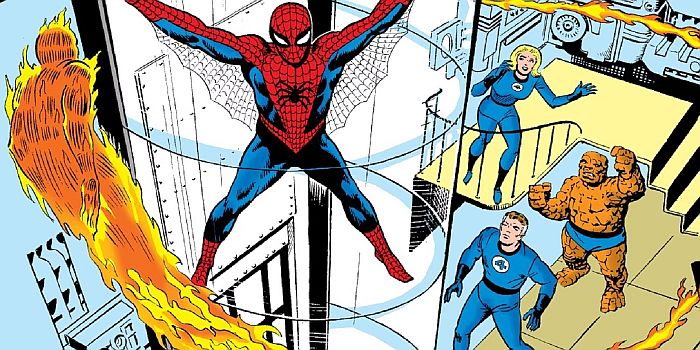
August 1st is celebrated as Spider-Man Day because Spider-Man made his debut in Amazing Fantasy #15, which was given an August, 1962 cover date despite hitting newstands in June. Though Amazing Fantasy ceased publication after the 15th issue, Spider-Man was a hit as a character and was on his way to becoming one of the iconic figures of the Marvel universe.
Spider-Man himself would not get his comic book until March, 1963 with the first issue of The Amazing Spider-Man. The majority of that issue featured Marvel’s newest hero battling the Chameleon, a Russian criminal who was committing crimes while disguised as Spider-Man! Of course, Spider-Man’s bad reputation didn’t start with the Chameleon. Especially in the early days of his career, people often assumed that Spider-Man was up to no good. (Having J. Jonah Jameson as an enemy didn’t help.) While all the other heroes were celebrated by the public, Spider-Man was always misunderstood. That’s one reason why readers identified with him.
Before battling the Chameleon, the continually cash-strapped Spider-Man tried to improve his situation by getting a job with the Fantastic Four.
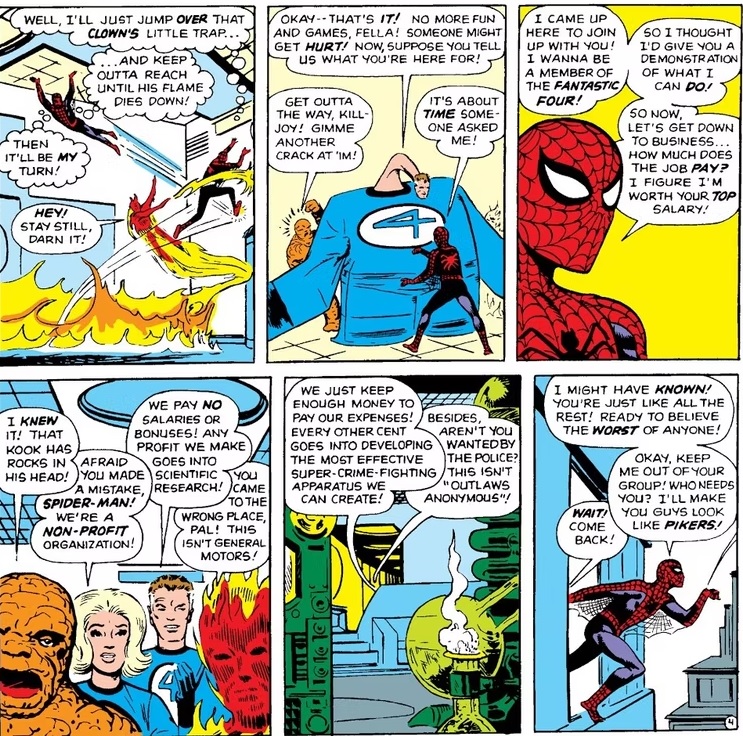
It didn’t go well. Spider-Man’s idea of a job interview was breaking into the Baxter Building and proving that he could hold his own in battle with each member of the group. Spider-Man proved that he could fight but Mr. Fantastic was not impressed, telling Spider-Man that the Fantastic Four were a non-profit organization and that picking a fight was not the way to get a job. Offended, Spider-Man announced that he didn’t need the Fantastic Four and left. Because Mr. Fantastic and the rest of the Fantastic Four always came across as being full of themselves, I am sure many readers agreed with Spider-Man. By swinging out of there, Spider-Man let his readers know that he didn’t need anyone’s approval.
Not only did this moment establish who Spider-Man was as a character but it also started a long Marvel cross-over tradition. Heroes would frequently meet each other, crossing over from book to book. They would often team up but, before they could do that, they always had to fight over a misunderstanding and trade insults. The moment that Spider-Man told off Mr. Fantastic was also the moment that the Marvel Universe first truly came to life.
Later, of course, Spider-Man and the Fantastic Four made up. Spider-Man and the Human Torch co-starred in several issues of Marvel Team-Up. But most readers will always prefer to remember Spider-Man telling Mr. Fantastic to get bent.
August 1st is Spider-Man Day. Despite this being the day that observes Spider-Man’s first appearance in the 15th issue of Marvel’s Amazing Fantasy, the trash is still being collected and the mail is still being delivered. Spider-Man Day is a holiday when no one gets any time off. I’m sure that the web slinger himself would appreciate the irony.
The appeal of Spider-Man has always been that he’s the hero who never feels that he’s done enough. He’s also the hero who is almost always unappreciated by the rest of the world. He’s the hero who often resents having to do his job but who still feels a responsibility to try to make the world a better place. Spider-Man is the superhero that almost everyone can relate to.
As far as television and movies go, every generation has gotten the Spider-Man that they deserved.
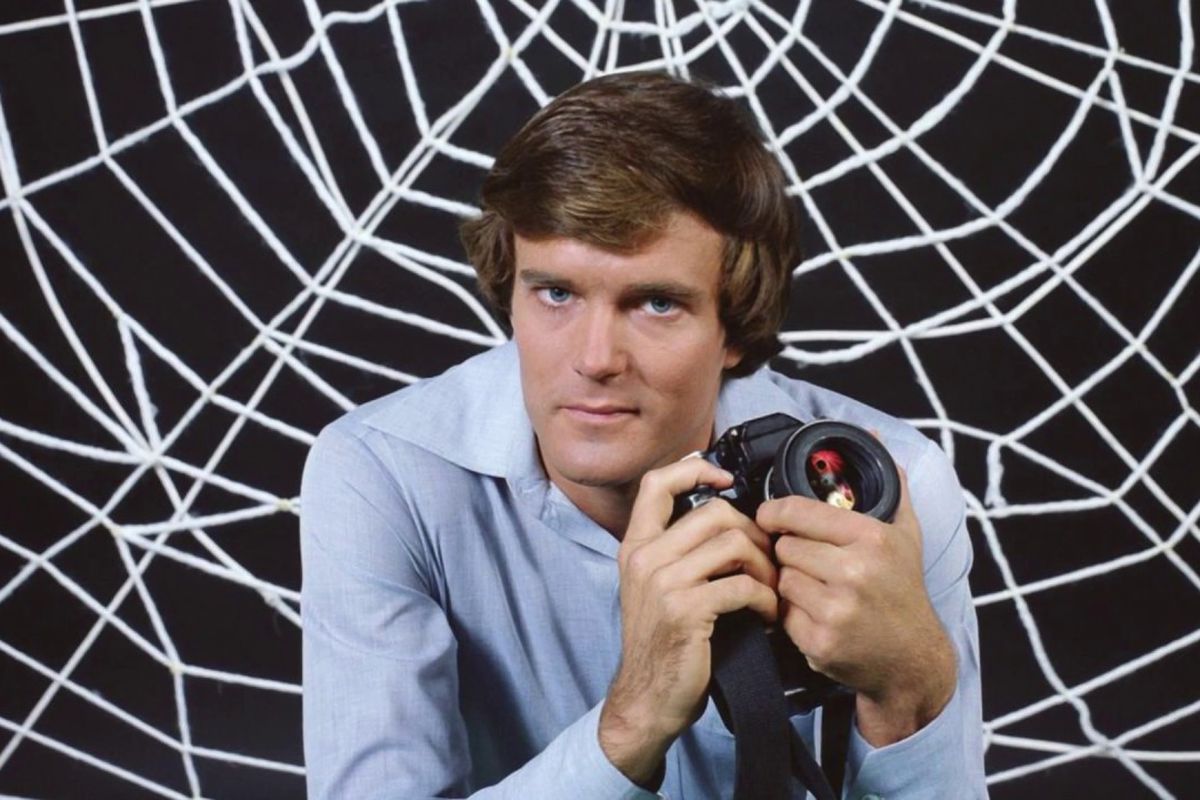
The boomers got Nicholas Hammond’s Spider-Man. Hammond played Spider-Man for two seasons in the 70s. He was a little boring but, from what I’ve seen, his show has a reputation for being worse than it was. Like the best of the boomers, Hammond’s Spider-Man could be stuffy but he got the job done.
Generation X got Tobey Maguire, who played Spider-Man in three films that Sam Raimi directed in the aughts. Like Generation X, Maguire’s Spider-Man was quiet but clever. Despite his quick wit, he was frequently neurotic and more than a little introverted but he always came through in the end.
Then, Andrew Garfield played the millennial version of Spider-Man. Angsty and awkward, Garfield’s Spider-Man was aware that society would never fully accept him, both as Peter and as Spider-Man. At times, it seemed like his every attempt at making things better somehow only made them worse.
And finally, the Zoomers have got Tom Holland’s Spider-Man, an earnest idealist who struggles with the fact that the world is more complicated than it seems. You can criticize him for being naïve but never doubt the sincerity of his beliefs.
All of the actors who played Spider-Man have done a good job and they all deserve praise. My favorite is Tobey Maguire but that’s largely because, having been born in ’82, I’m on the dividing line between Generation X and Millennial and I’ve always leaned more towards the Generation X side of things. Plus, I can relate to this:
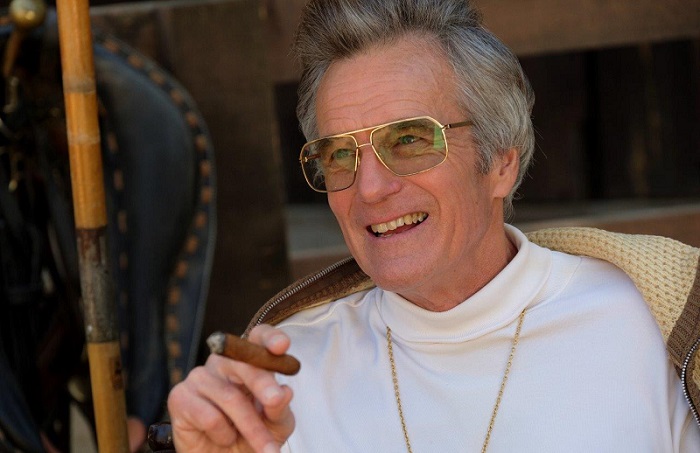
Maguire, Garfield, and Holland all came together to appear in the previous Spider-Man film, which I thought was a nice touch. I just wish Nicholas Hammond had been invited to join them.
Nicholas Hammond, as Peter Parker
Nicholas Hammond, Today
Having an older, perhaps retired Spider-Man joining forces with the Maguire, Garfield, and Holland versions of the character would have provided an extra-dimension to the movie, much as used to happen on Doctor Who whenever any of the previous incarnations of the Time Lord would meet the newest version.
Regardless of who plays him or whether he’s Peter Parker or Miles Morales, Spider-Man remains the hero to whom we can all relate. Spider-Man is all of us.
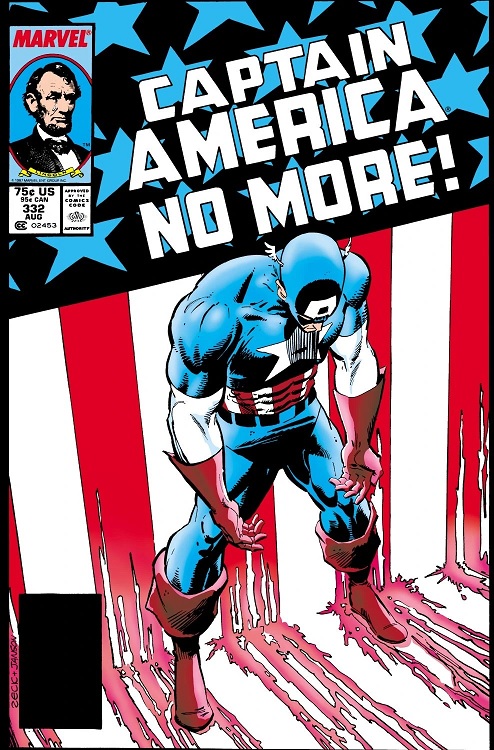
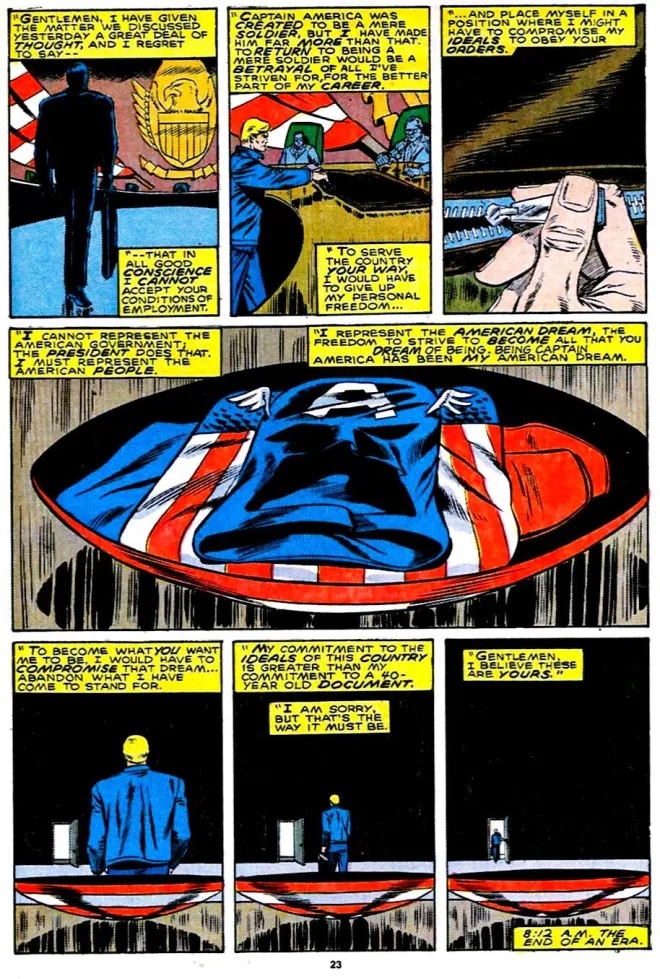
Captain America #332 (August, 1987) opens with Captain America, the living symbol of the USA, being summoned to the Pentagon. A group of faceless bureaucrats known as The Commission tell Captain America that it is time for him to become an official agent of the U.S. Government. They argue that Steve Rogers would not even be Captain America if he hadn’t enlisted in the armed forces and been injected with the super soldier formula. It’s time for Steve Rogers to stop acting as a free agent and serve his government. And, if Steve can’t do that, the Commission can find someone to take his place, someone who understands the importance of following orders. Maybe even someone like the Super-Patriot, who is busy fighting a group of terrorists while Steve is at the meeting.
Steve thinks it over and then does the only thing that his conscience will allow.
He quits.
Of course, this wasn’t the first time that Steve Rogers quit being Captain America. In the 1970s, he was so disillusioned to discover that the President was a part of a secret conspiracy that he resigned his commission and briefly called himself The Captain. Eventually, he returned to being Captain America, just as he would do the second time that he quit. After The Commission named recruited Super Patriot to carry the shield, Steve didn’t have much choice but to take it back.
Still, this moment defined what Steve Rogers was all about. He wasn’t about serving the government or enforcing anyone’s particular policy. He was about America and the ideals that he felt it should stand for. And if that meant defying his government, that’s what he would do.
It was a great moment.
Captain America Vol. 1#332 (August, 1987)
“The Choice”
Writer — Mark Gruenwald Penciler — Tom Morgan Inker — Bob McLeod Colorist — Ken Feduniewicz Letterer — Diana Albers Editor — Don Daley
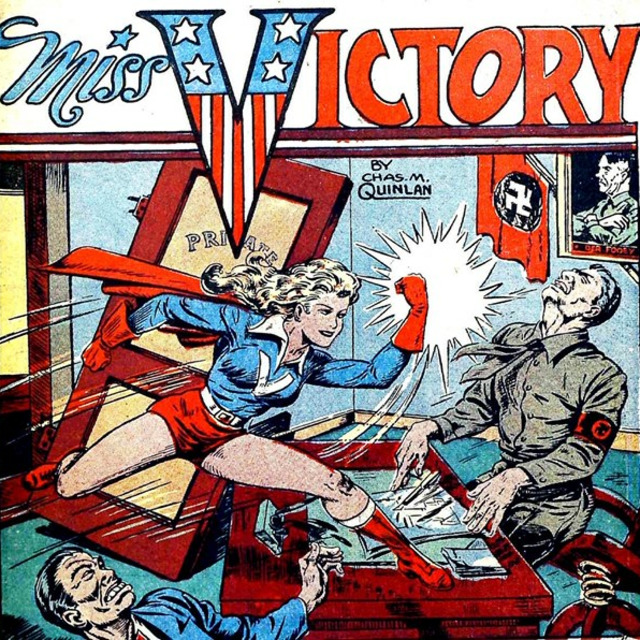
In the world of the comics, there were many costumed heroes during World War II. Everyone from Superman to Captain America to Captain Marvel did their part for the war effort, battling Nazis abroad and traitors at home. However, one of the first costumed heroes was unique because, in an age dominated by super-powered men, she was a woman who simply decided that she could better aid her country by wearing a costume and fighting its enemies. By day, she was Joan Wayne, a stenographer. But, when America’s enemies needed a good beat down, she became Miss Victory!
With this being Independence Day weekend, it seems appropriate to take a moment and pay our respects to one of the first female super heroes of World War II, Miss Victory!
Something tells me that if the late, great Steve Ditko didn’t harbor a sense of utter disdain for mysticism (I know, I know, weird considering he created the character of Dr. Strange) that he’d like David Tea’s comics : intricate bordering on the obsessive, singular in their approach, making little to no allowances for popular taste, and more than a trifle inflicted with/influenced by (depending upon one’s point of view) a kind of esoterically-flavored cultural and even political conservatism that probably doesn’t have much of a place in the MAGA clown car even though it shares at least a few of its goals, Tea strikes me as Ditko’s heir apparent and antithesis in almost equal measure, a “fellow traveler” who set out on a separate path. One that, crucially, doesn’t preclude the direct involvement of the supernatural in everyday life.
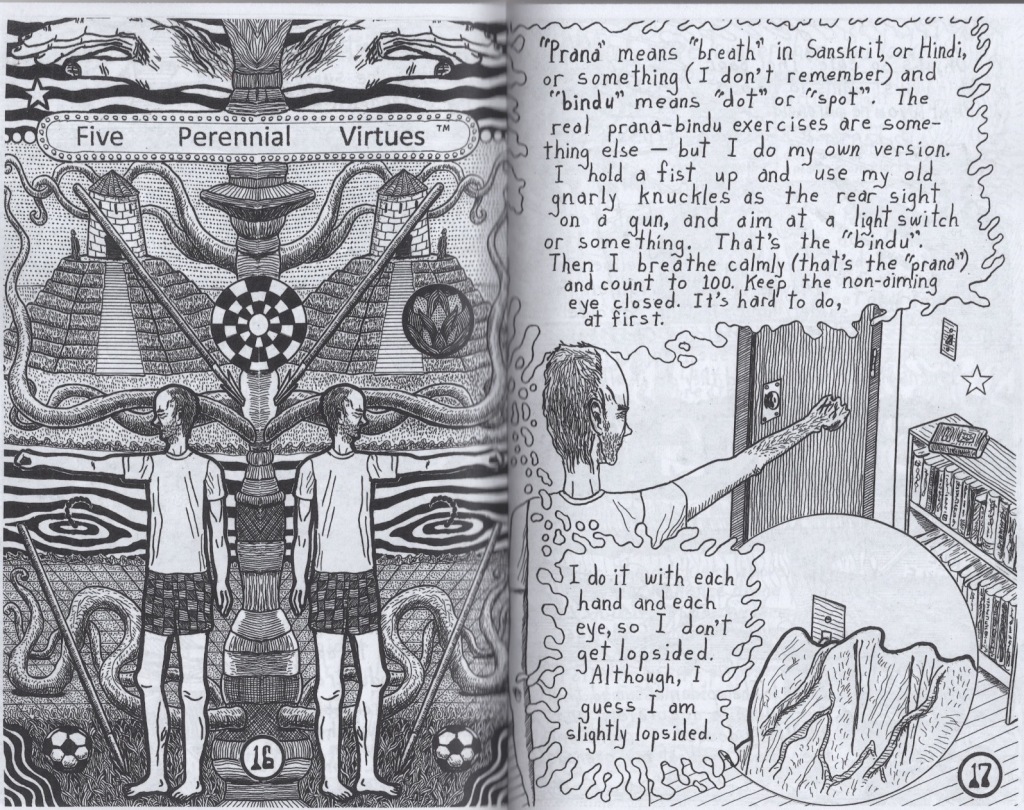
And, really, everyday life has always been — and remains — Tea’s focus, but he has a way of making even its most mundane minutiae seem interesting, alien, and altogether new. In the same way that a cat can be utterly enthralled with going after the same piece of string for the 10,000th time (and Tea has actually made a comic about that very subject), the unfolding episodic narrative that is Five Perennial Virtues can follow the same basic formula with entirely different results each issue.
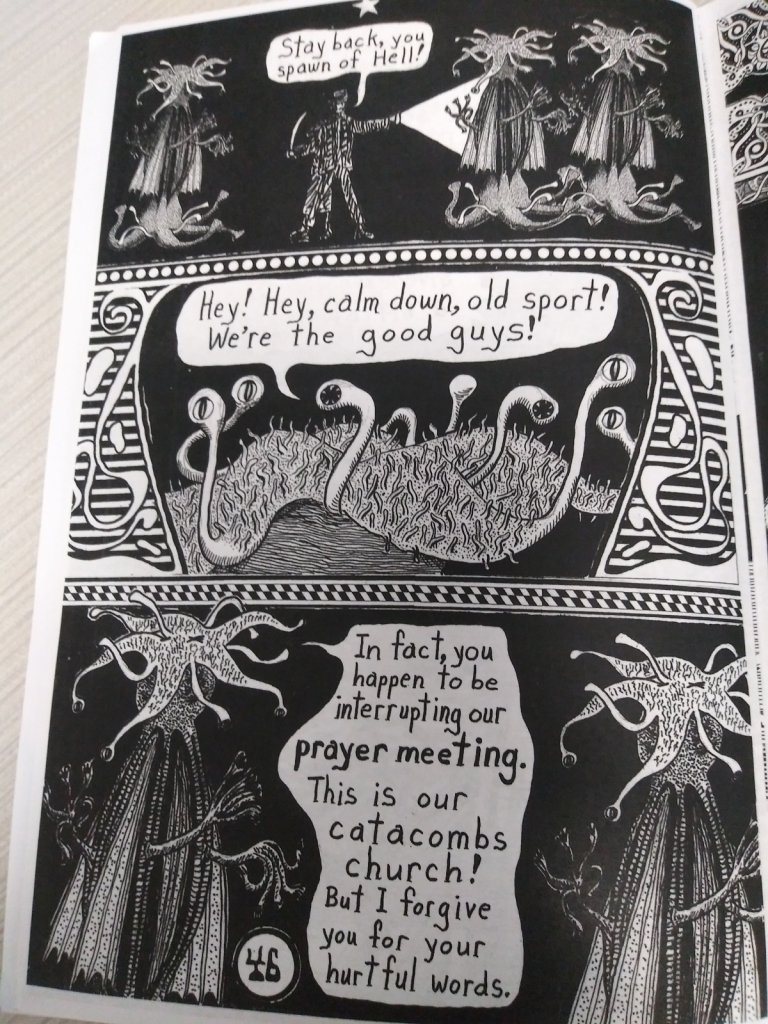
Although, in absolute fairness, “results” may not be what this comic is even after — as cliched as it is to say something is “all about the journey,” in this case it’s nevertheless absolutely true. Issue number twelve of Tea’s irregularly self-published series, subtitled “Pearl,” has just been released and is laden with explication, extrapolation, and explanation — some pages are quite literally a “wall of text” — and yet, as is the case with life itself, we’re no “further along” in many key respects at the end than we were at the start. Hell, it remains an open question how much of this narrative is “real” and how much is a “dream,” but the damned thing is : at some point you stop caring about such trivialities and just accept what’s unfolding on the page for what it is — whatever that may be.
For my own part, I’ve long since stopped trying to define what I term, in wholly unoriginal fashion, the “David Tea comics experience,” and just kind of surrendered to it. This isn’t work that takes a page from any particular playbook or stylistic tradition, but likewise it’s too well-versed in the tropes and trappings of sequential storytelling for me to feel comfortable labeling it as “outsider art.” Tea is clearly schooled in how comics have been made — in how, the narrow-minded would argue, they “should” be made — but either through conscious disregard of said strictures or distinct lack of interest in maintaining/perpetuating them, his work has achieved, and continues to build upon, a loose visual and narrative language entirely its own.
There is no mistaking a comic by this dude for a comic by anyone else.
It is, therefore, wholly accurate to say that the nuts and bolts of what’s happening in Five Perennial Virtues #12 can be summed up as : “disheveled (possibly homeless?) Dave meets an attractive and interesting young lady, behaves oddly, and weird things happen — plus fourth-wall-busting philosophical asides,” but the thing about truth and accuracy that makes it such a pain in the ass is that it’s far too confining to apply to art. And so, as with the set-up of one of Tea’s plots, I look at the entirety of these comics as a springboard to something else, some other way of observing life on the one hand but also experiencing it on the other. I don’t know if that’s the intention, but then I don’t know that Tea can be accused of even having something as pedestrian as an “intention” in the first place. I recall, for instance, asking him a few years back when I interviewed him what his titular five perennial virtues were, and he told me that he was still figuring that out — but that he was pretty sure that, yes, there were five of them.
Take a moment and let that sink in : with nearly two decades of cartooning under his belt — a point at which most of his “peers” think they’ve got more or less everything figured out — David Tea is still feeling his way forward, learning on the job, deciding both what the hell he wants to do with his art and how he wants to do it. And that, right there, is what makes his comics not only interesting, but vital. Time will tell if the repeating symbolism and Biblical asides of “Pearl” are things he returns to or discards in future issues — if this is a taste of things to come or a one-off aside — but we needn’t worry either way : Tea will do what feels right on the page at the time, just as he’s done here.
Just as he always has. After all, I don’t think it’s ever been about creating the so-called “perfect” comic with this guy : it’s about creating a comic that is perfectly itself. His always are.
Also, this review is “brought to you” by my Patreon site, where I serve up exclusive thrice-weekly rants and ramblings on the worlds of comics, films, television, literature, and politics for as little as a dollar a month. Subscribing is the best way to support my continuing work, so I’d be very appreciative if you’d take a moment to give it a look by directing your kind attention to https://www.patreon.com/fourcolorapocalypse











 Through the Shattered Lens