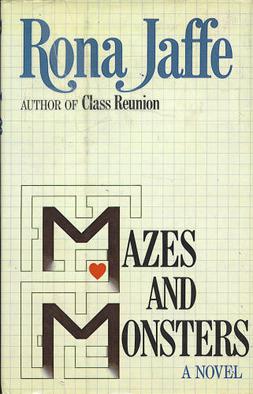
The 1981 novel, Mazes and Monsters, tells the story of four wealthy college students who deal with the ennui of being rich and privileged by obsessively playing a role-playing game called Mazes and Monsters.
That’s right! The game is Mazes and Monsters and most definitely not Dungeons and Dragons, even though both games are basically about people wandering around in dungeons and fighting monsters and searching for treasure. (For the record, I’ve never played Dungeons and Dragons or any other role playing game and I’ve never really had any desire too. That said, I did enjoy those episodes of Freaks and Geeks and Community.) One of the four players is Robbie Wheeling, who has never recovered from the death of his brother. When the players decide to move their game into the tunnels underneath their college, Robbie has a total break from reality and thinking that he actually is his M&M character, he flees to New York and lives on the streets. Desperate for money and food, he turns to prostitution but ends up stabbing the first man who picks him up. Agck! He never should have played that game!
Mazes and Monsters is usually described as being one of the key works of the 80s Satanic Panic and there’s certainly an element of that to be found in the plot. But the game is actually a fairly small part of the book. The majority of the book just deals with teenagers struggling with the transition of adulthood and figuring out where they belong in the world. The book isn’t quite as hysterical as its been described. If anything, the book almost makes the case that the game is helpful to the players in that it gives them an escape from all the ennui. Robbie was mentally unstable long before he played the game and it’s hard not to feel that something would have eventually set him off.
This is a rare case where the movie version is better than the book, if just because the movie features Tom Hanks as Robbie. Robbie mistaking a man for a demon and stabbing him? That’s really sad. Tom Hanks doing it? That’s cinematic magic!
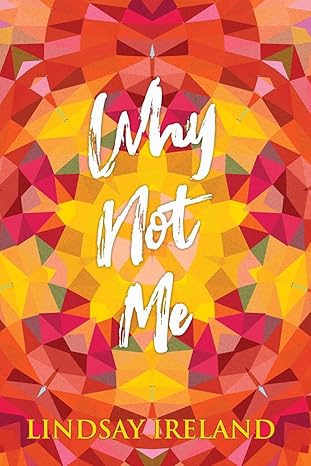
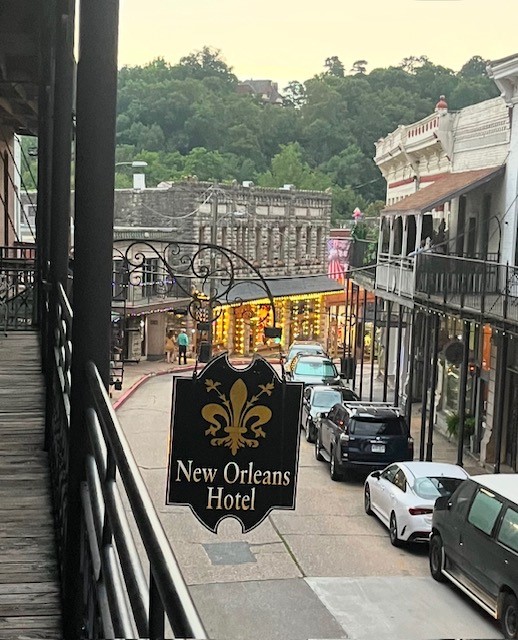
I don’t read that often for recreational purposes. When I do read, it’s usually books about my favorite actors, actresses, directors, or movies in general. But every now and then, a book will pique my interest, and I’ll pick it up. Back in the late spring of 2024, my partner on the “This Week in Charles Bronson” podcast, Eric Todd, made me aware of a book called WHY NOT ME, a memoir from Lindsay Ireland, the niece of Jill Ireland and Charles Bronson. Eric had made contact with Lindsay and the two had some preliminary discussion about her appearing on the podcast. Eric told me that she shared stories of her own life, which included her spending summers as a child on the Vermont ranch of her famous aunt and uncle. As a lifelong Bronson fan, it seemed the book could offer some valuable insight into the life of my movie hero. I figured I could spend some time trudging through Lindsay’s personal life if it allowed me to get those valuable nuggets of information on Bronson and Ireland. I went ahead and bought WHY NOT ME and took it with me when my wife, Sierra, and I were on a relaxing weekend in Eureka Springs, Arkansas. I settled in on the balcony of the New Orleans Hotel, which overlooks a section of the beautiful downtown area and started reading. Here’s a quick summary of the book taken directly from Amazon:
“Lindsay Ireland enjoyed an idyllic childhood. She spent her summers in Vermont with her movie-star relatives where she rode horses, played detective with her cousin, and drank ice-cold lemonade. After the summer months, Lindsay returned to her loving family where her biggest worry was getting good grades in school. Then one day Lindsay noticed blood in her stool. Suddenly instead of carefree afternoons swimming in a lake or dressing her Barbie doll, Lindsay spent months in a sterile hospital room receiving intravenous fluids and, eventually, a life-saving ostomy surgery. At age eleven, Lindsay was diagnosed with her first autoimmune disease, and her life was never the same. In this candid memoir, Lindsay evolves from a girl living with an autoimmune disease into a young woman struggling to love a body that has continuously failed her, and, eventually, into a mother and wife who has fought to make herself visible despite her invisible illnesses.”
As alluded to above, I was interested in WHY NOT ME because I wanted to read Lindsay Ireland’s stories about Charles Bronson & Jill Ireland. And I was certainly in awe as Lindsay spoke of her times with her Uncle Charlie, Aunt Jill and her cousins in Vermont. Reading about my movie hero from her perspective was something I appreciated tremendously. But what really blew me away with this book is how connected I became to Lindsay’s personal life events, struggles and triumphs. Lindsay funneled her memories and writings through a lens of “the power of perspective.” It’s through this perspective that Lindsay speaks of how important her family has been to her over the years as she’s faced the fear of serious health issues in both her childhood and again as an adult. She spoke of the importance of making a good match with a therapist, and how that has helped her over the years. She spoke of how important it has been for her to learn to speak of the difficult things in her life, even if they make her uncomfortable. Lindsay’s strength in writing is her ability to share her own insecurities, the ways that she has been able to overcome them, and then make you believe that you can overcome them to! I was able to relate to so many of the things she shared, and I can see how much my own life could have improved if I had done these things earlier.
The one thing that probably stuck with me the most, however, is when Lindsay spoke of how hard it was when she was dealing with some very difficult issues in her life, yet she felt unseen and unheard, even from those people who loved her, wanted the best for her and had good intentions. This is where I decided I need to make the most improvement in my own life. It seems we can get so caught up in our own feelings and concerns that the needs of others, even those we love, can be neglected. Sadly, I know that there are times that I don’t show the concern, empathy or compassion that I should to other people. After finishing WHY NOT ME, I am determined to make sure that the people I love never feel unseen or unheard, especially my wife. I fail at times, mainly because I can be a smartass, and my wife might even roll her eyes or tease me if she reads this, but I truly never want her to feel unseen or unheard again.
If you want to hear more directly from Lindsay, or maybe even hear me or my buddy Eric bare our own souls, I’ve attached our podcast episode again for your viewing / listening pleasure!
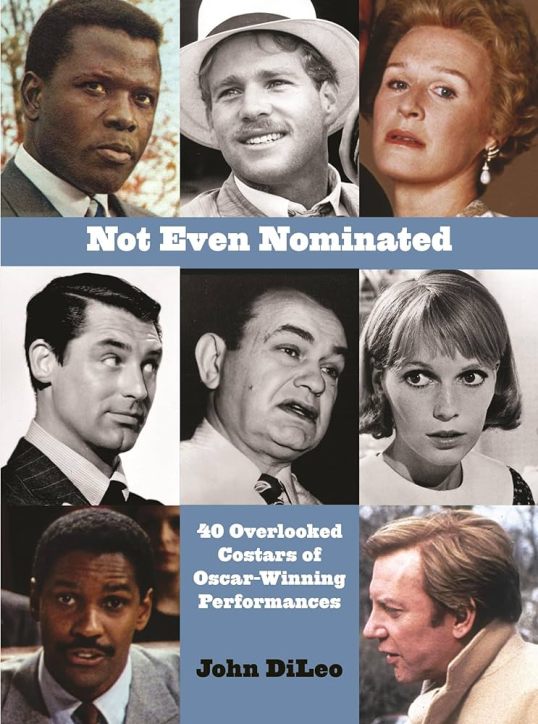
Rod Steiger won an Oscar for playing Chief Gillipsie in In The Heat of the Night but his co-star, Sidney Poitier, wasn’t even nominated. Despite the fact that Poitier delivered the line that everyone remembers — “They call me Mr. Tibbs!” — the Academy saw fit not nominate him alongside his co-star.
Timothy Hutton won an Oscar for his wonderful performance in Ordinary People but Donald Sutherland, cast against type as his conservative father and giving a heartfelt and heart-breaking performance, was not nominated.
In 1949, Walter Huston won a deserved Oscar for his performance in The Treasure of the Sierra Madre but, somehow, Humphrey Bogart was left out of the nominations.
Martin Landau was honored for playing Bela Lugosi in Ed Wood but Johnny Depp, playing the film’s title character, was ignored.
It’s something that has been happening since the announcement of the very first Academy Award nominations. Someone will win an Oscar and usually, they very much deserve it. Often, they’re a very popular winner because they’ve either overcome adversity or they’ve been nominated several times in the past without winning. But, in all the excitement over their victory, their equally worthy co-stars are overlooked.
John DiLeo’s Not Even Nominated takes a look at forty overlooked co-stars of Oscar-winning performers. Along with those that I mentioned at the start of this review, DiLeo also writes about performances from everyone from Charles Farrell in Seven Heaven to Cary Grant in The Philadelphia Story to Joseph Fiennes in Shakespeare in Love and Samuel L. Jackson in Django Unchained. Some of DiLeo’s picks are familiar to film lovers. The fact that Poitier wasn’t even nominated in 1968 despite starring in three popular and acclaimed films is something that has been discussed in many books and cultural histories. But DiLeo also gives some time to some equally strong performances that aren’t always cited, like Ryan O’Neal’s performance in Paper Moon and Dirk Bogarde’s turn in Darling and Stephen Boyd’s brilliant (and rather brave) work in Ben-Hur.
It makes for interesting reading. (It helps the DiLeo has an opinionated but enjoyable writing style.) For Oscar obsessives like you and me, it’s a must-have.
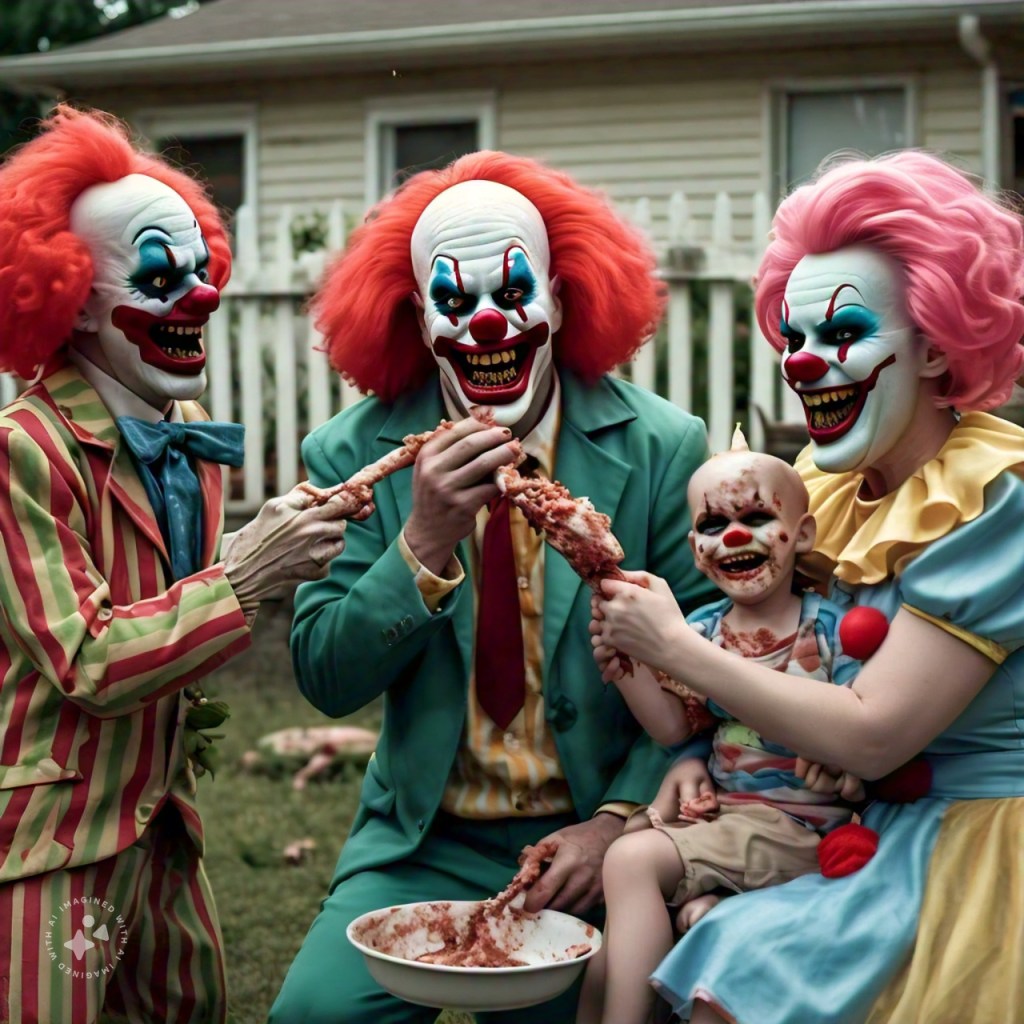
Clowns – nature’s murderers! Today, we’re going to discuss Clowns. Where do they come from? What is their life cycle? And of course, why are they even a F#@%ing thing?!!!
Feel encouraged to read this article in the voice of David Attenborough.
Clowns have a unique life-cycle.
They are always born in Vermont because they nest amongst the maple trees.
They begin as evil infants. At age 4, they get their first taste of human flesh, typically a kind neighbor who eats Pepperidge Farm cookies and has a spouse who makes way too many apple pies.
Then, they have their awkward teen years.
At this age, they’ve had their first kill and purchased at least one Bernie Sanders t-shirt and experimented with cannibalism or as they put it “Neo-Paleo” *groan*. They refer to the homeless as “Free Range” and Vegans are “Grass-fed”.
Clowns enter their Adult phase.
At this phase, they move to the suburbs for fatter, slower victims and, of course, better schools.
In their older years, they become solitary murderers and keep up on current events.
It is unknown to science why clowns are even a thing. I mean, we have tigers and things like that already and they’re scary enough. Is it really necessary to put makeup on a predator to be nightmare fuel at a kid’s party? I would vote no.
Happy Halloween and try not to be eaten by a clown.
In 1960s, Lester Bullard lives alone in the mountains of Tennessee. Abused as a child and scorned as an adult, Bullard is the type of person that most people try to ignore. He’s angry, bitter, and not all that knowledgeable about the world outside of his own fevered imagination. Having been evicted from his home, he moves into an abandoned shack where he spends his time voyeuristically watching the teenagers who sneak off to the isolated mountains so that they can fool around in their cars without being harassed by the grown-ups. When Bullard stumbles across two dead bodies in a car, it doesn’t so much send him on a downward spiral as much as it just accelerates the only fate that can be waiting for someone like Lester Bullard. Bullard does some truly disturbing things but, as the narrator reminds us, he’s “a child of God, much like yourself perhaps.”
(No, definitely not like me! Though I do get the narrator’s point.)
First published in 1973, Child of God was Cormac McCarthy’s third novel. It tells a disturbing story and one that will leave readers unsettled. Inspired by the type of macabre tales that used to be told around campfires, it’s a novel of cold, gothic horror. McCarthy’s prose creates such an atmosphere of darkness that it’s difficult to read the novel in one sitting. You almost have to put the book down so you can step outside and take a deep breath after some of the more grotesque moments. Child of God is also a character study of a man living on the fringes of what most people would already consider to be the fringe of society. Just as the people living on the East and West Coasts have rejected the citizens of Appalachia, Appalachia has rejected Luster Bullard. The book links Bullard to the violent history of Appalachia, with the Bullard family having been involved in many of the feuds that helped to define the region. McCarthy’s matter-of-fact prose serves to make Bullard’s crimes all the more disturbing, with McCarthy refusing to give the reader the easy out of a traditional, guns-blazing ending. Bullard’s ultimate fate feels almost as random as his crimes, challenging the idea of any sort of karmic justice. In the end, Bullard is destined to become another barely-remembered regional legend, like Ed Gein or the Bloody Benders. By telling his story without a hint of melodramatic excess, McCarthy leaves the reader with no choice but to consider that the world is full of real Lester Bullards.
I read 1988’s The Lifeguard earlier today. It’s a fast read, which is always a good thing.
The book tells the story of teenage Kelsey, whose father has just died and whose mother is already getting ready to marry her new boyfriend, Eric. Personally, I think mom is moving a bit too fast but then again, Eric’s rich and he invites Kelsey and her mom to spend the summer on Beverly Island. Kelsey makes new friends. She meets the people who might soon become her stepsiblings. She develops a crush on two of her potential stepbrothers, shy Justin and the intimidating Neale. And she gets involved in a potential murder when Beth, yet another of Eric’s children, disappears. Did Beth drown or did she fall victim to the killer of Beverly Island?
This book was so silly. Can Kelsey solve the mystery? Even more importantly, can Kelsey decide which one of her future stepsibilings she wants to date? Justin seems nice but Neal is so dark and mysterious. Can Kelsey figure out why the mysterious old man keeps yelling at her? Could he be the killer? He seems like kind of an obvious choice but Kesley might as well go ahead and break into his boat just to be sure….
Apparently, this book is considered to be a bit of a cult classic, solely because of the cover. And the cover is pretty cool. The book itself is nothing special but I probably would have appreciated it more if I hadn’t already read countless old school YA books with the exact same plot. I can only guess the R.L. Stine read The Lifeguard at some point.
This book also wins some points from me for having a ludicrously “happy” ending. Everything works out even though, to be honest, nothing should have worked out. Kelsey should have been traumatized for life and whatever plans her mom had to marry Eric should definitely have been cancelled! Seriously, there’s some things that not even the best of relationships can survive! That said, the ending was so over-the-top and — here’s that word again — silly, that I couldn’t help but appreciate it.
Since today would have been the 84th birthday of John Lennon, I want to take a minute to recommend a book called Revolution In The Head.
First published in 1994 and subsequently revised two more times, Revolution In The Head is both a chronological history of the songs that the Beatles recorded and a cultural history of the 60s. By examining the recording of each song, Ian MacDonald not only describes how each song reflects (or doesn’t reflect) what was happening in the group at the time but also how the Beatles’s changing sound reflected what was happening in the world at the time. Author Ian MacDonald was clearly a Beatles fan but, more importantly, he was not an apologist and, in the book, he’s just as quick to criticize as he is to praise. While he praises the majority of the band’s recordings, there’s more than a few that he totally dismisses. It’s a well-researched and passionately argued book, one that makes interesting reading for both fans of the group and history nerds like myself.
As for the Beatles themselves, they come across as fully developed people. MacDonald neither idealizes nor demonizes the group and instead focuses on the idea of them as working musicians who usually collaborated well together as a group but sometimes feared and resented that they were losing their individual identities. Neither Lennon nor Paul McCartney are presented as being saints and MacDonald doesn’t shy away from showing how frayed their relationship had become by the time the group split up. (They’re portrayed as developing a classic love/hate relationship with each other.) But both are also presented as being talented artists who were capable of creating beautiful music that would survive the test of time. For all the conflict and for all the times that Lennon complained about McCartney’s commercial sensibilities and for all the times that McCartney complained that Lennon was not committed to keeping the Beatles going, they were still capable of creating songs like Eleanor Rigby and A Day In The Life.
A lot of Beatles fans will probably disagree with MacDonald’s opinions. He’s surprisingly dismissive of a lot of George Harrison’s songs, including the wonderful While My Guitar Gently Weeps. But that’s okay! There’s nothing wrong with having differing opinions. It’s actually a good thing.
Dangerous work is being done at the Coppelmier Center For Disease Control. In an underground lab that sits beneath a major American city, three scientists are working on creating the ultimate biological weapon. That’s definitely not a good thing, especially when you consider that the city in question is Los Angeles and Los Angeles has a history of getting hit by earthquakes. You would think that Dr. Leo G. Coppelmier would have understood that building his underground bio weapon lab in a place known to randomly and violently shake was a bad idea. But Dr. Coppelmier is a wealthy genius and he wants to do things his way.
Of course, an earthquake does hit. And, of course, a really dangerous plague is set free. Soon, a horrifying creature with claws is killing people all over Los Angeles, removing their heads and their spinal columns and leaving the bodies in the sewers. (Yuck!) Could this be related to the earthquake and the mutated virus that was set free as a result? Of course it does …. but good luck getting the powers-to-be to admit it! The government would always rather cover up a problem than admit they played a role in creating it.
Reporter Bill Quinn is determined to discover and reveal the truth and he’s got two scientists and his best friend helping him out. But will he be able to track down and stop the killer before the plague is spread even further?
Published in 1987, Aftershock is a quick and pulpy read, one that feels like a gory throwback to the B-movies of the 50s and 60s, the ones in which some scientist would make the mistake of trying to play God and end up getting transformed into a fly or a member of the Alligator People. The subtext of those movies always seemed to be that it was dangerous to look for too many answers and that scientists should stop trying to change things just for the sake of changing them. The subtext of Aftershock is not quite as reactionary, instead it just suggests that it’s dangerous to build a bioweapon lab on the San Andreas fault and I agree with that. Aftershock is a violent and bloody tale that holds your attention and offers some genuinely frightening imagery. Reading it today, it’s hard not think about the fact that COVID undoubtedly escaped from a lab as well. After everything that we, as a society, have been through over the past four years, books about mad scientists and poorly-planned lab schemes hit a little bit differently nowadays.
Just from the cover, you would think that The Mall, which was first published in 1983, was a horror novel about a bunch of shoppers getting trapped by a collection of angry spirits whose slumber was disturbed by the titular building being constructed on an ancient burial ground.
Or you might think that The Mall was a sci-fi story in the style of Jim Wynorski’s Chopping Mall, in which The Mall of the Future turned on shoppers and refused to let them escape while a bunch of robots struck a blow for machine rights everywhere.
That’s certainly what I thought when I came across this book and spent a few minutes starting at the cover at Half-Price Books a few months ago. The cover seemed to show a man melting as he tried to open the doors of the mall! I mean, seriously, who wouldn’t be intrigued by such a horrific image? (If I did die at a mall, I would hope that I would at least die in an expensive store so people would be impressed when they heard.) I bought the book because of the cover and the cover is why I waited until horrorthon to read it.
Unfortunately, it turns out that the cover is the best thing about the book. It’s not really a horror novel, either. Sure, it’s listed as being a part of the horror genre on every online listing that I’ve found for it but the book itself is more of a Die Hard rip-off. (Yes, the book was published before Die Hard even went into production but that’s the power of Die Hard! It was being ripped off before it even existed.) The plot is that The Mall is a state-of-the-art playground for the upper and middle-classes. It was built by Mel Goodman, an industrialist who built himself up from nothing. On the same day that Mel is having his birthday party in the mall’s offices, his former employee, Jeffrey Prince, leads a group of criminals in an armed but surprisingly dull takeover of the mall. Prince threatens to kill everyone unless his financial demands are met. Unfortunately, no one can escape or enter the mall because the doors, I kid you not, have been superglued shut!
The frustrating thing about The Mall is that we are told that there are 40,000 people in the mall. And yet none of them really try to do anything to thwart Prince’s plans. Instead, they just wait patiently and some even continue to shop. That might seem like a satirical commentary on American consumerism but this isn’t half as clever (or emotionally resonant) as Dawn of the Dead. If anything, it’s the literary equivalent of one of those disaster films where a bunch of different people find themselves trapped in one location and they deal with their personal issues while waiting for the crisis to end. I’m a little bit surprised this was never turned into a made-for-TV movie.
In the end, it’s not a very good book but the cover continues to haunt me. Seriously, let that man out of the mall before he dissolves!
A friend of mine recently sent me Eric Roberts’s just published autobiography as a gift. I was excited because, as any of our regular readers know, I am a huge fan of the insanely busy Eric Roberts. That said, I wasn’t really expecting much from the book because most Hollywood autobiographies that I’ve read have had a tendency to be a bit dry. Often times, the author (or their ghost writer, as the case may be) is either too concerned about not offending anyone or too bitter about the state of their career to really provide much honest insight into their life or their chosen profession.
Eric Roberts, however, is the exception to the rule. Runaway Train is a fascinating read. Roberts comes across as being very honest about his career, his demons, his family, and his compulsive need to always be working. Roberts admits to being a workaholic but, as he explains it, it’s better to be addicted to acting than to be addicted to cocaine. And I have to say that I think he has a point there.
Roberts writes about his dysfunctional childhood, his time as a star, and his more recent career as an actor who is willing to appear in just about everything. He writes about his addictions and how they almost ruined his life. He writes about his marriage to Eliza and fully takes responsibility for all the times that he’s screwed up. (Roberts screwing up is a recurring theme throughout the book, almost to the extent that you just want to give the guy a hug and tell him to stop being so hard on himself.) He writes about the time that he spent as a patient of Dr. Drew on Celebrity Rehab. (In perhaps the book’s funniest moment, he realizes that he needs to be addicted to something if he’s going to go on Celebrity Rehab. Eventually, he agrees to go on the show for help with his marijuana addiction, despite Roberts belief, which I agree with, that you can’t actually get addicted to marijuana.) Roberts writes about some of his films, though he obviously can’t write about all 700 of them. So, while there is no Top Gunner trivia, there are three pretty interesting chapters devoted to Star 80, The Pope of Greenwich Village, and Runaway Train.
Roberts does write about other celebrities, though he does so in a way that is neither petty nor obsequious. He writes about his friendship with Robin Williams with an honesty that few other celebs would be willing to risk. Danny Trejo, Eddie Bunker, Mickey Rourke, Christopher Walken, Sterling Hayden, Doug Kenney, Sharon Stone, Rod Steiger, and Sylvester Stallone all show up at one point or another. And yes, Eric Roberts does write about his relationship with both his sister Julia and his daughter, Emma. Eric is open about he and Julia having been occasionally estranged but he manages to do so in a way that protects everyone’s privacy. One might never expect this from some of the roles that he’s played but Eric Roberts comes across as being a pretty classy, if somewhat eccentric, guy.
I loved this memoir. I recommend it to all of you.