Horror Book Review: ‘Salem’s Lot (by Stephen King)


“Within, walls continued upright, bricks met neatly, floors were firm, and doors were sensibly shut; silence lay steadily against the wood and stone of Hill House, and whatever walked there, walked alone.”
—Shirley Jackson, The Haunting of Hill House

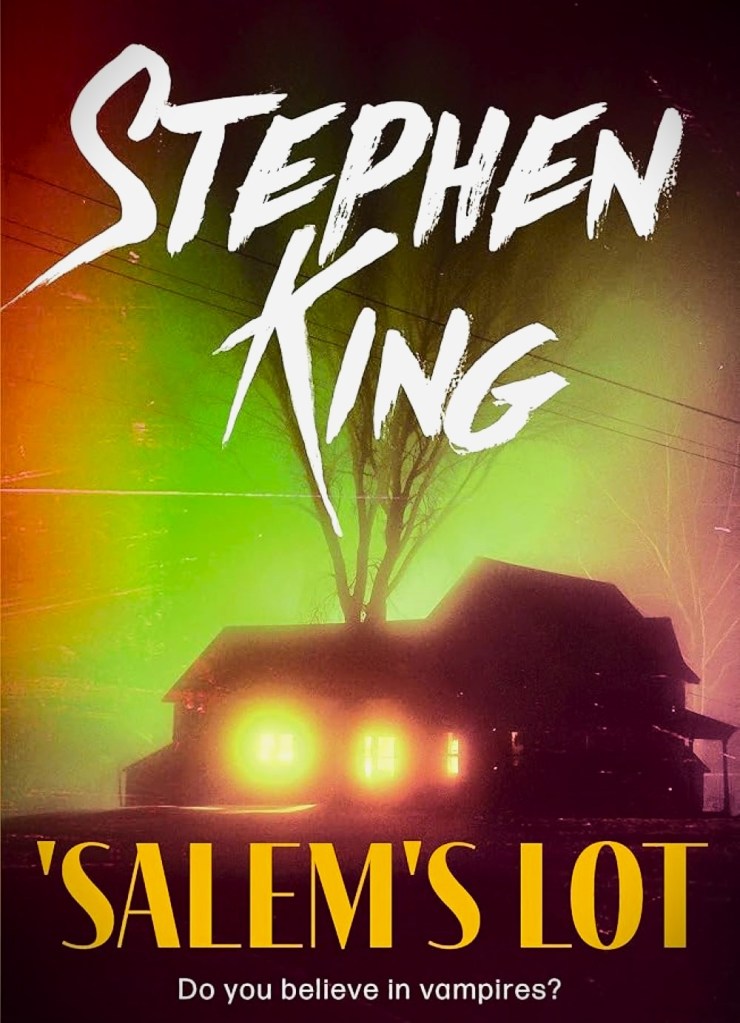
Stephen King’s Salem’s Lot opens with an unsettling and bold narrative choice. Instead of introducing the main characters or setting a conventional stage, the novel begins by showing two nameless figures—an older man and a younger companion, burdened by events already passed. These itinerants are fleeing a terrible evil, seeking refuge in a small Mexican village, suffused with mystery and dread. This brief but cryptic prologue hooks the reader immediately with a pervasive sense of unease and unanswered questions: who are these men, and what horror haunts them so far from home?

This unsettling beginning is not only risky but masterful. King, in just his second published novel, chooses to forgo straightforward exposition and instead promises that the narrative will move backward, retracing the dark events that led to this moment of flight and loss. The prologue casts a shadow into the past, preparing readers for a story where the darkness is already present and will only deepen.

Rewinding, the narrative places us in the small New England town of Jerusalem’s Lot—known to its inhabitants simply as “The Lot”—a quintessential small town in 1970s Maine. Here, Ben Mears, a novelist haunted by childhood trauma centered on the forbidding Marsten House, returns home with the intention of writing about the old mansion. The Marsten House is not just a setting; it is a malignant presence perched over the town like an ominous sentinel. Ben’s youth intrudes everywhere in his memory of that house—a place where something unknowable once touched him—and now, as an adult, he confronts both that past and the house again, its shadow casting unease over the town.

Ben isn’t the only arrival. Richard Straker sets up an antique shop, accompanied by his rarely seen partner, Kurt Barlow—an inscrutable figure whose very mention deepens the novel’s pervasive tension. King reveals Barlow’s presence slowly and indirectly, heightening the atmosphere without immediate confrontation.

King excels at immersing readers in the rhythms of small-town life. Through detailed observation of everyday routines, gossip, and personalities, he crafts a believable, textured community. Each townsperson—whether skeptical official, gossip-prone neighbor, child, or elder—is vividly realized, not as a simple archetype but as a living, breathing individual. Yet beneath this surface of normalcy lurks a pervasive darkness: secrets, resentments, and moral frailties accumulate like hidden mildew in the town’s corners.

In this, Salem’s Lot evokes the spirit of Peyton Place, the classic fictional small town where scandal and hypocrisy fester beneath neighborly facades. King’s Jerusalem’s Lot feels like a much darker cousin—a town where those faults and hidden sins once fodder for gossip become the very soil from which real, supernatural evil springs. While Peyton Place explored human failings within social dynamics, Salem’s Lot reveals how those failings create openings for Kurt Barlow’s vampiric menace. The town’s insularity, mistrust of outsiders, and collective denial become liabilities dooming it—not just morally, but existentially.

At the heart of this encroaching nightmare stands the Marsten House, a building elevated beyond mere backdrop into a living entity. Like Shirley Jackson’s Hill House, Richard Matheson’s Belasco House in Hell House, and King’s own later Overlook Hotel, the Marsten House is steeped in decades of violence and evil. Its walls seem to soak up past horrors; its windows serve as more than architectural features—they are eyes into the house’s dark soul. This physical presence is sinister and predatory, complicit in the nightmarish events it enables. To enter the house is to step into something corrupt and breathing, an organism as alive and malign as the vampire it conceals.

What makes Salem’s Lot especially powerful is how King integrates the supernatural into the texture of daily life. The fantastical elements do not feel imposed or alien but grow organically from the social dynamics, habits, and vulnerabilities of this small town. The horror is inevitable precisely because it grows from recognizable human weaknesses and communal blind spots. This fluid blending invites readers to experience terror as an intimate shattering of the ordinary, a disruption of the familiar.

Relationships anchor the emotional core of the narrative. Ben’s romance with Susan Norton, the steady wisdom of Matt Burke, the youthful courage of Mark Petrie—their humanity keeps the terror grounded and poignant. As vampirism spreads, these bonds are tested and shattered. Community, which once defined the town’s identity, fractures under suspicion and fear. Friends become threats; homes become prisons.

The looming Marsten House is a perfect emblem of this dual threat: a predator perched within the community itself. As Barlow turns neighbors into monsters, the house’s silent complicity looms ever larger. It is as much a character as any human, a sentinel feeding on the decay of place and spirit alike.

As the novel hurtles toward its climax, King heightens the tension with vivid, claustrophobic scenes inside the haunted mansion. The house’s corridors and rooms twist into traps, its atmosphere suffocating and oppressive. King’s mastery of sensory detail brings a visceral dimension to the horror, blending psychological terror with physical menace.

The conclusion returns to the somber tone of the prologue. Although some survive, the town is hollowed out—a ghostly husk abandoned to darkness. Evil is not eradicated but waits patiently, ready to thread its way back through the cracks. The cycle of horror, loss, and exile continues.

Stephen King’s unique strength in Salem’s Lot lies not only in his richly developed characters and finely drawn community but in how seamlessly he introduces supernatural horror into what reads like a real-time study of small-town life. The fantastical elements grow naturally from the social fabric, making the terror feel inevitable rather than contrived. This synthesis of realism and fantasy deepens the novel’s power.

King’s portrayal of Jerusalem’s Lot as a place rotting from within yet clinging to its veneer of normalcy offers a chilling echo of Peyton Place. But while Metalious’s town suffocated under scandal, Salem’s Lot is consumed by predation—the vampire feasting not only on blood but on the fractures of belonging and trust. It is both eerily familiar and profoundly alien: a place where monsters live not just in shadows, but in whispered suspicions and buried sins.

Through this blend of gothic haunted-house traditions, social critique, and psychological realism, Salem’s Lot endures as a masterpiece of horror. The Marsten House is not merely a setting but a sentinel, symbolizing accumulated evil watching over a doomed community. King’s novel terrifies not only with its monsters but with its intimate knowledge of how everyday life can harbor the seeds of nightmare beneath a calm surface.

Horror Review: Audition (dir. by Miike Takashi)


Takashi Miike’s Audition premiered in 1999 at various international film festivals before receiving a limited theatrical release in Japan in 2000. Before this film, Miike was largely known in Japan as a director of gritty, often hyper-violent yakuza cinema, with films like the Black Society Trilogy defining his reputation. However, Audition introduced him to the world stage in a way that shocked and captivated audiences beyond Asia. It was a major step in bringing Japanese horror, or J-horror, into the international spotlight, specifically to Western viewers who had limited exposure to this distinct style of horror. While filmmakers and cinephiles such as Quentin Tarantino and Eli Roth had been fans of Miike’s earlier works, Audition was a revelation that displayed a more complex, restrained, and deeply unsettling side of Japanese horror cinema that was largely unknown to general audiences in the West.

At first glance, Audition presents itself as a simple, quiet domestic drama. The film opens with Shigeharu Aoyama, played with a gentle dignity by Ryo Ishibashi, visiting his terminally ill wife in the hospital. This opening scene is tender and somber, establishing the emotional core of the film: a man grappling with loss. The narrative then leaps seven years forward, showing Aoyama as a widower still mired in grief, living a lonely life with his teenage son, Shigehiko. Shigehiko, sensing his father’s emotional paralysis, urges him to begin moving on with his life, encouraging him to date again and escape the depression that has enveloped him since his wife’s death.

The inciting moment comes when Aoyama’s friend Yasuhisa Yoshikawa, a film producer played by Jun Kunimura, proposes a peculiar solution: to hold an audition for a fictional TV drama, the real purpose being to discreetly find a woman who could be compatible with Aoyama as a partner. The auditions, while framed as a casting call, are frankly a thinly veiled matchmaking scheme. Although initially awkward and even comical in its premise, the auditions soon reveal a darker subtext—the women are not treated as individuals with their own hopes and desires, but rather as pieces in a man’s recovery process. This treatment subtly exposes lingering misogyny entrenched within the social fabric, where the women’s autonomy is overlooked and they are reduced to roles to be performed and judged purely on superficial criteria.

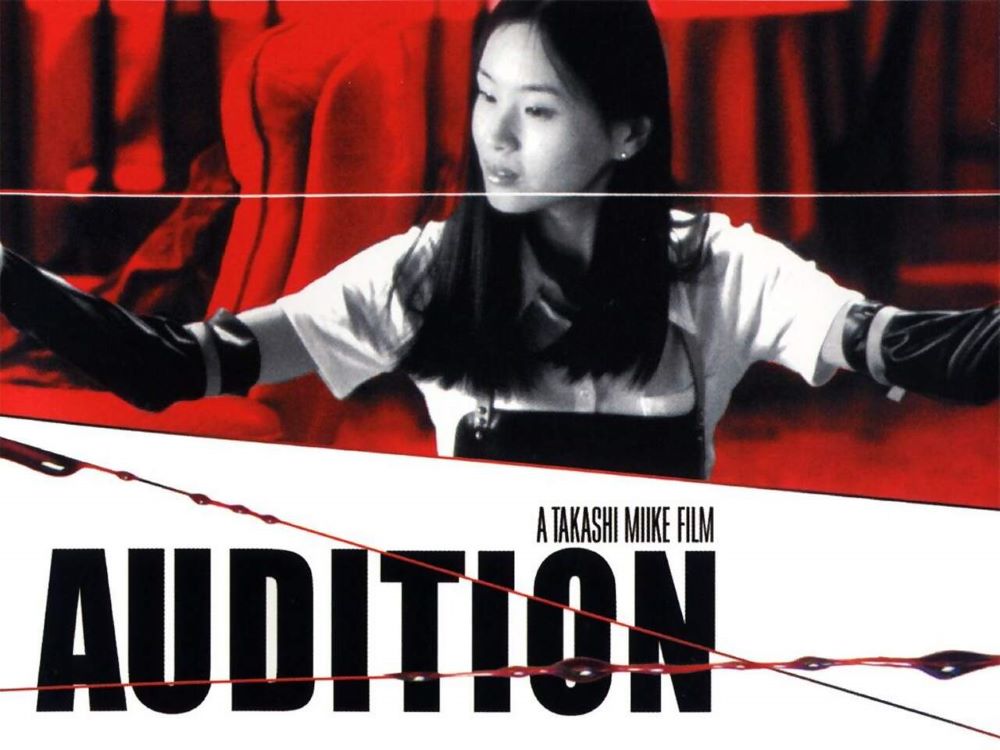
Among the candidates, one young woman stands out: Asami Yamazaki, portrayed with chilling serenity by Eihi Shiina. Asami, with her soft-spoken voice and seemingly delicate demeanor, instantly captures Aoyama’s attention. She shares a tragic backstory about her abandoned dreams of becoming a ballerina, cut short by a debilitating injury. This combination of fragility and mystery pulls Aoyama in, despite the warnings from Yoshikawa, who finds suspicious gaps in her background and troubling connections to violent incidents. What makes Asami particularly intriguing is the way Miike shapes her character with a complex duality. Outwardly, she embodies calmness and grace, which is visually reinforced through her wardrobe choices. She is often dressed in white—a color traditionally associated with purity and innocence—but she also frequently dons black latex over her white clothing. This contrast of white and black on her outfit manifests her dual nature: the peaceful façade masking a darker, far more dangerous interior.

This juxtaposition of colors is a subtle yet powerful artistic choice. It visually hints at her character’s concealed capacity for violence and control beneath a serene exterior. The black latex signals strength, mystery, and something potentially sinister, while the white suggests vulnerability and fragility. Asami doesn’t scream threat or menace; instead, she radiates an almost hypnotic calm that belies the storm hidden underneath. This visual storytelling complements the slow-building tension of the film, where the audience is continuously reminded to question appearances and expect unsettling surprises beneath the surface.

For much of the film’s first hour, Audition presents itself as a slow-burning romance between two emotionally damaged people. The pacing is unhurried, and the tone is understated and reserved, encouraging viewers to settle into the seemingly bittersweet story of a man tentatively trying to open his heart again. Yet throughout, subtle details apply pressure on this comfortable façade: Asami’s unblinking stares, her quiet stillness, and the unsettling sight of the large burlap sack sitting ominously in her sparsely furnished apartment speak volumes in silence. Miike shows a masterful ability to create an overwhelming sense of horror and dread from this sparse setting—just Asami, a burlap sack, and a phone lying on the floor become enough to chill the viewer deeply by their sheer mysteriousness and the ominous possibilities they evoke. The emptiness of the room forces attention on the few elements present, making the audience fill in unseen horrors with imagination, intensifying the tension without a single loud noise or burst of action.

The horror emerges gradually, not as a sudden rupture but as an inevitable revelation. As the film progresses, Asami’s cracks in the façade deepen, and the audience is led to an increasingly dark place where it becomes clear that almost nothing is as it seems. When the violence finally explodes, the tone shifts entirely. Miike keeps the camera steady and calm while the terror unfolds with surgical precision—a terrifying contrast to most horror films’ usual frantic editing in moments of violence. The infamous climactic scene is a masterclass in controlled horror: every movement, every sound, every visual detail is deliberate. It unfolds with a quiet, ritualistic menace that makes it impossible to look away, yet deeply uncomfortable to watch.

Asami’s violent acts are disturbing not only for their nature but for the serenity with which she carries them out. Her cold, calm demeanor during these moments reinforces her duality. The woman who once seemed so fragile now becomes merciless, completely in control, almost as if performing a deeply personal ritual. Her chilling voice remains soft, almost tender, as she methodically inflicts unimaginable pain on Aoyama, turning the hunting of the predator into a careful orchestration of revenge and self-assertion.

This transformation invites apt comparison to Annie Wilkes from Rob Reiner’s film adaptation of Stephen King’s Misery. Both characters are women whose broken pasts have twisted them into forces of violent control. Annie Wilkes, played iconically by Kathy Bates, is a former nurse whose love turns obsessive and horrifying when she imprisons her favorite author. Like Asami, Annie’s violence is not born from random cruelty but from deep emotional scars and isolation that have warped her understanding of love and power. Both women are trapped by their traumas and express that trauma through calculated violence—a grim reclaiming of agency in worlds that had silenced or harmed them. While Asami channels her rage through a cold, almost ritualistic cruelty hidden beneath an outer calm, Annie’s madness is an explosive, volatile cyclone of passion and psychosis. Both, however, show how a woman shaped by pain and repression might lash back in terrifying ways.

What made Audition stand out at the time—and still does today—is its slow-building dread and emotional complexity. Western horror in the late 1990s was dominated by slasher flicks, supernatural hauntings, and a new generation of self-referential genre films that played with tropes for laughs and jumpscares. Audition offered something completely different: a quiet, emotionally resonant story where the horror grows from the cracks in human relationships and societal expectations. Aoyama’s loneliness, his idealization of women, and his emotional blindness all play into the film’s horrifying climax, making the violence feel almost inevitable—a dark extension of the story’s psychological and social subtext.

However, Audition has often been unfairly associated by Western critics and media with the so-called “torture porn” wave of horror films that emerged in the early 2000s. This grouping overlooks the important distinction that the brutal, graphic, and extended depictions of physical and sexual torture characteristic of torture porn owe much more to the French New Extremity movement. Filmmakers like Alexandre Aja, Pascal Laugier, Xavier Gens, and Alexandre Bustillo pushed horror into territories of relentless physical torment, prolonged scenes of sexual violence—including rape—and vivid, lingering gore with films such as High Tension (2003), Martyrs (2008), and Inside (2007). These films are marked by their explicit, often shocking depiction of suffering and are designed to push the audience’s limits through sustained, graphic realism.

In contrast, Audition relies heavily on psychological tension, careful pacing, and emotional weight rather than overt gore or relentless brutality. Its moments of violence, while shocking, are part of a carefully constructed narrative about loneliness, denial, and control, creating horror through gradual revelation rather than relentless spectacle. Miike’s film helped broaden the landscape of horror by introducing a more atmospheric, character-driven terror that challenged viewers to engage deeply with the emotional and social undercurrents of fear.

When Audition reached Western film festivals and arthouse theaters, it caused a stir. Many audiences were unprepared for its unsettling mix of quiet domestic drama and savage horror. Accounts of fainting and walkouts spread quickly, but beyond the shock factor, the film earned critical praise for its artistry and unique voice. Directors like Quentin Tarantino championed Miike’s work, drawing attention not only to him but to the broader wave of Japanese horror arriving on the global stage. Audition helped open the door for landmark films like Ringu (1998) and Ju-on: The Grudge (2002), sparking widespread interest in J-horror’s more subtle, psychological approach to fear.

At its core, Audition is about appearances and the dangerous fictions people build around longing and loss. Asami embodies this perfectly—her serene outward demeanor conceals a deeply disturbed interior. The interplay of light and shadow in her wardrobe, the gentle cadence of her speech compared with her violent deeds, all speak to the duality of her character. She is both victim and predator, delicate and deadly, calm and terrifying.

In this way, Miike invites viewers not just to witness horror but to feel it as an inevitable expression of human vulnerability and social repression. Violence here is less an escape than a dark reflection of isolation and a desperate reclaiming of power when all other avenues are closed.

Looking back, Audition stands as the film that propelled Takashi Miike beyond obscurity and established him as a singular voice in global cinema. It was one of the earliest J-horror films to find a meaningful audience in the West, breaking new ground in how horror could be crafted—fear born from loneliness and cultural repression, told with unsettling subtlety. It remains a haunting, unforgettable film that changed horror’s shape and opened many eyes to the frightening potential lurking beneath calm surfaces.

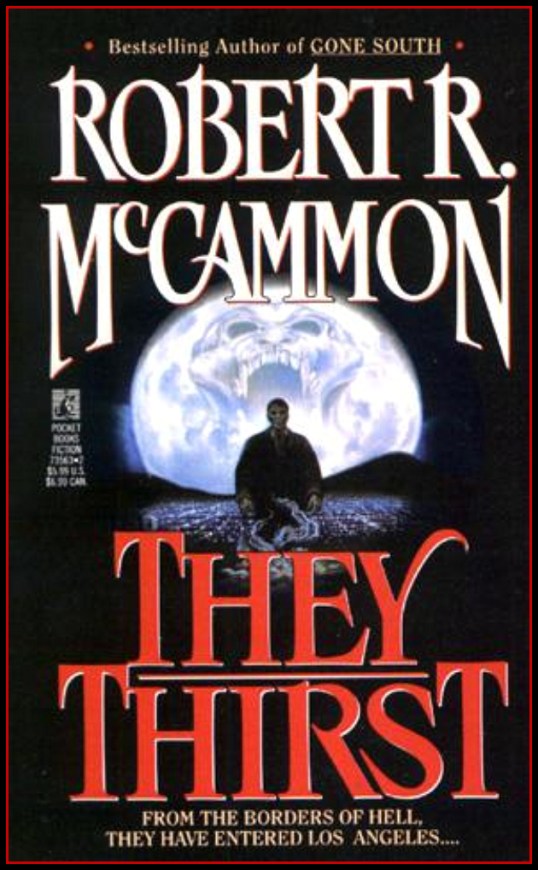
Horror Book Review: They Thirst (by Robert R. McCammon)


Robert McCammon’s 1981 novel They Thirst stands as a significant yet often overlooked contribution to the vampire horror genre and to modern horror literature more broadly. The novel deftly marries Gothic vampire traditions with contemporary anxieties surrounding urban decay, societal collapse, and the limitations of scientific reasoning. McCammon’s approach—transforming vampirism from a supernatural curse into a viral, apocalyptic force—presents a fresh perspective that elevates the narrative beyond conventional monster fiction. The result is a richly detailed and thought-provoking story that explores not just the nature of evil, but humanity’s fragile relationship with belief, knowledge, and survival.

The novel’s geographical and thematic scope is ambitious from the outset. It begins in Eastern Europe, grounding the story firmly in vampire mythology, before making a dramatic shift to Los Angeles, California. This transition is more than a change of location; it serves as a potent narrative device. While Stephen King’s ’Salem’s Lot confines the vampire threat to the insular setting of a small New England town, They Thirst imagines an entire sprawling metropolis consumed from within. Los Angeles—with its sprawling excesses, cultural contrasts, and complicated history—becomes a perfect backdrop for the ancient evil of McCammon’s story. In many ways, the city and the novel’s antagonist are made for one another: Vulkan, a 13th-century Hungarian prince turned vampire, and his undead legion prey on humanity’s vulnerable underbelly, just as Los Angeles has often been depicted as a city feeding off the dreams—and the desperation—of its most naive and downtrodden residents.

This parallel between city and vampire empire is one of the novel’s strongest thematic elements. Both embody forms of false promise: Los Angeles offers fame, wealth, and a kind of modern immortality through celebrity culture, while Vulkan offers literal immortality through vampirism. Yet both promises are double-edged. The city’s glittering surface conceals poverty, violence, and spiritual emptiness; Vulkan’s offer of eternal life masks the curse of undeath and loss of humanity. In that sense, Vulkan and Los Angeles mirror each other, feeding off hope and desperation alike. This symbiotic relationship deepens the horror: it’s not just that vampires invade the city, but that they thrive there because the city, in its essence, is already broken and hungry.

The antagonist, Prince Vulkan, represents the archetypal vampire lord but is also reimagined as a force of apocalyptic renewal. His ambition is to establish a vampiric empire within Los Angeles, turning the city into a dark kingdom under his rule. The irony of this choice is palpable; Los Angeles is a city obsessed with youth, image, and perpetual reinvention, and Vulkan exploits those cultural values by offering something seemingly eternal. His infiltration begins subtly—with grave robberies, disappearances, and escalating violence—until the infestation becomes impossible to ignore. The city’s sprawling nature, its labyrinthine neighborhoods, and its social divides become the perfect terrain for an epidemic to spread unchecked.

McCammon stays true to Bram Stoker’s legacy, incorporating essential vampire lore: vulnerability to sunlight, the necessity of native soil in coffins, and the insatiable craving for blood remain central to the story. But he sets these paranormal elements against a starkly modern world, making their impact feel immediate and unavoidable. One striking subplot involves a wealthy coffin manufacturer whose industrial-scale production unwittingly supports Vulkan’s legion by supplying coffins in large quantities. This detail reinforces the novel’s critique of modernity: progress and capitalism, while often celebrated, can be co-opted by darkness when divorced from awareness and wisdom.

Central to the narrative is the novel’s sharp examination of science and superstition. McCammon critiques modern rationalism’s limits when confronted with the inexplicable. As the vampire epidemic grows, institutions built on evidence and strict rationality—police departments, medical professionals, the press—are shown to be inadequate. Police officers demand forensic proof; scientists dismiss eyewitness accounts as hysteria or fabrication; journalists prioritize sensationalism over truth. This widespread skepticism, while understandable in a culture founded on empiricism, ironically becomes what allows the vampires to thrive. McCammon suggests that humanity’s overreliance on logic and denial is itself a fatal vulnerability. The story implies that what civilization labels “superstition” may hold the very keys to survival against threats outside the realm of science.

This tension—between modern science and the supernatural—gives the novel a distinctively unsettling atmosphere. The city’s collapse is not solely due to the vampires themselves but also because humanity’s intellectual arrogance leaves it vulnerable. The horror grows as reason twists into denial, and disbelief becomes as lethal as the vampires’ bite. McCammon doesn’t dismiss science but critiques a worldview that excludes anything it can’t measure or rationalize. The vampires are, in a way, as much the product of this intellectual blindness as they are physical monsters.

From this thematic core comes one of the novel’s most compelling characters: Detective Andy Palatizin. A man haunted by his past in Hungary, Palatizin has already faced these same creatures in his youth. His instincts and knowledge make him an outlier in the modern police force, where skeptics and bureaucrats dismiss his warnings as superstition. Palatizin’s struggle embodies the tension between ancient wisdom and modern disbelief. Alongside him are characters who represent various facets of Los Angeles life: Wes Richer, a hopeful comedian whose life is upended by the chaos; Solange, his psychic partner who senses the darkness; Tommy Chandler, a youth thrust unwillingly into the fight against evil; and Kobra, a dangerous albino gang leader whose alliance with Vulkan underscores the novel’s bleak view of human nature. Through these characters, McCammon presents a cross-section of humanity reacting to incomprehensible horror in ways both brave and flawed.

The novel’s pacing builds steadily, escalating from subtle unease to urban apocalypse. McCammon’s detailed descriptions of Los Angeles falling apart—freeways clogged with abandoned vehicles, entire neighborhoods burned out, power grids failing—create a vivid portrait of a civilization unraveling. It is in this progression that They Thirst transcends the conventional vampire tale, transforming into a mythic story of apocalypse. The battle grows beyond individual survival into a symbolic contest between light and darkness, belief and denial.

In this way, They Thirst invites comparison not only to ’Salem’s Lot but also to Stephen King’s The Stand. Both novels begin with localized catastrophe but evolve toward apocalyptic narrative arcs that weigh heavily on the theme of good versus evil. Palatizin’s final confrontation with Prince Vulkan mirrors the spiritual and philosophical duels seen in The Stand—a struggle not only between man and monster but between faith and nihilism. This heightened mythic tone gives They Thirst a resonance that extends beyond its genre, engaging with questions about human nature, belief, and the limits of reason.

The novel’s themes also echo the Japanese vampire tale Shiki, which similarly explores a community’s devastating response to supernatural infection and the corrosive effects of denial. Although Shiki is set in a small rural village as opposed to a vast city, both stories articulate the dangers of refusing to confront inconvenient truths, particularly when those truths conflict with scientific rationality or cultural blindness. McCammon’s choice of Los Angeles as a setting magnifies this theme, illustrating how sprawling urban environments—with their anonymity, social stratification, and competing belief systems—become fertile ground for supernatural and existential threats alike.

Moreover, They Thirst represents a crucial moment in Robert McCammon’s development as a writer of expansive horror fiction. The novel’s sophisticated interplay between individual characters and large-scale disaster foreshadows the narrative techniques he would later perfect in Swan Song. If They Thirst can be considered McCammon’s ’Salem’s Lot—an exploration of vampirism growing into an epic struggle—then Swan Song stands as his The Stand—a sweeping post-apocalyptic saga combining horror, hope, and human resilience on a grand scale. Seen in this light, They Thirst is not only a memorable and impactful vampire narrative but also the author’s foundational work in epic horror storytelling.

In sum, They Thirst is a novel of considerable ambition and thematic richness. It successfully unites Gothic vampire mythology with contemporary social concerns, delivering a story that is both thrilling and intellectually engaging. The interplay of science and superstition, the vivid portrayal of Los Angeles as a city on the brink, and the moral complexity of its characters elevate the book beyond simple genre fare. This novel offers a challenging and unforgettable journey — a reminder that some darkness is older than reason and that even the brightest city lights may hide the longest shadows.
Would further assistance be welcome in preparing this review for publication or tailoring it to a specific format or audience?Robert McCammon’s 1981 novel They Thirst stands as a significant yet often overlooked contribution to the vampire horror genre and to modern horror literature more broadly. The novel deftly marries Gothic vampire traditions with contemporary anxieties surrounding urban decay, societal collapse, and the limitations of scientific reasoning. McCammon’s approach—transforming vampirism from a supernatural curse into a viral, apocalyptic force—presents a fresh perspective that elevates the narrative beyond conventional monster fiction. The result is a richly detailed and thought-provoking story that explores not just the nature of evil, but humanity’s fragile relationship with belief, knowledge, and survival.

The novel’s geographical and thematic scope is ambitious from the outset. It begins in Eastern Europe, grounding the story firmly in vampire mythology, before making a dramatic shift to Los Angeles, California. This transition is more than a change of location; it serves as a potent narrative device. While Stephen King’s ’Salem’s Lot confines the vampire threat to the insular setting of a small New England town, They Thirst imagines an entire sprawling metropolis consumed from within. Los Angeles—with its sprawling excesses, cultural contrasts, and complicated history—becomes a perfect backdrop for the ancient evil of McCammon’s story. In many ways, the city and the novel’s antagonist are made for one another: Vulkan, a 13th-century Hungarian prince turned vampire, and his undead legion prey on humanity’s vulnerable underbelly, just as Los Angeles has often been depicted as a city feeding off the dreams—and the desperation—of its most naive and downtrodden residents.

This parallel between city and vampire empire is one of the novel’s strongest thematic elements. Both embody forms of false promise: Los Angeles offers fame, wealth, and a kind of modern immortality through celebrity culture, while Vulkan offers literal immortality through vampirism. Yet both promises are double-edged. The city’s glittering surface conceals poverty, violence, and spiritual emptiness; Vulkan’s offer of eternal life masks the curse of undeath and loss of humanity. In that sense, Vulkan and Los Angeles mirror each other, feeding off hope and desperation alike. This symbiotic relationship deepens the horror: it’s not just that vampires invade the city, but that they thrive there because the city, in its essence, is already broken and hungry.

The antagonist, Prince Vulkan, represents the archetypal vampire lord but is also reimagined as a force of apocalyptic renewal. His ambition is to establish a vampiric empire within Los Angeles, turning the city into a dark kingdom under his rule. The irony of this choice is palpable; Los Angeles is a city obsessed with youth, image, and perpetual reinvention, and Vulkan exploits those cultural values by offering something seemingly eternal. His infiltration begins subtly—with grave robberies, disappearances, and escalating violence—until the infestation becomes impossible to ignore. The city’s sprawling nature, its labyrinthine neighborhoods, and its social divides become the perfect terrain for an epidemic to spread unchecked.

McCammon stays true to Bram Stoker’s legacy, incorporating essential vampire lore: vulnerability to sunlight, the necessity of native soil in coffins, and the insatiable craving for blood remain central to the story. But he sets these paranormal elements against a starkly modern world, making their impact feel immediate and unavoidable. One striking subplot involves a wealthy coffin manufacturer whose industrial-scale production unwittingly supports Vulkan’s legion by supplying coffins in large quantities. This detail reinforces the novel’s critique of modernity: progress and capitalism, while often celebrated, can be co-opted by darkness when divorced from awareness and wisdom.

Central to the narrative is the novel’s sharp examination of science and superstition. McCammon critiques modern rationalism’s limits when confronted with the inexplicable. As the vampire epidemic grows, institutions built on evidence and strict rationality—police departments, medical professionals, the press—are shown to be inadequate. Police officers demand forensic proof; scientists dismiss eyewitness accounts as hysteria or fabrication; journalists prioritize sensationalism over truth. This widespread skepticism, while understandable in a culture founded on empiricism, ironically becomes what allows the vampires to thrive. McCammon suggests that humanity’s overreliance on logic and denial is itself a fatal vulnerability. The story implies that what civilization labels “superstition” may hold the very keys to survival against threats outside the realm of science.

This tension—between modern science and the supernatural—gives the novel a distinctively unsettling atmosphere. The city’s collapse is not solely due to the vampires themselves but also because humanity’s intellectual arrogance leaves it vulnerable. The horror grows as reason twists into denial, and disbelief becomes as lethal as the vampires’ bite. McCammon doesn’t dismiss science but critiques a worldview that excludes anything it can’t measure or rationalize. The vampires are, in a way, as much the product of this intellectual blindness as they are physical monsters.

From this thematic core comes one of the novel’s most compelling characters: Detective Andy Palatizin. A man haunted by his past in Hungary, Palatizin has already faced these same creatures in his youth. His instincts and knowledge make him an outlier in the modern police force, where skeptics and bureaucrats dismiss his warnings as superstition. Palatizin’s struggle embodies the tension between ancient wisdom and modern disbelief. Alongside him are characters who represent various facets of Los Angeles life: Wes Richer, a hopeful comedian whose life is upended by the chaos; Solange, his psychic partner who senses the darkness; Tommy Chandler, a youth thrust unwillingly into the fight against evil; and Kobra, a dangerous albino gang leader whose alliance with Vulkan underscores the novel’s bleak view of human nature. Through these characters, McCammon presents a cross-section of humanity reacting to incomprehensible horror in ways both brave and flawed.

The novel’s pacing builds steadily, escalating from subtle unease to urban apocalypse. McCammon’s detailed descriptions of Los Angeles falling apart—freeways clogged with abandoned vehicles, entire neighborhoods burned out, power grids failing—create a vivid portrait of a civilization unraveling. It is in this progression that They Thirst transcends the conventional vampire tale, transforming into a mythic story of apocalypse. The battle grows beyond individual survival into a symbolic contest between light and darkness, belief and denial.

In this way, They Thirst invites comparison not only to ’Salem’s Lot but also to Stephen King’s The Stand. Both novels begin with localized catastrophe but evolve toward apocalyptic narrative arcs that weigh heavily on the theme of good versus evil. Palatizin’s final confrontation with Prince Vulkan mirrors the spiritual and philosophical duels seen in The Stand—a struggle not only between man and monster but between faith and nihilism. This heightened mythic tone gives They Thirst a resonance that extends beyond its genre, engaging with questions about human nature, belief, and the limits of reason.

The novel’s themes also echo the Japanese vampire tale Shiki, which similarly explores a community’s devastating response to supernatural infection and the corrosive effects of denial. Although Shiki is set in a small rural village as opposed to a vast city, both stories articulate the dangers of refusing to confront inconvenient truths, particularly when those truths conflict with scientific rationality or cultural blindness. McCammon’s choice of Los Angeles as a setting magnifies this theme, illustrating how sprawling urban environments—with their anonymity, social stratification, and competing belief systems—become fertile ground for supernatural and existential threats alike.

Moreover, They Thirst represents a crucial moment in Robert McCammon’s development as a writer of expansive horror fiction. The novel’s sophisticated interplay between individual characters and large-scale disaster foreshadows the narrative techniques he would later perfect in Swan Song. If They Thirst can be considered McCammon’s ’Salem’s Lot—an exploration of vampirism growing into an epic struggle—then Swan Song stands as his The Stand—a sweeping post-apocalyptic saga combining horror, hope, and human resilience on a grand scale. Seen in this light, They Thirst is not only a memorable and impactful vampire narrative but also the author’s foundational work in epic horror storytelling.

In sum, They Thirst is a novel of considerable ambition and thematic richness. It successfully unites Gothic vampire mythology with contemporary social concerns, delivering a story that is both thrilling and intellectually engaging. The interplay of science and superstition, the vivid portrayal of Los Angeles as a city on the brink, and the moral complexity of its characters elevate the book beyond simple genre fare. This novel offers a challenging and unforgettable journey — a reminder that some darkness is older than reason and that even the brightest city lights may hide the longest shadows.
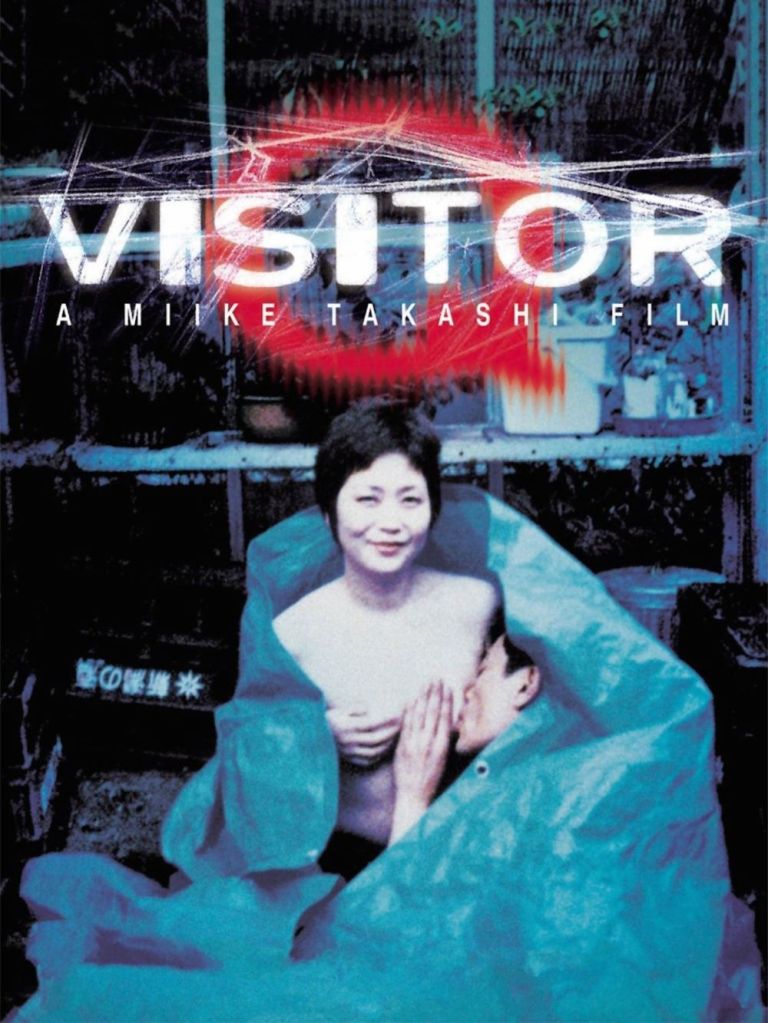
Horror Review: Visitor Q (dir. Miike Takashi)


Miike Takashi’s 2001 film Visitor Q (called Bizita Q in Japan) is definitely one of the most bizarre and disturbing movies out there. It often gets compared to the work of Quentin Tarantino, but that comparison really doesn’t do Miike justice. Tarantino’s style is all about showing violence in a flashy, stylized way that sometimes feels more like entertainment or homage than outright shock. Miike, on the other hand, takes a very different approach—his films are much more raw, unfiltered, and transgressive. Where Tarantino’s violence can almost feel like a performance, Miike’s hits you in a way that’s meant to provoke and unsettle on a deeper level.

Visitor Q is a wild, surreal ride that dives headfirst into the messy mix of violence and sex that’s so common in today’s media, with a cheeky nod toward reality TV culture. The film came out of Japan at a really interesting time, when the culture was pretty conflicted about Western influences. Japan often points fingers at the West for “decadence” and moral decline, but at the same time, it produces some of the most intense and boundary-pushing entertainment around—like anime and manga filled with everything from weirdly sexualized creatures (yes, tentacles, lots of tentacles) to ultra-violent stories that Western media would blush at.

The plot itself is maybe the simplest part of the whole thing. It’s about a down-on-his-luck former TV reporter named Q Takahashi who’s trying to support his dysfunctional family by filming a documentary about how violence and sex in media affects young people today. From there, the story quickly spins into something much darker and more uncomfortable, focusing on his family’s raw problems: drug abuse, emotional numbness, incest, necrophilia, and other twisted stuff that’s hard to even put into words.

What really makes Visitor Q stand out is how Miike doesn’t hold anything back. This film isn’t trying to make you comfortable or distract you with flashy effects. Instead, it confronts you with some very real, very uncomfortable issues. Miike has a fearless way of showing violence and sex that feels totally unfiltered and even brutal, forcing you to face parts of human nature and society that most movies would shy away from or sugarcoat.

It’s easy to see how this movie channels the spirit of the Marquis de Sade, that infamous figure known for embracing taboo and shock to criticize societal hypocrisy. Miike takes this spirit and uses it to spotlight the way media—and especially the voyeuristic culture of reality TV—turns personal pain and dysfunction into public spectacle. The movie asks us to think about how watching violence and sex over and over might warp not just society’s values, but how people actually relate to one another.

One thing Visitor Q pokes at pretty hard is voyeurism, the idea of watching other people’s lives like it’s entertainment. The former TV reporter filming his family for the documentary is both an observer and a participant, and the film forces viewers to question the ethics of watching intimate, often tragic moments unfold just for the sake of entertainment. It’s a powerful reminder of what media voyeurism can do to real lives.

Another theme that hits home is how desensitized people have become to violence and sex. The family in the movie often reacts to brutal, horrible things with complete indifference—almost like they’re numb from being exposed to this stuff all the time. Miike seems to be saying that when we see violence and sex as everyday entertainment, it dulls our emotions and disconnects us from the human suffering behind those images. This is especially relevant for young people growing up in a media-saturated world, which is exactly what the film’s documentary narrator is trying to get at.

Some of the film’s more extreme themes, like incest and necrophilia, are obviously shocking, but Miike uses them to highlight just how broken the family is. These aren’t just there for shock value—they’re symbols of how far relationships can fall apart when love, respect, and communication break down entirely. The film uses these taboos as metaphors for emotional neglect and societal decay, asking us to look hard at the dark corners of family life and human nature that most media avoids.

Watching Visitor Q is definitely not an easy ride. At first, most people find themselves looking away or flinching because the content is so wild and graphic. But it’s interesting how, over time, viewers start watching the movie without turning away, even if what they see is still deeply disturbing. The film somehow pulls you in with its surreal style and brutal honesty, making you confront just how far you’re willing to go in understanding these messed-up family dynamics and cultural critiques.

Stylistically, the film bounces between stark realism and surreal, almost absurd imagery. This gives it a rollercoaster tone that keeps you off balance—one moment it’s brutally raw, the next it’s almost darkly comedic or bizarre. This mix mirrors the instability of the family and the unpredictable nature of their world. Miike really embraces both the artistic and the extreme exploitation sides of filmmaking here, unapologetically pushing boundaries with each scene.

Despite all the shocking stuff, the film comes with a clear message about the relationship between media, sex, and violence. It’s not just reflecting society’s problems; it’s suggesting that media actually shapes how we think, feel, and behave—especially for kids. The film also takes a swipe at reality TV, highlighting how people get a twisted sense of pleasure from watching others’ suffering and humiliation. This is even more relevant today with social media and constant livestreams making all aspects of life a public show.

Miike’s gritty and unfiltered take makes it clear he isn’t just copying Western transgressive directors—he’s got his own voice and style that’s as challenging as it is unique. Where Tarantino’s films entertain and provoke with wit and style, Miike’s work disturbs and pushes, asking viewers to get uncomfortable and reflect. Comparisons to Pasolini, the Italian filmmaker known for his raw and provocative films, fit well here. Like Pasolini, Miike straddles the line between art and exploitation, using shock to force deeper questions about society.

In the end, Visitor Q isn’t a movie for casual watching or easy enjoyment. It’s intense, often repugnant, and demands a tough kind of attention. But for those willing to dive into its messy, surreal, and disturbing world, it offers a powerful look at how media influences family, society, and morality. Miike Takashi is definitely not Japan’s Tarantino—he’s a far more transgressive filmmaker who dares to challenge audiences by taking them into the most uncomfortable and raw parts of human experience. If one has the courage and curiosity, Visitor Q is an unforgettable, provocative film that forces us to think hard about voyeurism, media excess, and just how dark and strange life can get behind closed doors.

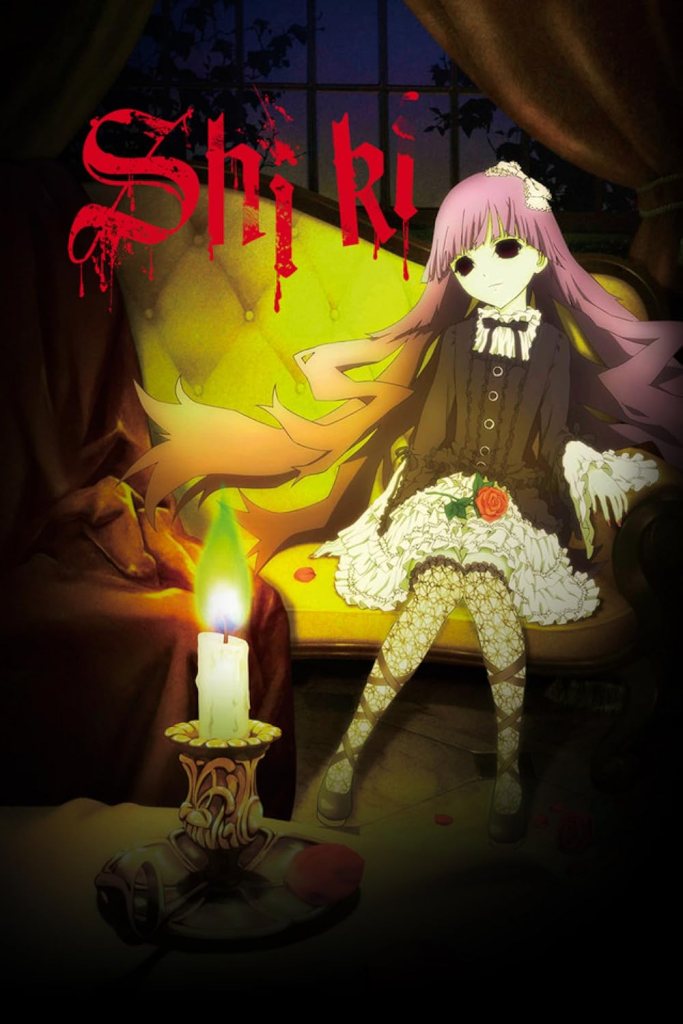
Anime You Should Be Watching (Horror Edition): Shiki (dir. by Tetsurō Amino)


The anime adaptation of Shiki, based on Fuyumi Ono’s acclaimed horror novel and directed by Tetsurō Amino, stands as a rare specimen in the horror genre. Rather than relying on quick shocks, excessive gore, or typical jump scares, Shiki unsettles its audience through atmosphere, moral erosion, and the slow, relentless unraveling of human conscience. Premiering in 2010, the series unfolds at a measured, almost meditative pace, transforming what could have been a simple vampire tale into a profound meditation on survival, faith, fear, and the delicate boundary between life and death when everything is pushed to the brink.

The story is set in Sotoba, a small, isolated village nestled precariously near a larger modern metropolis. The residents of Sotoba live tightly woven lives, their routines and social bonds preserved with careful attention over generations. This fragile peace shatters when a mysterious wave of deaths begins sweeping through the population. At first, these fatalities are dismissed as consequences of the harsh local climate—heatstroke, seasonal illnesses, and the inevitable toll of old age. Yet, as the body count rises, the truth reveals itself to be much darker: the deceased are rising as vampires, known locally as “shiki” or “corpse demons,” creatures that survive by feeding on the living.

What distinguishes Shiki from many other vampire narratives is its refusal to paint the conflict in stark black-and-white terms of good versus evil. The shiki are portrayed not as mindless monsters but as tormented souls, burdened by memories, emotions, and guilt over what they have become and the horrors they must commit to survive. Conversely, the human villagers—once caring and close-knit neighbors—succumb to suspicion, fear, and eventually cold-hearted survival instincts. The real horror emerges as morality frays and the line between human and monster becomes irrevocably blurred.

Unlike classic horror tales set in small towns—such as Stephen King’s ’Salem’s Lot, where a seemingly idyllic village hides sinister supernatural forces—Shiki offers a nuanced inward gaze. For instance, the novel They Thirst situates vampirism within a sprawling urban landscape, where anonymity accelerates chaos and alienation. In contrast, Shiki uses the microcosm of Sotoba to emphasize intimate, communal decay. The focus is not just on the physical threat, but on the erosion of social bonds and moral fabric, revealing how fragile human civility truly is under stress.

While ’Salem’s Lot depicts vampires as a pure evil contaminating a tight-knit community—highlighting themes of moral corruption and contamination—Shiki explores moral ambiguity with far greater depth. The vampires, including the enigmatic Sunako Kirishiki, retain their memories, emotions, and even remorse. Both vampires and humans carry guilt and anguish, complicating simplistic notions of villainy. The villagers—their friends, family, and neighbors—begin to see the suffering of the vampires while realizing their own brutal deeds. The narrative challenges viewers to question whether survival excuses the loss of morality or if it is possible to retain one’s spirit even amid brutal chaos.

At the heart of the series are characters who embody competing moral philosophies. Natsuno Yuki, a cynical teenager newly transplanted to Sotoba from the city, provides both an insider and outsider’s perspective. His disillusioned view highlights how fear, suspicion, and grief can unravel even the most intimate relationships. Natsuno serves as a rational voice within a community unraveling into paranoia and despair, offering a reflection of the audience’s own struggle to comprehend the incomprehensible.

Dr. Toshio Ozaki exemplifies the desperate human desire for order amid chaos. Initially, he seeks to explain away the deaths with rational, scientific explanations grounded in medicine. However, when superstition and supernatural realities intrude, Ozaki is compelled to confront truths beyond his understanding. His leadership in trying to save Sotoba begins with scientific resolve but soon descends into moral compromise. As hysteria spreads, the villagers’ collective violence explodes into ruthless slaughter, justified as necessary to preserve survival. Ozaki’s internal conflict—balancing ethical convictions against brutal necessity—reflects the series’ central question: at what point does the will to survive erode the soul?

Set against this turmoil is Sunako Kirishiki, the quiet yet profoundly troubled leader among the shiki. Though she has lived for centuries and suffers deeply from a sense of divine rejection—believing God has forsaken her—Sunako retains a core spirituality that anchors her sense of morality. Even as she is forced to kill in order to survive, she wrestles with guilt and her faltering faith. Her belief that divine rejection is not synonymous with divine abandonment acts as a form of moral defiance, preserving her fragile humanity amid brutal circumstances.

This spiritual resilience is deepened through her relationship with Seishin Muroi, a local junior monk and published author. Muroi, gentle and introspective, offers a unique perspective on the tragedy unfolding in Sotoba. His dual roles as a religious figure and a thoughtful writer allow him to interpret the crisis with spiritual depth and philosophical insight. His literary works—admired by the Kirishiki family, especially Sunako—explore mortality, suffering, and the search for meaning beyond pain. As a monk, Muroi embodies faith and compassion; as an author, he grapples with existential ambiguities, granting him a rare wisdom in navigating the village’s descent.

Muroi’s role makes him both observer and actor in Sotoba’s unraveling. His spiritual duties compel him to provide comfort and guidance, while his writings deepen his understanding of human and supernatural suffering. This duality shapes his interactions with Sunako and others, serving as a pathway for faith and empathy to endure amid horror and despair.

Sunako’s friendship with Muroi becomes central to her moral endurance. In contrast to Tatsumi, the Kirishiki family’s pragmatic and ruthless jinrō guardian who views survival through a cold, utilitarian lens, Muroi offers a moral counterpoint grounded in mercy and hope. Through his compassionate presence and reflective insights, Sunako finds a way to renew her faith. Although she feels forsaken, Muroi’s influence rekindles the fragile spark of belief in her that prevents her humanity from being swallowed by despair.

The thematic contrast between Muroi and Tatsumi becomes a fulcrum for Shiki: survival devoid of soul versus survival with spirit. Muroi’s continuing faith—soft, tentative, but persistent—demonstrates that even in the bleakest conditions, moral conviction need not fade entirely. His dual lens as monk and author enriches the narrative, bridging theology and philosophy while threading through the story’s core existential dilemmas.

Amino’s direction amplifies these themes through patient pacing and subtle storytelling. The mounting tension grows slowly through quiet, contemplative moments and lingering visuals—the hum of cicadas, shifting light through leaves, the barely audible footsteps in the dark. Ryu Fujisaki’s stylized character designs convey unease with elongated features and a surreal sheen, while Yasuharu Takanashi’s sparse, mournful score melds choral lamentations with haunting silences. Together, these elements create an immersive atmosphere steeped in dread and melancholy.

By the series’ climax, the distinction between human and shiki dissolves into near indistinguishability. Both sides bear the scars of survival—physical, psychological, and spiritual. The violence ceases, but the damage lingers, leaving survivors hollow, burdened by guilt and loss. Yet amidst the ruins of a shattered community, Sunako’s renewed faith, forged under Muroi’s guidance, flickers faintly—an emblem of hope that refuses to be extinguished.

The final scene distills this weighty truth without grandiosity or closure. There are no victors, no absolutes—only profound loneliness in survival. The living bear wounds deeper than any inflicted by fang or bullet. But in this quiet aftermath, Sunako’s fragile faith, buoyed by Muroi’s steadfast compassion, pulses as the last vestige of what it means to remain human: choosing faith and empathy even when everything else seems lost.

Shiki closes not with resolution but with a haunting reminder: survival is incomplete without humanity, and faith—however delicate—is the courage to hold onto that humanity when all else has fallen away.

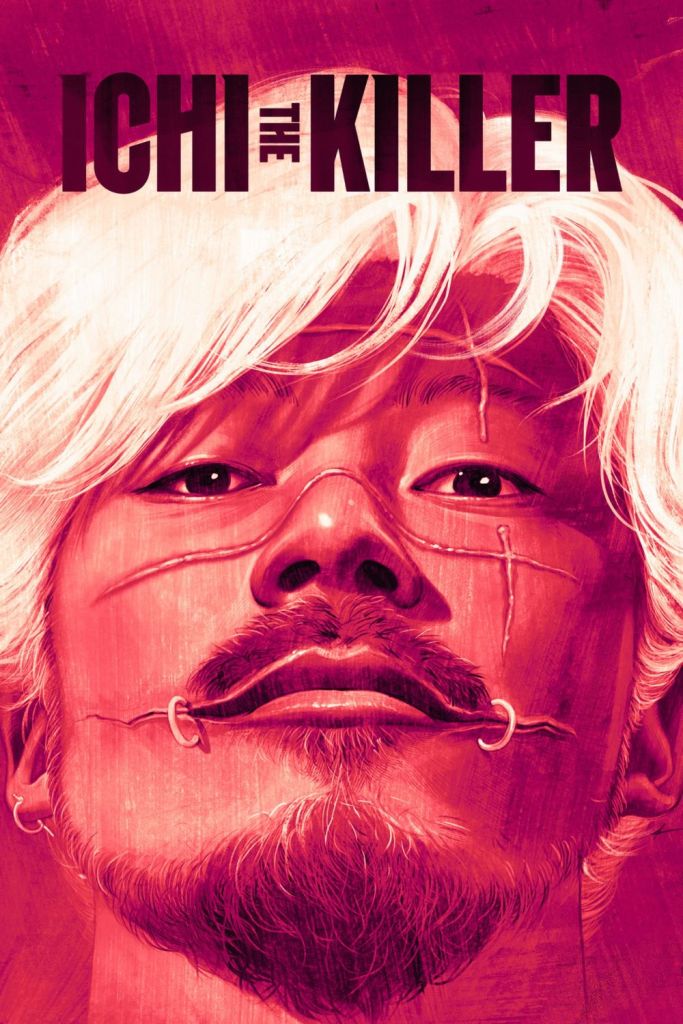
Horror Review: Ichi the Killer (dir. by Miike Takashi)


Filmmaking in Japan has always thrived on extremes—but not in one uniform direction. On one end lies the haunting, gothic atmosphere of horror steeped in shadows, ritual, and psychological dread; on the other lies the explosion of ultra-violence, pushed to grotesque and sometimes cartoonish heights. This duality mirrors the country’s broader cultural and artistic history, from the impressionistic ritualism of Noh theater and kabuki to the stark contrasts found in ukiyo-e prints. It was inevitable that such traditions would shape Japanese cinema, inspiring films that swing between meditative stillness and overwhelming sensory assault. Few modern filmmakers embody this radical spectrum more vividly than Miike Takashi, the ever-provocative and unapologetically eclectic mad genius of Japanese film.

Trying to find a Western counterpart to Miike often feels impossible. He refuses to be pinned down, leaping from genre to genre with the same restless energy as a filmmaker like Steven Soderbergh, but with far darker, more transgressive tendencies. Yet even in his eclecticism, Miike tends to operate at the polar extremes of Japanese genre filmmaking. One year he delivers chillingly restrained, gothic atmosphere—as seen in Audition or One Missed Call, both sustained by mood, dread, and psychological unease. The next, he unleashes pure ultra-violence, as in Dead or Alive or Ichi the Killer, films that seem designed to push cinematic violence far beyond socially tolerable thresholds. He’s made yakuza dramas, samurai fantasies, children’s stories, westerns, thrillers, and even musicals. To watch Miike is to surrender to unpredictability—but always to expect extremity.

And nowhere is Miike’s fascination with the violent pole more vividly captured than in his infamous 2001 adaptation of Hideo Yamamoto’s manga Ichi the Killer (Koroshiya 1 in Japan). The film remains one of his boldest and most grotesque provocations: hallucinatory, hyper-violent, and defiantly sadomasochistic. If Audition showed Miike at his gothic and restrained, building terror through silence and stillness, then Ichi the Killer does the opposite—it blasts the viewer with sensory chaos, arterial spray, and sadomasochistic spectacle. The result pushes beyond gore into nightmare surrealism, so extreme it resembles Peckinpah’s The Wild Bunch refracted through a carnival mirror.

On its surface, the narrative is deceptively straightforward: at its core lies the hunt between two men. Ichi, an emotionally fragile vigilante manipulated into becoming a weapon of destruction, and Kakihara, a flamboyant, sadistic yakuza enforcer who thrives on pain both given and received. While Miike alters aspects of the manga, he retains the dual narrative thread of these two figures spiraling toward an inevitable rooftop showdown high above Tokyo’s neon chaos. Yet to describe the plot too literally is pointless. Miike warps Yamamoto’s crime saga into something closer to a fever dream, a delirious collage of violence and grotesquerie where linear logic is slowly dissolved, leaving behind only sensation.

Where Ichi the Killer separates itself is in its layered subtext of body horror and sadomasochism. Miike is not content with gore alone; he explores the intimate psychology of pain and pleasure, showing their fusion in ways that unsettle. This is established from the film’s beginning, in one of its most infamous moments, when Ichi—lonely, voyeuristic, and lost in disturbing fantasies—masturbates while watching a prostitute being assaulted, climaxing onto a balcony railing. The explicitness shocks, but more importantly, it plants the film’s thematic flag: eroticism polluted by brutality, desire inseparable from cruelty. Miike ensures the audience feels implicated, not just as witnesses but as voyeurs who cannot look away.

Kakihara embodies the other side of this sadomasochistic spectrum. He lives for violence, both inflicting and enduring it. His Glasgow smile—cut into his cheeks years before Ledger’s Joker canonized the image—is carved symbol of his philosophy: rebellion scarred into flesh, grotesque yet strangely glamorous. Much of this impact rests on Tadanobu Asano’s performance. Watching him in this role today, it’s startling to compare Kakihara to his later mainstream work in the Marvel Cinematic Universe (Thor films) or the prestige Shōgun remake. The actor who once played measured dignity and stoicism there is here unchained, flamboyant, and feral. His Kakihara is rockstar-like, charismatic, terrifying, and magnetic; the performance feels like a primal howl that stands in stark contrast to his more restrained global roles. By the finale, one could argue Kakihara comes closer to the film’s “hero” than Ichi himself, embodying violence not merely as cruelty but as pure identity.

The film unfolds as a series of violent tableaux, each more outrageous than the last, somewhere between grotesque cartoon and waking nightmare. Bodies are mangled, organs splatter, arterial spray bursts like abstract expressionist brushstrokes. Miike pushes the imagery so far it sometimes tips into slapstick, calling to mind Peter Jackson’s Dead Alive. It’s violence past the point of horror, collapsing into absurdist comedy: as if Tom and Jerry were redrawn with box cutters and razor wire. Tarantino’s famous “House of Blue Leaves” sequence in Kill Bill clearly draws inspiration from Miike’s operatic bloodletting.

And yet Ichi the Killer is not mere shock and gore. Beyond its chaotic excess, the film probes violence as spectacle—something audiences recoil from but also consume with fascination. Miike refuses to let the audience off the hook. He doesn’t desensitize; he implicates. Watching Ichi means simultaneously condemning its cruelty and acknowledging our own morbid curiosity. That tension—between gothic atmospheres of dread and gaudy ultra-violence—is where Miike thrives.

This duality makes Ichi the Killer one of the most notorious entries in modern cult cinema. It isn’t for everyone, and was never intended to be. Some audiences will find it unwatchable, others mesmerizing. But what is undeniable is its extremity, one end of the spectrum of Japanese genre filmmaking stretched to breaking point. If Audition embodies Miike’s gothic restraint, Ichi represents his carnival of brutality. Together, they capture the twin poles of his artistry and of Japanese extremity itself. Violence here is more than gore—it is body horror, sadomasochism, and spectacle fused together, a dark carnival Miike dares us to enter and dares us not to look away.

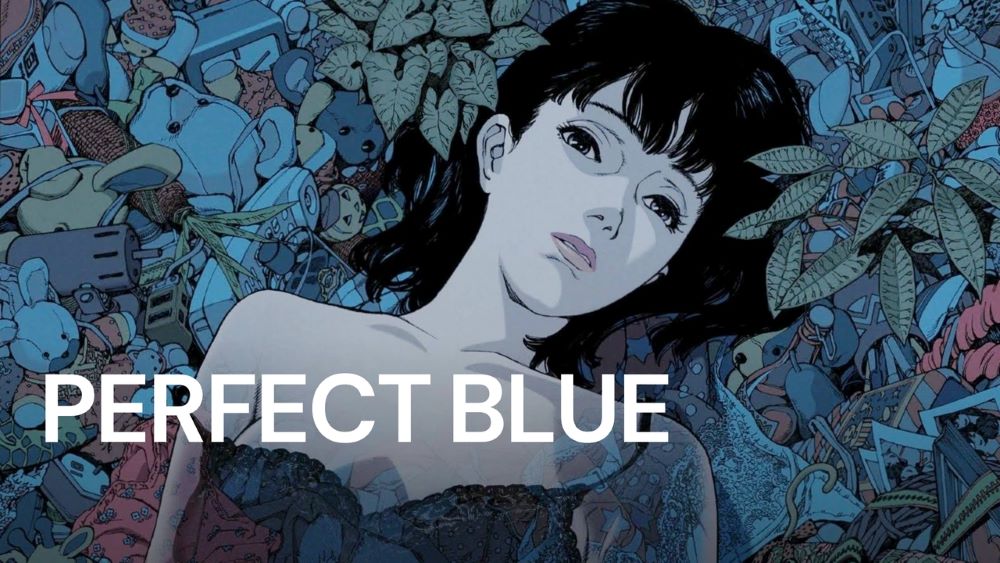
Anime You Should Be Watching (Horror Edition): Perfect Blue (dir. by Satoshi Kon)


Satoshi Kon’s 1998 psychological thriller Perfect Blue remains a striking and influential work nearly three decades after its release. Despite being an animated film, it evokes the unsettling style and tension found in the classic Italian giallo thrillers of the 1970s and ’80s—films by directors like Dario Argento and Mario Bava—and melds them admirably with elements of 1970s Eurotrash exploitation and arthouse psychological thriller reminiscent of Brian De Palma. Kon’s debut feature is a haunting exploration of fractured identity, blending show-business satire, Hitchcockian suspense, and surreal nightmare imagery into a profoundly relevant story in today’s age of parasocial fandom and digital voyeurism.

The film centers on Mima Kirigoe, a member of the bubblegum J-Pop group “CHAM!” who decides to leave the idol world to pursue a career in serious acting. This choice, rooted in her desire for personal growth and artistic expression, sets off devastating consequences. For her managers and many fans, Mima’s break from the manufactured idol persona is viewed as betrayal—a dissolution of a carefully crafted image designed for maximum market appeal. The pristine, innocent figure worshipped by fans begins to crumble, replaced by the complicated reality of adulthood and the harsh glare of fame.

To fully grasp the horror underpinning Perfect Blue, it’s important to understand the nature of Japanese idol culture. These idols are not merely singers or performers—they are highly managed brands. Every lyric, outfit, choreographed move, and public appearance is tightly controlled to project purity and accessibility. This system bears close resemblance to the meticulously produced Western pop acts of the late 1990s and early 2000s like Britney Spears and the Backstreet Boys. Both rely on constructing polished, artificial personas that maximize commercial appeal, often at the expense of genuine selfhood. When an idol deviates from this script, it frequently provokes obsession, confusion, and even violent reactions from a subset of fans unable to reconcile the constructed image with evolving reality.

Mima’s transition from ingénue pop star to serious actress thrusts her into an intense psychological crucible. Her first major acting role requires her to perform a deeply disturbing rape scene, one that blurs lines between professional obligation and personal violation. Kon lingers on Mima’s shocked expression—a powerful mask of confusion and repressed trauma. This sequence sets the tone for the film: a world where performance, identity, and exploitation intertwine irrevocably, creating a landscape where self and roles imposed by society become indistinguishable.

As Mima’s public persona shifts, darker forces emerge. An eerie fan website titled “Mima’s Room” chronicles her life with disturbing accuracy but is clearly authored by an unknown party. Even more threatening is an obsessed fan fixated on the idol version of Mima, stalking her and insisting that the “real” Mima no longer exists. This duality—between reality and imitation, self and construct—becomes the film’s thematic centerpiece. The narrative loops and fractures, cutting between dreams, televised drama, and supposed reality until neither Mima nor the viewer can be sure what is authentic. This masterful ambiguity immerses us in the protagonist’s psychological collapse.

The horror in Perfect Blue operates on two deeply intertwined levels. First, it is a psychological portrait of a young woman’s unraveling, echoing themes explored in Roman Polanski’s Repulsion and Darren Aronofsky’s Black Swan—films focused on fragile female psyches under immense pressure. While Aronofsky has publicly denied that Black Swan was directly inspired by Perfect Blue, the similarities in theme and specific visual motifs suggest otherwise. Both films explore the disintegration of identity in a young woman caught between innocence and adult roles, with dreamlike, unsettling sequences blurring reality and hallucination. The parallels in their portrayal of psychological breakdown, stalking, and the pressure of performance are striking, though Aronofsky’s work is set in the world of ballet rather than pop music and acting.

Second, Perfect Blue channels the lush, stylized dread characteristic of giallo cinema. Kon borrows Argento’s fascination with voyeuristic camera angles, saturated color palettes, and the interplay of beauty and violence. Like Argento’s heroines trapped in a hall of mirrors, Mima finds herself caught in a labyrinth where surreal horror becomes tangible and murder might be just another staged act in a disturbing performance.

Yet unlike Suspiria’s occult grotesques, Kon’s horror resides not in supernatural forces but within the mind and media itself. Animation becomes a revelatory choice—rather than softening violence, it frees Kon from physical constraints, allowing reality to fracture visually with startling fluidity. Identities shift from frame to frame, reflections move independently of their sources, and timelines collapse and fragment like psychic glitches. The medium’s flexibility intensifies the film’s psychological disorientation, blurring fact and fantasy in ways live-action cinema would struggle to capture so viscerally.

Kon’s prescient understanding of media obsession resonates more strongly than ever today. Long before social media reshaped how identity is constructed and perceived, Perfect Blue envisioned the internet as a distorting mirror that erases the line between self and performance. The “Mima’s Room” website serves both as diary and prison—a disturbing precursor to the carefully curated digital personas that dominate social media platforms now. As Mima reads falsified diary entries that resemble her life more “truthfully” than her own memory, she grows alienated from reality. The omnipresent gaze of fans, stalkers, and producers merges into an oppressive force she cannot escape.

This taps into a modern phenomenon: parasocial relationships. These one-sided emotional bonds fans develop with celebrities or fictional characters foster a dangerous illusion of intimacy and knowledge, often masking boundaries between admiration and entitlement. In Perfect Blue, the deranged fan believes he “knows” Mima in a way that justifies controlling her, even committing violence to preserve the image he idolizes. This mirrors the darker side of parasocial dynamics today, where fans demand absolute authenticity or control over public figures’ identities, sometimes leading to harassment or stalking. Kon’s film foreshadows how internet culture can exacerbate these fragile boundaries, blurring realities and fueling destructive obsession.

The film’s editing amplifies this psychological suffocation. Kon intercuts scenes from Mima’s TV drama—ironically titled Double Bind—with moments from her “real” life until one blurs imperceptibly into the other. Viewers are drawn deeper into uncertainty: are we witnessing actual events, staged fiction, or yet another deceptive layer? This deliberate manipulation creates unease without relying on cheap jump scares or graphic violence. The horror is existential—losing trust not only in others but in one’s own mind.

This theme has become exponentially more relevant with the rise of social media influencers and online streaming personalities. Today, countless individuals cultivate personal brands that blend their private lives with public personas online, often with blurred or deliberately ambiguous boundaries. The intense fan interaction, constant scrutiny, and expectation of accessibility echo the pressures Mima faces. As social media blurs the line between “real” self and online performance, the risks of losing grip on one’s identity—as Mima does—feel more immediate and widespread than ever.

It is extraordinary that Perfect Blue was Kon’s first feature film. His command of cinematic language is masterful—harnessing animation as a means to probe psychological depths rather than as mere escapism. His subsequent works—Millennium ActressTokyo GodfathersPaprika—build on themes of identity, memory, and the fluid borders of reality, but Perfect Blue remains his rawest and most unsettling contribution. His untimely death from pancreatic cancer in 2010 at just 46 left the film community mourning a visionary whose full promise was tragically unfulfilled.

One of Perfect Blue’s greatest achievements is rejecting outsider stereotypes about anime. It is neither childish fantasy nor gratuitous erotica, though it fearlessly explores sexual anxiety, trauma, and performance under intense scrutiny. Kon’s film proves that animation can tackle mature themes—mental illness, societal pressure, gender identity—with subtlety and emotional gravitas usually reserved for live-action cinema. It challenges the misinformed Western association of adult anime with “hentai,” affirming animation’s capacity as a serious art form.

Kon’s film also critiques fandom’s darker impulses, asking difficult questions about ownership and identity. How much of a celebrity’s life belongs to the public? How much of one’s self must be sacrificed under the weight of expectation? In today’s hyperconnected online world, Kon’s portrayal of obsessive fans demanding idealized idols is uncannily relevant and urgent.

Ultimately, Perfect Blue transcends genre and era. It is not merely a psychological thriller or celebrity critique but a mirror held to an increasingly performative world. Long before social media dissolved the lines between private and public selves, Kon foresaw how image can consume reality. The result is a masterful fusion of paranoia, empathy, and stunning visual style—a giallo-inspired fever dream painted in blood-red and neon blue. For animation, it remains a landmark in artistic maturity; for cinema as a whole, it stands as one of the most chilling and insightful portraits of fame’s corrosive gaze and the dark side of parasocial obsession.

Horror Review: Horror Express (dir. Eugenio Martin)


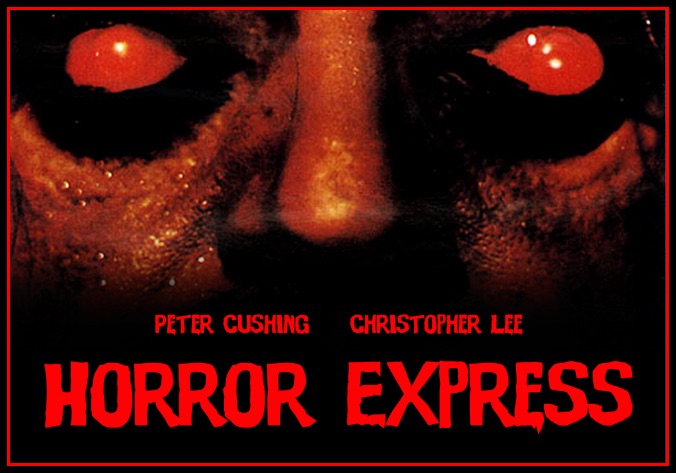
There was one film I saw when I was very young that absolutely terrified me, and even now, decades later, it still has the power to unsettle me and rob me of sleep. That film is Horror Express, a 1972 Spanish-British horror/science fiction hybrid directed by Eugenio Martín. It brought together two titans of gothic horror cinema, Christopher Lee and Peter Cushing—icons of the Hammer Films era—while also featuring Telly Savalas in a sadistic, scene-stealing turn as a volatile Cossack captain.

When Horror Express was released, the horror genre was at a fascinating crossroads. The gothic traditions popularized by Hammer Studios throughout the 1960s were beginning to fade, overtaken by the grittier, bloodier styles of filmmakers like Herschell Gordon Lewis and George A. Romero. By 1968, Romero’s Night of the Living Dead had already shifted the genre toward a darker, more nihilistic tone, paving the way for the grislier excesses that would dominate the 1970s. Martín’s film stood out precisely because it clung to the elegance and atmosphere of Hammer’s gothic aesthetic while incorporating moments of shocking violence and morbid detail. It occupied an unusual in-between space: refined in look and tone yet unnerving in its thematic brutality. Its blend of period atmosphere, science fiction paranoia, and restrained gore made it a fascinating transitional work in horror history.

The premise is simple but chilling. Aboard the Trans-Siberian Express, a British anthropologist (Christopher Lee’s Professor Saxton) transports a recently unearthed specimen—an ape-like, fossilized creature. His colleague, Peter Cushing’s Dr. Wells, becomes reluctantly entangled in the unfolding mystery. Predictably, the specimen is not what it seems; it revives and begins unleashing a series of violent attacks on the passengers. Soon it is revealed to harbor a far more terrifying, alien intelligence capable of killing and inhabiting its victims. This leads to one of the film’s most haunting sequences: the white-eyed, zombie-like corpses, drained of memories and humanity, shambling through the train corridors under the entity’s control. At eight years old, these images struck me as some of the most horrifying I had ever seen, and even today their uncanny blend of gothic atmosphere and science fiction body horror still lingers.

Viewed in retrospect, Horror Express bears a striking resemblance to John W. Campbell’s novella Who Goes There?—the basis for Howard Hawks’ The Thing from Another World and John Carpenter’s The Thing in 1982. Like those stories, it is steeped in paranoia, playing with the idea of an alien intelligence that can absorb knowledge and animate the dead. While it never attains the precision of Carpenter’s later masterpiece, it foreshadows that same blend of claustrophobia, distrust, and escalating dread.

What makes Horror Express unforgettable is its restraint. Rather than leaning on gore, it generates fear through suggestion, atmosphere, and disturbing imagery. The snowy isolation of the Trans-Siberian route reinforces the cold sterility of its alien invader, while the confined train cars become a claustrophobic prison of escalating terror. Over time, the film has slipped into the public domain, making it widely available on streaming platforms and budget DVDs. Though often overlooked in surveys of 1970s horror, it deserves recognition as one of the last great gothic horror films before the torch passed to Craven, Carpenter, and Hooper.

For me, Horror Express remains not just a childhood scare but a cinematic touchstone: a rare piece of science fiction horror bridging two eras, one that manages to terrify without relying on excess gore. It disturbed me at age eight, and even now, watching the blank-eyed corpses lurch through the dim train cars still triggers that same visceral shiver.

Horror Review: The Sadness (dir. by Rob Jabbaz)


Zombie and infection films have long been a proving ground for aspiring horror filmmakers. The subgenre is relatively inexpensive to produce, often relying on claustrophobic settings, survival scenarios, and plentiful blood-and-makeup effects. Because of this, it’s become an enticing entry point for directors looking to make their mark. But while horror can be a forgiving sandbox for experimentation, creating a film that is not just watchable but truly memorable is another matter entirely.

That’s why Rob Jabbaz’s 2021 debut feature The Sadness feels like both a breath of fresh air and a brutal gut-punch. In a cinematic landscape oversaturated with lifeless zombie rehashes, The Sadness stands out as one of the rare gems in the rough: an uncompromising, unfiltered vision that twists infection horror into grotesque new extremes.

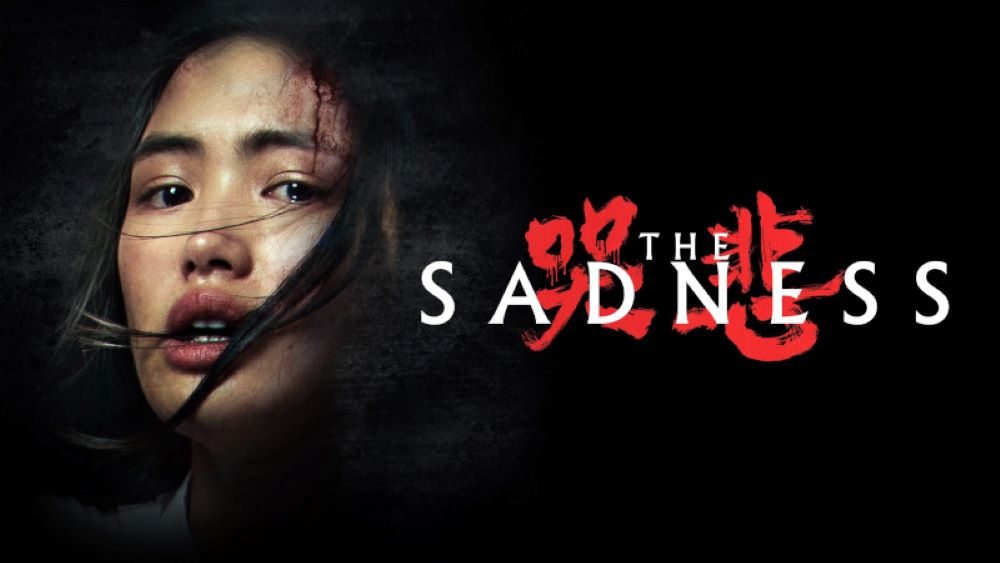
The film’s timing alone heightens its impact. Premiering in 2021 as the world was still reeling from COVID-19, The Sadness unfolded against a backdrop of real-world uncertainty and fear. Set in Taipei, it follows a young couple, Jim (Berant Zhu) and Kat (Regina Lei), as they struggle to reunite while a viral outbreak ravages the city. But this isn’t a traditional zombie plague. Those infected don’t stumble through streets in mindless hunger—instead, they shed every shred of empathy and morality, indulging instead in the darkest, most depraved impulses imaginable.

What makes this outbreak particularly disturbing is not the survivalist violence we expect from zombie cinema, but the sadistic cruelty with which the infected embrace their new instincts. They don’t just kill. They torment, torture, and mutilate with gleeful abandon. And yet, in one of the film’s most haunting touches, many of the infected appear to be crying as they carry out these atrocities. Buried deep in the recesses of their corrupted minds is an awareness of the horror of their actions, a recognition that what they are doing is monstrous and wrong. But the virus strips them of the ability to stop themselves, forcing them to participate in their own cruelty even as they mourn it. This paradox of weeping while committing acts of unthinkable violence underlines the film’s title: The Sadness is not simply about gore or shock, but about the profound tragedy of human beings imprisoned within impulses they are horrified to enact.

On its surface, the film invites comparisons to Danny Boyle’s 28 Days Later—especially in its depiction of a city descending into viral chaos. But where Boyle’s rage virus unleashed primal anger, Jabbaz’s strain of infection is even more terrifying: it revels in cruelty, poisoning not just the body but the soul. The Sadness also recalls Garth Ennis’ infamous Crossed comic series—widely deemed unfilmable due to its extremes. That connection is impossible to ignore, both in subject matter and in its deliberate transgressiveness.

As writer, editor, and director, Jabbaz approaches the material with unnerving precision. The first act foreshadows the viral threat in subtle ways—background chatter on TV screens, fleeting moments of sudden aggression—before Taipei collapses into anarchy almost overnight. The narrative remains lean and purposeful, stripping away filler in favor of pacing that escalates terror with brutal efficiency.

Shot in just 28 days, the film nevertheless carries an impressive polish. Cinematographer Jie-Li Bai and production designer Liu Chin-Fu infuse the movie with a grounded sense of place: crowded subways, sterile hospitals, bustling street corners. Each environment feels authentically lived-in before they transform, piece by piece, into blood-soaked arenas of carnage. Practical gore effects are prioritized over CGI, and the result is viscerally effective—sickening yet strangely mesmerizing, almost operatic in their execution. Like the best extreme horror, it locates a twisted beauty in its spectacle of destruction.

The Sadness is more than just gore for gore’s sake. Released during the height of a global pandemic, the film functions as a thematic mirror, reflecting society’s fractures under pressure—our denial of crisis, government missteps, selfish impulses, and the darkness that emerges when rules and trust collapse. Whether or not Jabbaz meant the film as a direct allegory is almost irrelevant; in its execution, it feels pandemic-era, uncannily timely, and raw.

Unsurprisingly, the horror community quickly drew parallels to Ennis’ Crossed. The comparison resonated so strongly that Jabbaz himself has since been attached to direct a live-action Crossed adaptation. If The Sadness is any indication, he may be the rare filmmaker with both the vision and the audacity to bring such an “unfilmable” work to life.

From its deceptively calm beginning to its bleak and nihilistic finale, The Sadness never loosens its grip. It is not a film for everyone—many will find it too transgressive, too nihilistic, or simply too traumatic to endure. But for horror fans who crave extremity, who embrace the genre as a place where boundaries should be tested, The Sadness is more than another zombie flick. It is a tragedy as much as it is a nightmare, and the sight of its infected monsters weeping as they commit atrocities lingers long after the credits roll. That image embodies the very essence of the title: a work that confronts not only our capacity for violence, but the unbearable sorrow of being aware of it, powerless, and consumed.

It is a defining statement in 21st-century horror: brutal, relentless, grotesque, and timely. Rob Jabbaz’s debut doesn’t just enter the infection canon—it tears through it, leaving behind a benchmark of modern extreme cinema.

Horror Song of the Day: Threnody to the Victims of Hiroshima (by Krzysztof Penderecki)


Have you ever heard Penderecki’s Threnody to the Victims of Hiroshima? It’s definitely not your typical kind of music. When I first listened to it, I wasn’t really sure what was happening—it’s loud, chaotic, and incredibly intense. There’s no melody or rhythm that you can follow; instead, it feels like a massive wave of sound crashing over you, full of raw emotion and tension.

One of the things that makes it so striking is that Penderecki wrote it for 52 string instruments. Now, usually, when you think of that many strings playing together, you imagine something rich, smooth, and harmonious. But this is completely different. Those violins, violas, cellos, and basses don’t blend into a melody; instead, they create layers of dissonant sounds—like dozens of voices crying out all at once. It’s less about making “music” in the traditional sense and more about creating an intense atmosphere you can almost feel physically.


What’s really interesting is that Penderecki wasn’t initially trying to compose a tribute. The piece was simply titled 8 minutes and 37 seconds, just the length of the piece. But when he heard it performed, he realized something powerful was happening. The sound conveyed devastation and sorrow in a way words couldn’t. That’s when he dedicated it to the victims of Hiroshima, giving all that chaotic noise a heartbreaking context.

Listening to Threnody is like being caught in a storm made of sound. It opens with a blast of high-pitched, almost screaming tones, then moves between moments of total chaos and eerie silence. Instead of a neat ending, the piece slowly fades away, leaving you with a heavy, unsettling quiet—like the echo of a tragedy that never really ends.

What’s especially notable is how much this piece challenges what we usually expect from music. It doesn’t have melodies, harmonies, or rhythms in the way most music does. Penderecki broke all those rules to focus purely on emotion through sound itself. That approach not only made Threnody groundbreaking in classical music but also opened the door for its huge influence on horror film music. Filmmakers recognized how those sharp, dissonant strings create tension and fear on a gut level. You can hear Penderecki’s influence in iconic horror scores like those in Kubrick’s The Shining or Lynch’s Twin Peaks. Those creepy, screeching string sounds that make your skin crawl? That’s Penderecki’s legacy.

For me, what makes Threnody unforgettable is how honest it feels. It doesn’t try to comfort or please the listener. Instead, it’s a raw cry of grief made real through fifty-two instruments playing together but refusing to blend smoothly. It’s a reminder that music doesn’t always have to be beautiful to be powerful and that sometimes the most intense emotions are best expressed through sound that challenges everything we think music should be. Once you’ve listened, it sticks with you—an echo of sorrow that doesn’t fade.