Decade of last.fm scrobbling countdown:
22. Стары Ольса (Stary Olsa, 1,257 plays)
Top track (111 plays): Танцы (Dances), from Келіх кола (Loving Cup, 2000)
Featured track: Дрыгула, from Дрыгула (2009)
I don’t know of too many bands from Belarus, but the one I’m most familiar with is amazing. It’s a bit fitting that Stary Olsa should be my first entry in this on-going series to appear within the fall season, because I actually featured both “Dances” and “Drygula” this time last year. Of course it has nothing to do with horror, but it’s firmly rooted in the traditions from which our Halloween has derived–those of a misty past dominated by perceptions and beliefs not yet subsumed by European Christian standards. I don’t know whether the songs Stary Olsa play are themselves of ancient origin, but their instrumentation certainly is, and the songs they have crafted, whether traditional or original, are convincingly and memorably medieval. You’ll hear none of that western adherence to formula here; playing slightly out of tune or hitting a wrong note is a positive property of the music I like best. It comes to life with an earthiness that strives not for order and rationality, but for a taste of those unpredictable, wild-eyed expressions that highlight the more authentic human experiences of joy and sorrow. A lot of the best folk music abandons modern society’s notions of how these feelings ought to be expressed in exchange for a more direct connection. Stary Olsa certainly aren’t unique in this regard, but they do it better than most any other ensemble I’ve heard.
Decade of last.fm scrobbling countdown:
23. The Tossers (1,222 plays)
Top track (57 plays): The Crock of Gold, from The Valley of the Shadow of Death (2005)
My introduction to Irish punk was about as random as they come. I had “Come On Eileen” by Dexys Midnight Runners stuck in my head, and I could not for the life of me remember what it was called or who wrote it. I made a forum post asking “who wrote that song that goes too-ra-loo-rai-a?”, and someone–much to my persistent bewilderment today–responded with “Aye Sir” by The Tossers. It was through this cluttered back door that I first came to discover legends like The Pogues, The Dubliners, Dropkick Murphys, and Flogging Molly, and I owe a world of thanks to that forgotten forum poster for it.
A lot of my love for The Tossers is definitely nostalgia, because they introduced me to a world of music that has influenced my life tremendously ever since. But more significantly, I love The Tossers because they manifest an earthy side of Irish folk that bigger and brighter rock stars can never, by consequence of their fame, present quite so intimately. The drunken camaraderie, the sense of belonging, the singing and the dancing, all of the glory that one of the most persistently vibrant folk traditions in the world can bring–you certainly feel them all at a Dropkick concert, but with The Tossers it comes before an audience of a few hundred, most of whom know the songs by heart. They’re probably the best punk-minded Irish folk band drifting around America to have never made it big, and their live show is a blast every time.
Decade of last.fm scrobbling countdown:
24. Radiohead (1,176 plays)
Top track (35 plays): Knives Out, from Amnesiac (2001)
It should come as no surprise that Radiohead made it onto my decade top 50 chart somewhere. The dominant album on that list might be a little less common: Amnesiac (2001) took the title with a modest margin over Hail to the Thief (2003) and OK Computer (1997). This is no accident–no single weekend of Winamp stuck on repeat. Since pretty much the week it was released, Amnesiac has been my favorite Radiohead album.
It would be a bit silly to argue that Amnesiac is their best. Just as Radiohead are too unique to really be compared to any other band, pretty much every album they’ve released since The Bends (1995) has resided in a world of its own. OK Computer certainly offers the broadest appeal, and Kid A (2000) seems to get the most praise from the more eclectic, aesthetically minded fans, but it’s the consistent vibe of Amnesiac that grabs me most. From start to finish, it glides on a sea of glass beneath an inebriated night sky. While the individual tracks are stellar at every turn, the sum of its parts come nowhere near the whole, and I can rarely bring myself to listen to them out of their intended order. There’s some calming chill that sets across the whole 45 minutes, and a spirit of motion that I did not experience again until “Bloom” (The King of Limbs, 2011).
That being said, of courseOK Computer and Hail to the Thief are unrivaled masterpieces, of courseIn Rainbows (2007) and The King of Limbs are worlds above the average for a band late in their career, and of courseThe Bends redefined the limits of rock in its day. The only album in their discography that you might justifiably find some fault with is Pablo Honey (1993), and that’s only when you measure it by the standard Radiohead set and maintained for the two decades to follow. In the most general sense, weighing all factors evenly, they might rightly be regarded as the greatest band to ever exist. That’s not lofty praise; it’s an opinion that a good many experienced music critics are prepared to agree with. But to the question of how Radiohead became my 24th most listened to band of the past 10 years, and not say, my 50th, I point without hesitation to Amnesiac.
Decade of last.fm scrobbling countdown:
25. Cracker (1,162 plays)
Top track (52 plays): Big Dipper, from The Golden Age (1996)
Featured track: One Fine Day live, originally from Forever (2002)
Most people my age have heard Cracker, but they might not remember the name. You know, Cracker, that two-hit wonder from the early 90s that wrote “Low” and “Teen Angst (What the World Needs Now)”. Like most of you, I never bothered actually picking up a Cracker album while they were popular. They only stumbled into my discography through an impulse buy when I saw their first Best Of compilation, Garage D’Or (2000), near a checkout register in Best Buy. I thought, “Oh, greatest hits? I thought they only had two,” and I picked it up to see what I was missing. For a while afterwards I was convinced that they must have had a dozen radio singles that I was just a little too young to remember, but the truth of it sank in over time: One of the greatest rock bands of my generation had slipped through the cracks.
Well, my obsession with Cracker ran for a year or two before I eventually forgot about them, and they might have been lost to me forever if I hadn’t happened to find myself in San Antonio, Texas, with a car for the first time in two years and nothing better to do with it. I did a last.fm search on upcoming gigs in Austin, saw Cracker were playing that evening, and took off. Any band would have sufficed, but these guys blew me away. Their performance defied anything you might expect out of aging rock stars. With an intimate connection to the music and the audience, it was as if they had just recorded the material yesterday; They were overlooked American legends in their prime playing in a venue small enough to make eye contact. To top it off, they even offered a tip of the hat to a semi-local country legend. (They covered Ray Wylie Hubbard’s “Up Against the Wall, Redneck Mother”.) I’ve gone out of my way to catch Cracker live every time they’ve played near me since, and I’m never disappointed.
I will never know why Cracker were not as successful as Pearl Jam or Tom Petty or any of the other rock legends I grew up with, because I honestly think they’re on par. David Lowery’s lyrical whit and sardonic vocals pair up perfectly with Johnny Hickman’s tasteful blues rock guitar to create one of the most readily identifiable and creative duos in the business.
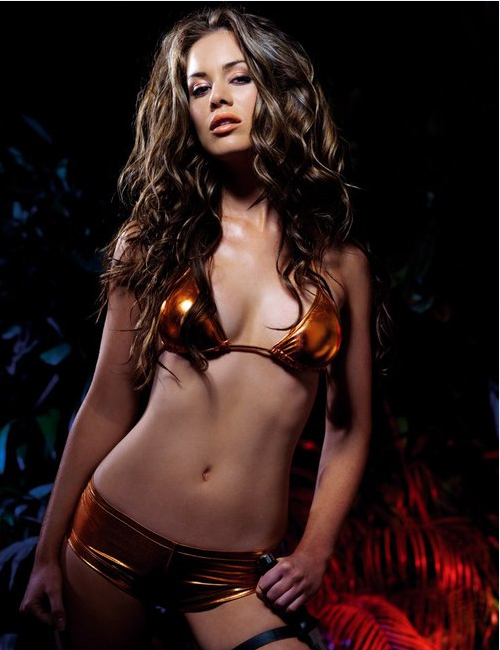
Game of Thrones is a series about power, and it has never been inclined to tone down the sources from which power is derived. With that in mind, David Benioff and D. B. Weiss were tasked with the not so unpleasant challenge of recruiting a number of highly attractive women willing to take most or all of their clothes off. Canadian-born Roxanne McKee was one such cast member, playing the role of servant and seductress Doreah.
Before the lovely Ms. McKee was conspiring with Xaro Xoan Daxos to steal Daenerys’ dragons, she graduated from Royal Holloway, University of London, and won a talent contest which landed her a spot in the British soap opera Hollyoaks. Her acting career has since landed her a variety of supporting roles, including a handful of horror films. Like our last featured hottie, Michelle Ryan, McKee has also played a role in EastEnders. She seems to have a bright future ahead of her.
Decade of last.fm scrobbling countdown:
26. Summoning (1,154 plays)
Top track (86 plays): Menegroth, from Oath Bound (2006)
Featured track: Ashen Cold, from Let Mortal Heroes Sing Your Fame (2001)
Blind Guardian’s Nightfall in Middle-Earth might be the most inspired musical retelling of any of J.R.R. Tolkien’s works to date, but no band has crafted an atmospheric sound to capture that world quite so convincingly as Summoning. With a sound that would just as soon excite fans of video game music or “new age” artists like David Arkenstone as their orginal black metal fan base, Summoning have forged a truly unique musical path. While their first studio album, Lugburz (1995), was relatively standard for the synth-laden black metal of its day, they nearly finalized the sound that made them famous on Minas Morgul, released later that same year. Since then, the only perceptible change has been a slow decline in the use of tremolo guitar; the quality of the songwriting and the imaginative world it invokes has remained pretty consistently superb.
For me at least, Summoning and Tolkien’s fantasy world have become nearly inseparable. The echoing, tribal drums paint vast landscapes cast dark by distorted vocals and guitar. The synth speckles the scene in a light that, never breaching the world of full orchestration, retains a fantasy aspect through its unnatural sound. The lyrics enliven the music with the spirit of an epic tale–whether it be the dramatic narrated loop on on “South Away”–“By the crowns of the seven kings and the rods of the five wizards!”–the water god Ulmo’s bold proclamations on “Farewell”–Who can tell you the age of the moon? But I can! Who can call the fish from the depths of the sea? Yes, I can! Who can change the shapes of the hills and the headlands? I can!–or the spirit of perseverance on the track here featured–“Though his body is not tall and his courage seems small, his fame will take long to fade.”
Tolkien’s greatest achievement was to craft a fantasy world so vast that imaginative minds ever since have managed to forge a place within it. Summoning have done so with a level of excellence nearly unrivaled, and they continue to today. There might have been a seven year gap between Oath Bound (2006) and Old Mornings Dawn (2013), but their new release is in every way on par with the rest. It’s a bit of a wonder that they’re only ranked 26th on my decade-spanning last.fm charts. I suspect that, another ten years from now, they’ll be much nearer the top, because their music takes me to a place that is eternal.
Decade of last.fm scrobbling countdown:
27. Alcest (1,127 plays)
Top track (154 plays): Souvenirs d’un autre monde, from Souvenirs d’un autre monde (2007)
Featured track: Là Où Naissent Les Couleurs Nouvelles, from Les Voyages De L’Âme (2012)
About two years ago I passed up a rare opportunity to strike up a one on one conversation with a musician I admire to no end. Alcest had just finished opening for Enslaved on their 2011 U.S. tour, and I stumbled upon Neige idling in the outdoor smoking lounge, standing exposed in the middle without a pesky fan in sight. I’m not the sort to pester someone over a stupid autograph, and I couldn’t think of a question worth asking on the spur of the moment, so I let the opportunity pass. But if I could have it back again, I would ask him what bands he’d been listening to when he recorded Le Secret (2005). Influence has been a hot topic for Alcest interviews ever since Neige denied any knowledge of shoegaze music at the release of Souvenirs d’un autre monde (2007). He responded to the comparisons by actively engaging a lot of relevant 80s and early 1990s bands, such that the perceived similarities lead to real influence down the road. I don’t think that is as apparent in his more recent works as some fans would like to believe; in Alcest, Neige produces the sort of uniqueness and quality that transcends genres. Nevertheless, my fascination with the history of music begs the question. Le Secret delivered what I wanted with a unique innocence that could only ever succeed once, and it certainly wasn’t “shoegaze” that paved the way for it.
Le Secret rather felt to me like something the black metal scene was destined to produce sooner or later. I’d been craving it since I first heard Ulver’s “Of Wolf and Passion”. If black metal had always been more about De Mysteriis than Dom Sathanas, “Le Secret” was the final incantation–the first real invocation in a world of petty summoners. Le Secret battered down the stereotyped walls, presenting a glorious first glimpse at what dwelt beyond that meditative barrier of blast beats and tremolo. On Souvenirs d’un autre monde and beyond, Neige gave us a beautiful vision of just how that world appeared to him, and he continues to improve on it with each new release. “Là Où Naissent Les Couleurs Nouvelles”, the 2012 track here featured, might be his most encompassing song to date.
Don’t get me wrong. Neige was certainly not the first black metal artist to think outside the box. The Ukrainian black metal scene especially had been doing it for years. But I feel like Neige’s artistic accomplishment and subsequent popularity really paved the way towards a widespread abandonment of black metal’s pseudo-machismo persona in exchange for the artistry necessary to accomplish a more sublime beauty and brutality alike. If we are ever going to speak of “post-black metal” or some “third wave” supplanting the early 1990s establishment, it began in 2005 and 2006 with the likes of Alcest and Agalloch. It is only an odd coincidence that the term “shoegaze” has regained popularity outside of metal and adopted new definitions. I look at Alcest not as a merging of two styles, but as a change in mindset which has empowered countless bands over the last few years to let their novel ideas be heard and widely distributed.
Le Secret will always be my favorite Alcest recording because of its timeliness and audible obliviousness to this transition which was slowly gaining ground. But perhaps I’ve beat that horse to death over the past few years. When I listen to Les Voyages De L’Âme (2012), I hear a musician in his prime, undeterred by the expectations of any particular genre, who has successfully improved with every new album. Alcest’s sixth major release, Shelter, should be coming out some time later this year, and I have really high hopes.
Decade of last.fm scrobbling countdown:
28. Týr (1,101 plays)
Top track (75 plays): Hail to the Hammer, from various albums
Featured track: Regin Smiður, from Eric the Red (2003)
Viking metal, pagan metal, folk metal, call it what you will–it’s pretty impressive that Týr have managed to capture an extraordinary vision of the Norse past with absolutely no traditional instrumentation or synth choruses to speak of save the human voice. Since their second album, Eric the Red, Týr have revolved around Heri Joensen’s breathtaking vocals. Their unique brand of progressive rock instrumentation is heavy enough to blast out your stereo and yet entirely subservient to the driving vocal anthems. I would be very interested to gain a better understanding of where Joensen’s dedication to tradition gives way to his unique creativity as one of the most innovative musicians making music today–of the extent to which his vocals are derived from Faroese tradition. With an educational background in both vocals and Indo-European linguistics, he probably has a better idea than most of how traditional Germanic and Norse singing must have sounded, and I feel a sense of solidarity between the band and other students of folk vocalization such as Latvia’s Skyforger. At the same time, I gather that Norse musical tradition is a far more elusive beast than its eastern counterparts.
As a modern band, Týr seem to me the most central act of the whole “viking metal” scene. The term is a bit of a ruse, in so far as it lacks both the stylistic conformity of most genre labels and the acknowledged generality of catch-alls like “folk metal”. Whether a band might garner the label depends upon so many nuance factors that it is much easier to agree upon which acts ought to receive it than to discuss why. Attempts to properly define it are few and far between. The Wikipedia article on “viking metal”, for instance, is largely substantiated by a thesis on folk metal submitted by Aaron Patrick Mulvany in 2000. That is only 12 years removed from Bathory’s Blood Fire Death–now a quarter of a century behind us–and two years prior to one of the most significant bands of the “genre”‘s debut. With the utmost respect for anyone who acknowledges folk metal as a legitimate subject for scholarship (I’m looking forward to reading Mulvany’s thesis, available online, over the next few days), I would ascribe to him the gift of prophecy were it not hopelessly dated. But while I would say that Bathory was fundamentally black metal, Amon Amarth death metal at their core, Falkenbach hopelessly under-appreciated, and Thyrfing given to fantasy, the inherent catch-all-ism of progressive metal (not the Dream Theater worship standardized derivative) lends to Týr a sense of authentic originality. As a metal act they do their own thing, and that makes their tradition-influenced vocals and lyrics emerge with no strings attached.
Týr’s music is neither too confrontational nor too fanciful to be generally accessible. They are, in the very least, the first band I would recommend to an inexperienced listener who asked me what specifically Norse-derived folk metal sounded like. Their sound bleeds an authentic scholarly interest in Norse culture and plugs the myriad gaps with progressive rock that is both down to earth and impressively original. You’ll find no fallback to Tolkien here (album cover aside), and no hell-raising or Transylvanian hunger either; it’s something a bit more Apollonian, and exciting all the same. If I could pick any one artist to spend an evening in a pub with, Heri Joensen may very well top my list.
Decade of last.fm scrobbling countdown:
39. Therion (1,059 plays)
Top track (81 plays): The Siren of the Woods, from Theli (1997)
Featured track: Vanaheim, from Secret of the Runes (2001)
Therion is an interesting animal in the world of metal. In a lot of ways, Christofer Johnsson’s brainchild derives from forms of music that don’t much suit me. The harsher vocals are firmly rooted in his death metal origins, the guitar riffs and drumming waver between metal and a softer “hard rock” sound, and 80s-inspired over the top solos flourish throughout the discography. Yet all of these typical turn-offs for me shake their negative connotations and merge rather seamlessly with Johnsson’s greater operatic vision. For the majority of Therion’s 26 year history, Johnsson has been forging his own unique path through the world of theatrical rock by infusing fairly typical stylistic norms with outstanding song writing. I can’t help but fear at times that Therion may descend to the quality of another boring Trans-Siberian Orchestra, but they never do. Across 15 studio albums, Johnsson continually manages to find compelling new ways to make the peculiar marriage of rock and opera somehow work.
I’ll admit to not being a huge Therion fan. The vast majority of the 1000+ listens that render them my 29th most-listened-to band of the past decade came in 2003 and 2004, when the individual elements of their sound were still a bit novel to me. I never did get around to picking up Sitra Ahra or Les Fleurs du Mal. But I’ve heard enough to confidently state that Johnsson is one of the finest song-writers to seriously approach the possibilities of combining rock with classical styles. Secret of the Runes is my personal favorite album in his discography. There, I think Johnsson really let the opera be heavy in its own right; it’s frequently more intense and driving than the traditional metal instrumentation accompanying it.
Decade of last.fm scrobbling countdown:
30. The Smashing Pumpkins (1,058 plays)
Top track (36 plays): I of the Mourning, from Machina: The Machines of God (2000)
2000 might have been one of the most optimistic years in American history. Bill Clinton was still president, the massive corporate effort to overcome a Y2K electronic doomsday scenario had succeeded impressively, the medical field was speeding towards a glimmering utopian future of nanobots and stem cell technology, and we had just wrapped up the Kosovo conflict to conclude a rare decade characterized more by sincere humanitarian intervention than by capitalist imperialism. Though we would soon plummet back to the social and political stone age in successive waves of decadence, this naive teenager’s outlook on the future was a dreamy ideal of progress. If there was trouble in the air, I never felt it. Whatever concerns the future might bring were fundamentally tied to it, not to the here and now.
Every Smashing Pumpkins album struck me in a fairly unique way. Each Siamese Dream track seemed like an overwhelming independent entity; I would get hung up on a song like “Rocket” and listen to it over and over again for days before moving on to the next. Mellon Collie and the Infinite Sadness I enjoyed more as a collective, basking in the roller coaster romp from ecstasy to sadness to rage that characterized juxtapositions like “Thru the Eyes of Ruby”, “Stumbleine”, and “x.y.u.” Adore kind of washed over me as a kid, and while I appreciate it more today, I will never quite get over the absence of Jimmy Chamberlin.
On Machina: The Machines of God, I think the vision of an album really overtook the band. Each song felt like a part of the collective to a greater degree than ever before. The highs and lows were all subdued. There was more total sound encompassing everything, while the edges of the heaviest tracks were dulled–while “We Only Come Out At Night” and “Tales of a Scorched Earth” certainly belong together as elements of a greater emotional road trip, “With Every Light” and “Heavy Metal Machines” were substantially closer in their musical approach and production. If Mellon Collie was a pendulum swinging violently between beauty and aggression, Machina rocked gently and subtly around its zen point. I fell in love with it even more than with Mellon Collie or Siamese Dream–a feat I did not think possible.
It might go against the popular grain to speak of Machina as the best Pumpkins album–of “I of the Mourning” and “Age of Innocence” as their best songs or “Stand Inside Your Love” as their best single. But these are definitely my favorites. I felt a perfect connection between the overall vibe of this album and my outlook on the world in 2000. “I of the Mourning” captured it perfectly for me–a positive cultivation of a sense of longing framed not by some mournful acoustic guitar but by that encompassing futuristic dream that characterizes the sound of Machina from start to finish.
Perhaps the stars just all aligned in the right place and time. Machina seems more like a personal testament to the band’s experiences together leading up to their impending break-up than a commentary on the state of the world. “Age of Innocence” functioned in retrospect as a clear final farewell. But it was a positive farewell, looking brightly to the uncertain future, and as such it seemed to coalesce with our passage into a new millennium. The 21st century promised, falsely as it turned out, to be a little less compulsive than the last, and I think Corgan likewise saw himself waving farewell to an endearing yet tumultuous phase in his life. I’ll leave you with that closing song:
We dismiss the back roads
and ride these streets unafraid
resort to scraping paint
from our bones unashamed
no more the eye upon you
no more the simple man
desolation yes, hesitation no
desolation yes, hesitation no
as you might have guessed, all is never shown
desolation yes, hesitation no
and in my prayers I dream alone
a silent speech to deaf ears:
If you want love, you must be love
but if you bleed love, you will die loved
no more the lie upon you
cast in stone the autumn shade
desolation yes, hesitation no
desolation yes, hesitation no
as you might have sensed, we won’t make it home
desolation yes, hesitation no
before the rites of spring
come to mean all things
a little taste of what may come
a mere glimpse of what has gone
cause for the moment we are free
we seek to bind our release
too young to die, too rich to care
too fucked to swear that I was there
desolation yes, hesitation no
desolation yes, hesitation no
as you might have guessed, we won’t make it home
desolation yes, hesitation no








 Through the Shattered Lens