 Howard Hansen (Ted Prior) is a best-selling horror writer who is suffering from writer’s block. With his agent, Murray (Frank Sivero), pressuring him to get something written, Howard decides to seek inspiration in Chinatown. When he steps into a curio shop and sees a grotesque, one-eyed blob floating in a jar of formaldehyde, Howard buys it. He hopes that the blob will give him an idea for a great book but instead, it just causes him to have nightmares and violent sex with his wife, Peggy (Sandahl Bergman).
Meanwhile, Murray is in debt with loan shark Scott Lindsey (Henry Silva) and Scott’s number one debt collector, Gus (Chad McQueen). Murray needs money and he needs it quickly. Murray sends his “secretary,” Carol (Shannon Tweed), to live with the Hansens and steal an unpublished romance novel that Howard wrote when he was just starting out as a writer. However, the one-eyed blob possesses Carol and she is soon climbing onto both Howard’s workout equipment and Howard! Soon everyone is under the influence of the one-eyed blob, Carol is forcing Howard and Peggy to make love while she holds the gun on them, and both Gus and Murray are sneaking around the house, trying to find the manuscript.
A movie that was once very popular on late night Cinemax, Possessed By The Night is a sometimes awkward but frequently entertaining horror/thriller hybrid from B-auteur Fred Olen Ray. Along with giving Frank Sivero a rare leading role (Sivero is best known for playing Frankie in Goodfellas and providing the inspiration for the Simpsons character of the same name), Possessed By The Night proves that no movie can be that bad when featuring both Sandahl Bergman and Shannon Tweed. When you watch a Fred Olen Ray/Shannon Tweed collaboration from 1994, you know what you’re getting and Possessed By The Night delivers.


 1930s. New York City. For years, Stephanie St. Clair (Cicely Tyson) has been the benevolent queen of the Harlem underworld, running a successful numbers game and protecting her community from outsiders. However, psychotic crime boss Dutch Schultz (Tim Roth) is determined to move into Harlem and take over the rackets for himself. With the weary support of Lucky Luciano (Andy Garcia), Schultz thinks that he is unstoppable but he did not count on the intervention of Bumpy Johnson (Laurence Fishburne). Just paroled from Sing Sing, Bumpy is determined to do whatever has to be done to keep Schultz out of Harlem.
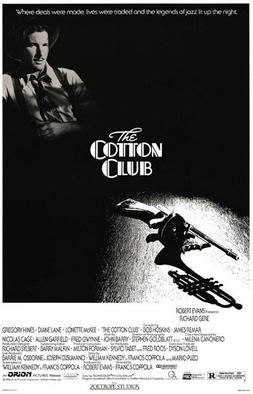 The time is the 1930s and the place is New York City. Everyone wants to get into the Cotton Club. Owned by British gangster Owney Madden (Bob Hoskins), the Cotton Club is a place where the stage is exclusively reserved for black performers and the audience is exclusively rich and white. Everyone from gangsters to film stars comes to the Cotton Club.
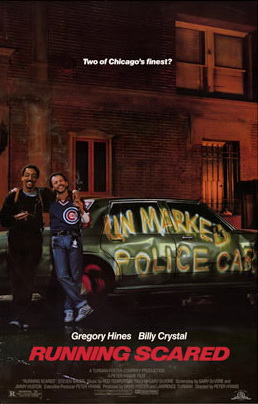 Running Scared is weird but good.
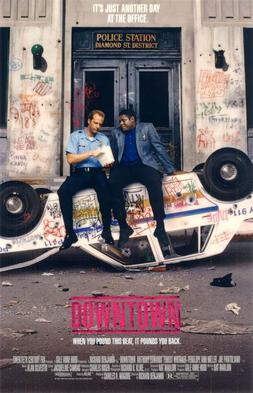 Alex (Anthony Edwards) is a patrolman assigned to the nicest neighborhood in Philadelphia but, after he gets in trouble for pulling over a wealthy businessman (David Clennon), he is told that he can either be suspended or he can take a transfer downtown, to the Diamond Street precinct. Alex takes the transfer, even though everyone on the force says that “not even the Terminator would go to Diamond Street.” Alex gets assigned to work with seasoned Sgt. Dennis Curren (Forest Whitaker), who is still emotionally scarred by the death of his former partner and does not want to have to babysit a naive white cop from the suburbs, especially one who is obsessed with the Beach Boys. At first, Alex struggles with his new assignment and his new partner but, when an old friend is murdered by a notorious hitman (Joe Pantoliano), Alex is determined to crack the case and bring the killer to justice.
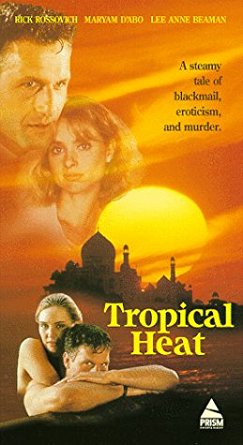 In India, a maharaja is killed when an elephant steps on him. His widow, an American named Beverly (Maryam d’Abo) stands to receive five million dollars but the life insurance company wants to make sure that the maharajah is actually dead before paying. Luckily, insurance exec Carolyn (Lee Anne Beaman) knows the world’s stupidest private investigator, a man named Gravis (Rick Rossovich). Gravis is busy house sitting a friend’s mansion and says he does not want to go to India but, after having sex with Carolyn in the pool, he changes his mind. Once he arrives, he casually investigates the maharaja’s death whenever he is not busy having sex with Beverly. During the course of his “investigation,” Gravis meets a young Indian woman (Asha Siewkumar), who thinks that there is more to the maharjah’s death than just a rogue elephant. Gravis has sex with her, too. Eventually, the movie runs out of people for Gravis to have sex with and it ends.
 Dr. Judd Stevens (Roger Moore) is a mild-mannered Chicago psychologist who has never been in any trouble, so why has one of his patients and his receptionist been murdered? Lt. McGreavy (Rod Steiger), who has a personal grudge against Stevens, thinks that the doctor himself might be responsible. Dr. Stevens thinks that the first murder was a case of mistaken identity and that he is being targeted for assassination. Detective Angeli (Elliott Gould) says that he is willing to consider Stevens’s theory but can Stevens trust him? Or should Dr. Stevens put his trust in a veteran P.I. (Art Carney) or maybe even his newest patient (Anne Archer)?
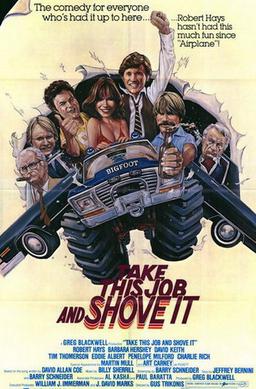 Originally from a small town in Iowa, Frank Macklin (Robert Hays) is a hotshot young executive with The Ellison Group. When Frank is assigned to manage and revitalize a failing brewery in his hometown, it is a chance for Frank to rediscover his roots. His childhood friends (played by actors like David Keith, Tim Thomerson, and Art Carney) may no longer trust him now that Frank wears a tie but it only takes a few monster truck rallies and a football game in a bar for Frank to show that he is still one of them. However, Frank discovers that the only reason that he was sent to make the brewery profitable was so that his bosses could sell it to a buffoonish millionaire who doesn’t know the first thing about how to run a business. Will Frank stand by while his bosses screw over the hardworking men and women of the heartland? Or will he say, “You can take this job and shove it?”
 Old west outlaw Frank Calder (Oliver Reed) wants to learn how to read so he and his gang ride into the nearby town and kidnap Melissa Ruger (Candice Bergen). Because he saw her reading to a group of children, Calder assumed that Melissa was a school teacher. Instead, Melissa is the wife of a brutal cattle baron and hunter named Brandt Ruger (Gene Hackman). Even after Calder learns the truth about Melissa’s identity, he keeps it a secret from his gang because he knows that they would kill her and then kill him as punishment for kidnapping the wife of a man as powerful as Brandt. Stockholm Syndrome kicks in and Melissa starts to fall in love with Calder. Meanwhile, Brandt learns that his wife has been kidnapped and, with a group of equally brutal friends, he sets out to get her back. In Brandt’s opinion, Calder has stolen his personal property. Using a powerful and newly designed rifle, Brandt kills Calder’s men one-by-one until there is a final, bloody confrontation in the desert.
 Through the Shattered Lens