3000 Miles to Graceland (2001, directed by Demian Lichtenstein)


Five thieves show up in Vegas to rob a casino.  The casino is also hosting an Elvis convention so the criminals all dress up like Elvis before trying to pull off their heist.  Since one of the criminals is played by Kurt Russell and Russell famously played Elvis in a made-for-TV movie, it’s a meta joke.  The worst of the criminals is played by Kevin Costner because, in 2001, Costner’s career was dead in the water and he was trying to reinvent himself as some sort of badass character actor.

As a result of a shootout and series of personal betrayals, Russell and Costner are the only two thieves who survive the heist.  Kurt Russell ends up taking all of the money for himself and running off with single mother Courteney Cox.  (Yes, Cox’s then-husband, David Arquette, does have a small role in the movie.)  Costner pursues them, killing anyone who he comes in contact with until it all leads to one final shoot out.

3000 Miles to Graceland is a stupid, stupid movie that was made at the time when every director was still trying to remake Reservoir Dogs and The Usual Suspects.  If you need any proof of how bad this movie is, just consider that it is one of the few Kurt Russell films to never develop a cult following.  There are people who would jump into the mouth of a volcano if Kurt Russell told them to and even they won’t watch 3000 Miles to Graceland.  Even the worst 90s crime films have at least a few people willing to defend them but 3000 Miles to Graceland has been abandoned on the ash heap of crime film history.  Despite having a once-in-a-lifetime supporting cast — Christian Slater, Bookeem Woodbine, Kevin Pollack, Jon Lovitz, Howie Long, Ice-T, and even Paul Anka — 3000 Miles to Graceland has never even received a direct-to-video sequel.

Why is 3000 Miles to Graceland so forgettable?  The heist storyline has been done to death and this film doesn’t bring anything new to the genre.  The only new wrinkle that 3000 Miles to Graceland brings to its familiar story is that the thieves are all dressed like Elvis and that gets old pretty quick.  The other problem is that Kevin Costner is miscast as the psycho villain.  Michael Madsen could have handled the role.  So could Tom Sizemore or Woody Harrelson or just about other actor out there.  But Kevin Costner, who first found fame as a sort of modern-day Gary Cooper, never seems comfortable playing a cold-hearted sociopath.  He makes up for this discomfort by trying too hard.  Comparing his performance here to his more nuanced turn as another criminal in A Perfect World shows just how miscast he was in 3000 Miles To Graceland.

Fortunately, better things were ahead for almost everyone involved in this movie.  Kevin Costner has recently returned to playing the type of roles that made him a star to begin with and Kurt Russell has become an American idol.  Fortunately, 3000 Miles to Graceland is remembered, if at all, as just an unfortunate detour in their otherwise distinguished careers.
Music Video of the Day: Take My Breath Away by Berlin (1986, directed by Marcello Anciano)


Take My Breath Away was written by Giorgio Moroder and Tom Whitlock after the producers of Top Gun realized that they needed a romantic scene between Tom Cruise and Kelly McGillis and that they would need something other than Danger Zone to play during it.  (Originally, the love scene wasn’t in the finished film but when test audiences said that they would like to see one, Cruise and McGillis were brought back to quickly shoot one.  McGillis had dyed her hair for another film, which is why the scene itself is shot in silhouette.)

The song was originally offered to The Motels but it was eventually recorded by Berlin.  (Terri Nunn, the lead singer of Berlin, was one of the contenders for the role of Princess Leia in Star Wars and would have been cast in the role if, for some reason, Carrie Fisher hadn’t worked out.)  Like most of the soundtrack-related music videos of the 80s, the video for Take My Breath Away is a mix of clips from the film and clips of the band performing.

Enjoy!

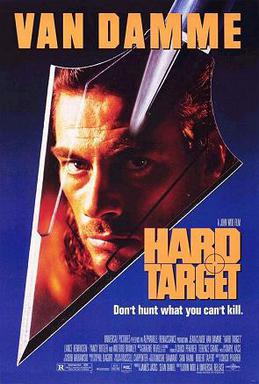
Hard Target (1993, directed by John Woo)


Nat Binder (Yancy Butler) has come to New Orleans to track down the father who she hasn’t seen since she was seven years old.  What she doesn’t know is that her father has recently been kidnapped and killed for sport by a wealthy hunter and Most Dangerous Game enthusiast named Emil Fouchon (Lance Henriksen).  After a homeless veteran named Chance Bourdeaux (Jean-Claude Van Damme) saves her from a group of muggers, Nat hires him to help her track down her father.  This turns out to be a good decision because Fouchon is sending out his private army to track down Nat and Chance is Jean-Claude Van Damme.

Jean-Claude Van Damme has never gotten as much respect as he deserves.  Even though most of his action movies were low-budget and often not very good, Van Damme was still a better actor than some of the other B-action stars of the 90s and, unlike most of his contemporaries, he could actually do most of the things that he did in the movies in real life as well.  Though Van Damme may have sabotaged his career through cocaine abuse, it’s not a surprise that most action fans would welcome a Jean-Claude Van Damme comeback far more than a comeback by someone like Steven Seagal.  Hard Target features Van Damme at his best, emphasizing his athleticism and contrasting his earnest acting style with the more flamboyant villainy of Lance Henriksen, who also brings his best to the role of Emil.  The film also features Wilford Brimley, bringing his best to the role of Bourdeaux’s uncle.  Van Damme, Henriksen, and Brimley all at their best?  How could anyone turn down Hard Target?

Hard Target was the first American film of director John Woo and he proves himself to be the perfect director for the material.  With Woo, every scene becomes an operatic set piece and it’s impossible to worry about any plot inconsistencies when Van Damme is gracefully jumping out of the way of bullets and missiles.  Woo turns the material into a live-action comic book and, even if it’s not as good as his Hong Kong films or later American films like Face/Off, it’s still undeniably entertaining.

Hard Target is Van Damme’s best film of the 90s.  Watch it on a double bill with Surviving The Game.


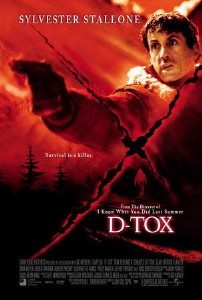
Cinemax Friday: Eye See You (2002, directed by Jim Gillespie)


Today, now that he’s received a second Oscar nomination for playing Rocky Balboa, directed several Expendable movies, and reemerged as an icon of American pop culture, it’s easy to forget just how bad Sylvester Stallone’s career was going at the start of the 21st Century.  After appearing in a notable series of flops and going unrewarded after his attempt to reinvent himself as a serious actor in Cop Land, Stallone was in danger of fading into irrelevance.  While Arnold Schwarzenegger was preparing to run for governor, Stallone found himself facing every former star’s nightmare: a career in direct-to-video thrillers.

Eye See You comes from that period of Stallone’s career.  It’s basically a slasher film, except that the victims are all middle-aged alcoholics instead of nubile teens.  Stallone plays FBI agent Jack Malloy, who hits the bottle pretty hard after his girlfriend is murder by a serial killer.  After Malloy attempts suicide, his partner (Charles S. Dutton) sends Malloy to an isolated rehab clinic, one that caters only to cops on the edge.  Unfortunately, the serial killer follows Malloy to the clinic and, when a sudden blizzard hits, the killer starts to pick off all of the cops, one-by-one.

Eye See You (which was originally called D-Tox until someone finally realized that made the movie sound like it was about a robot learning how to be human) is really bad.  Jim Gillespie also directed I Know What You Did Last Summer and he brings out all of the usual slasher tricks but they’re less effective when the people being stalked are adults who should have enough common sense not to split up when there’s a killer on the loose.  The film tries to throw in some of The Thing‘s paranoia and it also tries to duplicate The Shining‘s sense of isolation but none of it really works.  The Thing was set in an arctic research facility while The Shining was set in a hotel that was specifically closed in the winter because of the risk of blizzard.  There’s really no logical reason for Eye See You‘s rehab center to be located out in the middle of nowhere except for the fact that the film needed to get Stallone and the other cops isolated.  Even if you accept that the rehab center needs to be away from civilization, why build it in a location that is certain to get regularly hit by life-threatening weather?

The film is full of great character actors but it wastes them.  If you’re going to have Tom Berenger, Robert Patrick, and Kris Kristofferson all in the same film, one of them should turn out to be the murderer!  Instead, they’re just there to die and it’s hard not to resent a waste of good actors.  For his part, Stallone seems to be mentally checked out, as if he knew during filming that this wasn’t going to be his comeback vehicle.

Fortunately, even after appearing in films like Eye See You,  Stallone was able to eventually make a comeback.  As has often been the case in his career, he did it by taking matters into his own hands and bringing both Rambo and Rocky Balboa back to theaters.  The Expendables films, while hardly being high art, served to remind people of why they liked Stallone in the first place and Creed reminded everyone that Stallone actually can act when he has the right script.  Fortunately, Sly was saved from spend the rest of his career appearing in direct-to-video films and I’m glad.  Direct-to-video is the perfect place for Steven Seagal but Sylvester Stallone belongs on the big screen!

Music Video of the Day: Who’s Crying Now by Journey (1981, directed by ????)


Love them or hate them, Journey is band that just epitomized an era.  Who’s Crying Now, which was the first single off of their Escape album, was one of their biggest hits.  Until 2009, it was Journey’s top-charting hit in the UK.  (Interestingly, it was Don’t Stop Believin’ that dethroned Who’s Crying Now from that spot as the result of Don’t Stop Believin’ being featured on an episode of The X-Factor 28 years after it was initially released.)

As with most of Journey’s music videos, the video for Who’s Crying Now keeps thing simple with the band performing the song.  Journey wouldn’t try to do a conceptual video until 1983’s infamous video for Separate WaysWe all know how that turned out.

Enjoy!

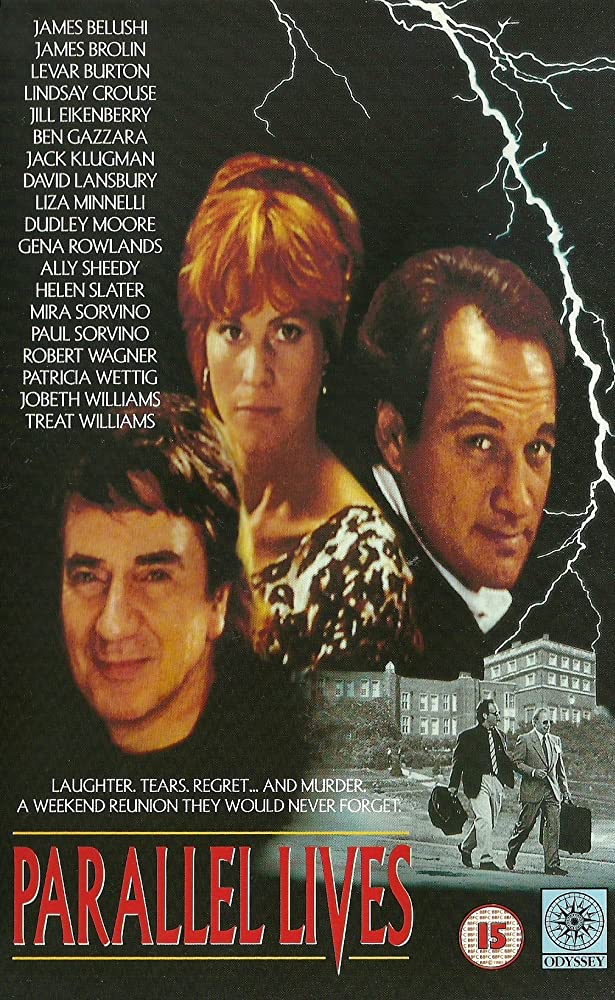
Parallel Lives (1994, directed by Linda Yellen)


A large group of people gather together one weekend for a fraternity/sorority reunion.  Since college, some of them have become rich and powerful.  Some of them are now famous.  Some of them are now seedy and disreputable.  They all have college memories, though there’s such a wide variety of age groups represented that it’s hard to believe that any of them actually went to college together.  After the men spend the day playing practical jokes and touch football and the women spend the night talking about their hopes and dreams, they wake up the next morning to discover the someone has murdered Treat Williams.  A pony-tailed sheriff (Robert Wagner) shows up to question everyone.

Parallel Lives was made for Showtime with the help of the Sundance Institute.  Today, it’s a forgotten film but, for some reason, it was very popular with American Airlines during the summer of 1997.  That summer, when I flew to the UK, Parallel Lives was one of the movies that we were shown.  (It was the second feature.  The first feature was Down Periscope, a submarine comedy starring Kelsey Grammar.  Fourteen year-old me enjoyed Down Periscope but, in retrospect, it wasn’t much of a flight.)  A month and a half later, when I flew back to the U.S., Parallel Lives was again one of the films shown on the flight!  For that reason, I may be the only person on the planet who has not forgotten that a film called Parallel Lives exists.

Parallel Lives, I later learned, was an entirely improvised film.  The huge cast were all given their characters and a brief outline of the film’s story and they were then allowed to come up with their own dialogue.  Unfortunately, no one did a very good job of it and the men were reduced to bro-ing it up while the women spent most of the movie having extended group therapy.  The story doesn’t add up too much and, even when I rewatched it from an adult’s perspective, I wasn’t sure what I was supposed to get out of everyone talking about how different the real world was from college.  Technically, the film’s a murder mystery but you can’t improvise a successful murder mystery.  This film proves that point.

Of course, it doesn’t help that there are 26 characters, all trying to get a word in at the same time.  Some of the roles don’t make much sense.  Dudley Moore shows up, playing an imaginary friend.  (How do you improvise being a figment of someone’s imagination?)  James Brolin introduces himself to everyone as being, “Professor Doctor Spencer Jones” and that appears to be as far as he got with his improv.  Ben Gazzara is a gambler and Mira Sorvino is the prostitute that he brings to the reunion while Mira’s father, Paul Sorvino, moons the camera several times.  Jack Klugman is a senator with Alzheimer’s and Patricia Wettig is his daughter.  The majority of the movie centers around Jim Belushi, playing a reporter and falling in love with JoBeth Williams.  Liza Minnelli, Helen Slater, Levar Burton, Lindsay Crouse, Matthew Perry, Ally Sheedy, and Gena Rowlands all have small roles.  How did so many talented people come together to make such a forgettable movie and why did American Airlines decide it was the movie to show people on their way to another country?  That’s the true mystery of Parallel Lives.

Music Video of the Day: Problem Child by AC↯DC (1976, directed by Russell Mulcahy)


Here’s the thing about AC/DC.

When it came to music videos, they’ve never needed to do anything fancy.  They’re not one of those bands that needs a bunch of bells and whistles to look impressive.  All they have to do is come out on stage and rock.  Their best music videos are usually very simple performance clips, like this one.

This video was filmed at the Sidney Myer Music Bowl in Melbourne, Australia.  If it looks rough, that’s because it was supposed to be a part of a large concert film but the film’s backers ran out of money before any major post-production work could be done.  The rough look, however, works for AC/DC.  They are a band that could handle looking rough.

Russell Mulchay, of course, went on to direct multiple videos for Duran Duran, along with Highlander.

Enjoy!

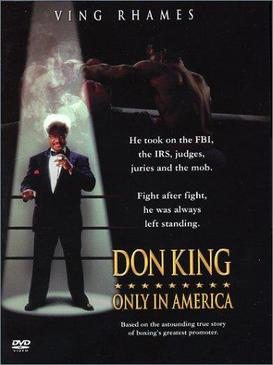
Don King: Only In America (1997, directed by John Herzfeld)


Don King: Only In America is an HBO biopic of the controversial boxing promoter, Don King.  It’s a good movie but it will probably always be overshadowed by what happened when the Hollywood Foreign Press Association voted to give Ving Rhames the Golden Globe for Best Actor in a TV-Movie or Miniseries.  When Rhames won, he called fellow nominee Jack Lemmon to the stage and gave him the award, saying “I feel that being an artist is about giving, and I’d like to give this to you.”  Lemmon, who had been nominated for his work in 12 Angry Men, accepted the statue while the audience gave Rhames a standing ovation.  The HFPA later sent Rhames a second statue and Spike Lee satirized the entire incident in Bamboozled when he had Damon Wayans give away an award he had won to Matthew Modine.

Ving Rhames plays the title role in Don King: Only in America and he definitely deserved every nomination and award that he received as a result.  The episodic film starts in the 50s, with a young King being sentenced to prison and then shows how King went on to become one of the wealthiest and most powerful men in America.  It’s not always a flattering portrait.  The movie fully documents how King cheated the boxers that he managed and the damage that he ultimately did to the image of boxing, a sport that didn’t have a particularly good reputation to begin with.  At the same time, Rhames is such a force of nature that it’s hard not to sometimes admire King’s chutzpah as he deals with and outwits everyone from the Mob to the IRS to racist fight promoters to greedy dictators.  As played by Rhames, King makes himself a success by the virtue of his own hard work and utter ruthlessness.  He’s a flamboyant showman who knows how to play hardball behind the scenes and who refuses to take no for an answer.  He ruins the lives of too many people to ever become a sympathetic figure but he remains a fascinating one.

The film features Rhames, as King, standing in a boxing ring, telling us his story and occasionally interrupting the flashbacks whenever he thinks that they’re reflecting too negatively on him.  (When the film shows Muhammad Ali, played by Darius McCrary, incapacitated by Parkinson’s, King stops the film and angrily tells us that he had nothing to do with that.)  The real Don King supposedly hated the way this film portrayed him and threatened to stop doing business with HBO after it aired but he should have appreciated Ving Rhames’s performance.  Don King is fond of saying that he could have become a millionaire “only in America,” and Rhames’s flamboyant, charismatic, and no holds barred performance convinces us that he’s right.

Great Moments In Comic Book History: Conan The Barbarian Visits Times Square


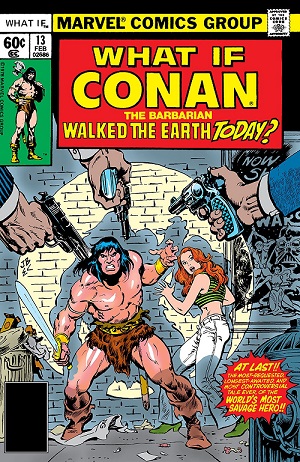
Without a doubt one of the greatest Conan stories ever told, What If Conan the Barbarian Walked the Earth Today? opens in the Hyborian Age with everyone’s favorite barbarian getting tossed into a well by an evil sorcerer.  It turns out that the well has the power to send people through time and, before you know it, Conan the Barbarian finds himself transported to 1977 New York!

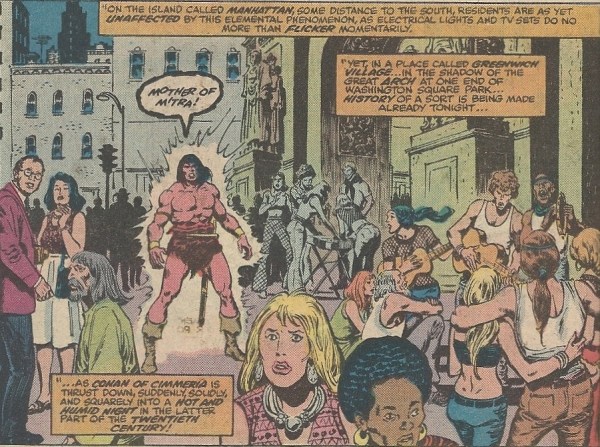
If you know anything about Conan (especially the version of Conan who appeared in Marvel Comics), you probably have all sorts of expectations about how Conan would handle being in New York in 1977 and the great thing about this issue of What If? is that fulfills every one of them.  Conan neither speaks nor understands the language, he’s wearing a loincloth, carrying a sword, and he’s in the most crime-ridden spot in America.  Being Conan, he does what he does best.  He kills muggers, makes love to a taxi driver, and eventually gets sent back to his time via a lucky strike of lightning.

Here are a few things that make this one of Conan’s greatest adventures:

First, the story incorporates the real-life New York City Blackout of 1977.  In fact, it’s even suggested that it was the temporal energy surge of Conan’s arrival in 1977 that led to the blackout in the first place.  The 1977 blackout, which occurred while New York was suffering from a heat wave and tensions were already high due to the Son of Sam murders, led to widespread rioting.  And to think, it was all Conan’s fault!

Another cool thing about Conan’s trip to 1977 is that most New Yorkers just assume that he’s another Times Square weirdo, with one person actually making the mistake of grabbing Conan’s sword and declaring himself to be Darth Vader!  The people who see Conan mention that he looks like Sylvester Stallone and, I kid you not, Arnold Schwarzenegger!  Keep in mind, this story was published several years before the future governor of California was selected to play Conan the Barbarian in the film of the same name.

Finally, this story is different from other issues of What If? in that it definitely happened.  A typical What If? story would imagine what would have happened if a super hero had lost their latest battle.  (Usually, everyone would die and the universe would end.  What If? was dark.)  What If? #13, though, is just a Conan story.  He goes to the future and then he goes back to the past.  No one’s history is changed.  As far as I’m concerned, What If #13 tells a story that, in terms of the Marvel canon, really happened.  Conan really did cause the Blackout of 1977 and Peter Parker and Mary Jane Watson really did see him in Times Square.

For all of these reasons, Conan the Barbarian’s trip to 1977 truly was a great moment in comic book history!

What If? (Vol. 1 #13, February 1979)

“What If Conan the Barbarian Walked the Earth Today?”

  • Writer — Roy Thomas
  • Penciler — John Buscema
  • Inker– Ernie Chan
  • Colourist — Glynis Wein
  • Letterer — Joe Rosen
  • Cover Artist — John Buscema, Ernie Chan

Previous Great Moments In Comic Book History:

  1. Winchester Before Winchester: Swamp Thing Vol. 2 #45 “Ghost Dance” 
  2. The Avengers Appear on David Letterman
  3. Crisis on Campus
  4. “Even in Death”
  5. The Debut of Man-Wolf in Amazing Spider-Man
  6. Spider-Man Meets The Monster Maker

The Trigger Effect (1996, directed by David Koepp)


Annie (Elisabeth Shue) and Matthew (Kyle MacLachlan) are a married couple with an infant daughter and a macho best friend named Joe (Dermot Mulroney).  When a suddenly blackout throws the city into chaos, Matthew and Annie can only watch as the world seems to go mad all around them.  Matthew quickly goes from being mild and straight-laced to stealing medicine from the local pharmacy and purchasing a shotgun with Joe.  When a potential burglar is killed by one of their neighbors, Annie, Matthew, and Joe decides that it’s time to get out of town and head up to Annie’s parents’ house.  Things do not go as planned as one of the three ends up seriously wounded and the members of the group have to decide how far they’ll go to survive.

The Trigger Effect has an interesting premise and raises some relevant questions about how far people will go to protect themselves in a crisis.  Unfortunately, the execution is almost totally botched.  Shue, MacLahclan, and Mulroney are all good actors but none of their characters are that interesting and an attempt to insert some sexual tension between Annie and Joe just feels like a cheap cliche.  Since the movie doesn’t make it clear who these three were before the blackout, it’s hard to be effected by what they do after the lights go out.

Michael Rooker has a cameo at the start of the film’s third act.  It involves him yelling and, because it’s a big dramatic moment, you won’t want to laugh but it’s hard not to because his rant just goes on for so long.  In that one moment, whatever reality has been created by the film goes straight out the window.  It all leads to a predictable ending that feels like it was taken from the Giant Book of Hollywood Cliches.  That’s a good book if you can find a copy.

This was David Koepp’s directorial debut and it has the weaknesses that you would expect to find in a first film.  Koepp’s second film, Stir of Echoes, would be a marked improvement.