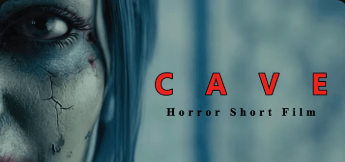
The intro looks terrible. It’s bad even for anything I have seen up to this point. We open with a meteor heading towards earth.
A bear watches the impact and goes to investigate because why not? The meteor was hiding a spaceship. Later, there is a cute couple taking a selfie during their camping trip. I wonder what will happen?
They enter a cave and hear growling. They are confronted by a MONSTER BEAR. A huge huge bear. I’m guessing the bear is part alien now. The monster bear attacks and kills the husband, but the wife escapes and has PTSD hallucinations.
The ending was not great. I would have ended in the cave rather than tack on this boring segment. So, when the angry mobs come to feed the AI creators to sharks, I would just let the sharks gnaw on this creator, but nothing terrible. It was bad though; so, know that and if the creator reads this, please stop doing this.
“You want to put some kind of explanation down here before you leave? Here’s one as good as any you’re likely to find. We’re bein’ punished by the Creator…”— John “Flyboy”
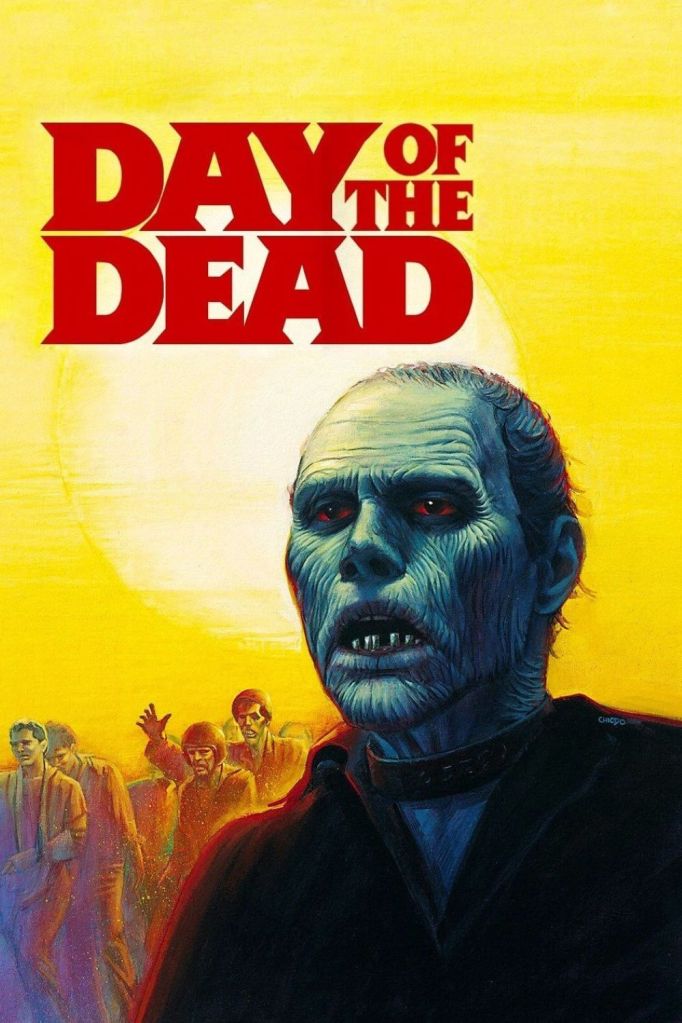
George A. Romero’s 1985 film Day of the Dead stands as an unflinching and deeply cynical meditation on the collapse of society amid a relentless zombie apocalypse, intensifying thematic and narrative complexities first introduced in Night of the Living Dead (1968) and Dawn of the Dead (1978).
Originally, Romero envisioned the film as an epic, describing it as “the Gone with the Wind of zombie films.” His screenplay featured above-ground scenes and a more expansive narrative, but budget cuts halved the original $7 million budget to $3.5 million, forcing a drastic paredown. While much grandiosity was lost, the trimming resulted in a tighter narrative and heightened the nihilistic tone, deepening the film’s focused exploration of humanity’s darkest aspects during apocalypse.
Set after civilization has collapsed, Day of the Dead places viewers in the suffocating confines of a missile silo bunker in Florida, where scientists and soldiers struggle for survival and solutions amid encroaching undead hordes. The claustrophobic atmosphere—born partly from the abandonment of Romero’s broader original sequences—intensifies the tension between the hopeful scientific pursuit of salvation and the harsh pragmatism of military authority. These competing ideologies escalate into authoritarian violence, embodying the fractured microcosm of a dying society.
Within this claustrophobic world, a third group—composed of characters Flyboy and McDermott—emerges as a stand-in for the rest of humanity. They observe the scientists and soldiers—institutions historically symbols of security and innovation—but witness how these deeply entrenched ways of thinking only exacerbate problems instead of solving them. This third faction characterizes humanity caught between rigid orders and doomed pursuits, reflecting Romero’s broader commentary on societal stagnation and fragmentation.
Central to this conflict are Dr. Logan, or “Frankenstein,” a scientist obsessed with controlling the undead through experimentation, and Captain Rhodes, the hardened soldier who believes survival demands ruthless control.
Logan’s controversial research seeks to domesticate and condition zombies, notably through his most celebrated subject, Bub—the undead zombie capable of rudimentary recognition and emotion—challenging assumptions about humanity and monstrosity.
Here the film benefits greatly from the extraordinary practical effects work of Tom Savini, whose contributions on Day of the Dead are widely considered his magnum opus. Savini’s makeup and gore effects remain unsurpassed in zombie cinema, continually influencing horror visuals to this day. Drawing from his experience as a combat photographer in Vietnam, Savini brought visceral realism to every decomposed corpse and violent injury. The close-quarters zombie encounters showcase meticulous practical work—detailed wounds, biting, and dismemberment—rendered with stunning anatomical authenticity that predates CGI dominance.
Bub, also a masterclass in makeup and animatronics, embodies this fusion of horror and humanity with lifelike textures and movements that blur the line between corpse and creature, rendering the undead terrifyingly believable.
The film captures the growing paranoia and cruelty as resources dwindle—food, ammunition, and medical supplies—and the fragile social order begins to shatter. The characters’ mounting desperation illustrates Romero’s thesis that humanity’s real enemy may be its own incapacity for cooperation.
The moral and social decay is vividly portrayed through characters like Miguel, whose mental breakdown sets destructive events in motion, and Rhodes, whose authoritarian survivalism fractures alliances and moral compass alike. Logan’s cold detachment and experiments push ethical boundaries in a world on the brink.
Romero’s direction combines claustrophobic dread with stark psychological terror, further amplified by Savini’s effects. The cinematography’s low lighting and tight framing create an oppressive environment, while graphic violence underscores a world irrevocably broken. The unsettling sound design—moans, silences, sudden outbreaks—immerses viewers in a relentless atmosphere of decay and fear.
Romero described Day of the Dead as a tragedy about how lack of human communication causes chaos and collapse even in this small slice of society. The dysfunction—soldiers and scientists talking past each other, eroding trust, spirals of paranoia—serves as a bleak allegory for 1980s America’s political and cultural fragmentation. Failed teamwork, mental health crises, and fatal miscommunication thrive as the bunker metaphorically becomes a prison of fractured humanity.
Though not as commercially successful as its predecessors, Day of the Dead remains the bleakest and most nihilistic entry in Romero’s Dead series. Its overall grim tone, combined with mostly unlikable characters, establishes it as the most desolate and truly apocalyptic film of the series. The characters often appear fractured, neurotic, and unable to escape their own destructive tendencies, making the story’s world feel even more hopeless and devastating.
Far beyond a simple gore fest, Day of the Dead serves as a profound social critique infused with psychological depth. It explores fear, isolation, authority abuse, and the ethical limits of science, reflecting enduring anxieties about society and survival. The film’s unsettling portrayal of humanity’s failings, embodied in broken relationships and moral decay, presents a harsh reckoning with what it means to be human when humanity itself is the ultimate threat to its own existence. This thematic complexity, combined with Romero’s unyielding vision and Savini’s unparalleled effects, crafts a chilling and unforgettable cinematic experience.
1962’s CarnivalofSouls was the only feature film to be directed by Herk Harvey. It was made on a budget of $33,000 and was filmed in Kansas and Utah, often without permits. The film was also the feature acting debut of model Candace Hilligoss, cast here as a emotionally withdrawn church organist who is involved in a serious car accident and then finds herself haunted by pasty-faced ghosts and surreal visions.
When it was initially released, CarnivalofSouls was dismissed by American critics. Indeed, it would a little over twenty years before the film started to be appreciated as both a classic independent film and also a truly eerie horror movie. Today, it’s recognized as a classic of the genre, an expressionistic ghost story that also works as a character study of a woman who is haunted by not just physical death but also emotional malaise.
Carnival of Souls is a Halloween tradition here at the TSL offices. This year, the tradition continues.
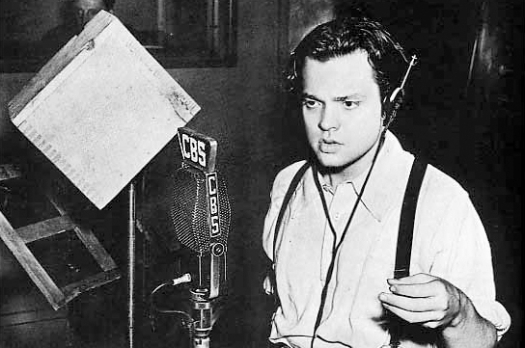
On October 30th, 1938, Orson Welles and the Mercury Theater On The Air broadcast an adaptation of H.G. Wells’s War of the Worlds and, legend has it, they scared the ever-loving heck out of America.
Actually, there’s some debate as to just how panicked America got when they heard the Mercury Theater On The Air’s adaptation of War of the Worlds. There was definitely some panic but there are differing reports on just how wide spread it was. For our purposes, let’s assume that the entire country was terrified at the same time and that everyone was loading up a shotgun and planning to go out and look for aliens. With his adaptation of War of the Worlds, Orson Welles managed to invent the whole found footage genre that would later come to dominate horror cinema in the late 90s and the aughts. Every found footage horror film owes a debt to what Orson Welles accomplished with War of the Worlds. Ultimately, it’s just another example of how far ahead of his time Orson Welles was.
H.G. Wells, the original author of War of the Worlds, and Orson Welles only met once, while they were both in San Antonio, Texas in 1940. (Orson Welles and H.G. Wells hanging out in San Antonio? To be honest, that sounds like it would make a good movie.) They were interviewed for a local radio station. H.G. Wells expressed some skepticism about the reports of Americans panicking while Welles compared the radio broadcast to someone dressing up like a ghost and shouting “Boo!” during Halloween. Both Wells and Welles then encouraged Americans to worry less about Martians and more about the growing threat of Hitler and the war in Europe.
I’ve shared this before but this just seems like the time to share it again. Here, for Halloween Eve, is the 1938 Mercury Theater On The Air production of The War of the Worlds!
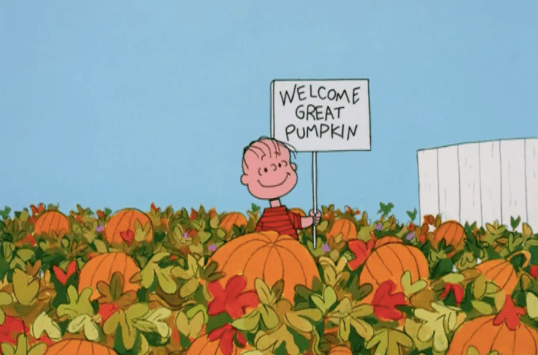
I don’t know about you but, after Game 5 of the World Series, I am praying to the Great Pumpkin for a Halloween miracle.
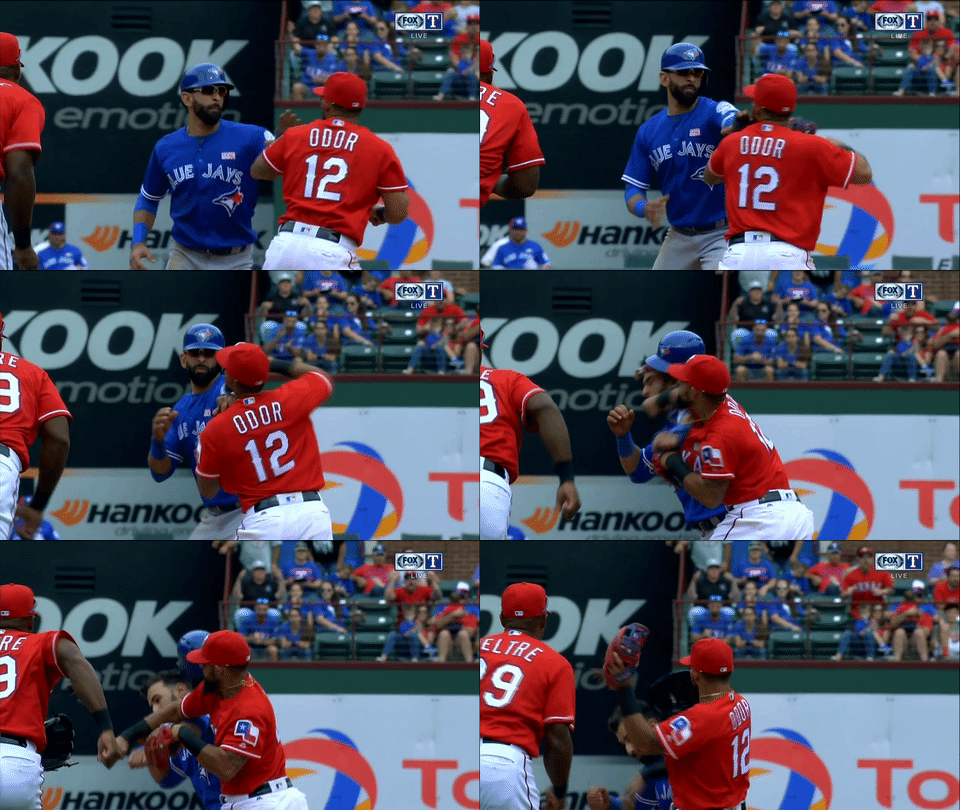
The Blue Jays are one game away from winning the World Series. Game 6 will be played tomorrow, on Halloween night. I want to spend my Halloween handing out candy and dancing the monster mash. (It’s a graveyard smash.) I do not want to spend it watching my least favorite baseball team win the World Series. The Blue Jays deserve a lot of credit for how they’ve played this season but, until they fully exorcise the spirit of Jose Bautista and his bat flip from the team, I cannot support them.
I know people don’t like the Dodgers. I don’t care. They’re the only thing keeping the Blue Jays from winning the World Series.
Tomorrow’s game is pivotal. If the Dodgers win, Game 7 will be played on November 1st and, if the Blue Jays do take the Series, at least it won’t happen on a holiday. If the Blue Jays win Game 6, it’s all over.
I’m going to be make sure this household is the most sincere in the neighborhood so that the Great Pumpkin will give me what I want.
In this video, Arnold Schwarzenegger is sent to the past to eliminate Guns N’ Roses but ultimately decides that it would be a waste of ammo. Obviously, he knew that fulfilling his mission would change history and the world would never get to hear Chinese Democracy.
This song (and this video) were used to promote Terminator 2: Judgement Day.
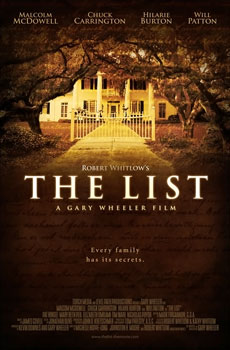
2007’s The List opens during the dying days of the American Civil War.
A group of wealthy plantation owners form a secret society. They pool together their fortunes and they each sign onto a list. Over the years, whenever a member of the Society passes away, their eldest male descendant replaces them on the List and also has access to the fortune that that the Society secretly holds.
In 2007, directionless attorney Renny Jacobsen (Chuck Carrington) is shocked when his father dies and leaves him next to no money. As Renny tells us over and over again, he really could have used some of his father’s fortune. However, his father does leave him a key the leads to Renny uncovering a tape that explains everything that he needs to know about the Society. All Renny has to do is sign his name to the List.
The Society is now run by Desmond Larochette (Malcolm McDowell) and we know that he’s evil because his name is Desmond Larochette and he’s played by Malcolm McDowell. Larochette seems to be more than happy to allow Renny to join the Society but he’s not quite as happy that another member of the group died and only left behind a female heir, Jo Johnston (Hilarie Burton). The members of the Society are faced with quite a quandary. Should they allow a woman to join their society? And, if not, what should they do now that she know about the Society’s existence?
When Jo goes to the mansion for the Society’s meeting, she spots a portrait of a gray-haired gentleman and asks who he is. Gus Eicholtz (Pat Hingle) explains that the painting is of John C. Calhoun, who served as Vice President under Andrew Jackson. “He looks angry,” Jo says and honestly, that was a piece of historical and artistic criticism that was so simple-minded that Jo really should have been disqualified from joining the Society at that very moment.
First off, how are you going to join a Southern secret society if you don’t know how John C. Calhoun is? Secondly, the portrait in question is actually a pretty famous one. George Alexander Haley painted it while Calhoun was Secretary of State. Even if you don’t know who John C. Calhoun is, chances are that you’ve seen the painting. Finally, there’s the claim that “He looks angry.” The painting was completed in 1845. Everyone looked angry in 1840s! Even the noted bon vivant Henry Clay looked angry in his 1848 State Department portrait. (And Clay actually had his picture taken for his official portrait. Imagine how furious he would look if someone had painted him?)
Anyway, Renny joins the society but Jo does not, But then Renny discovers that it’s not as easy to get his hands on the money as he thought and he spends the entire movie complaining about it. That’s pretty much it. There is some suggestion that Desmond might have demonic powers, but it’s not really explored. Another heir dies mysteriously and it seems like Jo is being targeted as well. Again, it’s not really clear why. In the end, Renny puts God before the money but it kind of comes out of nowhere. It’s a muddled story and, by the end of the film, it’s still a struggle to figure out what it all meant. At the very least, Malcolm McDowell seemed to be having fun, playing an evil character and speaking in an almost indecipherable accent.
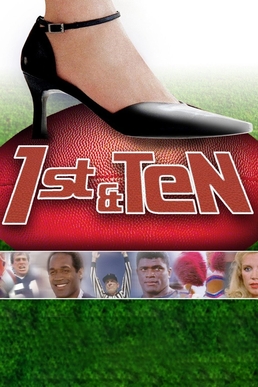
Welcome to Late Night Retro Television Reviews, a feature where we review some of our favorite and least favorite shows of the past! On Wednesdays, I will be reviewing 1st and Ten, which aired in syndication from 1984 to 1991. The entire series is streaming on Tubi.
Things are getting crazy at training camp!
Episode 2.3 “A Second Chance”
(Dir by Bruce Seth Green, originally aired on September 8th, 1986)
This week’s episode featured the unforgettable sight of O.J. Simpson tackling a knife-wielding Don Swayze and saving the life of Delta Burke.
Swayze was playing Clay Daniels, a tight end who was drafted by Coach Denardo, even though he apparently pulled a knife on a professor in college. After Clay threatened Johnny Valentine after he felt Valentine wasn’t throwing him the ball enough, Denardo explained that he drafted Clay because Clay can play football. Okay, Ernie, I guess that justifies having a knife-wielding maniac in the locker room….
After Denardo finally cut Clay from the team, Clay showed up at Diana’s house with a knife. Fortunately, Diana was able to call Denardo and T.D. Parker for help. Denardo showed up and promised he would give Clay a second chance. And then T.D. tackled Clay and grabbed that knife like a pro!
Meanwhile, Yinessa returned to training camp but he was not happy that his friend and roommate, wide receiver Jamie Waldren (Jeff Kaake), had a drug problem. This episode ended with Yinessa getting into a fight with someone who broke into their room in search of Waldren’s cocaine. An angry Yinessa flushed all of Waldren’s cocaine. Considering that this episode also featured Diana being named Chairperson of the League’s Anti-Drug Committee, I’m sure this won’t lead to any sort of awkwardness with the team.
Much like last week’s episode, this episode was so melodramatic and over-the-top that I couldn’t help but enjoy it. Drugs, training camp, and knives! Will the Bulls make it to the Championship Game a second year in a row? It’s not looking good but, considering that they have O.J. Simpson’s razor-sharp instincts at their disposal, I wouldn’t count them out yet!



 Through the Shattered Lens