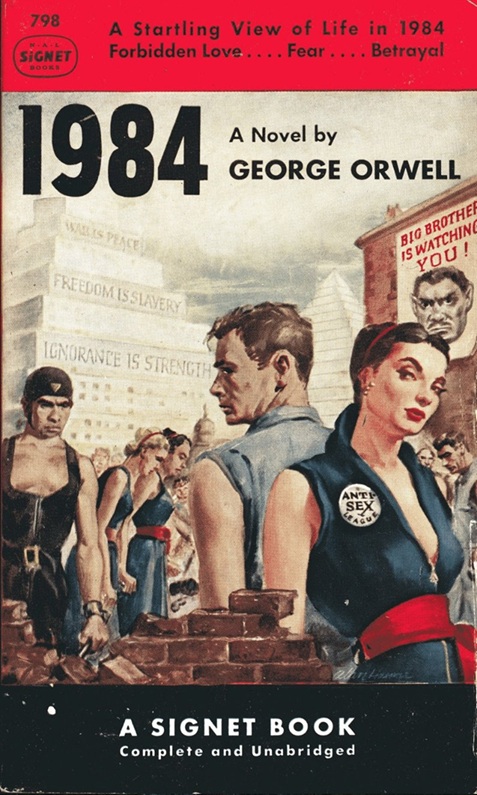
by Alan Harmon
This cover is from 1950.
by Alan Harmon
This cover is from 1950.
This is from the end of my favorite musical biopic, Walk Hard: The Dewey Cox Story. It’s a beautiful ride, indeed.
Enjoy!
Welcome to Late Night Retro Television Reviews, a feature where we review some of our favorite and least favorite shows of the past! On Sunday, I will be reviewing the Canadian series, Degrassi High, which aired on CBC and PBS from 1989 to 1991! The series can be streamed on YouTube and Tubi

This week, everyone is sick of Wheels.
Episode 2.8 “Home, Sweet Home”
(Dir by Kit Hood, originally aired on January 7th, 1991)
Oh, Wheels! Always in trouble, that one.
Ever since getting kicked out of his grandma’s house, Wheels has been staying with Joey but, after several weeks, Joey and his parents are sick of their houseguest. Wheels easts all the food, never says thank you, and has yet to even to start to look for his own place. Instead, he steals a bunch of money from Joey’s mom’s purse. As a result, Wheels not only gets kicked out of the Jeremiah residence but Snake’s parents announce that Wheels can’t stay with them either. Trapped outside during a thunderstorm, Wheels calls his grandmother and promises to obey her rules if she allows him to come home.
“I don’t believe you,” she replies before hanging up on him.
OUCH! Though, to be honest, she’s right about Wheels’s sincerity. Wheels is a pathological liar who takes advantage of anyone who trusts him. It’s been a while since he was the cool kid that everyone wanted to date.
Wheels eventually crashes on Snake’s back porch. (“My parents cannot know you’re back here,” Snake says.) The next day, at school, Wheels promises Joey that he will pay back the money he owes. Joey turns his back on Wheels and walks off.
And, again, Wheels really has no one to blame for but himself. And those of us who know our Degrassi history know that things are soon going to get even worse for Derek Wheeler.
Meanwhile, Michelle returns home so she can have a quiet place to study. She is shocked to find her father is at the house. (She thought he would be at cooking class.) Michelle agrees to move back in but on the condition that she pay rent and that her father stop trying to control her life. Her father reluctantly agrees. I guess, now that she’s broken up with BLT, it no longer matters that her father was previously portrayed as being a raging racist.
This episode was okay but it felt very familiar. We’ve done the whole Wheels-is-awful thing already. Add to that, as terrible as Wheels is, I don’t really agree with Grandma’s decision to refuse to allow him to come home. Wheels promised to abide by his grandmother’s rules and that was the condition that Grandma set for his return. Wheels is a handful and undoubtedly was being insincere but I think Grandma is going back on her word here. If Wheels had come home, she could have at least continued to talk to him and kept trying to get him to go to therapy. Instead, she left him out in the middle of Toronto in a rainstorm. Shame on her for that.
Some characters are just doomed no matter what and that’s certainly the case with Wheels.
Actress Kathleen Wilhoite is 61 years old today. Wilhoite is a talented actress and singer who has over 40 years worth of film and TV credits, including movies like ROAD HOUSE (1989), with Patrick Swayze, and BAD INFLUENCE (1991), with Rob Lowe and James Spader. The movie I’ll always appreciate her the most for is the fun Charles Bronson badass cop movie, MURPHY’S LAW, that was made for the infamous Cannon Studios back in 1986. Handcuffed to Bronson for portions of the film, Wilhoite’s character Arabella McGee has an extremely interesting vocabulary, which mostly consists of cheesy, crude and vulgar insults for almost every person she comes into contact with. I saw this movie when I was 13 years old, and I copied way too many of her zingers for my own personal use over the next few years. Heck, 38 years later, I’m still not above calling the people I love “snot licking, donkey farts!”
Happy Birthday, Kathleen! Enjoy the video below that shares all of those insults from the movie!
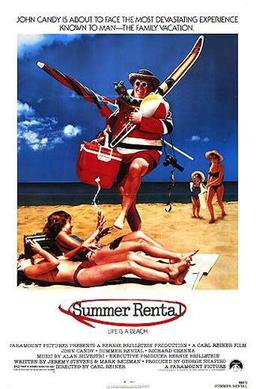 After a blow-up at work, air traffic controller John Chester (John Candy) is given five weeks of paid leave. He takes his family to Florida, where they rent a beach house and discover that their summer town is controlled by snobbish sailing champion Al Pellett (Richard Crenna). It’s the snobs vs slobs as Pellett tries to kick John and his family out of their summer rental and John tries to prove himself to his son and daughter (Joey Lawrence and Kerri Green) by winning the local sailing championship. Luckily, John has Sully (Rip Torn), a modern-day pirate captain, on his side.
John Candy was a remarkable talent. It’s just a shame that he didn’t appear in more good films. He will always be remembered for films like Splash, Uncle Buck, Planes, Train, and Automobiles, and Only The Lonely but unfortunately, most of his starring roles were in lightweight, forgettable far like Summer Rental. Candy is likable as John Chester and sympathetic even when he’s losing his temper over every minor inconvenience. But the film itself never really does much to distinguish itself from all of the other 80s comedies about middle class outsiders taking on the richest man in town. Candy is stuck playing a role that really could have been played by any comedic actor in 1985. It’s just as easy to imagine Dan Aykroyd or even Henry Winkler in the role. It feels like a waste of Candy.
The best thing about the film is Rip Torn’s performance as Sully. Torn’s performance here feels like a dry run for his award-winning work as Artie on The Larry Sanders Show. I would have watched an entire movie about Sully. As it is, Summer Rental is inoffensive and forgettable.
Welcome to Retro Television Reviews, a feature where we review some of our favorite and least favorite shows of the past! On Sundays, I will be reviewing Homicide: Life On The Street, which aired from 1993 to 1999, on NBC! It can be viewed on Peacock.
This week, the Homicide detective finally arrest the shooter but can they get a confession?
Episode 3.15 “End Game”
(Dir by Lee Bonner, originally aired on February 10th, 1995)
Finally, the Homicide detectives have figured out who actually shot Bolander, Howard, and Felton. Gordon Pratt (Steve Buscemi), who lived at the apartment that the detectives were accidentally sent to, is a gun-obsessed pseudo-intellectual whose apartment is full of books that he’s probably never read and a picture of himself posing like Lee Harvey Oswald with the rifle he used to kill JFK. Pratt also has an outstanding warrant for his arrest, explaining why he panicked when the cops accidentally knocked on his door.
Here’s my question. Why exactly did it not occur to anyone to see who lived in Apartment 201 when the shootings first happened? I understand that they were focused on a different suspect but it still seems strange that, with all the detectives assigned to the case, no one bothered to check out the guy who lived in Apartment 201.
Anyway, Bayliss and Mitch Drummond drop in on Pratt’s parents, who own a farmhouse and insist that Gordon would never shoot anyone. Meanwhile, Pratt’s co-workers all talk about how much they hate his guts with one guy mentioning that Pratt went out of his way to antagonize people. Pratt is finally tracked down at a massage parlor.
The majority of this episode centers around Pembleton and Bayliss interrogating Pratt. It’s an obvious attempt to recapture the intensity of the first season’s Three Men and Adena and it actually succeeds, thanks to some smart writing and the performances of Andre Braugher, Kyle Secor, and especially Steve Buscemi. Buscemi plays Pratt as being the ultimate uneducated know-it-all, someone who has picked bits and pieces of philosophy and who has learned that, if you deliver your mundane thoughts with a sneering contempt, some people will assume that you’re smarter than you actually are. Pembleton and Bayliss have fun picking apart Pratt’s arrogance but — and this is what sets Homicide apart from so many other cop shows — Pembleton ultimately goes too far. When he takes a look at Pratt’s copy of Plato’s The Republic and realizes that it’s written in Greek, Pembleton can’t help but taunt Pratt and point out that, unlike Pratt, he can actually read ancient Greek because he was educated by “the Jesuits,” while Pratt didn’t even mange to graduate high school.
“I want a lawyer!” Pratt shouts.
At this point, I realized that I had gotten so wrapped up in the interrogation scene that I had totally forgotten about the fact that all of the evidence linking Pratt to the shooting was circumstantial. Without a gun or a confession, there’s not enough evidence to hold Pratt. He pleads out to his outstanding assault warrant and he’s free within a few hours.
“You got too cute, Frank,” Munch says, leading to Pembleton physically attacking Munch and then storming out of the station. Munch goes to the hospital to see Bolander (who has woken up from his coma but who has no memory of who Much actually is) and Bayliss is the only person left to take the call when Gordon Pratt turns up dead in the lobby of his apartment building, shot in the head.
Who murdered Gordon Pratt and was it a cop? That’s what Bayliss — who sarcastically declares “I love my job!” before heading to the crime scene — will have to figure out.
Great episode! Not only was it wonderfully performed but, just when you thought to yourself, “There’s no way Pembleton could get away with this in real life,” it turns out that Pembleton couldn’t get away with it on Homicide either. That’s what makes Frank Pembleton such a fascinating character. He’s a brilliant detective but, in this episode, he let his desire to embarrass Pratt get in the way of doing his job. “He who loses control loses,” Pembleton says and, in this episode, he lost control. Pembleton’s reaction is to storm out of the station in a huff, leaving Bayliss the task of figuring out who killed Gordon Pratt.
My money’s on Munch, just because of how upset he was when Pratt walked and also that it would make sense for Munch to avenge Bolander’s head wound by shooting Pratt in the head. We’ll see if I’m correct next week!
We’ll be coming into Los Angeles in another 12 hours or so. And then, it’ll be onto Dallas. It was a good vacation but I’m definitely ready to jump back into things. I have to say thank you to my fellow writers here at the Shattered Lens and especially my wonderful sister, the one and only Dazzling Erin Nicole, for keeping the site thriving while I was gone.
Here’s today’s song of the day. For the record, I will not be bringing in a couple of keys. I still love Arlo, though!
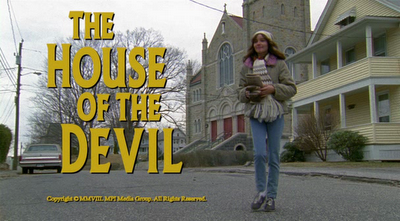
Yesterday, #ScarySocial watched House of the Devil, one of my favorite horror flicks. Here’s my favorite scene from that film!
I love this scene because I usually do the exact same thing whenever I have the house to myself.
4 Or More Shots From 4 Or More Films is just what it says it is, 4 shots from 4 of our favorite films. As opposed to the reviews and recaps that we usually post, 4 Shots From 4 Films lets the visuals do the talking!
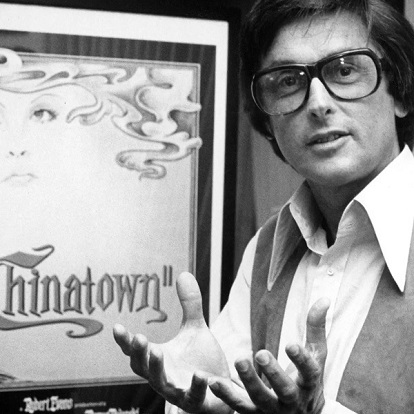
95 years ago today, Robert Evans was born in New York City. He started out working in his brother’s clothing business but a chance meeting with actress Norma Shearer led to him becoming an actor. And while Evans, by his own account, was not a particularly good actor, he did prove himself to be very skilled at playing the games of Hollywood. Evans eventually moved from acting to production, first as an executive at Paramount and then as an independent producer.
He lived a life as glamorous and tumultuous as the stars of his pictures and his memoir, The Kid Stays In The Picture, is considered to be one of the classic show biz autobiographies. He hung out with cinematic rebels like Jack Nicholson and Robert Towne and counted Secretary of State Henry Kissinger as a friend. He suggested that Francis Ford Coppola should direct The Godfather and, when Paramount put pressure on Coppola to cut the film down to two hours, it was Evans who famously announced that a two-hour Godfather was nothing more than a trailer. He lost Ali MacGraw to Steve McQueen and, again by own account, he lost a lot of potentially productive years to cocaine. (The Cotton Club scandal is one of the wildest in the history of Hollywood, though it should be noted that Evans himself was never charged with any wrongdoing.) But, for all that he lost, Evans continues to gain admirers as being the epitome of the producer who was willing to take chances. For all of his flamboyance, Evans had an eye for good material and the willingness to protect his directors. In many ways, he was as important to the cinematic revolution of the 70s as the directors that he hired. When Evans passed away in 2019, it was truly the end of an era.
Here, in honor of the birth and legacy of Robert Evans, are 8 Shots from 8 Films that Evans produced, either as studio chief at Paramount or as an independent producer.
8 Shots From 8 Robert Evans Films

Rosemary’s Baby (1968, dir by Romnn Polanski, DP: William A. Fraker)
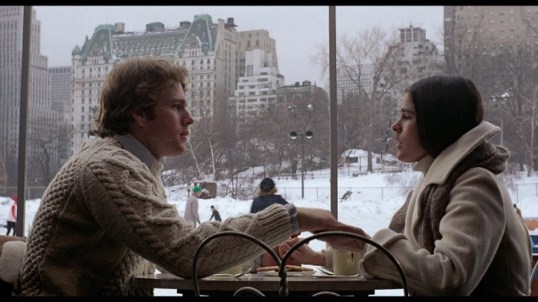
Love Story (1970, dir by Arthur Hiller, DP: Richard Kratina)
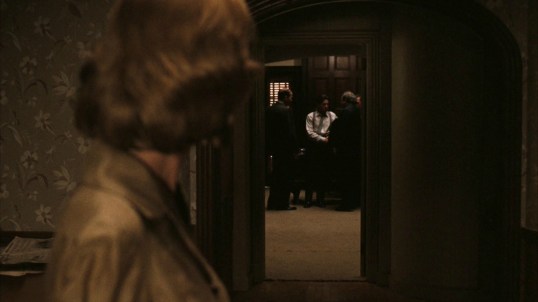
The Godfather (1972, dir by Francis Ford Coppola, Cinematography by Gordon Willis)
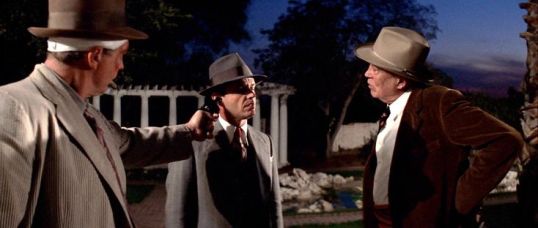
Chinatown (1974, dir by Roman Polanski, DP: John A. Alonzo)
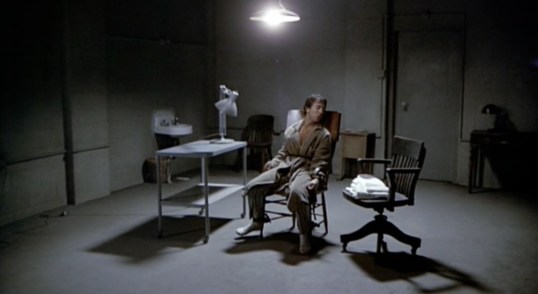
Marathon Man (1976, dir by John Schlesinger, DP: Conrad Hall)
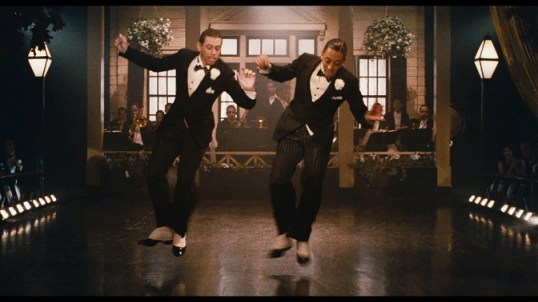
The Cotton Club (1984, dir by Francis Ford Coppola, DP: Stephen Goldblatt)

The Two Jakes (1990, dir by Jack Nicholson, DP: Vilmos Zsigmond)
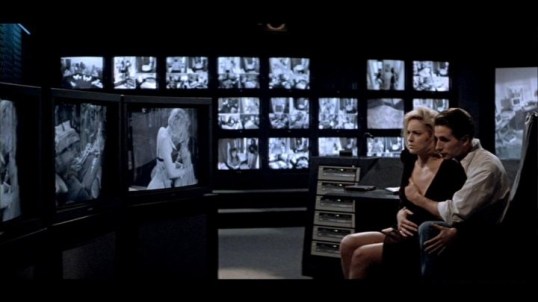
Sliver (1993, dir by Phillip Noyce, DP: Vilmos Zsigmond)
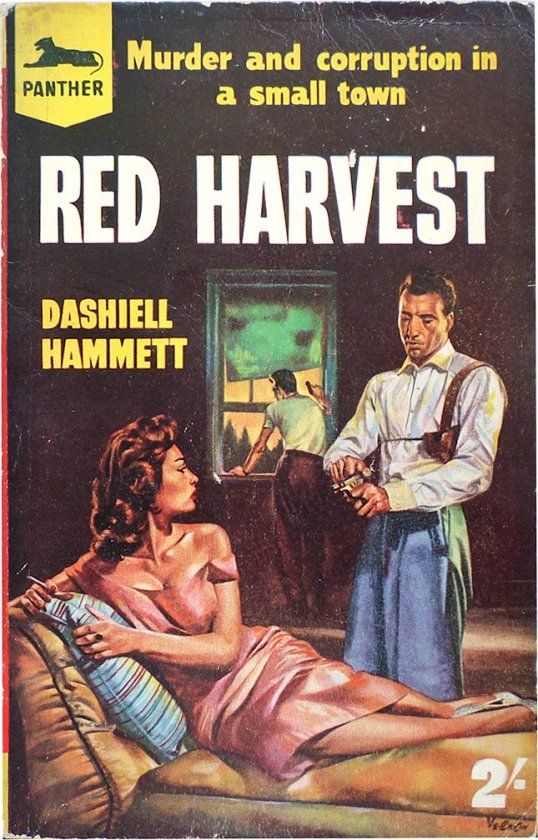
by John Vernon
This cover is from 1958.
 Through the Shattered Lens