Quick Review: The Longest Day (dir. by Ken Annakin, Andrew Marton, and Bernhard Wicki)


Hey hey!! Before you read this, know that this isn’t the only review for The Longest Day. Lisa Marie also wrote about it. Read that first, and then double back here if you like.

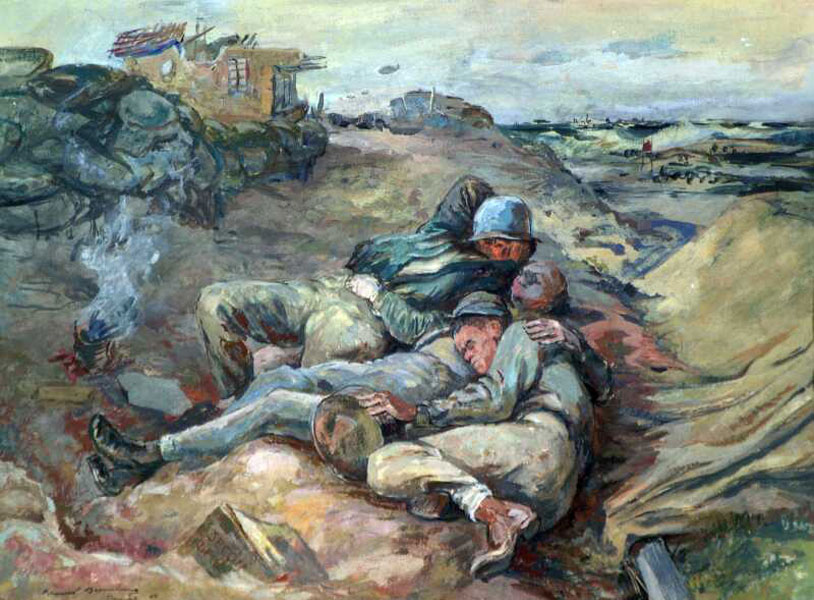
With June 6th being the 81st Anniversary of D-Day, I decided to write about 1962’s The Longest Day, a film often discussed in my family, but surprisingly, I don’t recall ever fully watching it until today. I’ll try to get a hold of a hard copy of this in the future. The film is currently available to watch (with ads) on YouTube. This was a film my Aunt adored, as she liked seeing the Military come to the rescue in any situation (which happened often in most classic sci-fi films). This, They Died With Their Boots On, and All Quiet on the Western Front were films she raved about.

According to the National WWII Museum, “The Allies suffered over 10,300 total casualties (killed, wounded, or missing), of which approximately 2,400 were on Omaha Beach.” it was also an incredible offensive achievement, with nations gathering together to take the fight to a common enemy. 

I don’t have a whole lot to say about this. As this is a film based on actual events (which takes some movie related liberties), I can’t complain or state I loved the “story”. As my boss at my Dayjob sometimes says, “It is what it is.” In terms of presentation, however, I highly recommend it. The film never really falters, nor does it give you too much time to relax. There’s a quiet tension with all of the characters you meet (all of the Allied ones, anyway), wondering if they may make it through by the end. If nothing else, watching it reminds one of the sacrifices made and the courage of anyone deciding to run head first into battle like that. 

The film is epic in scope, with a runtime of 3 hours and an all star cast that includes Robert Mitchum (Cape Fear), Eddie Albert (Dreamscape), John Wayne (The Quiet Man), Henry Fonda (Once Upon a Time in the West) Curt Jurgens (The Spy Who Loved Me), Red Buttons and Roddy McDowall (who would later work together in The Poseidon Adventure), Richard Beymer (West Side Story), Frank Findlay (Lifeforce), Gert Frobe and Sean Connery (both two years shy of working together in Goldfinger), Richard Burton (Cleopatra) and Robert Ryan (The Wild Bunch) among others.

Much like 1970’s Tora!Tora!Tora! (which my Dad often talked about), there were multiple directors for The Longest Day. Bernhard Wiki captured the German scenes, Andrew Marton handled the American ones, and Ken Annakin handled both the English and French sequences. This is all brought together in a seamless and pretty amazing tapestry. Unlike Steven Spielberg’s Saving Private Ryan, The Longest Day only covers the time leading up to and through the Omaha Beach assault, using the bulk of the film’s 3rd hour for the event. The entire film makes wonderful use of the time with all the alternate views, and by the time the first combat starts near the start of the 2nd hour, it continues to flow from interaction to interaction. There are also some wonderful arial shots over the battles, including an classic one shot that’s pretty marvelous given the time period.

The film takes place just before the invasion. American troops are already in the water on boats. Others are ready to parachute in. The French are ready to fight, waiting for the right phrase to hit the radio to put them into action. all are waiting to hear from the Britians on when the Allied Assault should begin. The weather isn’t optimal, but with the operation already delayed once before, President Eisenhower (Henry Grace) decides the 6th is the drop date. The Germans assume nothing will happen assaults are supposedly not done in harsh weather, but this proves to be quite the mistake.

It was wonderful to see everything come together. From the French sabotaging communications, to the strange comedy of soldier toting bagpipes to lead the Scottish into battle, or the Nuns who walked right through battle to save lives, it’s quite a sight to behold. 

COMBAT (TV Series) – starring Rick Jason and Vic Morrow – S3, E30: “Heritage” (Guest star – Charles Bronson)!


Just after surviving a difficult mission, Lt. Hanley (Rick Jason) and Kirby (Jack Hogan) are given orders to guide an artistic demolitions expert named Cpl. Velasquez (Charles Bronson) to a German observation post that sits on top of a rocky mountain. Their objective is to blow up the enemy post so a group of ten thousand Allied soldiers can cross the valley below on the very next day. Complicating the journey to the targeted destination is Velasquez’s slow pace and fascination with the local geology. This lack of focus causes plenty of problems with Hanley who just wants to get to the location and blow it to smithereens. Once they finally make it to the observation post, Velasquez spots a vault dug into the side of mountain and determines it’s the perfect spot to set his charges. However, when he goes into the vault, he sees that it is full of priceless sculptures and works of art, and he can’t bring himself to blow them up. But if they don’t complete their mission, 10,000 Allied soldiers will soon be sitting ducks. Will Velasquez come to his senses in time to save the men?!!

Today, I watched my old VHS tape of this season 3 episode of COMBAT, called “Heritage,” which premiered in April of 1965. When I was in junior high, I was at Wal-Mart and they had a big bin of VHS tapes, and in those bins, they had tapes that would contain one episode of the series. I don’t remember now who the guest stars were on the other tapes, but I certainly got excited when I saw an episode with Charles Bronson for sale. Since this was in the late 80’s, my tape is over 35 years old, and it’s still holding up well. “Heritage” is the only episode of COMBAT that I’ve ever seen. The series stars Rick Jason as Lt. Hanley and Vic Morrow as Sgt. Saunders. Morrow just makes a very short appearance here at the very beginning, with the episode focusing on the characters played by Jason and Bronson. The other primary character in this episode, who goes by the name of Kirby, is played by Jack Hogan who appeared in 111 episodes of the series. He’s more in the background of the episode as Bronson and Jason take center stage. 

Charles Bronson plays a much different type of character than he would go on to play in most of movies from the 70’s and 80’s. His Cpl. Velasquez can be described as more of a lover and not a fighter. Rather than focus on getting to his target, he’d rather take his time and soak in the interesting and varied rock formations along the way. Rather than easily taking out the enemy and saving his fellow soldiers, he can’t bring himself to destroy priceless works of art, pieces he calls our “God-given…immortal heritage!” It takes a little getting used to, but Bronson turns in a strong performance as a man who has something much more beautiful on his mind than just following orders and killing. This character and performance contrasts greatly with Rick Jason’s character who just wants to complete his mission and get back to base. It’s a shame that war puts people into these kinds of positions where you have to destroy some amazing things in order to save others, but that’s just how it is. I thank God that there have been so many brave men and women who have done what it takes to give us the freedom that we enjoy every day. Even though it was gonna hurt, Cpl. Velasquez, as played by Charles Bronson, is the kind of man who does what it takes. 

Overall, “Heritage” is a good episode that’s elevated by Bronson’s excellent performance. It’s a prime example of just what a great character actor Bronson was before hitting the big time as an international superstar a few short years later. I may have to check out a few more episodes of the COMBAT series after this! 

Scenes That I Love: Robert Englund Robs A Store In Hustle


Robert Englund

Today, the Shattered Lens wishes a happy 78th birthday to actor Robert Englund.

Englund will forever be identified with the horror genre and Freddy Krueger.  That said, before he first played Krueger in the first Nightmare on Elm Street, he was a busy character actor who appeared in roles both big and small.  He was considered for Star Wars.  He even played some sympathetic characters!

Of course, he’s not particularly sympathetic in today’s scene that I love.  Here he is in 1975’s Hustle, bringing his intense style to the small role of a thief who pulls a gun on Burt Reynolds.  This scene stands out for both Englund’s menace and Reynolds’s trademark cool.  Of course, if you’ve seen the film, you know what this scene is going to lead to.  The 70s were a dark time!


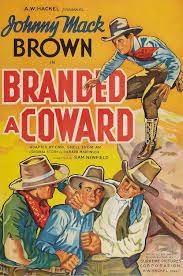
Branded A Coward (1935, directed by Sam Newfield)


When Johnny Hume was just a young boy, he witnessed his entire family being killed by a group of bandits led by the mysterious Cat.  Johnny grows up to be a trick-shot artist but, despite his skill with a gun, he can’t stand to point it at anyone or to be near any sort of gunfights.  When a fight breaks out in a saloon, he hides behind a bar and is labeled a coward.

Still, Johnny and his sidekick (Syd Saylor) somehow find the strength to run off a bunch of stagecoach robbers and save passenger Ethel Carson (Billie Seward).  Johnny is offered a chance to become the new town marshal.  Johnny, despite his fear of gunfights, accepts after he hears that the Cat is back in business.  Johnny wants revenge but the Cat turns out to be not who he was expecting.

Branded A Coward may be a zero-budget Poverty Row western but it’s actually has an interesting story and a good (if not entirely unexpected) twist towards the end.  Johnny Mack Brown was one of the better actors amongst the cowboys who starred in the westerns put out by PRC and directed by Sam Newfield.  Brown does a good job portraying Johnny’s fear and also his determination to get justice for his family.  Johnny proves he’s no coward but at what cost?

The plot here is a little darker than most of the westerns that were coming out at this time.  Every Poverty Row western featured a comic relief sidekick but this might be the only to feature the sidekick getting killed.  In the role of Oscar, Syd Saylor leaned very heavily on his fake stuttering shtick, to the extent that it actually got offensive.  I wasn’t sorry to see his character go.  Johnny Mack Brown didn’t need any help to get justice.

4 Films For The Weekend (6/6/25)


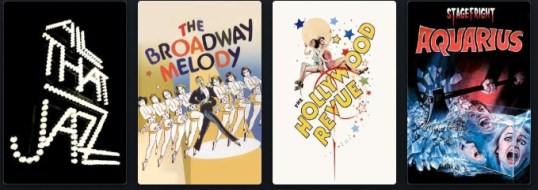
On Sunday, the Tonys will be handed out on  and, if you want to watch the ceremony, it’ll be televised on CBS.  However, if you’d just rather watch some movies about backstage life, I’ve got a few suggestions.

The Broadway Melody (1929) is a historically important film, in that it was the first sound film and the first musical to win the Oscar for Best Picture.  The story is nothing special.  Two sisters (Anita Page and Bessie Love) attempt to make the transition for Vaudeville to Broadway.  One sister becomes a success and almost loses herself in the process.  The other sister remains determined to become a star.  Watching the film today, it’s obvious that the cast and the crew were still figuring out how to work with sound.  That said, it’s a historical oddity and an interesting look at the film industry making the transition into the sound era.  If you’re into that sort of thing — and I certainly am! — the film is now available on Tubi. 

Far more entertaining is the same year’s Hollywood Revue of 1929 (1929).  Produced by MGM, Hollywood Revue features all of the MGM featured players showing off what they could do.  It’s a plotless parade of variety acts, hosted by the suave Conrad Nagel and featuring everyone from Joan Crawford to Marion Davies to Buster Keaton, Laurel & Hardy, Lionel Barrymore, John Gilbert, and Jack Benny!  The goal here was to not only show off MGM’s roster of stars but also to show audiences that MGM knew how make sound pictures.  It’s actually a really fun little movie.  The cast appears to be having fun and there’s something really enjoyable about seeing so many talented people all in one movie.  It also features a song called Singin’ In The RainThe film can be viewed on YouTube.

Bob Fosse’s All That Jazz (1979) is a masterpiece, following choreographer Joe Gideon (Roy Scheider) as he directs both a film and a musical at the same time while popping pills, having heart attacks, and flirting with the Angel of Death (Jessica Lange).  The scene where Gideon watches as his daughter and his girlfriend perform a dance routine that they’ve prepared for him is one of the most heartfelt moments that I’ve ever seen in a movie.  The film’s surreal ending manages to be satirical, heart-breaking, oddly funny, and sad.  Fosse based Gideon on himself and sadly, they both shared the same fate.  It can be viewed on Tubi.

Finally, Michele Soavi’s Stage Fright (1987) is one of the best horror films to ever be set in a theater.  Have you ever wondered why the victims in slasher films don’t just leave the house or the theater?  Have you ever said, “Don’t split up, you idiots!”  Well, in this one, everyone sticks together and everyone tries to leave and it doesn’t do a bit of good.  (Unfortunately, their director has a cocaine problem.)  This film has an absolutely brilliant opening sequence.  I always laugh when the Marilyn Monroe look-alike starts playing the saxophone.  The much-missed Giovanni Lombardo Radice has a small role.  Director Soavi appears as a cop who asks, “Do you think I look like James Dean?”  The film is on Tubi.

(Check out last week’s Weekend Films here!)

A Book To Read This Weekend (6/6/25)


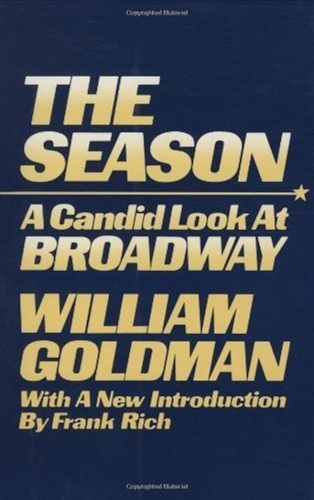
With the Tony Awards scheduled to be held and televised on Sunday, this weekend might be a good time to read William Goldman’s The Season.

First published in 1969, The Season was William Goldman’s very opinionated and very snarky look at the 1967-1968 Broadway season.  Best known as a screenwriter, Goldman took the money that he made from selling the script for Butch Cassidy and the Sundance Kid and spent a year going to Broadway show after Broadway show.  Many shows, he sat through multiple times.  The book features his thoughts on not just the productions but also the culture around Broadway.  Apparently, when the book was published, it was considered controversial because Goldman suggested that most Broadway critics played favorites and didn’t honestly write about the shows that they reviewed.  Goldman suggested that some performers were viewed as being untouchable while other worthy actors were ignored because they weren’t a part of the clique.  Today, that seems like common sense.  One need only look at a site like Rotten Tomatoes to see how pervasive groupthink is amongst film critics and also how carefully most reviews are written to ensure that no one loses access to the next big studio event.  In 1969, however, people were apparently a bit more naive about that sort of thing.

It’s an interesting book, especially if you’re a theater nerd like me.  That said, it’s also a bit of an annoying book.  There’s a smugness to Goldman’s tone, one that is actually present in all of Goldman’s books and essays and yes, aspiring screenwriters, that includes Adventures In The Screen Trade.  He clearly believed himself to be the smartest guy in the room and he wasn’t going to let you forget it.  It makes for a somewhat odd reading experience.  On the one hand, Goldman’s style is lively.  Goldman holds your interest.  On the other hand, there will be times when you’ll want to throw a book across the room.  When he hears two women talking about their confusion as to why they didn’t enjoy a show as much as they had hoped, Goldman describes walking up to them and offering to tell them.  It comes across as being very condescending.

That said, Goldman makes up for it in the chapters in which he explores some of the more troubled productions of the season.  His barbed dismissals of some of Broadway’s most popular performers still packs a punch and it remains relevant today as there are, to put it mildly, more than a few acclaimed performers who have been coasting on their reputations and their fandoms for more than a decade.  Goldman passed away in 2018.  One can only imagine what he would think of today’s celebrity-worshipping culture.

Finally, The Season does feature one beautiful chapter and it should be read by anyone who appreciates the character actors who carry movies and plays while the stars get all the credit.  Goldman’s look at play called The Trial of Lee Harvey Oswald features a powerful profile of actor Peter Masterson.  Goldman writes about a play that closed after 7 nights and which was not critically acclaimed but he turns the chapter into a celebration of truly good acting.  It’s the chapter that makes the rest of the book worth the trouble.

(Click here for last week’s Weekend Book!)

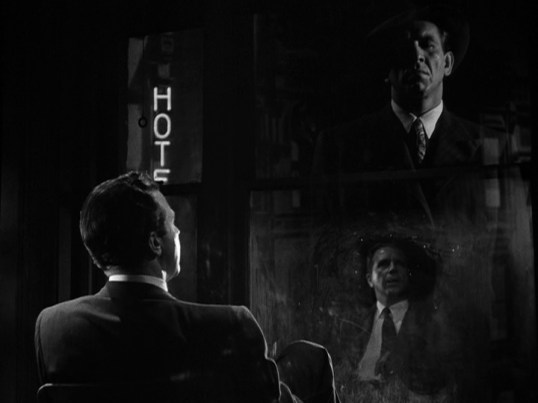
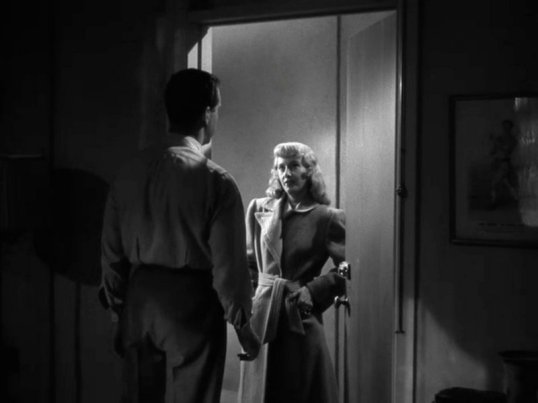
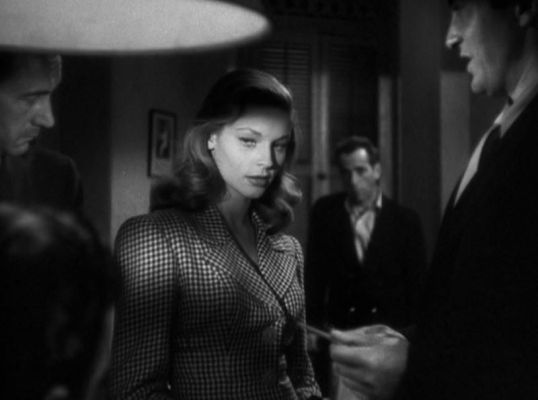
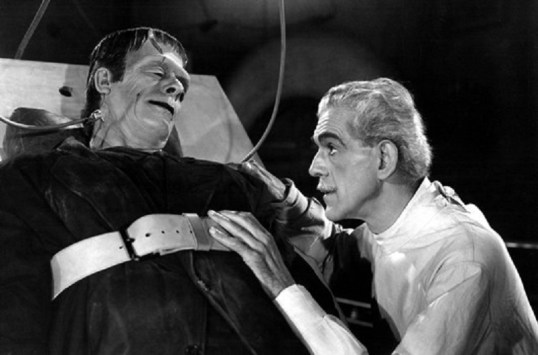
4 Shots From 4 Films: Special 1944 Edition


4 Or More Shots From 4 Or More Films is just what it says it is, 4 shots from 4 of our favorite films. As opposed to the reviews and recaps that we usually post, 4 Shots From 4 Films lets the visuals do the talking!

Today, we pay tribute to the year 1944 with….

4 Shots From 4 1944 Films

Murder, My Sweet (1944, dir by Edward Dmytryk, DP: Harry J. Wild)

Double Indemnity (1944, dir by Billy Wilder, DP: John Seitz)

To Have and Have Not (1944, dir by Howard Hawks, DP: Sidney Hickox)

House of Frankenstein (1944, dir by Erle C. Kenton, DP: George Robinson)


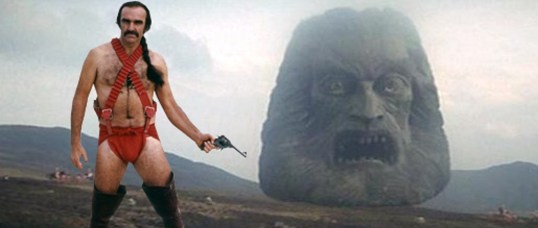
Live Tweet Alert: Join #FridayNightFlix for Zardoz!


Zardoz (1974, dir by John Boorman, DP: Geoffrey Unsworth)

As some of our regular readers undoubtedly know, I am involved in a few weekly watch parties.  On Twitter, I host #FridayNightFlix every Friday and I co-host #ScarySocial on Saturday.  On Mastodon, I am one of the five hosts of #MondayActionMovie!  Every week, we get together.  We watch a movie.  We tweet our way through it.

Tonight, at 10 pm et, I will be hosting #FridayNightFlix!  The movie?  Zardoz, starring Sean Connery, Charlotte Rampling, and a big ugly head!

If you want to join us this Friday, just hop onto twitter, start the movie at 10 pm et, and use the #FridayNightFlix hashtag!  I’ll be there tweeting and I imagine some other members of the TSL Crew will be there as well.  It’s a friendly group and welcoming of newcomers so don’t be shy.

Zardoz is available on Prime!

See you there!