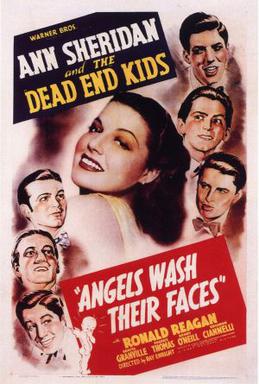
Angels Wash Their Faces (1939, directed by Ray Enright)


Gangster William Kroner (Bernard Nedell) and his henchman Martino (Eduardo Ciannelli) frame teenager Gabe Ryan (Frankie Thomas) for setting several buildings on fire.  Because Gabe has just gotten out of reform school and is a member of a local neighborhood gang, they know that no one will believe him or his sister, Joy (Ann Sheridan).

What Kroner and Martino did not count on were the Dead End Kids (Billy Halop, Bobby Jordan, Leo Gorcey, Gabriel Dell, Huntz Hall, and Benard Punsley).  They’re not going to sit by while the adults send their friend to jail.  Plus, one of their friends was killed in one of the fires.  The kids are out for revenge and sympathetic district attorney Pat Remsen (Ronald Reagan) is on their side.

As a publicity stunt, the city is holding an election for “Kid Mayor.”  The Kid Mayor gets to run the city for a week.  What could go wrong?  Billy Halop decides to run for Kid Mayor so that he can order the arrest of Kroner and then beat a confession out of him.

Angels Wash Their Faces was one of the last of the studio-made Dead End Kid films.  After this one, they would be sent down to Poverty Row and their films would be more obviously comedic.  Angels Wash Their Faces starts out as a juvenile delinquent drama, with Gabe struggling to rebuild his life and keep on the right track.  Then it becomes a goofy comedy, with Billy Halop running for mayor and unleashing vigilante justice on the bad guys.  I’m not sure that any city would actually give the “kid mayor” the power to lock people up.  Whoever came up with the idea of a kid mayor should be run out of politics.

On the positive side, Ann Sheridan is beautiful.  Future president Reagan is his usual friendly self.  On the negative side, the movie, overall, lacks the edge that made the first few Dead End Kids films memorable and the Dead End Kids themselves seem to be pretty much interchangeable.  Huntz Hall would have made a better mayor.
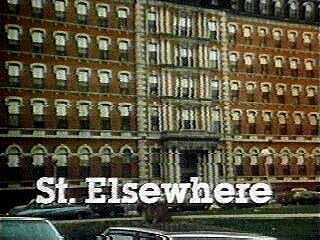
 

Retro Television Review: St. Elsewhere 1.20 “Craig In Love”


Welcome to Retro Television Reviews, a feature where we review some of our favorite and least favorite shows of the past! On Fridays, I will be reviewing St. Elsewhere, a medical show which ran on NBC from 1982 to 1988.  The show can be found on Hulu and, for purchase, on Prime!

This week, Dr. Craig does the unthinkable …. maybe.

Episode 1.20 “Craig In Love”

(Dir by Victor Lobl, originally aired April 12, 1983)

Dr. Craig is indeed in love in this episode.  He’s totally smitten with the Hungarian Dr. Vera Anya and, when his wife Ellen (played by Bonnie Bartlett, real-life wife of William Daniels) goes out of town to visit her mother, Craig makes plans to show Dr. Anya around the town and maybe more….

Ugh.  Seriously, I don’t like the idea of Dr. Craig cheating on his wife and, though this episode leaves it ambiguous as to what actually happened, it totally appears that’s what Craig did over the weekend.  Dr. Craig is pompous and full-of-himself and rude to almost everyone he talks to but it’s always appeared that he totally loved his wife.  The whole idea of him thinking about cheating — much less actually doing it — just doesn’t seem right for his character.  And, quite frankly, Dr. Anya wasn’t really that intriguing of a character so if Craig did share more than just that passionate goodbye kiss with her …. well, I prefer to pretend this entire storyline didn’t happen.

Far more interesting was the malpractice suit brought against Dr. Chandler and Nurse Daniels.  As the hospital’s lawyer explains it, there really isn’t much of a case to be made for malpractice.  Instead, the dead man’s family is just hoping to get a quick settlement out of it.  Most doctors aren’t willing to pay the legal fees and don’t have the time to go to court.  Chandler, however, is personally offended by the suit and pledges to do whatever he has to do fight it.  Yay, Chandler!  Seriously, I hate people who try to bully people into settlements.  After my Dad died, there was this crazy woman who thought she could bully his estate into giving her half a million dollars.  Instead, she received nothing and that’s exactly what she deserved.  Both Denzel Washington and Ellen Bry gave good performances this week.  Ellen  Bry’s Nurse Daniels is quickly becoming one of my favorite characters.  She doesn’t let anyone push her around.

Speaking of pushing people around, Dr. Morrison finally got sick of Dr. White’s drug addiction and the two of them ended up having a fist fight in the men’s room.  Still, when White later crashed his girlfriend’s car and needed to be bailed out of jail, Morrison was the first person that he called.  Morrison, being a saint, got White out of jail.  White, being a jerk, barely even said thank you.  Morrison went to Westphall with his concerns about Dr. White.  Westphall responded that it wasn’t his place to give a fatherly lecture.  That’s cold, Westphall.  What about when he kills a patient because he’s high?  Will you care then?  No wonder St. Eligius is getting sued for malpractice!

Finally, Dr. Samuels had a cold so he spent the entire episode whining about it.  Seriously, Dr. Samuels is one of my least favorite characters of all time.

This episode was uneven for me.  I’m not happy about Dr. Craig being a cheater but I am happy that Dr. Chandler is standing up for himself.  Dr. White appears to be heading to a very dark place.

There’s only two episodes left in the first season so I’m assuming we’re going to get some sort of closure to at least some of these storylines.  We’ll see what happens next week!


4 Shots From 4 Films: Special 1932 Edition


4 Shots From 4 Films is just what it says it is, 4 shots from 4 of our favorite films. As opposed to the reviews and recaps that we usually post, 4 Shots From 4 Films lets the visuals do the talking!

Today, we take a look at a classic cinematic year.  It’s time for….

4 Shots From 4 1932 Films

The Blood of a Poet (1932, dir by Jean Cocteau, DP: Georges Piranal)

Shanghai Express (1932, dir by Josef von Sternberg, DP: Lee Garmes and James Wong Howe)

Trouble In Paradise (1932, dir by Ernst Lubitsch, DP: Victor Milner)

Vampyr (1932, dir by Carl Theodor Dreyer, DP: Rudolph Mate)

Live Tweet Alert: Join #FridayNightFlix for Meteor!


As some of our regular readers undoubtedly know, I am involved in a few weekly watch parties.  On Twitter, I host #FridayNightFlix every Friday and I co-host #ScarySocial on Saturday.  On Mastodon, I am one of the five hosts of #MondayActionMovie!  Every week, we get together.  We watch a movie.  We tweet our way through it.

Tonight, at 10 pm et, I will be hosting #FridayNightFlix!  The movie?  1979’s Meteor, with Sean Connery and friends!

If you want to join us this Friday, just hop onto twitter, start the movie at 10 pm et, and use the #FridayNightFlix hashtag!  I’ll be there tweeting and I imagine some other members of the TSL Crew will be there as well.  It’s a friendly group and welcoming of newcomers so don’t be shy.

Meteor is available on Prime!

See you there!

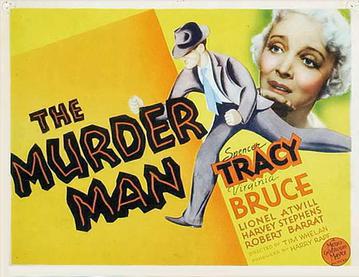
Film Review: The Murder Man (dir by Tim Whelan)


Seven minutes into the 1935 film, The Murder Man, 27 year-old James Stewart makes his film debut.

He’s playing a reporter named Shorty and, since this is a 30s newspaper film, he’s first seen sitting at a table with a bunch of other cynical reporters, the majority of whom seem to be alcoholics and gambling addicts.  Suddenly, words comes down that a corrupt businessman named Halford has been assassinated, shot by an apparent sniper.  (It is theorized that he was shot from one of those carnival shooting gallery games, which was somewhat oddly set up on a street corner.  Maybe there was shooting galleries all over place in 1935.  I supposed people had to do something to keep their spirits up during the Depression.)  While the other reporters run to the scene of the crime, Shorty is on the phone and calling his editors to let them know that a huge story is about to break.

Steve Grey (Spencer Tracy) is the reporter assigned to the story.  Crime is his beat and everyone agrees that no one’s better at covering criminals and understanding what makes them tick.  Unfortunately, it’s not always easy to track Steve down.  He’s a hard drinking reporter and lately, he’s been concerned about the collapse of his father’s business.  Still, when Steve is finally tracked down, he throws himself into covering the story and speculating, in print, about who could have killed Halford.  In fact, his girlfriend (Virginia Bruce) worries that Steve is working too hard and that he’s developing a drinking problem.  She suggests that Steve needs to take some time off but Steve is driven to keep working.

It’s largely as a result of Steve’s actions that a man named Henry Mander (Harvey Stephens) is arrested and convicted of Halford’s murder.  Steve should be happy but instead, he seems disturbed by the fact that he is responsible for Mander going to jail.  When his editor requests that Steve go to Sing Sing to interview Mander, a shocking truth is revealed.

Admittedly, the main reason that I watched The Murder Man was because it was the feature film debut of James Stewart.  (Stewart previously appeared in a comedy short that starred Shemp Howard.)  Stewart is only in a handful of scenes and he really doesn’t have much to do with the main plot.  To be honest, Shorty’s lines could have been given to anyone.  That said, Stewart still comes across as being a natural on camera.  As soon as you hear that familiar voice, you can’t help but smile.

Even if Stewart hadn’t been in the film, I would have enjoyed The Murder Man.  It’s fast-paced mystery and it has a decent (if not totally unexpected) twist ending.  It’s one of those films from the 30s where everyone speaks quickly and in clipped tones.  Casual cynicism is the theme for the day.  Spencer Tracy gives a wonderful performance as the hard-drinking and troubled Steve Grey and the scene where he meets Mander in prison is surprisingly moving.  Clocking in at only 68 minutes, The Murder Man is a good example of 30s Hollywood.

Late Night Retro Television Review: Highway to Heaven 3.21 “Parents’ Day”


Welcome to Late Night Retro Television Reviews, a feature where we review some of our favorite and least favorite shows of the past!  On Thursdays, I will be reviewing Highway to Heaven, which aired on NBC from 1984 to 1989.  The entire show is currently streaming on Tubi and several other services!

This week, Mark and Jonathan become narcs!

Episode 3.21 “Parents’ Day”

(Dir by Michael Landon, originally aired on February 25th, 1987)

Robert Culp plays one of the worst characters ever in this week’s episode of Highway to Heaven.

Culp plays Ronald James, a news anchor who is known for his fiery anti-drug editorials.  His teenage son, David (Lance Wilson-White), is a student at an exclusive boarding school.  When a joint is found in David’s dorm room, Ronald comes down hard on his son.  Ronald says David should be ashamed of himself.  Ronald says that David has brought dishonor to the family.  Ronald grounds David for four weeks.

After attending an anti-drug lecture delivered by newly hired narcotics detective Mark Gordon, David decides to call the police and tell them about the cocaine that is hidden in his family’s garage.  The cocaine belongs to Ronald but, when Ronald is confronted by the police, he announces that it must belong to David.  When it becomes obvious that Ronald’s job is at risk, he tells David to take the blame.  David says he’ll do it if Ronald promises to stop using.  Ronald agrees.

David takes the blame….

….and Ronald keeps on using!

Seriously, what a scumbag!

While Ronald is disappointing everyone, Jonathan — who is also working as a narcotics detective — pressures the local boarding school drug dealer, Brad Dietrich (Bill Calvert), to stop dealing.  Brad laughs off Jonathan’s threat.  Come back with a warrant, Brad says.  Then Brad’s girlfriend overdoses on the cocaine that Brad gave her.

Finally, after David nearly drinks himself to death, Ronald goes on the news and admits that he’s a drug addict.  He then says that parents have to step up and do a better job.  That’s fine, Ronald, but you know what?  YOU’RE A DRUG ADDICT WHO FRAMED YOUR OWN SON!  You don’t get to be a moral authority!

As you can probably guess, there was not a subtle moment to be found in this episode.  On the one hand, the message was obviously heartfelt.  That’s kind of a given when it comes to Highway to Heaven.  With every episode, it’s obvious that Michael Landon was sincerely trying to make the world a better place.  On the other hand, this episode was so heavy-handed that it sometimes verged on camp.  Culp was very believable as someone who was totally coked up.  The kid playing his son, on the other hand, was considerably less convincing.  It also doesn’t help that there’s a massive hole in the middle of the plot.  If the police were really unsure about who had brought the cocaine into Ronald’s house, they could have just drug-tested both Ronald and David to see who was snorting.  As well, seen from a modern perspective, it’s hard to really buy into the show’s argument that parents and children should be constantly calling the police on each other.  Today we know that the attempt at a zero tolerance war on drugs made the situation even worse.  This episode’s suggestion that snitching on loved ones is the answer reminded me of the worst excesses of the COVID era.

As I mentioned earlier, the episode ends with Ronald making an impassioned plea to parents to get serious about teenage drug use.  Hopefully, he was arrested as soon as the cameras were turned off.


Brad’s “scene of the day” – Glenn Ford, Charles Bronson, Rod Steiger & Ernest Borgnine!


JUBAL (1956) is one of my favorite westerns. It’s set in the Grand Tetons and it stars some of my all time favorite actors, namely Bronson, Ford and Steiger. On what would have been his 109th birthday, I just wanted to take a moment to appreciate Glenn Ford. I visited the Tetons a couple of summers ago and I thought of these great actors often! Enjoy this scene from these icons of cinema!

Film Review: …. And Justice For All (Dir by Norman Jewison)


First released in 1979, ….And Justice For All will always be remembered for one scene.

Yell it with me, “YOU’RE OUT OF ORDER!  THE WHOLE TRIAL IS OUT OF ORDER!  THEY’RE OUT OF ORDER!”

When attorney Arthur Kirkland (Al Pacino) starts screaming in the middle of the courtroom, it’s a cathartic moment.  We’ve spent nearly two hours watching as Arthur deals with one insane situation after another.  One of Arthur’s partners, Warren (Larry Bryggman), cares more about his car than actually delivering the right documents to a judge.  Another of Arthur’s partners, Jay (Jeffrey Tambor), has a nervous breakdown and, after shaving his head, ends up throwing cafeteria plates at people in the courthouse.  Arthur has three clients, one of whom is indigent, one of whom is innocent, and one of whom is a wealthy and despised judge (John Forsythe) who has been accused of a rape that Arthur suspects he committed.  The system offers no mercy for Arthur’s innocent (or, at the very least, harmless) clients while going out of it’s way to defend the judge.  Meanwhile, another judge (Jack Warden), is driven to take suicidal risks, like flying a helicopter until it runs out of fuel and comes down in a nearby harbor.  The assistant district attorney (Craig T. Nelson) only cares about his political ambitions and finally, after one incident after another, Arthur snaps.  And it’s cathartic because we’re all on the verge of snapping as well.

That final moment, with its signature Al Pacino rant, is such a strong and iconic scene that it’s easy to forget that the film itself is actually rather uneven.  The script, by Barry Levinson and Valerie Curtin, owes a good deal to the work of Paddy Chayefsky.  Just as Chayefsky often wrote about men being driven mad by institutional failure, ….And Justice For All features character after character snapping when faced with the screwed-up realities of the American justice system.  The final “out of order” speech is obviously meant to be this film’s version of Howard Beale’s “I’m as mad as Hell and I’m not going to take it!” speech from Network and, much like George C. Scott in the Chayefsky-written The Hospital, Arthur spends a lot of time talking about what he doesn’t like about his job.  The thing that sets ….And Justice For All apart from the best works of Chayefsky is that Levinson, Curtin, and director Norman Jewison all take Arthur Kirkland at his word while one gets the feeling that Chayefsky would have been a bit more willing to call out Arthur on his self-righteousness.  Arthur has every right to be angry when Warren forgets to give a judge an important document while Warren is substituting for him in court.  At the same time, Arthur is the one who trusted Warren to do it.  In the end, the document was not about one of Warren’s client.  In fact, Warren knew absolutely nothing about the case or Arthur’s client.  The document was about Arthur’s client and Arthur was the one who decided trust someone who had consistently shown himself to not be particularly detailed-orientated.  One gets the feeling that Chayefsky would not have let Arthur off the hook as easily as Levinson, Curtin, and Jewison do.  Arthur’s perpetual indignation can sometimes be a little hard to take.

It’s a very episodic film.  Arthur goes from one crisis to another and sometimes, you do have to wonder if Arthur has ever had any human or legal interactions that haven’t ended with someone either going insane or dying.  There’s no gradual build-up to the film’s insanity, it’s right there from the beginning.  And while this means the narrative often feels heavy-handed, it also makes that final speech all the more cathartic.  It’s an uneven film and, of all of the characters that Pacino played in the 70s, Arthur is probably the least interesting.  But that final rant makes up for a lot and, fortunately, Pacino was just the actor to make it memorable.  For all it’s flaws, the final few minutes of ….And Justice For All make the film unforgettable.