Cage (1989, directed by Lang Elliott)


As with so many stories, it all starts with Vietnam.

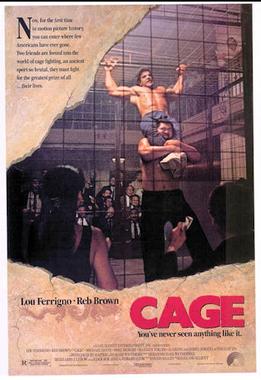
In 1969, soldier Billy Thomas (Lou Ferrigno) heroically saves the life of his captain, Scott Monroe (Reb Brown).  Unfortunately, while their helicopter is taking off, Billy takes a bullet to the head.  While he survives the wound, he is left with the mind of a child.  Scott dedicates his life to taking care of Billy and, after the war, they open a bar together.  However, mobster Tony Baccola (Michael Dante) feels that Billy would be the perfect contestant for a series of fight-to-death cage matches that have been set up by Chinese gangster Tin Lum Yin (James Shigeta).  In desperate need of money, Tony kidnaps Billy and forces him to fight, telling him that it’s what Scott needs him to do.  Billy doesn’t want to fight and, when he first enters the cage, he says, “Hi, how are you?” and tries to shake his opponent’s hand.  But when his opponents try to hit Billy, he has no choice but to defend himself.  It’s up to Scott to rescue his friend.

The plot of this movie is pretty dumb but I’m not embarrassed to say that the film itself won me over.  The fights were decent but the main reason why the movie works is because of Lou Ferrigno and Reb Brown, who made their friendship and their bond feel very real.  Ferrigno was especially good in this film.  How can you not root for a guy who just wants to be everyone’s friend and who, even after his twelfth cage match, still gets upset over having to hit people?

A pure B-movie all the way, Cage also features familiar faces like Branscombe Richmond, Al Leong, and Danny Trejo.  Most of the critics may not have liked it but Ferrigno has described Cage as being his his favorite film performance and I agree.
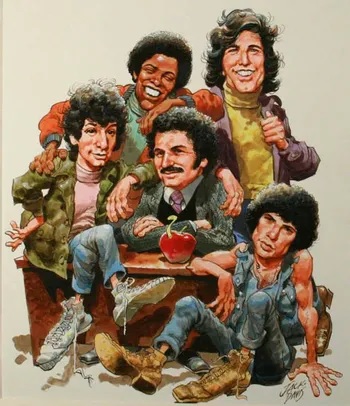
Retro Television Review: Welcome Back, Kotter 4.16 “The Goodbye Guy”


Welcome to Retro Television Reviews, a feature where we review some of our favorite and least favorite shows of the past!  On Saturdays, I will be reviewing Welcome Back Kotter, which ran on ABC  from 1975 to 1979.  The entire show can be purchased on Prime.

This week, Epstein gets a story of his very own.

Episode 4.16 “The Goodbye Guy”

(Dir by Norman Abbott, originally aired on February 1oth, 1979)

Barbarino is gone.  Gabe is gone.  It’s Epstein’s turn to step up and become the center of the show.

Epstein is upset because he has wrestling tickets but the other Sweathogs all have dates for the evening,  For some reason, Epstein decides to go the Kotter apartment even though Gabe is — *ahem* — out of town.  Was Epstein planning on asking Julie to go see a wrestling match with him?  We’ll never know because Julie is not at the apartment.  She’s at the faculty dance with Mr. Woodman.

Mr. Woodman’s niece, Kelly (Georganne LaPiere), is at the apartment, babysitting the rarely-seen Kotter twins.  (I was actually starting to think that Gabe might have abducted the twins and moved to Long Island with them, it’s been so long since we’ve seen or heard from any of them.)  Kelly is a college student but she looks considerably younger than Epstein, who is supposedly just a high school senior.  That said, it’s love at first sight between Kelly and Epstein.  Mr. Woodman’s not happy about that and orders Kelly to stay away from the Sweathog.  So, of course, Kelly moves in with Epstein.

It’s as culture clash, of course.  Kelly is smart and sophisticated.  Epstein has been in high school for ten years and says that his dream is to own a fleet of dump trucks.  After Kelly laughs at his dream and Epstein makes a scene at a vegetarian restaurant, it looks like their love might be doomed!

Well, that happens when you move in with someone after knowing them for two hours….

“I’m going to miss you, Fido,” Epstein says after they have one final conversation in the high school courtyard.  The audience says “Awwwww!” but I think Kelly made the right decision to walk way because Epstein is never going to graduate high school.  The show’s producers obviously intended to keep the Sweathogs in that school forever.  Add to that, how can you love a guy who nicknames you after a dog?

Speaking of nicknames, why does Epstein tolerate being called “Little Juan” by Horshack?  When this show began, Epstein was the most dangerous and unstable of the Sweathogs.  He was the one who was voted most likely to take a life.  I remember at least a few episodes where he brought a knife to school.  Epstein was always on the verge of exploding, which made his character an interesting one.  If Kotter could reach Epstein, he could reach anyone.  But now, Epstein is just as bland and well-behaved as everyone else in the show.  It’s a shame.

Oh well.  At least Woodman was happy by the end of this episode.

We’re nearly done with this show!  Only a few more episodes to go.  Will Gabe ever return?  We’ll find out.

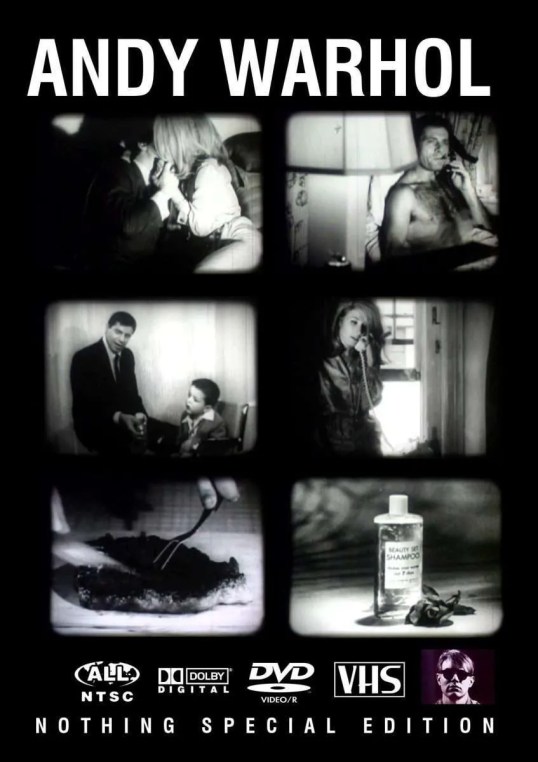
Film Review: Soap Opera (dir by Andy Warhol)


Directed by Andy Warhol, 1964’s Soap Opera features a plot that largely plays out in silence.

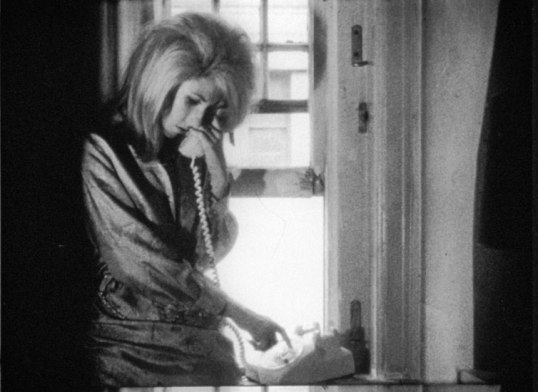
The silent, grainy black-and-white footage depicts what appears to be a love triangle between Warhol associate Rufus Collins, Sam Green, Ivy Nicholson, Gerard Malanga, and “Baby Jane” Holzer.  There’s a lot of kissing.  There’s a lot of slapping.  There’s a lot of scenes of our nameless characters giving each other suspicious and meaningful looks.  At one point, Jane Holzer makes what appears to be a very important phone call.  We don’t know who these people are or how they’re related but they certainly do seem to be intensely obsessed with each other.  The situations grow progressively more and more sexual and one gets the feeling that, if we could only hear the dialogue, we would have a chance to vicariously take part in a great melodrama.  Of course, the footage itself is so grainy that it’s sometimes hard to tell who is who.  Indeed, the characters often seem to be interchangeable.  That’s certainly true of real soap operas as well.  With new actors regularly stepping into old roles and one story’s hero becoming the next story’s villain, soap operas were all about accepting whatever was presented on the screen.  In real life, drama has real consequences.  In Warhol’s film and on television, melodrama is just something that happens without any real repercussions.

Janes Holzer in Soap Opera

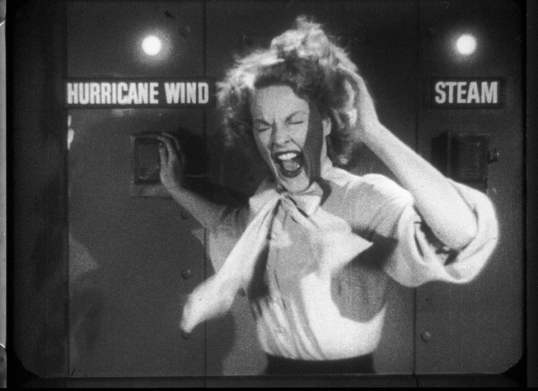
Fortunately, the film provides a few breaks from the repetitive cycle of nonstop, grainy drama.  Sprinkled throughout the film are commercials breaks, featuring actual commercials that were supplied to Warhol by Lester Persky, an advertising executive who later found greater fame as a Broadway producer.  (He produced Hair, amongst other productions.)  In between scenes of Ivy Nicholson kissing Sam Green and Rufus Collins looking shocked, we get a serious of very happy and very loud commercials.  Indeed, after watching the silent and grainy soap opera footage, it’s a bit jarring to have an expertly staged commercial suddenly blare forth in crisp black-and-white.  An obnoxious salesman tries to sell us things to make our home better and our meals tastier.  Jerry Lewis shows up with a child and tells us to be sure to contribute money to his telethon.  Model Rosemary Kelly is introduced by an announcer who tells us that Rosemary is going to tell us about the greatest adventure of her life.  That adventure?  Not conditioning her hair for five days.  Amazingly, her hair is still full and lustrous!  Even after swimming and sleeping on it!  Not even a broken steam valve can make her hair look bad!  This commercial is so effective that it’s actually featured twice and why not?  Even I want to know Rosemary’s secrets and my hair always looks good!

Rosemary Kelly in Soap Opera

Warhol subtitled this film The Lester Persky Story, both to thank Persky for supplying the commercials but also to point out that the commercials were really the whole point of the show.  The plot of any show, whether it’s a real one or the one in Warhol’s film, really only exists to keep you watching long enough to see the commercials.  And it must be said that the commercials are the most interesting part of this film.  After watching the Soap Opera actors for ten minutes, it’s a relief when Rosemary Kelly appears and, with a big smile on her face, starts enthusiastically talking about her hair.  We all complain about commercials but we still accept them as a fact of life and, in the end, it’s usually the commercials that people remember and try to pattern their lives after.  I mean, there’s a reason why I’m still singing that “Nothing is everything” song from the Skyrizi commercials.

And now, let’s check out how Rosemary Kelly’s hair is doing in hurricane winds!

Rosemary Kelly in Soap Opera


Live Tweet Alert: Join #ScarySocial for Ticks!


As some of our regular readers undoubtedly know, I am involved in a few weekly live tweets on twitter.  I host #FridayNightFlix every Friday, I co-host #ScarySocial on Saturday, and I am one of the five hosts of #MondayActionMovie!  Every week, we get together.  We watch a movie.  We tweet our way through it.

Tonight, at 9 pm et, Deanna Dawn will be hosting #ScarySocial!  The movie?  1993’s Ticks!

If you want to join us this Friday, just hop onto twitter, start the movie at 9 pm et, and use the #ScarySocial hashtag!  I’ll be there tweeting and I imagine some other members of the TSL Crew will be there as well.  It’s a friendly group and welcoming of newcomers so don’t be shy.

Ticks is available on Prime!

See you there!

4 Shots from 4 Anime: Isekai Edition


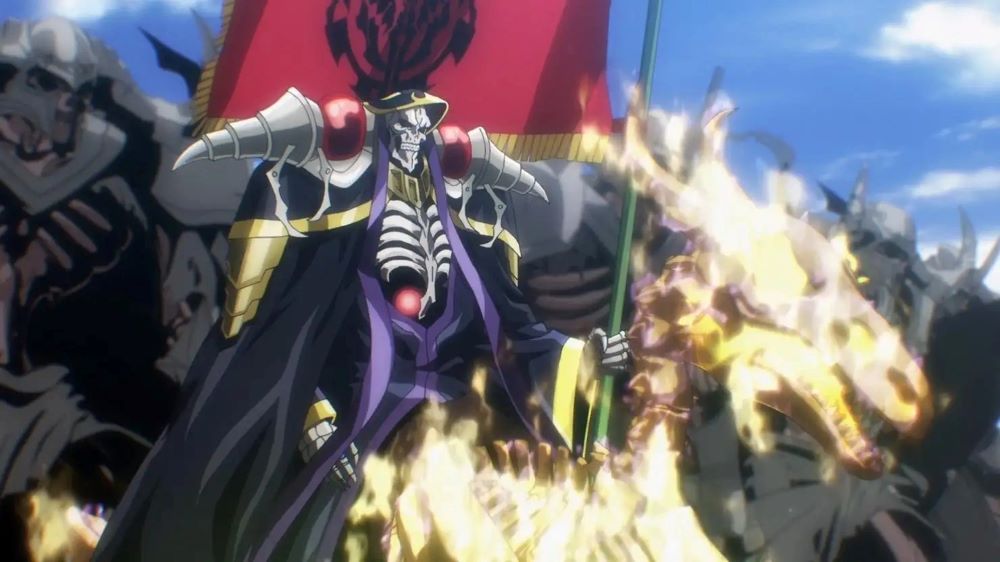
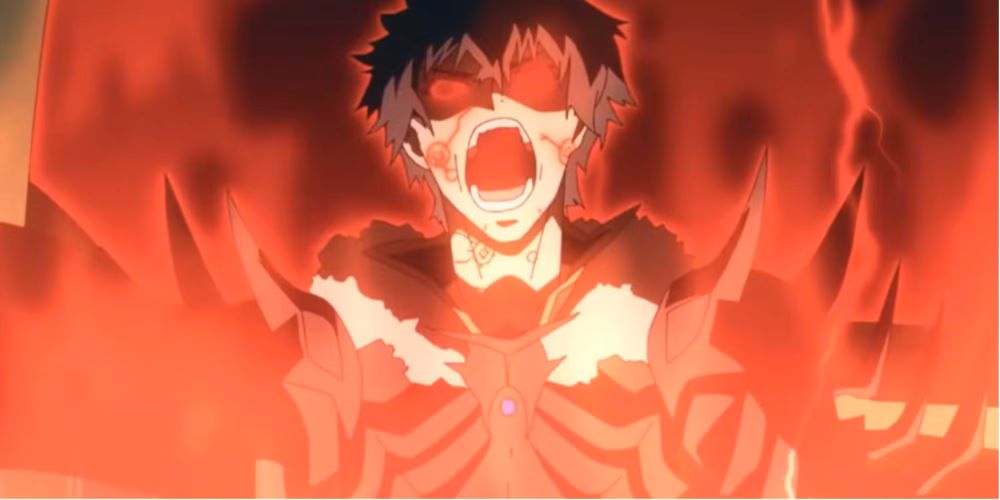
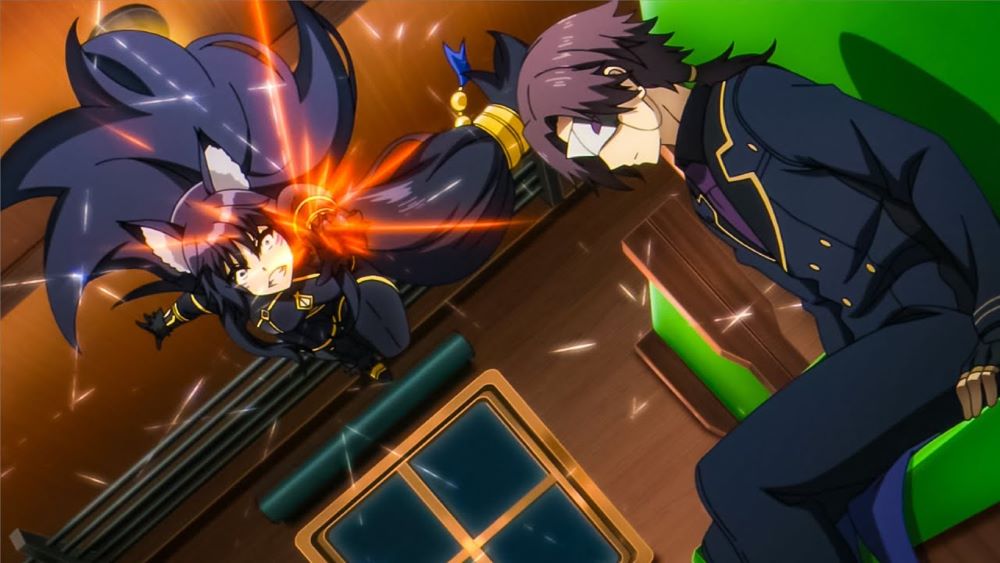
Continuing my current focus on the isekai corner of the anime fandom I present four shots from four isekai anime series that is currently still airing with new seasons. All started out strong and gaining new fans.

Some have pointed out that the quality in later seasons have dipped for some, but those who invested their time to watch these series have stuck with the four series. With the dearth of mid to bad isekai series coming out year after year it’s just due time for the genre to go out with a whimper, but until that happens…“Isekai is dead! Long live the isekai!”

Overlord (Ōbārōdo) by Kugane Maruyama
The Rising of the Shield Hero (Tate no Yūsha no Nariagari) by Aneko Yusagi
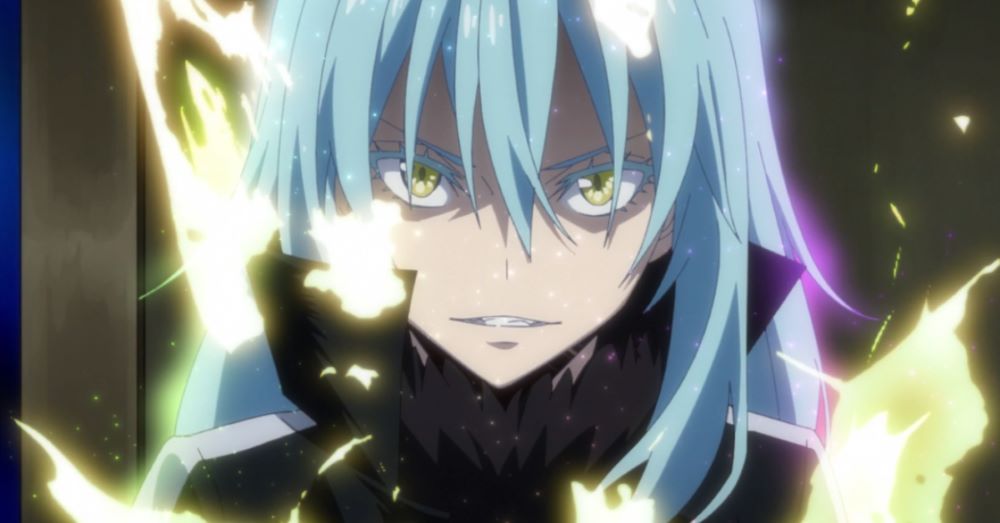
That Time I Got Reincarnated as a Slime (Tensei Shitara Suraimu Datta Ken) by Fuse
The Eminence in Shadow (Kage no Jitsuryokusha ni Naritakute!) by Daisuke Aizawa

Song of the Day: The Man Who Shot Liberty Valance, performed by Gene Pitney


Since I already shared a scene from my favorite John Ford film, it seems only right that today’s song of the day should pay some respect to Mr. Ford as well.  Here is the theme song from 1962’s The Man Who Shot Liberty Valance, performed by Gene Pitney.

When Liberty Valance rode to town
The womenfolk would hide, they’d hide
When Liberty Valance walked around
The men would step aside

‘Cause the point of a gun was the only law
That Liberty understood
When it came to shooting straight and fast
He was mighty good

From out of the East a stranger came
A law book in his hand, a man
The kind of a man the West would need
To tame a troubled land

‘Cause the point of a gun was the only law
That Liberty understood
When it came to shooting straight and fast
He was mighty good

Many a man would face his gun
And many a man would fall
The man who shot Liberty Valance
He shot Liberty Valance
He was the bravest of them all

The love of a girl can make a man stay on
When he should go, stay on
Just trying to build a peaceful life
Where love is free to grow

But the point of a gun was the only law
That Liberty understood
When the final showdown came at last
A law book was no good

Alone and afraid, she prayed that he’d
Return that fateful night, oh that night
When nothing she said could keep her man
From going out to fight

From the moment a girl gets to be full grown
The very first thing she learns
When two men go out to face each other
Only one returns

Everyone heard two shots ring out
One shot made Liberty fall
The man who shot Liberty Valence
He shot Liberty Valance
He was the bravest of them all

The man who shot Liberty Valance
He shot Liberty Valance
He was the bravest of them all

Songwriters: Burt F. Bacharach / Hal David

Scenes That I Love: Who Was Really “The Man Who Shot Liberty Valance?”


John Ford was born 131 years ago today and it seems appropriate that today’s scene of the day should come from his final great film (even if it wasn’t the last film that Ford directed).

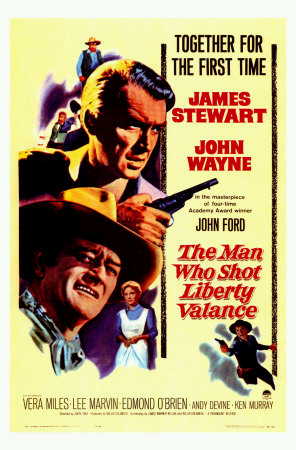
In 1962’s The Man Who Shot Liberty Valance, frontier lawyer Ransom Stoddard (James Stewart) comes to political prominence due to his notoriety for being the man who, in self-defense, gunned down notorious outlaw Liberty Valance (Lee Marvin).  Stoddard, an intellectual who opposes violence, is not happy about this.  When Stoddard considers refusing to be a delegate to the upcoming statehood convention, he is reprimanded by Tom Doniphon (John Wayne).  Stoddard and Doniphon are friends but they’re also romantic rivals, both being in love with Hallie (Vera Miles).  In this scene, Doniphon reveals the truth about who shot Liberty Valance.