Love On The Shattered Lens: The Path of the Wind (dir by Doug Hufnagle)


The 2009 film, The Path of the Wind, begins with a man being released from prison and discovering that living in the real world can be just as confining.

Lee Ferguson (Joe Rowley) has spent the last few years locked up, convicted of killing a man.  It was a spontaneous fight and Lee didn’t intend for the man to die but that doesn’t change the fact that Lee is responsible for taking another man’s life.  He was a model prisoner and he intends to be a model citizen.  Fortunately, he’s inherited a nice house and a good deal of money from his father.  He’s also got a job waiting for him, as the well-meaning manager of the local grocery store has agreed to give Lee a chance.

From the minute he leaves the prison, Lee feels out-of-place in the world.  He’s still struggling to control his temper and, because of his past, he’s hesitant about letting anyone get too close to him.  He knows that if he tries to get close to anyone, he’ll eventually have to tell them why, despite his obvious intelligence and education, he’s currently working as a stocker in a grocery store.  And, after he tells them that he’s been in prison, he’ll then have to explain what he did to find himself in that situation.

Still, on his first night of working at the grocery store, he meets a young woman named Katie (Liz DuChez).  When he first sees her, Katie is being harassed by her violent ex-husband.  Lee chases the man off.  It turns out that Katie runs the local video store and she thanks Lee by offering him all of the free movies that he wants.  Eventually, Lee works up the courage to go to the video store and gets a bunch of western DVDs.  Later, he reveals that he not only doesn’t have a DVD player but he’s not totally sure what a DVD player is.  I guess Lee was in prison for a while.

It takes a while but Lee and Katie finally start to date.  Katie opens up about her past as a stripper and Lee finally tells her about the time that he spent in prison.  (It turns out that Katie already knew.)  They fall in love but there are still problems.  For one thing, Katie is rather religious whereas Lee is a committed agnostic.  Secondly, Katie refuses to have sex unless she’s married.  Lee, meanwhile, really, really wants to get laid….

Of course, that’s not all that’s going on in The Path of the Wind.  There’s about a different dozen storylines running through The Path of the Wind and the film doesn’t do a particularly good job of juggling all of them.  Along with having to deal with Katie’s psycho ex-husband, Lee also has to deal with not one but two evil coworkers and his bitter sister.  This is one of those films where a lot of plot points are raised but then mysterious abandoned.  There is one effective scene, in which Wilford Brimley shows up as the father of the man that Lee killed.  Brimley’s only in the film for a few minutes but he brings so much natural authority to his role that he basically takes over the entire movie for the limited amount of time that he’s on screen.

The film’s a bit of a mess but there’s a low-key sincerity to it that’s kind of likable.  According to the imdb, it was made for a budget of $100,000 and, with the exception of Wilford Brimley, the cast is largely made up of amateurs.  That said, both Joe Rowley and Liz DuChez have enough screen presence to be watchable and, even if the dialogue sometimes sounds a bit awkward, they have a likable chemistry and you can believe them as a couple.  Add to that, the film does attempt to deal with a very real issue, the difficulty that ex-cons face trying to rejoin a society that often values punishment and revenge over forgiveness and rehabilitation.  This is an amateur film but it may hold your interest.

The Pan Book Covers of Hans Helweg


Hans Helweg was a Danish illustrator who is probably best remembered for the work he did illustrating Michael Bond’s series of books about a guinea pig named Olga da Polga.  For example:

However, before Hans Helweg brought Olga de Polga to adorable life, he illustrated several covers for Pan Books, a British paperback publisher.  In the 50s and 60s, Pan’s paperbacks was known for their colorful covers, which has since made them highly attractive to collectors.  Helweg was responsible for some of the most colorful.  And since Helweg, as opposed to many other illustrators, almost always singed his work, his covers are some of the most eagerly sought after.

Here are just a few of Han Helweg’s Pan Book covers:

4 Shots From 4 Films: Special Lee Marvin Edition


Prime Cut (1972, directed by Michael Ritchie)

4 Shots From 4 Films is just what it says it is, 4 shots from 4 of our favorite films. As opposed to the reviews and recaps that we usually post, 4 Shots From 4 Films lets the visuals do the talking!

96 years ago, Lee Marvin was born in New York City.  After getting kicked out of several prestigious prep schools for “bad behavior,” 18 year-old Lee Marvin enlisted in the Marin Corps, was briefly a corporal before getting demoted back to private (again, because of “bad behavior”), and was wounded in action during the Battle of Saipan.  (Marvin was one of the few members of his unit to survive the battle.)  After he was discharged from the Marines, he worked as a plumber’s assistant at a local community theater and, after being asked to temporarily replace an actor who had fallen ill, Marvin decided to pursue a career as an actor.

Marvin became one of Hollywood’s premier tough guys.  He played his share of gangsters, cops, and cowboys but, because of his background, he was a natural for playing military men.  Whether it was The Dirty Dozen, The Big Red One, or The Delta Force, Lee Marvin was a natural leader and brought authenticity to every military role the played.  His final film was The Delta Force, which just happens to be the greatest film ever made.

In honor of Lee Marvin’s birthday, here are:

4 Shots From 4 Films

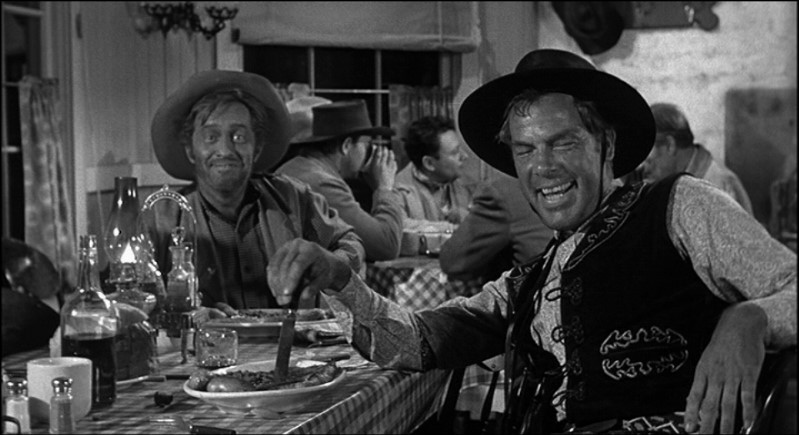
The Man Who Shot Liberty Valance (1962, directed by John Ford)

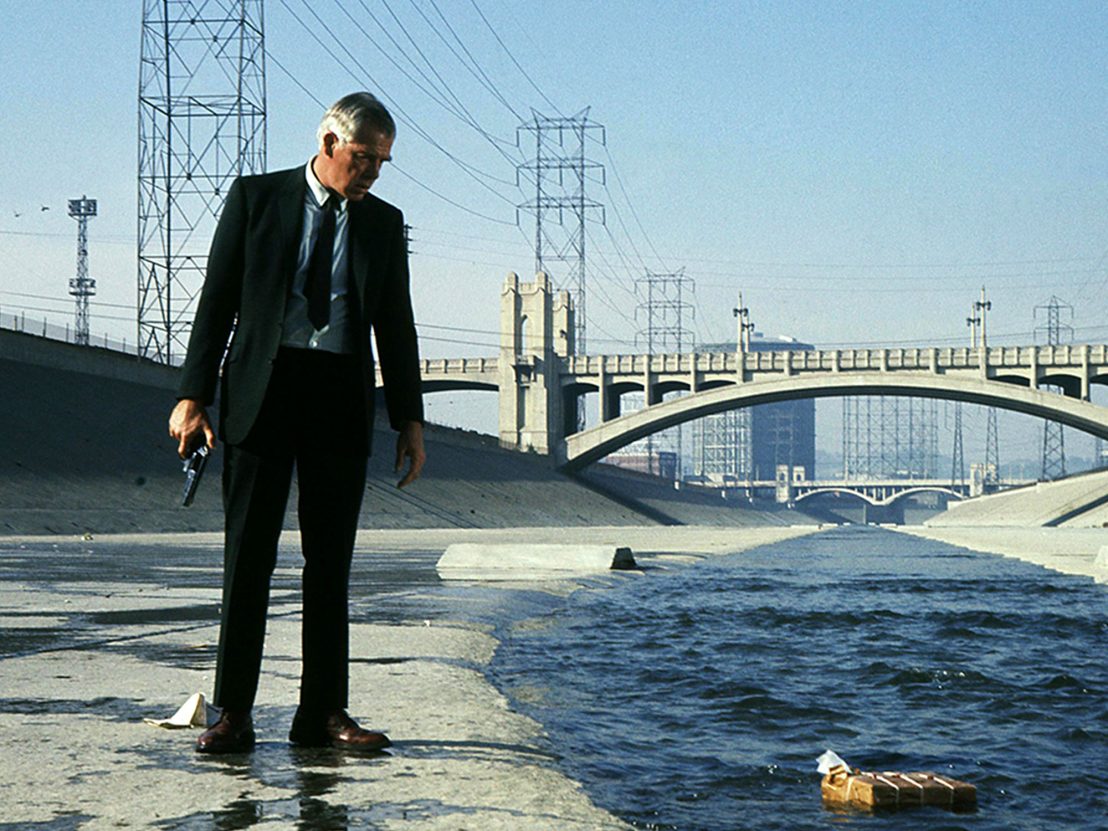
Point Blank (1967, directed by John Boorman)’

The Big Red One (1980, directed by Sam Fuller)

The Delta Force (1986, directed by Menahem Golan)

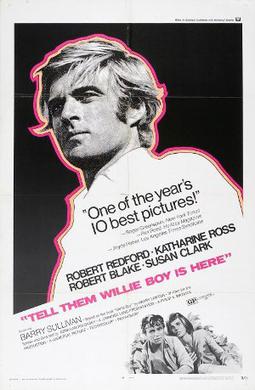
Tell Them Willie Boy Is Here (1969, directed by Abraham Polonsky)


In 1908, a Paiute Indian named Willie (Robert Blake) has fallen in love with a white woman named Lola (Katharine Ross).  After Lola’s father discovers Willie and Lola together, Willie shoots him.  Willie claims that the shooting was in self-defense while the white citizens of California insist that it was cold-blooded murder, motivated by a tribal custom that would allow Willie to claim Lola as his wife upon the death of her father.  Willie and Lola go on the run, trying to escape through the Morongo Valley.

Because President Taft is scheduled to make a trip to the area, the locals are eager for Willie Boy to either be captured or killed.  Several posses form, all intent on tracking Willie down.  A humane deputy sheriff named Cooper (Robert Redford) reluctantly leads the search for Willie.  Cooper’s occasional lover is a school teacher named Elizabeth (Susan Clark) who insists that Cooper rescue Lola from Willie.  The only problem is that Lola doesn’t want to be rescued and Willie would rather die than surrender to the white men.

Tell Them Willie Boy Is Here is one of those revisionist westerns that were all the rage in the late 60s and the early 70s.  (The same year that he led a posse in Tell Them Willie Boy Is Here, Robert Redford also tried to outrun a posse in Butch Cassidy and the Sundance Kid.Willie Boy gets off to a good start, showing how Willie has to spend almost every hour of the day dealing with prejudice and racism.  The film does a good job of showing that even “liberal” whites, like Elizabeth, are capable of being prejudiced.  There are hints that Cooper and Willie share a mutual respect and both Blake and Redford do a good job portraying the weary respect that the lawman and the outlaw have for each other.

Things start to fall apart when Willie shoots Lola’s father.  The scene is shot so confusingly that it’s hard to know what exactly happened and it feels like a cop out.  Rather than definitely saying whether Willie had no choice but to shoot Lola’s father or that Willie intentionally committed murder, the scene tries to have it both ways and it doesn’t work.  Once the chase begins, the movie is equally split between Cooper and the posse and Willie and Lola and the end result is that the two main characters end up getting short changed.

Tell Them Willie Boy Is Here was directed by Abraham Polonsky, a screenwriter who was blacklisted during the McCarthy era.  While this is definitely a film made from a left-wing perspective, its actual message still feels muddled.  Willie is the driving force behind the plot but the film seems to be more interested in the less intriguing Cooper.  The film ends on a note of ambiguity, which perhaps felt daring in 1969 but today, just feels like another cop out.  Despite a great performance from Blake and a better-than-usual one from Redford, Tell Them Willie Boy Is Here is an unfortunate misfire.

Love on the Shattered Lens: Blue Crush (dir by John Stockwell)


Released in 2002, Blue Crush tells the story of Anne Marie Chadwick (Kate Bosworth).

Anne Marie lives in Hawaii and she’s got a lot going on in her life.  Because her mother recently abandoned her daughters so that she could run off to Las Vegas with her good-for-nothing boyfriend, Anne Marie is practically raising her 14 year-old sister, Penny (Mike Boorem).  Anne Marie is also working as a maid at a beach-side hotel, where she and her two best friends, Eden (Michelle Rodriguez) and Lena (Sanoe Lake), spend their time cleaning up messes and trying on the guests’s clothes.  I have to admit that, if I was a maid, I’d probably try on the clothes too.  However, after watching Blue Crush several times, I can tell you that the last thing I would ever want to do would be to work as a hotel maid.  Seriously, some of the messes that Anne Marie, Eden, and Lena had to deal with were so disgusting that I had to look away from the screen.  Bleh!

Anne Marie and her two friends are also surfers!  In fact, surfing is pretty much what their lives revolve around.  Anne Marie has been invited to compete in an upcoming competition but she’s haunted by an incident that occurred several years before, an extreme wipe-out that nearly caused her to drown.  (Despite all of the beautiful surfing footage, this film does little to alleviate my own extreme drowning phobia.)  Despite Eden’s encouragement, Anne Marie isn’t sure that she has what it takes to get back into the competition circuit.

Unfortunately, there’s a group of NFL players staying at the hotel and they totally trash their room and leave a huge mess for the maids to clean up.  (At one point, Lena finds a used condom stuck to the bottom of her shoe and totally freaks out.  I would have to.  I once moved into an apartment that was already inhabited by several friends of mine and, while I was cleaning, I came across like nearly a hundred used condoms hidden in every nook and cranny of the place.  I mean, I was happy that everyone was having sex but seriously, don’t just leave your condom on the floor after it’s been used.  Pick up after yourself!  Anyway, where was I?)  Fortunately, however, one of the players is a totally hot quarterback named Matt (Matthew Davis).  Matt and his fellow players hire Anne Marie and her friends to teach them how to surf.  Matt and Anne Marie end up falling in love, mostly because they’re the two best-looking people on the beach.  With Matt’s support, will Anne Marie be able to conquer her fears and compete in the competition?  It would be a really depressing movie if she didn’t.


So, let’s see.  What do you we have here?

We’ve got lots of pretty shots of pretty people running along the beach in slow motion.

We’ve got a soft-focus love scene between the best-looking people in the movie.

We’ve got a ton of exciting surfing footage.

We’ve got a thoroughly predictable plot that still kind of works because everyone involved is so good-looking.

Yep, this must be a John Stockwell film.

Seriously, John Stockwell is one of my favorite directors because he always delivers exactly what he promises.  He makes films about beautiful people in beautiful places and if that’s not enough for you, too bad.  He’s a genre director and makes no apologies for it.  There’s a refreshing lack of pretension when it comes to John Stockwell’s filmography and it’s hard not to appreciate the universe that he creates in films like Crazy/Beautiful, Into the Deep, In the Blood, and this one.  It’s a universe where everyone knows that they’re in a genre movie and they behave accordingly.  It’s a world where the scenery is beautiful, the people are attractive, and nearly every problem can be solved by a kiss or the proper one-liner.

You could probably make the argument that the storyline of Blue Crush is shallow and a bit obvious.  I wouldn’t necessarily disagree with you.  But who cares?  Kate Bosworth and Matthew Davis have a tone of chemistry, the Hawaiian scenery is gorgeous, and well, I just kind of love this movie.


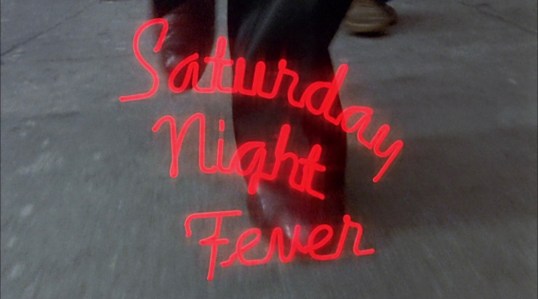
Scenes That I Love: The Opening Credits of Saturday Night Fever


Saturday Night Fever (1977, dir. John Badham)

Today is John Travolta’s birthday!

In honor of this day, here’s a scene that I love, the opening credits of Saturday Night Fever.  Watch as John Travolta, playing the role of Tony Manero, walks down the streets of Brooklyn, not letting the fact that he’s carrying two cans of paint do anything to lessen his strut.  Watch as Tony puts a down payment on a pair of shoes!  Thrill as Tony buys two slices of pizza!  Cringe as Tony bothers a woman who wants absolutely nothing to do with him!

This is one of the greatest introductions in film history.  Not only does it set Tony up as an exemplar of cool but it also subverts our expectations by revealing just how little being an exemplar of cool really means.  I always relate to the woman who gets annoyed with Tony and tells him to go away.  I know exactly how she feels, as does any woman who has ever been stopped in the middle of the street by some guy who thinks she has an obligation to talk him.  It doesn’t matter how handsome he is or how much time he obviously spent working on his hair.  He’s still just some guy carrying two buckets of paint and acting like she should be flattered that he spent half a minute staring at her ass before chasing after her.  For all of his carefully constructed attitude, Tony comes across as being a rather ludicrous figure in this introduction.  He carries those cans of paint like he’s going to war and you secretly get the feeling that he knows how silly he looks carrying them but he’s not going to allow anything to get in the way of his strut.

The rest of the film, of course, is about presenting who Tony actually is underneath the disco facade and it’s not always a pretty picture.  I actually discussed this with some friends this weekend while we were listening to combination of disco and punk music.  Saturday Night Fever has a reputation for being a fun dance movie but actually, it’s an extremely dark and rather depressing movie.  The opening song isn’t lying when it says that “I’m going nowhere.”  Tony is lost and, despite what happens in the sequel, he’s probably never going to escape his circumstances.  Even though he clearly wants to be a better person, you’re never quite convinced that he has what it takes to truly do that.  At least he can strut a little while waiting for the world to end.  It takes guts to give an honest performance when you’re playing as imperfect a character as Tony Manero but Travolta pulls it off.  (We won’t talk about some of the films that he made in the years immediately after this one.  Eventually, he did make a comeback with Pulp Fiction and spent several years again appearing in good films.  And then somehow, last year, he ended up starring in The Fanatic.  Oh well.  66 is not that old and I’m sure Travolta has more than one comeback within him.)

Anyway, happy birthday to John Travolta!  And here is today’s scene that I love: