A Blast From The Past: Sacheen Littlefeather Crashes The Oscars


The year was 1973 and Marlon Brando was the obvious front-runner to win the Oscar for Best Actor.  His performance in The Godfather had not only provided an important anchor to that sprawling film but it also rejuvenated his career.

No one was surprised when Liv Ullman and Roger Moore announced that Brando had won the Oscar.  The shock came when a young woman named Sacheen Littlefeather approached the stage.  The rest is Oscar history:

Brando had actually given Sacheen a 15-page speech that he wanted her to read from the stage.  However, the show’s producers — realizing what Brando was planning — told Sacheen that, if she stayed on stage for longer than 60 seconds, she would be forcibly removed.  Hence, Sacheen improvised her stage comments and then read Brando’s speech backstage.  As a result of this incident, the Academy banned proxy acceptances.

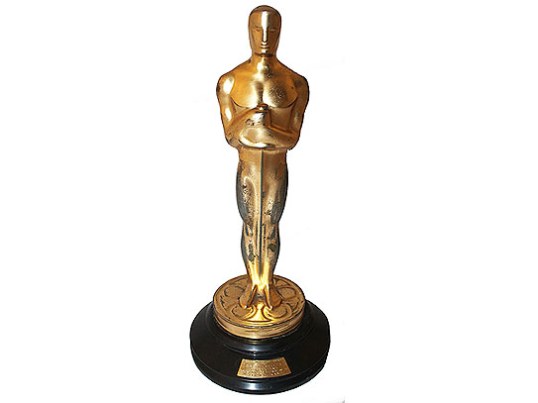
As for Brando’s Oscar, Roger Moore took it home with him and kept it until, a few days later, armed guard showed up to take it back from him.

Lisa Reviews An Oscar Nominee: Five Easy Pieces (dir by Bob Rafelson)


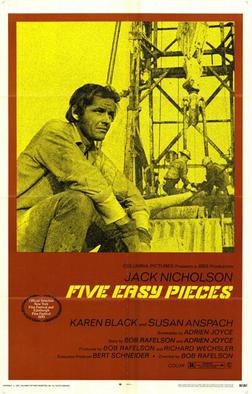
First released in 1970, Five Easy Pieces tells the story of a lost man named Bobby Dupea (Jack Nicholson).

When we first meet Bobby, he’s working at a California oil field.  He likes to go bowling.  He has a girlfriend named Rayette (Karen Black), who is a country music-obsessed waitress.  His best friend is Elton (Billy “Green” Bush), a friendly redneck with a memorable laugh.  Bobby may have a girlfriend and Elton may be married but that doesn’t stop either one of them from going out at night, getting drunk, and trying to pick up women.

Bobby seems to be just another blue-collar guy with a grudge against the bosses but it doesn’t take long to realize that there’s something different about him.  Bobby may be friends with Elton but it’s obvious that the two of them come from very different background.  No matter how much he tries to hide it, Bobby is smarter than everyone else around him.  When he and Elton get stuck in a traffic jam, Bobby spots a piano sitting on the back of a pickup truck.  Getting out of his car, Bobby yells at everyone who is honking and then climbs up to the piano.  He sits down, he puts his fingers to the keys and he starts to play.  Knowing Bobby, you’re expecting him to just bang the keys and make noise.  Instead, he plays beautiful music.

Later, Bobby steps into a recording studio.  Paritia (Lois Smith), a neurotic woman, is playing the piano.  The recording engineers joke about her lack of talent.  Bobby glares at them, annoyed.  It quickly becomes apparent why Bobby is so protective.  Paritia is Bobby’s sister.

Bobby, it turns out, comes from a wealthy family of musicians.  Everyone in the family has dealt with the pressure to succeed differently.  Paritia continues to play, despite not having much talent.  Bobby’s older brother, the buffoonish Carl (Ralph Waite), plays violin and has staid home with their father (William Challee).  Bobby, on the other hand, ran away from home.  He’s spent his entire life trying to escape from both his talent and his family.  However, when Paritia explains that their father has suffered from two strokes and might not live much longer, Bobby reluctantly decides to return home and try to make some sort of peace with his father.

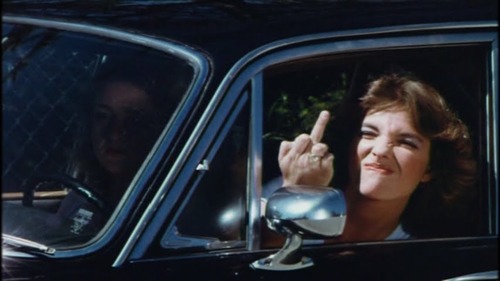
It’s not as easy a journey as Bobby would have liked.  For one thing, Rayette demands to go with him.  On the drive up to Washington, they pick up two hitchhikers (Helena Kallionetes and Toni Basil), one of whom is obsessed with filth.  In the film’s most famous scene, an attempt to get a simple lunch order modified leads to Bobby losing control.

See, that’s the thing with Bobby.  In many ways, he’s a jerk.  He treats Rayette terribly.  While his family is hardly perfect, the film doesn’t hide from the fact that Bobby isn’t always the easiest person to deal with.  And yet, you can’t help but sympathize with Bobby.  If he seems permanently annoyed with the world … well, that’s because the world’s annoying.  And, to Bobby’s credit, he’s a bit more self-aware than the typical rebel without a cause.  When one of the hitchhikers praises his temper tantrum at the diner, Bobby points out that, after all of that, he still didn’t get the order that he wanted.

In Washington, Bobby tells Rayette to stay at a motel and then goes to see his family.  Bobby seems as out-of-place among his wealthy family as he did hanging out in the oil fields with Elton.  He ends up cheating on Rayette with Carl’s fiancee, a pianist named Catherine van Oost (Susan Anspach).

And then Rayette shows up for dinner…

Five Easy Pieces is a sometimes funny and often poignant character study of a man who seems to be destined to always feel lost in the world.  Bobby spends the whole movie trying to find a place where he can find happiness and every time, reality interferes with his plans.  Nicholson gives a brilliant performance, playing Bobby as a talented guy who doesn’t really like himself that much.  Bobby’s search for happiness leads to a rather haunting ending, one that suggests that some people are just meant to spend their entire life wandering.

Five Easy Pieces was nominated for Best Picture but lost to Patton.

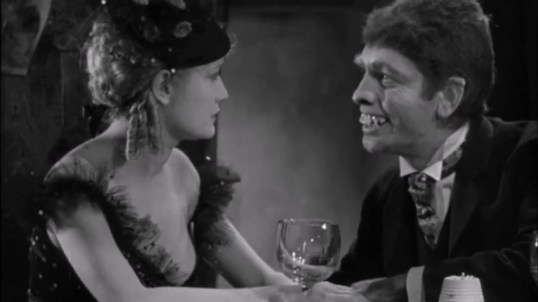
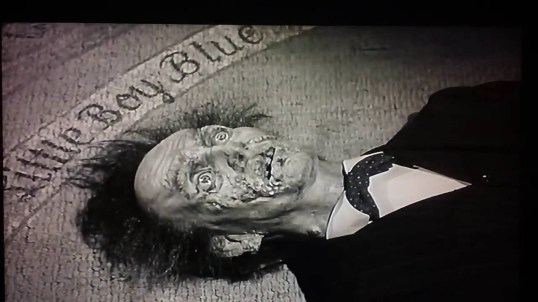
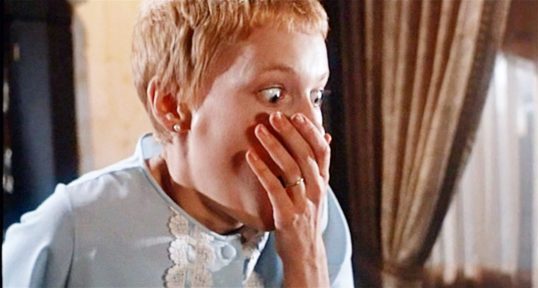
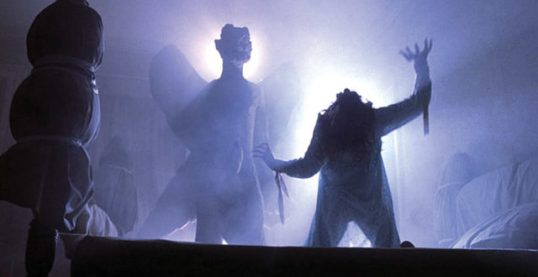
4 Shots From 4 Films: Oscar Winning Horror!


4 Shots From 4 Films is just what it says it is, 4 shots from 4 of our favorite films. As opposed to the reviews and recaps that we usually post, 4 Shots From 4 Films lets the visuals do the talking. There’s a lot of buzz about horror themed movies GET OUT and THE SHAPE OF WATER winning Oscars tonight, but there have been a handful of horror movies nominated in the past, some even taking home the coveted statuette! Here are 4 Shots from some Academy Award winning tales of terror!:

Dr. Jekyll and Mr. Hyde (Paramount 1931; Best Actor Fredric March)

The Picture of Dorian Gray (MGM 1945; Best Cinematography, Harry Strandling Sr)

Rosemary’s Baby (Paramount 1968; Best Supporting Actress Ruth Gordon)

The Exorcist (Warner Brothers 1973; Best Adapted Screenplay William Peter Blatty, Best Sound Mixing Robert Knudson & Chris Newman)


8 Sure Shot Best Picture Nominees That Were Not


Let’s be honest.

Predicting the Oscar nominees is not an exact science.  The fact of the matter is that a lot of it is guesswork, especially in the early months of the year.

“Oh, Scorsese has a movie coming out?  Well, Martin Scorsese’s movies are always nominated!”

“Last year’s best seller is being adapted into a movie?  The Academy loves best sellers!”

“David Fincher’s directing High School Musical 4?  I LOVE DAVID FINCHER!  Best Picture for sure!”

That’s why, every year, there are films that seem like they’re guaranteed to reap Oscar glory.  These are the films that, in July, are listed on all of the awards sites as probable best picture nominees.  And every year, several of those sure shots turn out to actually be long shots.

Since Arleigh founded Through the Shattered Lens back in 2009, there’s been many guaranteed Best Picture contenders that, when the nominations were announced, were nowhere to be found.  Here are just 8 examples:
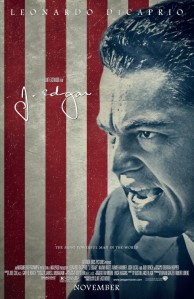
1. J. Edgar (dir by Clint Eastwood)

Remember how Leonardo DiCaprio was going finally win his first Oscar for playing J. Edgar Hoover in the 2011 Oscar biopic?  There was also some speculation that Armie Hammer would pick a supporting nod and, of course, the film was going to be a best picture nominee.  Then the movie came out, fell flat, and received not a single Oscar nomination.
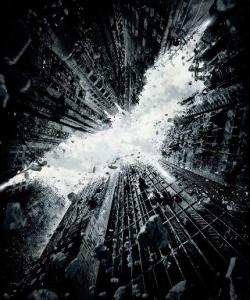
2. The Dark Knight Rises (dir by Christopher Nolan)

I was not as big of a fan of this movie as some people who write for this site.  In fact, I thought it was kind of a mess.  Still, back in 2012, a lot of people assumed the Academy would make up for not nominating The Dark Knight by nominating the sequel.  (In a particular noxious example of fanboy culture, Christy Lemire was attacked online when she gave The Dark Knight Rises its first negative review.)  For all of the hyper and controversy, The Dark Knight Rises was totally ignored when the 2012 Oscar nominations were announced.
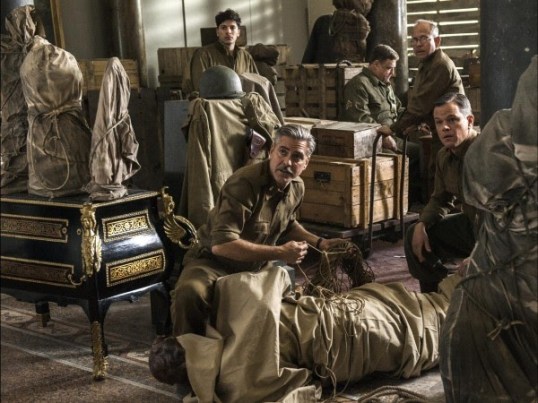
3. The Monuments Men (dir by George Clooney)

As strange as it may seem today, this now-forgotten World War II film was originally considered to be a surefire Oscar contender.  Throughout most of 2013, the majority of the experts on Gold Derby listed The Monuments Men as their number one prediction for Best Picture.  The logic was that it was based on an interesting true story, it featured Bill Murray in a serious role, and it was directed by George Clooney.  Then, suddenly, the release date was pushed back to 2014.  That was the first sign of trouble.  Then the movie came out and it turned out to be a complete mess, one that underused Murray and which reminded us that, regardless of his skill as an actor, George Clooney is a remarkably dull director.
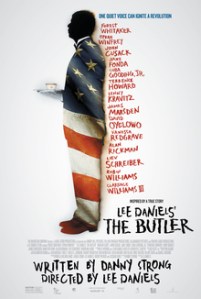
4. Lee Daniel’s The Butler (dir by Lee Daniels)

From 2013, this is a good example of a film that tried so hard to be an Oscar contender that it basically knocked itself right out of contention.  Between the blind and dated worship of JFK and John Cusack’s performance as Richard Nixon, this film almost seemed like a parody of a bad Oscar contender.
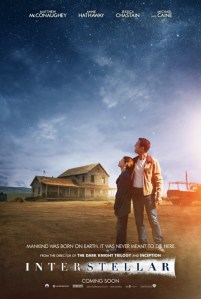
5. Interstellar (dir by Christopher Nolan)

Personally, I liked 2014’s Interstellar more than I liked The Dark Knight Rises but ultimately, this turned out to be just another Christopher Nolan film that didn’t get much of a reaction from the Academy.  (Despite the nominations given to both Dunkirk and Inception, it’s hard not to feel that the Academy will always resent Nolan for being both successful and ambitious.)

6. Joy (dir by David O. Russell)

Many of us thought it would be one of the films to be nominated for best picture of 2015.  That was until we actually saw the damn thing.  David O. Russell’s worst movie still managed to net Jennifer Lawrence a nomination but not much else.
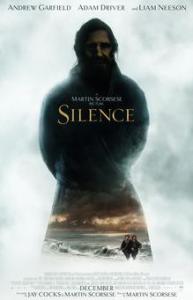
7. Silence (dir by Martin Scrosese)

Martin Scrosese’s 2016 passion product was expected to be a major contender and, on many sites, it was listed as a probable winner all the way through December.  However, when the nominations were announced, Silence only received one nomination, for cinematography.
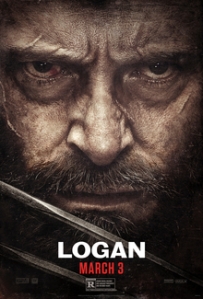
8. Logan (dir by James Mangold)

At the start of 2017, a lot of critics stated that Logan might be the first comic book movie ever nominated for Best Picture.  For a month or two, I certainly thought it would be.  Ultimately, though, it only picked up a nomination for adapted screenplay.

Which 2018 sure short will turn into a long shot?  We’ll find out next year!
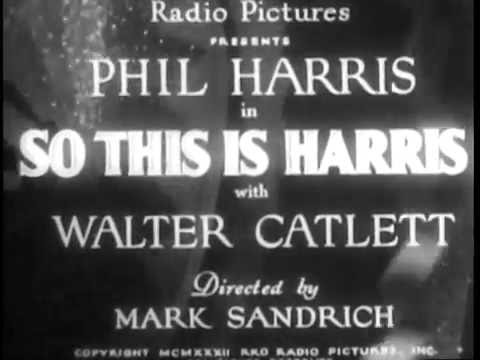
An Oscar Extra: SO THIS IS HARRIS (RKO 1933)


gary loggins's avatarcracked rear viewer

Tonight is Hollywood’s big night, the 90th annual Academy Awards presentation. In Oscar’s honor, I’d like to present the Best Short winner for the 1932-33 season, SO THIS IS HARRIS. Crooner/bandleader Phil Harris stars as himself in this Pre-Code classic, along with comic actor Walter Catlett as a homebrew making husband jealous of his wife’s infatuation with the singer. Mark Sandrich, later the director of four Fred Astaire /Ginger Rogers romps, uses some innovative techniques, including the kaleidoscopic opening and neat swipes, to create a fast-paced, fun little outing. And wait til you get a load of the “Singing in the Shower” number – now THAT’S Pre-Code! Also featuring perennial Laurel & Hardy nemesis James Finlayson (“D’oh!”), enjoy SO THIS IS HARRIS, and happy Oscar viewing!:

View original post

Lisa Reviews An Oscar Nominee: 49th Parallel (dir by Michael Powell)


Hello and welcome to the TSL’s continuing coverage of Oscar Sunday!  Today, along with some other Oscar-related things, I’m going to post reviews of some of the films that have been nominated for best picture over the years!  Let’s start things off with the 1941 Best Picture nominee, 49th Parallel!

Before anything, I should clear up some confusion about this film.  This is a British film about Nazis trying to reach the border between Canada and the U.S.  When it was first released in the UK, it was named after the coordinates of the border.  However, in the actual film, the Nazis never actually go to the 49th Parallel.  Instead, the film concludes at Niagara Falls.  However, it was probably reasonable assume that British audiences would not necessarily know or care whether Niagara Falls was actually located on the 49th Parallel.  Considering that they were currently at war with Germany, they had more important things to concern themselves with.

However, it was apparently felt that American audiences would notice that Niagara Falls wasn’t actually located on the 49th Parallel.  (Personally, I think the British may have been giving us too much credit.)  So, when the film was released in the United States, the title was changed to The Invaders.  When the film was subsequently nominated for Best Picture, it was nominated under the name The Invaders.  I’ve actually come across some online sources that claim that The Invaders and 49th Parallel are two separate films.  No, they’re the same film, it’s just that the film in question has two different titles.  Out of respect to the people who actually made the movie, I’ve decided to use the original title in this review.

When watching 49th Parallel (it’s available on YouTube), it helps to know something about history.  Today, there’s a tendency to overlook the fact that World War II had already been raging for nearly two years before the United States got involved.  Though the U.S. was an ally to Britain, it remained officially neutral until the Japanese bombed Pearl Harbor.  Up until that moment, many prominent Americans were isolationists and took the attitude that the war was Europe’s problem.  (On the other hand, Canada, as a Dominion of the British Empire, followed Britain into the war in 1939.)  Though the 49th Parallel may have been a British film that was largely set in Canada, it was also meant to frighten Americans and hopefully bring them over to the British side.

(When interviewed about the film, screenwriter Emeric Pressbruger said, “”Goebbels considered himself an expert on propaganda, but I thought I’d show him a thing or two.”)

Directed by Michael Powell, 49th Parallel opens with a German U-boat creeping into the waters around Canada.  The Nazis are hoping to disrupt shipping operations but it turns out that they’re no match for the Royal Canadian Navy.  (GO CANADA!)  When the U-boat sinks into the Hudson Bay, only six Nazis manage to survive.  Led by the arrogant Lt. Hirth (Eric Portman), the Nazis attempt to make their way to the border and to the safety of America.

Of course, it doesn’t turn out to be an easy journey.  Not only are the Germans in an unfamiliar country but they also keep running into Canadians.  Without fail, nearly every Canadian they meet is polite but willing to fight and die for his country.  The Canadians themselves are played by actors who, in the 40s, would have been familiar faces.  Laurence Olivier plays a fur trapper, getting top-billing for his cameo appearance.  Raymond Massey, who was best known for playing Abraham Lincoln, shows up as a Canadian solider.  Leslie Howard is the writer who discovers that Nazis have no respect for art.  Anton Walbrook is a German-Canadian farmer who rejects the attempts of Lt. Hirth to bring him over to the Nazi side.  The Canadians are so sympathetic that one of the Nazis is even moved to reject the Third Reich and is promptly executed by his compatriots, showing the audience the foolishness of hoping that the “good Germans” would ever be able to overthrow the bad ones.

It’s pure propaganda but it’s anti-Nazi propaganda so that’s not really a problem.  Powell keeps the story moving at a steady pace and all of the actors get impassioned performances.  You can tell this movie was more than just a job for them.  Instead, it was their way of fighting for their country and hopefully inspiring others to join in the battle against Hitler.  The film is both a love letter to Canada and a plea to the United States to renounce neutrality.  (Interestingly enough, by the time 49th Parallel made it to U.S. screens, America had finally declared war on the Axis Powers.)

49th Parallel was nominated for best picture but it lost to another World War II propaganda film, Mrs. Miniver.

Happy Oscar Sunday From All The Humans And Cats At The Shattered Lens!


It’s Oscar Sunday!

For many humans and cats, today is an unofficial holiday!  Today is the day that we find out who and what the Academy has selected for the best of last year!  We may agree.  We may disagree.  But a lot of us will be watching!

Happy Oscar Sunday, everyone!  Please enjoy today’s Oscar-related posts.  Who knows?  We might even toss in some non-Oscar related posts as well!  You never know!

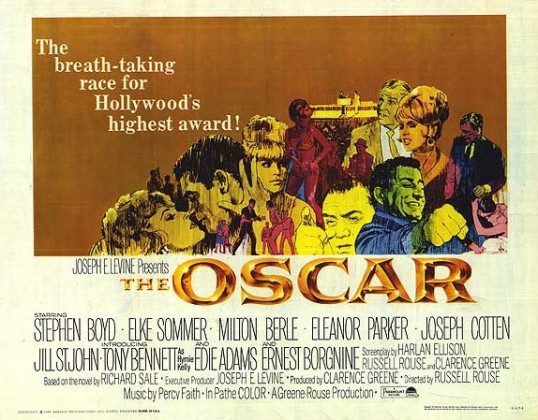
Scenes That I Love: Tony Bennett Has A Meltdown in The Oscar


Have you ever wondered what it takes to win an Oscar?  The 1966 film, The Oscar, revealed to audiences just how sleazy a world Hollywood can be.  Frankie Fane (Stephen Boyd) does everything he can to win an Oscar and he doesn’t care who he hurts!

But fear not — Hollywood may not be perfect but it has no room for someone like Frankie Fane!  At the end of the movie, a man named Frank does win the Oscar but his last name is Sinatra and Frankie Fane is left humiliated.  That’ll teach him to try to take advantage of Hollywood!

Yes, The Oscar is an incredibly silly film but it’s also a lot of fun.  In this scene that I love, Frankie’s best friend — played by Tony Bennett of all people — confronts Frankie about the type of star that he’s become.

Six Other Films From Crown International Pictures That Deserved An Oscar Nomination!


An hour ago, I told you about the only Oscar nomination that was ever received by Crown International Pictures, one of the most prolific B-movie distributors of the 70s and 80s.  That nomination was for Best Original Song for Crown’s 1972 film, The Stepmother.

Here are 6 more films from Crown International Pictures that I think deserved some Oscar consideration:

The Teacher (1974)

“She corrupted the youthful morality of the entire school!” the poster screamed but actually, The Teacher was a surprisingly sensitive coming-of-age story about a relationship between a younger man and an older woman.  Jay North and Angel Tompkins both give excellent performances and Anthony James shows why he was one of the busiest character actors of the 70s.

2. The Sister In Law (1974)

John Savage has been acting for several decades.  He’s appeared in a number of acclaimed films but he’s never received an Oscar nomination.  One of his best performances was in this melancholy look at love, betrayal, and ennui in the early 70s.

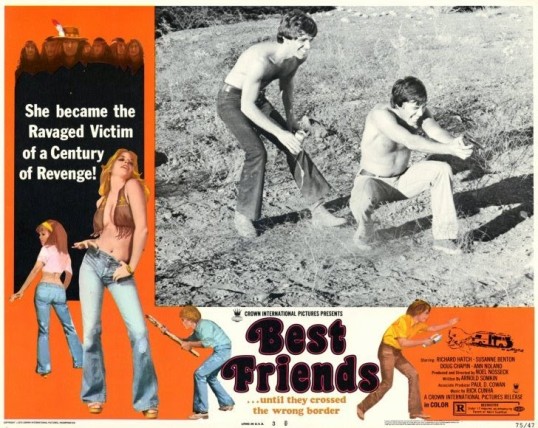
3. Best Friends (1975)

One of the strangest films ever released by Crown International, Best Friends is also one of the best.  A road trip between two old friends goes terribly wrong when one of the friends turns out to be a total psycho.  This well-acted and rather sad film definitely deserves to be better-known than it is.

4. Trip With The Teacher (1975)

Zalman King for Best Supporting Actor?  Hell yeah!

5. Malibu High (1979)

Surely Kim Bentley’s performance as a high school student-turned-professional assassin deserved some sort of consideration!

6. Don’t Answer The Phone (1980)

Don’t Answer The Phone is not a particularly good movie but it certainly is effective.  It made me want to go out and get a derringer or some other cute little gun that I could carry in my purse.  That’s largely because of the performance of Nicholas Worth.  Worth plays one of the most perverse and frightening murderers of all time and Worth throws himself into the role.  It’s one of the best psycho performances of all time and certainly worthy of a Best Supporting Actor nomination.

Crown International Pictures’s Only Oscar Nomination


If you’re fan of old movies that used to play in the grindhouses or at the drive-ins, you’re familiar with the Crown International Picture logo.

This logo appeared at the start of some of the most entertaining and cheaply made exploitation films of all time.  These were movies with titles like Malibu Beach, The Teacher, Cavegirl, They Saved Hitler’s Brain, The Sidehackers, My Tutor, Trip With The Teacher, Best Friends, and The Sister-in-Law.  These films may have never been critically acclaimed but they’re still being discovered and loved by viewers today.

Crown International Pictures was founded in 1959 and ceased operations in 1992.  Over the course of 43 years, the studio only received one Oscar nomination.  That was in 1972, for Best Original Song.  Written by Sammy Fain and Paul Francis Webster, Strange Are The Ways Of Love played over the credits for The Stepmother.

In honor of both the Oscars and Crown International Picture, here is Strange Are The Ways Of Love