“All-New Hawkeye” #1 Hits The Mark


4426838-01

Let’s be honest : as far as descriptives go, “all-new” is getting pretty fucking old — especially at Marvel Comics, where at this very moment it’s being flat-out used to death all across their entire line. Right now they’ve got All-New InvadersAll-New X-MenAll-New Captain America —hell, recently they even branded their entire “soft reboot” All-New Marvel Now! (which came right on the heels of the prior Marvel Now!) and saw fit, a couple of months back, to momentarily slap the label on their prestigious series of Miracleman reprints with All-New Miracelman Annual #1, despite the fact that the “headline” strip in that book was an unused Grant Morrison “inventory story” that had been sitting around gathering dust for nearly two decades.

Still, if there’s one thing the so-called “House Of Ideas” has always excelled at, it’s overkill, and now we can add All-New Hawkeye to the list, even though a) the series it’s “replacing” — namely Matt Fraction and David Aja’s more simply-titled Hawkeye — isn’t even over with yet, and has one more issue to go which will be every bit as “all-new” as this one is; and b) there’s really nothing terribly “new” about this series (apart from the cover price jumping from $2.99 to $3.99), especially in terms of tone and style,  anyway.

Which isn’t to say it’s bad, mind you — quite the reverse, in fact. It’s probably no secret to those who follow my comics review on here that I’m generally less-than-enamored with Marvel for a variety of reasons, but Fraction and Aja’s Hawekeye has certainly been an exception : I’ve loved their take on Clint Barton, his brother Barney, and his protege, Kate Bishop, from the outset, and while the book’s critics do raise a number of semi-valid points (let’s remember that the “Hawkguy” label actually originated with those who found the “everyman” tone of the series to be cliched and overly-self-conscious before it was “repurposed” and turned into a positive by its fans), at the end of the day I could care less — the humor, heart, and humanity that the Matt n’ Dave tandem (with more-than-able assistance from occasional fill-in artist Annie Wu) brought to the table drowned out their detractors with grace, confidence, ease and, yes, style — which probably especially bugs the shit out of the curmudgeonly crew of “haters” because the fact that the book was supposedly “too stylish” was one of their chief complaints. So while “give us more of the same” has been the bane of comics, both creatively and commercially, for ages now, when it comes to all things Hawkeye, ya know what? It’s just fine with me — up to a point.

HAWKEYE2015001-int2-1-3d81e

By and large, it seems like it’s fine with the new creative team of writer Jeff Lemire — who has a fair amount of experience with a certain emerald-clad archer over at DC — and artist Ramon Perez, as well, given that their supposedly “all-new” take on the character feels very much like a continuation of what’s come before, albeit with a few semi-significant new wrinkles added in. As the page reproduced directly above shows, Perez’s art is a reasonable approximation of Aja’s style, and Lemire’s got the characterization of Clint and Kate down pat, so if you don’t want to see this particular boat rocked too much, the first issue of this new series (which kicks off a five-part storyline titled “Wunderkammer”) will leave you feeling in very safe hands, indeed.

Which isn’t to say that they don’t appear to have at least some level of ambition — I’m sure Lemire, Perez, and co-colorist (more on that in a moment) Ian Herring would prefer to label what they’re doing as “building upon” the foundation laid by Fraction and Aja rather than merely “emulating” or, even more uncharitably, “imitating” it, but I’ve gotta be honest and say that the jury’s still out on which way all of that is going to go. All-New Hawkeye #1 throws out some hints in that direction, given that half the story is a flashback to Clint and Barney’s troubled upbringing in an abusive foster home and those pages/scenes feature a remarkably different art style (see below) that showcase Perez tackling the hues on his own with a limited  watercolor palette (one that’s,  appropriately enough given our hero’s costume, heavy on the purple) over his own “sketchier,” more fluid pencils and inks, but the “present-day” action is a rather bog-standard runaround with the two Hawkeyes busting into a “secret” Hydra base at the behest of S.H.I.E.L.D. for reasons that will, in due course, become fully apparent, I’m sure. It’s fine and dandy stuff, don’t get me wrong, and is more or less exactly what I was hoping to get from this comic, but it’s definitely — well, what is it they say about the sincerest form of flattery again?
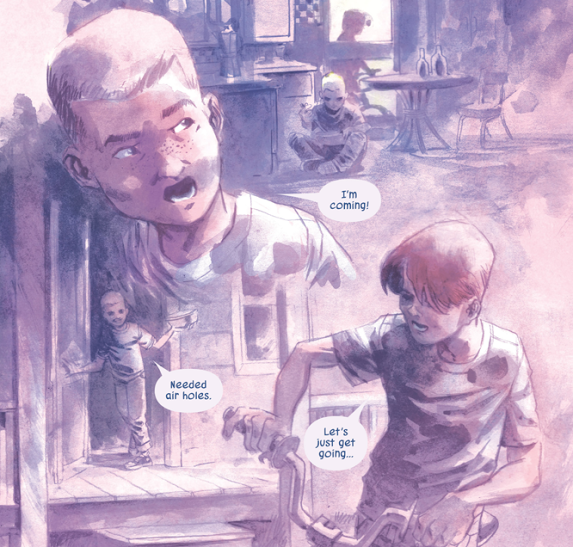
all-new-hawkeye-1-flashback

In any case, it’s  probably fair to guess that “some tinkering around the margins” is all the more leeway that Marvel editorial is willing to give the new creators on this book, at least to start with, and to be honest, that’s probably all that us long-time readers want, too, so I really don’t want to sound too much like I’m bitching here — yeah, I love to see established characters taken in new and surprising directions by writers and artists with a bold and unique vision all their own, but it’s not like that’s what every comic needs all the time.Sure, I’ll be disappointed if Lemire and Perez choose not to develop a more distinctive take on the character at some point (or, even more depressingly, if they’re not allowed to by company “suits”), but I have no problem with them easing us along by means of  a somewhat extended transition period. In short, I don’t mind the fact that All-New Hawkeye isn’t all that new just yet.

all-new-hawkeye-1-interior

But it’ll have to be at some point, won’t it? Much as I’ve thoroughly enjoyed what Fraction and Aja have done on their run — and I’m eagerly looking forward to seeing how they wrap it all up with issue #22 — I don’t want a “new” series that feels like a faint approximation of the old, which puts Lemire and Perez in a tricky spot : they’ve gotta prove that they have their own ideas for the book, but they can’t rush the journey from point A to point Z for fear of alienating loyal fans. As of right now, they appear to be taking a “one step at a time approach” — which is exactly right — but if “Wunderkammer” ends up feeling like five issues of them trying to ape their predecessors,  with some niftily-illustrated childhood memories added into the mix, well — that’s not gonna make anyone happy, is it? Folks who like constantly-developing-and-evolving characters and narratives will slam them for lack of ambition and/or effort, while folks who openly admit that “same old, same old” is all they’re looking for will rightly ask “why not just leave Fraction and Aja on the book, then?” I’m choosing to remain optimistic for the time being — this debut installment certainly doesn’t give me any reason not to be, I suppose — but it’s definitely a cautious optimism.

Even so, there’s certainly such a thing as over-thinking matters, and maybe by focusing on this series’ potential future, I’m losing out on the chance to feel good about its present state. When I take off my “worry-wart” cap, go with the flow, and appreciate All-New Hawkeye #1 for what it is — rather than, ya know,  spending/wasting all my time speculating about what it might be — I have to admit it’s a whole lot of fun.


Song of the Day: Hotel California (by The Eagles)


hotelcalifornia

Time for the latest “Song of the Day” and this one has grown on me with each passing year: “Hotel California” by The Eagles. It also continues an impromptu mini-series of songs with some of the greatest guitar solos. The previous entry, Lynyrd Skynyrd’s “Free Bird”, gave us an extended triple guitar solo that never seems to end.

I must admit that the group was never a favorite of mine growing up. I rarely listened to them and when they came on the radio I used to change the station. But as the years passed I began to give them more of a chance. I think part of it comes from the fact that this band is one of my Dad’s favorites. So, I gave them a chance in my advancing years. I guess with age does come wisdom since I began to really dig the band that I’ve dismissed as typical “adult contemporary” music in my youth. This just goes to show that the adage that sometimes “youth is wasted on the young” has some truth to it. My Dad’s probably looking down at me right now wherever he is and giving me that smirking smile that says “I told you so.”

“Hotel California” is my favorite of all the songs The Eagles have ever made. It’s not just catchy but the song also plays out like some sort of tale being sung by bards of old. Well, bards of old until we get to the dueling guitar solos by Don Felder and Joe Walsh which forms the climactic finish to the song. Guitar solos that I must say earns its place in rock pantheon as one of the best. That’s fact and not hyperbole.

FACT.

Another reason why this song of The Eagles is a favorite of mine is just the sense of the ominous just below the surface of the song. The lyrics does play out like a story, but a story tinged with a sense of malice and just a hint of the supernatural. It’s no wonder some of the more religious-minded fans of the song consider “Hotel California” as a song that details a time spent inside the Anton LeVay purchased San Francisco hotel called Hotel California which was converted into what would become the Church of Satan.

Lastly, I just plain love this song for the fact it paints my home state of California as something more than just a place to live and work in, but a place half in and out of reality. Maybe the song will convince Lisa Marie that California isn’t that bad of a state to be in.

Hotel California

On a dark desert highway, cool wind in my hair
Warm smell of colitas, rising up through the air
Up ahead in the distance, I saw a shimmering light
My head grew heavy and my sight grew dim
I had to stop for the night
There she stood in the doorway;
I heard the mission bell
And I was thinking to myself,
‘this could be heaven or this could be hell’
Then she lit up a candle and she showed me the way
There were voices down the corridor,
I thought I heard them say…

Welcome to the hotel california
Such a lovely place
Such a lovely face
Plenty of room at the hotel california
Any time of year, you can find it here

Her mind is tiffany-twisted, she got the mercedes bends
She got a lot of pretty, pretty boys, that she calls friends
How they dance in the courtyard, sweet summer sweat.
Some dance to remember, some dance to forget

So I called up the captain,
‘please bring me my wine’
He said, ‘we haven’t had that spirit here since nineteen sixty nine’
And still those voices are calling from far away,
Wake you up in the middle of the night
Just to hear them say…

Welcome to the hotel california
Such a lovely place
Such a lovely face
They livin’ it up at the hotel california
What a nice surprise, bring your alibis

Mirrors on the ceiling,
The pink champagne on ice
And she said ‘we are all just prisoners here, of our own device’
And in the master’s chambers,
They gathered for the feast
The stab it with their steely knives,
But they just can’t kill the beast

Last thing I remember, I was
Running for the door
I had to find the passage back
To the place I was before
‘relax,’ said the night man,
We are programmed to receive.
You can checkout any time you like,
But you can never leave!

(guitar solos)

Great Guitar Solos Series

Song of the Day: Free Bird (by Lynyrd Skynyrd)


FreeBird

I think if the United States ever decided to change it’s national anthem then I propose they just use Lynyrd Skynyrd’s classic arena power ballad Free Bird. It’s already considered by many as the unofficial anthem. There’s something about this song that is just so Americana. I know that the band itself has been accused of being racist because of their support for the historical legacy of the South and the Confederacy, but I don’t go for such nonsense. Lynyrd Skynyrd was just one of the best southern rock bands during the 70’s and probably would’ve reached Led Zeppelin status if a tragic plane crash hadn’t killed almost a third to half of the band.

It’s very hard not to get into this power ballad. A song which band front man Ronnie Van Zant would use to personally memorialize his fallen friend and colleague, Duane Allman of The Allman Brothers band who died from a motorcycle accident just a few years before. This song was always the most requested song by concert fans to be played by the band and play it they did and extending the triple guitar solo in the end from the usual 3-4 minute to as long as 10. It was this extended triple guitar solos with Gary Rossington, Allen Collins and Ed King which would be the highlight of any live performance of the song (one of my favorite solos)

It has also become a favorite amongst those who compose and pick music for films of late. Rob Zombie used it to highlight to great effect the nihilistic ending to his grindhouse film The Devil’s Rejects. The latest to use this song in a very inventive manner was Matthew Vaughn in the surprise hit of 2015, Kingsman: The Secret Service.

Even with most of the band either dead or retired the song still gets massive play when the current band tours and is still a favorite staple with most rock stations. Everytime I hear it come on or I play it on my mp3 player I feel like pulling out my Bic lighter, flicking it on and waving it in the air in tune to the song. FREE BIRD!!!

Free Bird

If I leave here tomorrow
Would you still remember me?
For I must be traveling on, now
‘Cause there’s too many places
I’ve got to see

But, if I stayed here with you, girl
Things just couldn’t be the same
‘Cause I’m as free as a bird now
And this bird, you’ll can not change
Oh, oh, oh, oh, oh

And the bird you cannot change
And this bird you cannot change
Lord knows, I can’t change
Bye, bye, baby it’s been a sweet love

Yeah, yeah
Though this feeling I can’t change
But please don’t take it so badly
‘Cause the Lord knows
I’m to blame

But, if I stayed here with you girl
Things just couldn’t be the same
‘Cause I’m as free as a bird now
And this bird, you’ll can not change
Oh, oh, oh, oh, oh

And this bird you cannot change
Lord knows, I can’t change
Lord help me, I can’t change
Lord I can’t change

Won’t you fly high, free bird, yeah?

(commence awesome triple guitar solos)

Guilty Pleasure No. 25: From Justin to Kelly (dir by Robert Iscove)


There’s a lot of reasons why a movie might become a guilty pleasure.  Often times, it’s because the film is technically terrible and yet still, for whatever reason, it’s fun.  And then sometimes, it’s because the film was made at a different time and, as a result, our modern cultural overlords demand that we dislike it regardless of how much we may also enjoy it.

And then there are films that you literally feel guilty for owning, watching, and sometimes enjoying.  These are the films that you always find yourself making excuses for owning,  Whenever I let anyone know that I have 2003’s From Justin To Kelly on DVD, I always make sure to point out that I also own the Criterion edition of Jean Renoir’s Rules of the Game and several films directed by Werner Herzog.

“Don’t judge me!” I shout, as my guests stare down at Kelly Clarkson and Justin Guarini’s retouched smiles beaming at them from the cover of From Justin To Kelly, “I actually do have good taste….”

And, if worst comes to worst, I just tell them that it was a gift from an old boyfriend who, just two days after giving me the DVD, was tragically killed while doing charity work in Vermont.  “The enemy is hunger…not the hungry!” I say and, while they sagely nod in agreement, I always push the DVD to the side.

From-justin-to-kelly

However, the fact of the matter is that I do own From Justin To Kelly and I actually have watched it more times than I’m willing to admit.  It’s difficult for me to explain why.  It’s not that From Justin To Kelly is a good film.  There’s a lot of people who claim that From Justin To Kelly is one of the worst films ever made and, while I think that’s a bit of an exaggeration, it’s hard to deny that the film really is pretty terrible.

From Justin To Kelly, of course, is the American Idol film.  By coming in first and second at the end of Idol‘s first season, Kelly Clarkson and Justin Guarini were contractually obligated to appear in a movie that would be written by Kim Fuller, the brother of Idol‘s producer.  From Justin To Kelly was quickly written and filmed so that it could both appear in theaters and be released on video before the start of Idol‘s second season.  If From Justin To Kelly had been a success, I imagine that all future American Idol winners and runner-ups would have been forced to appear in similar films.  And I have to admit that it’s kind of disappointing that From Justin To Kelly was not a success because I would have loved to have seen a beach movie starring Taylor Hicks and Katharine McPhee.

However, From Justin To Kelly was not a success.  In fact, it was such a failure that the producers of Idol decided to give up on movies and instead concentrate on doing what they’re good at — i.e., neutering otherwise interesting singers by forcing them to sing ballads written by Kara DioGuardi.  For the most part, the only time that you hear about From Justin To Kelly is when Kelly Clarkson talks about how much she hated making it.

(Reportedly, Kelly spent hours sobbing after reading the script.)

As for the film itself, it’s a romantic comedy musical beach party movie sort of thing.  Texas-born Kelly Clarkson plays Kelly, a girl from Texas.  Pennsylvania-raised Justin Guarini plays Justin, a guy who was raised in Pennsylvania.  Kelly is a waitress who gets dragged down to Florida for Spring Break by her friends, Alexa (Katharine Bailess) and Kaya (Anika Noni Rose).  (Bailess and Rose deliver their lines in the least convincing Texas accents ever.  However, since Kelly won American Idol and is very much a Texan, her movie friends had to be Texan too.)  Justin, meanwhile, is the “King of Spring Break,” which is odd since he and his friends Brandon (Greg Siff) and Eddie (Brian Dietzen) host parties that feel like they’d be more appropriate for a church camp.  (Then again, maybe Justin was meant to be the King of Bad Spring Break.  Maybe, if Idol had continued to make movies, Adam Lambert would have eventually gotten to play the King of Good Spring Break.)

Anyway, Kelly and Justin eventually meet.  Justin likes Kelly.  Kelly thinks he’s a player.  Justin’s like, “No, I’m not a player.”  Kelly’s like, “Okay, I guess we can be in love.”  But then Alexa decides that, no, Kelly and Justin should not be in love and, whenever Justin tries to text Kelly, Alexa texts back that Kelly’s not interested.  And, meanwhile, Kaya falls in love with a surly busboy (Jason Yribar), Brandon keeps getting ticketed by the same policewoman, and Eddie keeps failing to hook up with a girl that he met online.  Because, you know, the kids are so crazy with their text messages and their online dating and their … busboys.

(Seriously, did From Justin To Kelly really warrant that many subplots?)

During the whole time, everyone keeps singing songs and breaking out into choreographed dance numbers on the beach.  The film’s director, Robert Iscove, also did She’s All That and From Justin To Kelly at times feels as if it’s just a 80 minute version of She’s All That‘s prom dance-off, except in this case it’s performed by people who really can’t dance.

And yet, I’m going to take a minute to defend From Justin To Kelly.  While it’s true that the film’s songs don’t have anything to do with the film’s plot and they all lean a bit towards the vapid side, it’s also true that a few of them are catchy.  One reason why Kelly Clarkson is one of the few Idol winners to actually make a career for her outside of Idol is because she can make almost anything sound good.  For that matter, Justin Guarini is a far better singer than most people seem to remember him as being.  While it is true that, judging from their work here, neither Kelly or Justin can act, they’re both likable.  (Unfortunately, they also have next to no chemistry.  I was actually surprised to learn that Kelly and Justin apparently dated while making From Justin To Kelly because, for the most part, they both look terrified whenever they actually have to kiss on camera.)

From Justin To Kelly also has a massive nostalgia value.  After so many seasons and so many forgettable winners, it’s easy to forget about what a big deal American Idol was during that first season. I was 16 years old and I watched every episode and I got so emotionally involved in who was staying and who was going home.  Today, it seems incredibly silly that a movie would have been a part of Idol but, back then, it made total sense.  (That said, I know a lot of people who loved the first season of American Idol but I don’t know anyone who actually saw From Justin To Kelly in a theater.)

But, ultimately, I think the main reason why From Justin To Kelly remains an oddly fascinating bad film is because it takes place in a world that has absolutely nothing in common with the real world.  Nobody at Spring Break acts anything like any of the characters to be found in From Justin To Kelly.  Imagine a Spring Break where no one touched liquor, no one did drugs, and no one got laid.  Imagine a Spring Break where college students danced on the beach while wearing the most modest of bathing suits and flashing the most eager and innocent of smiles.  Even the film’s whipped cream bikini contest feels oddly chaste.  From Justin To Kelly might as well be science fiction and it’s just so odd to watch.

As you watch, you can not help but imagine how the people involved with both Idol and the film reacted to it all.  It’s actually fun to try to imagine what the cast talked in between shooting scenes.  Did they spent their time laughing at how bad the movie was going to be or did they try to fool themselves into thinking that it would all be okay?  (I’ve been involved in some bad community theater productions, which is what From Justin To Kelly resembles.  I know how darkly humorous thinks can get back stage as people try to come to terms with what’s happening.)  You watch and you ask yourself, “Did Kim Fuller actually think this is how American teenagers act when there’s no adults around?”  Even more fun, you can try to imagine what Randy, Paul and Simon said when they first saw the film.  I imagine it when something like this:

“Yo dawg, that was just alright for me, I don’t know, man, that was strange. Paula?”

“Argle bargle margle largle.  Simon?”

“It was rather like watching a small parakeet attempt to eat a 60 year-old man…”

And, as such, From Justin to Kelly remains a pleasure of mine.

It’s just one that I feel guilty about admitting to.

Previous Guilty Pleasures

  1. Half-Baked
  2. Save The Last Dance
  3. Every Rose Has Its Thorns
  4. The Jeremy Kyle Show
  5. Invasion USA
  6. The Golden Child
  7. Final Destination 2
  8. Paparazzi
  9. The Principal
  10. The Substitute
  11. Terror In The Family
  12. Pandorum
  13. Lambada
  14. Fear
  15. Cocktail
  16. Keep Off The Grass
  17. Girls, Girls, Girls
  18. Class
  19. Tart
  20. King Kong vs. Godzilla
  21. Hawk the Slayer
  22. Battle Beyond the Stars
  23. Meridian
  24. Walk of Shame

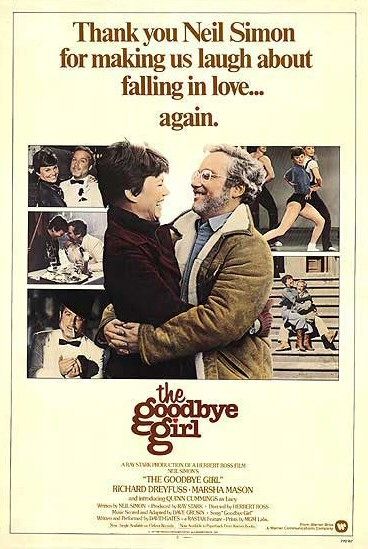
Lisa Watches An Oscar Nominee: The Goodbye Girl (dir by Herbert Ross)


Goodbye_Girl_movie_poster

After I watched San Francisco, I decided to watch yet another film that I had DVRed during TCM’s 31 Days of Oscar.  I had several films to choose from and I ultimately decided to watch the 1977 best picture nominee The Goodbye Girl because, in general, I like movies from the 70s.  Add to that, the film was described as being a comedy and who am I to turn down the chance to laugh?

The Goodbye Girl asks the question, “What would happen if two of the most annoying people on Earth were forced to live together and then ended up falling in love with each other as a result?”  Paula (Marsha Mason) is recently divorced and is trying to raise her 10 year-old daughter, Lucy (Quinn Cumming), while also trying to relaunch the dance career that she put on hold when she got married.  As played by Marsha Mason, Paula is probably one of the most humorless characters to ever be at the center of a romantic comedy.  It’s not just that Paula is written to be a very angry character.  (For the most part, Paula has every right to be angry).  Instead, it’s that Mason gives such a totally sour performance that you get the feeling that Paula has probably never smiled once over the course of her entire life.  When, later on in the film, she does smile, it feels forced and unnatural.  You worry that her face is going to split in half.

In the course of one very bad week, she is abandoned by her actor boyfriend (he’s going to Italy to shoot a film) and she discovers that, before he left, her ex also sublet their apartment to another actor.  That actor is Elliott Garfield (Richard Dreyfuss), who is hyperactive, immature, self-centered, and very, very talkative.  He does things like play guitar in the nude and meditate in the morning.

Once Elliott shows up and barges his way into the apartment, a familiar pattern is established.  Elliott does something eccentric.  Paula yells at him.  Elliott yells back.  Paula yells in reply.  Elliott yells some more.  Even if you never quite buy the idea that the two of them would ever fall in love, you’re glad when they do because at least it gives them something to do other than yell.

(Of course, The Goodbye Girl was written by Neil Simon, which means that not only are Elliott and Paula yellers but they’re also very quippy yellers.  And while I guess we should be happy that Elliott tells the occasional joke, the constant barrage one liners is ultimately rather alienating.  Every time you think that the film is about to make an interesting point about human relationships, Elliott says something quippy and ruins the mood.)

Which is not to say that The Goodbye Girl is a terrible movie.  The scenes where Elliott rehearses and then appears in a terrible production of Richard III are brilliantly done and wonderfully satirize theatrical pretension.  As well, during its second hour, the film settles down a little bit.  Or, I should say, Richard Dreyfuss settles down and actually starts to give a performance that’s more than just a collection of nervous tics.  It helps that once Elliott and Paula are in love, they don’t yell at each other quite as much.  There’s even a rooftop dinner scene where the two actors finally show a hint of chemistry.

Ultimately, The Goodbye Girl is an uneven film that feels a lot like a sitcom.  It’s one of those films that you watch and, even though it’s not terrible, you still find yourself thinking, “This was nominated for best picture?”

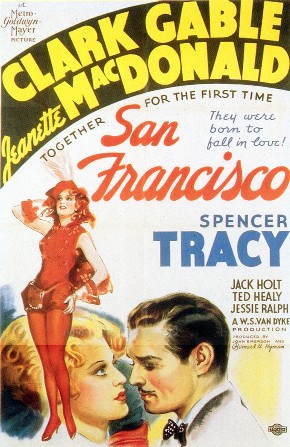
Lisa Watches An Oscar Nominee: San Francisco (dir by W.S. Van Dyke)


San_Francisco_(film)_poster

As I sit here writing this, I’m snowed in, my asthma’s acting up, and our cat is quickly losing patience with me.  On the plus side, however, this weather has given me an opportunity to watch some more of the old best picture nominees that I had saved up on my DVR.

For instance, I just finished watching the 1936 best picture nominee, San Francisco.

San Francisco was one of the first disaster films, a film that follows a group of characters as they attempt to survive the 1906 earthquake that destroyed the town of San Francisco.  And it has to be said that, nearly 80 years after the film was first released, the climatic earthquake remains effective and scary.  San Francisco, of course, was made long before there was any such thing as CGI.  Many of the film’s sets were built on special platforms that were designed to shake back and forth, just like in an actual earthquake.  When you see walls and buildings collapsing in San Francisco, you know that those walls are breaking apart and collapsing for real and the extras running for their life are literally doing just that.  After the earthquake, Clark Gable, as the film’s hero, walks through the ruins of San Francisco with the haunted look of a true survivor.  Gable was such a confident actor that it’s still jarring to see him looking overwhelmed.

Unfortunately, before you get to that spectacular earthquake, you have to sit through the rest of the film.  It’s a massive understatement to say that the pre-earthquake portion of San Francisco drags.  Clark Gable is Blackie Norton, a notorious gambler and saloon keeper.  Blackie may be a rogue but he’s a rogue with a heart of gold.  His childhood friend, Father Tim (Spencer Tracy), wants Blackie to run for the board of supervisors.  Blackie, however, is more interested in Mary Blake (Jeanette MacDonald), the newest singer at his club.

From the minute she first appears to the very end of the film, Jeanette MacDonald is singing.  Even when she’s not at the center of the scene, you can often hear her singing in the background.  And, after a little while, you just want her to stop singing.  But, whenever that happens, she tries to act and you realize that the only thing more boring than Jeanette MacDonald singing is Jeanette MacDonald acting.

Anyway, the film goes through all of the expected melodrama.  Blackie wants to reform.  Blackie decides not to reform.  Father Tim believes that there’s good in Blackie.  Father Tim gives up on Blackie.  Father Tim decides to give Blackie another chance.  Mary loves Blackie.  Mary fears Blackie.  Mary leaves Blackie.  Mary comes back to Blackie.  Mary leaves Blackie again.  Mary sings.  And sings and sings and sings…

But then, just when you’re about to fall asleep, the city starts to shake and all is forgotten in the wake of a natural disaster.  Even earthquakes serve a purpose…

San Francisco was a huge box office success.  It was nominated for best picture.  Somehow, Spencer Tracy received a nomination for best actor, despite the fact that he’s really not that impressive in the film. (His role is primarily a supporting one and he’s consistently overshadowed by Gable.)  The only Oscar that San Francisco won was for best sound recording and it must be said that, after all these years, the earthquake still sounds terrifying.

As for the film itself, I’d suggest skipping ahead to the earthquake.  That, after all, is the main reason anyone would be watching the film and, by skipping ahead, you’re spared having to sit through an hour and a half of Jeanette MacDonald singing.

Scenes That I Love: “And It’s a Beautiful Day” in Fargo


As I sit here typing this at nearly 2 in the morning, this is what our front yard currently looks like:

SnowNow, admittedly, this is nothing compared to what fellow TSL writers Pantsukudasai56 and Leon The Duke are having to deal with up in Massachusetts.  However, Erin and I live in Texas, where we consider 90 to be a cold front.  So, to us, that is a lot of snow!

(Add to that, it’s still coming down…)

As I watched the flakes fall and I realized that our cat’s outside water bowl had now disappeared under a mountain of snow, I couldn’t help but think of one of the best (and most snow-filled) films ever made, 1996’s Fargo.  Fargo is a film about many things: greed, love, home, fate, guilt, and innocence.  It’s also a film that’s full of snow.

And tonight’s Scene That I Love comes from Fargo.  When people talk about Fargo, they always seem to mention the woodchipper scene, the accents, and maybe the scene where William H. Macy flees the interview.  However, for me, the film’s best scene comes towards the end.  As Marge Gunderson (Frances McDormand) drives Gaer Grismund (Peter Stomare) to jail, she reflects on everything that’s happened.

Even though I’ve seen Fargo several times, this scene still always gets to me.  First off, there’s always a part of me that’s scared that Grismund is somehow going to attack Marge from the backseat.  But, beyond that, this is the scene where Marge reminds us that, for all the bad in the world, there’s still good as well.

And, of course, there’s all that snow…

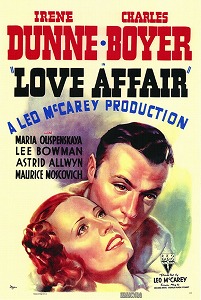
Lisa Watches An Oscar Nominee: Love Affair (dir by Leo McCarey)


Love_Affair

“If you can paint, I can walk!” — Terry McKay (Irene Dunne) in Love Affair (1939)

So, TCM’s 31 Days of Oscar has ended but I’m still on my mission to watch and review every single film that has ever been nominated for best picture.

Now, don’t get me wrong.  This isn’t going to be one of my series like Shattered Politics or Embracing the Melodrama.  I’m not going to post six best picture reviews a day for the next three weeks until I’ve reviewed every single one of them.  Instead, I’m just going to keep my eyes open.  When I see that a best picture nominee is going to be on TCM, I’ll be sure to record, watch, and review it.  On days that I have some extra time, I’ll watch and review something from my DVD and Blu-ray collection.  And, of course, I’ll keep make sure to keep up with what’s available on Netflix, Hulu, and all the other streaming services.

And, on a night like tonight when its sleeting outside and I’m aware that I probably won’t be going outside for the next two or three days, I’ll be sure to look through my DVR and see what I still need to watch.

Tonight, for example, I did just that and I ended up watching the 1939 best picture nominee, Love Affair.

Love Affair tells the story of two rich people in love.  Michel (Charles Boyer) is a painter and a notorious playboy. Terry (Irene Dunne) is an aspiring singer.  They’re both engaged to other people but, when they meet on a cruise, it’s love at first sight.  They try to avoid each other.  They try to remain faithful to their significant others.  But, when the boat docks off of the island of Madeira, Terry agrees to visit Michel’s grandmother with him.

Michel’s grandmother is played by Maria Ouspenkaya and, while Ouspenkaya does a good job playing the eccentric grandma and even received an Oscar nomination for her 10 minutes or so of screen time, it’s hard to look at her without imagining that she’s about to say something about what happens when the moon is full.  Or, at least, that’s the case if you’re a fan of the old Universal horror films and you’ve seen Ouspenkaya play the gypsy in original Wolf Man.  Instead of talking about the curse of lycanthropy, Michel’s grandma instead tells the two that they are meant to be together.

Anyway, once they return to New York, Michel and Terry agree to separate and, if after six months they still can’t stop thinking about each other, they’ll meet at the top of the Empire State Building.  Michel spends his six months becoming a more responsible human being.  Terry spends her six months singing.

Six months pass.  Michel stands at the top of the Empire State Building.  Little does he know that, on her way to meet him, Terry got struck by a car.  Michel is convinced that Terry stood him up.  Meanwhile, Terry is confined to a wheelchair.

Wow, depressing movie, huh?  Well, don’t worry.  That’s only the first half of the movie.  There’s still a lot more misunderstandings to get through before Terry can deliver her classic final line.

Occasionally, I’ve seen an old film referred to as being creaky but I don’t think I ever understood what that meant until I saw Love Affair.  Love Affair is such an old-fashioned melodrama and such a product of a bygone era that it can’t help but be a little bit fascinating.  Love Affair is definitely a film that was made at a different time and for a very different, far less cynical audiences and, watching the film today, definitely requires a bit of an attitude adjustment.  However, what Love Affair may now lack in entertainment value, it makes up for in historical value.  By today’s standards, Love Affair may seem slow and a bit too melodramatic but it remains a time capsule.  If you want to go back to 1939, you can either build a time machine or you can watch Love Affair.

(And, fortunately, Love Affair is in the public domain, which means it’ll be a lot easier to find than a working time machine.)

Committing (To) “Suiciders”


4412553-01

When I learned, after reading the first issue of Lee Bermejo’s new monthly Vertigo series Suiciders, that the writer/artist made his home in Italy, I can’t say I was terribly surprised, given that the basic set-up for this book appears to have torn at least a page from spaghetti exploitation stalwart Joe D’Amato’s post-apocalyptic “thrillers” Endgame and 2020 Texas Gladiators, but please don’t get the wrong idea — derivative as the premise here may be, I still think we’re in for a fun and intelligent ride that promises to explore issues of economic inequality and media saturation in a more straightforward way than most mainstream comics, particularly those of a superhero-ish bent, can or would ever dare to. The Vertigo imprint in general appears to be hitting something of a creative stride once again, after far too many years, and while so far sales numbers for their recently-added titles like FBP and Coffin Hill have generally been rather weak, let’s hope they decide to see them through and wait for them to gain an audience, because there’s some very promising stuff coming from the house that Moore, Gaiman, Morrison, et.al. built, and sooner or later the comics-buying public is bound to start paying attention — right?

Well, possibly. Or at least hopefully, at any rate — and you can add Suiciders to the list of new (relatively speaking) Vertigo books that definitely deserve more attention than they’re probably likely to get. Bermejo is certainly a “known quantity” as an artist, given that his detailed, gritty, realistic illustrations have been featured in some rather high-profile DC projects in recent years, most notably the Joker graphic novel and Before Watchmen : Rorschach (both done in collaboration with writer Brian Azzarello), and he was allowed to showcase both his writing and drawing skills on Batman : Noel, so a “solo” monthly of his own was probably due to happen at some point here, but I honestly couldn’t have predicted that he’d tackle his turn in the spotlight with this much confidence and clarity. The world of Suiciders seems to have arrived on comic store shelves fully realized down to the last detail, and even though we’re only given tantalizing glimpses into it here in issue #1, it’s a fairly safe bet that most readers — particularly those with a penchant for “after doomsday” scenarios such as myself — will be left hungry for a whole lot more, even at $3.999 a pop (incidentally, has anyone else noticed Vertigo quietly sneaking more and more of their titles up a dollar? Sure, they usually give you a high-gloss cover for that extra buck you’re laying out, but it’s still a drag).

Suiciders_1_pg1

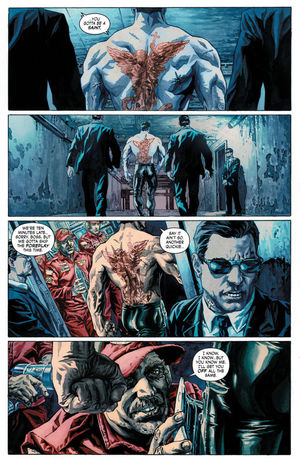
Here’s a brief rundown of the particulars, for those inclined to know more before they buy : in the future, L.A. has been devastated by a massive earthquake (I guess the whole nuke angle is kinda played out) and in the aftermath of that catastrophe, rather than rebuild per se,  the powers that be have just decided to start all over from scratch — for the 1%. Hence,  the city has bifurcated into two distinct regions — the glitzy and wealthy New Angeles, and the decimated and impoverished “old city.” It appears that the division isn’t too terribly dissimilar to the prevailing socio-economic structure of apartheid-era South Africa, where blacks far outnumbered whites but had no real voice in government despite doing all the menial labor that the privileged minority counted on for basic survival — and for their trouble, found themelves  warehoused in desperately poor, sickeningly inhumane “homelands” on the other side of a fence from their social “betters.” We might think that’s all a thing of the past, I suppose,  but the situation in Israel today isn’t much different, with Palestinians living in squalid conditions in the outdoor concentration camp that is Gaza and having to carry a pass and proceed through a security checkpoint to get to their jobs in places like Jeruslaem, Tel Aviv, etc. where they do the blue-collar and service-related work the wealthier, lighter-skinned folks are dependent upon  — and it’s not like we’re immune to this sort of de-humanizing bullshit in the US, either, as the rich increasingly flee to mansions in gated “communities” where you have to present ID to gain access, while the poor, whose labor the folks behind gates are both exploiting and in need of, see their inner-city neighborhoods deteriorate further and further at the same time their social safety net is being raided and squandered by the those  who already have way more than enough.

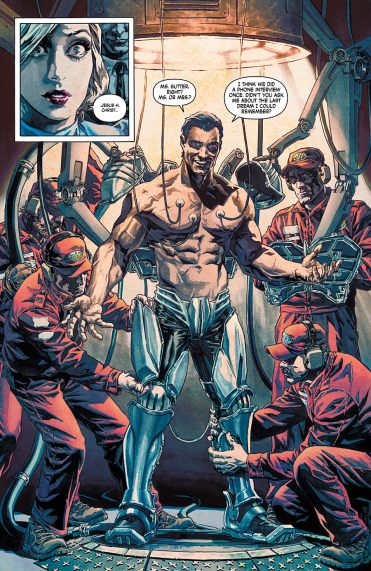
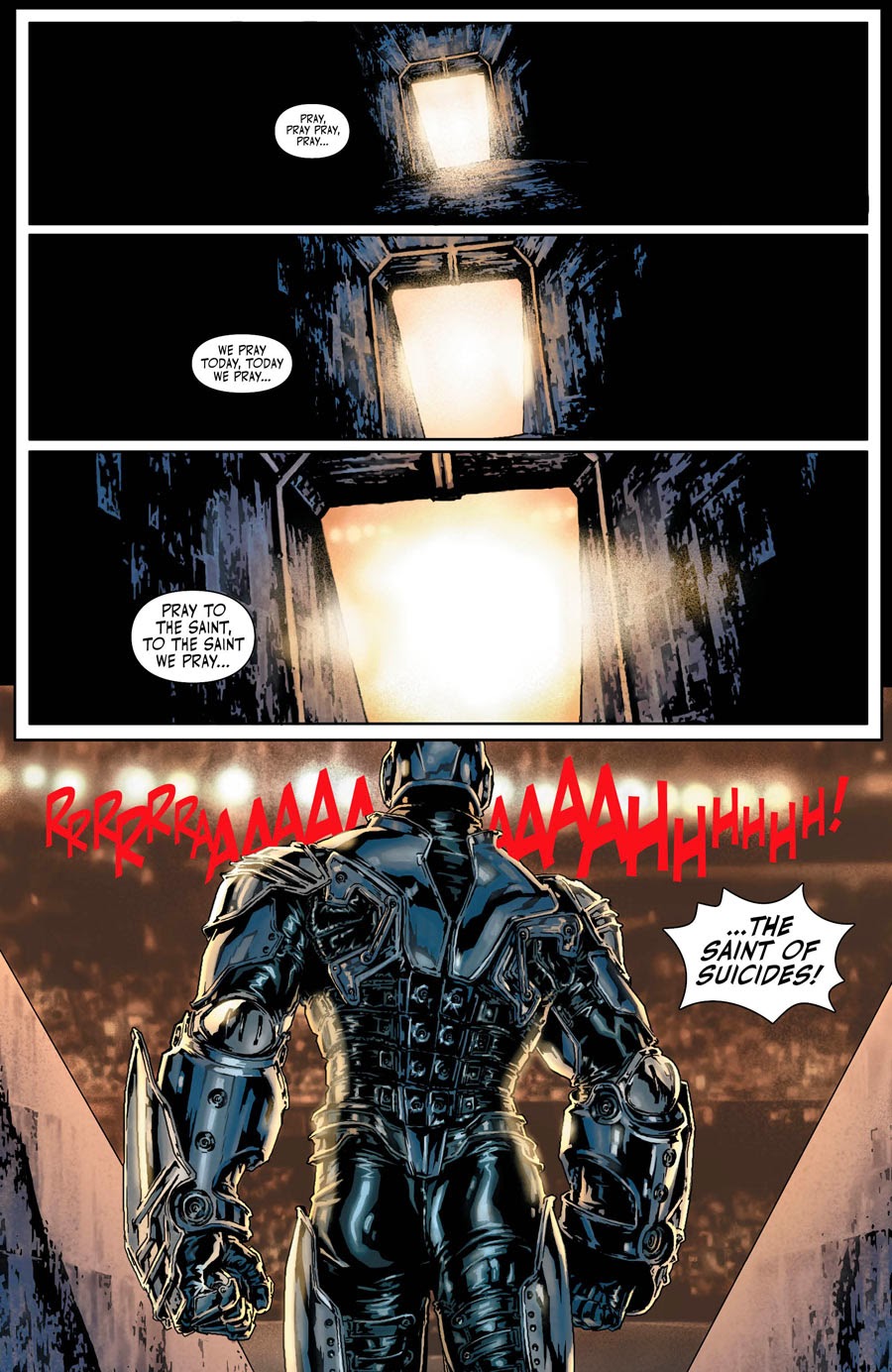
What to do to distract the populace from this abhorrent state of affairs? The Romans called it “bread and circuses,” these days we call it pro sports and TV (because we don’t feel the need to keep the peasants fed anymore), and in New Angeles they call it “Suiciding” — a sort of high-tech combination of American Gladiators and MMA fighting that you can definitely see coming down the pipeline in the next 10-to-20 years (if that).  The biggest star of the Suicide Ring is a rugged, handsome bruiser known as The Saint, and while he appears to be our ostensible “hero” of the story, Bermejo wisely plays it close to the vest and reveals very little about him beyond the fact that there’s more going on with him than meets the eye. Shit, we don’t even know his real name or anything of substance about his background yet, but you just get a feeling that there are sides to him that his well-oiled PR machine would rather have the public — and, by extension, us readers — kept in the dark about.

SUICIDERS-1-6-2cc08


The bulk of the action in this debut installment is consumed with The Saint’s latest championship battle, and Bermejo makes you feel every punch and kick with his fluid pacing and high-octane visuals, ably abetted by colorist extraordinaire Matt Hollingsworth, who imbues the penciler/inker’s pages with a radically different, but no less impressive, palette that Barbara Ciardo did on Joker and Before Wathcmen : Rorschach (a book I’m now convinced Bermejo should have written himself because, let’s face it, Azzarello’s script was a lazy, uninspired mess). All in all, the two of them concoct a feast for the eyes here that you’ll find yourself studying in detail for fear of missing anything too intricate,  awesome, or both.

But how does it read? Pretty damn well, I’m pleased to report. Bermejo has a solid grip on both characterization and world-building, and the sub-plot that runs concurrent with the main storyline, about a hapless band of refugees looking to sneak into New Angeles to provide a better life for their families, is both believable and repulsive in equal measure. It doesn’t end well (spoiler alert), and you never expect it to (cancel said spoiler alert), but you feel it all the same when tragedy strikes, nonetheless — a sure sign that a writer knows what he or she is doing. Not every script sets out to reinvent the wheel, but when the author is able to get you to  invest yourself in their story despite the fact that you know where it’s headed, well , that’s always worthy of a measure of respect, in my book.

SUIC-1-Preview1

And my respect — whatever that’s worth — is definitely something that Bermejo has won back with Suiciders #1. More or less everyone who participated in the Before Watchmen debacle (with the exception of Amanda Conner, who did sublime work — as she always does) saw their reputations knocked down a good few notches in the eyes of many, myself included, but this book is just the right combination of socially aware critique, sci-fi dystopianism, and bad-ass action to keep me hooked for a good long while. There’s a grim, remorseless, polarized, and utterly believable future society beckoning for us to come explore it in these pages, and Bermejo and Hollingsworth are proving themselves, at least to this point, to be excellent tour guides.

Fair warning, though : things  look as though they’re gonna get pretty dangerous pretty fast, so I’m thinking some Saint-style body armor will probably be in order if you want to make it out of Suiciders alive.

A Vision of the Avengers: Age of Ultron for the Third Time


AgeofUltron

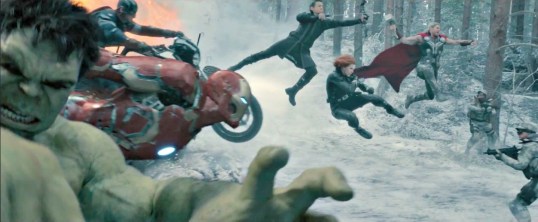
The third and, hopefully, final trailer for Avengers: Age of Ultron was unlocked today after a Twitter event which had millions of people tweeting the hashtag #AvengersAssemble. One has to give it up to the Marvel marketing machine. They know how to get the public clamoring for more when it comes to their films.

All that could be said has been said about this film. Just sit back and enjoy (or critique) one of the most highly-anticipated films of the year.