Short Film: Mama (dir. by Andres Muschietti)


213444-mama-short-film

This weekend sees the release of the Guillermo Del Toro produced horror film Mama. It’s the full feature length film from a short film of the same name by Argentinean filmmaker Andres Muschietti who also directs the full film.

I’m pretty jaded when it comes to horror films purporting to scare the hell out of people, but after seeing this short I could easily believe why Guillermo Del Toro jumped at the chance to produce the feature length adaptation and put the short film’s director back in the chair to the the adaptation. It’s a short film that’s barely 3-minutes long and it’s a wonderful exercise in setting the appropriate mood and atmosphere before the money shot when we finally see the titular character of “Mama”.

Anyone who lives in a home with a second floor and stairs leading up it will definitely need to see this short film to get an idea of what to expect when they finally see Mama in the theaters.

Artist Profile: Norman Saunders (1907–1989)


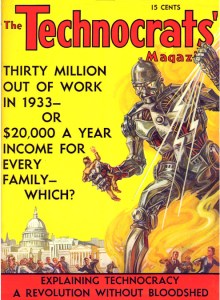
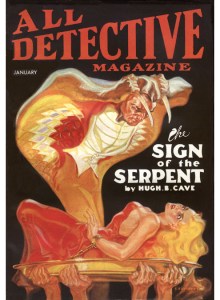
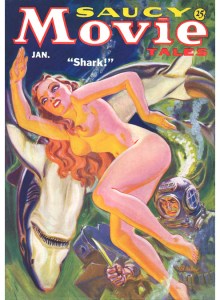
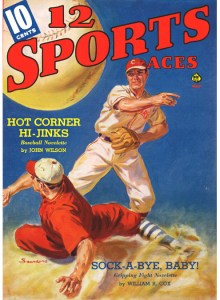
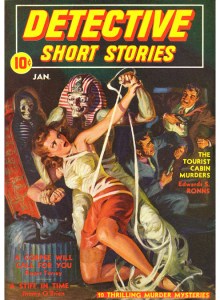
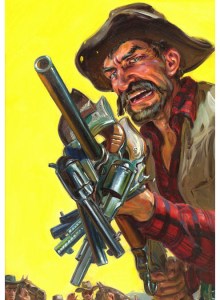
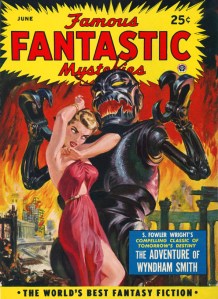
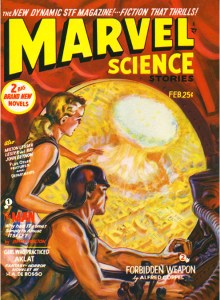
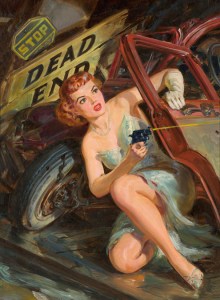
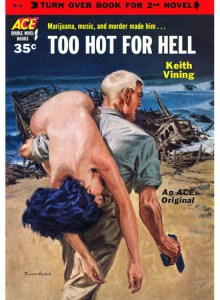
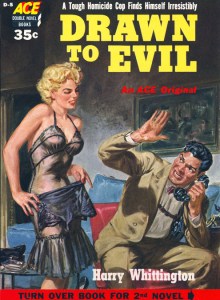
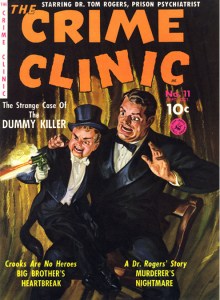
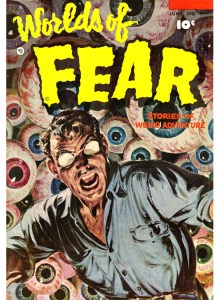
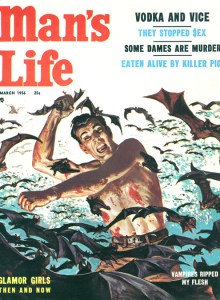
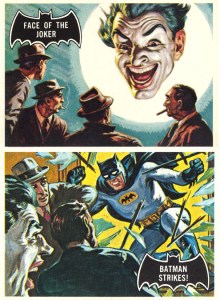
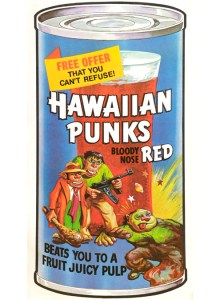
Saunders1A native of Minnesota, Norman Saunders trained in art by correspondence courses with the Federal Schools, Inc. of Minneapolis.  After receiving his diploma in 1927, Saunders received a scholarship to the Chicago Art Institute and worked as a staff artist for Fawcett Publications.  After moving to New York in 1934, Saunders started his long and prolific career as an independent pulp artist.  By the time he painted his last pulp cover in 1960, he had painted a record 867 pulp covers.  After 1960, Saunders illustrated comic books, men’s adventures magazines, and trading cards.

A small sample of his work can be found below:

Saunders2Saunders3Saunders4Saunders6Saunders7Saunders8Saunders9Saunders10Saunders11Saunders12Saunders13Saunders14Saunders15Saunders16Saunders17Saunders18Saunders19Saunders20

Film Review: Casino (dir by Martin Scorsese)


(Minor spoilers below)

Casino, Martin Scorsese’s epic, Las Vegas-set film from 1995, is one of my favorite films of all time.  It seems to show up on cable every other week and, whenever I see that it’s playing, I always make it a point to catch at least a few minutes.

Casino opens with veteran Las Vegas bookie Ace Rothstein (played by Robert De Niro) getting into a car.  He starts the engine and the car explodes.  The rest of the movie is an extended flashback as both Ace and his friend and eventual rival Nicky (Joe Pesci) explain how Ace went from being the most powerful man in Vegas to getting blown up in his car.

We are shown how Ace was originally sent to Vegas by a group of mobsters who are headquartered in the far less flamboyant town of Kansas City.  Ace keeps an eye on the city for the bosses and, as long as the money keep coming in, they leave Ace alone to do whatever he wants.  When Ace isn’t bribing government officials (including one particularly sleazy state senator who was reportedly based on future U.S. Sen. Harry Reid) and breaking the fingers of the unlucky gamblers who have been caught trying to cheat the casino, he’s busy falling in love with the beautiful prostitute Ginger (Sharon Stone, who was nominated for Best Actress for her work in this film).  Though Ginger warns Ace that she doesn’t love him and is still hung up on her manipulative pimp Lester Diamond (James Woods, who is hilariously sleazy), Ginger and Ace still get married.

Everything’s perfect except for the fact that Ace’s old friend Nicky (Joe Pesci) has also moved to Vegas.  As opposed to the calm and low-key Ace, Nicky has a violent temper and soon, he starts drawing unwanted attention to both himself and Ace.  When Ace attempts to control Nicky, Nicky responds by turning on his friend and soon, the two of them are fighting an undeclared war for control of the city.  Meanwhile, the bosses in Kansas City are starting to notice that less and less money is making its way back to them from Las Vegas…

There are so many things that I love about Casino that I don’t even know where to begin.

First off, I love the film’s glamour.  I love the way that the film celebrates the glitz of Las Vegas, presenting it as an oasis of exuberant life sitting in the middle of a barren desert that, we’re told, is full of dead people.  I love seeing the tacky yet stylish casinos.  I love seeing the inside of Ace’s mansion.  And Ginger’s clothes are just to die for!

I love that Scorsese’s signature visual style perfectly keeps up with and comments on the natural flamboyance of Las Vegas.  Consider how the film starts, with the shadowy form of Ace Rothstein being tossed through the air and then descending back down to Earth.  Consider the image of Ace standing in the middle of the desert and being submerged within a thick cloud of dust as Nicky’s car speeds away from him.  Consider how Scorsese’s camera glides through the casino, letting us see both the people who cheat and the people who are watching them cheat.  Consider Nicky standing outside of his jewelry stare and freezing the movement of the camera with his reptilian glare.  Consider the scene of cocaine being snorted up a straw, seemingly filmed from inside the straw.  Casino is a film full of the type of images that all directors promise but few ever actually deliver.

I love that Casino is built around a brilliant lead performance from Robert De Niro.  De Niro gives a performance that mixes both tragedy and comedy.  My favorite De Niro moment comes about halfway through the film, when Ace finds himself hosting a wonderfully tacky cable access show called Aces High. Ace interviews “celebrities” like Frankie Avalon, introduces the Ace Rothstein Dancers, and even finds the time to do some juggling.  De Niro makes Ace into an endearing and awkward character in these scenes, a permanent outsider who has finally managed to become something of a star.

It’s easy to compare Casino to Scorsese’s other classic mix of gangster film and social satire, 1990’s Goodfellas.  Both films feature De Niro, Pesci, and Frank Vincent.  (In a nice piece of irony, Casino features Vincent getting a little revenge after being attacked twice by Joe Pesci in two different Scorsese films.)  Both films are based on nonfiction books by Nicholas Pileggi.  Both films feature nonstop music playing on the soundtrack.  Both films feature multiple narrators who explain to us how the day-to-day operations of the  Mafia are conducted.  When Scorsese shows us Ace and Ginger’s wedding day, it feels almost like a scene-for-scene recreation of Henry Hill’s wedding in Goodfellas.

At the same time, there are a few key differences between Goodfellas and Casino.  Whereas Goodfellas was all about being a low-level cog in the Mafia, Casino is about management.  Casino is about the guys who the Goodfellas made  rich.  Goodfellas was about the drudgery of everyday life whereas Casino is about the glitz and the glamour promised by the fantasy world of Las Vegas.  Whereas Goodfellas was almost obsessively anti-romantic, Casino is a gangster film with heart.  No matter what else you might say about him as a character, Ace’s love for both Ginger and Las Vegas is real.  On a similar note, when Nicky turns against Ace, it’s because his feelings have been hurt.  In the end, Ace and Nicky come across like children who have, temporarily, been given the keys to the world’s biggest playground.

Casino is a glossy, flamboyant film that literally opens with a bang and ends on a note of melancholy and loss.  Not only is Ace reduced to being an anonymous old man working out of a nondescript office but our last two views of Vegas are of the old casinos being dynamited and an army of overweight tourists emerging from the airport like the unstoppable zombies from Dawn of the Dead.  This, then, is Scorsese’s view of the apocalypse. The world isn’t destroyed by a cataclysm but instead by an invasion of terminal middle American blandness.

Scenes I Love: Eastern Promises


EasternPromises

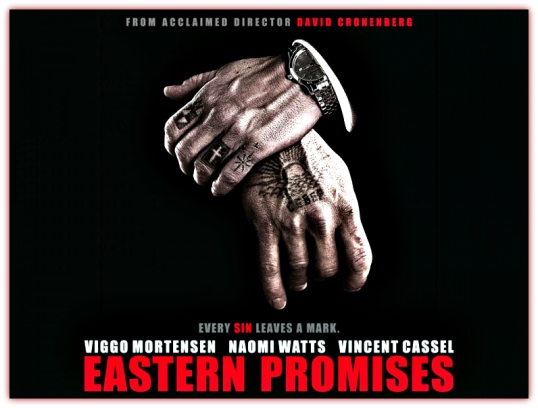
News that the sequel to Eastern Promises was one of the few pieces of news that really bummed me out when it made the rounds late 2012. The first film was one of my top ten for 2007 and consider it one of the better films about organized crime in the 21st century. A sequel to this film wasn’t needed, but most fans of the film wanted one just to see a furthering of the storyline between Viggo Mortensen’s character and that of Vincent Cassel’s character.

While the sequel may not be happening there’s still hope that it will get resuscitated in the future. Until that happens let’s take a look at what has to be one of the most realistic fight scenes on film. It’s the infamous (or famous depending on how you feel about the scene) Russian bath house scene near the end of the film. The scene sees Viggo Mortensen’s character of Nikolai Luzhin set upon by a couple of Chechen hitmen in the bath house where he proceeds to fight for his life in the most vulnerable fashion anyone can ever find themselves in.

Cronenberg has always been one of my favorite filmmakers and I continue to believe that his work body of work throughout his career puts him in the upper echelon, if not the elite level, of filmmakers living and working today. This fight scene has nothing glamorous about it. The cool factor that some attribute to the scene just emphasizes Cronenberg’s recent observation about the hypocrisy of those who denounce violence yet look at the violence he creates on film and call it art.

I consider this a scene I love just for the base simplicity of the scene itself. It’s primal and almost Darwinian in the lengths a person will go through to keep themselves alive for one second more. The scene also reminds me why Viggo Mortensen remains one of this era’s most underrated and greatest actors. Yes, it’s just a fight scene, but he gives so much into making it authentic that one could almost believe that his life was in danger and he did the fight for real (in fact Mortensen did injure himself so much during the several takes of the scene that his bruises afterwards became a problem for the make-up department who had to apply his vory v zakone tattoos every day).

What Lisa and Evelyn Watched Last Night #65: Megiddo: The Omega Code 2 (dir by Brian Trenchard-Smith)


Last night, after we finished watching the first episode of the new season of American Idol, my bff Evelyn and I watched Megiddo: The Omega Code 2, an evangelical apocalypse film from 2001.

Why Were We Watching It?

Considering that I’m an occasionally agnostic Irish Catholic and Evelyn describes herself as being a “Jewish atheist,” and that Megiddo: The Omega Code 2 is a film about Armageddon told from an evangelical point of view, I think the real question is how could we not watch it?  I mean, seriously.

Along with that, of course, Evelyn and I both wanted to watch something that nobody would ever expect either one of us to ever watch.

What Was It About?

Stone Alexander (Michael York) is President of the European Union and is promoting a plan that he claims will solve all of the world’s problems.  His younger brother, David Alexander (Michael Biehn) is vice president of the United States and wants to keep America from turning into Europe.  David is also in love with Stone’s wife (Diane Venora).  And, of course, Stone is actually the Antichrist while David is Michael Biehn.

Anyway, Stone uses his magic devil powers to cause President Benson (R. Lee Ermey) to die of a heart attack and David becomes President.  David, however, refuses to join Stone’s “new world order” so Stone frames David for the murder of their father.  David goes into hiding with a few loyal American soldiers while Stone makes plans to launch a military strike against Jerusalem.

It all, of course, leads to a huge battle between the forces of Hell and the combined armies of Spain and China (no, really).  David finally gets his chance to confront his brother, many prayers are said, and, eventually, a CGI demon pops up and creates a lot of CGI mayhem.

What Worked?

Evelyn claims that nothing worked in this film but I disagree just slightly.  First off, and most importantly, Franco Nero is in this film!  He plays Stone’s father-in-law and, while he may no longer be the dashing Lancelot from Camelot, Franco Nero is still aging pretty damn well.

Udo Kier is in the film too.  Seriously, Udo Kier pops up in the strangest places.

Michael York is a lot of fun as the wonderfully evil Stone Alexander. York’s performance here makes his delivery of the line, “YOU CAN LIVE!  LIIIIIIIIIIIIIIIIIIIIVE!” at the end of Logan’s Run look restrained.  Also, if you’re going to have a made-for-evil name like Stone Alexander, you might as well be the Antichrist.

On a personal note, I had a lot of fun annoying Evelyn by pointing out that just about every policy proposed by Stone Alexander has also been proposed by Barack Obama.  I imagine that Megiddo must be a very popular film among certain conspiracy-minded segments of the population.

What Did Not Work?

To be honest, the entire film didn’t work.  It’s not a very good film.  The special effects were cheap, the script made the Atlas Shrugged films look subtle, and I imagine that the film probably created more atheists than believers.

That said, Megiddo is still better than Avatar.

“Oh my God!  Just like Evelyn and Lisa!” Moments

None.

Lessons Learned

Franco Nero ages like a fine wine.

Getting the point of Megiddo

Song of the Day: Stars from Les Miserables (Alain Boubil & Claude-Michel Schönberg)


Tom Hooper’s film adaptation of the stage musical Les Misérables is now out in the theaters and people seem to really be enjoying the production. Even site co-founder Lisa Marie wrote a review of the film which she really enjoyed despite it’s flaws. Even those who love the film version will have to admit that some of the actors cast in the film were not up to the task vocally once it was time for them to sing their signature songs. One such person who seem to have gotten the brunt of this would be Russell Crowe in the role of Inspector Javert. To say his rendition of Javert’s first major song as being somewhat lacking would be an understatement. This is why I chose what I think is the best rendition of the song “Stars” as the latest Song of the Day.

This version was from the Original Broadway Cast production and had singer and actor Terrence Mann in the role of the dogged and zealous inspector. This was the very first version I ever heard and was fortunate enough to see live and continues to be my favorite version. Mann’s baritone voice is not so deep and overwhelming that we lose much of the emotions in the song as they’re sung. There’s still a strong sense of duty and zealous tone in Mann’s voice but also a hint of the character’s religious conviction by way of awe for having been given the opportunity to chase down one who has sinned.

While some prefer Phillip Quast from the London production of the musical I will always believe that Mann’s version of “Stars” is the best version out there.


Stars

There, out in the darkness
A fugitive running
Fallen from Grace
Fallen from grace
God be my witness
I never shall yield
Till we come face to face

He knows his way in the dark
But mine is the way of the Lord
And those who follow the path of the righteous
Shall have their reward
And if they fall
As Lucifer fell
The flame
The sword!

Stars
In your multitudes
Scarce to be counted
Filling the darkness
With order and light
You are the sentinels
Silent and sure
Keeping watch in the night

You know your place in the sky
You hold your course and your aim
And each in your season
Returns and returns
And is always the same
And if you fall as Lucifer fell
You fall in vain!

And so it must be
And so it is written
On the doorway to paradise
That those who falter and those who fall
Must pay the price!

Lord let me find him
That I may see him
Safe behind bars
I will never rest
Till then, this I swear
This I swear by the stars!

The Daily Grindhouse: Kiss Daddy Goodnight (dir by Peter Ily Huemer)


To me, Uma Thurman will always be Kill Bill‘s Beatrix Kiddo and, for that reason, she will always be one of my favorite actresses.  Though we take that film and her performance in it for granted now, the fact of the matter is that Kill Bill, Volume 1 was one of the most important milestones in my evolution towards becoming a film fanatic.  I was a senior in high school when I first saw that movie and I had the same insecurities that every 17 year-old girl has.  However, when I watched the Kill Bill films, I felt like I could survive anything.  If Beatrix Kiddo (in the form of Uma Thurman) could survive being shot in the head and come out of her coma kicking ass, then I knew that I could certainly survive breaking up with my boyfriend or getting my period in gym class or waking up with a big zit in the middle of my forehead.

However, even Uma Thurman had to start somewhere and that somewhere, in her case, was with an obscure, low-budget film called Kiss Daddy Goodnight.  Kiss Daddy Goodnight, which also features Steve Buscemi in a small role, is one of those moody, atmosphere-drenched films that always seems to show up in cheap, 10-movie box sets.  I recently watched it as a part of the Night Chills box set and I discovered that it’s not really as terrible as many reviewers claim.

First released in 1987 and looking as if it was produced with a budget of about a $1,000, Kiss Daddy Goodnight  is another one of those oddly fascinating and pretentious grindhouse films that tries to mix art and exploitation.  Shot on location at some of the sleaziest locations in New York City, Kiss Daddy Goodnight is the ennui-drenched story of Laura (17 year-old Uma Thurman).  Laura is an actress who supplements her income by going out at night with a Louise Brooks wig on, picking up rich men, drugging them, and robbing them.  Laura steals an ornate dagger from one of her victims and makes plans to give it to her mom as a birthday present.

Kiss Daddy Goodnight is also the story of Sid (Paul Dillon), a friend of Laura’s who, having previously left for reasons unknown, returns to New York and announces that he’s looking for Laura’s ex-boyfriend, Johnny.  Sid wants to start a band.  Laura tells him that she doesn’t know where Johnny is but she allows Sid to crash at her apartment.  Sid spends most of the movie walking up to random people and asking if they’ve seen Johnny.  He also finds the time to go through Laura’s closet whenever Laura’s not at the apartment.  “Fucking bitch,” Sid randomly exclaims while looking at Laura’s dresses.

Kiss Daddy Goodnight also tells the story of William (Paul Richards), a courtly older man who lives in an apartment with a rabbit and who spends most of his time missing his daughter Lara, who wants nothing to do with him.  William becomes obsessed with Laura, who looks almost exactly like Lara.  We’re never quite sure what William does for a living but he’s rich enough to have a henchman who follows Laura whenever she leaves her apartment.

Finally, Kiss Daddy Goodnight is the story of Johnny who, once Sid does find him, turns out to be played by a very young Steve Buscemi.  Johnny is only on-screen for about 5 minutes but, since he’s played by Buscemi (who, as opposed to Dillon and Richards, can actually act), he becomes a major character by default.  Johnny is the only character in the film who seems to have a life outside of what we’re seeing on-screen.  When Sid says he wants to get the band together again, Johnny says he no longer plays.  When Sid says, “Laura says hello,” Johnny simply gives him a contemptuous stare and turns on the TV.  The camera zooms in on the TV and we spend a few minutes watching football players tackling each other in slow motion.

Yes, Kiss Daddy Goodnight is an odd little film.  While the film’s nominal plot is basically William pursuing Laura while Sid attempts to protect her, the film itself has a random, almost improvised feel to it.  The film is more interested in documenting the weird people around Laura and Sid than in Laura and Sid themselves.  When Sid applies for a job in a seafood place, the camera pans over to the two men in sitting in the booth behind him and we spend a minute listening to them talk about a friend who has been kicked out of a private school in Europe.  When Laura takes a taxi to her apartment, the driver discusses philosophy with her.  The phone number 559-8317 appears throughout the movie, cryptically scrawled on apparently every wall in New York.  No one calls the number or even seems to notice it but it’s there as evidence that Kiss Daddy Goodnight is far more concerned with preserving a specific time and place than with telling a traditional story.  When viewed as a  historic document, Kiss Daddy Goodnight is a success d’estime.

Kiss Daddy Goodnight has a pretty bad reputation.  One need only visit its page on the IMDb to see how little most people seem to think of Uma Thurman’s debut film.  I, however, found it to be a bit more interesting than its reputation would lead one to suspect.  Along with serving as a time capsule of New York City, the film proves that, even early in their respective careers, both Thurman and Buscemi had the talent and charisma necessary to become stars.  If nothing else, just the fact that Uma Turman could go from Kiss Daddy Goodnight to Kill Bill, should give us all hope for the future.

It’s just more evidence that anything is possible.

Film Review: Les Miserables (dir. by Tom Hooper)


I was recently talking to one of my fellow film bloggers when the subject of this year’s Oscar nominees came up.  After I told her that I thought that Beasts of the Southern Wild was the worst of this year’s nominees, she rather vigorously shook her head and said, “No film this year was less deserving of a nomination than Les Mis.”

Now, I have to admit that it’s rare that her and I ever agree on anything.  For instance, she thinks that Barack Obama is going to save the world whereas I … well, let’s just say that I don’t.  She watches Glee and I would watch Community if it would ever come back on the air.  However, we do usually agree about films and, in fact, our friendship was initially the result of our shared loathing for Avatar.  So, I was curious why her reaction to Les Miserables was so different from mine.

In her own words, Les Miserables was “bombastic” and over-directed by Tom Hooper.  She complained about Russell Crowe’s singing and she felt that Sacha Baron Cohen appeared to be acting in a totally different film from everyone else.  The term “style over substance” came up more than a few times and she felt that even the things that did work — like Anne Hathaway’s draining performance as Fantine, Samantha Barks’ poignant work as Eponine, and Aaron Tveit’s charismatic performance as Enjorlas — simply served to highlight how uneven the film was when taken as a whole.  Finally — and I think that this is actually the key behind a lot of the online backlash against Les Miserables — she admitted that a part of her reaction was due to the fact that she still resented the fact that Hooper’s previous film, The King’s Speech, defeated The Social Network for Best Picture way back in 2010.

What’s ironic is that I found myself agreeing with a lot of what she was saying.  The fact of the matter is that Hooper does over-direct Les Miserables and the frequent jump cuts do tend to detract from the film’s performances.  It’s not a coincidence that the film’s best performance is given by one of the few performers (Anna Hathaway, of course) who is actually allowed to sing an entire song in close-up without Hooper cutting away to distract us with something else.  And yes, Sacha Baron Cohen does feel out-of-place and yes, Russell Crowe is a bit miscast in the role of Javert.

And yet, despite those not minor complaints, I still loved Les Miserables and I think it’s more than deserving of its nomination for Best Picture of the year.

Les Miserables in an adaptation of the Broadway musical that was itself an adaptation of Victor Hugo’s classic novel.  The plot will be familiar to anyone who has ever taken an English class.  In 19th century France, Jean Valjean (Hugh Jackman) serves 19 years in prison for stealing bread.  When he’s paroled from prison, he adopts a new identity and starts a new life.  Eventually, he becomes a factory owner and a local politician and is known for his kindness and honesty.  When the tragic prostitute Fantine (Anne Hathaway) dies, Valjean adopts her daughter, Cosette.  However, when the obsessive Inspector Javert (Russell Crowe) learns of Valjean’s true identity, Valjean and Cosette are forced to go into hiding.  Many years later, the now grown Cosette (Amanda Seyfried) has fallen in love with the revolutionary Marius (Eddie Redmayne, who gives a performance that is just as good as Hathaway’s much more lauded work). As France descends into revolution, Javert again discovers Valjean, much blood is shed on the streets of Paris, and Sacha Baron Cohen keeps popping up and offering some awkward comedic relief.

Yes, Les Miserables is all about style and yes, it is a bit bombastic but is that necessarily a bad thing?  I loved Les Mis specifically because it was such an old school spectacle.  There have been several very serious, very sober-minded adaptations of Les Miserables and most of them, especially the nearly 5 hour French version from 1934, deserve to be seen.  Both the Broadway musical and Hooper’s adaptation play up the story’s inherent melodrama and the resulting show is one that is designed to get more of an emotional response than an intellectual one.  Tom Hooper’s Les Miserables is a film that has specifically been made for those of us who aren’t ashamed to shed a few tears at the movies.  When I walked out of the theater after watching Les Miserables, I had mascara everywhere and I can’t think of a higher compliment to pay this uneven but ultimately triumphant film.

The Case for Dredd 3-D


558551d83bc53bcdec27e79335a5e8bd

I don’t know that many people who, in the thrall of a weak September, dished out the $5, $10, $12, to see Dredd 3-D. This is curious, because I saw it the day that it came out, and I sang its praises til… wait, when am I writing this? I suppose the singing goes on. If you’ve seen Dredd 3-D, you probably had the same initial reaction I did – that this movie is much, much, much better than you ever thought it would be. But, having seen it three times in theaters, and roughly one billion times since the DVD release… there’s more to this movie. This is a truly great film. And since we’re in the season of handing out awards, and because movies like Dredd 3-D know from the moment of their inception that they will never sniff a nomination, it seems like a fine time to extol the virtues of what might be the best action movie made since the calendar flipped over from 1989.

If you’ve seen the film, I can probably spare you most of this song of praise. Of the few people that I know who have seen the film (most of them forced to see it by me), I have heard very few complaints. Of course, I have targeted the film’s audience amongst my own friends, and I’m not trying to win it the support of the Academy. But for a film to be so universally heralded amongst fans of a certain genre is actually fairly impressive in 2013, let alone for that very same film – a gritty B action film, by all accounts – to command a startling 77% fresh rating at Rotten Tomatoes, is nothing short of incredible.

For the uninitiated, let’s start at the beginning. What is Dredd 3-D?

Well, it’s an exploration of a dystopian future that is the primary subject of the long-running Judge Dredd comic strip, an American hero who has been published almost exclusively in the United Kingdom. Dredd is a living metaphor, he is blind justice, the implacable and unrelenting arm of the law. He is fearless, he is formidable… he is the law. In a desolate future, North America is a nuclear wasteland. Outside of the boundaries of the incredible Megacity One, all is irradiated desolation. The Megacity runs from Boston to Washington DC, and contains twice as many people as lived in all of North America in 2012. Within the city limits, only one organization is still fighting to maintain order… the Judges of the Hall of Justice. They are judges, they are juries, and if necessary, they are executioners.

In Dredd 3-D, this is effectively all of the exposition we need. Judge Dredd (Karl Urban) is the merciless reality of a law that is actively losing its struggle to serve and protect. Megacity One is falling apart day by day. But if Dredd himself is dismayed, he does not show it. Our opening sequence is a bloodbath of a high-speed chase through the streets of Megacity One that is given all the feel of a totally average day on the job. Innocent people die, vehicles are destroyed, drugs are consumed, and assault weapons are in abundance. So routine does the film make the bust feel, that it drew me into the world of Judge Dredd. Once I was there, and once the action started, the film never released its talons.

From there, Judge Dredd hauls rookie Judge-Candidate Anderson (Olivia Thirlby) out into the real world. As befits an assessment, Anderson takes the lead, committing herself and Dredd to respond to a multiple homicide at Peach Trees, one of the massive megastructures of Megacity One, a single tenement that houses over 75,000 people. Upon arrival, the Judges determine that the corpses – skinned and thrown off the balcony of Peach Trees’ level 200 – were executions, intended to send a message. From there, we’re off. The Judges fight their way up the megastructure and toward survival, battling against the savage druglord Ma-Ma (Lena Headley) and her minions. Most of the effects are practical, most of the dialogue is minimal, and while the story does have its emotional aspect, the action is the centerpiece of this film.

So, given that, why would I prop this film up as one of 2012’s best? Why would I, had I an Academy vote, have nominated Dredd 3-D for Best Picture (and probably Best Direction and Best Score, but probably nothing else). Because Dredd 3-D understands its genre, and its audience, and it attempts to be a perfect film within that framework. There is no pretension here. There are no regal accents, timeless proclamations of love, or elaborate Victorian costumes. That probably disqualifies Dredd from an award this year, but it shouldn’t. Because Dredd is a better film than Les Miserables (which, earnestly, has been done better more than once before). It is a better film than Lincoln (no one has ever claimed that they felt Dredd 3-D’s length)… because Dredd 3-D is a perfect action movie. If we do not ascribe any deeper motivations or requirements to a film than it be relentlessly entertaining and that it fill the basic requirements of its genre, there are few films ever made that will fill this criteria better.

Dredd 3-D sets up its scenario expertly, in a handful of scenes, and without much in the way of dialogue. Karl Urban has proved time and again that he is both versatile and talented (and criminally underrated, but that’s neither here nor there) but he is not asked to do much here. Dredd delivers his lines in the same tone of voice regardless of the situation. Where Dredd’s catch-phrases seemed campy and over-wrought in the 1995 adaptation starring Sylvester Stallone, Urban seems to have the better measure of his character. He is mercilessly deadpan, transforming one-liners into either tiny morsels of dry humour or vaguely ominous threats. Because Dredd’s persona is so unvarying, it never seems like he’s delivering a line. He is simply stating facts, as he observes them, and we are reacting in turn. Throughout the film, Dredd delivers roughly three facial expressions – a default look of grim severity, a look of significant disappointment (when a particular misfortune befalls rookie Judge Anderson) and one that I would not describe otherwise than grim fury (when a particularly more unfortunate misfortune befalls rookie Judge Anderson).

Dredd 3-D doesn’t demand much from its audience, but it outputs entertainment at an almost unvarying rate. The action scenes and set-pieces are actually remarkably varied (such as they can be) despite the confined nature of the film’s locations. As we watch, Dredd’s relentless implacability, and the sense that he literally cannot be stopped, actually become a fun part of the story. There is literally nothing to recommend the villains of the piece to us, despite a fairly layered performance by Lena Headley, who manages to be savage, determined, exhausted, and regretful basically all at once. This is one circumstance in which we very much want “the law” to prevail… and if what you hunger for is watching the law burn gang-bangers to death with incendiary ammunition, this film will grant you your fondest wish.

So, while Dredd 3-D may not have been nominated for any prestigious awards this season, please do it the favour of checking it out. It is a nearly-perfect action movie, and it is that way in spite of, not because of, its source material. Show it some love, and hope that the who’s-who of Hollywood realizes why this film is worth our time – and that they make many more films just like it.

What Lisa Marie Watched Last Night #64: The 70th Annual Golden Globes


Last night, I watched the 70th Annual Golden Globe awards.  Judging from twitter, so did a lot of other people.  All I can say is that I hope my golden globes are as popular as this show when they’re 70 years old.

Why Was I Watching It?

I have to admit that I nearly didn’t watch it because I was in kind of a crappy mood on Sunday night.  Seriously,that night,  my twitter timeline was a testament to just how annoyed this little redheaded Irish girl can get.  But, in the end, I decided that I had to watch the Golden Globes because, even though I don’t care much for rich celebrities, I do love movies, I love TV, and I love award shows.  Add to that, I knew that if I didn’t watch the Golden Globes that would mean missing out on a chance to make countless references to my boobs and I just couldn’t do that to my followers on twitter.

What Was It About?

It was about celebrities getting drunk and winning awards and getting bleeped while delivering their acceptance speeches.  It was about the fact that the members of the Hollywood Foreign Press Association will do anything to get George Clooney to come hang out with them.  It was about Tommy Lee Jones glaring, Jodie Foster rambling, and Quentin Tarantino using the n-word backstage.  It was about Ben Affleck winning Best Director and Argo beating Lincoln for best film.  It was about star fucking and star mocking.  It was the best of award shows and it was the worst of award shows.  In short, it was the Golden Globes.

What Worked?

To be honest, the 70th annual Golden Globes were a lot of fun.  The show moved quickly and most of the jokes were actually funny.  The assembled stars started drinking early and I think that helped out a lot.

Among those who won Golden Globes, the best acceptance speeches were given by Lena Dunham, Christoph Waltz, Ben Affleck, and Daniel Day-Lewis.  A lot of people were critical of Anne Hathaway’s acceptance speech but I thought it was sweet and genuine.

My favorite winner was Jennifer Lawrence, mostly because she specifically started her speech by mentioning that she had beaten “Meryl.”  Some people on twitter felt that was a bit rude but, quite frankly, I’ve grown tired of Meryl Streep showing up at every awards ceremony looking like grandma in a prom dress.

(Meryl, incidentally, was not at the Golden Globes last night because she had the flu.)

I thought Will Ferrell and Kristen Wiig were funny when they did their little introduction for the Best Actress (Comedy/Musical) award but I thought Tommy Lee Jones’ annoyed glare was even funnier.

Tina Fey (who looked great) and Amy Poehler (who did not) were both great hosts and I loved Poelher’s joke about how torturous it must have been for Kathryn Bigelow to be married to James Cameron.  That’s one of the great things about the Golden Globes.  Unlike at the Oscars, people are willing to make jokes about James Cameron.

Unlike a lot of people, I found Jodie Foster’s “coming out” speech to be funny and wonderfully human.  That said, I wasn’t aware that Jodie Foster was ever in the closet.  Seriously, worst kept secret ever.

It was a genuinely exciting and nice moment when Argo was announced as the winner for Best Motion Picture (Drama), defeating the heavily favored Lincoln. While I liked both of those films, there is a definite backlash brewing against the seeming inevitability of Lincoln’s victory.

Finally, Sacha Baron Cohen was pretty annoying but, on the plus side, he did take the time to insult Russell Crowe’s singing.  As anyone who has ever watched South Park knows, this means that Crowe is going to jump in his tug boat and head off on a quest for vengeance.

And that’s the way things should be.

What Did Not Work?

A lot of people on twitter were really excited when Bill Clinton came out on stage to introduce the clip for Lincoln.  Myself, I hit mute as soon as I saw him.  I don’t watch awards shows to see redneck politicians.  Add to that, having Bill Clinton introduce Lincoln was yet another example of the nonstop hype that has led to people resenting both Steven Spielberg and his latest film.

The Golden Globes used to be a fun precursor to the actual Oscar nominations so it was hard not to be disappointed that, under this new schedule, the Golden Globes were awarded after the Oscar nominations had been announced.

“OMG!  Just like me!” Moment

"I'll show you some Golden Globes!"

“I’ll show you some Golden Globes!”

Lessons Learned

None.  I was too stubborn last night to learn any lessons.