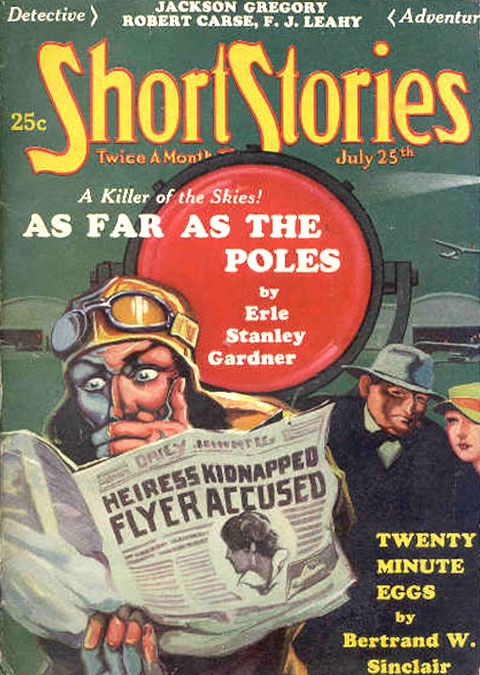
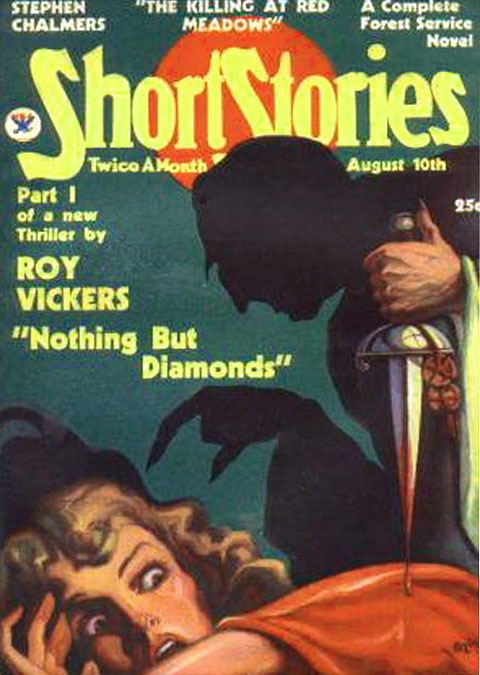
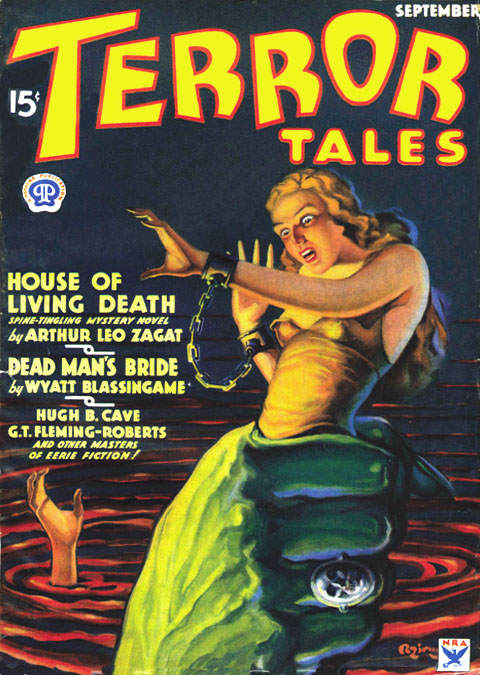
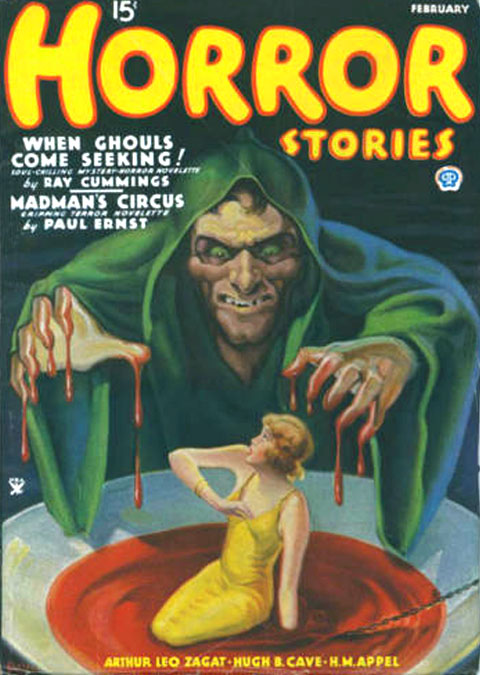
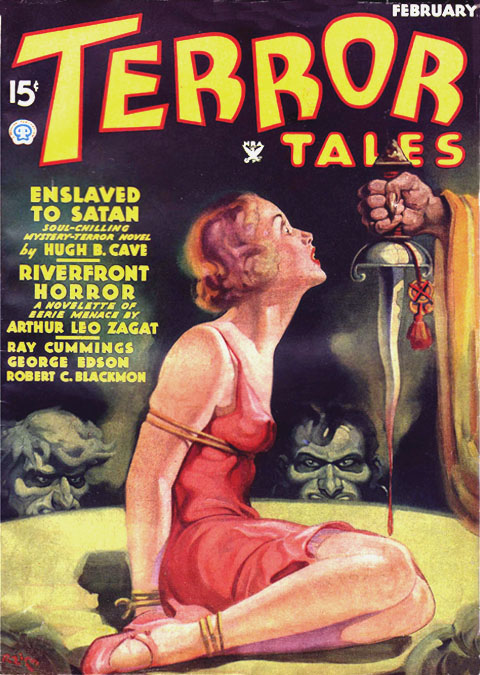
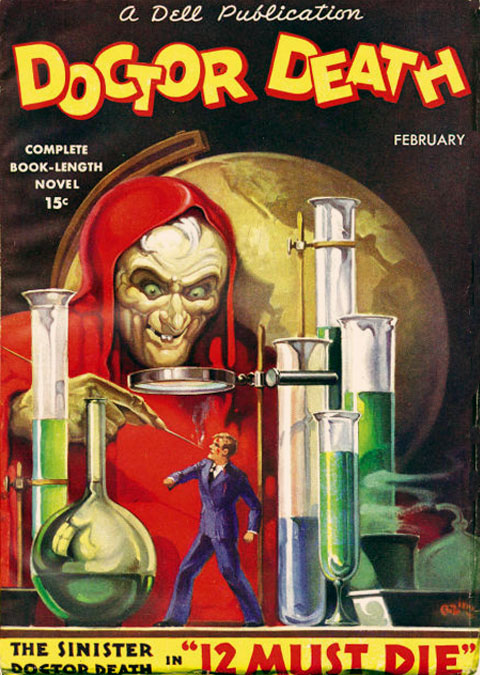
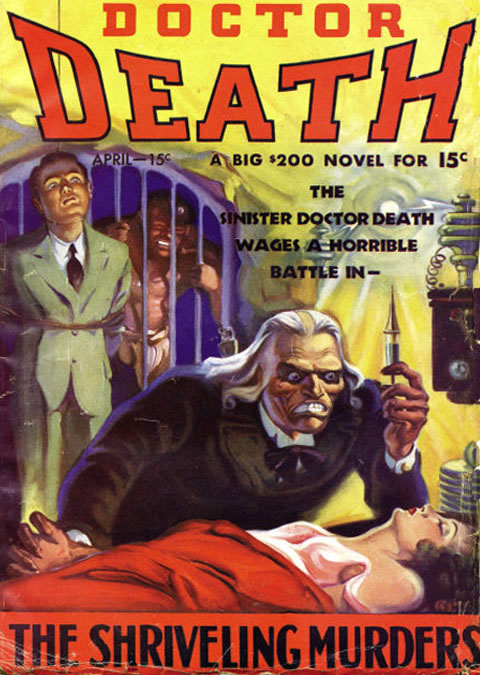
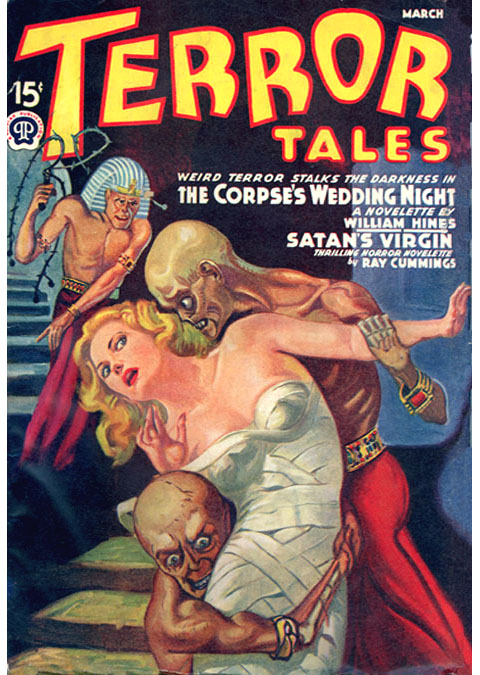
The son of German immigrants, Rudolph Zirm was born in New Jersey. Though he never had any formal artistic training, Zirm pursued a career as a freelance artist after the print shop he worked at closed in 1933. Though he only worked as an artist for 6 years and was never acclaimed during his lifetime, Zirm’s work is now highly praised and sought by collectors.
Titanfall is really turning out to be one of my most-anticipated game titles of 2013.
It’s the very first title for Respawn Entertainment. A studio made up of the people who first created the Call of Duty studio, Infinity Ward, and who ended up being fired (or leaving to follow their fired leaders) by the powers-that-be who held sway over Activision. There was talk about whether Respawn Entertainment would ever get a chance to show Activision and it’s detractors that they still had what it takes to succeed in the first-person shooter market dominated by three titles (Call of Duty, Battlefield and Halo).
Titanfall looks to dispel such notions first with a triumphant return to this summer’s E3 where they revealed the title to everyone to much acclaim. Now we got to see more of the gameplay itself both in mechanics and graphics at this past week’s Gamescom 2013 over at Cologne, Germany.
The gameplay trailer pretty much dispelled whatever doubts I might have had about this title and now has my money ready to be exchanged for it when it comes out for the Xbox One (for some on the PC or Xbox 360) in early 2014.
Occasionally, I like to do a little thing that I call “Let’s second guess the Academy.” This is when we look at the films that have won Academy Awards in the past and we ask ourselves, “Should that film have won?”
For this latest edition of Let’s Second Guess the Academy, let’s take a look at 1993. The 1993 Academy Awards were dominated by Schindler’s List. Steven Spielberg’s powerful Holocaust drama won both best picture and best director. It remains the film by which all other Holocaust dramas are judged.
But did Schindler’s List deserve to win? Or would you have preferred to see one of the other four nominees win the title of Best Picture of 1993? Let us know by voting below!
Now, here comes the fun part. Let’s say that Spielberg never got around to directing Schindler’s List. And maybe The Piano never played in the states and The Fugitive bombed at the box office. Let’s say that none of the five best picture nominees had been eligible to be nominated in 1993. Which five films would you have nominated in their place?
Below, you can vote for up to five alternative nominees.
On January 1st, 2009, a young man named Oscar Grant was executed in Oakland, California. Grant was returning home from celebrating the New Year’s in San Francisco when he and several other young black man were pulled off a train by the Bay Area Rapid Transit Police. According to the police, Grant had been involved in a fight on the train. In a moment that was recorded by several cell phones (and later broadcast across the world), Grant was shot in the back by a BART policeman. According to the police, Grant had been resisting arrest and his executioner had meant to use his taser but had grabbed his gun by mistake.
The death of Oscar Grant made the news even down here in Texas and I can still remember discussing it with my friends. As a bunch of good, white liberals (and yes, believe it or not, I was once a little bit liberal, though even back then I was, at heart, more of a civil libertarian than anything else), we were all properly outraged by what happened. At one point, I declared that this proved that police hide behind the power of their tasers. We all agreed that it was a terrible thing that had happened and that the cop involved needed to be held responsible.
Only recently did I realize that, even as fashionably outraged as me and my friend were and even though we did feel that this was a classic case of police overreactions, we also automatically assumed that the cop was telling the truth when he said that he meant to grab for his taser. For all of our righteous indignation, we — as a bunch of white people who had spent most of our time living in white neighborhoods and white towns — still had a hard time accepting the idea that a white police officer had intentionally executed a black man. As outraged as we were, we were assumed that we were angry about an aberration. As such, we assumed that the shooter would be held responsible and we went on with our comfortably sheltered lives. Needless to say, we were incredibly naive. While the death of Oscar Grant made national news, it made far less news when the man who shot him was eventually sentenced to only two years in prison. (He was paroled after 8 months.)
I’ve been thinking about Oscar Grant (and the way that my friends and I initially reacted to the news reports of his death) ever since I saw Fruitvale Station, a devastating independent film that also marks the directorial debut of Ryan Coogler.
Starting in the early morning hours and ending in the first hours of 2009, Fruitvale Station follows Oscar Grant (played, in an award-worthy performance by Michael B. Jordan) as he lives the final day of his life. In between doing such every day things as buying a birthday card for his mother (played, in a luminous performance, by the great Octavia Spencer) and picking up his daughter from daycare, Oscar worries about how he’s going to pay his rent and struggles against the temptation to return to his former life of dealing drugs.
While we watch the film knowing what Oscar doesn’t — that this is the last day of his life — the film itself manages to be a lot more than just a recreation of a tragic event. There’s a vibrancy and sense of hope to the scenes where Oscar drives through Oakland or hangs out with his family. That vibrancy makes the film’s inevitable conclusion all the more powerful and devastating.
As for the actual shooting, Fruitvale Station leaves it to the audience to decide whether Oscar was intentionally executed or if he was shot by a cop who thought he was holding a taser. As the cop who shot Oscar, Chad Michael Murray is only on-screen for a split second. As the other cop on the scene, Kevin Durand (who played Martin Keamy on Lost) shouts and bullies as only Kevin Durand can do. If the film leaves it ambiguous about whether or not Oscar was intentionally shot, it’s not ambiguous about the fact that Oscar was killed because, as a black man, he was automatically viewed as being a potential threat by the white police officers. Whether the intention was to tase him or to shoot him, the ultimate goal was to reassert the authority of the police.
As Fruitvale Station makes clear, the shooting was both an individual tragedy and a piece of the larger tragedy that’s still being played out across this country. The film’s triumph is that it makes Oscar Grant into both a compelling individual and a powerful symbol of the struggle that many Americans face as they try to survive under a system that’s been designed to keep them down.
So, have you seen Fruitvale Station? If you haven’t, you need to. It’s one of the best films of 2013.
Today’s dance scene that I love comes from the 2009 musical Nine.
To be honest, Nine is a terrible film that almost plays like it was specifically designed to parody flashy but superficial musicals. However, Nine is meant to be taken seriously and that’s is its greatest failure. Cinema Italiano is one of Nine’s better-known songs, despite the fact that, in many ways, it epitomizes a lot of what’s wrong with the film as a whole. For one thing, it’s obvious, from the lyrics, that the song’s writer knows very little about Italian cinema. (If anything, it sounds like the song was meant to describe the French new wave.)
And yet, I have to admit that I love the scene where Kate Hudson performs Cinema Italiano. I think it’s because, even though Hudson is not a great singer, she so throws herself into her performance that she wins the viewers over. This is the epitome of a guilty pleasure, a scene that I shouldn’t love and yet I do.



 Through the Shattered Lens