What I Played Today: Tomb Raider (2013)


tomb-raider-2013-wallpaper1

I hate to call this a “review”… because the game came out months ago, and I just now finished it. By now, probably everyone who is interested already knows that this game exists, that it is awesome, and that it needs to be played. But we here at The Shattered Lens also exist to serve the conservative buyer, the type who wonders to themselves “Is any single player game worth $60 anymore? How much of that $60 is being taken up by a Tomb Raider multiplayer nobody asked for or wanted?” “Oh God, another Tomb Raider?” I imagine that last line being accompanied by an outward eye roll, but with a quiet inner voice whispering, God, I hope it does not suck.

Well, fortunately for that tiny segment of the population… I am here to help you. I finished Tomb Raider today, and I have plenty to say about it, some of which I’m going to truncate in acknowledgment of the fact that this take would be a lot fresher if I’d written it two days after the game came out. I pre-ordered it. Obviously, there is no excuse for my having dismissed the game for even an instant. Now, with all that preamble managed…

Let’s look at Tomb Raider.

Of olde, Tomb Raider was a PC (first) and Console (adaptations, later simultaneous releases) puzzle / platformer game that starred well-endowed protagonist Lara Croft as she went about exploring ruins of the ancient world. As with any good “archaeology” narrative, the lines between historical fact and myth are blurred, and Lara would go on to discover things like oh, I dunno, the lost continent of Atlantis. The games focused heavily on platforming with some puzzles, which had (unfortunately) been forced into a relationship with a perennially awkward and not-optimal combat “system” which allowed for varying degrees of athleticism and varying degrees of inaccurate bullet spraying.

Tomb Raider (2013) is built on a more stable foundation. The game here essentially plays like any third person shooter you know of – there are plenty of chest-high obstacles available to shield you from enemy fire, ammo can be found everywhere (I’d say there’s a real argument that the game offers way too much ammo to the player, in fact), and like any good shooter in the Call of Duty era, you have several weapons that can be aimed down their sights and fired accurately at a precisely determined target. Not bad, right? Actually, it improves from there, hybriding in several elements that fans of the wildly popular Batman Arkham: (whatever) franchise. Lara, like Batman, learns skills and acquires new equipment as she proceeds through the story. That stuff can be used to go back and open up previously inaccessible secret areas and retrieve formerly inaccessible historical relics (though, to be honest, very little serious backtracking is required even if you intend to complete 100% of the collectibles). Lara has a predictable array of athletic moves at her disposal, including running, jumping, and climbing (including climbing-with-an-axe-climbing [the axe doubles as debatably Lara’s most powerful weapon]) as well as being a 100 pound girl who also happens to be qualified to pass the Presidential Fitness Test (try to outlast Lara Croft doing pull-ups. I dare you.) The action reminds me of Batman or Assassin’s Creed in the big picture, but the devil is in the details, and those details really do a lot to differentiate Tomb Raider from the gameplay that definitely influenced it.

Tomb Raider (2013) takes place on a lush, temperate island in the Dragon’s Triangle (a real-life region of water which extends from the southeastern Japanese coast toward the Phillipines) that was home to the ancient Yamatai civilization. Things immediately go totally awry, of course, and the rest of the game chronicles Lara’s individual journey to survive her experiences on the island – something complicated by savage and seemingly malevolent storms, and the discovery of a whole nation of crazed cultists who call the island home. Your mileage will probably vary with the actual storyline, particularly the endgame where Lara discovers the truth behind the island’s various mysteries (no fear, Lost fans, it’s all spelled out in the end!), and with the supporting characters, who are pretty one-note. To be frank, the supporting characters just don’t have much to do with this story, which is all about Lara Croft.

Lara herself is characterized extremely well, both through the excellent voice acting of Camilla Luddington, as well as through her physicality. As the player acquires new skills for Lara, she becomes demonstrably more capable in the game… and also more brutal. I have heard it argued that the game is diminished by the extent to which Lara – who has a hard time with the first occasion on which she kills another human being to survive – indulges in increasingly brutal violence as the game goes on. I would argue the opposite. I thought the game was very effective in putting myself in Lara’s shoes, so to speak, from the way the camera hovers close to her to the way she talks to herself, trying to encourage herself in grim situations, and reflecting on the madness and horror in which she has become buried. Far from objecting to Lara’s thought progression – and “morality” progression, if you want to call it that – I found myself snapping earlier than she does, at one point cursing her enemies and resolving to destroy them. Perhaps all of that pales in comparison to what I think is the strongest, best, part of Lara Croft’s character, however: Lara is never a victim. During the game, she is captured more than once, and encounters a variety of terrible situations, some of which she needs a little (very little) help to escape. But time and again, Lara draws deep into her own reserves of resourcefulness and willpower and not only extracts herself from increasingly dangerous situations… but attempts to drag the other survivors of her wrecked ship, and their would-be rescuers, with her to safety.

Fans of the series who were primarily interested in the puzzle-solving action of previous Tomb Raider games are almost certainly going to find this game a bit of a disappointment. Certainly, there are puzzles around – particularly in the optional ‘Hidden Tombs’ which can be completed for a bounty of salvage parts and experience points to upgrade Lara – but they definitely aren’t the core focus of the game in the way that they have been in previous titles. Once you have learned what to look for in the environment, the method of advancing through each open-roam area should be fairly obvious – it’s simply up to you to make the necessary jumps, climbs, etc. to reach your goals. It’s worth restating that the combat is quite a bit smoother than it was in previous installments, with obvious influences from other modern shooters giving it a much more polished feel. You may occasionally find the combat difficult, however, depending on your personal ability at sneaking around the island and murdering guards noiselessly (or avoiding them entirely). I consider myself good at stealth mechanics, but that I often prefer a straightforward solution if it will save me a lot of time (this goes triple for games where I know I’m going to be running around searching for collectibles. Better to just wipe out the whole population of badguys so they can’t harass me later).

Oh, and as for those pesky collectibles? There are a lot of them, and some of them are super hard to see in the game environment, but don’t go rushing off to find a game guide just yet… The game contains plenty of ways to find them (try setting a waypoint on the object of your desire and using Lara’s “Survival Instincts” if you really get stuck!) between the treasure maps and some of the skills you can purchase for Lara.

For me, even as a fan of both puzzles and previous installments… I really loved Tomb Raider (2013). This is one of the best pure single-player experiences I’ve gone through in a while (and, it’s worth noting, the game is not short by any means, although obviously it could be completed much faster than I managed if you were avoiding collectibles and time-killing puzzles). I encourage any of the remaining fence sitters to check this one out.
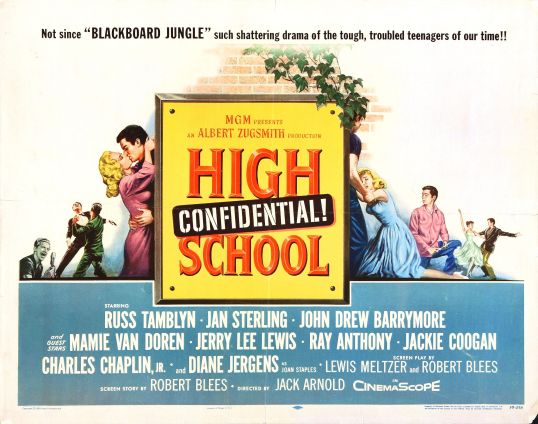
Scenes That I Love: “Tomorrow Is A Drag” from High School Confidential


high_school_confidential_poster_03Tonight, TCM has been showing a marathon a Mamie Van Doren films.  I just sat through The Beat Generation, a 1959 film where Mamie is among the many women to fall victim to a crazed beatnik known as the Aspirin Kid.

Now, to be honest, The Beat Generation is not a very good film.  In fact, it’s probably one of the most anti-female movies that I’ve ever seen.  Watching it, I found myself very happy that I was not alive during the 50s.

However, it did remind me of the far superior High School Confidential, another film that featured a bunch of faux Beatniks and Mamie Van Doren in a supporting role.  Released in 1958 and directed by Jack Arnold, High School Confidential is a lot of fun.

And that brings us to tonight’s scene that I love.  In the scene below, “beatnik” poetess Philippa Fallon recites a poem while secret drug dealer Jackie Coogan plays the piano.  I love this scene because it’s just so typical of the way that exploitation films from the 50s tended to portray the beat generation.

I have to admit that whenever I see one of these old films that attempted to cluelessly portray (and mock) the beatniks of the 50s, I’m reminded of the similarly clueless way that bloggers are portrayed in most current films and Aaron Sorkin-penned television series.

Before You See Anything Else — “Before Midnight”


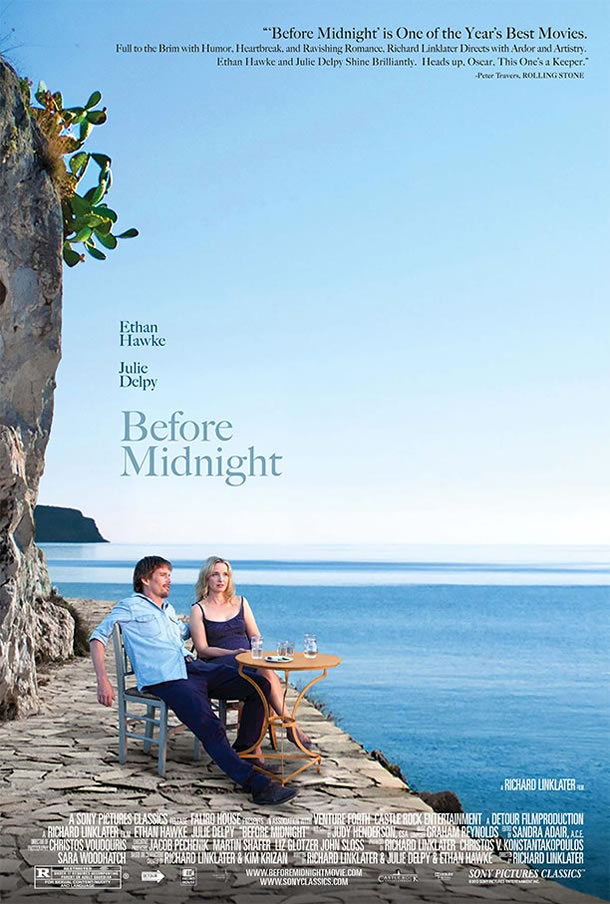
before-midnight-poster


So, this is it. You can keep your Man Of Steels, your Iron Man 3s, your Star Trek : Into Darknesses, and your Pacific Rims — fun popcorn fare some of those may be, but for me summer 2013 at the movies is all about the third installment in Richard Linklater, Ethan Hawke, and Julie Delpy’s long-running cinematic romance, Before Midnight. I won’t rehash the details of how and why this unlikeliest of indie “franchises” has meant so much to this armchair critic on a personal level over the years — hell, over the decades now! — as my reviews of Before Sunrise and Before Sunset last week covered that ground pretty damn thoroughly already, suffice to say that the chance to see Jesse and Celine living happily ever after is, at the risk of sounding hopelessly corny, a little bit of a celluloid dream come true for yours truly. And so here it is — and here they are, doing just that.

Or are they? Okay, sure, they’re together — and have been, apparently, since the conclusion of Before Sunset nine years ago. They’ve got twin daughters, successful careers (Jesse as a novelist and English professor, Celine as an environmental activist) in Paris, and are just winding up spending a magical summer at a writer’s retreat in the Greek Islands. Sounds ideal, right?

But all is not, of course, well in paradise — Jesse’s torn about the son he left behind in the US and wants to be a more active part of his life, Celine feels stifled by the apparently-tranquil domesticity of her situation and has no desire to move back to America for Jesse to be near his kid, and both are struggling with the the ever-narrowing possibilities life offers up as we age and our thousands of dreams get whittled down to a more concrete set of responsibilities. The passing years have seen “must do”s replace “want to”s in their lives, and one of the running themes of all of these Before pictures is that of  somehow finding a way for love and passion and the sheer wonder of being with another person who understands and accepts us for who we are to survive amidst all that.

They seem to be doing their best. Their sex life is still refreshingly healthy for a cinematic couple on the cusp of middle age, they still walk and talk like the two young lovebirds who met on the train to Vienna, and they still show a genuine affection for one another that can give all of us some small measure of hope. But half the film is consumed by a fairly heated and wide-ranging argument in a hotel room that lays bare the many fault lines underpinning in their relationship. The only question, it seems, is whether they’ll continue to navigate those together or choose to go their separate ways.

Linklater, Delpy, and Hawke, who collaborated on the screenplay together once again (though it’s still nice to see them share character-creation credits with Linklater’s friend, the late Kim Krizan), strike a very delicate balance here between presenting the “heaviest” material we’ve yet to see in this series with the most lighthearted, comedic  sequences to date, as well, and the end result is a film that’s not just a joy to watch, but to absorb, from its first frame to its last.

My long-standing group of friends I’ve seen all these films with waited until we could all see it together, and over the customary after-movie drinks last night we all agreed on two things — we loved it to pieces, even though it was, in many instances, the most difficult of  the bunch to take in; and we couldn’t wait to see it again. It’s just a bit too early to figure out where we’d rank this is the entire — uhhmmmm — “pantheon,” I guess, after only one viewing, ya see.

Now, if you’ll indulge me, I’d like to unceremoniously transition into a personal plea here — rumors are swirling that this might be the final Before of the bunch, and if that’s the case, I think it’s well past time for Oscar to show it a little respect. Yes, this series enjoys a deeply passionate and committed following, but it sure would be nice if Hollywood’s establishment paid some attention to this evolving little piece of wonderment that’s been happening under their noses for nearly two decades. Hawke and Delpy have both affected subtle body-language shifts over the years to delineate their characters’ evolving personalities (he walks with more swagger than ever, for instance, while she exudes an air of peace-that’s-looking-for-any-excuse-to-erupt resignation) that perfectly complement their maturation on paper and each is deserving of a Best Actor/Actress in a Leading Role nomination, and if the three collaborators aren’t recognized with a nod for Best Original Screenplay, there seriously ought to be an investigation. Hell, unless something else comes along that completely knocks our collective socks off, there ought to be an investigation if they don’t win it. Let’s get the email, blog, forum, etc. pressure campaign started right here — who’s with me on this?

Before Midnight is the most authentically human picture to come down the pipeline in ages, and traverses a rocky yet rewarding emotional terrain with grace, warmth, and yes, even charm. It shows how love endures when initial , lustful ehuberance ages into a kind of occasionally- resplendent ardor, and how it finds its level and holds us aloft even when we get everything we’ve ever wanted only to find out it’s still not exactly what we were yearning for (humans, we’re so picky). It’s the “happily ever after” we’ve always wanted for Jesse and Celine — and for ourselves — warts and all. And I’m so completely in love with the cinema, and even with life,  again it damn near hurts. If this is, indeed, the end — and I sincerely hope it’s not, I want to grow old with these characters — it couldn’t be more perfectly imperfect, more gloriously flawed, more tragically comedic, more uneasily blissful.


Artist Profile: Harry Barton (1908 — 2001)


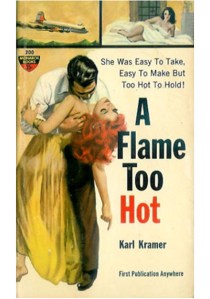
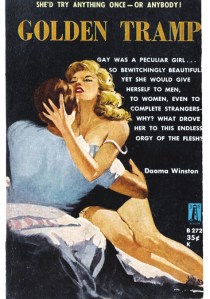
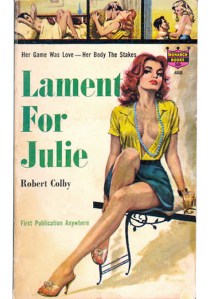
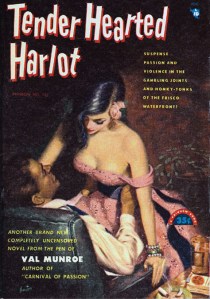
ArgosyHarry Barton was born in Seattle.  After graduating from Broadway High, Barton got his first job as a commercial artist working in a sign shop.  After studying with Art Students League in New York City, Barton painted covers for Argosy and Exciting Westerns.  Through the 1950s and 1960s, Barton painted paperback book covers.  From the 1970s until his death, Barton specialized in paintings of the Old West, which he sold through the Smith Gallery in New York.

A selection of his paperback work can be found below:

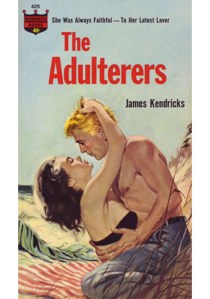
A Sin In TimeDeath Draws The LineFlame Too HotGolden TrampLament For JulieTender-Hearted HarlotThe Adulterers

Review: True Blood Ep. 6.1 (“Who Are You, Really?”)


Who_Are_You_Really_Main

True Blood (or, as my aunt calls it, the show with all the naked people) is back!  Last night saw the premiere of the first episode of the sixth season of the venerable HBO series.  That also means that, for the next ten weeks, we’ll be reviewing each episode here at the Shattered Lens.

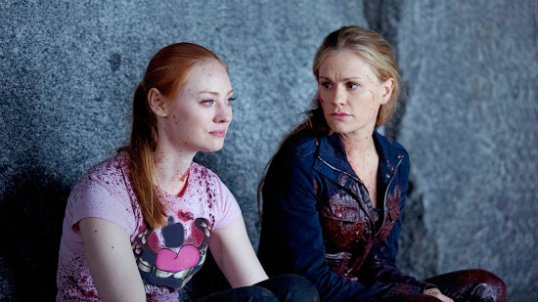
Last night’s episode started right where last season left off.  Bill drank the rest of Lillith’s blood, was reborn as some sort of blood-covered demon, and then proceeded to go on a rampage through the Authority HQ.  While all the characters that we care about — Sookie (Anna Paquin), Eric (Alexander Skarsgard), Jason (Ryan Kwanten), Pam (Kristen Bauer Von Straten), Tara (Rutina Wesley), Nora (Lucy Griffiths), Jessica (Deborah Ann Woll), Sam (Sam Trammell), Luna (Janina Gavanker), and Emma (Chloe Noelle) — manage to get out safely, it appears that crazed Bill kills everyone else in the building and then, for good measure, blows it up.

Soon after escaping, Luna asks Sam to take care of Emma and then dies of her wounds.  Luna’s death was a genuinely surprising moment, though I do have to admit that I wish Sam could at least have an episode or two where something either weird or terrible didn’t happen to him.  Sam takes Emma back to his bar where they run into Lafayette (Nelsan Ellis) and Sam watches a TV news report on how Louisiana’s governor (the wonderfully sleazy Arliss Howard) is declaring martial law on all vampires until the True Blood shortage is taken care of.

(At this point, I realized that I couldn’t remember whether or not Lafayette still has that demon inside of him.  Was that resolved last season?)

Meanwhile, Andy (Chris Bauer) is a still a dumbass but he’s now also a father of a bunch of faery kids who are aging very fast.  I have to admit that I’m not really that interested in Andy’s subplot, though I’m sure that the vampires of Bon Temps will be very interested in having all that new faery blood to choose from.

Alcide, meanwhile, is now pack leader, which means that he gets to eat his enemies and have sex with anyone he wants to, as long as he remembers that Rikki (Kelly Overton) is his “number one bitch.”  I’ve read comments from a few reviewers who have complained that Alcide’s scenes felt gratuitous.  Over on the A.V. Club, they complained that the only reason Alcide was in last night’s episode was so we could see Joe Manganiello naked.  To those reviewers, I say, “Shut up!”  Seriously, it’s not True Blood without Naked Alcide.

And trust me, we needed some Naked Alcide last night because the main storyline was kind of depressing.

After Eric, Nora, Sookie, Tara, and Pam all agreed that they would kill Bill if they had to, Jessica found herself being summoned to Bill’s mansion.  It was there that they discovered Bill, looking very normal.  After Bill explained that he was still Bill Compton but that he was also something much more, Eric attempted to attack him.  Bill easily defended himself, just to then be staked from behind by Sookie.

And how did Bill respond?

By removing the stake from his chest.

So, apparently, Bill is now a demigod of some sort.

After Bill ordered everyone but Jessica to leave, Sookie and Eric returned to her home.  After Eric signed the house back over to her, Sookie then took away his invitation and forced Eric to leave.

Meanwhile, Jason — who had earlier run off on his own after escaping the destruction of the Authority HQ — was picked up by a passing motorist.  Now, as soon as I saw that motorist, I knew he was going to be trouble because he was played by Rutger Hauer.  And sure enough, it turns out that Hauer is playing Warlow, the same vampire who previously killed Jason and Sookie’s parents.  Before vanishing, Warlow says that “nothing will keep me from getting Sookie.”

So, to summarize:

Sookie is trying, once again, to live a life free of vampire drama, Eric is thinking about abandoning Bon Temps all together, Bill is acting strange, Jessica is being used as a pawn, and Alcide’s naked.

The more things change, the more thing’s stay the same, right?

Overall, I had mixed feelings about last night’s episode.  After the excitement of last season’s finale, it’s hard not to be disappointed that tonight’s episode didn’t offer up much of a resolution.  In many ways, it felt more like an episode that you would expect to find in the middle of a 24-episode run, as opposed to the start of a 10-episode season.

That said, this episode did feature Alcide naked so who am I to complain?

Random Observations:

  • Tonight’s unofficial scene count: 45
  • Last night’s episode was directed by Bill Compton himself, Stephen Moyer.
  • “I’m your number one bitch,” is something that I often say, as well.
  • Where’s Rev. Newlin?
  • With the death of Luna and the “possession” of Bill, last night’s episode was unusually somber.  I hope that’s not going to be the way the rest of this season is going to play out.  True Blood is always at its best when mixing comedy with melodrama.
  • This is the first season without Alan Ball as showrunner (though he’s still an executive producer on the show).  It’s tempting to say that Ball’s absence is why last night’s episode felt somewhat off but, of course, it’s still to early to say one way or the other.
  • Because of Anna Paquin’s pregnancy, this season is only going to last 10 episodes.
  • And I’m looking forward to reviewing all ten of them!

Hottie of the Day – Antje Traue


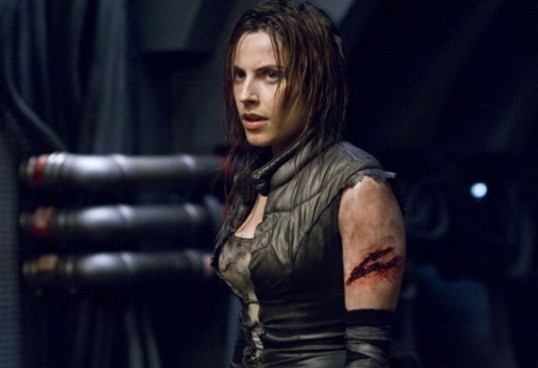
With Man of Steel out this weekend, everyone’s taken notice of Antje Traue, who plays General Zod’s partner in destruction, Faora-Ul. As such, we are adding her as the Hottie of the Day. Hailing from Germany, she also appeared in 2009’s Pandorum, alongside Dennis Quaid and Ben Foster. In Man of Steel, she managed to steal just about every scene she was in. Hopefully we’ll see her in more in the future.

pandorum-043 600full-antje-traue-1 Pandorum_010
AT
at2 at3 antje-traue-1at5 mv5bmtmynze4mdi1m15bml5 at6 at7at8 at9
antje-traue

Ten Years #43: Neutral Milk Hotel


Decade of last.fm scrobbling countdown:
43. Neutral Milk Hotel (727 plays)
Top track (81 plays): Holland, 1945, from In the Aeroplane Over the Sea (1998)
Featured track: In the Aeroplane Over the Sea (full album)

When you listen to a really diverse and enormous catalog of music, terms like “favorite” can seem more cheap than they really are. We are bombarded, after all, with trite Rolling Stones style top 100 whatever lists for which half the entries are predetermined without any serious consideration whatsoever and the remainder are entirely arbitrary. I like to think that this Top 50 series contains sufficient factual restraints to avoid these shortcomings–that the inclusions are genuine in a manner that avoids momentary whims and degeneration to name recognition. (You won’t find any Led Zeppelin, Beatles, or Pink Floyd in this house.) But I also like to think that that the dozens–maybe hundreds–of musical entities I have described as a “favorite” here on Shattered Lens have been sufficiently qualified to bear weight. I don’t typically speak of unequivocal favorites. I point out what I like best under a well-defined set of conditions.

So read this as it stands: In the Aeroplane Over the Sea is my favorite album. At some point in the late 1990s, Jeff Mangum became possessed by some superhuman muse long enough to compose 40 minutes of poetic euphoria.

I don’t know that any prose description could fully capture the depth of this album. It is a mesh of beautiful poetic metaphors that only slowly begin to reveal themselves over dozens of listens. It does follow a loose chronology that is sufficiently cryptic to allow for multiple but similar interpretations. The album begins with a reflection on an innocent childhood and the narrator’s first sexual experience (presumably with her–or possibly his–step-brother, the “King of Carrot Flowers”) in an environment of domestic tension that they were at the time oblivious to. The scene then fades into the past like a movie, the The King Of Carrot Flowers Pts. Two And Three presenting a bizarre first-hand account of the experience of being born–some sacred moment followed by an explosion of chaos as the narrator first boldly proclaims her existence in total disregard to the good and bad around it. (Garbage bins? Dead dogs?) The title track which follows seems to hark back to the scene of the opening song from the perspective of the innocent in awe of the mysteries of life, embracing her young lover and dreamily “laughing out loud” at “how strange it is to be anything at all.” Two-Headed Boy is the first track in which the lovers start to grow up. The childish “King of Carrot Flowers” has become a metaphorical misfit, one head clinging to youth and the other being forced into the hardships of adulthood. Their physical love is expressed in passionate desperation, aware that their innocence is fleeting: “In the dark we will take off our clothes, and they’ll be placing fingers through the notches in your spine and when all is breaking everything that you can keep inside.” The narrator ultimately assures him that their innocence is eternal, lying in wait for the moment that he can overcome his recognition of the hardships of life, and then she gets up and leaves: “Two-Headed Boy, there’s no reason to grieve. The world that you need is wrapped in gold silver sleeves left beneath Christmas trees in the snow. I will take you and leave you alone, watching spirals of white softly flow over your eyelids, and all you did will wait until the point when you let go.”

At this point, an instrumental interlude marks the passage of time into the middle third of the album. A blundering plod titled The Fool, it seems to capture the cast’s development into typical adults, overcome by petty concerns and squabbles. This new stage is not immediately spelled out, however. Instead, Mangum introduces the elusive ‘voices in his head’ characters in the plot, beginning with Anne Frank and her friend or lover. Holland, 1945 rocks out in a peculiarly up-beat fashion. It seems to be narrated by a holocaust survivor reflecting on the loss of Anne. Unlike the Two-Headed Boy, the narrator here is peculiarly optimistic and remains positive even while presenting such cutting lines as “it’s so sad to see the world agree that they’d rather see their faces filled with flies, all when I wanted to keep white roses in their eyes.” Prevented by tragedy from ever experiencing a traditional passage into mundane adulthood, the narrator remains at once innocent and fully aware of one of the 20th century’s greatest atrocities. The next track is beautiful but hard to place in context. We meet the “Communist Daughter”, a woman placed in another 20th century nightmare, and the imagery is completely inverted. The ocean is filled with seaweed and the white mountain peaks are not blanketed in snow but stained with semen, while the industrial wasteland around her is beautiful–the “cars careen from the clouds”, and “the bridges burst and twist about”. Oh Comely presumably returns to the original cast, and it hits rock bottom. Narrated, I think, by the adult successor of the Two-Headed Boy, it captures an intense bitterness towards some former lover–probably not the step-sister–and towards life in general. The narrator describes Comely as having been raised by a broken family in a trailer park and blundering into one bad relationship after another in search of elusive happiness, sleeping with men who make shallow promises in order to take advantage of her: “Oh Comely, all of your friends are now letting you blow, bristling and ugly, bursting with fruits falling out from the holes of some bratty bright and bubbly friend you could need to say comforting things in your ear. But oh Comely, there isn’t such one friend that you could find here standing next to me; he’s only my enemy. I’ll crush him with everything I own. Say what you want to say and hang for your hollow ways.” The narrator goes on to reflect on his own relationship with Comely and those moments when their love felt sincere, and then the song gives way from bitterness to lament. Voices of the past speak out in the narrator’s head: Anne’s lover describes her miserable death and regrets being unable to save her, while another voice calls to his dear Goldaline, claiming to be trapped “inside some stranger’s stomach” and promising to return her to a place where “there is sun and spring and green forever”.

The album then moves on to what I would consider its third and final movement–three tracks of inspiring beauty that describe the narrator–possibly the adult King of Carrot Flowers/Two-Headed Boy–reaching that “point where you let go” described in Two-Headed Boy and abandoning his bitterness to embrace life again. Ghost is something of an awakening. The narrator realizes that the ghost of Anne lives within him with her youthful spirit intact, and with it a sort of universal, eternal innocence shared among all of us though often forgotten with age. Suddenly the optimism of Holland, 1945 makes sense. “One day a New York city baby, a girl, fell from the sky from the top of a burning apartment building fourteen stories high. When her spirit left her body, how it split the sun. I know that she will live forever. All goes on and on and on. She goes, and now she knows she’ll never be afraid to watch the morning paper blow into a hole where no one can escape.” Her spirit will never fall into that hole of adult drudgery–and the narrator can at last climb back out of it. The next track is an instrumental celebration of this. The closing track, Two-Headed Boy Pt. 2, is by far my favorite on the album. The narrator finally grasps what is important in life. He makes amends with the people who were once close to him–his misguided father, a wayward brother, perhaps a former sister-in-law–acknowledges the breaking point where the innocence of their relationships was lost, and encourages the Two-Headed Boy to appreciate the simple things in life while they last and not be bitter at their parting:

Daddy please hear this song that I sing. In your heart there’s a spark that just screams for a lover to bring a child to your chest that could lay as you sleep and love all you have left, like your boy used to be, long ago, wrapped in sheets warm and wet.

Blister please, with those wings in your spine, love to be with a brother of mine. How he’d love to find your tongue in his teeth, in a struggle to find secret songs that you keep wrapped in boxes so tight, sounding only at night as you sleep.

In my dreams you’re alive and you’re crying, as your mouth moves in mine, soft and sweet. Rings of flowers ’round your eyes, and I’ll love you for the rest of your life.

Brother see, we are one in the same. And you left with your head filled with flames, and you watched as your brains fell out through you teeth. Push the pieces in place. Make your smile sweet to see. Don’t you take this away. I’m still wanting my face on your cheek.

And when we break we’ll wait for our miracle.
God is a place where some holy spectacle lies.
When we break, we’ll wait for our miracle.
God is a place you will wait for the rest of your life.

Two-Headed Boy, she is all you could need. She will feed you tomatoes and radio wires, and retire to sheets safe and clean. But don’t hate her when she gets up to leave.