Song of the Day: How You Like Me Now? (Performed by The Heavy)


Today has not been a good day to be an asthmatic.  Along with a high temperature in the triple digits, the air is full of all sorts of evil things that all seem to serve little purpose beyond inspiring me to reach for my inhaler. 

On a miserable day like this, it only seems appropriate to make one of my favorite songs of all time the song of the day.

Ever since I first heard it used in a commercial featuring a Sock Monkey taking a road trip to Las Vegas with his friends, the robot and the weird red thing, I have been in love with the song How You Like Me Now?  As performed by the British band The Heavy, How You Like Me Now is one of those songs that always makes me smile.  The easiest way to get me excited about seeing a film is to include this song in the film’s ad campaign.  Perhaps that explains why it’s shown up in trailers for everything from Faster to the Change-Up to the upcoming Ted.

For me, David O. Russell made perfect use of this song in his Oscar-nominated film The Fighter.  Who can forget the sight of Christian Bale and Mark Wahlberg strutting through the streets of Lowell while this song played on the soundtrack?  It was an iconic scene, featuring an iconic song and I loved it.

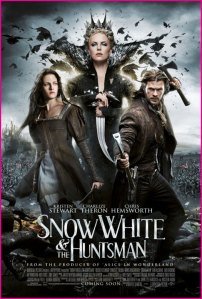
Trash Film Guru Vs. The Summer Blockbusters : “Snow White And The Huntsman”


Having proven yesterday how little I know about all things vampire with my review of Abraham Lincoln : Vampire Hunter, I figured I’d take a crack at another mythic genre, namely the fairy tale — or “folklore,” if you prefer — today. Why stop when you’re on a roll, right?

To be honest, though,  I guess what we’re here to talk about isn’t even “folklore” per se so much as the modern interpretation of a very popular piece of folklore indeed, since the film under our microscope this evening is first-time director Rupert Sanders’ Snow White And The Huntsman, the second “reimagining” of the Snow White legend to hit the screens this year following hot on the heels of Mirror, Mirror, and definitely the decidedly more “mature” of the two.

There were, frankly, a lot of reasons to be skeptical about this movie going in — Kristen Stewart sure isn’t my idea of perfect casting in the lead, for one thing — but on the whole, I actually walked out of this one pleasantly surprised. Not blown away, by any means — hell, not even bowled over — but it visually arresting enough and well-paced enough to sustain my interest throughout, even though the idea of Snow White as some kind of bad-ass warrior queen seems absurd to a guy like me who basically only knows the Disney version, and remembers it very faintly at that.

Sanders, who I understand got his start in music videos, definitely brings the kind of “these folks have a short attention span, so let’s not let up on the gas” attitude you’d expect from somebody fresh out of that milieu, and while he doesn’t really seem to be much of an actor’s director — Charlize Theron in given free reign to ham it up to the hilt with her interpretation of the evil Queen Ravenna, Chris Hemsworth is essentially just reprising his Thor role as the co-titular Hunstman, and Stewart does what she does “best,” namely look completely lost but somehow project an attitude that we’re supposed to think that’s “sexy,” and that we’re damn lucky she even inhabits the same planet as us mere mortals, as Snow White herself — but when he’s laying out a visual feast this scrumptious, I can live with a few of the ingredients being a bit sour and/or stale.

And what a feast it is! Yeah, there’s definitely a lot of liberal borrowing from the Tim Burton playbook going on here, particularly with little tricks like superimposing the heads of the likes of Bob Hoskins and Ian McShane onto CGI dwarves’ bodies, but Sanders’ overall vision of  the fantastic is considerably less color-saturated and joyful than Burton’s, and frankly a little edgier. When Burton goes “dark” or “morbid” he does so with his tongue firmly planted in his cheek, while Sanders really seems to mean it — this shit is supposed be more than just a little bit intimidating.

In that sense, he’s probably closer to the original intent of the Brothers Grimm and their contemporaries than he may even have consciously been aiming for, since “fairy tales” weren’t just designed to keep the young’uns of years gone by entertained, but to scare the shit out of them by illustrating the consequences of what would happen if they didn’t do as they were told, as well. There’s irony, I suppose, in the fact that this film, clearly billed as an “adult” take on the Snow White legend, actually ends up being closer, in tone and spirit, to the original than the decidedly more “family-friendly” Mirror, Mirror, but it’s the kind of irony I can certainly get behind, especially when the end result, while ultimately as disposable as most any other summer blockbuster fare (notice how pretty much all my praise here is aimed solely at the film’s visual sensibility and nothing else — there’s good reason for that, as the story is essentially exactly the kind of  hollow, by-the-numbers modern Hollywood take on the proceedings that you’d expect), is this downright fascinating to look at. Beneath the surface, there’s not much of anything going on in Snow White And The Huntsman, to put things as kindly as possible —but the surface is so damn lush, cryptic, and enthralling that you won’t realize, or even care, that you’ve pretty much been had until well after you leave the theater.

‘Wings of Desire’ Review (dir. Wim Wenders, 1987)


I should probably start by saying that I’ve always had a strong personal connection to and love for films that explore human nature and existence. What it means to live, isolation, and the inter-connectivity of human beings and the strains between the physical and spiritual world are questions that have had the biggest impacts on me. This is probably why when I look back at my favorite films they are those directed by auteurs like Bergman and Kieslowski, who tackled these themes with such intimacy and beauty. I say this to remind you that I know what I like…so when I say “Wings of Desire”, after two viewings in one day, is probably my new favorite film, I do it without hyperbole. But be warned, like most intellectually challenging films, and those that connected with me on an emotional level more than anything, this review consists a whole lot of rambling and not so coherent thought.

I’d first like to just state that I truly believe that this is one of the most poetic and beautiful stories ever put to film. It is the tale of Damiel and Cassiel, two of many angels who have wandered earth since its beginning, bearing witness to its growth and the development of man. They are not the angels of the Christian faith, but rather those from poetry, more metaphorical and spiritual beings observing and acting as guardians. They can’t directly alter our fate but can often guide or comfort us in times of great pain. For example when Damiel finds a victim of a motorcycle accident lying on the curb, covered in blood, fearing his death as regrets start to surface, he comes to his side. To calm him Damiel places his hands upon the mans head and begins to recite beautiful memories and images. Suddenly the victim begins to do the same, his fear now replaced with a sort of tranquility, as if Damiel has helped him face death by making his life pass before him.

A great deal of the film follows Damiel and Cassiel through their usual routine of listening to the tortured thoughts of humans, helping those they can, and sharing with each other specific human thoughts or actions worth remembering. On this particular afternoon Damiel expresses to Cassiel his wanting to relinquish his immortality to become human. He explains that he has been on the outside looking in for too long. Now he yearns to live, to touch, to be hurt and most importantly to love. He wants to experience the importance of true existence when time and the acknowledgment of your morality creates a passion and joy for even the simplest things, like a hot drink on a cold day or rubbing your hands together to warm them up.

This desire to take on a human form is intensified when he begins to fall for a trapeze artist named Marion. He first encounters her in a local circus, gliding through the air on her swing dressed as an angel. Damiel’s fascination with her grows when the circus is shut down, and Marion falls into a sort of despair. She is alone, away from home, her dreams of being a great trapeze artist slipping. In this time Damiel visits her often, hoping that his presence helps her, while being spellbound by her beauty and how she handles her emotions.

Meanwhile, Cassiel begins to follow an elderly gentlemen named Homer, a professor and a poet, who has been unable to write, he has lost all motivation for his muse and storyteller are gone. The thing these characters share is afeeling of isolation and disconnection that mirrors the world around them. Marion loses her audience when the circus closes. She is now left alone, wanting to be loved. Homer explains how his listeners, once huddle together in groups with ears open are now scattered readers. This feeling of isolation and disconnect is made all the more poignant as it is set in West Berlin while a wall literally divided Germany. The two, along with most of the people we see our angels listening to, have thoughts filled with worry and sadness. They are missing something, we all are, but what? This is where Damiel and Marion’s eventual unity becomes very important. Offsetting them all is Peter Falk, playing himself, shooting a new film in the city. He displays a sort of passion in life that intrigues both Damiel and Cassiel. Falk cares about the simple things, even the most minor details and seemingly insignificant human moments. Here is a man that values every second of life, which gives Damiel all the more reason to want to share that experience.

On a technical level one of the films greatest achievements is how most of the film is devoid of color. It is meant to be the world seen through the eyes of the angels. Everything to them seems so plain, and all detail and color is lost. It is a bold choice, but one that not only works but when there is a transition to color when in a human perspective, the beauty, ecstasy and warmth of life is much more apparent. This imagery and cinematography, particularly the lighting, is all absolutely beautiful. This comes as no surprise given that it was done by Henri Alekan who did “The Beauty and the Beast” (1946) which is one of the most visually breathtaking black and white films ever made.

Perhaps my favorite things about the film is Bruno Ganz’s wonderful performance as Damiel. He has the face and presence of a man who has been around for a long time and doesn’t feel very much because he has seen and heard it all; yet he still expresses a sense of longing for life and love boiling under the surface. When he eventually takes a human form the joy he exudes is an absolute delight to watch. Right up there is another stand out performance by Peter Falk who sadly passed away last year. He plays himself, with that face and voice like no other, and is easily the most “human” character in the film.

Now under the surface of the beautiful imagery, the wonderful performances and poetic story there are many themes Wenders wishes to explore. What seems to come up most is how disconnected and divided we humans are, even though we live in a world filled with so much life and beauty. We are at times just too blind to see it. We aren’t angels yet we often look at the world as if it is in black and white. This divide seems to be present even amongst the world of angels as Damiel and Cassiel are both quite different; again these differences coming from ones ability to appreciate even the smallest of things. While Damiel is fascinated by life and drawn towards pleasure, Cassiel on the other hand seems drawn towards suffering. Cassiel spends numerous times thinking back to the war, seeing images and memories of the destruction. He seems almost haunted by these things which is why the idea of morality may not appeal to him. There is no joy in the life he sees, even though his own journal of human events contain moments of joy amongst the bad. He is conflicted, a feeling brilliantly displayed in one scene set during a Nick Cave concert. He is following Damiel who is searching for Marion. Cassiel stands behind the stage, eyes closed, as lights cast three moving shadows of him on the wall, like his fragmented soul is standing right before our eyes. What has he, a master of the spiritua world, not been able to find that Damiel has? The answer is an appreciation of the sensual, which for Damiel is represented by Marion.

But even she seems at times lost, asking questions such as “why am I me and why not you?” What is the cause of our individuality, why must we shut ourselves out to others? Why can’t we be one? What separates us? This is where Damiel’s relationship with Marion becomes not just a sentimental romance subplot, but an example of how unity and love are possible. If Damiel represents the spiritual, then Marion is the sensual, material world. The blending of the two, their love for one another, is what opens the door for more worldly love and a growing appreciation for life; and most importantly the binding of us all. It’s that connection to our spiritual, not just material, side that brings us true joy.

Of course this is only how I viewed the story. After my second viewing I spent a lot of time contemplating what it all meant, while also reading reviews and analysis from others. I always love reading how others personally view films such as this. Many came to similar conclusions as I did, and even those that viewed it differently seemed to share the same appreciation for it all as me. That isn’t to say some might not find it all overwhelming, especially when the pacing is slow and deliberate, though I personally never once found it dull.

So in the end, I think what I took away from the film is that the passion for and the celebration of life is what separates us from angels and connects us all. Our morality is perhaps the greatest gift we could have ever received. A gift we all share, and once we realize this and let sensuality and spirituality flow together than love and peace can conquer. It is this profound and beautiful notion that “Wings of Desire” delivers, set amongst a metaphysical and poetic tale of romance intertwined with political and philosophical questions and observations about human nature, connections, and existence that give it an emotional and intellectual state that few other films since perhaps those by Bergman and Bunuel have ever achieved. What is perhaps more astonishing is how it achieves this all without an ounce of pretentiousness. There are no manipulated or exaggerated claims by Wenders in an attempt to drive these themes home. He simply observes, in an often humorous and lighthearted manor, these universal fears, desires, questions and emotions; and it drew me in from beginning to end as I was mesmerized by everything on screen. It is because of all this that I say “Wings of Desire” is probably my new favorite film, and should be seen by anyone with a love for life and cinema.


Review: Abraham Lincoln: Vampire Hunter (dir. by Timur Bekmambetov)


Timur Bekmambetov is one filmmaker that can never be said to hold things back visually on any of his films. He has a style that can be called a combination of the Wachowski Brothers and Zack Snyder. Now one can read that and just groan. The Wachowskis and Snyder are not what one would call the paragon of the filmmaking community. What they do tend to do are create pop-friendly and consumer-friendly films. Whether thse films are of high quality is another thing altogether.

Bekmambetov is an interesting filmmaker from Kazakhstan (who could easily pass for what we imagine Genghis Khan to look like if he was still alive) whose brand of action films tend to focus on all style with little to no substance. For some audiences this just means dumb, brainless fare that has no reason to be paid to see, but I tend to think these same people who shout loudest about how these type of films are dumbing down it’s audiences secretly watch them like crack addicts once they’re on cable. Bekmambetov’s latest film, Abraham Lincoln: Vampire Hunter, definitely follows his unique action and storytelling template he’s established with past films as Nightwatch, Daywatch and Wanted.

The film lives and dies on the simple conceit that one of the United States’ greatest Presidents was also vampire hunter of some skill. We see how an encounter with the vampire which led to the death of Abe’s mother (who had died of the condition known at the time as milk sickness) propels him through the intervening years to plot revenge on the same vampire. It’s during a failed attempt at revenge that he’s noticed by one Henry Sturgess (played by Dominic Cooper) who sees another potential vampire hunter in the young man (adult Lincoln played by one Benjamin Walker who could easily pass for a very young Liam Neeson). We get the usual training montage where Sturgess teaches Abe the finer points in vampire hunting and killing. It’s only proper that Abe would end up picking the rail-splitting axe he’s more comfortable in using than the more practical firearms.

Abraham Lincoln: Vampire Hunter is almost a straight adaptation of Seth Grahame-Smith’s novel of the same name. Some minor subplots are discarded to keep the film moving in the one path the filmmakers and screenwriter (Grahame-Smith himself) decided to concentrate on. It’s this one thing that really pushes the film into a level that would win an audience to it’s cause or lose them altogether. This thing I speak of is the idea that slavery was due to the vampires who have set themselves as the so-called shadow aristocracy of the South and needed a ready source of food to keep themselves hidden from the humans. Yes, slavery was started and made into a near industrial level by vampires. This in turn moves Lincoln to move beyond just vengeance on the vampires who have affected his life from such an early age and instead go towards abolishing slavery from the country as a way to destroy the vampires once and for all.

These are heady ideas that doesn’t seem to fit well with historical facts and figures. Yet, the film does a good enough job of keeping things serious with just the right amount of over-the-top action sequences that Bekmambetov has become well-known for. One such action sequence involves Lincoln and a vampire having a chase scene involving a huge horse stampede. They fight in and amongst the stampeding equines and then on and above them. It’s a sequence that’s equal parts exciting and ludicrous that one just has to either sit back and enjoy it or stand up and walk out. Which is the film in a nutshell. One either goes all-in on the film’s story or folds mentally.

This is not to say that the film has no flaws. It has some glaring flaws that threatened to push the film over the edge of being a fun action flick into all-out dreck. For starters the vampires themselves made for good villains, but Rufus Sewell as the leader of the American vampires (who happens to call himself Adam) looked bored with the whole proceedings. There were brief moments when the charm that we expect from vampire leaders show, but it’s far and few between. Most of the time Sewell looks to be just standing in a particular scene looking bored. The rest of his clan of vampires are no better though Marton Csokas asBart, one of Adam’s lieutenants and main supplier of slaves, did such an over-the-top performance that one wouldn’t be surprised to catch a glimpses of scenery stuck between his teeth.

It’s really the performance by Benjamin Walker in the title role that keeps the film afloat. He has a commanding presence on the screen and he’s able to be convincing as Lincoln both as a young man and then as the elder statesman (some very good old man make-up effects that put the elder Peter Weyland make-up in Prometheus to shame). Mary Elizabeth Winstead as Mary Todd Lincoln also does a good job in what could’ve been a thankless role, but she didn’t look out of place in this peculiar period piece.

The action sequences themselves were choreographed well even though Bekmambetov was still relying a lot of his own brand of slo-mo to accentuate the cool kills Lincoln makes with his silver-coated axe. After awhile this gimmick began to get repetitious, but then again one shouldn’t be surprised to see such a thing over-used in a Bekmambetov film. If one has seen his three previous films then they should know what to expect. Yet, even this doesn’t detract from what this film ultimately turned out to be and that’s just plain fun despite lacking in the acting in certain roles and the sensational, some would say tasteless, use of the Civil War and slavery to tell a story about a vampire-killing President.

Abraham Lincoln: Vampire Hunter will not make filmmakers like Christopher Nolan, Lars Von Trier and Michael Haneke quake in their shoes. It’s not a film that was made to win awards (though I can see it being nominated for best fight sequence in the MTV Movie Awards). What this film does seem to succeed enough in doing is be a fun and exciting film that rises above it’s source material on the strength of it’s lead and the action created by it’s filmmaker. For a genre film it certainly did a better job of mashing together disparate ideas than last year’s Cowboys & Aliens. Maybe if this film is enough of a success we’ll finally get some movement in the planned film adaptation of Seth Grahame-Smith’s other literary classic mash-up: Pride and Prejudice and Zombies. One can only hope.

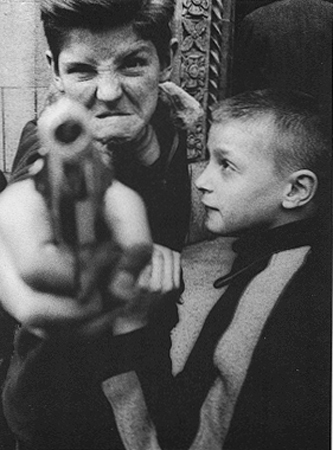
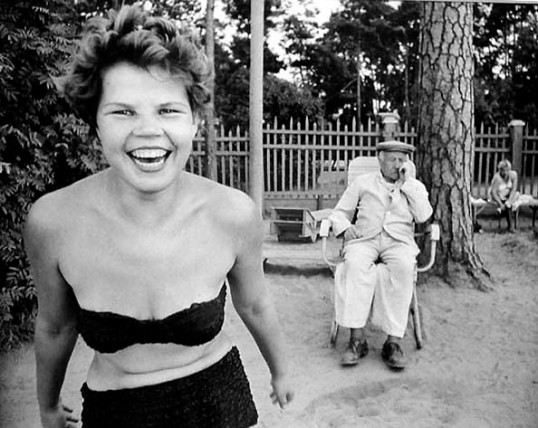
Artist Profile: William Klein (1928– )


The photographer William Klein was born in New York but has lived in France since his late teens.  He studied at the Sorbonne and began his career as an abstract painter and sculptor before moving into photography.  He is best known for using unusual photographic techniques like natural light, wide-angle and telephoto lenses, and motion blur in the context of fashion photography and photojournalism.  Klein has also directed several documentary and three features films.  His first film, 1966’s Who Are You Polly Magoo? was one of the first films ever made about the fashion industry.  Film critic Jonathan Rosenbaum has called Klein’s second film, 1968’s Mr. Freedom, “conceivably the most anti-American movie ever made.”    Professional Photographer Magazine has listed Klein as the 25th most influential photographer of all time.


Trash Film Guru Vs. The Summer Blockbusters : “Abraham Lincoln : Vampire Hunter”


I’m not exactly sure what the advertising tagline is for this film — as a matter of fact, near as I can tell it doesn’t seem to actually have one — but I know what it ought to be : “Silver — It’s Not Just For Werewolves Anymore.”

Look, I don’t consider myself to be a scholar of the vampiric arts (or whatever they’re called)  by any means — I’ve never seen True Blood or any of the Twilight films, for instance — but I know what kills these guys : wooden stakes through the heart. Garlic. Holy water. Sunlight.

Silver? That’s for lycanthropes. But apparently not anymore. Or, rather, not in the 1800s. Don’t get me wrong — director Timur Bekmambetov’s Abraham Lincoln : Vampire Hunter (based on the novel of the same name by Seth Grahame-Smith, who also wrote the screenplay, and produced by Tim Burton, whatever that’s worth) is a clever enough little piece of throwaway historical revisionism : vampires were responsible for the death of Honest Abe (Benjamin Walker)’s parents and so, concurrent with his rise in politics, he also undertakes a crusade, under the watchful eye of his mysterious mentor, Henry Sturgess (Dominic Cooper) to kill as many of them as he can in his off-hours with this kick-ass silver-bladed trick axe that he’s got. To make matters even worse, these dastardly vampires also control the slave trade (guess it’s too controversial these days to point out that it was other human beings who were responsible for shackling, buying, selling, and ultimately working to death their brethren for generations), and we know how the man in the stove pipe hat felt about that whole dastardly business.

Okay, fair enough — while I’m sure our fellow countrymen and women south of the Mason-Dixon line might take some offense at the idea that their side in the war is depicted here as being  controlled by vampires, my honest response to that is one of “tough shit, you’re getting off easy — your real ancestors (not that it’s in any way rational to hold people responsible for the actions of their forefathers) were fighting to keep people enslaved not because they were manipulated by supernatural forces but because they were just plain greedy and racist. Feel better now?,” in point of fact it’s actually a pretty clever pretense. Even clever enough to (almost) sustain an entire film.

But then we come back to this whole goddamn silver thing.  Seriously, it’s like vampire Kryptonite in this flick. There’s just no getting around how easy it makes to kill ’em off. And that undermines what otherwise would be a pretty entertaining enough little thrill ride. The performances are perfectly decent on the whole. The costumes, sets, and effects, are all top-notch. The historicity, while complete bullshit, holds together coherently enough. And the whole thing doesn’t take itself too terribly seriously, always something this reviewer in particular appreciates. But the sheer amount of suspension of disbelief required to actually thoroughly (as opposed to in a rather half-hearted and detached “oh, that’s kinda clever” sort of way) enjoy this film becomes a bridge  just  a tad too far when we throw this annoying  new mega- wrinkle into the vampire mythos. I get why they did it, but it grates just the same, and Grahame-Smith’s story relies on it so heavily that it takes what would otherwise be an acceptable enough deus ex machina and turns it into a thick, heavy, lumbering, unyielding crutch. Think of it as the silver straw that breaks the camel’s back.

Other than that, Mrs. Lincoln, how was the play?

Lisa Marie’s Grindhouse Trailers: The Supersized Richard Lynch Edition!


On June 20th, it was announced that the body of veteran character actor Richard Lynch had been found at his home.  Richard Lynch was never a household name but, if you’re a fan of exploitation and grindhouse cinema, you’ve probably seen him at least a few times.  He was the tall, blonde actor with the scarred face who was alway either killing people or having them killed.  Richard Lynch was one of those actors who, as soon as he showed up on-screen, you knew he was the bad guy. 

As an actor, Lynch always brought something special to even the simplest of his roles.  He was always the villain who you knew would probably easily kill the hero if the two of them ever met in the real world.  He was so good at being bad that you often couldn’t help but root for him. 

I first became aware of Richard Lynch when I bought a movie called Premonition on DVD.  This atmospheric 1976 film featured Richard Lynch in the role of a villainous yet oddly sympathetic carnival clown-turned-kidnapper.  When Lynch was on-screen, I literally could not look away.  Even better, the DVD included an interview with the now white-haired Richard Lynch in which he discussed his career.  Imagine my surprise to discover that this rather creepy and scary-looking actor was actually a very articulate and witty man.

A few days after I saw Premonition, I watched another 1976 film on DVD.  This one was Larry Cohen’s Gold Told Me To and, to my surprise, it also featured Richard Lynch. This time, he was cast as an alien messiah who inspired all sorts of mayhem in New York City.  From that moment on, Richard Lynch was one of my favorite of the old exploitation actors. 

After Richard Lynch’s body was found, there were several news stories that mentioned his passing.  Almost all of those stories repeated the story that Lynch’s distinctive facial scars were the result of him setting himself on fire as the result of bad LSD trip in 1967.  A few mentioned that he was a longtime friend of Al Pacino’s.  Most of them took a rather dismissive attitude towards the majority of Lynch’s films.

Over at the A.V. Club, a respectful article was posted and it was quickly followed by a bunch of snarky comments from the usual gang of toadsuckers, the majority of whom didn’t seem to know who Richard Lynch was (presumably because he never guest starred on Arrested Development).

In fact, it seemed like the only place that Richard Lynch got the proper amount of respect was on twitter.  And that’s a shame because an actor like Richard Lynch deserved a lot more.

The sad thing is that actors like Richard Lynch are rarely appreciated because elitist (and wannabe elitist) filmgoers and critics are rarely willing to admit that it does take a certain amount of talent to be an effective and memorable villain.  As an actor, Richard Lynch appeared in some good films and he also appeared in a lot of very bad films but he always gave a good performance.  Unlike so many other actors, he never used subpar material as an excuse to give a subpar performance.  Regardless of the films he found himself in, he always gave it his best and that’s why this super-sized edition of Lisa Marie’s Favorite Grindhouse and Exploitation Trailers is dedicated to Richard Lynch.

1) God Told Me To (1976)

Arguably, this film from director Larry Cohen was the best movie that Richard Lynch ever appeared in.  Though he doesn’t get a lot of screen time in either the film or the trailer, he easily dominates both, if just for the fact that Lynch plays the God of the title.

2) Deathsport (1978)

Richard Lynch vs. David Carradine.

3) The Sword and The Sorcerer (1982)

Though I haven’t seen it, this film is a favorite of many of my fellow contributors here at the Shattered Lens.

4) Cut and Run (1985)

This film was directed by Ruggero Deodato and apparently, it gained a certain amount of fame after it was banned in several countries.  I’ve seen it on DVD and all I can say is that this is one of the most misleading trailers ever made.  However, this film also features one of Richard Lynch’s most intimidating performances.

5) Savage Dawn (1985)

For some reason, I doubt that the character being played by Richard Lynch is a real priest.

6) Invasion USA (1985)

Judging from the response to Richard Lynch’s death on twitter, this Chuck Norris movie might be the film that he’s best known for.

7) The Barbarians (1987)

This film, which appears to feature Richard Lynch in full villain mode, was also directed by Ruggero Deodato.

8) Bad Dreams (1988)

Richard Lynch is all sorts of creepy in this trailer.  Knowing about his own true life story makes this trailer all the more odd to watch.

9) Trancers 2 (1992)

Helen Hunt’s in this?

10) Werewolf (1996)

This one looks like fun, to be honest.

11) Wedding Slashers (2006)

“Til death do us part…”

12) Mil Mascaras Vs. The Aztec Mummy (2006)

Finally, let’s finish things up with the trailer for this Mexican film in which Richard Lynch was cast as the President of the United States.

Richard Lynch, R.I.P.

Quick Review: The Newsroom (S1:E1) – “We Just Decided To.”


Quick story before the review. If you’d like to skip this, just scroll down a bit.

About a month before The Social Network came out, I was able to catch a special sneak preview of the film in Manhattan. The preview was special because after the film, Sony planned to have a Q&A session with some of the stars. While waiting on line and listening to some of the conversations, one person pointed out that they were waiting to see Aaron Sorkin.

“Excuse me, who?” I asked. The name didn’t ring any kind of bells with me. No Ratattouille – light in front of my eyes or anything.

“Sorkin. The West Wing.” She said.

“Ah, I’ve heard of that, but never saw it.” I said.

“A Few Good Men?” she added.

“Ah, I see!” I exclaimed, smiling. My sister and I loved that movie.  She actually memorized the “You can’t Handle the Truth” speech, we liked it so much. Okay, I had a handle who this was.

When the movie ended, we were presented with Armie Hammer, Andrew Garfield, Jesse Eisenberg, Olivia Munn, and Aaron Sorkin, seated in front of the audience. Being in the third row, they were all in hitting distance of my soda. The Q&A lasted for about a half hour or so. Walking out of there, my thoughts were that Aaron Sorkin was just a writer. By the time I got home and hit the internet, I found out that opinions on him, however, were polarized. It’s kind of interesting when all you have to do is throw out a person’s last name to start anyone talking. His work was either really revered or spat upon like a leper. I hadn’t seen anything like it since Joss Whedon, who’s writing I never knew of during the Roseanne years, absolutely could not stand during the Buffy years, and who finally won me over after seeing early morning episodes of Angel on TNT as the show was ending its main run.

So, that’s where I stand with Sorkin. He’s not a “Writer That Can Do No Wrong”, but I’ll admit that I like the conversational style he uses for characters. It’s almost similar to David E. Kelley’s work in a way. It’s not always required and can sometimes hinder things – Matthew Weiner is a good example of someone who does just fine without the tommy gun speeches – but it does work when it needs to.

My Thoughts (Where the Review actually begins…): 

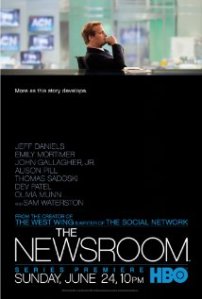
The Newsroom starts out with a televised interview where a number of people are arguing politics back and forth. Seated between them is Will McAvoy (Jeff Daniels), who doesn’t have much to say, but listens. As he does so, he has a moment where he kind of zones out when he notices a woman up in the stands. This gives us a hint to the vertigo issues he supposedly has. When asked why he thinks that America is the greatest country in the world, he notices the same girl who holds up a notepad reading “It’s not, but it could be.” Will chooses to give an even keel answer, but when forced to give ‘a human reaction’, he admits to not feeling that America’s all that. He loses it, stating that even though we proclaim ourselves to be the only free country in the world, there are tons out there. “Canada has freedom! Japan has Freedom. Belgium has freedom!”, he rattles off. He points out that the only thing America really is good at is having a high incarceration rate, for the most part. He then goes on to add the good things the country did over the years. Once the interview ends and he leaves, he turns to his colleagues and asks “What did I say out there?!”

And that was all before the opening credits. I thought that was a good way to start. Definitely a hook, though the responses overall to the scene could be interesting.

Will returns into work the following morning to find most of his staff missing. After a conversation with Maggie (Allison Pill), he finds out he needs to speak with his superior, Charlie (Sam Waterston). I like Allison Pill as an actress. She was great in The Pillars of the Earth, but here is where Sorkin kind of stumbles. Granted, her character is handling being newly promoted to a position she isn’t ready for, but she’s almost too jittery. She’s almost a ball of nerves. It’s the Winifred Burkle / Lexi Grey / Ally McBeal archetype of the “New Girl with a Lot on her Plate”. Before you start in on me, take a look at the first season of Weiner’s Mad Men and you’ll see an example in Elizabeth Moss that’s handled stronger than Pill’s character is here. It’s almost the same situation, but where Moss’ character finds small ways to stand on her own, Maggie’s just a little lost. I’m hoping that in future episodes, she’s able to shake that and come into her own.

We’re also introduced to some of the other characters that run the Newsroom. You have Don (Thomas Sadoski), Will’s former Associate Producer and Neal (Dev Patel), who is the resident tech analyst. We find that Charlie has brought on Mackenzie MacHale (Emily Mortimer) on as the Executive Producer, who Will has a serious problem with. Most of the episode is spent in Will’s office, arguing over how we can do better, and how he has the opportunity to make the news show stronger than what it was. Personally, I felt there were more interesting things going on outside of Will’s office then in it. At one point, a news blip comes in (courtesy of an iNews like program, which was nice), which touches on the start of the oil spill in Louisiana in 2010. It’s then that we’re told this is the time period we’re in. The show begins to accelerate and by the time that Will is actually on air, we get the notion of what the show could be if they rubbed out a little of conversations in between. That was very cool, like watching a submarine crew at work. The newscast scene is actually the strongest part of the episode overall, and Sorkin’s machine gun style dialogue helps there a lot, I felt. Dialog, he can do.

The only problem is for me is that we’re locked to this one location. It’s like watching a play unfold.  You’re in one location, and all of this information comes in. It’s discussed and action’s taken, but I didn’t get the feeling that the characters were growing or had room to. Let me put it this way. The star of the show isn’t any one person. It’s the News desk. The most important part of the show happened at the News desk, and while that was great, I’m thinking that for the characters involved, where are the subtle changes?

Here’s the thing (and I go to back to Mad Men, which I’ve also started watching from the beginning). By the end of the first episode of that show, you come to find that it’s main character, Don Draper, changes. You’re shown details that shape his attitude and come to find that he’s not the picture perfect fellow you may have thought he was. I didn’t get any of that with this episode of The Newsroom. I’m eager to see where it goes, because I like what’s being said, but I haven’t hit a point where any one of these people – even Will – is someone I feel I could hook on to. There’s always at least one character that stands out in a show for me – whether it’s Aaron Paul’s Jesse Pinkman in Breaking Bad or Andrew Lincoln’s Rick Grimes in The Walking Dead. I’m hoping that something changes here to help me find that. The only hint of growth or personal reflection seemed to come at the last few minutes between Mac and Will, when he discusses the conversation he had with her father. That, I would love to see more of.

Overall, the Newsroom isn’t a bad show. It kind of moves like a pilot should, a one shot that has to hit the audience with it’s strongest punch to make sure they’re hooked, while at the same time trying to plant seeds for future episodes. It does what it tries to – give the news – but I walked away feeling like I visited this business, watched what went on and then promptly left with only the mildest of introductions to the staff. I don’t really know anyone here.

It can definitely be improved upon, and it’s all the start of something. I’m just not exactly sure I know what that is.
AMV of the Day: Cherry – Chronicles of PHOTOpanic


It’s early in the morning and insomnia has hit me quite hard so might as well pick the latest “AMV of the Day”.

The latest pick is a fan-service lover’s wet dream as it highlights the more pervy side of anime. This is all in fun and another reason why anime has continued to rise in popularity. All the anime chosen by the multiple editors in this video are not what you call hentai, but all of them typical teen-focused series that just happens to have an over-abundance of panty shots and over-reliance on boobs.

There’s no other way to describe this video other than it will either sell the entertainment that is anime or swear people off of them for good. In my past experiences I’d bet on the former than the latter.

Anime: Isekai no Seikishi Monogatari, Sora no Otoshimono, Bakemonogatari, Kamen no Maid Guy,  Working!!, Hyakko,  Futurama, Rosario + Vampire,  Needless, Maria+Holic, B Gata H Kei, Baka to Test to Shoukanjuu

Song: “Cherry Pie” by Warrant

Creators: ManoD, Zevs1993, Rebellion, S.A Robert, LukW, J.Fry, Deidara94, Screenshot

Past AMVs of the Day

Review: True Blood S5E3 — Whatever I am, You Made Me


Last week on True Blood

After being captured and tortured by the Authority, Bill (Stephen Moyer) and Eric (Alexader Skarsgard) were on the verge of being executed by Roman (Chris Meloni) until Bill revealed that not only was Russell (Denis O’Hare) not killed but that he was now missing.  Meanwhile, in Bon Temps, a newly vampiric Tara (Rutina Wesley) fled into the dark night while Sookie (Anna Paquin) and Lafayette (Nelsan Ellis) watched helplessly. 

This week on True Blood

The majority of tonight’s episode was dominated by Tara and Rutina Wesley’s wonderfully angry performance.  We opened with Tara wandering through the night, searching for blood and nearly sucking it out of the first unfortuante stranded motorist that she comes across.  (“I got no problem with vampires!” the poor motorist protests.)  Eventually, Tara ends up locked up in Sam’s walk-in freezer where she has dreams about attacking Arlene.  (Like a lot of people, I went: “Oh.  My. God” at this scene until it became apparent that Tara was just having a dream.)  Eventually, Tara manages to get out of the freezer and, quite cleverly, breaks into a tanning salon so that she can expose herself to some UV rays.  I guess that’s one way to express your self-loathing.

The main reason that Tara’s having a hard time adjusting is because she’s been abandoned by her maker, Pam (Kristen Bauer Von Straten, who brings such life to the undead), who refuses to have anything to do with Tara.  For me, the highlight of tonight’s episode was seeing the continuation of the flashbacks to Pam’s origin.  In this episode we got to see how, in 1905 San Francisco, Pam went to rather extreme lengths to convince Eric to turn her.  Even better, we also got to see how Eric and Bill first met in Pam’s brothel. 

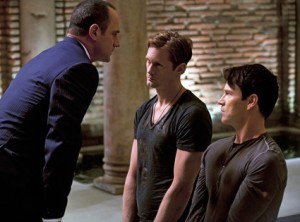
Speaking of Eric and Bill, they’re still being housed over at the Authority headquarters.  They’ve convinced Roman to release them so that they can track down Russell but Nora (Lucy Griffiths) is still being held prisoner and, while being tortured, she admits to being opposed to “mainstreaming.”  Both Bill and Eric are seduced by Salome and there’s a great scene towards the end of this episode where they compare notes in an elevator.  (Seriously, the vampire bromance between these two is always fun to watch and Moyer and Skarsgard always appear to be having fun acting opposite each other.)  Of course, it turns out that Salome’s apparently working for Roman and was testing Bill and Eric’s loyalty.

Or was she?  To be honest, I have a feeling that Salome has an agenda of her own…

The Rev. Newlin (Michael McMillan) also shows up in this episode.  Apparently, the reason he’s been on TV so much is because he’s groomed by Roman to be the new face of vampire-human coexistence.  Showrunner Alan Ball has been very open about the political subtext of True Blood in general and season 5 in particular and that subtext was pretty obvious in Meloni and McMillan’s scenes tonight. 

Usually, I’m not a huge fan of obvious subtext for the simple reason that it’s often … well, way too obvious.  In the past, I have to admit, I’ve felt that Ball — like most writers — is at his weakest when he’s hammering home a point.  (That’s why I’m wary of this season’s subplot about Terry’s service in Iraq.)  However, tonight, I thought that Meloni and McMillan both saved what could have been a rather heavy-handed scene.  Both of them brought just enough of a hint of perversity to their lines to keep the scene interesting.  Between Meloni’s barely suppressed rage and McMillan’s nervously insincere smile, their conversation was a lot of fun to watch.

But that’s not all that happened tonight!

Sookie finally confessed to Alcide that she killed Debbie.  Lafayette was briefly tempted to serve poisoned gumbo and it appears that he might be posessed.  And Jason met a woman in the super market which, of course, meant that he ended up getting laid.  That woman, incidentally, was a former teacher and lover of Jason’s and promptly after re-seducing her, Jason apparently had such a change of heart that he was even able to resist Jessica (Deborah Ann Woll) when she came calling later on that night.

To be honest, I wasn’t as big a fan of this episode as I was of Turn! Turn! Turn! and Authority Always Wins.  Don’t get me wrong.  Whatever I am, You Made Me had plenty of good moments and the script was full of the type of snarky one-liners that I’ll be repeating for weeks to come.  Overall, however, tonight’s episode felt a little bit off, just a tad bit uneven.  The final fourth of the show was genuinely exciting but the scenes leading up to it often seemed to alternate between playing out either too slowly or too quickly.  I’m looking forward to next week’s episode and I can’t wait to see how season 5 plays out but tonight’s episode was just okay for me. 

Random Thoughts and Observations:

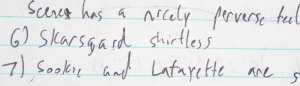
  • Whenever I watch a new episode of True Blood, I always grab a notebook and I jot down what happened in each scene.  I did this even before I started reviewing the show because 1) it was often the only way that I could actually keep track of what was going on and 2) I’m an obsessive list maker.  Anyway, by my very unofficial count, tonight’s episode had a total of 33 separate scenes.
  • For scene number 6, I simply wrote down “Skarsgard shirtless.”  Just in case there was any doubt where my mind usually is while watching True Blood
  • How cool is it that Salome is the actual Salome?
  • I thought the scenes at the beginning of this episode, where Tara was on the prowl, were very well-directed and did a good job at capturing the disorienting nature of Tara’s new existence.
  • Much like last week, I continued to be impressed with the set design of the Authority’s headquarters and the contrast between the baroque upper level and the rather shabby lower levels.  If nothing else, it provided a perfect reminder of the corruption that often lurks behind the benevolent facade of most authorities (including, it would appear, the Authority).
  • Most effective “Oh my God!” moment: Lafayette pouring bleach into the gumbo.  I have to admit that, after watching Arachnoquake last night, I was hoping Lafayette would shout out, “Now that’s how you make jambalaya!”
  • After last week’s rather grim outing, this episode featured several laugh-out-loud lines:
  • “Can I hug you without you thinking about my boobs?”  This was my favorite line in this episode, if just because I’ve often been tempted to say the same thing.
  • “And right now, I’m fuck buddies with the love of my best friend’s life.  Who’s a teenage vampire.”
  • “These beans are as cold as titties in a brass bra.”
  • “My dick starts shouting, ‘Just shut up and fuck her!'” At least Jason is honest.
  • “Go back to dry humping each other and buying my overpriced drinks or get the fuck out!”

Finally, I’ll close with a quick prediction: By the end of this season, Salome will try to engineer a coup in order to take out Roman and install either Bill or Eric in his place.