
Well, it’s nearly February so I guess it’s time for me to start listing my picks for the best and the worst of 2022.
It’s pretty much a tradition here at the Shattered Lens that I always end up running behind as far as posting these lists are concerned. I always think that I’m going to have everything ready to go during the first week of January but then I realize that there’s still a host of movies that I need to see before I can, in good conscience, post any sort of list. Fortunately, I think I’ve finally reached where I can start posting lists. Add to that, as I said at the start of this post, it’s nearly February!
Below, you’ll find my picks for the 16 worst films of 2022. Why 16 films? Because Lisa doesn’t do odd numbers!
In the end, of course, this list is my opinion. You’re free to agree or disagree. That’s the wonderful thing about having an opinion.
(Also be sure to check out my picks for 2021, 2020, 2019, 2018, 2017, 2016, 2015, 2014, 2013, 2012, 2011, and 2010!)
16. Glass Onion (dir by Rian Johnson) — I realize that, by even including Glass Onion on this list, I’m going out on a limb here. A lot of people who I respect really enjoyed this film. Several of my friends have it on their best of the year lists. And that’s fine! The film just didn’t work for me and it often seemed a bit too amused with itself. That said, what really pushed me over the edge was what happened to the Mona Lisa. If that hadn’t happened, this film would probably be ranked in the middle of the 129 films that are eligible for this year’s worst and best lists.
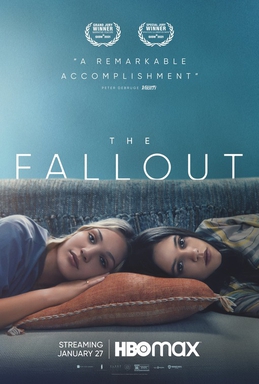
15. The Fallout (dir by Megan Park) — The Fallout dealt with an important subject and it had some good performances but it was just a bit too overwritten and predictable for me. Plus, the film opened with someone making a really messy peanut butter sandwich and that totally grossed me out. Jenna Ortega is still destined to be a star, though.
14. Studio 666 (dir by BJ McDonnell) — I wasn’t particularly harsh in my initial review of Studio 666 but, the more I think about it, the more dissatisfied I am with the film. This is one of those films where the people making it definitely had more fun than the people who watched it. I still respect the Foo Fighters for doing something for their fans and Dave Grohl seems to be about as likable and goofy as a rock star can be. But the film itself ultimately feels a bit lazy,
13. A Day To Die (dir by Wes Miller) — This bland action film got some attention because it was one of the many films featuring Bruce Willis to be released this year. Unfortunately, this one was just boring. Willis and co-star Kevin Dillion were both seen to better effect in Wire Room.
12. The Princess (dir by Le-Van Kiet) — This cheap-looking film had a lot of action but not much characterization. The film was so busy patting itself on the back for celebrating girl power that it didn’t seem to have noticed that the girl at the center of the film was seriously underwritten.
11. The Bubble (dir by Judd Apatow) — This oddly mean-spirited satire was Judd Apatow at his most self-indulgent and undisciplined. The film’s smug attitude made it a real chore to sit through.

10. Fortress: Sniper’s Eye (dir by Josh Sternfeld) — This rather pointless action film was among the many films in which Bruce Willis appeared this year. Willis spends most of the film offscreen while Jesse Metcalfe and Chad Michael Murray play two enemies who are trying to kill each other because of …. reasons, I guess. Instead of watching this film, check out Willis in White Elephant, an entertaining film in which he plays a crime boss who goes to war with Michael Rooker.
9. Hellraiser (dir by David Buckner) — Blandly directed and poorly acted, this was a pointless reboot of the Hellraiser series, with Jamie Clayton proving to be a forgettable replacement for Doug Bradley.
8. American Siege (dir by Edward Drake) — This was undoubtedly the worst of Bruce Willis’s 2022 films, with a silly plot and Willis cast as an alcoholic police chief who has to decide whether or not to stand up to the richest man in town. That said, Edward Drake also directed in Bruce Willis in Gasoline Alley, an excellent modern-day noir that featured a great lead performance from Devon Sawa and which gave Willis a decent role. Instead of seeing American Siege, track down Gasoline Alley.
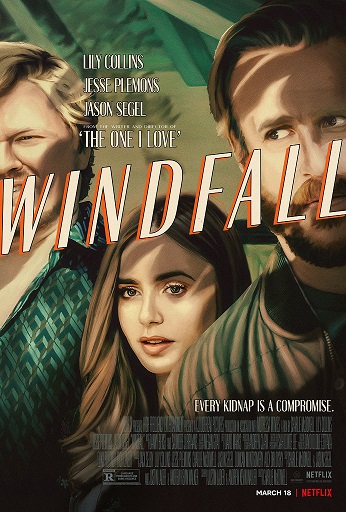
7. Windfall (dir by Charlie McDowell) — Jason Segel, Jesse Plemons, Lily Collins, and Charlie McDowell are all undoubtedly talented but this hostage melodrama goes nowhere unexpected. Like a lot of hostage dramas, it becomes a bit of a drag as all of the expected mental games are played. The attempt at social commentary falls flat.
6. Morbius (dir by Daniel Espinosa) — I started this film in October and didn’t bother to finish it until January. Jared Leto seems to be taking the whole thing just a bit too seriously. I still think it’s funny that a bunch of twitter trolls tricked Sony into re-releasing this thing so that it could flop twice.
5. Amsterdam (dir by David O. Russell) — Overlong and self-indulgent, Amsterdam features all of David O. Russell’s storytelling flaws without many of his strength. To be honest, this film lost me as soon as the cutesy “This is based on an almost true story” flashed across the screen. Amsterdam thinks that it’s considerably more clever than it is. Taylor Swift, for all of her other talents, is not a particularly interesting actress. Christian Bale gave the type of terrible performance that can only be delivered by someone with a lot of talent but not much of an attention span. John David Washington was as bland as ever. The anti-FDR Businessman’s Plot is not as obscure or unknown as this film seems to think that it is.
4. Blonde (dir by Andrew Dominik) — Andrew Dominik gives us yet another incredibly pretentious film that doesn’t seem to have much of a point beyond rubbing the audience’s face in how depressing life can be. For all the effort that this film takes to recreate the life of Marilyn Monroe, the film doesn’t really seem to have much respect for her or even really like her that much. Indeed, the film takes an almost perverse joy in detailing every tragedy that she suffered but it never displays much empathy for her suffering. Never does the film see fit to really acknowledge her as a talented actress who was reportedly far more intelligent and well-read than most people realized. People should be far more upset over Ana de Armas’s Oscar nomination than Andrea Riseborough’s.
3. The Sky is Everywhere (dir by Josephine Decker) — Ugh. This film was unbearably twee.
2. Halloween Ends (dir by David Gordon Green) — In the past, I’ve liked quite a few of David Gordon Green’s films. But I have to admit that I’ve disliked his Halloween films so much that it’s actually made me start to dislike his past movies as well. There’s just something incredibly smug about Green’s approach to the films, as if he wants to make sure that we all understand that he’s better than the average horror director. The thought of Green redoing The Exorcist…. bleh! Anyway, Halloween Ends is a Halloween film that barely features Michael Myers. The ending, with the somber march to the auto yard, was the most unintentionally funny thing that I’ve seen this year. Can someone please tell David Gordon Green to get back to making films like Joe?
1. After Ever Happy (dir by Castille Landon) — The saga of the world’s most boring lovers continues. Will these films never end!?

 Through the Shattered Lens