The Pittsburgh Film Critics Association has announced their picks for the best of 2025. And here they are:
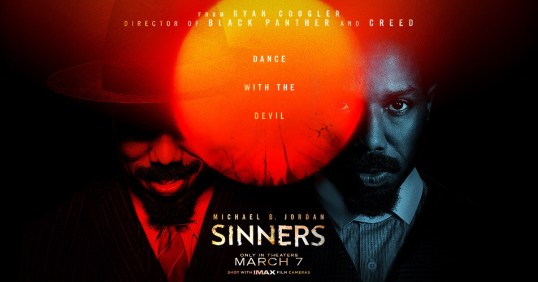
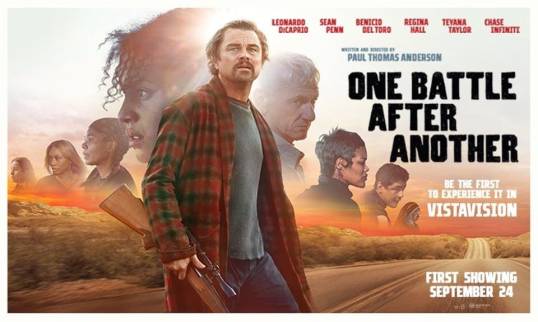
BEST PICTURE Winner: Sinners Runner-Up: One Battle After Another
BEST LEAD ACTOR Winner: Rose Byrne — If I Had Legs I’d Kick You Runner-Up: Jessie Buckley — Hamnet
BEST SUPPORTING ACTOR Winner: Amy Madigan — Weapons Runner-Up: Wunmi Mosaku — Sinners
BEST FEATURED ACTOR(15 minutes or less of screen time) Winner: William H. Macy — Train Dreams Runner-Up: Naomi Ackie — Sorry, Baby
BREAKTHROUGH PERFORMANCE Winner: Miles Caton — Sinners Runner-Up: Chase Infiniti — One Battle After Another Bark-through performance: Indy the Dog — Good Boy
BEST ANIMATED VOICE PERFORMANCE Winners (Tie): Arden Cho — KPop Demon Hunters; Ke Huy Quan — Zootopia 2
BEST DIRECTOR Winner: Ryan Coogler — Sinners Runner-Up: Paul Thomas Anderson — One Battle After Another
BEST ORIGINAL SCREENPLAY Winner: Ryan Coogler — Sinners Runner-Up: Eva Victor — Sorry, Baby
BEST ADAPTED SCREENPLAY Winner: Paul Thomas Anderson — One Battle After Another Runner-Up: Rian Johnson — Wake Up Dead Man
BEST SOUND DESIGN Winner: Steve Boeddeker — Sinners Runner-Up: Al Nelson — F1: The Movie
BEST HAIR, MAKEUP, & COSTUMES Winner*:* Siân Richards, Ken Diaz, Mike Fontaine, Shunika Terry (Hair and Makeup); Ruth E. Carter (Costumes) — Sinners Runner-up: Mike Hill, Jordan Samuel, Cliona Furey (Hair and Makeup); Kate Hawley (Costumes) — Frankenstein
BEST ANIMATED FEATURE Winner: KPop Demon Hunters Runner-Up: Zootopia 2
BEST FILM NOT IN THE ENGLISH LANGUAGE Winner: Sentimental Value Runner-Up: It Was Just an Accident
BEST STUNT PERFORMANCE & CHOREOGRAPHY Winner: Wade Eastwood — Mission: Impossible — The Final Reckoning Runner-Up: Andy Gill — Sinners
GOOD NEIGHBOR AWARD Winner: It Was Just an Accident for director Jafar Panahi’s continued critique of the Iranian regime.
Here are the picks of the Seattle Film Critics Society for the best of 2025! The winners are listed in bold.
BEST PICTURE
Bugonia – Yorgos Lanthimos
Hamnet – Chloé Zhao
It Was Just an Accident – Jafar Panahi
Marty Supreme – Josh Safdie One Battle After Another – Paul Thomas Anderson
Sentimental Value – Joachim Trier
Sinners – Ryan Coogler
Sorry, Baby – Eva Victor
Train Dreams – Clint Bentley
Weapons – Zach Cregger
BEST DIRECTOR
Hamnet – Chloé Zhao
Marty Supreme – Josh Safdie One Battle After Another – Paul Thomas Anderson
Sinners – Ryan Coogler
Train Dreams – Clint Bentley
BEST ACTOR IN A LEADING ROLE
Timothée Chalamet – Marty Supreme Leonardo DiCaprio – One Battle After Another
Joel Edgerton – Train Dreams
Ethan Hawke – Blue Moon
Michael B. Jordan – Sinners
BEST ACTRESS IN A LEADING ROLE Jessie Buckley – Hamnet
Rose Byrne – If I Had Legs I’d Kick You
Amanda Seyfried – The Testament of Ann Lee
Emma Stone – Bugonia
Eva Victor – Sorry, Baby
BEST ACTOR IN A SUPPORTING ROLE
Benicio del Toro – One Battle After Another
Jacob Elordi – Frankenstein
David Jonsson – The Long Walk
William H. Macy – Train Dreams Sean Penn – One Battle After Another
BEST ACTRESS IN A SUPPORTING ROLE
Ariana Grande – Wicked: For Good
Inga Ibsdotter Lilleaas – Sentimental Value
Amy Madigan – Weapons Wunmi Mosaku – Sinners
Teyana Taylor – One Battle After Another
BEST ENSEMBLE CAST
Eephus – Carson Lund
Marty Supreme – Jennifer Venditti One Battle After Another – Cassandra Kulukundis
Sinners – Francine Maisler
Wake Up Dead Man: A Knives Out Story – Bret Howe, Mary Vernieu
BEST YOUTH PERFORMANCE
Cary Christopher – Weapons
Shannon Gorman – Rental Family Jacobi Jupe – Hamnet
Jasper Thompson – The Mastermind
Alfie Williams – 28 Years Later
BEST SCREENPLAY
Marty Supreme – Ronald Bronstein, Josh Safdie One Battle After Another – Paul Thomas Anderson
Sinners – Ryan Coogler
Sorry, Baby – Eva Victor
Train Dreams – Clint Bentley, Greg Kwedar
BEST ANIMATED FILM
Arco – Ugo Bienvenu
The Colors Within – Naoko Yamada KPop Demon Hunters – Maggie Kang, Chris Appelhans
Little Amélie or the Character of Rain – Maïlys Vallade, Liane-Cho Han
Zootopia 2 – Jared Bush, Byron Howard
BEST DOCUMENTARY FILM
The Alabama Solution – Andrew Jarecki, Charlotte Kaufman
Come See Me in the Good Light – Ryan White
Pavements – Alex Ross Perry
The Perfect Neighbor – Geeta Gandbhir WTO/99 – Ian Bell
BEST INTERNATIONAL FILM It Was Just an Accident – Jafar Panahi
No Other Choice – Park Chan-wook
The Secret Agent – Kleber Mendonça Filho
Sentimental Value – Joachim Trier
The Ugly Stepsister – Emilie Blichfeldt
BEST PACIFIC NORTHWEST FEATURE FILM
Not One Drop of Blood – Jackson Devereux, Lachlan Hinton
To Kill a Wolf – Kelsey Taylor Train Dreams – Clint Bentley
Twinless – James Sweeney
Wolf Land (Director’s Cut) – Sarah Hoffman
WTO/99 – Ian Bell
BEST PACIFIC NORTHWEST SHORT FILM
Charlotte, 1994 – Brian Pittala
A Fateful Weekend – Tony Doupe
Shelly’s Leg – Wes Hurley Songs of Black Folk – Justin Emeka, Haley Watson
Style: A Seattle Basketball Story – Bryan Tucker
BEST CINEMATOGRAPHY
Frankenstein – Dan Laustsen
Hamnet – Łukasz Żal
One Battle After Another – Michael Bauman Sinners – Autumn Durald Arkapaw
Train Dreams – Adolpho Veloso
BEST COSTUME DESIGN Frankenstein – Kate Hawley
The Phoenician Scheme – Milena Canonero
Sinners – Ruth E. Carter
Train Dreams – Malgosia Turzanska
Wicked: For Good – Paul Tazewell
BEST FILM EDITING
F1 The Movie – Stephen Mirrione, Patrick J. Smith
Marty Supreme – Ronald Bronstein, Josh Safdie One Battle After Another – Andy Jurgensen
Reflection in a Dead Diamond – Bernard Beets
Sinners – Michael P. Shawver
BEST ORIGINAL SCORE
F1 The Movie – Hans Zimmer
Frankenstein – Alexandre Desplat One Battle After Another – Jonny Greenwood
Sinners – Ludwig Göransson
Tron: Ares – Nine Inch Nails
BEST PRODUCTION DESIGN
Fantastic Four: First Steps – Kasra Farahani (Production Design); Jille Azis (Set Decoration) Frankenstein – Tamara Deverell (Production Design); Shane Vieau (Set Decoration)
The Phoenician Scheme – Adam Stockhausen (Production Design); Anna Pinnock (Set Decoration)
Resurrection – Liu Qiang, Tu Nan
Sinners – Hannah Beachler (Production Design); Monique Champagne (Set Decoration)
BEST ACTION CHOREOGRAPHY
Avatar: Fire and Ash – Garrett Warren, Steve Brown, Stuart Thorp
From the World of John Wick: Ballerina – Stephen Dunlevy, Jackson Spindell Mission: Impossible – The Final Reckoning – Wade Eastwood
Predator: Badlands – Jacob Tomuri
Sinners – Andy Gill
BEST VISUAL EFFECTS Avatar: Fire and Ash – Joe Letteri, Richard Baneham, Eric Saindon, Daniel Barrett
F1 The Movie – Ryan Tudhope, Nicolas Chevallier, Robert Harrington
Frankenstein – Dennis Berardi, Ayo Burgess, Ivan Busquets, José Granell
Predator: Badlands – Olivier Dumont, Alec Gillis, Sheldon Stopsack, Karl Rapley
Sinners – Michael Ralla, Espen Nordahl, Guido Wolter, Donnie Dean
VILLAIN OF THE YEAR Aunt Gladys – Weapons (as portrayed by Amy Madigan)
Col. Steven J. Lockjaw – One Battle After Another (as portrayed by Sean Penn)
Laura – Bring Her Back (as portrayed by Sally Hawkins)
Lex Luthor – Superman (as portrayed by Nicholas Hoult)
Remmick – Sinners (as portrayed by Jack O’Connell)
Here are the 2025 nominations of the Seattle Film Critics Society!
BEST PICTURE Bugonia – Yorgos Lanthimos Hamnet – Chloé Zhao It Was Just an Accident – Jafar Panahi Marty Supreme – Josh Safdie One Battle After Another – Paul Thomas Anderson Sentimental Value – Joachim Trier Sinners – Ryan Coogler Sorry, Baby – Eva Victor Train Dreams – Clint Bentley Weapons – Zach Cregger
BEST DIRECTOR Hamnet – Chloé Zhao Marty Supreme – Josh Safdie One Battle After Another – Paul Thomas Anderson Sinners – Ryan Coogler Train Dreams – Clint Bentley
BEST ACTOR IN A LEADING ROLE Timothée Chalamet – Marty Supreme Leonardo DiCaprio – One Battle After Another Joel Edgerton – Train Dreams Ethan Hawke – Blue Moon Michael B. Jordan – Sinners
BEST ACTRESS IN A LEADING ROLE Jessie Buckley – Hamnet Rose Byrne – If I Had Legs I’d Kick You Amanda Seyfried – The Testament of Ann Lee Emma Stone – Bugonia Eva Victor – Sorry, Baby
BEST ACTOR IN A SUPPORTING ROLE Benicio del Toro – One Battle After Another Jacob Elordi – Frankenstein David Jonsson – The Long Walk William H. Macy – Train Dreams Sean Penn – One Battle After Another
BEST ACTRESS IN A SUPPORTING ROLE Ariana Grande – Wicked: For Good Inga Ibsdotter Lilleaas – Sentimental Value Amy Madigan – Weapons Wunmi Mosaku – Sinners Teyana Taylor – One Battle After Another
BEST ENSEMBLE CAST Eephus – Carson Lund Marty Supreme – Jennifer Venditti One Battle After Another – Cassandra Kulukundis Sinners – Francine Maisler Wake Up Dead Man: A Knives Out Story – Bret Howe, Mary Vernieu
BEST YOUTH PERFORMANCE Cary Christopher – Weapons Shannon Gorman – Rental Family Jacobi Jupe – Hamnet Jasper Thompson – The Mastermind Alfie Williams – 28 Years Later
BEST SCREENPLAY Marty Supreme – Ronald Bronstein, Josh Safdie One Battle After Another – Paul Thomas Anderson Sinners – Ryan Coogler Sorry, Baby – Eva Victor Train Dreams – Clint Bentley, Greg Kwedar
BEST ANIMATED FILM Arco – Ugo Bienvenu The Colors Within – Naoko Yamada KPop Demon Hunters – Maggie Kang, Chris Appelhans Little Amélie or the Character of Rain – Maïlys Vallade, Liane-Cho Han Zootopia 2 – Jared Bush, Byron Howard
BEST DOCUMENTARY FILM The Alabama Solution – Andrew Jarecki, Charlotte Kaufman Come See Me in the Good Light – Ryan White Pavements – Alex Ross Perry The Perfect Neighbor – Geeta Gandbhir WTO/99 – Ian Bell
BEST INTERNATIONAL FILM It Was Just an Accident – Jafar Panahi No Other Choice – Park Chan-wook The Secret Agent – Kleber Mendonça Filho Sentimental Value – Joachim Trier The Ugly Stepsister – Emilie Blichfeldt
BEST PACIFIC NORTHWEST FEATURE FILM Not One Drop of Blood – Jackson Devereux, Lachlan Hinton To Kill a Wolf – Kelsey Taylor Train Dreams – Clint Bentley Twinless – James Sweeney Wolf Land (Director’s Cut) – Sarah Hoffman WTO/99 – Ian Bell
BEST PACIFIC NORTHWEST SHORT FILM Charlotte, 1994 – Brian Pittala A Fateful Weekend – Tony Doupe Shelly’s Leg – Wes Hurley Songs of Black Folk – Justin Emeka, Haley Watson Style: A Seattle Basketball Story – Bryan Tucker
BEST CINEMATOGRAPHY Frankenstein – Dan Laustsen Hamnet – Łukasz Żal One Battle After Another – Michael Bauman Sinners – Autumn Durald Arkapaw Train Dreams – Adolpho Veloso
BEST COSTUME DESIGN Frankenstein – Kate Hawley The Phoenician Scheme – Milena Canonero Sinners – Ruth E. Carter Train Dreams – Malgosia Turzanska Wicked: For Good – Paul Tazewell
BEST FILM EDITING F1 The Movie – Stephen Mirrione, Patrick J. Smith Marty Supreme – Ronald Bronstein, Josh Safdie One Battle After Another – Andy Jurgensen Reflection in a Dead Diamond – Bernard Beets Sinners – Michael P. Shawver
BEST ORIGINAL SCORE F1 The Movie – Hans Zimmer Frankenstein – Alexandre Desplat One Battle After Another – Jonny Greenwood Sinners – Ludwig Göransson Tron: Ares – Nine Inch Nails
BEST PRODUCTION DESIGN Fantastic Four: First Steps – Kasra Farahani (Production Design); Jille Azis (Set Decoration) Frankenstein – Tamara Deverell (Production Design); Shane Vieau (Set Decoration) The Phoenician Scheme – Adam Stockhausen (Production Design); Anna Pinnock (Set Decoration) Resurrection – Liu Qiang, Tu Nan Sinners – Hannah Beachler (Production Design); Monique Champagne (Set Decoration)
BEST ACTION CHOREOGRAPHY Avatar: Fire and Ash – Garrett Warren, Steve Brown, Stuart Thorp From the World of John Wick: Ballerina – Stephen Dunlevy, Jackson Spindell Mission: Impossible – The Final Reckoning – Wade Eastwood Predator: Badlands – Jacob Tomuri Sinners – Andy Gill
BEST VISUAL EFFECTS Avatar: Fire and Ash – Joe Letteri, Richard Baneham, Eric Saindon, Daniel Barrett F1 The Movie – Ryan Tudhope, Nicolas Chevallier, Robert Harrington Frankenstein – Dennis Berardi, Ayo Burgess, Ivan Busquets, José Granell Predator: Badlands – Olivier Dumont, Alec Gillis, Sheldon Stopsack, Karl Rapley Sinners – Michael Ralla, Espen Nordahl, Guido Wolter, Donnie Dean
VILLAIN OF THE YEAR Aunt Gladys – Weapons (as portrayed by Amy Madigan) Col. Steven J. Lockjaw – One Battle After Another (as portrayed by Sean Penn) Laura – Bring Her Back (as portrayed by Sally Hawkins) Lex Luthor – Superman (as portrayed by Nicholas Hoult) Remmick – Sinners (as portrayed by Jack O’Connell)
To the East, there’s a cemetery that sits near a bus stop. It’s surrounded by a fence and, judging from the gravestones that I’ve seen, it was last used in 1917. It was a private cemetery, one that functioned as the final resting place for the members of one of the families who founded my hometown. To the west, there’s a park that is home to another private cemetery. It’s also surrounded by a fence. That fence wasn’t always there but it went up a few years ago because people were vandalizing the tomb stones and breaking the statues that had stood there for over a hundred years. How sick to do you have to be vandalize a graveyard?
Occasionally, when I’m near either one of the two cemeteries, I’ll take some time to look at the names on the headstones. The names are of people who I will never know. I’ll never know what they were like to live with or to eat dinner with. I’ll never know what hobbies occupied their time. I’ll never know what books they read. I’ll never know who they were. But I will always know that someone cared enough to erect a tombstone to let the world that person had once been alive. I will always know that, at some point, they were alive and they were a part of society.
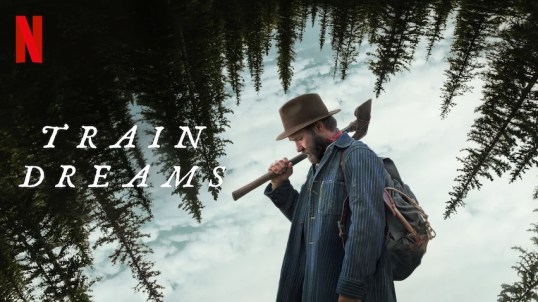
I thought about those two cemeteries as I watched Train Dreams. Based on the award-winning novella by Denis Johnson, Train Dreams stars Joel Edgerton as Robert Grainier. At the start of the film, the narrator (Will Patton) tells us that Grainier lived for 80 years and he spent most of his life in Idaho. He never saw the ocean. He was an orphan who never learned who his parents were, when he was born, or how he came to be placed on a train in the late 19th century. The film follows Grainier as he goes from dropping out of school to working as a logger to marrying Gladys (Felicity Jones). He builds a cabin for Gladys to live in while he’s away looking for work. He and Gladys have a daughter named Kate.
Growing up at a time when the frontier had only recently been tamed and when death was considered to be acceptable risk for the men cutting down trees and laying down railroad tracks, Robert sees his share of disturbing things. As a child, he comes across as a mountain man who is slowly dying. Working for the railroad, he watches as one of his co-workers is casually tossed off a bridge. Later, the elderly and kind-hearted Arn Peebles (William H. Macy) is mortally injured in a random accident. When loggers die, their boots are hammered into a tree. Years, later those same trees are cut down and the boots are forgotten. And yet, for all the danger in Robert’s life, there are the moments that make it all worth it. Robert always returns home to his cabin and to the embrace of Gladys and the sight of his daughter growing up. He always returns to his family until he can’t anymore. As he ages, Robert isolates himself from civilization and becomes semi-legendary in the nearby town. But, as always, legends are eventually forgotten.
Visually, it’s a hauntingly beautiful film. The scenery is stunning, even while Robert and his fellow loggers are busy changing it by chopping down trees. But there’s always a hint of danger hiding behind the beauty. A forest fire brings an eerie, orange tint to the sky but it also destroys many lives and dreams. Joel Edgerton gives a strong performance as Robert, proving once again that he’s one of the few actors who can star in a period piece without looking out-of-place. Edgerton’s performance gives the film the humanity needed to keep it from becoming purely a film about visuals. As Robert, Edgerton rarely yells or shows much emotion at all. But his eyes tell us everything that we need to know.
With its stunning visuals, its narration, and its emphasis on nature, Train Dreams owes an obvious debt to Terence Malick. That said, it’s not quite as thematically deep as Malick’s best films. Whereas Malick would have been concerned about Robert’s place in both the universe and the afterlife, Train Dreams is more content to focus on Robert’s 80 years in Idaho (and occasionally Spokane). Whereas Malick often seems to be daring his audience to walk out, Train Dreams is very much about keeping you watching as Robert grows old. That’s not necessarily a criticism, of course. It’s just an acknowledgment that Train Dreams is the rarest of all creatures, an arthouse film that’s also a crowd pleaser. It doesn’t alienate its audience but it does so at the cost of the risks that make Malick’s later films so fascinating, if occasionally frustrating. That said, Train Dreams does stick with you. I’ll be thinking about the final 20 minutes for quite some time.
Train Dreams tells the story of a man — one of many — who may have been forgotten by history but who mattered during his 80 years on this Earth. In the end, Robert Grainier serves as a stand-in for all the people who lived their lives as American rapidly changed from being a frontier to being a superpower. The world may forget him but the viewer never will.
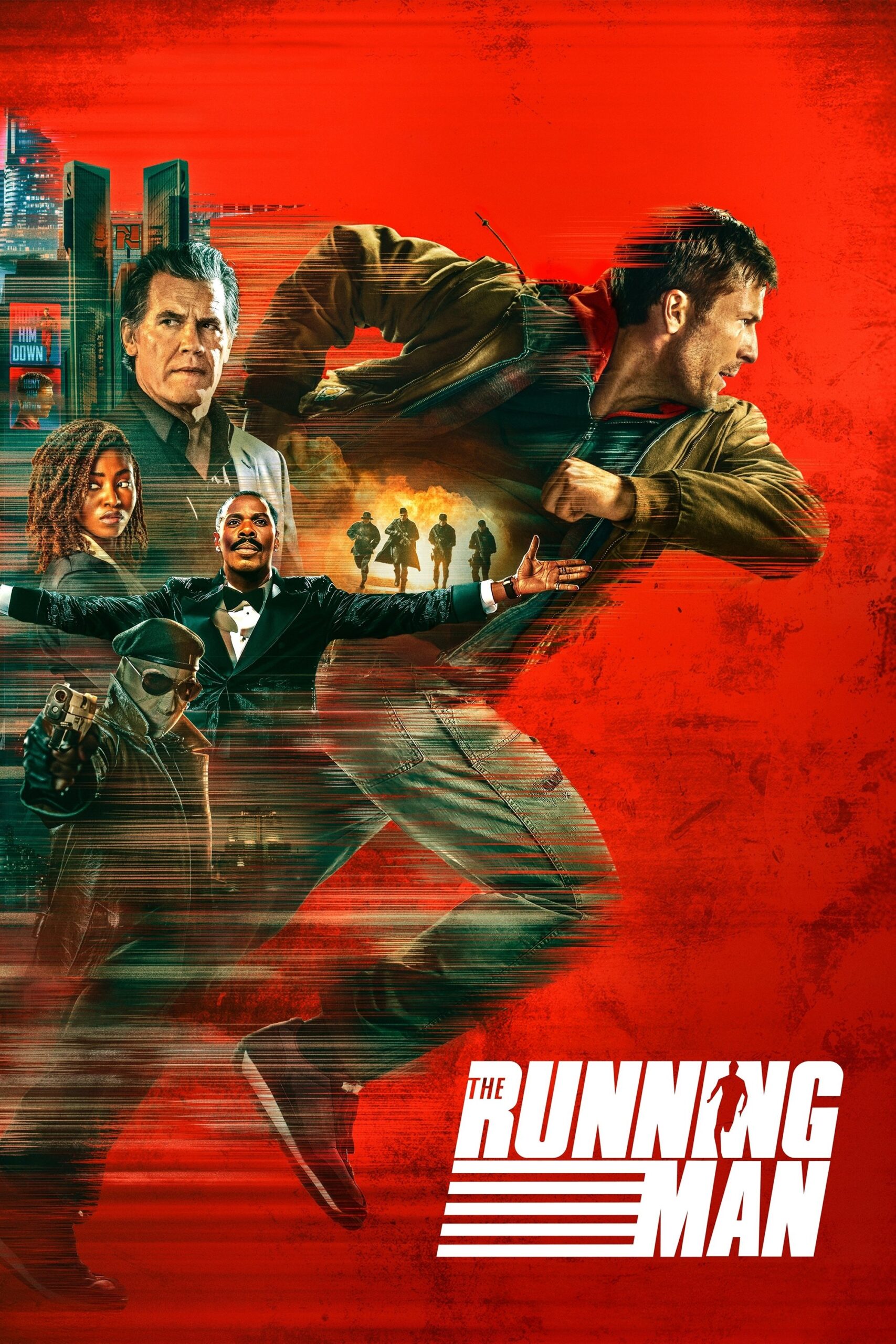
Edgar Wright’s 2025 take on The Running Man is an adrenaline shot to the chest and a sly riff on our era’s obsession with dystopian game shows, all filtered through his own eye for spectacle and pacing. Unlike many of his earlier works, such as Shaun of the Dead and Scott Pilgrim vs. The World, which bristle with meta-commentary, the film is a sleeker and more bruising affair. At its core, this is a survival thriller decked out in neon, driven by a director who wants to both honor and outpace what’s come before.
Wright’s version ditches the muscle-bound caricature of the 1987 Schwarzenegger adaptation, recentering on a more grounded protagonist. Glen Powell’s Ben Richards isn’t a quip-dispensing tank; he’s a desperate father, pressed to extremes, haunted more by anxiety than rage. We meet him in a world where reality TV devours everything, and nothing is too cruel if it wins the ratings war. Richards is cast as the sacrificial everyman, volunteering for the deadly Running Man show only because his family’s survival is at stake, not his ego. This lends the film a more human—and frankly, more believable—edge than either of its predecessors.
Visually, The Running Man is vintage Wright: kinetic and muscular, with chase scenes propelled by propulsive synths and punchy editing, each set piece designed as much to thrill as to disorient. Gone, however, is much of the director’s comedic ribbing; what remains is a tense visual feast, saturated in electric colors and relentless motion. The camera rarely settles. The television show itself is depicted as both garish and sinister, a spectacle that feels plausible because it’s only five minutes into our own future.
The film takes sharp aim at the machinery of television and the spectacle it creates, exposing how entertainment can thrive on cruelty and manipulation. It highlights a world where reality is heavily curated and shaped to serve ratings and control, with the audience complicit in consuming and encouraging the degradation of genuine human experience. The media in the film mirrors warnings that have circulated in recent years—that it has become a tool designed to appease the masses, even going so far as to use deepfakes to manipulate narratives in favor of particular agendas. While this focus on broadcast media delivers potent social commentary, Wright does drop the ball a bit by concentrating too much on traditional TV media at a time when entertainment consumption is largely online and more fragmented. This narrower scope misses an opportunity to deeply engage with the digital age’s sprawling and insidious impact on public attention and truth.
Glen Powell’s performance is pivotal to the film’s success. He anchors the story, selling both the exhaustion and the resolve required for the role. This Ben Richards is no superhero—his fear feels palpable, and his reactions are messy, urgent, and often impulsive. Opposite him, Josh Brolin steps in as Dan Killian, the show’s orchestrator. Brolin’s performance, smooth and menacing, turns every negotiation and threat into a master class in corporate evil. The stalkers, the show’s gladiatorial killers, are less cartoon than their 1987 counterparts, but all the more chilling for their believability—branding themselves like influencers, they embody a world where violence and popularity are inseparable.
On the surface, Wright’s Running Man leans heavily into social satire. It lobs grenades at infotainment, the exploitation inherent in reality TV, and the way audiences are silently implicated in all the carnage they consume. Reality is a construct, truth is whatever the network decides to show, and every moment of suffering is a data point in an endless quest for engagement. The critique is loud, though not always nuanced. Where Wright has previously reveled in self-aware storytelling, here he pulls back, focusing on the mechanics and cost of spectacle more than its digital afterlife.
Action is where the film hits hardest. Wright brings his expected flair for movement and tension, with chase sequences escalating to wild, blood-smeared crescendos, and hand-to-hand fights that feel tactile rather than stylized. The film borrows more heavily from the structure of King’s novel, raising stakes with each new adversary and refusing to let viewers catch their breath. Despite the non-stop pace, the movie runs a little too long—some sequences feel indulgent, and the final act’s rhythm stutters as it builds toward its conclusion. Still, even in its bloat, there’s always something energetic or visually inventive happening onscreen.
The movie’s climax and resolution avoid over-explaining or revealing too much, instead choosing to leave room for interpretation and suspense about the outcomes for the characters and the world they inhabit. This restraint preserves the tension and leaves viewers with something to chew on beyond the final credits.
For fans of Edgar Wright, there’s a sense of something both familiar and altered here. The visual wit, the muscular editing, the stylish sound cues—they’re all present. Yet the film feels less like a playground for Wright’s usual whimsy and more like a taut, collaborative blockbuster. It’s playfully brutal and thoroughly engaging, but does not, in the end, subvert the genre quite as gleefully as some might hope. For every moment of subtext or clever visual flourish, there is another in which the movie simply barrels forward, content to dazzle and provoke in equal measure.
The Running Man (2025) is a film with a target audience—those who want action, smart but accessible social commentary, and just enough character work to feel the stakes. It will delight viewers drawn to a flashier, meaner take on dystopian spectacle, and Powell’s central performance is likely to win over skeptics and fans alike. If you’re hoping for a thesis on algorithmic age or a meditation on surveillance capitalism, you may need to look elsewhere. But if you want a turbo-charged chase movie that occasionally stops to wag a finger at the world that spawned it, you’re likely to have a great time.
Ultimately, Edgar Wright’s Running Man is a sharp, glossy refit of a classic dystopian story, packed with high-octane action and grounded by its central performance. It won’t please everyone and doesn’t attempt to, but it never forgets that, above all, good television keeps us running. In the era of spectacle, that might be all you need.
In this scene from Fargo, nothing is going right for Jerry. He can’t even get the ice off of his windshield and, even if he does, imagine trying to pull out of the snow-covered parking lot. One good thing about living in Texas is that I only have deal with this maybe once or twice a year.
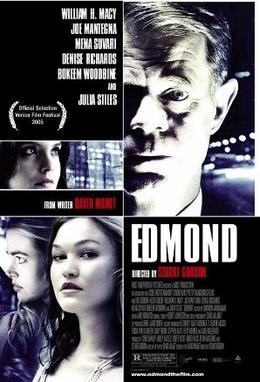
Based on a one-act play by David Mamet, 2005’s Edmond tells the story of Edmond Burke (William H. Macy).
Edmond shares his name (if not the actual spelling) with the philosopher Edmund Burke. Edmund Burke was a strong believer that society had to put value in good manners to survive and that religious and moral institutions played an important role in promoting the idea of people treating each other with respect and decency. Edmund Burke knew what he believes and his writings continue to influence thinks to this day. Edmond Burke, on the other hand, doesn’t know what he believes. He doesn’t know who he wants to be. All he knows is that he doesn’t feel like he’s accomplished anything with his life. “I don’t feel like a man,” he says at one point to a racist bar patron (played by Joe Mantegna) who replies that Edmond needs to get laid.
On a whim, Edmond steps into the shop of a fortune teller (Frances Bay), who flips a few Tarot cards and then tells Edmond that “You’re not where you’re supposed to be.” Edmond takes her words to heart. He starts the night by telling his wife (played by Mamet’s wife, Rebecca Pidgeon) that he’s leaving their apartment and he won’t be coming back. He goes to the bar, where he discusses his marriage with Mantegna. He goes to a strip club where he’s kicked out after he refuses to pay $100 for a drink. He goes to a peep show where he’s frustrated by the glass between him and the stripper and the stripper’s constant demand that he expose himself. He gets beaten in an alley by three men who were running a three-card monte scam. Edmond’s problem is that he left home without much cash and each encounter leads to him having less and less money. If he can’t pay, no one wants to help him, regardless of how much Edmond argues for a little kindness. He pawns his wedding ring for $120 but apparently, he just turns around and uses that money to buy a knife. An alley-way fight with a pimp leads to Edmond committing his first murder. A one-night stand with a waitress (a heart-breaking Julia Stiles) leads to a second murder after a conversation about whether or not the waitress is actually an actress leads to a sudden burst of violence. Edmond ends up eventually in prison, getting raped by his cellmate (Bookem Woodbine) and being told, “It happens.” Unable to accept that his actions have, in one night, led him from being a businessman to a prisoner, Edmond says, “I’m ready to go home now.” By the end of the film, Edmond realizes that perhaps he is now where he was meant to be.
It’s a disturbing film, all the more so because Edmond is played by the likable William H. Macy and watching Macy go from being a somewhat frustrated but mild-mannered businessman to becoming a blood-drenched, racial slur-shouting murderer is not a pleasant experience. Both the play and the film have generated a lot of controversy due to just how far Edmond goes. I don’t see either production as being an endorsement of Edmond or his actions. Instead, I see Edmond as a portrait of someone who, after a lifetime of being willfully blind to the world around him, ends up embracing all of the ugliness that he suddenly discovers around him. He’s driven mad by discovering, over the course of one night, that the world that is not as kind and well-mannered as he assumed that it was and it all hits him so suddenly that he can’t handle it. He discovers that he’s not special and that the world is largely indifferent to his feelings. He gets overwhelmed and, until he gets his hands on that knife, he feels powerless and emasculated. (The knife is an obvious phallic symbol.) It’s not until the film’s final scene that Edmond truly understands what he’s done and who he has become.
Edmond is not always an easy film to watch. The second murder scene is truly nightmarish, all the more so because the camera remains on Edmond as he’s drenched in blood. This is one of William H. Macy’s best performances and also one of his most disturbing characters. That said, it’s a play and a film that continues to be relevant today. There’s undoubtedly a lot of Edmonds out there.
Fargo (1996, dir by the Coen Brothers, cinematography by Roger Deakins)
Today, we wish a happy birthday to one of the great character actors, William H. Macy.
Today’s scene that I love comes from the film that I feel features Macy’s greatest performance, 1996’s Fargo. In this scene, hapless car salesman-turned-wannabe-criminal mastermind Jerry Lundegaard (played by Macy) discovers that his get rich quick scheme has one major flaw. Absolutely no one, not even his fearsome father-in-law, wants to give Jerry a dime of money. In this scene, you can’t help but feel sorry for Jerry, even though most of his problems are his own fault.
Every Monday night at 9:00 Central Time, my wife Sierra and I host a “Live Movie Tweet” event on X using the hashtag #MondayMuggers. We rotate movie picks each week, and our tastes are quite different. Tonight, Monday March 10th, we’re watching BLOOD FATHER starring Mel Gibson, Erin Moriarty, Diego Luna, Michael Parks, William H. Macy, and Miguel Sandoval.
BLOOD FATHER is the story of an ex-con (Mel Gibson) who reunites with his estranged 17-year old daughter (Erin Moriarty) to protect her from drug dealers hell bent on killing her.
I remember being very excited about BLOOD FATHER when it was released back in 2016. I’ve always been a big fan of Mel Gibson’s work, and this movie looked like it would be right down my alley. I was visiting the Tampa area on a business trip and decided to take in the film at a theater in Pinellas Park during some downtime. I remember enjoying the film very much and thinking Gibson was especially badass in the title role. I’m looking forward to watching it again with the #MondayMuggers crew.
Here are a few interesting tidbits about BLOOD FATHER:
Raoul Max Trujillo plays a badass Sicario trying to kill Mel Gibson and his on-screen daughter in this film. 10 years earlier he had played the chief warrior in APOCALYPTO (2006), which was directed by Gibson.
The movie Lydia (Erin Moriarty) is watching in the theater is the remake of ASSAULT ON PRECINCT 13 (2005). Jean-François Richet directed that film and BLOOD FATHER.
In 2008, Sylvester Stallone was planning to direct and star in an adaptation of Peter Craig’s novel “Blood Father.” Stallone and Mel Gibson would work together in 2014 on THE EXPENDABLES 3.
Director Jean-Francois Richet’s most recent film is PLANE (2023), starring Gerard Butler. It’s a damn good action film as well.
BLOOD FATHER was written by Peter Craig. His other credits include THE TOWN (2010), THE HUNGER GAMES: MOCKINGJAY 1 & 2 (2014-2015), THE BATMAN (2022) and TOP GUN: MAVERICK (2022).
So, join us tonight for #MondayMuggers and watch BLOOD FATHER! It’s on Amazon Prime.
After being passed over twice as a result of both a “brushing incident” with a Russian submarine and an embarrassing tattoo, Lt. Commander Thomas Dodge (Kelsey Grammer, playing Dodge as being the laid back opposite of Frasier Crane) has finally been promoted and given his own submarine to command. The catch is that the submarine is a rusty piece of junk from World War II and he’s been assigned a crew of misfits. Captain Dodge is to take part in a war game. Admiral Winslow (Rip Torn) wants Dodge to prove that even an out-of-commission submarine can be dangerous by infiltrating Charleston Harbor undetected and then blowing up a dummy warship in Norfolk Harbor. If Dodge is successful, he’ll get a nuclear submarine to command. If he fails, he’ll be assigned of desk job and probably leave the Navy. While the sympathetic Winslow encourages Dodge to “think like a pirate,” the antagonistic Admiral Graham (Bruce Dern) pulls out all the stops to make sure Dodge fails.
I imagine that Down Periscope was probably pitched as Police Academy In The Navy and it follows the general rules of the Police Academy films, right down to casting Lauren Holly as the one woman on the submarine who has to overcome her own insecurities and prove herself to all the men. Unfortunately, none of the misfits on the crew are as memorable as the cadets from Police Academy and the movie’s attempts to mix juvenile humor with suspenseful naval action are not at all successful. Having Rob Schneider go totally over the top as Dodge’s second-in-command while having William H. Macy give a serious performance as the captain assigned to prevent Dodge from reaching the harbor indicates that Down Periscope has a definite identity problem.
Harry Dean Stanton plays Howard, who is the submarine’s chief engineer and who uses whiskey as a fuel to keep the submarine moving. Toby Huss has a few amusing moments as the electrician who keeps electrocuting himself. Grammer, Dern, and Macy have more than proven their talents in other projects and Rip Torn will always be remembered for bringing Artie to profane life on The Larry Sanders Show. Director David Ward also directed Major League and wrote The Sting. A lot of talent went into making Down Periscope so it’s a shame the film wasn’t more memorable.


 Through the Shattered Lens