4 Shots From 4 Films: Special Maureen O’Hara Edition


4 Shots From 4 Films is just what it says it is, 4 shots from 4 of our favorite films. As opposed to the reviews and recaps that we usually post, 4 Shots From 4 Films is all about letting the visuals do the talking.

These 4 Shots From 4 Films are dedicated to the memory of the great Maureen O’Hara.

4 Shots From 4 Maureen O’Hara Films

The Hunchback of Notre Dame (1939, dir by William Dieterle)

The Hunchback of Notre Dame (1939, dir by William Dieterle)

Dance, Girl. Dance (1940, dir by Dorothy Arzner)

Dance, Girl. Dance (1940, dir by Dorothy Arzner)

Miracle on the 34th Street (1947, dir by George Seaton)

Miracle on the 34th Street (1947, dir by George Seaton)

The Quiet Man (1952, dir by John Ford)

The Quiet Man (1952, dir by John Ford)

Sláinte!

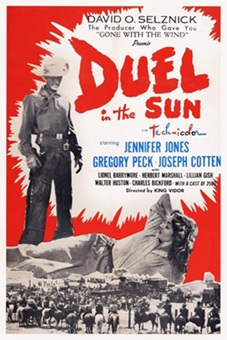
Duel In The Sun (1946, directed by King Vidor)


After her father is executed for killing her mother and her mother’s lover, “half-breed” Pearl Chavez (Jennifer Jones) is sent to live with her father’s second cousin, Laura Beth McCanles (Lillian Gish).  Laura is the wife of rancher, politician, and all-around racist Senator Jackson McCanles (Lionel Barrymore).  Worried that Pearl’s beauty and uninhibited manner will get her into trouble, Laura arranges for Pearl to meet with a minister known as The Sinkller (Walter Huston) who instructs Pearl on how to be a “good” girl.

Wanting to make Pearl bad and his, Lewton “Lewt” McCanles (Gregory Peck) becomes obsessed with Pearl and is soon forcing himself on her on a regular basis.  When the good McCanles brother, Jesse (Joseph Cotten), leaves the ranch despite being in love with Pearl, Pearl tries to find a good husband in the form of Sam Pierce (Charles Bickford).  Lewt responds by gunning Sam down and then goes on the run.  It all leads to an overwrought duel in the sun as the two doomed lovers take aim at each other.

Duel In The Sun is credited to veteran director King Vidor and there are a few shots of the western landscape that do feel typical of Vidor’s work.  However, Duel In The Sun’s true auteur was its producer, David O. Selznick.  Still looking to recapture his earlier success with Gone With The Wind and eager to make his future wife, Jennifer Jones, into an even bigger star than she was, Selznick obsessed over every detail of Duel In The Sun, pushing Vidor and a host of other directors (including Josef von Sternberg, William Dieterle, William Cameron Menzies, Otto Brower, and Sidney Franklin)  to make the film more steamy, more melodramatic, more violent, and more visually epic.  Reportedly, while Video was trying to shoot the film’s titular duel, he had to call cut several times when Selznick ran into the scene with a water bottle to spray more “sweat” onto Jones and Peck.  Today, the stiff Peck seems miscast as the black sheep of the family, the reserved Jones is even more miscast as a mestiza, and the plot is clearly too simplistic to carry the film’s epic ambitions.  A few impressive shots aside, Duel In The Sun is just boring,  In the 40s, though, the film’s relative openness about sex generated enough controversy to make Duel In The Sun into a box office hit.  It was one of the two top-grossing westerns of the 40s, beating out Red River, My Darling Clementine, Fort Apache, The Ox-Bow Incident, and several other films that were actually good.

Unlike Jones, Peck, and even usually reliable stalwart like Lionel Barrymore and Walter Huston, Joseph Cotten at least emerges from this film with his dignity intact.  Playing the good brother, Cotten gets to underplay while everyone else is overplaying and it turns out to be the right approach for him.  Surviving Duel In The Sun was no easy feat but Cotten pulled it off.

4 Shots From 4 Films: Special Joseph Cotten Edition


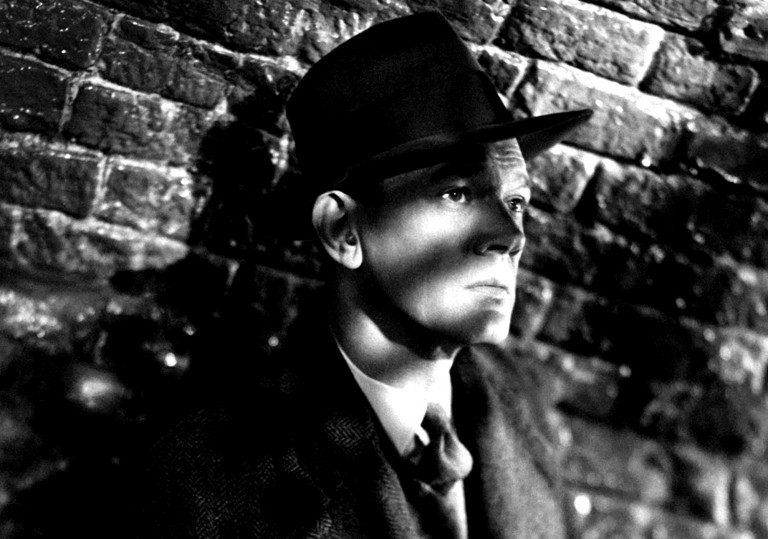
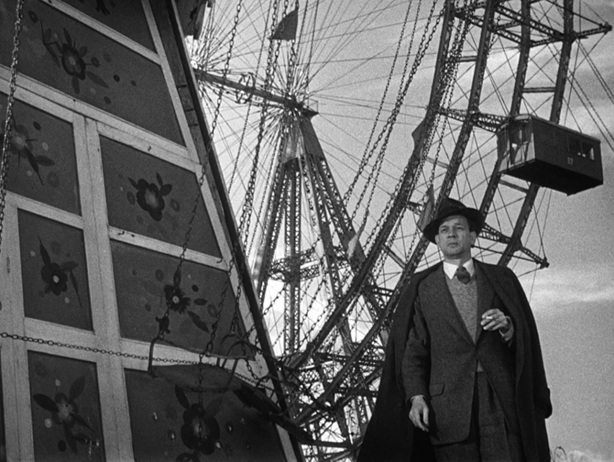
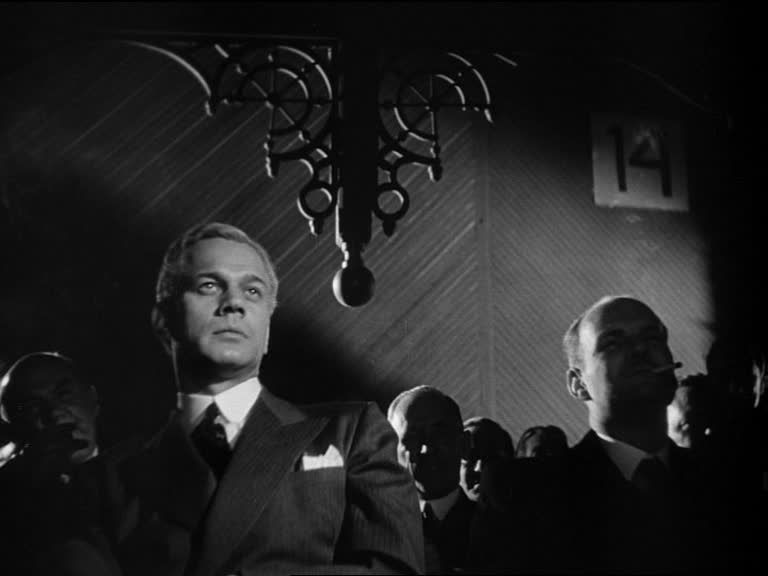
The Third Man (1949, directed by Carol Reed)

4 Shots From 4 Films is just what it says it is, 4 shots from 4 of our favorite films. As opposed to the reviews and recaps that we usually post, 4 Shots From 4 Films lets the visuals do the talking!

As you can probably guess from my pen name and my profile pic, Joseph Cotten is one of my favorite actors.  Cotten may be best known for his association with Orson Welles but he worked with several great directors over the years.  Along with playing Jedediah Leland in Welles’s Citizen Kane, he starred in Hitchcock’s Shadow of a Doubt and Carol Reed’s The Third Man.  Even while his film career was flourishing, Cotten continued to appear on the Broadway stage and, during the early days of television, he frequently appeared on anthology series, the majority of which were broadcast live.

In honor of Cotten’s birthday, here are four shots from four of his best films.

4 Shots From 4 Films

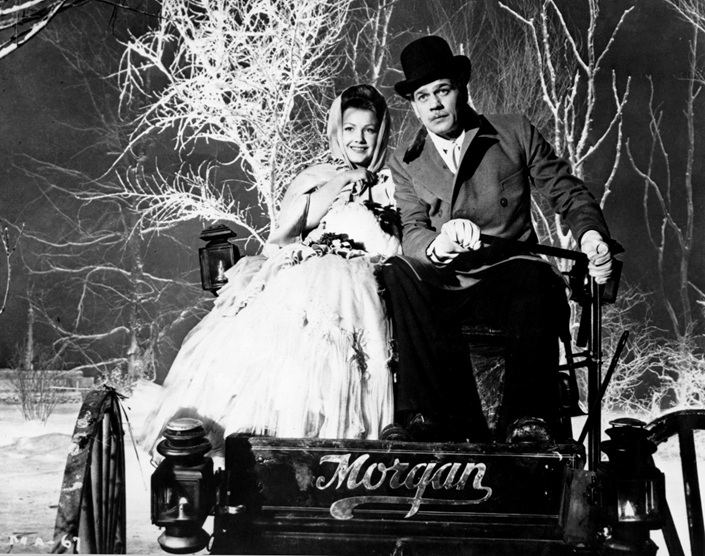
The Magnificent Ambersons (1942, directed by Orson Welles)

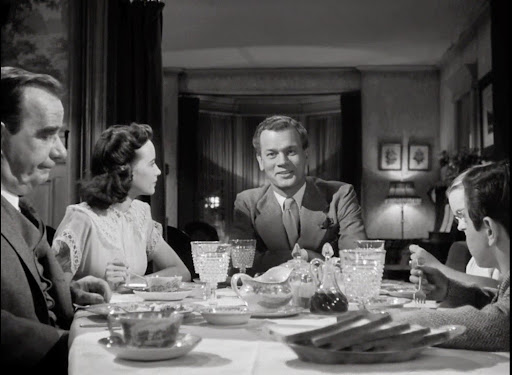
Shadow of a Doubt (1943, directed by Alfred Hitchcock)

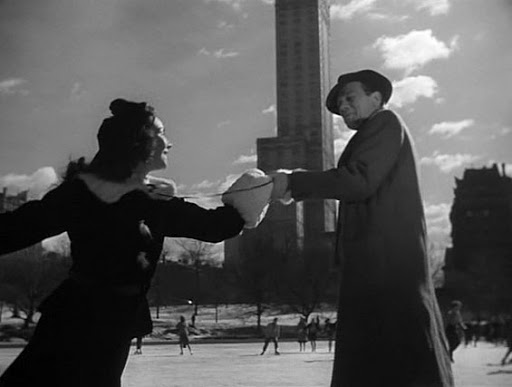
Portrait of Jennie (1948, directed by William Dieterle)

The Third Man (1949, directed by Carol Reed)

Lisa Reviews An Oscar Winner: The Life of Emile Zola (dir by William Dieterle)


The Life of Emile Zola, the winner of the 1936 Oscar for Best Picture of the Year, opens with two French artists living in a drafty apartment.

Emile Zola (Paul Muni) is destined to become one of France’s most popular and important writers.  Paul Cezanne (Vladimir Sokoloff) will eventually become one of the most important artists of the post-impressionist movement.  But for now, they’re just two struggling artists who have sworn that they will never sell out their principles.  They are poor but they’re happy.  That changes for Zola after he meets a prostitute named Nana (Erin O’Brien-Moore) and he uses her life story as the inspiration for a novel.  The book is controversial and its frank content scandalizes France.  The public censor comes close to banning it.  But it also becomes a best seller.  It’s the book everyone secretly owns but claims to have never read.

Zola writes several more books, all about the conditions of the working class in France.  Eventually, he becomes what he claimed he would never be, a wealthy man living in a mansion and having little contact with the poor and oppressed.  Cezanne sees Zola one last time, calling him out for having sold his talent for money.  Cezanne explains that, on general principle, he can no longer be Zola’s friend.

Meanwhile, a quiet and rather meek family man named Captain Alfred Dreyfus (Joseph Schildkraut) has been arrested and accused of being a spy for Germany.  There’s little evidence that Dreyfus is a spy.  Indeed, most of the evidence seems to point to a Major Walsin-Esterhazy (Robert Barrat).  But, because Dreyfus is considered to be an outsider, he is convicted in a show trial and exiled to Devil’s Island.

(In real life, it’s generally agreed that Dreyfus was a victim of anti-Semitism.  As the only Jewish member of the army’s General Staff, Dreyfus was viewed with suspicion by his colleagues even before anyone knew that there was a German spy.  The Life of Emile Zola doesn’t specifically state that Dreyfus was a victim of anti-Semitism, with the exception of a brief moment when one of his accusers looks at his personnel file and says, “He’s not one of us,” while pointing at the word “Jew.”  Otherwise, the fact that Dreyfuss was Jewish is never mentioned in the film.  It’s as if the film is going out of its way to avoid offending the very people that the movie is criticizing.)

After speaking to Dreyfus’s wife (played by Gale Sondergaard, who would later become the victim of a show trial herself when she was blacklisted as a suspected communist), Zola decides to take up Dreyfus’s case.  He publishes an open letter — J’Accuse — in which he states that Dreyfus was not given a fair trial and that Dreyfus is innocent of the charges against him.  Zola finds himself in court, accused of libel.  Zola uses his trial to give Dreyfus the hearing that he never received.  While the army boos his every utterance, the people of France rally to his side.

The Life of Emile Zola is an early example of the type of prestige production that today is often referred to as being an “Oscar picture.”  It tells a true story.  As a film that condemns the treatment of Alfred Dreyfus but avoids stating the obvious reason why Dreyfus was targeted in the first place, it’s political without being radical.  And it features a performance from the most acclaimed actor of the era, Paul Muni.  Muni gives a powerful performance as Zola, holding the viewer’s attention even during the lengthy trial scenes that take up most the second half of the film.  That said, the true star of the film is Joseph Schildkraut, who plays Dreyfus as being a kind and trusting soul who finds himself caught up in a Kafkaesque nightmare.  At one point, Dreyfus is given a gun and told that there’s one way that he can avoid being put on trial for treason.  Schildkraut played the scene so well that I wanted to cheer when he refused to surrender.

The Life of Emile Zola is a big and, at times, self-consciously important production.  It was clearly designed to win a bunch of Oscars and it certainly managed to do that.  Compared to some of the other films nominated that year — The Awful Truth, Dead End, A Star is Born, Lost Horizon, Stage Door, In Old Chicago — The Life of Emile Zola can seem a bit stodgy.  However,  the performances of Muni and Schildkraut continue to make the film worth watching.

8 Shots From 8 Films You Should Watch In 2022


4 Or More Shots From 4 Or More Films is just what it says it is, 4 shots from 4 of our favorite films. As opposed to the reviews and recaps that we usually post, 4 Shots From 4 Films lets the visuals do the talking!

Today is the start of a new year and it’s also a day to start thinking about which film you’re going to discover over the course of the next 12 months!  Below are my suggestions for 8 films that, if you haven’t already watched them, you should definitely make time to watch before 2023 rolls around!

8 Shots From 8 Film For 2022

It (1927, dir by Clarence Badger, DP: H. Kinley Martin)

The Rules of Game (1939, dir by Jean Renoir, DP: Jean Bachelet)

Portrait of Jennie (1948, dir by William Dieterle, DP; Joseph H. August)

Chappaqua (1966, dir by Conrad Rooks, DP: Etienne Becker, Robert Frank, and Eugene Schufftan)

An American Hippie in Israel (1972, dir by Amos Sefer, DP: Ya’ackov Kallach)

Strange Behavior (1981, dir by Micahel Laughlin, DP: Louis Horvath)

The Two Orphan Vampires (1997, dir by Jean Rollin, DP: Norbert Marfaing-Sintes)

A Field in England (2013, dir by Ben Wheatley, DP: Laurie Rose)

4 Shots From 4 Films: In Tribute To Joseph Cotten


The Third Man (1949, directed by Carol Reed)

4 Shots From 4 Films is just what it says it is, 4 shots from 4 of our favorite films. As opposed to the reviews and recaps that we usually post, 4 Shots From 4 Films lets the visuals do the talking!

As you can probably guess from my pen name and my profile pic, Joseph Cotten is one of my favorite actors.  Born 115 years ago on this day, Cotten may be best known for his association with Orson Welles but he worked with several great directors over the years.  Along with playing Jedediah Leland in Welles’s Citizen Kane, he starred in Hitchcock’s Shadow of a Doubt and Carol Reed’s The Third Man.  Even while his film career was flourishing, Cotten continued to appear on the Broadway stage and, during the early days of television, he frequently appeared on anthology series, the majority of which were broadcast live.  Cotten even had a memorable cameo in Michael Cimino’s infamous film, Heaven’s Gate.

In honor of Cotten’s birthday, here are four shots from four of his best films.

4 Shots From 4 Films

Citizen Kane (1941, directed by Orson Welles)

Journey Into Fear (1943, directed by Norman Foster and Orson Welles)

Shadow of a Doubt (1943, directed by Alfred Hitchcock)

Portrait of Jennie (1948, directed by William Dieterle)


6 Good Films That Were Not Nominated For Best Picture: The 1940s


Gary Cooper. Joan Fontaine, Mary Astor, and Donald Crisp at the 1942 Oscars.

Continuing our look at good films that were not nominated for best picture, here are 6 films from the 1940s.

Shadow of a Doubt (1943, dir by Alfred Hitchcock)

Amazing, Alfred Hitchcock never won the Best Directing Oscar.  In fact, it was rare that his films were even nominated.  (Though Rebecca did win Best Picture, it could be argued that film’s style was as much to due to David O. Selznick as it was to Hitchcock.)  One of the best of Hitchcock’s unnominated films was Shadow of a Doubt.  With its dark sense of humor and wonderful performances from Joseph Cotten and Teresa Wright, Shadow of a Doubt was Hitchcock at his best.  It was also, perhaps, a bit too darkly subversive for the Academy.

Detour (1945, dir by Edgar G. Ulmer)

The ultimate film noir nightmare, Detour was actually well-received when it was originally released, though it would take a while for the film to be recognized as a true classic.  Still, there was no way that the Academy was going to nominate a low-budget B-movie about a guy who hitchhikes across America and manages to accidentally kill two people.  Detour was far too nightmarish and surreal for the Academy but it’s remained one of the most influential films ever made.

Gilda (1946, dir by Charles Vidor)

Another classic film noir, Gilda is the film that, for many, will always define Rita Hayworth.  Through the film was a financial and critical success, it was ignored by the Academy.  The success of this film and the popularity of Hayworth’s performance led to the fourth atomic bomb to ever be detonated being named Gilda.  Rita Hayworth was reportedly not happy to hear it.

Black Narcissus (1947, dir by Michael Powell and Emeric Pressburger)

One of the most visually stunning films ever made, Black Narcissus won Oscars for Best Cinematography and for Art Design but it received no other nominations, not even for the outstanding performances of Deborah Kerr and Kathleen Byron, as two nuns who have very different reactions to the Himalayas.

Out of the Past (1947, dir by Jacques Tourneur)

A world-weary private investigator (Robert Michum) is hired by a slick and psychotic gangster (Kirk Douglas) and ordered to track down the gangster’s girlfriend (Jane Greer).  So beings this rather melancholy and introspective film noir, one that is distinguished by wonderfully shadowy photography and which features one of Mitchum’s best performances.  Sadly, the Academy recognized neither the film nor Mitchum’s performance.

Portrait of Jennie (1948, dir by William Dieterle)

This haunting and dream-like fantasy stars Joseph Cotten as a painter who meets, paints, and falls in love with a mysterious woman (Jennifer Jones) who may not be what she seems.  The film was apparently not a huge success when it was first released but, seen today, it’s hard not to get swept up in the film’s romantic sadness.  Though it received a nomination for Best Cinematography, it was otherwise ignored by the Academy.

Up next, in about an hour or so, the 1950s!

4 Shots From 4 Films — In Memory of Maureen O’Hara


4 Shots From 4 Films is just what it says it is, 4 shots from 4 of our favorite films. As opposed to the reviews and recaps that we usually post, 4 Shots From 4 Films is all about letting the visuals do the talking.

Sadly, it had been announced that actress Maureen O’Hara passed away this morning.  As a lover of Golden Age Hollywood, Maureen was always one of my favorite actresses.  (After all, we were both outspoken Irish redheads!)  Maureen was one of the last surviving actresses from Hollywood’s golden age and, with her passing, a bit history passes too.

(I should also mention that Maureen played the mother of one of my favorite actress, Natalie Wood, in one of my favorite films of all time, Miracle on 34th Street.  Whenever I see Miracle, I think about my mom.)

These 4 Shots From 4 Films are dedicated to the memory of the great Maureen O’Hara.

4 Shots From 4 Films

The Hunchback of Notre Dame (1939, dir by William Dieterle)

The Hunchback of Notre Dame (1939, dir by William Dieterle)

Dance, Girl. Dance (1940, dir by Dorothy Arzner)

Dance, Girl. Dance (1940, dir by Dorothy Arzner)

Miracle on the 34th Street (1947, dir by George Seaton)

Miracle on the 34th Street (1947, dir by George Seaton)


The Quiet Man (1952, dir by John Ford)

The Quiet Man (1952, dir by John Ford)

Sláinte!