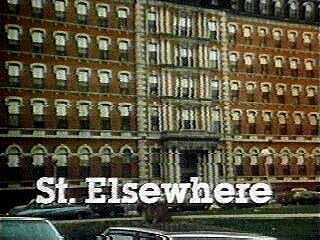
Retro Television Review: St. Elsewhere 1.6 “Legionnaires: Part One”


Welcome to Retro Television Reviews, a feature where we review some of our favorite and least favorite shows of the past! On Fridays, I will be reviewing St. Elsewhere, a medical show which ran on NBC from 1982 to 1988.  The show can be found on Hulu!

This week, Peter White continues to disappoint everyone.

Episode 1.6 “Legionnaires: Part One”

(Dir by Thomas Carter, originally aired on December 7th, 1982)

Dr. Peter White (Terence Knox) is perhaps the most incompetent doctor at St. Eligius.  Over the course of the first few episodes, we have watched as he’s taken advantage of his fellow residents, been rude to patients, misdiagnosed obvious medical conditions, and complained nonstop about how difficult his life is.  Dr. White is struggling to balance the punishing schedule of being a resident with also being a husband and the father to a young girl and a newborn.  He’s in over his head.

What’s interesting is that, despite all of his problems, he’s not a particularly sympathetic character and I don’t think he’s meant to be.  He’s never going to be a good doctor and he doesn’t have the courage to admit it.  Instead of finding a career for which he’s suited, he insists on being a doctor and risking the life of anyone unlucky enough to be his patient.  What makes Dr. White an especially disturbing character is that there are probably a lot of doctors in the real world who are just like him.  They’re overwhelmed and they make stupid mistakes.  I get overwhelmed sometimes too, as does everyone.  And, like everyone, I occasionally make mistakes.  However, my mistakes usually amount to something like missing a cringey typo that causes me to feel embarrassment until I get a chance to fix it.  A doctor’s mistake can lead to people dying.

This week, Dr. White attempts to give penicillin to a patient who is allergic.  Fortunately, Dr. Westphall is able to stop White from putting his patient into a coma.  Dr. White also manages to lose his hospital-issued pager and, when he’s told that it will cost him $300 to get a new one, he freaks out.  A chance meeting with a lawyer in the hospital cafeteria leads White to offer to sell out the hospital by recommending the lawyer to anyone willing to sue because they ended up with a doctor like Peter White.  White finally raises the money by donating his sperm.  The nurse at the sperm bank says that it’s really generous for a doctor to donate.  Not this doctor!

While Peter is screwing up his life, Dr. Westphall is dealing with what appears to be an outbreak of Legionnaire’s Disease in one of the wards.  Westphall wants to immediately shut down the ward.  Dr. Auschlander and board member H.J. Cummings (Christopher Guest — yes, that Christopher Guest) disagree.  However, after another young woman dies of what appears to be Legionnaire’s, Westphall orders the ward to be closed and the patients to be relocated.

Meanwhile, Kathy Martin broke up with Fiscus because she felt their fling was turning into a relationship and Dr. Cavanero dealt with a nurse who disliked her.  Neither one of those subplots did much for me, though Kathy is emerging as one of my favorite characters on this show.  Before breaking up with Fiscus, she goes to a funeral of a stranger just so he won’t be buried without someone there to mourn him.  She wears white to the funeral.  One doctor comments that she’s never seen Kathy wear white before.  Kathy’s a great character and deserves better than just being Fiscus’s girlfriend.

This episode was an improvement over the last episode I watched.  According to the title, it’s also only “Part One” so I imagine there will be some fallout over closing that ward next week.  We’ll see what happens.

Retro Television Review: St. Elsewhere 1.5 “Samuels and the Kid”


Welcome to Retro Television Reviews, a feature where we review some of our favorite and least favorite shows of the past! On Fridays, I will be reviewing St. Elsewhere, a medical show which ran on NBC from 1982 to 1988.  The show can be found on Hulu!

This week’s episode of St. Elsewhere featured Dr. Craig winning an award.  Good for him!

Episode 1.5 “Samuels and the Kid”

(Dir by Thomas Carter, originally aired on November 30th, 1982)

This week’s episode of St. Elsewhere was kind of boring,  It wasn’t a bad episode because the show was well-acted and even the boring subplots felt as is they were part of a bigger whole but, especially when compared to last week’s episode, Samuels and the Kid just wasn’t as compelling.

The Kid of the title is Robbie Durant (Jeremy Licht), a young patient who needs to have some minor surgery done on his ankle.  Dr. Samuels take a really intense interest in the kid, bonding with him and even offering him tickets to a Patriots football game.  At first, it seems like Samuels is just trying to be nice to a kid who is in a scary situation.  (When I was growing up, I spent a few nights in the hospital because of my asthma and it always scared me to death.)  But, at the end of the episode, it is revealed that Samuels had a son who was Robbie’s age who died in a freak accident.  As for Robbie, the operation is a success but he still dies as the result of an embolism.  It was sad but, at the same time, I knew Robbie was going to die as soon as he showed up in the hospital.  I’ve seen enough medical shows to know.

Dr. Cavanero was at a bed-and-breakfast when she learned that one of her patients had gone into labor and was at her apartment alone.  Cavenro had to beg people for change so that she could use a pay phone to call the patient’s neighbors so that she could talk them through delivering the baby.  Seen today, the most interesting thing about this storyline is that it takes place at a time when people had to carry around quarters so that they could call each other in case of an emergency.  (There is a very dusty old payphone a few blocks away from my house.  I assume it doesn’t work and I don’t think it’s been touched by human hands since the 90s — and I’m certainly not going to touch it! — but it’s always interesting to see it sitting there like some haunted beacon of the past.)

Dr. Fiscus continued to have sex with Kathy Martin.  Good for them but I really don’t know that I need to spend a good deal of time listening to Howie Mandel talk about his sex life.

Dr. Chandler (Denzel Washington) accused a nurse of being incompetent.  Nurse Rosenthal (Christina Pickles) got mad at him for yelling at the nurse in the hospital hallway.  Dr. Westphall mediated and agreed to move the nurse to another floor.  Denzel Washington is always fun when he’s yelling at people.

There was one very funny scene.  Dr. Craig won an award for surgeon of the year and gave an extremely long, pompous, and rather bitter acceptance speech.  (The award was a plaster cast of his own hands.)  William Daniels played the scene perfectly and I have a feeling that Dr. Craig is going to end up becoming my favorite character.  As a bonus, Daniels’s wife, Bonnie Bartlett, appeared as Craig’s wife.  By the middle of Craig’s speech, even she had stoppled listening and lit a cigarette.

As I said, this was a little bit of a boring episode.   Still, I look forward to the future of the show!

Speaking of the future, this is my last St. Elsewhere review of 2024.  My next review of this show will post on January 3rd!


Retro Television Review: St. Elsewhere 1.3 “Down’s Syndrome”


Welcome to Retro Television Reviews, a feature where we review some of our favorite and least favorite shows of the past! On Fridays, I will be reviewing St. Elsewhere, a medical show which ran on NBC from 1982 to 1988.  The show can be found on Hulu!

This week, we get to know a very bad doctor.

Episode 1.3 “Down’s Syndrome”

(Dir by Mark Tinker, originally aired on November 16th, 1982)

St. Eligius is home to several doctors, some of whom are good at their job and some of whom are really, really bad.

One of the bad ones appears to be Dr. Peter White (Terrence Knox), a resident who was in the background during the previous two episodes but who was at the center for a good deal of this episode.  Peter has a terrible bedside manner, absolutely no social skills, and his knowledge of medicine appears to be subpar at best.  When a homeless man comes in and complains of pain, Peter gives him a dose of potassium that nearly kills him.  (Only the quick thinking of Dr. Ehrlich — who himself hardly appears to be the perfect doctor — keeps the patient alive.)  Dr. White seems to be overwhelmed and it certainly doesn’t help that his wife is constantly calling the hospital and demanding to speak to him about every little thing.  That said, it’s hard to have much sympathy for Dr. White.  Yes, he’s overwhelmed but his mistakes nearly kill a man.

I have to admit that, as I watched Dr. Peter White on this week’s episode, I kept thinking about some of the doctors who treated my father after he had his car accident in May.  Whenever I spoke to them, they would brusquely answer my questions, usually in technical language that reflected that it had been a long time since they talked anyone who hadn’t gone to medical school.  At the time, I made the same excuses for them that I just made for Dr. White.  They were young, they were busy, and they were overwhelmed.  After my father died, though, I stopped making excuses for them and I instead just accepted that they weren’t very good at their job.  And perhaps Dr. White should admit the same.

It doesn’t help that Dr. White is contrasted with Dr. Auschlander, a kind and elderly liver specialist who is battling cancer but who still manages to treat all of his patients with kindness and respect.  The episode made it clear that all of the residents should hope to become a doctor like Dr. Auschlander.  While Peter snaps at his patients and nearly kills a man, Auschlander takes the time to play cards with a woman who is dying.  We should all be so lucky as to have an Auschlander in our life.

Finally, Brian Whitehill (Tony Bill) and his pregnant wife, Denise (Maureen Whitehill) are informed that their baby will be born with Down’s Syndrome.  In a scene that brings to mind Icelandic eugenics, Brian suggests that Denise get an abortion but Denise refuses, especially when she learns that she’s going to have a son.  (She already has two daughters.)  A day later, Brian comes home from work and tells Denise that he’s realized that she’s right and he’s prepared to be the father of a special needs child.  Denise replies that she had the abortion earlier in the day.  Seriously, what a depressing story!  That said, I respected what the show was doing here.  The patients are just as important as the doctors.

(And while Denise is getting an abortion, Dr. Morrison is learning that he’s going to be a father and, in contrast to Brian Whitehill, joyfully cheering in the hospital stairwell.)

As with the previous episode, there was a lot going on in the background.  Dr. Beale attempted to analyze terrorist Andrew Reinhardt (Tim Robbins), who is still basically acting like an arrogant prick.  Kathleen McAllister, the victim of Reinhardt’s attack, is still in a coma.  Dr. Westphall gave a tour of the hospital to two community leaders who both suggested that St. Eligius should shut down and move its operations to a wealthier neighborhood.  Dr. Fiscus got a blow job in an elevator from Kathy Martin.  (“Going down?” Fiscus asked the next guy who got on the elevator.)  It was a busy day at the hospital!  It was a good episode, even if it didn’t really have any of the big wow moments that the previous two episodes featured.  This episode was more about following a few days in the life of a hospital and the emphasis was on the nonstop flow of patients and doctors, some of whom were doing their best and some of whom were on the verge of giving up.  In the end, the main thing I took away from this episode was that there may not be enough Aucschlanders to make up for all the Peter Whites.


Retro Television Review: St. Elsewhere 1.2 “Bypass”


Welcome to Retro Television Reviews, a new feature where we review some of our favorite and least favorite shows of the past! On Fridays, I will be reviewing St. Elsewhere, a medical show which ran on NBC from 1982 to 1988.  The show can be found on Hulu!

This week, William Daniels claims the show as his own.

Episode 1.2 “Bypass”

(Dir by Thomas Carter, originally aired on November 9th, 1982)

“Hey, it’s Tim Robbins!”

Yes, the future Oscar winner shows up in the second episode of St. Elsewhere, playing a rich kid-turned-terrorist named Andrew Reinhardt.  Reinhardt, who no doubt learned all about Marxism during his first semester away at college, set off a bomb in a bank, killing two people and putting a woman named Kathleen McCallister into a coma.  Both Reihnhardt and McCallister have been brought to St. Eligius.  While Kathleen’s husband, Stephen (Jack Bannon), sobs in the hallway, Reinhardt acts like a petulant brat in his hospital room.

With the nurses refusing to change his sheets or even give him his morphine shots, it falls to Dr. Morrison to take care of him.  Reinhardt is not at all appreciative and Morrison finds himself conflicted.  How is he supposed to give proper medical treatment to someone who he despises?  Morrison is so conflicted that he even goes to Dr. Westphall.  Westphall responds by telling a long story about a time that he fell in love with a patient.  I’m getting the feeling that Morrison feeling conflicted and Westphall telling long stories are both going to be regular features on this show.

(The correct answer to Morrison’s question about how he can take care of a bad person is as follows: It’s your job and you’re getting paid to do it.)

This episode also gave the viewer a chance to get to know Dr. Craig, the very talented but very egotistical head of surgery who is played by the great William Daniels.  Dr. Craig holds a press conference to inform reporters about the conditions of both Reinhardt and Kathleen McCallister and declares that, despite its bad reputation, “St. Eligius is the place to be!”  He then proceeds to get angry when the press is more interested in talking to the surgeon who actually saved Kathleen’s life than to him.

Dr. Craig browbeats a Mr. Broadwater (Robert Costanzo) into getting bypass surgery done.  The surgery appears to have been a success but it’s hard to ignore that Craig essentially bullied the guy into getting a major operation, one that could have killed him if the least little thing had gone wrong.  Resident Victor Ehrlich (Ed Begley, Jr.) assists in the operation and, at one point, Dr. Craig intentionally head butts him when Ehrlich cannot name all of the arteries leading into the heart.  It’s a bit aggressive but, on the plus side, Ehrlich does learn all of the names.  Afterwards, Dr. Craig brags about how his own son is following in his footsteps and tells Mr. Broadwater’s son that some day, a new Dr. Craig will operate on him.  In other words, Dr. Craig is kind of a jerk but he’s good at what he does and he’s played by William Daniels so it’s hard to hold anything against him.

There were other subplots playing out in the background, the majority of which just seemed to be there to remind us that St. Elsewhere is an ensemble show and that, just because someone isn’t a major character in this episode, that doesn’t mean they won’t be important later on.  Psychiatrist Hugh Beale (G.W. Bailey) attempted to learn how to swim and ended up taking a class with a bunch of children.  Dr. Fiscus (Howie Mandel, the least convincing doctor ever) held court in the cafeteria and claimed that the hormones used in processing food were causing children to develop earlier than ever before.  Dr. Peter White (Terrence Knox) wandered around with a bunch of X-rays and begged everyone he met to help him understand what he was (or wasn’t) seeing.  If nothing else, this episode did a good job of capturing the idea of the hospital as being a place that’s always busy.

For the most part, though, it was Dr. Craig who carried this episode.  While Morrison and Westphall ponderously considered the implications of doing their jobs, Craig was an arrogant, angry, and brilliant dynamo and William Daniels’s high-energy performance was a pleasure to watch.  Whenever the episode started to slow down, Dr. Craig would liven things up by yelling at someone.  The hospital was lucky to have Dr. Craig and St. Elsewhere was lucky to have William Daniels.

Retro Television Review: St. Elsewhere 1.1 “Pilot”


Welcome to Retro Television Reviews, a new feature where we review some of our favorite and least favorite shows of the past! On Fridays, I will be reviewing St. Elsewhere, a medical show which ran on NBC from 1982 to 1988.  The show can be found on Hulu!

When I started reviewing Homicide, Jeff suggested that I should also review St. Elsewhere because the two shows shared a similar sensibility and a lot of behind-the-scenes personnel.  (Homicide showrunner Tom Fontana started out as a writer on St. Elsewhere.)  Apparently. a few characters from St. Elsewhere would eventually cross-over to Homicide.  Since I’m planning on soon reviewing two shows that were descended from HomicideOz and The Wire — it only seemed right to also review a show that was Homicide’s ancestor.

Though the show aired largely before my time, St. Elsewhere is definitely a show that I have heard about.  Everyone who follows American pop culture has either read about or seen the show’s infamous final episode and knows about the Tommy Westphall Universe Hypothesis.  Obviously, I can’t get into it now because that would be a spoiler but we’ll discuss it when the time comes!

For now, let’s start at the beginning, with the pilot!

Episode 1.1 “Pilot”

(Dir by Thomas Carter, originally aired on October 26th, 1982)

St. Eligius is a hospital in Boston that has obviously seen better days.  From the outside, it looks old.  On the inside, the hallways have the dim and dull look of a building that hasn’t been renovated in over ten years.  As Dr. Mark Craig (William Daniels, long before he played Mr. Feeney on Boy Meets World) angrily puts it, the hospital gets no respect in Boston.  It’s seen as being a “dumping ground” for patients who can’t afford anything better.  Dr. Craig is world-renowned heart surgeon whose wealthy patients have donated what few improvements the hospital has seen over the past few years.  (“All of our clocks now read the same time!” Dr. Craig brags at one point.)  But not even Dr. Craig can change the hospital’s reputation as being secondary to Boston General.

There are actually a few good things about St. Eligius.  For one thing, a young Denzel Washington is on staff, playing resident Phillip Chandler.  Denzel doesn’t get to do much in the pilot but still, his presence fills the viewer with confidence.  St. Eligius is also home to a world-renowned liver specialist, Dr. Daniel Auschlander (played by Norman Lloyd, who also worked with Hitchcock and Orson Welles).  Auschlander has liver cancer but the hospital chief-of-staff, Dr. Donald Westphall (Ed Flanders), assures everyone that Auschlander will probably “out live us all.”  (And he was right, to an extent.  Norman Lloyd lived to be 106 years old before passing away in 2021.  Ed Flanders died, tragically by suicide, in 1995.)  St. Eligius is a teaching hospital and the residents want to make a good impression by keeping their patients alive.  That’s always a good thing.

At the same time, how secure can you feel when Howie Mandel is one of the residents?  Mandel plays Dr. Wayne Fiscus, who wears a baseball cap and acts …. well, he acts a lot like Howie Mandel.  Like Washington, Mandel doesn’t do a lot in the pilot.  He does get a subplot where he apparently has sex in the morgue with goth pathologist Cathy Martin (Barbara Whinnery) but otherwise, we don’t see him treating a patient or anything like that.  Still, it’s a bit jarring to see Howie Mandel as a doctor.  I would not necessarily want him for my doctor because he’s to be easily distracted.  Maybe he’ll change my mind as the series progresses.

Speaking of sex, Dr. Ben Samuels (David Birney) has gonorrhea and spends most of the pilot approaching doctors and nurses and informing them of his conditions and suggesting that they might want to get tested themselves.  That’s not exactly the best way to be introduced to a character but it also lets us know that this show is not just going to be about dedicated doctors who spend all of their time worrying about their patients and making amazing medical discoveries.  Instead, this show is also about doctors who get venereal diseases.  Has anyone checked on Fiscus in the morgue?

(That said, Dr. Samuels does get a scene where he saves the life of a woman who was injured in a terrorist bombing, as if the show does want to make sure that we know that he can do his job, even if he is spreading VD through the hospital.)

The majority of the episode follows Dr. Jack Morrison (David Morse), a first-year resident who has been working several 24-hour shifts and who complains, at one point, that he hasn’t seen his wife for days.  Dr. Morrison gets upset when a surgeon wants to operate on one of his patients, a 15 year-old girl named Sandy (Heather McAdams).  Morrison believes that surgeons always want to cut into somebody.  Morrison gets even more upset when Sandy’s mother requests that Sandy be transferred to Boston General, which has a reputation for being a better, more modern hospital.  In fact, Morrison is so upset and exhausted that he forgets to file a death certificate for a patient who dies during the night.  As a result, it’s believed that the patient, who has a reputation for being violent, has gone missing and is stalking the hospital.  Dr. Annie Cavanero (Cynthia Sikes) spends the entire episode looking for a dead man, which at least gives her an excuse to visit every ward and introduce the viewers to the members of the show’s ensemble cast.

Having lost my mom to cancer and now my Dad to Parkinson’s, I was hesitant about reviewing St. Elsewhere.  (Actually, I was hesitant about reviewing any medical show.)  When my Dad was in the hospital, I felt like I couldn’t get anyone to give me a straight answer about his condition and I often felt the doctors were talking down to me.  To be honest, my worst conflicts were with the nurses, one of whom told me that I would have to “lose the attitude” before she would explain why my father had been moved to the Delirium Ward.  (It didn’t help that, at the same time my Dad was in the hospital, there was a huge storm that left us without power for a week.)  At the same time, there were other doctors who were helpful.  The staff at the rehab center that my dad was sent to were also wonderful.  I have my regrets about agreeing to hospice care but the nurse who was assigned to my Dad was very empathetic and totally understanding whenever I asked her for a cigarette.  (Under normal circumstances, I don’t smoke because I have asthma but seriously, the stress was killing me.)  I’m bitter and angry about a lot of what happened but I’m also thankful for the small moments of kindness.

Watching a show set in a hospital was not easy for me but the pilot of St. Elsewhere appealed to me with its mix of melodrama and humor.  There was a quirkiness to it that I appreciated.  William Daniels made me laugh with his annoyed rant about how little respect the hospital received.  Most of all, I cared about whether or not Dr. Morrison would still be alive at the end of his shift.  David Morse’s performance won me over.  He’s the type of doctor that I would want to have.  Well, actually, I’d probably want Denzel to my doctor but Dr, Morrison could assist.  Just keep Dr. Howie Mandel away from me.  Nothing against him but he seemed to be having way too much fun at the hospital….

Most importantly, the show ended with a cat.

Next week, the drama continues at St. Elsewhere!

Retro Television Reviews: Sarah T — Portrait of a Teenage Alcoholic (dir by Richard Donner)


Welcome to Retro Television Reviews, a feature where we review some of our favorite and least favorite shows of the past!  On Sundays, I will be reviewing the made-for-television movies that used to be a primetime mainstay.  Today’s film is 1975’s Sarah T — Portrait of a Teenage Alcoholic.  It  can be viewed on YouTube!

In 1975, two years after shocking audiences in and receiving an Oscar nomination for The Exorcist, Linda Blair played Sarah Travis.  Sarah is fourteen years old.  She has a high IQ.  She lives in a nice suburban home.  She has an older sister named Nancy (Laurette Sprang) and she makes a good deal of money working as a babysitter.  Sarah lives with her mother, Jean (Verna Bloom) and her stepfather, Matt (William Daniels).  She misses her father, a chronically unemployed artist named Jerry (Larry Hagman).  Jerry is the type who will complain about how no one is willing to give him a chance while he’s day drinking early in the morning.  Jerry’s an alcoholic.  That’s one of the many things that led to Jean divorcing him.  (Matt is fairly regular drinker as well but it soon becomes apparent that he can handle his liquor in a way that Jerry cannot.  Matt has a glass of Scotch after work.  Jerry has his daughter by a slushy so he can pour his beer in the cup.)  Jean is always quick to keep Sarah from drinking.  When someone offers her a drink at a party, Jean replies that Sarah only drinks ginger ale.

Of course, the name of this movie is Sarah T. — Portrait of a Teenage Alcoholic so we already know that Jean is incorrect about that.  When we first meet Sarah, she is fourteen and she’s been regularly drinking for two years.  She’s even worked out a system where she gets liquor delivered to the house and then tells the deliveryman that her mother is in the shower but she left the money for the booze on the dining room table.  Like many alcoholics, Sarah has become very good at tricking people and hiding her addiction.  Of course, Sarah doesn’t think that she’s an alcoholic but …. well, again, just check out the title of the film.

When Sarah goes to a party with Ken (Mark Hamill, two years before Star Wars), the handsome captain of the school’s swim team, she ends up having too much to drink.  Nice guy Ken not only takes her home but also takes the blame, telling Jean and Matt that he was the one who gave Sarah the alcohol.  Jean, convinced that this is the first time that Sarah has ever gotten drunk, forbids her from spending any more time with Ken.  In the morning, Jean comments that Sarah will probably have a terrible hangover and maybe that’s punishment enough.  The joke, of course, is on Jean.  Sarah doesn’t even get hangovers anymore.

Soon, Sarah’s grades start to slip and she starts to skip class so that she can drink.  Still blaming Ken for all of Sarah’s problems, Jean finally takes Sarah to a psychologist, Dr. Kitteridge (Michael Lerner).  Dr. Kitteridge announces that Sarah is an alcoholic and recommends that she start attending A.A. meetings.  Sarah does go to one meeting, in which she meets a surprisingly cheerful 12 year-old alcoholic.  However, Sarah still has a way to go and so does the movie.  I mean, we haven’t even gotten to the scene where Sarah begs a group of older boys to give her the bottle of wine that they’re clumsily tossing in the air.  By the end of the film, she’s even managed to hurt poor, loyal Ken.

Myself, I hardly ever drink.  Some of that is because, like Sarah, I’m the daughter of an alcoholic and a child of divorce and I’ve seen firsthand how difficult it can be to live with an addiction.  (My Dad has been sober for five years and I am so proud of him!)  Of course, another reason why I hardly ever drink is because my tolerance for alcohol is amazingly low.  I get drunk off one sip of beer.  Long ago, I realized my life would be a lot easier and simpler if I just didn’t drink and so I don’t.  Watching the film, I wondered if I was watching what my life would have been like if I had gone the opposite route.  Would I have ended up like Sarah T?

Probably not.  Sarah T is one of those films that was obviously made with the best of intentions but it just feels inauthentic.  A lot of that is due to the performance of Linda Blair, who often seems to be overacting and trying too hard to give an “Emmy-worthy” performance.  There’s not much depth to Blair’s performance and, as a result, the viewer never really buys into the story.  At her worse, Blair brings to mind Jessie Spano shouting, “I’m so excited!” during that episode of Saved By The Bell.  (Blair was far better served by B-movies like Savage Streets, in which she got to kick ass as a vigilante, than by films like this.)  As well, the film’s portrayal of A.A. is so cheerful, upbeat, and positive that it almost felt like a Disney version of InterventionWho are all of these happy addicts? I wondered as I watched the scene play out.

Because I’ve been a bit critical of his acting abilities in the past, I do feel the need to point out that Mark Hamill gives the best performance in this film.  He plays Ken as being a genuinely decent human being and it’s hard not to sympathize with him as he gets in over his head trying to deal with Sarah.  If Blair plays every emotion on the surface, Hamill suggests that there’s a lot going on with Ken.  Deep down, he knows that he can’t help Sarah but he still feels like he has to try.  Though Blair may be the star of the film, it’s Hamill who makes the biggest impression.

As a final note, this film was directed by Richard Donner, who is best-known for directing The Omen, Superman and Lethal Weapon.  This was Donner’s final made-for-TV film before he moved into features.  There’s nothing particularly special about Donner’s direction of Sarah T.  If anything, the film’s pacing feels a bit off.  Fortunately, just as Linda Blair would get to prove herself as one of the queens of exploitation cinema and Mark Hamill would go on to achieve immortality as Luke Skywalker, Donner would get plenty of opportunities to show himself to be one of Hollywood’s premier, big budget maestros.

As for Sarah T., I would recommend watching it on a double bill with Go Ask Alice.

6 Shots From 6 Films: Special Richard Brooks Edition


4 (or more) Shots From 4 (or more) Films is just what it says it is, 4 (or more) shots from 4 (or more) of our favorite films. As opposed to the reviews and recaps that we usually post, 4 (or more) Shots From 4 (or more) Films lets the visuals do the talking.

109 years ago today, Richard Brooks was born in Philadelphia, Pennsylvania. He would go on to become an iconoclastic director, making films that challenged taboos and often dealt with the social issues that most mainstream Hollywood filmmakers refused to touch. With In Cold Blood, he launched the entire true crime genre. With Elmer Gantry, he was one of the first American directors to examine how religion became a big business. Throughout his long career, Brooks was a consistent opponent of bigotry, censorship, and hate. As one of the few independent directors to regularly work and achieve prominence during the studio era, he was a trailblazer for many today’s best directors.

In honor of the date of his birth, it’s time for….

6 Shots From 6 Richard Brooks Films

Blackboard Jungle (1955, dir by Richard Brooks, DP: Russell Harlan)
Cat On A Hot Tin Roof (1958, dir by Richard Brooks, DP: William Daniels)
Elmer Gantry (1960, dir by Richard Brooks, DP: John Alton)
In Cold Blood (1967, dir by Richard Brooks, DP: Conrad Hall)
Bite The Bullet (1975, dir by Richard Brooks, DP: Harry Stradling, Jr.)
Looking for Mr. Goodbar (1977, dir by Richard Brooks, DP: John A. Fraker)

Film Review: Ladybug Ladybug (dir by Frank Perry)


Long before he played the long-suffering Mr. Feeney on Boy Meets World, William Daniels made his film debut as another school principal in the 1963 film, Ladybug Ladybug.

In Ladybug Ladybug, Daniels plays Mr. Calkins and he’s got a lot more to worry about than just some unstable student with an unhealthy fixation on a girl that he’s gaslighted into loving him.  No, Mr. Calkins has to deal with the very real possibility that a nuclear war might break out at any second.  One day, when an imminent nuclear attack warning signal goes off, no one can be sure whether or not it’s real or if it was an accident.  However, Mr. Calkins takes no chances.  He dismisses school for the day and tells all of the students to go home.

However, there’s a problem.  The school is in a rural area and most of the students live several miles away.  Because it’s early in the day, there aren’t any school buses running.  The children will have to walk home.  To make sure that the kids get to safety, they’re divided into groups.  A teacher is assigned to each group, tasked with keeping the children calm and making sure they reach their houses.

It’s a long walk and the countryside is deathly quiet.  Some of the children talk about what’s going to happen if there really is a war.  Others, being too young to understand the seriousness of the situation, treat it all like a game.  As each child reaches their house, they have to deal with parents who are more concerned about why their child has come home early than the fact that there might be a war about to break out.

Back at the school, Mr. Calkins and a few remains teachers wait.  One teacher tries to clean up her classroom, all the while realizing that there’s a chance that the classroom will never be used again.

And we, the viewers, keep waiting for a bomb to drop or, at the very least, some sort of clarification about what’s really happening.  We wait in vain.  The film’s ending is harrowing but, at the same time, ambiguous.  Is the world ending or are the children going to wake up in the morning and head back to school?  It all depends on how you interpret the film’s final few moments.

Of course, by the time we reach that ending, a group of children has already taken cover in a bomb shelter.  Unfortunately, their self-appointed leader has decided that there’s not room for all the children, which means that one girl ends up getting kicked out.  Wandering around outside, she finds an old refrigerator to hide in.  Your heart sinks as you watch her climb in and close the door behind her….

Ladbybug Ladybug is a grim film.  At times, it runs the risk of being a bit too grim.  The film definitely gets across its point but it’s so relentlessly depressing that it’s a bit difficult to sit through.  Of course, Ladybug Ladybug was filmed around the same time as the Cuban Missile Crisis so, for many viewers in 1963, the film was less an allegory and more just a record of the feelings and fears that they had to deal with every single day.  Towards the end of the film, when one of the children desperately starts to yell, “Stop!  Stop!  STOP!,” he was undoubtedly speaking for an entire generation that grew up under the shadow of mutually assured destruction.

Ladybug Ladybug was one of the many nuclear war-themed films to be released in the early 60s.  One could easily imagine it as being a companion piece to Fail Safe.  While President Henry Fonda is debating whether or not to sacrifice New York, the children are simply trying to get home.

Kolchak: The Night Stalker 1.4 “The Vampire” (dir by Don Weis)


On tonight’s episode of Kolchak….

Kolchak is on assignment in Los Angeles and he’s shocked to discover that the town is turning into a city of vampires!  This episode is a sequel to the made-for-TV movie that first introduced to Carl Kolchak to the world.  Not only does this episode feature a vampire but it also features the great character actor, William Daniels.  William Daniels is one of those actors who plays astonishment quite well so his scenes with Kolchak are a lot of fun.

This episode originally aired on October 4th, 1974.

Enjoy!

http://www.youtube.com/watch?v=H4wykRWPOkQ

An Olympic Film Review: Blades of Glory (dir by Josh Gordon and Will Speck)


All good things must come to an end and the Winter Olympics have done just that.  Tonight, here in the States, NBC will wrap up their coverage of the Games and they’ll broadcast the Closing Ceremonies.  As NBC tends to do, they’ll pretend that they’re broadcasting live but the truth of the matter is that the Winter Games are over and now we’ll have to wait two years for the far-less exciting Summer Games.

I enjoyed the Winter Olympics this year.  I was one of those obsessive people who would watch all of the recaps at one in the morning.  Medal-wise, Norway dominated with a total of 39 medals.  The United States came in fourth with only 23 medals but that’s still 22 more medals than Latvia got!  (Just kidding, we love you, Latvia!)  Overall, though, it was a pretty good Olympics.

That said, there were a few things missing.

For instance, no one attempted to recreate JFK’s affair with Marilyn Monroe on ice.  I thought that was definitely a missed opportunity.

There weren’t any frantic chase scenes.  No mascots were injured over the course of the Olympics.  I guess we should be happy about that, all things considered.  Still, it’s hard not to feel that this break with Olympic tradition left something lacking in the games.

Finally, none of the skating routines featured the risk of decapitation.  Again, I guess this is a good thing.  I mean, we really don’t want to see anyone lose their head, especially not when the games are being broadcast across the world.  But again, it was hard not to feel that lack of the Iron Lotus was unfortunate.

In short, the Winter Olympics may have been good but they were nothing like the 2007 film, Blades of Glory. 

Blades of Glory tells the story of two very different ice skaters.  Jon Heder is Jimmy McElroy, who was adopted by a hyper-competitive, kinda creepy millionaire (William Fichtner) and practically raised to become a gold medalist.  Will Ferrell is Chazz Michael Michaels, who is a hard-drinking, hard-living, sex addict.  Jimmy is all about technical perfection.  He’s a non-threatening, almost child-like celebrity, the type who has earned himself his own obsessive stalker (Nick Swardson).  Chazz is, on the other hand, is a self-styled rock star, as well as being something of an idiot.  In 2002, when they both tie for the gold, they get into an argument that 1) leads to a mascot getting set on fire, 2) brings shame upon the “World Winter Games,” and 3) leads to them getting banned from men’s single competition.

But, as Jimmy’s stalker figures out, that doesn’t mean that they can’t compete in pair skating!  The former rivals may loathe each other but it’s either that or a future of skating in cheap ice shows and working in retail!  Under the guidance of their burned-out coach (Craig T. Nelson), Jimmy and Chazz learn to work together.  And what better way to win the gold than to do an extremely dangerous maneuver that could potentially lead to one of them losing his head?

However, not everyone is happy to see Chazz and Jimmy return to competition.  The reigning champions — Straz and Fairchild Van Waldenberg (Amy Poehler and Will Arnett, who were still married when they played creepy siblings in this film) — have no intention of allowing themselves to be upstaged.  And if that means using their younger sister (Jenna Fischer) to try to drive a wedge between Chazz and Jimmy, so be it…

So, obviously, Blades of Glory is not a serious look at the world of ice skating.  The plot is really just an excuse to highlight the absurdity of putting people who clearly don’t belong there on the ice.  This is another Will Ferrell comedy where the majority of the laughs come from the absolute dedication that Ferrell brings to playing an almost absurdly stupid human being.  Ferrell has the ability to deliver even the most nonsensical of dialogue with total sincerity and conviction.  In Blades of Glory, he’s well-matched by Jon Heder, who brings his own odd style to the role of Jimmy.  If Ferrell is all about aggressive stupidity, Jon Heder is all about impish stupidity and it becomes surprisingly compelling to see whose stupidity will ultimately win it.

While it never quite reaches the highs of Anchorman, Blades of Glory is still a funny movie.  It made me laugh and that’s always a good thing.