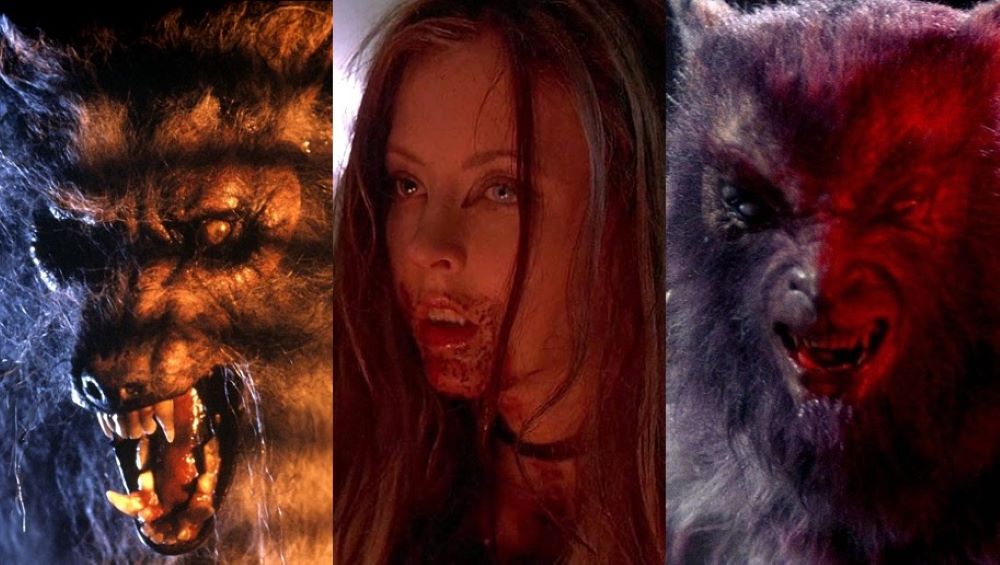
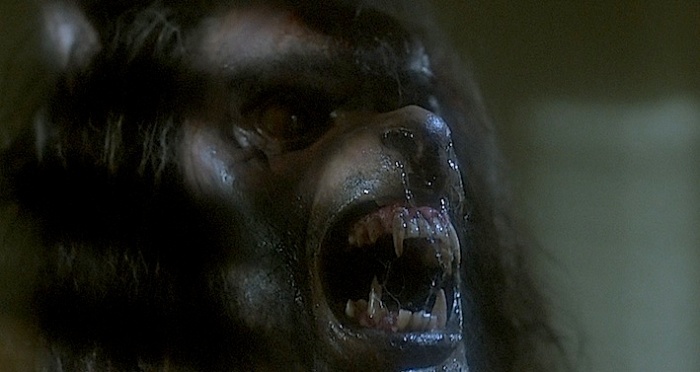
Werewolf (1997, directed by Tony Zarrindast)


An foul-tempered man named Yuri (Jorge Riverso) gets his hands on the skeleton of a werewolf that was discovered out in the middle of the Arizona desert.  Anyone who gets scratched by the werewolf’s skeleton is destined to transform into a werewolf themselves.

That’s not much of a plot.  This is the first time that I’ve come across the idea that touching a werewolf’s skeleton will also turn you into a werewolf.  It doesn’t make much sense but it does lead to a lot of scenes of Yuri creeping around and hitting people with pieces of the werewolf skeleton.  He’s working with an archeologist (Richard Lynch) who wants to capture a werewolf and then make money by displaying it in a freak show.  Unfortunately, almost everyone who gets touched by the werewolf skeleton dies shortly afterwards.

Other than Richard Lynch and Jorge Rivero, the only “name” actor in this movie is Joe Estevez, Martin Sheen’s look-alike brother.  Joe Estevez has the role that I guess would go to Daniel Baldwin if the movie were made today.  He stands around and yells.  Overall the acting is so poor that it’s often laugh-out-loud funny.  Adriana Stastny mutters, “This is absolutely fascinating,” in the dullest voice possible when she’s first told about how the skeleton can turn someone into a werewolf.  As for the werewolf, it’s appearance changes from scene-to-scene, making it next to impossible to actually follow the plot.

There’s  a reason why this movie is best-known for being used in an episode of Mystery Science Theater 3000.  Without Mike and the bots, it’s almost unbearably dull.  There’s nothing absolutely fascinating about it.

Under the Moon’s Shadow: The Many Faces of the Modern Werewolf in Cinema


“Beneath the full moon’s gaze, the werewolf’s howl reminds us that the monster we fear most lives within.”

Werewolves have been haunting movies for almost a century, capturing our deepest fears and hidden desires. But today’s werewolf films go beyond the classic horror formula, offering fresh takes that reflect different genres, tones, and cultural vibes. From the intense, action-packed Dog Soldiers to the emotionally charged coming-of-age story in Ginger Snaps, modern werewolf stories keep evolving. This piece explores five standout films—Dog Soldiers (2002), Ginger Snaps (2000), Wolfen (1981), The Howling (1981), and An American Werewolf in London (1981)—to see how they each put their unique spin on the age-old monster myth.

The Werewolf as Warrior: Dog Soldiers’ Brutal Siege

Neil Marshall’s Dog Soldiers breaks away from the lonely, tragic werewolf trope and cranks up the action. Set deep in the Scottish Highlands, it throws a squad of British soldiers against a ferocious pack of werewolves. This film turns the myth into a survival war story packed with tension and raw energy, reminiscent of classics like Aliens and Zulu. The werewolves here aren’t lonely victims—they’re terrifying predators, more beast than man, rarely fully shown to keep the suspense sharp. The movie focuses on the squad’s fight to survive and the bonds they share, putting teamwork and instinct front and center.

The werewolves are intentionally faceless threats, less about human drama and more about pure danger. Instead of personal transformation, Dog Soldiers is about external combat, the struggle between man and beast in its rawest form.

Adolescence Unleashed: Ginger Snaps and the Lycanthropic Metaphor

Ginger Snaps takes a totally different route, using werewolf transformation as a metaphor for female puberty and all the confusing emotions that come with growing up. The bridge between monster and metaphor is Ginger’s first period, which triggers her curse and mirrors the changes and fears of adolescence. The movie digs deep into sisterhood, identity crises, and the loss of control, wrapping its horror in psychological drama and dark humor.

Instead of flashy creature effects, Ginger Snaps keeps things subtle, focusing on emotional truth. It’s a personal story about change and fear of becoming “other,” making the monster symbolic of real-life struggles rather than just an external threat.

Urban Shadows: Wolfen’s Mystical Guardians of Decay

Wolfen stands apart for taking the werewolf myth into the world of urban decay and social unrest. Set in New York City’s rundown South Bronx, it follows detectives chasing a mysterious “Wolfen” creature tied to Native American spirituality. These aren’t just monsters—they’re ancient protectors fighting back against the destruction of nature by the city.

This movie trades fast-paced horror for slow-building atmosphere and social commentary. It uses the werewolf myth to reflect on displacement, environmental trauma, and the clash between nature and modern life.

Satire and Savagery: The Howling’s Shifting Tones

Joe Dante’s The Howling mixes body horror, camp, and satire in a way few horror movies do. The film tracks a journalist who stumbles upon a hidden werewolf colony and shifts effortlessly between chilling scares and self-aware humor. The transformation scenes set a new standard with unforgettable effects, and the movie sneaks in sharp critiques of media culture and cult mentality.

The werewolves in The Howling have a raw, animalistic design inspired by medieval art, which adds to the unsettling vibe. The film plays with expectations, flipping between serious horror and playful camp to keep viewers on their toes.

Tragedy and Humor: An American Werewolf in London’s Genre Fusion

An American Werewolf in London changed the game by blending horror, comedy, and tragedy all in one. It tells the bittersweet story of an American backpacker cursed after a werewolf attack in England. The special effects were groundbreaking, making the transformation scenes legendary. But more than the effects, its mix of sharp wit and real sadness gives it an emotional depth rare for horror films.

Unlike the external threats in Dog Soldiers or Wolfen, this film focuses on the inner turmoil of becoming a monster and the tragic human cost. The humor lightens the mood but never undercuts the emotional punch.

Thematic and Stylistic Divergence: A Closer Look

What stands out most when looking at these films is just how differently each approaches the werewolf myth, using it to tap into a wide variety of fears and ideas.

Tone and Mood

The films differ widely in tone. Dog Soldiers is intense and gritty, pulling viewers into a tense battle for survival marked by an unrelenting external threat. In contrast, Ginger Snaps is more reflective and symbolic, presenting the werewolf as a metaphor for adolescent change and identity struggles, especially in the context of female puberty. Its tone is intimate and emotionally charged.

Wolfen adopts a slower, more brooding atmosphere, emphasizing mystery and social critique through ecological and urban decay themes. The Howling fluctuates between genuine body horror and camp satire, challenging viewer expectations with its mix of fear and humor. Finally, An American Werewolf in London balances horror and comedy with a tragic undertone, creating an emotional complexity that few other werewolf films achieve.

Narrative Focus

The stories told by these films further highlight their differences. Dog Soldiers centers on a group dynamic, focusing on survival against a faceless external menace. Ginger Snaps is more inward-looking, exploring personal growth, family bonds, and the emotional upheaval of transformation.

Wolfen zooms out to look at social and environmental issues, making the werewolf a symbol of nature fighting back against urban chaos. Similarly, The Howling blends personal horror with cultural critique, exploring media obsession and cult psychology, all while keeping the story focused on its characters. An American Werewolf in London chooses to dive deep into one man’s tragic journey, showing the emotional impact of becoming a monster.

Cultural Themes

Together, these films show how the werewolf myth can reflect whatever fears or themes society is grappling with. Dog Soldiers taps into worries about survival and overwhelming outside forces; Ginger Snaps gets at the confusion and pain of growing up; Wolfen reflects alienation and environmental concerns; The Howling examines media hype and societal madness; and An American Werewolf in London highlights inner conflict and loss.

This broad range of themes and styles proves the werewolf legend is still incredibly adaptable—still a powerful way for films to engage with human experience in all its complexity.

Other Modern Werewolf Films in Context

Beyond these main works, many other films contribute to the werewolf legacy. The Company of Wolves (1984) explores gender and sexuality through fairy tale visuals. Silver Bullet (1985) adapts Stephen King for a small-town horror tale. Joe Johnston’s The Wolfman (2010) revives gothic horror with modern effects and includes standout makeup work by Rick Baker, delivering a visually rich yet emotionally complex take on the classic. Mike Nichols’ Wolf (1994) uses lycanthropy as a metaphor for aging and desire.

Most recently, Leigh Whannell’s remake of The Wolfman (2024) offers a fresh perspective on the myth, blending psychological horror with visceral transformation sequences. Whannell’s version emphasizes the protagonist’s internal struggle and familial curses within a contemporary setting, melding suspense with a nuanced character study and updated special effects to appeal to modern audiences while honoring the gothic roots.

Adding a lighter touch is The Monster Squad (1987), where a group of kids face off against classic monsters—including a reluctant Wolfman—in a mix of horror, adventure, and youthful courage. Its playful tone offers a nostalgic, fun take on the werewolf legend, proving that these creatures can captivate across genres and generations.

Together, these films highlight how the werewolf myth keeps evolving, adapting to reflect new cultural moments and storytelling styles.

Conclusion: Why the Werewolf Still Howls

The lasting power of werewolves in cinema lies in their extraordinary adaptability. These films show how the werewolf morphs to fit different narratives and cultural concerns: from brutal external threats in Dog Soldiers to metaphors for personal growth in Ginger Snaps; from mystical protectors in Wolfen to symbols of media mania in The Howling; and from tragic heroes in An American Werewolf in London to youthful adventurers in The Monster Squad.

The werewolf is not just a monster of flesh and fur but a cultural shape-shifter—malleable, symbolic, and endlessly fascinating. Its transformations mirror not only physical change but societal anxieties, personal struggles, and the complexities of human nature. This versatility guarantees the werewolf’s howl will echo across cinema for generations to come.

Horror On TV: Kolchak: The Night Stalker 1.5 “The Werewolf” (dir by Alan Baron)


What a day!

Hi, everyone.  If today’s horrorthon seemed to be missing some of the usual contributions, that’s because today has been a crazy day.  It’s been raining in Dallas since last Friday and it’s supposed to continue to do so for the next week.  This morning, the storms brought lightning and that lighting struck a building and set it on fire.  The building’s roof proceeded to collapse.  That building belonged to AT&T and it’s destruction let to what those of us in Dallas have christened the Great ATT Outage of 2018.

Basically, for the past 11 hours, the Texas Bureau of the Shattered Lens has had no internet access!  So, I’m sorry to say that I was not able to write and post all of the reviews that I wanted to post today.  I’ll have to play catch up later this week.  I do want to say thank you to Gary, Jeff, and Case for their contributions today!  It’s nice to know that you can depend on your partners in crime!

Fortunately, things are back up and running once again.  And just in time for me to share the fifth episode of Kolchak: The Night Stalker.  In this one, our favorite nervous reporter deals with a — you guessed it! — a werewolf!  This episode originally aired on November 1st, 1974.

Enjoy!

http://www.youtube.com/watch?v=dzJnB5mTZuY

Horror Scenes I Love: The Howling


TheHowlingI always thought that Joe Dante’s 1981 horror film, The Howling, has been overlooked just a little bit due to it’s release being the same year as John Landis’ own horror film, An American Werewolf In London. Both were werewolf films and both were good in their own right.

Dante’s film has been called silly by some critics, but it was the more serious of the two with Landis’ own film mixing in more black humor in the narrative than Dante’s which took on a more traditional approach to the werewolf horror. Even the transformation scene from both films took on opposite sides in terms of mood and tone. Where Landis’ film treated the scene with both a mixture of horror and camp (due to the music playing in the background) in The Howling the scene went for full-on horror.

This has been one of my favorite horror scenes and it’s all due to the work of the very person who made John Carpenter’s The Thing such a memorable piece of horror filmmaking: Rob Bottin.

This man should be handed every award for every effects work he has ever done and will continue to do. It’s a shame that he hasn’t done anything of note since 2002’s Serving Sara, but until Hollywood decides that if they want great practical effects paired with advancing CG ones and hire Bottin once again we can always fall back on his past work such as the one’s he did for The Howling.

Lisa Marie’s Grindhouse Trailers: The Supersized Richard Lynch Edition!


On June 20th, it was announced that the body of veteran character actor Richard Lynch had been found at his home.  Richard Lynch was never a household name but, if you’re a fan of exploitation and grindhouse cinema, you’ve probably seen him at least a few times.  He was the tall, blonde actor with the scarred face who was alway either killing people or having them killed.  Richard Lynch was one of those actors who, as soon as he showed up on-screen, you knew he was the bad guy. 

As an actor, Lynch always brought something special to even the simplest of his roles.  He was always the villain who you knew would probably easily kill the hero if the two of them ever met in the real world.  He was so good at being bad that you often couldn’t help but root for him. 

I first became aware of Richard Lynch when I bought a movie called Premonition on DVD.  This atmospheric 1976 film featured Richard Lynch in the role of a villainous yet oddly sympathetic carnival clown-turned-kidnapper.  When Lynch was on-screen, I literally could not look away.  Even better, the DVD included an interview with the now white-haired Richard Lynch in which he discussed his career.  Imagine my surprise to discover that this rather creepy and scary-looking actor was actually a very articulate and witty man.

A few days after I saw Premonition, I watched another 1976 film on DVD.  This one was Larry Cohen’s Gold Told Me To and, to my surprise, it also featured Richard Lynch. This time, he was cast as an alien messiah who inspired all sorts of mayhem in New York City.  From that moment on, Richard Lynch was one of my favorite of the old exploitation actors. 

After Richard Lynch’s body was found, there were several news stories that mentioned his passing.  Almost all of those stories repeated the story that Lynch’s distinctive facial scars were the result of him setting himself on fire as the result of bad LSD trip in 1967.  A few mentioned that he was a longtime friend of Al Pacino’s.  Most of them took a rather dismissive attitude towards the majority of Lynch’s films.

Over at the A.V. Club, a respectful article was posted and it was quickly followed by a bunch of snarky comments from the usual gang of toadsuckers, the majority of whom didn’t seem to know who Richard Lynch was (presumably because he never guest starred on Arrested Development).

In fact, it seemed like the only place that Richard Lynch got the proper amount of respect was on twitter.  And that’s a shame because an actor like Richard Lynch deserved a lot more.

The sad thing is that actors like Richard Lynch are rarely appreciated because elitist (and wannabe elitist) filmgoers and critics are rarely willing to admit that it does take a certain amount of talent to be an effective and memorable villain.  As an actor, Richard Lynch appeared in some good films and he also appeared in a lot of very bad films but he always gave a good performance.  Unlike so many other actors, he never used subpar material as an excuse to give a subpar performance.  Regardless of the films he found himself in, he always gave it his best and that’s why this super-sized edition of Lisa Marie’s Favorite Grindhouse and Exploitation Trailers is dedicated to Richard Lynch.

1) God Told Me To (1976)

Arguably, this film from director Larry Cohen was the best movie that Richard Lynch ever appeared in.  Though he doesn’t get a lot of screen time in either the film or the trailer, he easily dominates both, if just for the fact that Lynch plays the God of the title.

2) Deathsport (1978)

Richard Lynch vs. David Carradine.

3) The Sword and The Sorcerer (1982)

Though I haven’t seen it, this film is a favorite of many of my fellow contributors here at the Shattered Lens.

4) Cut and Run (1985)

This film was directed by Ruggero Deodato and apparently, it gained a certain amount of fame after it was banned in several countries.  I’ve seen it on DVD and all I can say is that this is one of the most misleading trailers ever made.  However, this film also features one of Richard Lynch’s most intimidating performances.

5) Savage Dawn (1985)

For some reason, I doubt that the character being played by Richard Lynch is a real priest.

6) Invasion USA (1985)

Judging from the response to Richard Lynch’s death on twitter, this Chuck Norris movie might be the film that he’s best known for.

7) The Barbarians (1987)

This film, which appears to feature Richard Lynch in full villain mode, was also directed by Ruggero Deodato.

8) Bad Dreams (1988)

Richard Lynch is all sorts of creepy in this trailer.  Knowing about his own true life story makes this trailer all the more odd to watch.

9) Trancers 2 (1992)

Helen Hunt’s in this?

10) Werewolf (1996)

This one looks like fun, to be honest.

11) Wedding Slashers (2006)

“Til death do us part…”

12) Mil Mascaras Vs. The Aztec Mummy (2006)

Finally, let’s finish things up with the trailer for this Mexican film in which Richard Lynch was cast as the President of the United States.

Richard Lynch, R.I.P.

Felicia Day to be SyFy’s Re-Imagined Red Riding Hood


News which may just strike some genre and geekdom fans blind with excitement it look like Dr. Horrible and The Guild star Felicia Day has been tapped to portray the descendant of Little Red Riding Hood in the SyFy Channel’s re-imagining of the Red Riding Hood tale.

SyFy has already done their re-imagining of the Wizard of Oz with Tin Man a couple years ago and have made it known that they will do similar re-imagining’s of classic fairy tale stories with Red their version of Little Red Riding Hood. Ms. Day will play one of Riding Hood’s werewolf-hunting descendants whose family shares the same proclivity to hunting the shapeshifting beasts. Her character of Red brings home her fiance to meet the family but who remains skeptical of their lineage and their werewolf-hunting sidejobs. That is until he himself gets bitten by one of the beasts and now must try to stay away from Red’s family who know what must be done. Red must try and save her man against his curse and her family.

While Ms. Day has had success starring in two of the web’s most popular and successful online series with Joss Whedon’s Dr. Horrible and her own The Guild, SyFy’s Red marks her first lead role in a production in film and tv. Here’s to hoping this is the sign of better things to come for the internet’s redhead darling.

Source: TV by The Numbers