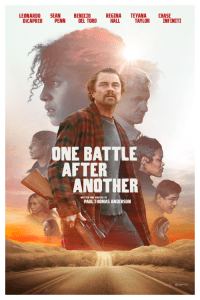
I had a moment in the theatre that felt like an inside joke shooting over my head. In the scene, our villain is given in invitation to a club, which caused my audience to snicker and chuckle. That was the only slightly uncomfortable moment I had with Paul Thomas Anderson’s latest, One Battle After Another. Did they all know something I didn’t?
One Battle After Another, is incredibly impressive from start to finish. It may be one of the first few films I’ve watched this year to give Ryan Coogler’s Sinners a run for it’s Awards Season money (which is a short list that only currently includes Zach Cregger’s Weapons and maybe Pierre Perifel’s The Bad Guys 2). The film reaches heights of craziness and comedy that’s on par with some of the Coen Brothers best works (there’s a lot of The Big Lebowski in it), while still being serious and tense enough to find yourself worrying about all of these characters and their possible outcomes. Much like Pynchon’s and Anderson’s Inherent Vice, it’s got a good mix of seriousness and comedy. I scooped it up the moment it hit digital and have watched it about 3 more times since then (though not as much as my locked-in film for the year, William Freidkin’s Sorcerer, a discovery that’s been a comfort food rewatch for stressful days).
Based off of Thomas Pynchon’s novel “Vineland”, One Battle After Another is the story of Bob Ferguson (Leonardo DiCaprio, Once Upon a Time in Hollywood) an alcohol addled stoner that just wants to get through the day. There was a time when Bob was involved in dangerous and violent acts when he was with the group “The French 75”. but he puts this behind him after the birth of his daughter, Willa (Chase Infiniti, TV’s Presumed Innocent). Willa doesn’t fully believe all of her father’s stories, and perceives him as a waste of space. It all takes a turn when an old enemy, Captain Steven J. Lockjaw (Sean Penn, reuniting with Anderson from Licorice Pizza) puts them in his crosshairs. Can Bob keep Willa safe while being almost completely lost? In the end, beyond the violence and the images that reflect some of today’s times, my takeaway was that it was just a story about parenthood. Some rise up for the challenge, and others shirk the responsibility. It’s a Dad trying to climb out of the hole he put himself in to protect his daughter. I feel that’s an honorable thing, even if some of the actions to get there may not be right or “on the level”.
From a production standpoint, One Battle After Another is rich with scenes and sequences that shift between classic steady shots to kinetic one shots. Michael Bauman, who was also the cinematographer for Licorice Pizza, has some amazing camera work here, especially in the film’s third act. For a film that runs about 2 hours and 40 minutes, it’s a smooth flowing film. There’s a classic line by David Lynch (Bless the Maker and his film stock) in the Fabelmansregarding the use of the horizon that really gets put to the test in One Battle After Another. It’s a sequence that on the big screen really felt amazing, and makes me regret not catching the film in the 70 MM format.
The performances are fantastic all around and it’s so surprise that most of this cast are up for the Golden Globes next January. DiCaprio plays Bob like a mix of Jeff Lebowski meets Jack Burton, kind of just stumbling through it all. He carries it easily and throws himself full force into the role. As great as he is in all this, everyone else from Teyana Taylor’s (Coming 2 America) fiery Perfidia Beverly Hills to Benecio Del Toro (Sicario) calm as hell Sensei (who picked up the most audience applause) kind of steal the show here. Even Alana Haim was good to see there, though she doesn’t have that big of a part this time around. It’s Sean Penn’s Steven J. Lockjaw that comes off wild and crazy. He did a fantastic job with the character, though I’m not sure I want him to actually win anything. That role really was wicked, which is perhaps a testament to how good he was.
The only element of the movie I had a problem with was the music. Radiohead’s Jonny Greenwood, who’s scored most of Anderson’s films, has some strange melodies in the film. Some come across sounding like the Wicked Witch of the West in the Wizard of Oz, but I will say it does make sense for most of the movie. Jon Brion (Magnolia) also has two great pieces of music for the film that aren’t on the movie’s soundtrack. They can be found if you search for them.
Overall, I truly enjoyed Paul Thomas Anderson’s One Battle After Another. I really have to work on going through the rest of his films, like Boogie Nights and Phantom Thread at some point.
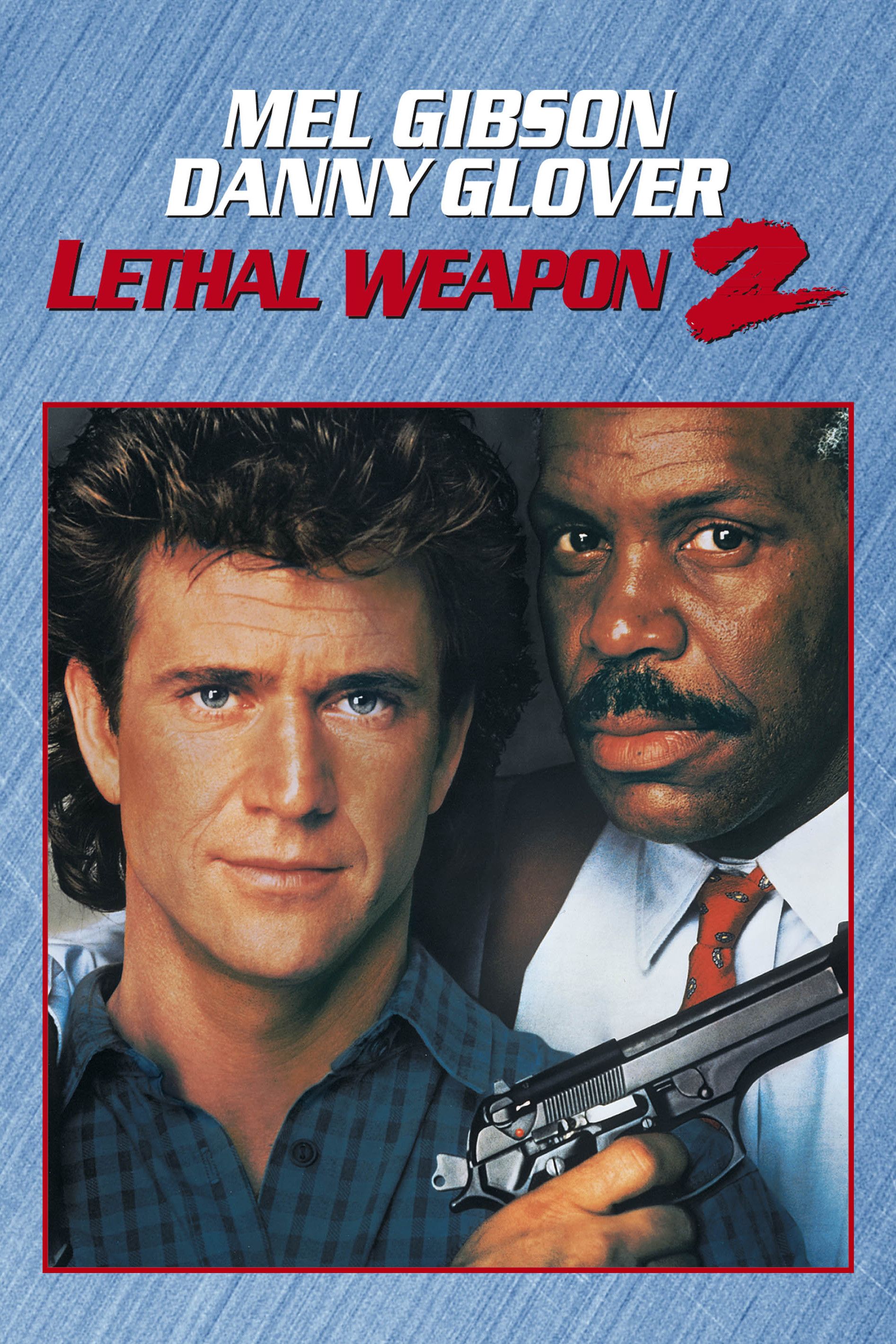
Lethal Weapon 2 is the kind of sequel that doesn’t really try to reinvent what worked the first time so much as crank the volume on everything: the action is bigger, the jokes come faster, and the chaos feels almost constant. Depending on what you loved about Lethal Weapon, that approach delivers more of the high-energy partnership in a flashier package. It’s a confident, very entertaining 80s action movie that knows it’s a sequel and leans into the spectacle that status allows.
Plot-wise, Lethal Weapon 2 wastes no time reminding you what this world feels like. It drops Riggs and Murtaugh into a wild car chase almost immediately, and from there the story locks onto a case involving South African diplomats hiding behind apartheid-era “diplomatic immunity” while running a massive drug and money-laundering operation. It’s a cleaner, more high-concept hook than the original’s murkier web of Vietnam vets and heroin smuggling, and the script makes the villains broad on purpose, almost cartoonishly arrogant, to give the audience someone very easy to hate. The trade-off is that the plot feels a bit more mechanical this time; you always know who the bad guys are and what the destination is, so the film’s real energy comes from the detours, jokes, and set-pieces rather than any mystery.
One of the big shifts from Lethal Weapon to Lethal Weapon 2 is tone. The first film balanced brutal violence and dark humor with a surprisingly heavy focus on Riggs’ suicidal grief and Murtaugh’s fear of getting too old for the job. The sequel keeps those elements in the background but leans harder into banter, slapstick timing, and outrageous gags like the now-famous exploding toilet sequence, with Richard Donner’s direction pushing the script toward action comedy. It’s still R-rated and not shy about blood or cruelty, but the emotional intensity is dialed down compared to the original’s raw edges.
Mel Gibson and Danny Glover remain the anchor, and their chemistry is as sharp as ever. Gibson’s Riggs is still reckless and unhinged, but there’s a looser, more playful side to him this time; he’s less haunted and more of a live-wire prankster until the story gives him something personal to latch onto. Glover’s Murtaugh continues to be the grounded center, constantly exasperated and always half a step away from just walking off the job, and the film has a lot of fun putting his straight-man persona through increasingly humiliating situations while still letting him be competent when it counts. Compared to the first film, where their partnership slowly thawed from suspicion to genuine trust, Lethal Weapon 2 starts from “these guys are already a team” and builds its best moments from how comfortably they now bounce off each other.
The biggest new ingredient is Joe Pesci as Leo Getz, a federal witness turned tagalong who basically functions as the franchise’s third stooge. Pesci leans into the motor-mouthed, paranoid, endlessly complaining energy that would become his signature, and his presence tips some scenes from gritty cop story into broad comedy. He undercuts tension at times, but he also gives the movie a different rhythm, especially in the quieter in-between beats where the first film might have lingered more on Riggs’ inner damage.
In terms of action, Donner clearly has more money and confidence to play with, and it shows. The chases are bigger, the shootouts are staged with a slicker sense of geography, and there’s a steady escalation in scale that makes the film feel like a genuine summer sequel rather than just another mid-budget cop movie. The original had a grimy, street-level intensity, with brutal fistfights and sudden bursts of violence; Lethal Weapon 2 is more interested in creative set-pieces, crowd-pleasing payoffs, and moments designed to make an audience cheer. It’s less intimate, but it is rarely dull.
Where the film lands in a more complicated space is its attempt to keep some emotional stakes alive while also going bigger and funnier. Riggs’ grief over the loss of his wife is still part of his character, and the story finds ways to poke at that wound again, including a new relationship that lets him imagine some kind of future beyond the constant death wish. Those beats are there to echo what worked so well in the first movie, but they have less room to breathe, often getting squeezed between an action scene and a joke instead of shaping the entire film’s tone. You can feel the push and pull between wanting to keep the darker emotional spine and delivering the kind of lighter, more easily marketable sequel a studio would understandably chase.
The villains themselves are effective in that pulpy 80s way: not nuanced, but very punchable. Arjen Rudd, with his smug talk of “diplomatic immunity,” is a villain designed to make audiences grind their teeth, and his main henchman adds a physically intimidating, quietly sadistic presence to the mix. Compared to the original’s more grounded ex-military antagonists, these guys feel one step closer to Bond territory, and that shift mirrors the film’s overall move toward heightened, almost comic-book stakes. What the sequel loses in plausibility, it gains in revenge-fantasy satisfaction.
When stacked directly against Lethal Weapon, the second film feels like a classic case of “if you liked hanging out with these characters once, here’s more time with them.” The original is tighter, more emotionally focused, and arguably more distinctive, with a stronger sense of danger and genuine unpredictability around Riggs’ mental state. Lethal Weapon 2 smooths some of those jagged edges and replaces them with quips, bigger set-pieces, and a more overtly crowd-pleasing structure, which makes it an easier, more consistently fun watch but also a slightly less resonant one. It is still a good film, but in many ways it is also the moment where the franchise shifts from a character-driven cop thriller with action to a full-on action-comedy machine.
As a fair, middle-of-the-road assessment, Lethal Weapon 2 works very well on its own terms and delivers exactly what most people want out of a late-80s buddy-cop sequel. The chemistry is intact, the action is energetic, and the film moves with the kind of confident pace that never really lets you get bored. At the same time, the tonal tilt toward broader humor and more cartoonish villains means it doesn’t quite have the same staying power or emotional punch as Lethal Weapon, especially if what hooked you the first time was how wounded and volatile it all felt. For fans of the original, it’s an enjoyable continuation—a louder, flashier second round that may not hit as hard, but still knows how to entertain.
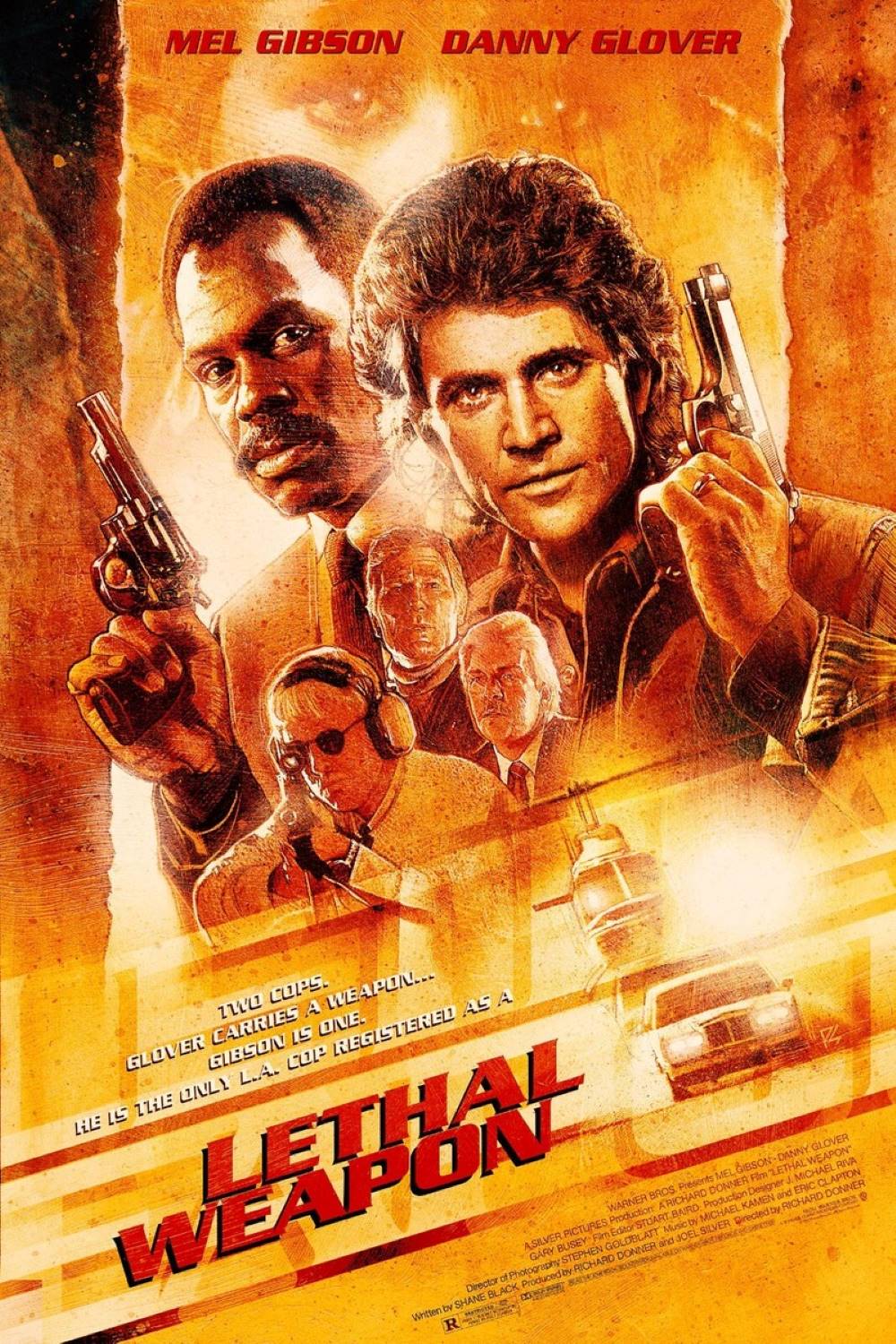
Lethal Weapon is one of those action movies that looks like pure genre formula on paper but somehow plays like lightning in a bottle on screen. From the opening moments, it feels like a film that knows exactly what kind of ride it wants to deliver and leans into that mission with confidence, attitude, and just enough heart to make the bullets and explosions actually matter.
The premise itself is as straightforward as they come, and that simplicity is part of the charm. Martin Riggs is the textbook “cop on the edge,” a former special forces sniper whose life has completely fallen apart after the death of his wife. He’s volatile, depressed, and teetering on the edge of suicidal, which gives everything he does an extra layer of danger. On the other side of the pairing is Roger Murtaugh, a seasoned detective staring down his 50th birthday, trying to balance a long career in homicide with the quiet, constant pull of his family at home. When these two are thrown together and assigned to a case involving drugs, dead bodies, and shady ex-military criminals, the story plays out across familiar beats: suspicious deaths, escalating confrontations, close calls, and a trail that leads them deeper into a dangerous operation. The crime plot is pulpy and direct rather than twisty, but the film uses it as a sturdy framework rather than the main point of interest, keeping the investigation moving while the characters come into focus. Much of that sharp setup and snappy progression comes from Shane Black’s script, which crackles with knowing genre savvy, pitch-perfect banter, and a keen eye for how personal pain fuels action-hero antics.
What really makes Lethal Weapon feel alive is how much time it spends letting Riggs and Murtaugh exist as people before they fully morph into the “classic duo” that pop culture remembers. The film doesn’t rush past the small stuff. Riggs is introduced living in a rundown trailer on the beach with his scruffy dog for company, drinking and stumbling through life with the casual recklessness of someone who genuinely doesn’t care if he sees tomorrow. Those early moments of him alone, flirting with self-destruction, give his later heroics a sense of tragic context: he’s not just fearless, he’s half-convinced he has nothing left to lose. Murtaugh’s introduction is a complete contrast: a crowded home, kids, a loving wife, and the kind of loud, chaotic domestic life that’s full of relatable irritation and warmth. Seeing him grumble through birthday milestones or awkwardly handle family situations does more for his character than any speech about his years on the force could. These slices of everyday life build a strong emotional foundation so that when the bullets start flying, there’s something at stake beyond catching bad guys. Black’s writing shines here, weaving those intimate details into the thriller beats without ever feeling forced or preachy.
The chemistry between Mel Gibson and Danny Glover is the film’s true secret weapon. Gibson plays Riggs as an unpredictable live wire, able to flip from goofy physical comedy to chilling seriousness in an instant. He sells the idea that this is a man barely keeping it together, yet still razor-sharp when it comes to the job. There’s a constant sense that his jokes and antics are a flimsy barrier over something very raw. Glover, by contrast, keeps Murtaugh grounded and human; his performance is packed with little sighs, muttered reactions, and weary facial expressions that speak volumes. He comes across as a guy who has seen too much, loves his family, and genuinely wants to do the right thing, but is exhausted by how hard that is in practice. Their initial friction hits the expected “mismatched partners” beats: Murtaugh thinks Riggs is unstable and dangerous, while Riggs treats Murtaugh like a fussy old man who doesn’t get it. Yet as they move through stakeouts, interrogations, and gunfights, their banter evolves from pure irritation into an easy rhythm filled with barbs, mutual respect, and eventually real affection. Shane Black’s dialogue is the glue for all of it—witty, profane, and laced with just enough vulnerability to make the laughs land harder and the tension feel real.
Richard Donner’s direction is a huge part of why all of this clicks as well as it does. He has a knack for blending big, commercial genre instincts with an eye for character detail, and Lethal Weapon is a textbook example of that balance. He stages action scenes with clear geography and rhythm, so even when things get loud and chaotic, you always know where you are and what everyone is trying to do. At the same time, he’s just as interested in the quiet beats: a pause on Riggs’ face after a joke lands flat, Murtaugh’s body language when he walks into his noisy home after a brutal day, the way a conversation in a car can shift from banter to confession in a couple of lines. Donner keeps the film moving at a brisk pace, but he knows when to let a shot linger or a silence hang long enough to tell you what the characters can’t quite say out loud. His tonal control—jumping from dark to funny to tense without completely losing the thread—is a big reason the movie doesn’t collapse under its own genre juggling, and it pairs beautifully with Black’s script that sets up those shifts so precisely.
Tonally, Lethal Weapon walks a tricky line, and that’s a big part of its identity. On one hand, this is a story with genuinely dark undercurrents. Riggs’ suicidal impulses are not a throwaway character quirk; the film gives time to scenes where he nearly acts on them and struggles in a very raw way with his grief and loneliness. The case they’re working breaks open into territory involving drugs, exploitation, and violence that’s sometimes nasty rather than cleanly heroic. On the other hand, the film is full of humor, ranging from quick one-liners to broad physical bits. The Murtaugh household provides a lot of that levity: awkward conversations with his kids, Riggs stumbling through family dynamics, and the contrast between domestic calm and the chaos of the streets. The movie often jumps from heavy emotional beats to comedic ones and back again, and while the transitions can be abrupt, that mixture is part of what keeps it from feeling like just another grim cop story. The laughter doesn’t erase the darker material, but it does give the movie a sense of momentum and charm that keeps it entertaining instead of oppressive. Black’s screenplay nails this push-pull, using humor as both release valve and revelation.
As an action film, Lethal Weapon delivers a steady run of sequences that are energetic, clear, and tactile. The action is built around physical stunts, dangerous-looking falls, and gunfights that feel chaotic without becoming incoherent. One memorable sequence has Riggs dealing with a jumper on a rooftop in a way that instantly tells you everything about his mentality and willingness to risk himself. Another set piece in a more open, exposed environment lets the film escalate tension step by step before violence finally erupts. Through it all, Donner keeps a strong sense of spatial clarity; you can track where the characters are, what they’re trying to do, and how each decision raises the stakes. The fights feel scrappy and painful rather than overly slick, and that slightly rough quality actually works in the movie’s favor, making each impact land harder. Riggs, especially, moves like a human weapon, hurling himself into situations with a recklessness that ties directly into his psychological state, all fueled by Black’s clever plotting that makes those risks feel personal.
Underneath the gunfire and explosions, there’s a surprisingly sturdy emotional core tying everything together. Riggs’ grief isn’t just window dressing; it’s the lens through which his every decision makes sense. The movie doesn’t lecture you about what he’s feeling, but it shows it—through quiet moments alone, through the anger that erupts at all the wrong times, and through the way he throws his body into danger almost as if daring the world to take him out. Murtaugh’s arc is more subtle but still strongly drawn. He’s at an age where he has to confront the reality that he can’t keep pace with younger, more reckless colleagues forever, and yet his sense of duty keeps pulling him into situations where his family might lose him. Throughout their investigation, Murtaugh’s protective instincts—toward his loved ones, toward Riggs, and toward innocent people caught in the crossfire—become as important as his skills as a detective.
The relationship that develops between Riggs and Murtaugh is the heart of the film and the main reason it sticks in the memory. At first, Murtaugh just wants to survive partnering with a man he genuinely believes might be unhinged, while Riggs seems to treat their pairing as just another chaotic twist in a life already off the rails. As they trade confessions, back each other up in tight spots, and slowly understand what the other is carrying, their bond shifts into something like brotherhood. Murtaugh becomes a kind of anchor for Riggs, offering not just backup in a fight but also a place at the table, both literally and figuratively. Riggs, in turn, forces Murtaugh out of his comfort zone, reminding him that he still has plenty of courage and fire left in him. The film doesn’t turn their connection into a sentimental soapbox, but it lets small moments—a shared laugh after a narrow escape, a quiet conversation after the chaos—do the emotional lifting, with Black’s words giving those scenes their understated power.
If there’s a clear weak spot, it’s that the villains are fairly thinly drawn, operating more as looming threats than fully realized characters. They are dangerous and organized, capable of serious brutality and clearly involved in serious criminal operations, but the movie doesn’t spend much time exploring their motivations or inner lives. They’re the kind of antagonists designed to be obstacles: formidable enough to make the heroes’ victories feel earned, but not so complex that they distract from the central duo. For a character-driven action film, that trade-off mostly works. When Lethal Weapon is firing on all cylinders, the tension doesn’t come from wondering what the bad guys will do next so much as from seeing how Riggs and Murtaugh will handle whatever gets thrown at them and what that reveals about who they are.
Structurally, the film keeps a tight pace, always nudging the story forward even when it pauses for character beats. Expository scenes rarely feel like dry info dumps; they’re often laced with jokes, personal jabs, or subtle shifts in how the two leads relate to each other. The downtime moments—a quiet drink, a shared meal, a conversation in a car between partners who would rather pretend they’re fine—are as important as the louder ones. By the time the case ramps up to its most intense passages, there’s been enough time with these characters to care less about the mechanics of the plot and more about whether these two damaged, stubborn men can come out the other side with something to hold onto.
What ultimately makes Lethal Weapon work so well is that it doesn’t settle for being just a checklist of genre requirements. Yes, it has gunfights, dark humor, car chases, and tough-guy posturing. But wrapped around all of that is a story about grief, aging, loyalty, and how unlikely partnerships can change the trajectory of a person’s life. Donner’s steady hand behind the camera, Shane Black’s razor-sharp script, and the powerhouse performances turn what could have been a forgettable cop thriller into something much more memorable. For anyone who enjoys action movies that care as much about the people pulling the triggers as the bullets they fire, Lethal Weapon stands out as a defining entry in the buddy-cop mold, powered by the messy, heartfelt dynamic at its center and the sure-footed craftsmanship that brings it all together.
“We’ve got to start thinking beyond our guns. Those days are closin’ fast.” — Pike Bishop
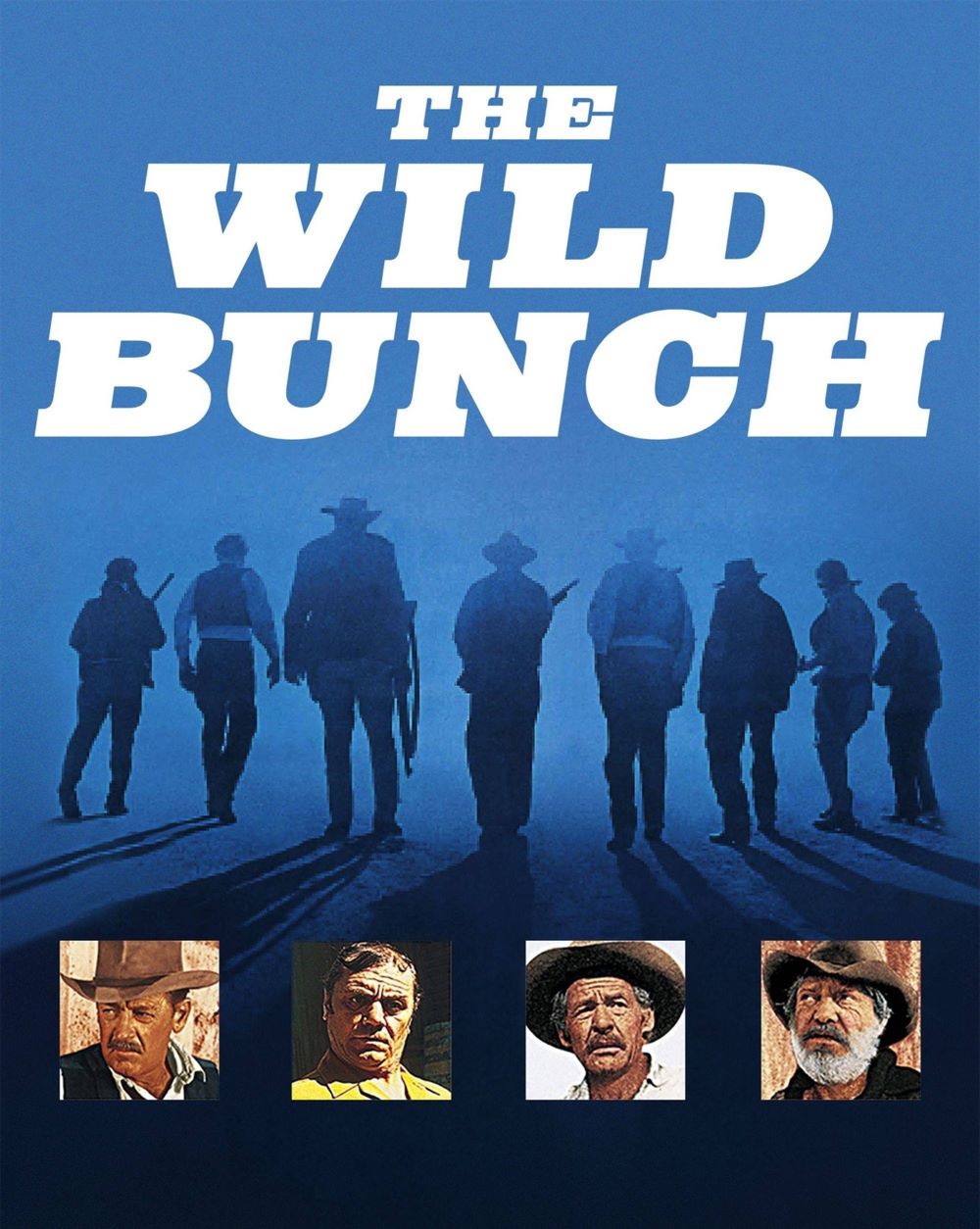
Sam Peckinpah’s The Wild Bunch stands out as a landmark in the Western genre, famous for its daringly harsh depiction of both violence and the fading mythos of the American West. Rather than following the traditions of earlier Westerns, the film presents a gritty portrait of aging outlaws on the edge of extinction, wrestling with a society that has evolved past them. It’s a movie that’s difficult to shake, both for its unapologetic style and the unresolved feelings it leaves long after the final shots ring out.
At its core, the story centers on Pike Bishop and his band—a crew of seasoned criminals aiming for one last grand heist as modernity encroaches on their world. Hoping to pull off a train robbery, they end up entangled in deeper complications after being betrayed and soon are thrust into the turbulence of the Mexican Revolution. Peckinpah builds a narrative where clear-cut morality falls away. The criminals and those pursuing them, supposed bringers of justice, are equally compromised and dangerous. This balancing act challenges the audience to reassess their sympathies, since the characters rarely line up as traditional heroes or villains.
The film’s notoriety is inseparable from its treatment of violence. In an era when Westerns often depicted gunfights as almost bloodless, The Wild Bunch arrived blazing with slow-motion fatalities, realistic wounds, and chaos that feels nearly documentary. Peckinpah didn’t intend to sugarcoat death; the film’s fight scenes are designed to unsettle rather than thrill, making viewers register the true cost of violence on screen. The movie’s most infamous sequences, particularly the opening and closing shootouts, still provoke debate over whether their artistry justifies their brutality. Peckinpah reportedly wanted to expose the real consequences of violence, not celebrate them, and the resulting imagery remains both striking and disturbing decades later.
Beyond its bloodshed, the film is packed with melancholy, exploring the futility and obsolescence of its central figures. The Wild Bunch themselves—Pike, Dutch, Lyle, Angel, and others—all feel the weight of their era’s end. They are not just outdated in terms of time; their entire way of life has been mechanized and modernized beyond their grasp. The film depicts this through powerful imagery, from horses being supplanted by cars and trucks to rifles giving way to machine guns. This mechanization highlights that Pike and his men live in a world that has moved on, leaving them behind. Their code of honor and rough camaraderie are relics in a brutal, mechanized landscape that favors efficiency and merciless violence. The emergence of rapid-fire weaponry and vehicles is more than a backdrop; it symbolizes their growing irrelevance and the passing of a wild, untamed frontier.
Technically speaking, The Wild Bunch is as impressive as it is influential. The cinematography captures wide Mexican landscapes with dust and sunlight, conveying both beauty and bleakness. The editing—particularly in the action scenes—was ahead of its time, with its expressive use of multiple camera angles and slow-motion adding an almost ballet-like rhythm to chaotic violence. The music, a mix of Jerry Fielding’s score and traditional Mexican songs, deepens the film’s sense of place and loss. All of this technical prowess merges in set pieces that are still studied by action directors today.
One of the film’s most enduring legacies is its profound influence on a slew of filmmakers in the years following its release. Directors like Martin Scorsese, Quentin Tarantino, and John Woo have all cited The Wild Bunch as a key inspiration, particularly in how it reshaped the depiction of violence and complex characters onscreen. Peckinpah’s innovative use of slow motion during action scenes transformed gunfights into sequences that feel almost balletic, bringing an eerie beauty to brutality. This technique became a hallmark of John Woo’s work, where slow-motion shootouts are choreographed with a dance-like precision, making the violence stylized yet emotionally impactful. Meanwhile, Scorsese and Tarantino embraced the moral ambiguity and character complexity Peckinpah championed, pushing their own stories beyond clear-cut good and evil. Through these directors and many others, The Wild Bunch continues to resonate and shape modern cinema.
The performances in The Wild Bunch are integral to its powerful impact, with its ensemble cast bringing layered humanity to otherwise rough, sometimes brutal characters. William Holden leads as Pike Bishop with a mix of weary charisma and existential urgency, embodying a man caught between the fading wild past and a ruthless present. Holden’s Pike is not just a leader of outlaws, but a man wrestling with his own moral contradictions—as loyal and protective as he is capable of cold violence. This complexity allows the character to stay compelling rather than becoming a cliché tough guy.
Ernest Borgnine as Dutch Engstrom offers a grizzled, weary presence, conveying the toll that years of violence have taken on his spirit, while Warren Oates imbues Lyle Gorch with a volatile and rebellious energy that adds tension within the gang. His brother, Tector Gorch, played by Ben Johnson, brings a contrasting steadiness, portraying a man caught between loyalty and survival. Robert Ryan’s portrayal of Deke Thornton, the relentless bounty hunter, stands out as a tragic figure torn between his past friendship with Pike and his duty. This character conflict gives the story a deeper emotional layer and adds weight to the relentless pursuit central to the plot.
Supporting performances by Edmond O’Brien as Freddie Sykes and Jaime Sánchez as Angel enrich the group dynamic, each adding distinct personality traits that feel authentic and lived-in. The chemistry between the cast helps ground the film’s heavy themes in real human experience, making the characters’ struggles with obsolescence and loyalty resonate beyond the screen.
However, despite the strong male performances, the film’s treatment of female characters is notably sparse and limiting. Women in the film often fall into marginal roles, lacking development or agency, which reflects the gender dynamics of many Westerns from the era but feels particularly dated today.
For viewers seeking straightforward heroism or moral clarity, The Wild Bunch can be a challenging experience. Its bleak, nihilistic worldview and refusal to deliver easy answers may leave some feeling drained. The story culminates in a violent, unresolved climax with no tidy resolution, emphasizing loss and the end of an era. But it is precisely this rawness and technical mastery that keep the film compelling and worthy of close viewing.
The Wild Bunch demands you shed simple notions of good versus evil and prepare for a rough, often brutal ride. It’s a story about men fighting not just other men but inevitability—caught between their own fading values and the relentless march of modernization and change. Peckinpah doesn’t offer comfort; instead, he forces the viewer to reckon with violence’s cost and the price of nostalgia. Even with all its grit and flaws, the film’s artistry and influence remain undeniable, securing its status as a masterwork that redefined Westerns and action cinema alike. It’s a wild ride that continues to inspire and provoke long after the credits roll.
I stumbled on the full trailer for James Gunn’s Superman by accident today, as I was looking for background music to play while handling some apartment chores. I don’t know why IGN has this first and not the Warner Brothers YouTube Channel, but it’s not a “Concept” trailer.
I don’t know if I’m fully sold on this. It definitely feels a bit lighter compared to earlier presentations of the character. I do like David Corenswet’s approach (via Gunn’s writing/direction), though I thought he did a great job in Ti West’s Pearl and in Twisters. It definitely looks like there’s a great deal going on here, and the Man of Steel has quite a bit of backup to help him out.
We’ll all find out on July 11, when the film premieres in theatres.
The trailer for Denis Villeneuve’s Dune Part Two was just released. We’re seeing some new faces in Florence Pugh as Princess Irulan, Austin Butler as Feyd, Lea Seydoux as Lady Margot and Christopher Walken as the Padishah Emperor Shaddam IV. I like Javier Bardem’s Stilgar telling Paul to “Keep things simple.” here. So far, it’s looking good!
I slept on it before writing this, to let the euphoria pass.
Matt Reeves’ The Batman surprised me in a number of ways, some of which can’t be mentioned without throwing spoilers. I’ll perhaps write a second piece on this, but for now, understand that this film has effectively pushed The Dark Knight to the side as my favorite live-action Batman film (The Lego Batman Movie stands on a pedestal all it’s own above all the rest). My favorite Batman stories are the detective tales. Gotham by Gaslight. The Long Halloween. Hush.
On film, the Caped Crusader has moments of investigation, but they often took a backseat either to the action or the resolution came as quickly as a Batcomputer search. For me, The Batman had closer ties to films like David Fincher’s Seven, Alan J. Pakula’s Klute, Bruce Malmuth’s Nighthawks, and even Shane Black’s The Nice Guys to some degree. It does all this legwork while finding a way to avoid giving us the same clip of the Monarch Shooting of the Waynes. That alone is worth it for me. This is Batman. After more than 9 films, you’d be hard pressed to find anyone on the planet younger than maybe six who doesn’t know how he got that way.
Living in NYC, I can relate to Gotham City. On the surface, it’s beautiful. For those who can afford it, there are tons of amenities available to its citizens. Peel back that layer, though, and you’ll always have Crime in a city holding 9 million people. It’s a constant as rain. Gotham City is on the verge of breakdown. Looking at the torn poster filled streets and I was reminded of a cross between Walter Hill’s Streets of Fire and Alex Proyas’ The Crow .and the way most of Manhattan looks now with it’s closed down stores. The city almost serves as a character itself in The Batman. It’s a throwback to some of the classic black and white detective movies my parents grew up on like 1947’s Kiss of Death. For all his gadgets and resources, there’s an argument suggesting the Batman can never really save his beloved city, though we love his efforts.
“Forget it, Bruce. It’s Gotham.” one might as well say.
Visually, the movie is a little dark, but that makes sense given the tone of the film. Cinematographer Greig Fraser (Dune, Zero Dark Thirty) is somewhat new to me, but I’m liking his work, which felt a little like Janusz Kaminski’s Lost Souls. It wasn’t dark to the point where I couldn’t make out elements (and I was sitting in the front row, far left side in my theatre), I’ll say that much. I’ll keep an eye on him in the future.
The Batman takes place in our hero’s second to third year, according to an early narration (much like Blade Runner). Batman has a good rapport with Lt. James Gordon (Jeffrey Wright, No Time to Die) and his butler, Alfred (Andy Serkis, reuniting with Reeves since Dawn of the Planet of the Apes), for the most part, there are some results. Criminals flee when the bat symbol shines in the night sky, because no one really knows where The Dark Knight will strike. A new murder brings both Gordon and the Batman into play, as his opponent leaves various riddles for them to solve. The mystery brings Batman into various circles, including those of Selina Kyle (Zoe Kravitz, Kimi), crime boss Carmine Falcone (John Turturro, The Big Lebowski) and Oz (Colin Farrell, The Gentlemen). They all bring in great performances, including Peter Sarsgaard (Green Lantern), but it’s Paul Dano (Ruby Sparks, There Will Be Blood) who really runs away with things as The Riddler. I’ve never considered The Riddler to be a creepy villain, but this was quite dark, even for DC’s standards. I can’t imagine how it would have turned out if this was a Rated R film. I’m really curious to know.
Lt. James Gordon (Jeffrey Wright) and The Batman (Robert Pattinson) do some Detective work in Matt Reeves’ The Batman
Bruce Wayne has never been an easy character to handle on screen.
There are whole books written on the Psychology of the Batman. Here you have an individual who witnessed his parents being murdered as a kid and grows up in a near empty mansion with butlers and maids. The individual decides to dedicate his life (and vast resources) to studying criminal investigation techniques, martial arts and even Ninjitsu for a singular focus: To rid Gotham City of Crime. Add to this the concept of instilling fear in one’s enemies, and dressing up like a Bat to pummel thugs with fists and gadgets just adds to Wayne’s madness. Pattinson honed in on this and turns Bruce Wayne into a pretty isolated and brooding individual. For someone with nearly unlimited resources, he doesn’t seem happy with any of it at all. At least Keaton pretended to party and Clooney’s Wayne truly did party. Bale’s Wayne let Fox focus on research and development. Hell, even Affleck’s Wayne recognized he was rich and flaunted it like a superpower all its own. Pattinson’s Batman is lean and really looks like the kind of guy you might find stepping out of the shadows just past Wall Street late at night. No offense to Affleck’s Batman, who for some is the pinnacle of what the character should be, but I’ve always associated that look with the older, fresh out of retirement Batman of Frank Miller’s The Dark Knight Returns.
Together, Pattinson and Kravitz’ chemistry was really nice on screen. I’ll admit, I enjoyed the romance between the two. Both characters accept tha they’re Creatures of the Night, and there’s this sweet give and take between the two as they nudge each other. Selina doesn’t have to do crime, and Batman doesn’t have to be the spirit of Vengeance, but they’re caught up in what works best for them. I enjoyed that aspect.
At first listen (about a week ago), I thought Michael Giacchino’s theme needed something outside of the four note motif it had. Hearing the music with the movie is a different beast, and I have to say, it works really well here. In some places, it’s as minimalistic as Hans Zimmer’s Nolan scores.
Now, a little Devil’s Advocate. The main problem I had with The Batman was the same I had with Spider-Man: No Way Home. I understand DC & Warner Bros. want to draw people into the theatre, but in this age where every element of a trailer is scanned and studied, I’d argue that 40% of the action you watched on screen were already somewhat spoiled by the trailer (or trailers, if you watched every one the Warners released). I’m not saying one should refrain from watching trailers – I only watched the teaser and the main trailer – but I would have liked if they held some scenes back. One might also argue The Batman was lighter on action than the other films, but it’s the detective work and the character performances that make up for it.
There’s also a lot of rain. Almost too much. Remember the sequence in Jurassic Park with the first appearance of the T-Rex? I would say that most of The Batman is set under somewhat similar conditions. It felt like it either just rained, was about to, or you were in the middle of a downpour. Then again, so did The Crow. Perhaps that’s just a nitpick on my part.
Also, clocking in at 2 hours and 56 minutes, it’s a long film. You might not really notice it, but I’d go so far to say that the time didn’t feel wasted. I noticed 3 or 4 people who left for the restroom in my showing, if that’s any indication.
Overall, The Batman was a wonderful surprise from the DC side of things, and I’m liking the direction it’s going. It might not be a completely connected universe like Marvel’s lineup, but they’re proving they can still weave some amazing stories with the characters they have.
Ah, the Wizarding World of Harry Potter returns! With all of the controversy surrounding the Johnny Depp/Amber Heard breakup, Warner Bros. made a switch and now Mads Mikkelsen (Hannibal, Rogue One: A Star Wars Story) is our new Grindelwald in Fantastic Beasts: The Secrets of Dumbledore! What is it with Mikkelsen playing sorcerers hell bent on destroying things? This is becoming a trend.
This third act has our hero, Newt Scamander (Eddie Redmayne) and his friends out to stop Grindelwald before he can do more damage. As a prequel to the Potter stories, I’m pretty sure they’ll succeed, but how they get there is important. Though I’m not particularly excited for this, having Mads on board is never a bad thing.
Returning are Eddie Redmayne, Katherine Waterston, Jude Law, Alison Sudol, Dan Fogler and Ezra Miller.
The film will be available in theatres in April 2022.
The DC Fandome is currently underway! DC and Warner Bros. are showcasing the lineup for some of their new movies, shows and video games. One of the first offerings was a peek into Black Adam, starring Dwayne Johnson. Black Adam was a long term project, as Johnson is an executive producer for Shazam!
With Black Adam playing as an adversary to Shazam!, that should make for an interesting battle. We’ll see when the movie releases next year.
The trailer comes by way of both the DC FanDome and IGN

 Through the Shattered Lens