Welcome to Retro Television Reviews, a feature where we review some of our favorite and least favorite shows of the past! On Mondays, I will be reviewing Miami Vice, which ran on NBC from 1984 to 1989. The entire show can be purchased on Prime!
This week, Al Lombard retuns.
Episode 5.18 “World of Trouble”
(Dir by Alan Myerson, originally aired on Jun 14th, 1989)
Way back in the first season, Dennis Farina appeared as an honorable gangster named Al Lombard who did not want his son, Sal, to follow him into the family business. During his first appearance, Lombard considered ratting out his associates in return for an immunity deal but, in the end, he refused. Al Lombard was old school. He was not a rat. That didn’t make much difference to his associates. The episode ended with an ambiguous freeze frame and gunshot that suggested they had executed him.
In this episode, it is revealed that Al Lombard faked his death and has spent the last few years in Europe. When a judge dismisses the years-old indictment against him, Al returns to Miami so he can visit his son, Sal (Timothy Patrick Quill). Despite the fact that Lombard went back on his promise to testify against his associates, Crockett and Tubbs are still happy to see him. Al is a likable guy!
Unfortunately, the whole thing is a set-up. Rival gangster Federico Librizzi (Ned Eisenberg) arranged for the indictment to be dismissed in order to lure Al back to Miami. Once in Miami, Al is upset to discover that Sal is now involved in the family business and that a gang war is about to break out over a new superweapon that Sal stole from the DEA. When Librizzi’s hitmen try to take out Al, they hit Sal instead.
Sal is dead and Al wants revenge. Al is smart enough to show up at a meeting between Librizzi and Burnett and Cooper (*sigh* the undercover thing again). Librizzi shoots Al, forcing Crockett and Tubbs to shoot Librizzi.
This was one of the fifth season episodes that did not originally air during the show’s network run. It was included in syndication as a “lost episode.” Dennis Farina gives a charismatic performance as Al Lombard but that’s about all this episode really has going for it. The other performances are nowhere close to being as good as Farina’s and the whole plot to bring Lombard back to Miami is ludicrously convoluted. Seriously, there aren’t mob hitmen in Europe?
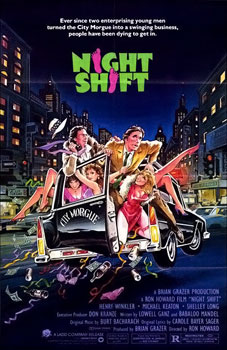
Chuck Lumley (Henry Winkler) was a Wall Street wizard until the stress of the job started to give him ulcers. He dropped out of the rat race, got a less stressful job as an attendant at a New York City morgue, and eventually met and became engaged to Charlotte (Gina Hecht). When Chuck’s supervisor decides to give Chuck’s day shift to his new guy, Chuck is promoted to the night shift. “He has the same last name as you,” Chuck says when he learns the about the new employee. “Yeah, I think he’s my nephew or something,” his supervisor replies.
Chuck finds himself working nights with “Billy Blaze” Blazejowski (Michael Keaton), a hyperactive “idea man,” who has so many brilliant plans that he has to carry around a tape recorder so he doesn’t forget them. A typical Billy Blaze idea is to battle litter by creating edible paper. Another one is to rent out the hearse as a limo and give rides to teenagers. Chuck may not be happy about his new shift or coworker but he is happy that he shares his new work schedule with his upstairs neighbor, Belinda Keaton (Shelley Long). Belinda is a high-class prostitute who first meets Chuck when she comes by the morgue to identify the body of her pimp. When Chuck discovers that Belinda needs a new pimp, he and Billy take on the job themselves, which brings them into conflict with not only the vice cops but also with Pig (Richard Belzer) and Mustafa (Grand L. Bush).
Raunchy but good-hearted, Night Shift has always been one of my favorite comedies. Along with being Ron Howard’s first movie for grown-ups, it also featured Michael Keaton in his first lead role. Keaton is both funny and surprisingly poignant as Billy. He’s hyperactive and impulsive and doesn’t think things through but his friendship with Chuck is real and later on in the movie, he reveals himself to have more depth than he lets on. Also giving good performances are Henry Winkler and Shelley Long, two performers better-known for their television work than their film roles. With his role here, Winkler proved that he was capable of playing more than just the Fonz. Shelley Long has probably never been better (or sexier) than she was in this film. The scene where she makes breakfast for Chuck is unforgettable. Even though she’s playing a stock character, the prostitute with a heart of gold, Shelley Long brings her own unique charm to the role and makes Belinda seem like a real person.
Night Shift starts out strong but falters slightly during its second hour, when Chuck and Billy seem to magically go from being nerdy morgue attendants to successful pimps overnight. Some of the violence feels out-of-place in what is essentially a buddy comedy with a dash of romance. It’s still a funny movie that is full of memorable one liners and good performances. As you might expect from Ron Howard, Night Shift is a surprisingly good-hearted look at the business of sex. Ron Howard has directed a lot of films since but few of them are as much fun as Night Shift.
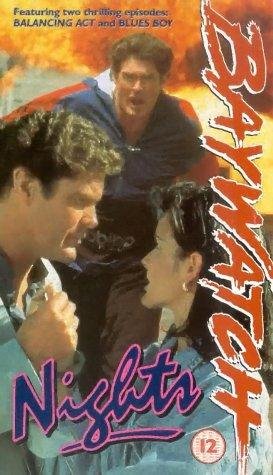
Welcome to Late Night Retro Television Reviews, a feature where we review some of our favorite and least favorite shows of the past! On Tuesdays, I will be reviewing Baywatch Nights, a detective show that ran in Syndication from 1995 to 1997. The entire show is currently streaming on YouTube!
This week, Mitch and Ryan play a deadly game!
Episode 2.13 “Nights to Dragon One”
(Dir by Richard Friedman, originally aired on February 16th, 1997)
Mitch and Ryan are hired to discover what has happened to a father and his daughter. When last seen, they were entering a mysterious building. The father was a lifelong adventurer and he had apparently heard that the building was home to “the ultimate game.” Along with daughter, he had to play. Now, they’re both missing.
So, of course, Mitch and Ryan enter the building and soon find themselves in a computer-simulated dungeon, complete with traps, deadly archers, random flames, and a cackling Game Master (Vincent Schiavelli) who occasionally materializes so he can taunt Mitch and Ryan about their lack of progress in the game.
Ryan is actually excited about playing the game, explaining the she played an earlier version of it when she was in college. All Mitch cares about is saving the man and his daughter. Mitch doesn’t get the point of computer simulations and virtual reality and all that sort of thing. Mitch probably thinks that email is just a fad as well. Mitch is the guy who goes to an escape room and, instead of reading the clues, just tries to break the door down.
And yet, it’s Mitch who ends up entering and winning the final confrontation with the Game Master, even though Ryan points out that it would make more sense for her to do it because she’s actually played the game before. Sorry, Ryan. The Hoff is here to save the day so just stand back and be quiet, I guess.
Vincent Schiavelli is a welcome presence as the Game Mater and he at least seems to be having fun with his role. That said, this is the worst episode of Baywatch Nights that I’ve seen so far and that includes out of the episodes from the non-supernatural first season as well. A huge problem is that the game itself is just boring. Mitch and Ryan have to make their way through a corridor of laser beams. Mitch and Ryan have to avoid the arrows being shot at them by a mysterious archer. Considering that this is a computer simulation where, in theory, anything could happen, this episode is a huge missed opportunity. Things should have been a lot stranger than they were.
Finally, this is one of those episodes where the camera never stops moving. As opposed to being disorientating or frightening, the constant movement just becomes annoying. There’s only so many Dutch angles that can be used in one scene before they lose their effectiveness.
This game could have been a lot of fun but instead, it’s just kind of dull. The Hoff wins but honestly, I feel like I could have won it as well. The Hoff/Angie chemistry is still strong but it’s not enough to save this middling episode.
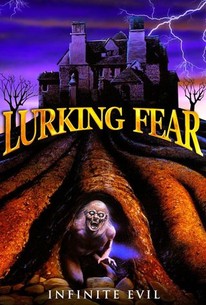
For years, the town of Leffert’s Corners has lived in fear of the criminal Martense family. The family’s youngest son, John (Blake Bailey), has just been released from prison and now he’s returning home. He knows that, before he died, his father arranged for a thousand dollars to be buried in the cemetery. After the town mortician (Vincent Schiavelli, in a too brief cameo) tells him where it is, John heads to the cemetery. Unfortunately, he’s followed by crime boss Bennett (Jon Finch) and his thugs.
Cathryn (Ashley Laurence) and Dr. Haggis (Jeffrey Combs) are already at the cemetery, though not for the money. It turns out that subterranean monsters (all of whom are descended from one John’s relatives) are living underneath the cemetery grounds and terrorizing the town. Cathryn and Haggis are planning on blowing up the graveyard but that plan is put on hold when John and Bennett arrive. Underground monsters or not, Bennett is planning on getting that money and if that means holding everyone hostage in a church while the monsters prepare to attack, that is exactly what he is going to do.
As is evident by the welcome presence of Jeffrey Combs, The Lurking Fear is another Full Moon production that was loosely adapted from a H.P. Lovecraft short story. The premise has promise and the cast is full of talent but the film’s direction is flat, the script is shallow, and the monsters themselves look good but there’s nothing that set them apart from a dozen other monsters that have appeared in Full Moon productions. (The monsters resemble the dungeon dweller from Castle Freak but they are never as scary.) It’s too bad because The Lurking Fear is one of Lovecraft’s best short stories and it seems like one that would make a great movie. But, as a movie, The Lurking Fear, like so many other Full Moon productions, doesn’t seem to know what to do with itself whenever the monsters aren’t around. Hopefully, someday, Lovecraft’s The Lurking Fear will get the film adaptation that it deserves.
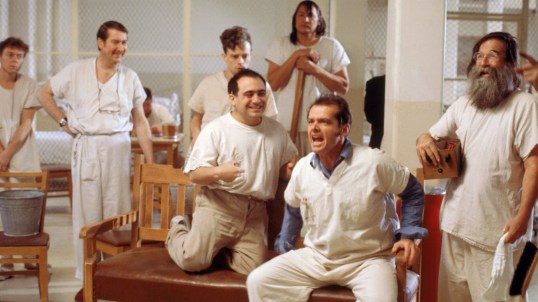
Technically, the 1975 film One Flew Over The Cuckoo’s Nest is not a horror film.
Though it may take place in a creepy mental hospital, there are no ghosts or zombies. There’s no masked killer wandering the halls. The shadows do not leap off the walls and there are no ghostly voice in the night, unless you count the rarely heard voice of Will Sampson’s Chief Bromden.
Admittedly, the cast is full of horror and paranormal veterans. Michael Berryman, of the original Hills Have Eyes, plays a patient. Louise Fletcher, who won an Oscar for playing the role of Nurse Ratched, went on to play intimidating matriarchs in any number of low-budget horror movies. Vincent Schiavelli, a patient in this film, played the angry subway ghost in Ghost. Another patient, Sidney Lassick, played Carrie’s condescending English teacher in Carrie. Brad Dourif, who received an Oscar nomination for playing the meek Billy Bibbit, has become a horror mainstay. Will Sampson appeared in the Poltergeist sequel. Both Scatman Crothers and Jack Nicholson would go on to appear in The Shining.
Nicholson plays Randle Patrick McMurphy, a career criminal who, hoping to get out of prison early, pretends to be mentally ill. He ends up getting sent to an Oregon mental institution, where his rebellious ways upset the administrators while, at the same time, inspiring the patients to actually try to take some control over their lives. The film is, in many ways, a celebration of personal freedom and rebellion. The only catch here is that, in One Flew Over The Cuckoo’s Nest, being a little bit too rebellious can lead to not only electroshock treatment but also a lobotomy. Those in charge have a way of making you permanently compliant.
And really, to me, that’s what makes One Flew Over The Cuckoo’s Nest a horror film. It’s about the horror of conformity and bureaucracy. The film may start out as something of a comedy and Nicholson brings a devil-may-care attitude to the role of McMurphy but then, eventually, you reach the scene where McMurphy is tied down and given electrical shocks to make him compliant. You reach the scene where Ratched coldly informs Billy Bibbit that she will be telling his mother that Billy lost his virginity to a prostitute and Billy reacts by slicing open his wrists. Finally, you reach the scene where McMurphy returns to the ward having had a bit of his brain removed. In those scenes, One Flew Over The Cuckoo’s Nest becomes a horror movie. The monster is not a ghost or a demon or a serial killer. Instead, it’s a system that is determined to squash out any bit of rebellion or free thought.
What makes Nurse Ratched such a great villain is the fact that, as opposed to being some sort of a maniacal force of evil, she’s really just someone doing her job and refusing to question her methods. She’s the ultimate symbol of bland authoritarianism. Her job is to keep the patients from getting out of control and, if that means lobotomizing them and driving one of them to suicide …. well, that’s what she’s going to do. For all the time that Ratched spends talking about therapy, her concern is not “curing” the patients or even helping them reach a point where they can leave the hospital and go one with their lives. Ratched’s concern is keeping everyone in their place. As played by Fletcher, Ratched epitomizes the banality of evil. (That’s one reason why it was so silly for Ryan Murphy to devote his most recent Netflix series to giving her an over-the-top origin story. Ratched is a great villain because she doesn’t have any complex motivations. She’s just doing whatever she has to do to keep control of the people are on her ward. Part of keeping control is not to allow anyone to question her methods. Everyone has had to deal with a Nurse Ratched at some point in the life. With the elections coming up, we’re about to be introduced to whole new collection of Nurse Ratcheds.)
I like One Flew Over The Cuckoo’s Nest, even though it’s an undeniably dated film. That said, it’s not as dated as the novel on which it’s based, nor is it as appallingly misogynistic. Jack Nicholson’s rough but charismatic performance holds up wonderfully well. (I don’t know if an actor has ever matched a character as perfectly as Nicholson does with McMurphy.) Louise Fletcher brings a steely resolve to the role of Nurse Ratched. Fans of spotting character actors in early roles will probably get a kick out of spotting both Danny DeVito and Christopher Lloyd as patients. The movie skillfully combines drama with comedy and the ending manages to be both melancholy and hopeful.
When it comes to the 1975 Oscar race …. well, I don’t know if I would argue that One Flew Over The Cuckoo’s Nest deserved to win Best Picture over Nashville, Dog Day Afternoon, or Barry Lyndon or Jaws. Dog Day Afternoon and Nashville feel as if they were ahead of their time, with their examination of the media and politics. Jaws set the template for almost every blockbuster that would follow and it’s certainly one of the most influential horror films ever made. Barry Lyndon is a stunning technical achievement. Compared to those films, One Flew Over The Cuckoo’s Nest seems rather simplistic. Watching it today, you’re very much aware of how much of the film’s power is due to Jack Nicholson’s magnetic screen presence. Nicholson definitely deserved his Oscar but it’s debatable whether or not the same can be said of One Flew Over The Cuckoo’s Nest as a whole.
So no, I wouldn’t necessary say that One Flew Over The Cuckoo’s Nest was the best of the films nominated that year. Still, it’s an entertaining film and a helluva ride. It’s a great film to watch whenever you’re sick of faceless bureaucrats trying to tell you what to do. And, in its own odd way, it’s a great film for Halloween season.
Tonight’s episode of Baywatch Nights originally aired on February 16th, 1997.
In this episode of Baywatch Nights, David Hasselhoff and Angie Harmon are hired to track down a missing man and his daughter. Their search leads to them becoming literally trapped inside a virtual reality where they either have to defeat the crazed Game Master (Vincent Schiavelli) or die! There’s even a scene where Angie Harmon has to pick up and roll a giant die! Taking full advantage of the inherent ludicrousness of David Hasselhoff’s screen persona, this is an episode that has to be seen to be believed.
The 1984 film Amadeus is about a man who learns, after it’s a bit too late to really do anything about it, that he is thoroughly mediocre.
When we first meet Antonio Salieri (played by F. Murray Abraham), he’s an old man who has been confined to a mental asylum because he attempted to slit his own throat. What should drive Salieri — a respected, if not particularly beloved, composer in 18th Century Vienna — to attempt to take his own life? As he explains it to Father Vogler (Richard Frank), it’s the guilt of knowing that he’s responsible for death of the greatest composer of all time, Wolfgang Amadeus Mozart.
When Mozart (Tom Hulce) first showed up in Vienna, Salieri was already the court composer to the thoroughly vacuous Emperor Joseph II (Jeffrey Jones). At the time, Salieri believed himself to be a genius touched by God. As he recounts to Father Vogler, he prayed to God when he was a boy and he struck what he believed was an ironclad deal. God would make Salieri a great composer and Salieri would remain a faithful believer.
But then Mozart shows up and, from the minute that he first hears one of Mozart’s compositions, Salieri realizes that Mozart is the one who has been blessed with genius. Mozart is the one who is writing the music that will be remembered for the rest of time, long after Salieri and all of his other rival composers have been forgotten. Upon first hearing Mozart, Salieri suddenly realizes that he has been betrayed by God. He is a mediocre talent and he’s always been a mediocre talent.
The worst part of it is not just that Mozart’s a genius. It’s also that Mozart knows he’s a genius. He’s a bit of a brat as well, with a remarkably annoying laugh and vulgar manners that scandalize proper society. Despite the efforts of his rivals to dismiss his talent, Mozart is beloved by the common people. He’s an 18th century rock star and it seems as if no amount of scandal and petty jealousy can slow him down. Even worse, the emperor takes a interest in Mozart and commissions him — and not Salieri — to write an opera.
Rejecting a God that he feels has betrayed him, Salieri plots Mozart’s downfall….
Goddamn, this is a great movie. Seriously, everything about Amadeus works.
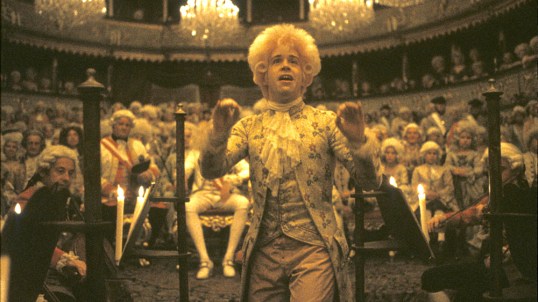
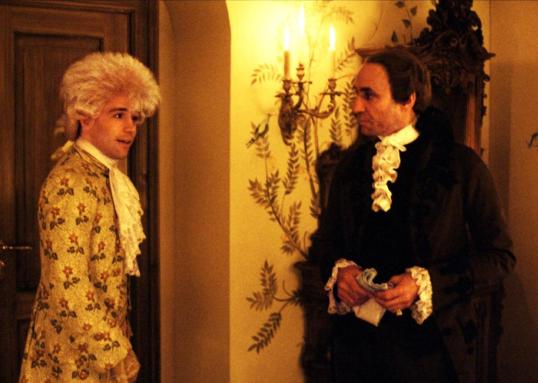
The ornate sets and the costumes not only wonderful to look at but they also actually tell us something about the characters who inhabit them. One look at the beautiful but cluttered home that Mozart shares with his wife, Constanze (Elisabeth Berridge), tells you almost everything you need to know about not only Mozart’s tastes (which are expensive) but also his talent (which is undisciplined but also limitless). The empty-headedness of Emperor Joseph is perfectly mirrored by the pretty but uninspired decor of his court while the grubby chaos of the mental asylum seems to have sprung straight from Salieri’s tortured soul. As visualized in Amadeus, there’s a cold beauty to Vienna, one that is fascinating but, at the same time, menacing. As for the costumes, Mozart’s powdered wig somehow seems to be brighter than everyone else’s and his colorful wardrobe demands your attention. Meanwhile, when a costumed and masked Salieri shows up at Mozart’s door, he’s like the Grim Reaper coming to collect a soul.
The witty script is full of sharp lines and director Milos Forman does a wonderful job of balancing comedy and drama. The scenes involving Joseph II are frequently hilarious and Jeffrey Jones does a great job of portraying Joseph as essentially being a very influential dunce. The scene where Joseph tells Mozart that he liked his latest composition but that “there are simply too many notes” is a classic and one to which any artist, whether they’re Mozart or not, will be able to relate. (“Just cut a few and it will be perfect.”)
The film is dominated by the performances of F. Murray Abraham and Tom Hulce. Hulce is wonderfully flamboyant in the early part of the film and, bravely, he doesn’t shy away from portraying Mozart as occasionally being a bit of a spoiled brat. It’s not just that Mozart can be annoying. It’s also that he’s often deliberately annoying. When we first see Mozart, it’s easy to understand why his very existence so grated on Salieri’s nerves and why Salieri considers him to be an “obscene child.” But as the film progresses, Hulce lets us in and we come to see that Mozart is actually a very vulnerable young man. When his disapproving father (Roy Dotrice) comes to visit, we suddenly understand both why Mozart is so driven to succeed but also why he is so instinctively self-destructive.
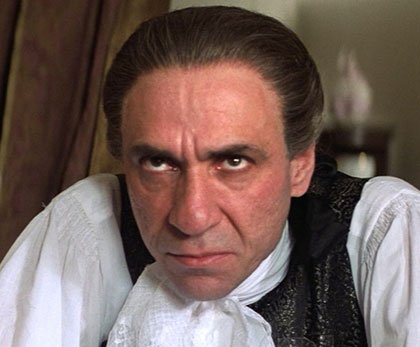
Meanwhile, F. Murray Abraham — well, what can I say about this performance? In the role of Salieri, Abraham gives one of the greatest film performances of all time. In many ways, Abraham has a tougher job than Hulce. If Hulce has to convince us that Mozart has been touched by genius despite the dumb things that he often does, Abraham has to make petty jealousy compelling. And somehow, Abraham manages to do just that. Whereas the role of Mozart allows Hucle to wear his emotions on the surface, Abraham has to play a character who keeps most of his thoughts and impulses hidden and the fact that we end up understanding Salieri (if never actually sympathizing with him) is a testament to F. Murray Abraham’s skill as an actor. Abraham won the Oscar for Best Actor for his work in Amadeus and it was more than deserved.
At the end of the film, Salieri declares himself to be the patron saint of mediocrities and, to a large extent, that’s what sets Amadeus apart from other biopics. Most people are mediocre. Most people are not going to end their life as a Mozart. They’re going to end their life as a Salieri or worse. This is one of the few films to be made about a runner-up. It’s interesting to note that, even though the film is more about Salieri than Mozart, it’s still called Amadeus. It’s not named Antonio or Salieri. Even in a film made about Salieri, Mozart is advertised as the main attraction.
(It should also be noted that many historians believe that Salieri and Mozart were actually fairly friendly acquaintances and that, beyond the normal rivalry that any two artists would feel, neither held any significant ill will towards the other. In other words, enjoy Amadeus as an outstanding piece of cinema but don’t necessarily mistake it for historical fact.)
Along with Abraham’s victory, Amadeus also won Best Picture of the year. Of the nominees, it certainly deserved it. (My pick for the best film of 1984 is Once Upon A Time In America with Amadeus as a close second.) It’s a great film and one that definitely deserves to be watched and rewatched.
Actor Bud Cort (you remember him from Harold and Maude) both directs and stars as Ted. Ted is a homeless poet who lives on the beach and only has one friend, a mellow beach bum named Max (Josh Brolin). Kim Adams plays Linda, who is the Venus of the title, a social worker who has a bodybuilder jerk for a boyfriend (Brian Thompson, who you might remember as the main villain in Cobra). When Ted sees Linda, it is love at first sight and at first, the movie seems like it is going to be a quirky romantic comedy where Ted eventually wins Linda over. When Linda turns down Ted’s advances, Ted does not give up. Instead, Ted starts following her everywhere and making harassing phone calls. Ted starts out as a nuisance and goes on to become a full-out stalker. Everyone, even Max, tells Ted to stop bothering Linda but he is convinced that he can make her fall in love him. He’s wrong.
Because of the presence of Cort both in front of and behind the camera, Ted & Venus sometimes seems like Harold and Maude: The Later Years. Harold, the iconoclast that everyone loved, has grown up and become Ted, the unemployable stalker. It’s an interesting idea and Cort pulls it off as an actor but not as a director. You have to admire Cort’s devotion to his vision but it’s impossible to be certain what that vision was because the film’s tone is all over the place. Cort gets a far better performance from himself than he does from the rest of the cast.
Speaking of the cast, the movie is full of familiar faces. In fact, there are almost too many familiar faces. It’s hard not to get distracted by all of the cameos. If you somehow see this obscure movie, keep an eye out for: Woody Harrelson (who gets two lines and five seconds of screen time), Rhea Pearlman, Carol Kane, Martin Mull, Gena Rowlands, Pat McCormick, Vincent Schiavelli, Cassandra Peterson, and Andrea Martin. When Ted is hauled into court, charged with stalking, the judge is played by LSD guru Timothy Leary. I am not sure what Ted & Venus was trying to say but Bud Cort assembled an impressive cast to say it.
(Lisa is currently in the process of cleaning out her DVR. It’s taking her such a long time that she’s running out of cutesy ways to talk about how long it’s taking. She recorded this 1989 comedy off of Starz on May 10th.)
This is another strange one.
Homer and Eddie opens with Homer (James Belushi) standing on the corner of an isolated stretch of desert road. He is hitchhiking. When a car finally stops to pick him up, Homer is so excited! He gets in the back seat, gives the two men in the front seat a really wide smile, and innocently asks them how they’re doing.
One of the men (played by director John Waters) holds up a gun and demands all of Homer’s money. After Homer hands the money over, he is kicked out of the car. As the car drives away, Homer pulls a few dollars out of his sock and loudly yells that he fooled them and that they didn’t get all of his money.
The car abruptly stops and, going in reverse, pulls back up to Homer. Homer gives up his money and the car speeds off.
In short, Homer probably shouldn’t be hitchhiking on his own. Homer, you see, was hit in the head by a baseball when he was younger. He has the mind and the innocent outlook of a child. He is cheerful, he is religious, and he is totally unprepared to deal with real world.
Fortunately, Homer won’t be alone for too long. Homer comes across an apparently deserted car and, without money or a place to stay, he decides to use the car as shelter. However, it turns out that the car isn’t as abandoned as it looks! No, the car is being used by Eddie (Whoopi Goldberg). Eddie stole the car when she escaped from a mental institution. Why was Eddie in the mental institution? She’s a paranoid schizophrenic and she occasionally kills people. Eddie and Homer are soon taking a very strange road trip, heading up north so that Homer can see his dying father.
It’s a very disjointed film, one that switches tone from scene to scene. The two stars seem to be acting in totally different movies. Belushi gives a very broad performance, one that often crosses the line into pure goofiness. Eddie, meanwhile, is continually and constantly full of rage. You never know when she’s going to snap and kill someone. I spent a good deal of the movie waiting for her to kill Homer. Maybe that was the point but it’s still hard to laugh at scenes of Homer and Eddie waving at a school bus full of cheerleaders when you’re also waiting for Whoopi Goldberg to beat and dismember Jim Belushi.
Homer and Eddie can summed up by one lengthy sequence. Eddie takes Homer to a brothel so that he can lose his virginity. While Homer is dancing around in his underwear, Eddie is at a convenience store, shooting the clerk (played by Pruitt Taylor Vince). The clerk, who was perfectly nice to Eddie before getting shot, looks at his wound and feebly says, “Why did you do that?” before dying.
It’s a weird little movie. Usually, I love weird moves but this one is too much of a mess for even me. As I watched it, I couldn’t help but think of how much more interesting the movie would be if it was the child-like Homer killing people and schizophrenic Eddie trying to keep him calm. On a positive note, this was decades before Whoopi Goldberg gave up her edginess to co-host The View and she gives shockingly good performance. When Eddie loses control, she’s actually frightening. But, unfortunately, the film itself just doesn’t work.
Tonight’s excursion into the world of televised horror is the 10th episode of the 3rd season of HBO’s Tales From The Crypt!
Steven Weber plays an alcoholic reporter who thinks that he has found the story of his career! Someone is preying on the homeless and our reporter is determined to find out who and why. (Not because he actually cares about the homeless, of course. He just needs a big story to save his career.) However, the reporter quickly discovers that 1) all charities are not charitable and 2) you should always be careful about biting off more than you can chew…
This well-acted episode was directed and written by Manny Coto and it originally aired on July 31st, 1991.

 Strange movie, Ted & Venus.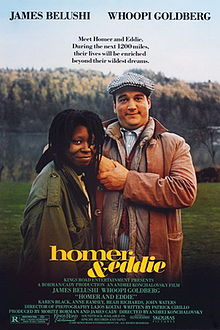
 Through the Shattered Lens