Film Review: The Don Is Dead (dir by Richard Fleischer)


“The Don is Dead!” shouts the title of this 1973 film and it’s not lying.

After the powerful and respect leader of the Regalbuto crime family dies, the Mafia’s governing body meets in Las Vegas to debate who should be allowed to take over the family’s operations.  Frank Regalbuto (a smoldering Robert Forster) wants to take over the family but it’s agreed that he’s still too young and hot-headed.  Instead, control of the family is given Don Angelo DiMorra (Anthony Quinn), an old school Mafia chieftain who everyone agrees is a man of respect.  Don DiMorra will serve as a mentor to Frank while Frank’s main enforcers, The Fargo Brothers, will be allowed to operate independently with the understanding that they will still respond if the mob needs them to do a job.  Tony Fargo (Forrest) wants to get out of the rackets all together while his older brother, Vince (Al Lettieri), remains loyal to the old ways of doing things.

Frank is not happy with the arrangement but he has other things to worry about.  He knows that there’s a traitor in his family.  While he and the Fargo brothers work to uncover the man’s identity so that they can take their revenge, Don Angelo falls in love with a Vegas showgirl named Ruby Dunne (Angel Tompkins).  However, Ruby is engaged to marry Frank and, when Frank returns from taking care of the traitor, he is tipped off as to what has been happening in his absence.  Frank goes crazy, nearly beating Ruby to death.  Don Angelo declares war on Frank and the Fargo brothers are forced to decide which side they’ll serve.

In the 1970s, almost every crime film was either a rip-off of The French Connection or The Godfather.  The Don Is Dead is unique in that it attempts to rip off both of them at the same time.  The film opens French Connection-style with a couple of hoods trying to double-cross Frank during a drug deal, leading to shoot-out.  (Keep an eye out for Sid Haig as one of Frank’s men.)   The film is full of scenes that are meant to duplicate the gritty feel of The French Connection though, needless to say, none of them are directed with the cinema verité intensity that William Friedkin brought to that classic film.  Meanwhile, Anthony Quinn plays a character who is very much reminiscent of Don Vito Corleone, even pausing at one point to tell Frank that “drugs are a dirty business.”  The Godfather‘s Abe Vigoda and Al Lettieri show up in supporting roles and Robert Forster gives a performance that owes more than a little to James Caan’s Oscar-nominated turn as Sonny Corleone.  (Interestingly enough, both Quinn and Forster were among the many actors considered for roles in The Godfather.)

Unfortunately, the film itself is slowly-paced and never really draws us into the plot.  Director Richard Fleischer, who directed a lot of films without ever developing a signature style, brings none of the intensity that William Friedkin brough to The French Connection nor can he duplicate Francis Ford Coppola’s operatic grandeur.  The Don is Dead plays out like a particularly violent made-for-TV movie.  There’s a lot of talented people in the cast but they’re defeated by thinly drawn characters.  Robert Evans often said that Coppola was hired to direct The Godfather because, as an Italian-American, he would bring an authenticity to the material that a non-Italian director would not be able to do.  The Don Is Dead would seem to indicate that Evans knew what he was talking about.

Retro Television Review: Miami Vice 3.11 “Forgive Us Our Debts”


Welcome to Retro Television Reviews, a feature where we review some of our favorite and least favorite shows of the past!  On Mondays, I will be reviewing Miami Vice, which ran on NBC from 1984 to 1989.  The entire show can be purchased on Prime!

This week’s episode took me by surprise!

Episode 3.11 “Forgive Us Our Debts”

(Dir by Jan Eliasberg, originally aired on December 12th, 1986)

Frank Hackman (Guy Boyd) has a date with Florida’s electric chair.  Even though he claims that he’s innocent of killing one of Sonny Crockett’s former partners, Hackman says that he’s guilty of killing others and, having become a Christian while on Death Row, he is prepared to pay the ultimate price.  He even suggests that his execution should be televised.

At first, Sonny is all for Hackman being executed.  But then, a priest calls the Vice Squad and tells them that one of his parishioners confessed to having evidence that could prove that Hackman was actually in Vegas when the murder occurred.  Sonny and the Squad track down Gus Albierro (Val Bisoglio), an auto mechanic who is dying of cancer and who says that he’s telling the truth to clear his conscience.   Not long after Gus talks to Crockett, Gus is executed in his garage.

Convinced that Hackman is innocent, Sonny and Tubbs have one day to find the other person who was with Gus and Hackman in Vegas.  That man turns out to be in the witness protection agency and, at first, he refuses to talk.  Then Crockett takes him outside and beats him up.

Long story short: After having had his head shaved for his date with the electric chair, Hackman’s life is saved and he leaves prison a free man….

Now, up until this point, I felt that this episode was just another rather heavy-handed diatribe against the death penalty.  Miami Vice, as a show, always leaned towards the Left and this episode features two smarmy Florida politicians who are eager to prove how tough they are on crime.  I thought the whole episode was a bit too obvious in its storytelling and I thought my review would focus on the hypocrisy of Miami Vice criticizing the death penalty when almost every episode has ended with the bad guys being taken down in a hail of bullets.

(On a personal note, I’m against the death penalty because I think there is too much of a risk of an innocent person being executed.  But, still, I’m not a fan of heavy-handed storytelling, regardless of whether I agree with the larger point or not.)

But this episode had one final twist waiting up its sleeve.  Hackman steps out of prison and sees Sonny waiting for him.  Sonny is feeling pretty proud of himself.  He saved an innocent man, right?  Wrong!  Hackman proceeds to tell Sonny that he actually did kill Sonny’s former partner and that Gus lied in return for Hackman’s friends sending money to his family.  That guy in witness protection who, at first, refused to testify?  He was working with Hackman, too.

“I won’t need this anymore,” Hackman says, yanking off the cross that was hanging out around his neck.

And that’s how the episode ends!  The bad guys triumph and it’s pretty much all Sonny’s fault!  This was the most cynical episode of Miami Vice yet.  The ending totally took me by surprise and it made me realize that, rather than being a heavy-handed and polemical, this episode was actually extremely clever and perfectly put together.  Just as Hackman fooled Sonny, Miami Vice fooled the viewer (in this case, me).  This turned out to be an excellent episode and certainly the best of season 3 so far.

Because of the holidays, this is my last Miami Vice review of 2024.  My reviews of Miami Vice will resume on January 6th, 2025!

Horror on TV: Kolchak: The Night Stalker 1.2 “The Zombie” (dir by Alexander Grasshoff)


Tonight, on Kolchak: The Night Stalker:

Chicago gangsters are turning up dead!  Is it a mob war or is it something else?  Kolchak suspects the latter and, as you can guess from this episode’s title, he’s right.  This episode features gangsters, numbers runners, and voodoo!

It originally aired on September 20th, 1974!

Enjoy!

http://www.youtube.com/watch?v=aN_GstECzL0

Embracing the Melodrama Part II #57: Saturday Night Fever (dir by John Badham)


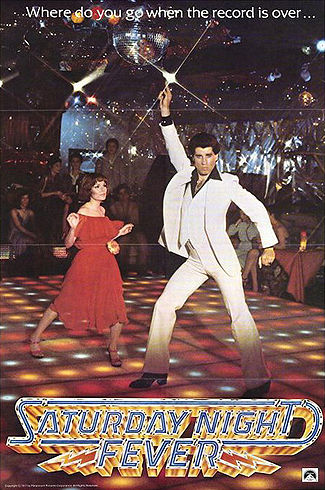
Saturday_night_fever_movie_posterHere’s a little bit of trivia about the iconic 1977 film Saturday Night Fever.

First off, according to the imdb, Saturday Night Fever was the first mainstream Hollywood film to ever use the term “blow job.”  That actually took me by surprise.  I mean, with all of the risks that the major studios took in the 70s, it still took them until 1977 to have someone say “blow job” in a movie?  But somehow, it seems appropriate that it would turn up in Saturday Night Fever.  We tend to think of Saturday Night Fever as being a movie where the soundtrack is nonstop disco and John Travolta dances in that iconic white suit.  But actually, Saturday Night Fever is a film about four guys who neither understand nor respect women.

When Tony (John Travolta), Joey (Joseph Cali), Double J (Paul Pape), and Bobby (Barry Miller) go down to that disco, it’s because they want to get laid.   Joey and Double J take turns having sex with insecure Annette (Donna Pescow) and, afterwards, Tony scornfully ask her if she‘s proud of herself.  When Bobby discovers that his girlfriend is pregnant, he is so terrified of having to be a father that he becomes suicidal.  As for Tony, he looks down on the women who are so eager to dance with him.  When he enters a dance contest with Stephanie (Karen Lynn Gorney), he can’t handle the fact that she wants more out of her life than just being his latest partner.

So, it makes sense that this would be the first mainstream movie to feature someone talking about a blow job because that’s what these boys are obsessed with.  Sexually primitive, hypocritically puritanical, and emotionally repressed, a blow job is all the intimacy that these boys can handle.

Another piece of trivia: while John Travolta was always the first choice for Tony Manero, several actors were seen for the roles of Joey and Double J.  At one point, both Ray Liotta and David Caruso were nearly cast in the role of Tony’s friends.  Imagine this: in some alternative universe, while white-suited John Travolta rules over the dance floor, Ray Liotta and David Caruso are standing in the background and cheering him on.

Of course, if Liotta and Caruso had been cast, it would be a totally different movie.  Whenever you watch Saturday Night Fever, you’re surprised by how much John Travolta totally dominates the film.  Even though the film devotes a good deal of time to Annette, Stephanie, Bobby and to Tony’s brother who has recently left the priesthood, Tony Manero is the only character that you remember.  That’s largely because Travolta is the only one of them who gives a truly memorable performance.

In theory, it’s easy to laugh at the thought of Travolta in that white suit, striking a dramatic pose on that cheap-looking dance floor.  But then you watch the film and you realize that Travolta truly did give a great performance.  And, to your surprise, you don’t laugh at Tony with his white suit because you know that the only time Tony has any control over his life is when he’s dancing.  He may work in a paint store.  He may regularly get slapped around by his family.  He may not be very smart or sensitive.  But when Tony’s dancing, he’s a king and you’re happy that he at least has one thing in his life that he can feel good about.

Even if he is kind of a jerk.

Of course, it helps that Tony is a really good dancer.  There’s actually a lot more going on in Saturday Night Fever than you might think but ultimately, it’s a dance movie and it’s one of the best.