1977’s Record City opens with a montage of rear-focused close-ups of women wearing short shorts and that pretty much tells you all that you really need to know about the film. It’s crass, shameless, and very much a product of its time.
The film takes place over the course of one day at a California vinyl record shop. It’s tempting to compare the film to something like Empire Records but, unlike Empire Records, Record City suggests that working in a record store is perhaps the worst thing that could ever happen to anyone. The store is dirty and grimy. The customers are rude and played by vaguely familiar comedy actors, all of whom seem to have been bitten by the overacting bug before stepping in front of the camera. The employees all seem to hate each other. Marty (Tim Thomerson) keeps getting slapped and kicked by Vivian (Deborah White). Vivian keeps getting groped by almost every customer and employee who walks by her. The only thing that Vivian hates more than men is other women. The store’s owner (Jack Carter) is in trouble with the mob. The store’s manager (Michael Callan) is lech who wears gold chains, keeps his shirt unbuttoned, and who expects the new cashier, Lorraine (Wendy Schaal), to sleep with him because, after all, he did hire her. Danny (Dennis Bowen) is the shy guy with a crush on Lorraine. Rupert (Stuart Goetz) is the nerdy virgin who goes from wearing a bowtie to dressing like a swinger but he still can’t get laid. Both the customers and the employees are paranoid about “fairies” coming into Record City. Pokey (Ed Begley, Jr.) wants to hold the place up and who can blame him? Really, the only likable employee is a black man known only as The Wiz and that’s just because he’s played by Ted Lange. (Yes, Isaac the Bartender from The Love Boat.) Lange gets to perform a song at the end of the film.
When the film isn’t focused on the antics inside Record City, it’s all about the talent show that’s taking place in a nearby parking lot. The talent show is hosted by radio DJ Gordon Kong (Rick Dees) and it gives the film an excuse to trot out a bunch of cameos, some of whom are more recognizable than others. For instance, Gallagher — the comedian with the sledgehammer — shows up. Kinky Friedman also shows up, playing himself and looking for records at Record City. When he spots a woman with a blonde bowl cut and glasses, he accuses her of being John Denver and then grabs her breasts. And to think — less than 30 years later, Kinky Friedman would run for governor of my homestate.
Anyway, this is a terrible and rather boring movie but I did find it interesting for one reason. It’s the reason why I find so many grindhouse films to be interesting. Shot on location and for no other reason than to make money, Record City is a true product of its time. There’s no attempt to try to make the 70s look nicer than they were. There’s no attempt to try to make the record store look like anything more than a tacky establishment. There’s an honesty to how low-rent the whole thing is. Watching the movie is like stepping into a time machine and getting a chance to experience the past firsthand. I was born long after the 70s but, after watching this film, I now feel like I’ve been there.
Welcome to Retro Television Reviews, a feature where we review some of our favorite and least favorite shows of the past! On Tuesdays, I will be reviewing the original Fantasy Island, which ran on ABC from 1977 to 1986. Almost entire show is currently streaming is on Youtube!
This week, Fantasy Island swings!
Episode 3.19 “The Swinger/Terrors of the Mind”
(Dir by Cliff Bole, originally aired on February 9th, 1980)
This week, we have one fun fantasy and one fantasy that’s a bit less interesting.
The less interesting fantasy features Herman Dodge (Howard Morris), a middle-aged man who is upset because he feels that he was too old to take part in the sexual revolution of the 60s and 70s. Having just gotten a divorce from Maxine (Anne Francis), Herman comes to the Island with his best friend, Stan (Jack Carter). Herman wants to be a swinger so Mr. Roarke makes him look a few years younger and then he takes him to the “Fantasy Island Mariana, where all the swingers hang out.”
Looks like a happening place!
Herman is soon the most popular guy at the marina and he even has a new girlfriend named Peggy (Judy Landers). Unfortunately, Duke (Lou Richards) and his friend, Hot Dog (Ed Ruffalo), are threatened by Herman’s sudden popularity. Herman is challenged to various “water sports,” (yes, I snickered) and Herman manages to hold his own but he’s not sure if he’ll be able to jump over a speedboat while on skis. Fortunately, Maxine shows up on the Island and Herman realizes that he not only loves her but he also enjoys being a part of the older, more conservative generation.
It’s a typical Fantasy Island fantasy, designed to appeal to the older viewers who weren’t sure what was going on with those wild and crazy kids. It was okay but it wasn’t particularly interesting.
Far more interesting was the other fantasy, in which Sharon Sanders (Lisa Hartman) comes to the Island from a small town and asks to be given the chance to see the future. Mr. Roarke gives her a diamond ring. When she concentrates on the diamond, she gets a vision of the future. Her first vision is of Martin Ward (Frankie Avalon) getting run over by a drunk driver. Sharon saves Martin’s life and the two of them fall in love. The Fantasy Island casino makes one of its rare appearances as Sharon uses the ring to win a lot of money at Roulette. But then Sharon sees a vision of an older man (Stephen McNally) strangling her and the fantasy is no longer fun.
Sharon wants to leave the Island and end her fantasy. Mr. Roarke replies that he cannot cancel a fantasy once it has begun, despite the fact that he’s done or offered to do that many times in the past for other guests. (I sometimes suspect that Mr. Roarke makes things up as he goes along.)
Anyway, the older man turns out to be the owner of the casino. He wants to murder Sharon because he can’t afford to pay her gambling winnings. Fortunately, when he does attack Sharon, Martin pops up out of nowhere and saves her life. Yay!
(So, I guess the casino is going to be closed now? And I thought Mr. Roarke owned the casino. Who knows? The Island is a confusing place.)
Sharon, having learned that the world is a dangerous place, returns to her hometown with Martin. Martin says they’re going to settle down together. Mr. Roarke says that he hopes Sharon has learned a lesson about taking fate into her own hands and not worrying about what the future holds, which doesn’t make much sense considering that Sharon’s future would have included being murdered if she hadn’t worried about it.
Though the fantasy becomes less logical the more I think about it, it was still an enjoyable one. Lisa Hartman and Frankie Avalon had a surprising amount of chemistry and the scene where the killer chased Sharon into a cemetery was well-done. I’m just happy that Martin was there to save Sharon, as opposed to hanging out at the Fantasy Island Marina.
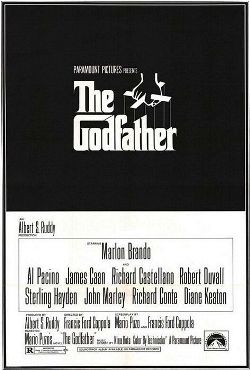
“I got something for your mother and Sonny and a tie for Freddy and Tom Hagen got the Reynolds Pen…” — Kay Adams (Diane Keaton) in The Godfather (1972)
It probably seems strange that when talking about The Godfather, a film that it is generally acknowledged as being one of the best and most influential of all time, I would start with an innocuous quote about getting Tom Hagen a pen.
(And it better have been a hell of a pen because, judging from the scene where Sollozzo stops him in the street, it looked like Tom was going all out as far as gifts were concerned…)
After all, The Godfather is a film that is full of memorable quotes. “Leave the gun. Take the cannoli.” “I’m going to make him an offer he can’t refuse.” “It’s strictly business.” “I believe in America….” “That’s my family, Kay. That’s not me.”
But I went with the quote about the Reynolds pen because, quite frankly, I find an excuse to repeat it every Christmas. Every holiday season, whenever I hear friends or family talking about presents, I remind them that Tom Hagen is getting the Reynolds pen. Doubt me? Check out these tweets from the past!
But all that love also makes The Godfather a difficult film to review. What do you say about a film that everyone already knows is great?
Do you praise it by saying that Al Pacino, Robert Duvall, James Caan, Diane Keaton, Marlon Brando, John Cazale, Richard Castellano, Abe Vigoda, Alex Rocco, and Talia Shire all gave excellent performances? You can do that but everyone already knows that.
Do you talk about how well director Francis Ford Coppola told this operatic, sprawling story of crime, family, and politics? You can do that but everyone already knows that.
Maybe you can talk about how beautiful Gordon Willis’s dark and shadowy cinematography looks, regardless of whether you’re seeing it in a theater or on TV. Because it certainly does but everyone knows that.
Maybe you can mention the haunting beauty of Nina Rota’s score but again…
Well, you get the idea.
Now, if you somehow have never seen the film before, allow me to try to tell you what happens in The Godfather. I say try because The Godfather is a true epic. Because it’s also an intimate family drama and features such a dominating lead performance from Al Pacino, it’s sometimes to easy to forget just how much is actually going on in The Godfather.
The Godfather tells the story of the Corleone Family. Patriarch Vito Corleone (Marlon Brando) has done very well for himself in America, making himself into a rich and influential man. Of course, Vito is also known as both Don Corleone and the Godfather and he’s made his fortune through less-than-legal means. He may be rich and he may be influential but when his daughter gets married, the FBI shows up outside the reception and takes pictures of all the cars in the parking lot. Vito Corleone knows judges and congressmen but none of them are willing to be seen in public with him. Vito is the establishment that nobody wants to acknowledge and sometimes, this very powerful man wonders if there will ever be a “Governor Corleone” or a “Senator Corleone.”
Vito is the proud father of three children and the adopted father of one more. His oldest son, and probable successor, is Sonny (James Caan). Sonny, however, has a temper and absolutely no impulse control. While his wife is bragging about him to the other women at the wedding, Sonny is upstairs screwing a bridesmaid. When the enemies of the Corleone Family declare war, Sonny declares war back and forgets the first rule of organized crime: “It’s not personal. It’s strictly business.”
After Sonny, there’s Fredo (John Cazale). Poor, pathetic Fredo. In many ways, it’s impossible not to feel sorry for Fredo. He’s the one who ends up getting exiled to Vegas, where he lives under the protection of the crude Moe Greene (Alex Rocco). One of the film’s best moments is when a bejeweled Fredo shows up at a Vegas hotel with an entourage of prostitutes and other hangers-on. In these scenes, Fred is trying so hard but when you take one look at his shifty eyes, it’s obvious that he’s still the same guy who we first saw stumbling around drunk at his sister’s wedding.
(And, of course, it’s impossible to watch Fredo in this film without thinking about both what will happen to the character in the Godfather, Part II and how John Cazale, who brought the character to such vibrant life, would die just 6 years later.)
As a female, daughter Connie (Talia Shire) is — for the first film, at least — excluded from the family business. Instead, she marries Sonny’s friend Carlo Rizzi (Gianni Russo). And, to put it gently, it’s not a match made in heaven.
And finally, there’s Michael (Al Pacino). Michael is the son who, at the start of the film, declares that he wants nothing to do with the family business. He’s the one who wants to break with family tradition by marrying Kay Adams (Diane Keaton), who is most definitely not Italian. He’s the one who was decorated in World War II and who comes to his sister’s wedding still dressed in his uniform. (In the second Godfather film, we learn that Vito thought Michael was foolish to join the army, which makes it all the more clear that, by wearing the uniform to the wedding, Michael is attempting to declare his own identity outside of the family.) To paraphrase the third Godfather film, Michael is the one who says he wants to get out but who keeps getting dragged back in.
And finally, the adopted son is Tom Hagen (Robert Duvall). Tom is the Don’s lawyer and one reason why Tom is one of my favorite characters is because, behind his usual stone-faced facade, Tom is actually very snarky. He just hides it well.
Early on, we get a hint that Tom is more amused than he lets on when he has dinner with the crude Jack Woltz (John Marley), a film producer who doesn’t want to use Johnny Fontane (Al Martino) in a movie When Woltz shouts insults at him, Tom calmly finishes his dinner and thanks him for a lovely evening. And he does it with just the hint of a little smirk and you can practically see him thinking, “Somebody’s going to wake up with a horse tomorrow….”
However, my favorite Tom Hagen moment comes when Kay, who is searching for Michael, drops by the family compound. Tom greets her at the gate. When Kay spots a car that’s riddled with bullet holes, she asks what happened. Tom smiles and says, “Oh, that was an accident. But luckily no one was hurt!” Duvall delivers the line with just the right attitude of “That’s my story and I’m sticking to it!” How can you not kind of love Tom after that?
And, of course, the film is full of other memorable characters, all of whom are scheming and plotting. There’s Clemenza (Richard S. Catellano) and Tessio (Abe Vigoda), the two Corleone lieutenants who may or may not be plotting to betray the Don. There’s fearsome Luca Brasi (Lenny Montana), who spends an eternity practicing what he wants to say at Connie’s wedding and yet still manages to screw it up. And, of course, there’s Sollozzo (Al Lettieri, playing a role originally offered to Franco Nero), the drug dealer who reacts angrily to Vito’s refusal to help him out. Meanwhile, Capt. McCluskey (Sterling Hayden) is busy beating up young punks and Al Neri (Richard Bright) is gunning people down in front of the courthouse. And, of course, there’s poor, innocent, ill-fated Appollonia (Simonetta Stefanelli)…
The Godfather is a great Italian-American epic, one that works as both a gangster film and a family drama. Perhaps the genius of the Godfather trilogy is that the Corleone family serves as an ink blot in a cinematic rorschach test. Audiences can look at them and see whatever they want. If you want them and their crimes to serve as a metaphor for capitalism, you need only listen to Tom and Michael repeatedly state that it’s only business. If you want to see them as heroic businessmen, just consider that their enemies essentially want to regulate the Corleones out of existence. If you want the Corleones to serve as symbols of the patriarchy, you need only watch as the door to Michael’s office is shut in Kay’s face. If you want to see the Corleones as heroes, you need only consider that they — and they alone — seem to operate with any sort of honorable criminal code. (This, of course, would change over the course of the two sequels.)
And, if you’re trying to fit a review of The Godfather into a series about political films, you only have to consider that Vito is regularly spoken of as being a man who carries politicians around in his pocket. We may not see any elected officials in the first Godfather film but their presence is felt. Above all else, it’s Vito’s political influence that sets in motion all of the events that unfold over the course of the film.
The Godfather, of course, won the Oscar for best picture of 1972. And while it’s rare that I openly agree with the Academy, I’m proud to say that this one time is a definite exception.


 Through the Shattered Lens