4 Shots From 4 Films is just what it says it is, 4 shots from 4 of our favorite films. As opposed to the reviews and recaps that we usually post, 4 Shots From 4 Films lets the visuals do the talking.
Today, we have 4 shots from 4 films that all feature horrific families!
1980’s The Funhouse opens with an almost shot-for-shot recreation of the famous shower scene from Psycho, with Amy (Elizabeth Berridge) getting attacked in the shower by a masked, knife-wielding maniac.
The only difference is that there’s no shrieking violins, there’s no blood, and the knife is quickly revealed to be a fake. It turns out that the “killer” is actually Amy’s younger brother, Joey (Shawn Carson). Joey loves horror movies. In fact, he’s pretty much the perfect stand-in for The Funhouse‘s intended audience. Joey was just playing a rather mean-spirited prank but now, as a result, Amy snaps that she’s not going to take him to the carnival.
Of course, Amy isn’t supposed to be going to the carnival either. Her parents have strictly forbidden it. Everyone knows that traveling carnivals are dangerous and, at the last town the carnival visited, two teenagers disappeared! There’s no proof that the carnival has anything to do with those disappearances, of course. But still…
Amy does exactly what I would have done in her situation. She tells her parents that she’s going over to a friend’s house and then she goes to the carnival anyway! Accompanying her is her boyfriend Buzz (Cooper Huckabee), who is so cool that he has a name like Buzz. Also along for the ride: Amy’s best friend, Liz (Largo Woodruff), and her boyfriend, Richie (Miles Chapin). Richie’s kind of a loser but that’s to be expected. Every group needs at least one idiot who can do something stupid that gets everyone else killed. We all know how that works.
The carnival turns out to be just as sleazy as Amy’s parents thought it would be. There’s a fake psychic (Sylvia Miles). There’s a magician who dresses like Dracula. There’s a barker (Kevin Conway), whose deep voice is constantly heard in the background. And, of course, there’s a funhouse! Still, everyone’s having a good time. Either that or they’re all just stoned.
For his part, Joey sneaks out of the house and goes to the carnival himself. He doesn’t have quite as much fun as Amy. In fact, his experience is pretty scary. Weird carnival people keep yelling at him. He keeps getting lost. Still, things could be worse. By the time his parents arrive to pick Joey up, Amy and her friends are all trapped in the funhouse. They’re being pursued by the barker and his deformed son (Wayne Doba). Needless to say, it’s all pretty much Richie’s fault.
Richie. What a dumbass.
With its teenage victims and its lengthy chase scenes, The Funhouse is often dismissed as just being another early 80s slasher film. However, The Funhouse is actually a fairly clever, entertaining, and occasionally even witty horror film. Much like director Tobe Hooper’s best-known film, The Texas Chainsaw Massacre, The Funhouse gets its scares by convincing audiences that they’re actually seeing more than they are. Hooper emphasizes atmosphere and performances over gore. While The Funhouse has its share of jump scares, it mostly succeeds by convincing us that anyone could die at any moment. It’s an intense film, with excellent performances from both Elizabeth Berridge and Kevin Conway.
After kickstaring the slasher genre with The Texas Chainsaw Massacre, Hooper used The Funhouse to poke a little fun at it. From the opening shower scene to the electrifying finale, Hooper plays with the genre-savvy expectations of the audiences. Our four victims even do the smart thing for once — they try to all stay together. Needless to say, that doesn’t work out too well.
The Funhouse is an entertaining thrill ride and, seen today, it’s more evidence that Tobe Hooper deserved better than he got from the film industry.
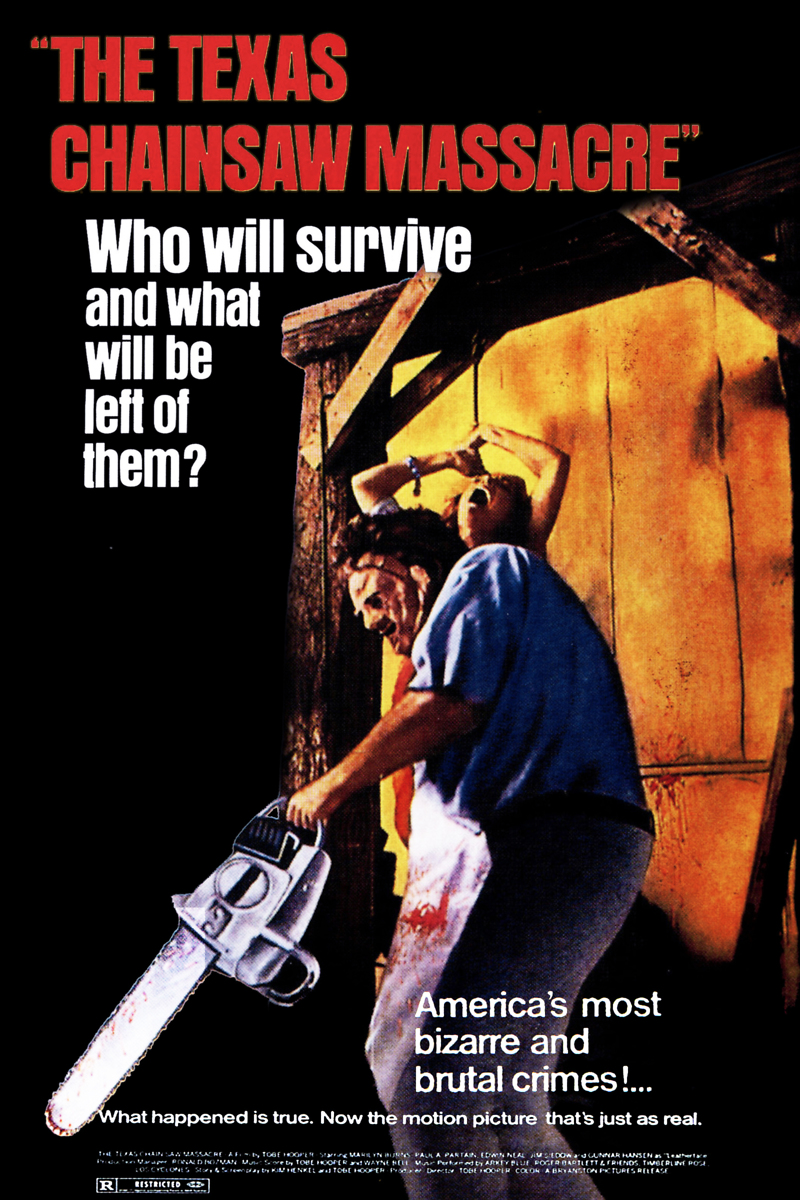
Originally released way back in 1974, The Texas Chainsaw Massacre continues to be one of the most iconic and influential horror films of all time.
Not only did the film terrify generations of filmgoers, it also undoubtedly inspired many people who lived up north to swear that they would never visit Texas. (Speaking as a Texan, I appreciate it!) So powerful was the impact of The Texas Chainsaw Massacre that it is regularly cited as being one of the first “gore” films, despite the fact that barely a drop of blood is seen throughout the entire film. Instead, what is seen is Sally (played by Marilyn Burns) screaming while running and Leatherface (Gunnar Hansen) dancing with that chainsaw.
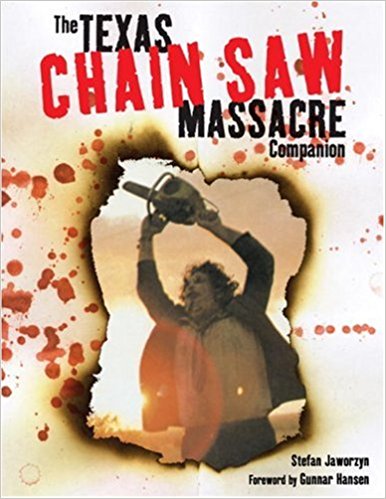
So, how did a group of hippies in Austin come to make one of the most famous movies of all time? That is the question that is answered in the 2004 book, The Texas Chainsaw Massacre Companion. Written by Stefan Jaworzyn and featuring a foreword by Gunnar Hansen, this breezy and entertaining book contains almost everything you could possibly want to know about this film. The book is largely an oral history, featuring lengthy quotes from the film’s cast and crew. (For the most part, Jaworzyn allows the interviews speak for themselves and only occasionally interjects any editorial commentary.) Along with detailing the film’s infamously difficult production (with Marilyn Burns nearly being driven to the point of an actual breakdown and Hansen, an otherwise sensitive poet, coming close to being possessed by his murderous character at one point), the companion also deals with crimes of Ed Gein and Tobe Hooper’s career both before and after his best known film.
Most interesting, to me, were the sections that dealt with how the head of the Texas Film Commission helped to secure The Texas Chainsaw Massacre a national distribution deal. Considering that The Texas Chainsaw Massacre basically portrayed Texas as being a place where you could get killed if you made a wrong turn, the involvement of the Texas Film Commission may seem strange at first. Some of the interviews in the book seem to suggest that the head of the Commission had a crush on Marilyn Burns.
It’s an entertaining book, even if I don’t agree with everything that Jaworzyn says. (He calls Psycho overrated at one point.) With the recent deaths of Marilyn Burns, Gunnar Hansen, and Tobe Hooper, The Texas Chainsaw Massacre Companion now serves as something of a tribute to these three artists and the film that, to the surprise of everyone, changed cinema forever.
Hi! Lisa here, filling in for Val, with today’s music video of the day!
On Saturday night, fans of both film and horror were saddened to learn of the death of Tobe Hooper. Tobe Hooper was a Texas original, a fiercely iconoclastic director who totally changed the face of horror when he directed a low-budget shocker called The Texas Chainsaw Massacre.
When it came time to pick today’s music video of the day, I decided to see if Tobe Hooper had ever directed a music video. It turned out that he directed exactly one and here it is:
According to almost everyone online, Dancing With Myself is a song about masturbation. However, Idol himself says that the song’s lyrics are actually meant to be quite literal. The song actually is about dancing with yourself. Here’s how it’s explained over on Songfacts:
“This song is commonly thought to be about masturbation, but it’s really more about dancing by yourself. Billy got the idea after watching Japanese kids at a Tokyo disco “dancing with themselves” in a nightclub. The kids would dance in a pogo style up and down, and there were mirrors in the club so they could watch themselves doing it… This song is about more than just dancing. Idol told Rolling Stone: “The song really is about people being in a disenfranchised world where they’re left bereft, dancing with their own reflections.”
As for how Tobe Hooper came to direct the video … well, I have no idea. I imagine he was hired because of his fame as the director of The Texas Chainsaw Massacre. This video came out a year after the original Poltergeist, a film that Hooper is credited with directing but which many people believed was actually directed by producer Steven Spielberg. (Poltergeist was a huge hit but the rumors of Hooper being a director-in-name-only permanently and unfairly damaged Hooper’s reputation.) As far as I know, this is the only music video that Tobe Hooper directed.
As for the video, it features neither masturbation nor Japanese nightclubs. Instead, it appears to be taking place in a post-apocalyptic setting. The beginning of the video reminds me a bit of Hooper’s underrated slasher film, The Funhouse.
Sweet and repressed Amy (Madchen Amick) is a college student who has too much on her plate. She has to take care of her greedy grandmother (Natalie Schaefer, of Gilligan’s Island fame). She has to read a book for her study partner (Corey Parker). She has to sew a dress for her older sister, Gloria (Daisy Hall). She has to find props for the school play. It is her search for props that leads to her buying an old chest at an estate sale. Inside the chest is a red cloak. Amy turns the red cloak into a dress but what she does not know is that the red cloak was previously won by Aztec priests while they conducted human sacrifices. As Professor Buchanan (Anthony Perkins) later explains, anyone who wears the dress will be driven to do evil.
Like Hitler’s Daughter and Deadly Game, I’m Dangerous Tonight was a USA original film. Like those two films, and despite the combined talents of the star of Psycho and the director of The Texas Chainsaw Massacre, I’m Dangerous Tonight is not very good. Perkins is mostly just used for exposition while Hooper’s direction suggests that his main concern was picking up his paycheck. I’m Dangerous Tonight will be best appreciated by fans of Madchen Amick. Amick is not only beautiful here but she also plays a character far different from Twin Peaks’s Shelly Johnson.
Also, be sure to keep an eye out for R. Lee Ermey, playing a tough, cigar-chomping police detective as only he can.
The first time I watched THE TEXAS CHAINSAW MASSACRE was at a drive-in around 1975. I remember laughing hysterically at the film; of course, I was tripping my brains out on mescaline at the time and laughed at anything! I’ve since viewed the film several times without chemical enhancement and I’m no longer laughing. I like it a lot, it’s a scary little exploitation shocker for sure, but one thing that really irks me is a certain segment of critics who treat it as some kind of metaphor with deep meaning.
Don’t get me wrong, there’s a lot to like here. The tension is gripping, the horror relentless, and Tobe Hooper did a terrific job working with a miniscule budget. It’s just that over the years, critics have overanalyzed the thing to death, expounding on the political and cultural ramifications of it’s themes and blah, blah, blah. Whether or not all this blathering about…
This October, I’m going to be doing something a little bit different with my contribution to 4 Shots From 4 Films. I’m going to be taking a little chronological tour of the history of horror cinema, moving from decade to decade.
This October, I’m going to be doing something a little bit different with my contribution to 4 Shots From 4 Films. I’m going to be taking a little chronological tour of the history of horror cinema, moving from decade to decade.
Some of y’all may have noticed that, whenever I don’t have much to say about a movie, I’ll usually start things about be praising either the film’s title or its poster art.
With that in mind, the 1979 film The Dark has got a great title. I mean, what self-respecting horror film could actually resist a movie called The Dark? It’s a title that promises horror and blood and no holds barred morbidity! And really, the title is so brilliant that it almost doesn’t matter that the film itself come no where close to delivering.
And finally, just check out the poster art!
Seriously, that’s a great poster! If I had been alive in 1979, I totally would have wanted to see this movie just because of the poster. Not only is the film called The Dark but the poster literally promises that this movie is going to be — and I quote — “A chilling tale of alien terror!”
Woo hoo!
Of course, The Dark didn’t start out as a chilling tale of alien terror. The Dark is one of those films where what happened behind the camera is far more interesting than what was actually filmed. The story behind The Dark is a classic tale of low-budget, exploitation filmmaking:
Originally, The Dark was going to be a story about a zombie decapitating people in Los Angeles. The zombie had once been a Confederate soldier who ended up resorting to cannibalism. As originally envisioned, the Dark would feature numerous scenes of that dead Confederate wandering around with a big axe that it would use to chop off heads.
Tobe Hooper, who was hot as a result of having directed The Texas Chainsaw Massacre, was brought in to direct. However, after just a few days of shooting, he was replaced. Depending on which version you read, Hooper was either fired or he walked off the set. Either way, all accounts seem to agree that Hooper didn’t see eye-to-eye with the film’s producers. (One of those producers was Dick Clark, the same guy who always used to host ABC’s New Year’s special.)
With Hooper gone, a new director was brought in. That director was John “Bud” Cardos, who had previously had a drive-in hit with Kingdom of the Spiders. Cardos finished the film but he had no emotional investment in it and that’s obvious when you watch The Dark today. Visually, The Dark looks and feels like an old cop show, the type that you might expect to turn up on a cable station that is specifically programmed to appeal to the elderly.
The film that Cardos completed featured a Confederate zombie with an axe. However, the producers showed that film to a preview audience and quickly discovered that nobody cared about a Confederate with an axe.
So, they made some changes.
At the time, Alien was the most popular film at the box office so the producers thought, “Why not add some special effects, redub some dialogue, and make our Confederate zombie into an alien?” Sure, why not?
Hastily, The Dark was reedited. All shots featuring the zombie with an axe were removed from the film. Instead, whenever the monster attacked, the film now featured a freeze frame of the monster’s face with some hastily added laser beams shooting out of his eyes. This would be followed by a freeze frame of the victim and stock footage of an explosion….
(That said, there’s still plenty of references to the alien removing people’s heads…)
Interestingly, there’s still a scene in the film in which a police detective suggests that the creature might be a zombie. “Zom-bies!?” his superior yells, “I don’t want to hear those two words again!” Well, don’t worry. It’s not a zombie! It’s an alien!
(You do have to wonder why an alien would be wearing jeans and flannel shirt but, then again, why would a Confederate zombie be wearing jeans and a flannel shirt? It’s a strange world.)
As you’ve probably already guessed, The Dark is a bit of a mess. The alien is going around Los Angeles and blowing people up. (Though a few times, he also rips off their heads because … well, we already went into that.) The father of one of the victims is a burned out writer and he’s played by William Devane. (This is the same William Devane who has played the President in nearly every movie and TV show ever made. Words cannot begin to express how bored Devane appears to be in this movie. Oddly, with his hair long and graying, Devane bears an uncanny resemblance to Law & Order SVU‘s Richard Belzer.) The father is investigating, even though the lead detective (played by Richard Jaeckel) tells him not to. A reporter (Cathy Lee Crosby) is also investigating. And then there’s a psychic (Jacquelyne Hyde) and the psychic somehow knows what the monster is and who is going to die next.
The characters do eventually cross paths. When the detective meets the reporter, the detective announces that he’s going to kill the killer. “38 caliber justice?” the reporter replies. “If he’s dead, he can’t kill again!” the detective explains and he kind of has a point.
(Making it even stranger is that, while the detective and the reporter talk, there’s a political protest gong on behind them. The protest consists of people jumping up and down.)
It’s all really messy because, while watching the movie, you get the feeling that none of the actors knew what anyone else was filming. It’s like six different films with six different tones and they’ve all been smashed together. It’s also not particularly scary because ultimately, the zombie alien is just a freeze frame with some hastily added laser beams. (It doesn’t help that the lasers occasionally go “pew pew” when they’re fired.)
4 Shots From 4 Films is just what it says it is, 4 shots from 4 of our favorite films. As opposed to the reviews and recaps that we usually post, 4 Shots From 4 Films is all about letting the visuals do the talking.
Let’s hop in the cinematic time machine and take a trip to the distant past with these 4 shots from 4 independent films!


 Sweet and repressed Amy (Madchen Amick) is a college student who has too much on her plate. She has to take care of her greedy grandmother (Natalie Schaefer, of Gilligan’s Island fame). She has to read a book for her study partner (Corey Parker). She has to sew a dress for her older sister, Gloria (Daisy Hall). She has to find props for the school play. It is her search for props that leads to her buying an old chest at an estate sale. Inside the chest is a red cloak. Amy turns the red cloak into a dress but what she does not know is that the red cloak was previously won by Aztec priests while they conducted human sacrifices. As Professor Buchanan (Anthony Perkins) later explains, anyone who wears the dress will be driven to do evil.


 Through the Shattered Lens