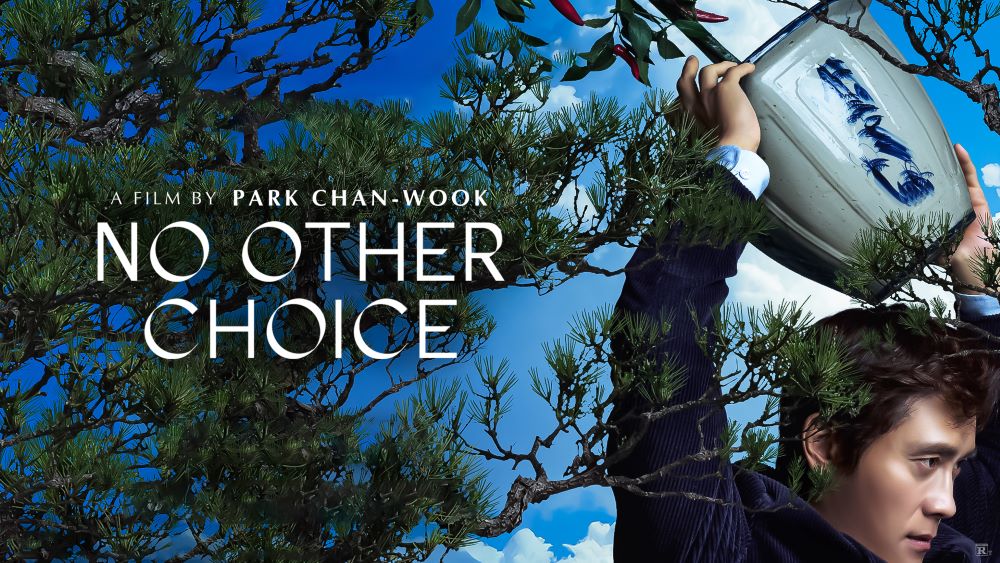
Review: No Other Choice (dir. by Park Chan-wook)


“I have no other choice.” — Yoo Man-su

No Other Choice grabs you right away with its wild premise—a loyal company man gets canned and decides to literally eliminate his job competition to claw his way back up. It’s one of the standout international films from last year, popping up on countless top films of 2025 lists for its gutsy mix of workplace rage and murderous absurdity. Park Chan-wook delivers a dark, twisty ride blending sharp satire with outright farce, and while it doesn’t always stick the landing perfectly, that bold energy and uncomfortable laughs make it a must-watch.

The story kicks off in a picture-perfect suburban home where Man-su, a longtime paper factory manager played by Lee Byung-hun, basks in the comforts of a solid middle-class life. He’s got the big house, loving wife Mi-ri, two kids, and even those flashy dogs that scream success. Everything feels polished and stable, almost too good to be true, which is exactly the point. Then the axe falls—layoffs hit, and suddenly Man-su’s years of service mean nothing in a brutal job market stacked against him. Every opening has a ranked list of candidates, and he’s always near the bottom. Desperation sets in, and he hatches a grim plan: take out the guys ahead of him one by one.

What makes this setup pop is how Park turns a simple “what if” into a mirror for real-world frustrations. Man-su’s logic spirals from understandable rage to unhinged obsession, repeating his mantra of having “no other choice” like it’s gospel. Each target he stalks feels like a warped reflection of himself—aging has-beens clinging to relevance or eager young hotshots with families of their own. It’s not just about the kills; it’s the quiet horror of seeing your own fears staring back. The film nails that sinking feeling of obsolescence, where loyalty gets you nowhere and the system chews people up without a second thought.

The action sequences are where Park’s signature style shines brightest. That first murder attempt is a masterclass in chaos—a shaky standoff with an antique pistol turns into a frantic, slapstick melee in some oversized wooden house. Blood flies, furniture shatters, and it’s all choreographed with such precision it borders on balletic. He mixes genuine tension with cartoonish escalation, making you laugh even as things get gruesome. It’s the kind of over-the-top violence that recalls his classics like Oldboy, but lighter, almost playful in its excess. You never know if the next swing will end it or devolve into more absurdity, and that unpredictability keeps the pulse racing.

At home, though, the real damage unfolds. Mi-ri, brought to life by Son Ye-jin in a quietly devastating turn, starts as the supportive spouse but cracks under the strain. They cut back on luxuries like tennis lessons and fancy music classes, but it’s the growing paranoia that poisons everything. Snide arguments erupt, kids get tangled in cover stories for the police, and the once-idyllic house feels like a pressure cooker. Park smartly shifts focus here, showing how one man’s breakdown ripples out to fracture his family. Mi-ri’s mix of worry, resentment, and tough love grounds the madness, reminding us this isn’t just a lone wolf tale—it’s about collateral damage in the pursuit of “normalcy.”

As a jab at corporate culture, the movie lands some solid punches. Those sterile job interviews and endless applicant lists capture the dehumanizing grind perfectly, where workers are just numbers on a spreadsheet. Man-su’s humiliation builds layer by layer, from polite rejections to outright indifference, culminating in a factory scene that’s equal parts poetic and punishing. He ends up as the last human holdout amid a sea of machines, a stark symbol of misplaced faith in the grind. Park doesn’t pretend to offer solutions, but he forces you to confront how capitalism turns colleagues into rivals and dignity into a luxury good.

That said, the film isn’t content to just indict the system—it digs into Man-su’s flaws too. He’s no innocent victim; he’s vain, stubborn, and blinded by pride. Moments of potential redemption pop up—a heartfelt chat with a fellow job-seeker, a glimpse of empathy for a rival dad—but he barrels past them every time. This refusal to pivot makes him compellingly human, a portrait of wounded ego that stops short of full villainy. Lee Byung-hun sells it all with subtle shifts: the forced smile in interviews, the twitchy hands during stakeouts, the hollow justifications whispered to himself. He’s magnetic, drawing sympathy even as you root for his comeuppance.

Visually, Park pulls out all the stops. Bold camera moves, clever framing, and those vintage thriller tricks—fancy dissolves, sharp cuts—give it a retro flair amid modern polish. Conversations crackle with visual wit, turning mundane chats into tense standoffs. The color palette swings from warm domestic glows to cold, shadowy nights, mirroring Man-su’s slide. It’s indulgent stuff, the kind of filmmaking that demands a big screen, though it occasionally tips into showiness when the plot needs room to breathe.

The supporting cast fleshes out the world nicely. Victims aren’t faceless; each gets a quick, vivid sketch that humanizes the body count. Detectives poke around with dry humor, adding a procedural edge without stealing focus. Son Ye-jin steals scenes effortlessly, her Mi-ri evolving from enabler to antagonist in the subtlest ways— a raised eyebrow here, a weary sigh there. It’s ensemble work that elevates the whole, making the satire feel lived-in rather than preachy.

Where it stumbles is in the pacing and bloat. The cat-and-mouse games repeat a bit too faithfully—stalk, scheme, screw-up, repeat—and by the third or fourth loop, the formula shows. Subplots with cops and side characters tangle up the momentum, diluting the core spiral. Park juggles a lot: farce, thriller beats, family drama, economic allegory. It mostly coheres, but you sense he’s wrestling to tie it all together. The ending, while punchy, leans hard on irony, which might leave some wanting deeper catharsis or ambiguity.

Still, flaws and all, No Other Choice pulses with invention and earned its spot as one of 2025’s best international gems, racking up mentions across year-end top lists from critics worldwide. It’s a timely gut-punch for anyone who’s felt the job market’s cruelty, wrapped in enough dark humor and style to linger. Not Park’s tightest, but his wildest in years—a messy, mean-spirited blast that dares you to laugh at the abyss. If you’re up for a thriller that treats resumes like kill lists and HR as the true horror, dive in. Just don’t expect tidy morals or easy outs; this one’s as complicated as real desperation gets.
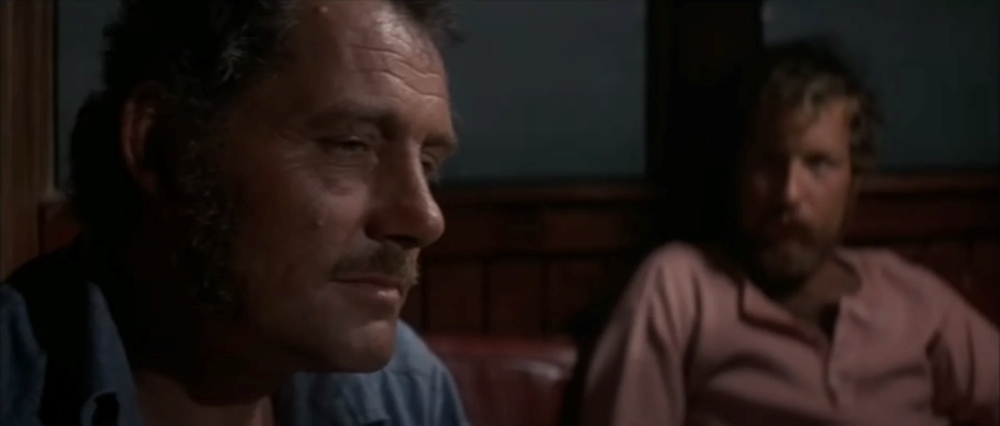
Scenes I Love: Jaws


“You know the thing about a shark, he’s got…lifeless eyes, black eyes, like a doll’s eye. When he comes at ya, doesn’t seem to be livin’. Until he bites ya and those black eyes roll over white.” — Quint

People have blamed Spielberg and his breakout film, Jaws, as the cause of the blockbuster mentality that studios have had since this film came out. Studios and producers wanted to recreate the ultra-successful box-office numbers of Jaws. Despite the fact that this film was modestly budgeted, people nowadays who think they’re film experts point to it as the culprit. They’ve called it the film that begun the dumbing down of Hollywood when creativity was sacrificed for profit.

Why did I pick a scene from this film as a favorite? I picked this particular scene because it’s one reason why the film succeeded and made people come back again and again. It’s a scene that perfectly captures one reason why we love to see films in a communal setting. We want to share the same experience and emotions this scene brought up from the pit of each audience’s psyche.

Jaws didn’t ruin the creativity in filmmaking. I like to think that this one film was a filmmaker at his most creativie (shark wouldn’t work properly so Spielberg kept it off-screen which just added to the terror and tension in the film). This very scene goes down as one of the greatest film monologues. It sets up the danger the trio faces with some anecdotal evidence from the very person who survived the experience, but who might have become unhinged because of it. I love the look of frozen terror on the face of Richard Dryefuss’ character as he listens to Robert Shaw tell the story of the ill-fated journey of the U.S.S. Indianapolis.

This latest “Scenes I Love” is why I consider Spielberg one of the best filmmaker of his generation and probably beyond that.

Horror On TV: Thriller 1.28 — Yours Truly, Jack The Ripper (dir by Ray Milland)


Since I reviewed Robert Bloch’s novel, The Night of the Ripper, earlier today, it seems only appropriate that tonight’s excursion into televised horror should be based on another Robert Bloch story about Jack the Ripper!

Yours Truly, Jack The Ripper is a classic episode of the 60s anthology series, Thiller.  This episode aired on April 11th, 1961 and it was directed by the Oscar-winning actor, Ray Milland!

Enjoy!


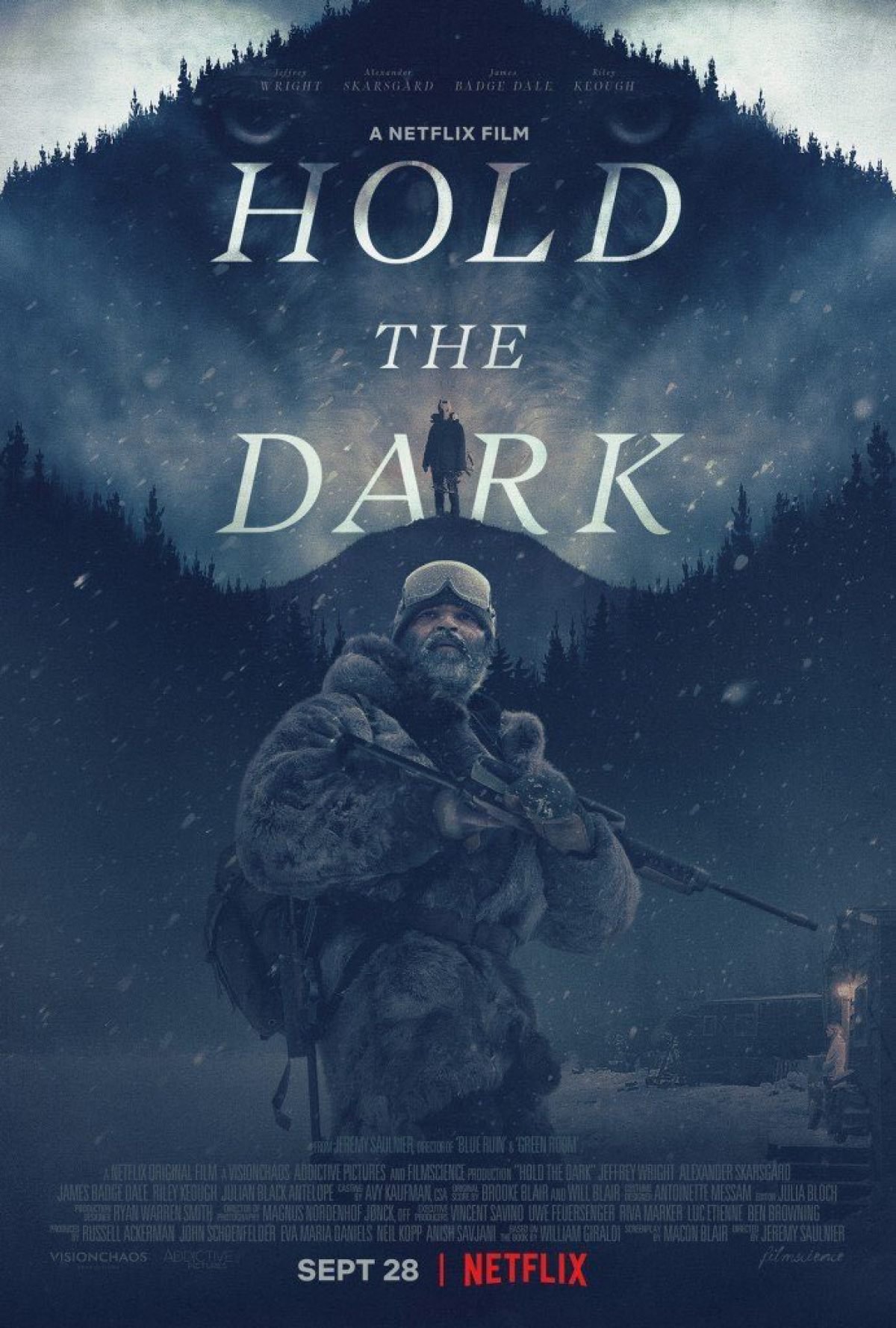
Horror Review: Hold the Dark (dir. by Jeremy Saulnier)


Hold the Dark

Jeremy Saulnier, writer and director of Blue Ruin and Green Room, invites the brave and the curious to experience his latest creation steeped in the dark, foreboding Alaskan wilderness with a hint of the supernatural and folklore mysticism.

One could never accuse Saulnier of being timid when it comes to on-screen violence. While there’s countless other filmmakers who can and have put on the screen much more dynamic and violent sequences, Saulnier is more of the Peckinpah school of film violence instead of the Michael Bay. His films portray violence at its most unglamorous. His study of the sort of violent means man can inflict on another man are neither titillating or exploitative.

He sees man’s tendency towards violence as primal and something inherent in every man with the veneer of civilization the only thing holding it back. Man, in how Saulnier sees him, is not a civilized species but one playing at one and who feels more at home practicing such violent means.

Whether it’s as an itinerant caught up in an old school blood feud or a hardcore punk band fighting to stay alive against some Northwest backswood Neo-nazi skinheads. They all dig down deep to find that inner primal self that revels in the bloodletting even when they try to hold on to that small slice of civilized behavior they’ve been taught was necessary to survive.

With Hold the Dark, Jeremy Saulnier veers away from the much more straightforward narrative of his last two films and more like an ambiguous campfire tale that may seem obtuse for some. The very ambiguous nature of the plot will definitely confound some viewers who prefer their thrillers to be easy to follow with well-defined roles of protagonist and antagonist. While Hold the Dark veers from that very linear narrative focus of Saulnier’s last two films, it does share those films study of the blurred lines of who is good and who is bad.

The film starts off with retired naturalist Russell Core (played by Jeffrey Wright) being summoned by grieving mother Medora Slone living in a remote village in the northern reaches of Alaska. She’s just lost her young son to what she says are a pack of wolves who have also taken two other children prior to her own. She knows that he is also a wolf expert and has hunted and put down wolves in his past. She wants the animals who killed her son found and killed in order to have an answer and closure for her husband who is currently deployed in Iraq.

From the moment Russell arrives in Medora’s village of Keelut, Alaska the film slowly,  but surely moves from being a man-vs-nature story to something that’s more a dark fairytale whose ending will definitely not be happily ever after. This is where Hold the Dark will either grab a viewer and tell them to just hold on and experience the violent, albeit sometimes confusing, happenings in this grim and dark corner of the world or they will fail to hold on and remain confused to what’s transpiring. Wanting to know whats going on in concrete, by-the-numbers facts and story beats.

Like Saulnier’s previous two films, Hold the Dark doesn’t shy away from showing how brutal man can be when it comes to inflicting pain and damage on another human being. The violence comes sudden, brutal and horrifically efficient in how a body can fall apart.

The screenplay, this time written solely by fellow collaborator Macon Blair, does bring some very interesting questions as to whether violence (or darkness) is inherent in man that is held at bay by the “light” of civilization or is it something that is learned, picked up like disease and passed on from generation to generation. Is violence a natural cycle that is just part of what makes humanity human or is it one that can be broken and left behind and cured of. These are some questions that sometimes has no easy answer and that lends the film’s obtuseness that may frustrate some viewers. Yet, it’s the film’s very ambiguousness that allows the viewer to marinate on the questions and ideas proposed. Whether there’s an answer to these questions will be up to the viewer.

Where the film’s story may frustate, the performances by the cast is excellent from start to finish. Whether it’s Jeffrey Wright’s Russel Core who is the stand-in for the viewer and one who also shares some of the viewers befuddlement at the situation he has found himself in but unable to break free from. Then there are Riley Keough and Alexander Skarsgard playing the Slone’s. One the grieving mother and the other the husband away at war whose reaction to news of his son’s death pushes the film’s narrative from a whodunit and straight into horror territory (some would say slasher film trope with creepy mask included).

Hold the Dark may not be a straight progression from what Jeremy Saulnier has done before with Blue Ruin and Green Room, but it is one that shares similar themes and ideas. It’s a film that allows for Saulnier to dabble in the more esoteric but nonetheless still keep his signature style as an auteur of raw, primal violence. There’s nothing light or hopeful in this latest dark fairytale from Jeremy Saulnier, but then again fairytales were never happy and hopeful to begin with, but tales to try and explain the encroaching darkness and something to help one hold it at bay.

Horror on TV: Thriller 2.20 “The Hollow Watcher” (dir by William F. Claxton)


Here’s one final episode of Thriller for this October’s horrorthon!

In this episode, we learn what happens when you stuff a dead body in a scarecrow.  The scarecrow stalks you!

Seriously, scarecrows are so freaky.

Enjoy!


Horror on TV: Thriller 2.19 “A Wig for Miss Devore” (dir by John Brahm)


For tonight’s televised horror, we have yet another classic episode of the Boris Karloff-hosted anthology series, Thriller!

In the Wig for Miss Devore, Sheila Devore (Patricia Barry) is an actress looking to make a comeback.  She’s recently been cast in a film about a real-life witch who was executed centuries ago.  Sheila’s so determined to make the part her own that she’s even willing to wear a wig that once belonged to the dead witch.

Needless to say, that proves to be a mistake for her.

However, it’s enjoyable for us!

Horror on TV: Thriller 2.18 “The Storm” (dir by Herschel Daugherty)


For tonight’s televised horror, we have another classic episode of the Boris Karloff-hosted anthology series, Thriller!

In this creepy and atmospheric episode, a newlywed (Nancy Kelly) and her cat attempt to get through a stormy night in an isolated house.  But are they really alone?

Watch, find out, and enjoy!


Horror on TV: Thriller 2.16 “Waxworks” (dir by Herschel Daugherty)


In this episode of the Boris Karloff-hosted anthology series, Thriller, murders are being committed all over Europe.  What do all of the murders have in common?  They have all happened outside of the same traveling wax museum!

Is it a coincidence or are the wax figures coming to life and committing murder?

This episode was written by Robert Bloch of Psycho fame and originally aired on January 8th, 1962.

Horror on TV: Thriller 2.14 “Portrait Without A Face” (dir by John Newland)


For tonight’s televised horror, we have another episode of the Boris Karloff-hosted anthology series, Thriller!

In Portrait Without A Face, an arrogant painter is murdered.  No one knows who murdered him but don’t worry.  Just because he’s dead, that doesn’t mean the artist has to stop painting!  In fact, his first post-death painting might just be a picture of the person who killed him…

Horror on TV: Thriller 2.5 “God Grante That She Lye Stille” (dir by Herschel Daugherty)


For tonight’s horror on television, we have an episode from the second season of the Boris Karloff-hosted anthology series, Thriller.

In God Grante That She Lye Stille, Lady Margaret Crewer (Sarah Marshall) returns to her ancestral home, hoping to collect her inheritance.  However, as soon becomes clear, the house is haunted by the spirit of one of her ancestors, a witch who was burned at the stake.

Who doesn’t love a good ghost story of Halloween?

Enjoy!