TV Review: Night Gallery 1.2 “Room With A View/The Little Black Bag/The Nature of the Enemy”


The second episode of Night Gallery originally aired on December 23rd, 1970 and it featured three stories, two of which were written by Rod Serling.  Serling, himself, introduced all three of the stories by inviting us to look at the paintings that may or may not have been inspired from them.

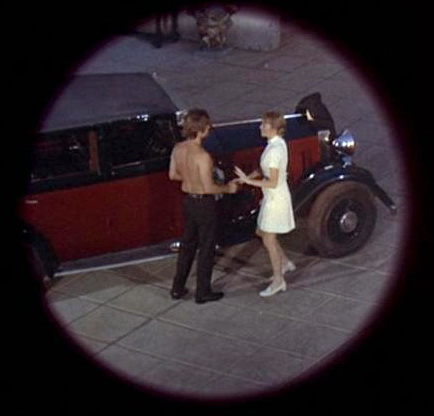
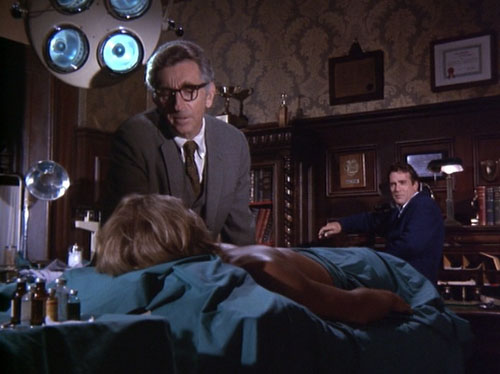
Room With A View (dir by Jerrold Freedman, written by Hal Dresner)

When a cranky, bed-bound man (Joseph Wiseman) discovers this his wife (Angel Tompkins) is cheating on him, he comes up with an elaborate scheme to get revenge.  It all hinges on his somewhat nervous nurse (Diane Keaton), who has no idea that she’s being manipulated.

This short segment is well-done but it doesn’t really feel like it belongs on an episode of Night Gallery.  There’s no elements of horror or science fiction to be found in this story.  Instead, it’s just about a manipulative man seeking revenge on his wife.  It’s actually easy to imagine this segment as being a flashback on a Monk-style detective show.  You just need a detective saying, “I finally figured out how you did it!”

For most viewers, probably the most interesting thing about this segment will be the presence of a young Diane Keaton, playing the nurse and laughing nervously at her patient’s rather intrusive questions.

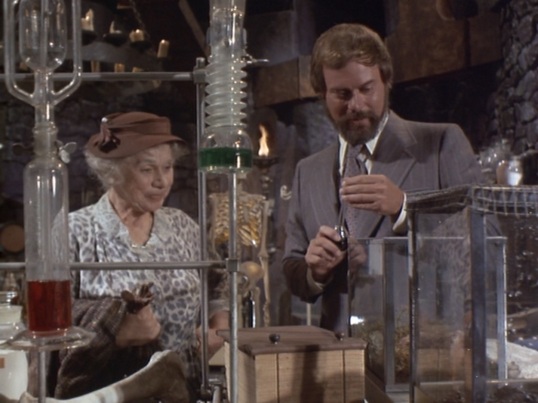
The Little Black Bag (dir by Jeannot Szwarc, written by Rod Serling)

In the 30th Century, a careless accident at a time travel station sends a black medical bag into the past.  It arrives in 1971, where it’s discovered by two homeless gentlemen.  One of the men is a disgraced former doctor named William Fall (Burgess Meredith).  The other, Hepplewhite (Chill Wills), has no medical experience but he does have a greedy spirit.  Fall wants to use the bag to do good,  Hepplewhite wants to use the bag to make money.  Meanwhile, in the future, poor put-upon Gillings (George Furth) is just trying to figure out what to do about the missing bag.

The Little Black Bag is this episode’s high point, featuring good performances from Meredith, Wills, and Furth and also ending with properly macabre twist.  This is another Rod Serling story about how terrible, at heart, most people are but Jeannot Szwarc’s direction is fast-paced and he never allows things to get too heavy-handed.

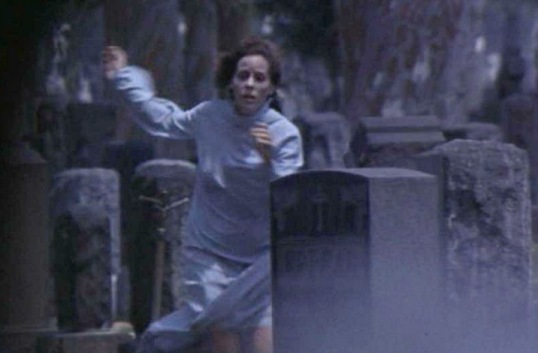
The Nature of the Enemy (dir by Allen Reisner, written by Rod Serling)

NASA’s latest expedition to the Moon has run into trouble.  The astronauts have discovered that there is something living on the lunar surface.  On Earth, the director of NASA (Joseph Campanella) tries to keep everyone calm while also figuring out the nature of the enemy.

This segment has an intriguing premise but it’s let down by a so-so execution.  Like a lot of less-than-effective Night Gallery segments, this one features a story that doesn’t so much conclude as it just stops after a somewhat weak punchline.

So, the second episode of Night Gallery was not an improvement on the first and it was nowhere close to matching the pilot.  Watching this episode, it was hard not to feel that the show had a few growing pains.  Did it want to be a horror anthology or a collection of short skits?  The 2nd episode reveals a show that was still trying to find it’s voice.

Previous Night Gallery Reviews:

  1. The Pilot
  2. The Dead Man/The Housekeeper


TV Review: Night Gallery 1.1 “The Dead Man/The Housekeeper” (dir by Douglas Heyes and John Meredyth Lucas)


As I wrote yesterday, I recently decided to sit down and watch every episode of the horror anthology series, Night Gallery.  Yesterday, I watched and reviewed the pilot movie.  Tonight, I watched the first episode of the weekly series.

Though the pilot originally aired in 1969, Night Gallery did not start to air as a regular series until December of 1970.  The first episode of season one was broadcast on December 16th, 1970.  As all of the episodes did, it stated with Rod Serling walking through a dimly lit museum and inviting the audience to look at a macabre painting.  Each painting was inspired by a different story.  Or were the stories inspired by the paintings?  To be honest, I don’t think the show ever made that clear.

The first episode featured two stories, both of which dealt with mad scientists.

The Dead Man (written and directed by Douglas Heyes)

The first segment was The Dead Man, an enjoyably atmospheric if somewhat difficult-to-follow story about a scientist, a young man with an amazing ability, and the woman who is torn between the two of them.

Carl Betz plays Max Redford, a doctor who has discovered that, under hypnotic suggestion, John Michael Fearing (Michael Blodgett) can simulate any medical condition, no matter how severe.  When Max reveals his discovery to his associate, Dr. Talmadge (Jeff Corey), Talmadge is concerned that Fearing will suffer permanent damage as a result of Max’s experiments.  Nonsense! Max explains.  All he has to do is give Fearing the proper signal and he’ll pop right out of his condition, as good as new.

Max decides to put Fearing to the ultimate test by having him simulate death.  However, when Fearing goes under, he dies for real.  Was it just an accident or did Max — who suspects that Fearing was having an affair with his wife (Louise Sorel) — secretly mean for Fearing to die?

The Dead Man raises some intriguing questions about life, death, and medical ethics.  It also has a quartet of good performances with Carl Betz doing an especially good job as Max.  Michael Blodgett showed up in a lot of early 70s films and TV shows and he was always convincing as a decadent hedonist.  The entire segment is full of creepy atmosphere but the ending is a bit of a let down.  After a great set-up, the segment just kind of fizzles out.

The Housekeeper (written by Heyes, directed by John Meredyth Lucas)

In the second segment, our mad scientist is named Cedric Acton (Larry Hagman).  Whereas Max Redford, in the previous segment, was misguided, Cedric Acton is just crazy.  Through the use of black magic (it involves a frog), Cedric has been experimenting with soul and brain transference.  (There’s an oinking chicken and a clucking pig in his laboratory, just in case anyone’s wondering how the experiments are going.)

Because Cedric loves his wife’s body but hates her personality, he wants to put the soul of his kindly housekeeper (Jeanette Nolan) into the body of his wife, Carlotta (Suzy Parker).  At first, the experiment is a success but things get complicated and …. well, I’m not really sure what it all leads to because this is one of those stories that just kind of ends without really offering up any type of resolution.

The Housekeeper is meant to be a comedy but it’s a bit too mean-spirited to really work.  This segment really calls out for karma to intervene and for Cedric’s soul to end up in something else’s body but instead it just ends with Cedric continuing his experiments.  It’s more than a little dissatisfying.  Larry Hagman does a good job playing Cedric, though.  He’s convincingly crazy.

Especially after the pilot, it’s hard not to be disappointed by the first episode of Night Gallery.  Both stories had potential but they were let down by weak endings.  Oh well.  Hopefully, tomorrow’s episode will be an improvement!

Film Review: Night Gallery (dir by Boris Sagal, Barry Shear, and Steven Spielberg)


Night Gallery was a horror anthology series that aired on NBC in the early 70s.  Each episode featured Rod Serling, of Twilight Zone fame, serving as the curator of a museum where all of the paintings have a somewhat macabre theme.  (One could even say that the museum was a …. wait for it …. night gallery!)  Serling would give each painting a properly pithy introduction and then the audience would see the story behind the artwork.  It was a bit like the Twilight Zone, except the Night Gallery episodes were in color, they were all horror-themed, and, for the most part, they steered away from social commentary.  The series ran from 1970 and 1973 and it still airs in syndication and on some of the retro stations.  (I believe it currently airs on Comet TV.)  Even if it wasn’t as consistently good as Twilight Zone, it’s still a pretty fun little series.

Two Christmases ago, I was gifted  Night Gallery: The Complete Series on DVD.  Though I’ve watched several episodes from the DVD, I recently realized that I have never actually sat down and watched every episode in order.  With the world currently shut down due to the pandemic (a development that, if we’re going to be honest, sounds like something Rod Serling would have used on the Twilight Zone), I figured what better time to watch the entire series then now?

I started out by watching the Night Gallery pilot film.  This originally aired on November 8th, 1969, a full year before Night Gallery became a weekly series.  It features three different stories (all written by Rod Serling) of the macabre.  As with every episode of the subsequent series, each story is introduced by Serling standing in front of a painting.  In the pilot, though, the museum is rather bare and the painting’s are a bit minimalist.  I have to admit that, as a lover of the baroque, I was a bit disappointed in that aspect of the pilot.

But what about the stories themselves?  Read on!
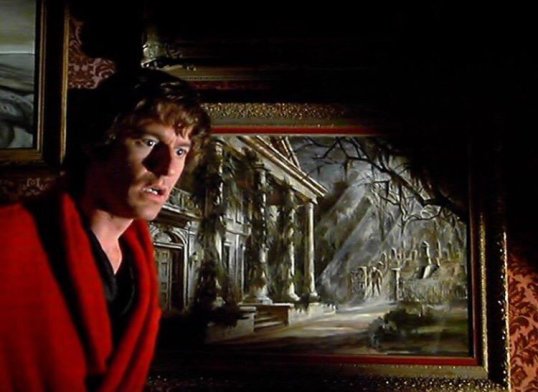
The Cemetery (dir by Boris Sagal)

The first story was The Cemetery, a cheerfully gruesome little tale that featured Roddy McDowall and Ossie Davis.  McDowall plays Jeremy, a spoiled young man who murders his uncle so that he might inherit the dead man’s estate.  At first, it looks like McDowall’s plot is a complete success but then McDowall notices a painting of the family graveyard hanging above a staircase.  (To be honest, it seems odd to hang a painting of a graveyard in the foyer but I guess that’s something old rich people do.)  The painting keeps changing.  One minute, the painting looks normal.  The next minute, it features a newly dug grave.  And then something emerging grave.  And then something heading towards the house….

Is Jeremy losing his mind or is the painting warning him that his uncle has risen from the dead and is seeking revenge!?  You’ll probably be able to guess the answer long before poor Jeremy but no matter.  This is a fun little horror story and it benefits from two enjoyably arch performances, from McDowall and, in the role of a butler who may have an agenda of his own, Ossie Davis.

Eyes (dir by Steven Spielberg)

Of the three stories presented in the pilot, Eyes probably gets the most attention from critics because it not only stars Joan Crawford in one of her final performances but it was the professional directorial debut (if you don’t count Amblin’) of 22 year-old Steven Spielberg.  Spielberg apparently had some issues dealing with the veteran crew members, many of whom didn’t like the idea of taking orders from a 22 year-old.  (It probably didn’t help that pictures from that era suggest that Spielberg looked several years younger than his age.  Let’s just say that it’s easy to understand why he eventually grew that beard.)  I’d like to think that Joan Crawford yelled at everyone and defended Spielberg and maybe even Rod Serling came down with Luca Brasi and said, “You’re going to the give this kid the respect he deserves or your brains are going to be all over that union contract.”  I don’t know if that’s true but it’s a nice thought.

That said, Eyes is pretty good.  Even if the crew doubted him, Spielberg proved himself as a director with this story.  It’s about a hateful and selfish woman (Joan Crawford) who happens to be both rich and blind.  She has manipulated a doctor into performing an experimental operation that will allow her to see.  The only catch is that the operation will only be good for 22 hours and a donor (Tom Bosley, as a bookie who is in trouble with the mob) will be required to give up his eyes so that Crawford can have those 22 hours.

On the one hand, this is very-much a Rod Serling-type tale.  It’s easy to imagine Eyes, with its belief in karma and its final macabre twist, as a Twilight Zone episode.  At the same time, Spielberg very much brings his own signature style to the film, livening up dialogue-heavy scenes with interesting camera angles and getting good performances from Crawford, Barry Sullivan, and Tom Bosley.  Eyes is a clever story but, for modern viewers, the most interesting thing about it will be discovering that, even at the age of 22, Spielberg already had a clear directorial style.
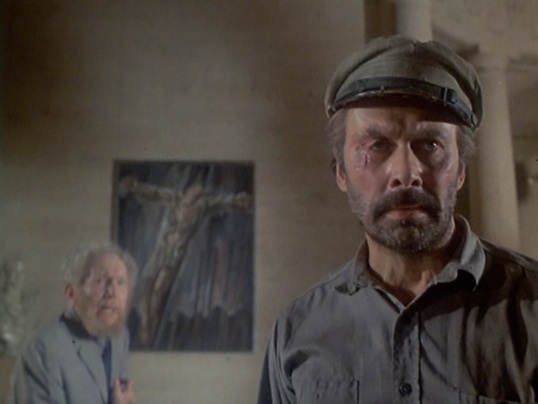
The Escape Route (dir by Barry Shear)

The Escape Route is about an Nazi war criminal named Joseph Strobe (played by Richard Kiley) who is hiding out in South America and spending all of his time nervously looking over his shoulder.  One day, he enters a museum where he finds himself drawn to two paintings.  One painting features a man who has been crucified in a concentration camp, which we learn was Strobe’s trademark back when he, himself, was a camp commandant.  The other painting features a fisherman in a peaceful setting.  Even though Strobe imagines himself as the peaceful fisherman, his attention keeps getting redirected to the painting of the concentration camp.  Soon, Strobe realizes that a survivor of the camp (played by Sam Jaffe) is also in the museum and that he is studying the painting as well.

Compared to Eyes and especially The Cemetery, The Escape Route may seem like a rather low-key story but it has a power that sneaks up on you.  Hiding out (as many real-life Nazi war criminals did) in South America, Strobe is full of excuses for his past and he may indeed be sincere in his wish that he had just become a fisherman as opposed to a brutal Nazi.  But, in the end, Strobe can neither escape his past nor his final punishment.  Justice cannot be escaped, no matter how hard Strobe tries to outrun it.  In the end, there is no escape for the wicked.  Richard Kiley and Sam Jaffe both give excellent performances.  The Escape Route will stick with you.

As a series, Night Gallery was a bit uneven but the pilot stands as a classic of its type, featuring three short films that all deserve to be remembered.

As for me, I’m going to try to watch an episode or two a day.  I may review a few more Night Gallery episodes here on the Shattered Lens.  As I said, the series itself was a bit uneven and not every episode is as good as the pilot.  Still, there’s definitely some gems to be found in the Night Gallery and I’ll share them as I come across them.

TV Review: Chilling Adventures of Sabrina 3.4 “The Hare Moon” (dir by Viet Nguyen)


I have to admit that I groaned a bit when I discovered that the fourth episode of part 3 of Chilling Adventures of Sabrina was going to center around yet another holiday.  Seriously, how many holidays do these witches have to celebrate over the course of year?  This time, the holiday was the Hare Moon, which involves everyone dressing in white, going on a picnic, and not killing a rabbit.  The holiday itself doesn’t make much sense and, to the show’s credit, this episode opens with Sabrina telling her aunts that it doesn’t make much sense.

So, I wasn’t expecting much from The Hare Moon but, to my surprise, it actually turned out to be a pretty good episode.  At the very least, it held my interest and that’s more than I can say for the episode that came immediately before this one.  I think it helped that a good deal of this episode took place in the woods during the day, which meant that I could, for once, actually see what was happening without having to strain my eyes.  I know that I spend a lot of time complaining about how underlit and dark the majority of Sabrina‘s interior scenes are but I think this episode proved my point.  When I could actually see who was talking, it was a lot easier for me to actually care about what they were talking about.

The highlight of this episode came when, during the Hare Moon ceremony, the witches ran into the pagan carnival people, who were all celebrating a holiday of their own.  The interaction between the two groups was wonderfully awkward and, even more importantly, the carnival people seem like worthy adversaries to the witches.  The carnival people worship the Green Man and, by the end of the episode, they had delivered an ultimatum to the witches.  The witches can either worship the Green Man or they can die.  Since the covens powers have been weakened by a petulant Satan, the witches are momentarily at a disadvantage.

In other developments, Harvey and Roz decided to investigate the carnival on their own, which led to Roz getting turned into a statue and …. well, I mean, it’s Harvey and Roz.  If either one of them had a personality beyond Harvey being amiably stupid and Roz having an overprotective father, it might be interesting but they don’t so who cares?  Nick also ended up setting Satan free because Nick’s main reason for being on the show is to do stuff like that.  Of course, the Spellmans were going to free Satan anyway so that they could get back their powers but Nick decided to go ahead and do it so now the Spellmans are still weak and even more screwed than before.  Way to go, Nick!

Anyway, this was actually a pretty entertaining episode.  The carnival people are wonderfully sinister and Will Swenson was well-cast as their leader. Kiernan Shipka remains the show’s greatest strength and even Miranda Otto and Lucy Davis got a few good lines in this episode.  There was still a bit too much filler but all in all, this was one of the better episodes.  If only every episode was this good.

TV Review: Chilling Adventures of Sabrina 3.3 “Chapter Twenty-Three: Heavy Is The Crown” (dir by Alex Pillai)


What’s this?, you ask.  Just now, you’re finally getting around to reviewing Chapter 23 of Chilling Adventures of Sabrina?

Admittedly, it has taken me a while.  The third season or third part or whatever the Hell you want to call it of this show was released on Netflix all the way back in January.  That’s a long time ago even by normal standards.  In May of 2020 (this is May, right?), January seems as if it might as well have been a decade ago.  You remember what the world was like in January — Iowa caucuses, open movie theaters, strong economy, and no social distancing — and it feels like some sort of lost age.  Case reviewed the first two episodes of Sabrina‘s third season back in February.  I was supposed to review episodes three and four as soon as I got back from my vacation in March.  Of course, as soon as I got back, the entire world went into lockdown and it was easy to get distracted from the latest Greendale drama.

Plus, I have to be honest.  So far, for the most part, I just haven’t enjoyed Chilling Adventures of Sabrina.  There have been a few tolerable episodes and Kiernan Shipka deserves to be a bigger star but the show itself often feels like a dead end.  The pace is often maddeningly slow and, other than Sabrina, almost all of the characters are rather flat and dull.  With the exception of Sabrina, everyone gets one defining trait and the show tends to beat viewers over the head with that trait.  As such, Aunt Zelda is always going to be arch and dismissive.  Hilda is always going to be naive and neurotic.  Ambrose is always going to decadent in the most boring ways possible.  Harvey is always going to be a dullard.  Roz is always going to be boring.  Beyond the one-dimensional characters, the whole look of the show bugs me.  Why does no one in Greendale ever turn on a light?  Why do I always have to strain my eyes trying to see what’s happening?  It gets frustrating.  Working up any enthusiasm to sit through another one of Sabrina’s adventures can be a struggle.

And yet, I will continue to watch the show because I do think that it has potential.  Now, to be honest, some of that is because the show is often so bad that it has nowhere to go but up.  But occasionally, there will be an interesting twist or a line of dialogue that doesn’t crash to the ground with a thud.  It doesn’t happen often but it does happen enough that I keep hoping Chilling Adventures will get things together.  My main hope is that, someday, the show will actually be worthy of Kiernan Shipka’s consistently excellent lead performance.

Just take the third episode of Part Three for example.  On the plus side, this episode features a trip to a wonderfully creepy carnival.  And even though the carnival itself is pretty obviously borrowed from Something Wicked This Way Comes and The Seven Faces of Dr. Lao, it’s still a lot of fun and effectively surreal and ominous.  However, to get to the carnival, we have to suffer through a lot of underlit drama featuring one-note characters.  We have to sit through Roz and Harvey having the least interesting relationship ever to appear in a Netflix drama.  We have to deal with Nick and his PSTD.  We have to deal with Miranda Otto delivering all of her lines in the same monotonous style.  We also have to sit through yet another quest.  In this case, Sabrina has to find three artifacts to hold onto the title of the ruler of Hell.  She manages to find Herod’s Crown but she still loses it to her rival for the throne, Prince Caliban.  So, I guess Sabrina is going to have to find the other two artifacts over the course of the season. I’d probably care more if Hell, as presented on this show, wasn’t so damn boring.  Presenting witchcraft as being tedious might make for an effective short film but making an entire series out of it is another thing all together.

And yet, Kiernan Shipka gives such a good performance in the lead role that you can almost overlook how annoying the show itself tends to be.  Shipka brings so much sincerity to her role that you want Sabrina to succeed.  I just wish the show was more often worthy of the talents of its star.

Oh well.  Fear not!  I actually liked the episode that came after this one.  I’ll be rewatching and reviewing it soon!


Guilty Pleasure No. 46: Bar Rescue


As I write this, I’m watching Bar Rescue on the Paramount Network and I’m trying to figure out why it is that I like this annoying show.

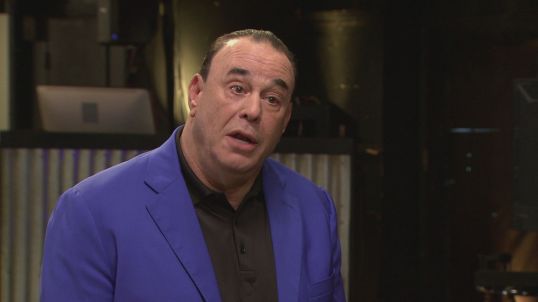
Bar Rescue, of course, is one of those shows where a jackass goes into a failing business — in this case, a bar — and basically screams at everyone for an hour until the bar starts making money.  It stars Jon Taffer, who has all of the charm of a low-level gangster who desperately needs to make his quota for the week or else the capo is going to break his thumbs.  The main them of each episode is that Taffer takes “bar science” very seriously and apparently cannot fathom a world where anyone tries to do anything different or quirky with their business.

If you search the internet, you’ll find all sorts of stories about the bars that Taffer “saved.”  A good deal of them went out of business after Taffer gave them their makeover.  Several of them immediately went back to the way they were running things pre-Bar Rescue.  Some of those bars have survived and some of them have not.  Taffer always makes a big deal about renaming almost every bar that he saves.  It’s rare that anyone sticks with Taffer’s new name.

I have to admit that I rarely drink so I’ve never really cared that much about bars.  In fact, it’s kind of hard for me to imagine anyone caring about the decor of the place where they’re getting drunk.  That may be one reason why I always find it oddly compelling to listen to Taffer rant and rave, as if designing the perfect bar is somehow the same thing as restoring the Sistine Chapel.  Whenever Taffer brings in his bar experts, I find myself smirking a little bit because Taffer’s experts are usually just people who are obviously angling for a show of their own.  The “experts” tend to be so condescending that I actually look forward to people talking back to them.

Speaking of people talking back, another reason that I watch Bar Rescue is because there’s always a chance that someone might throw a punch at Jon Taffer.  Seriously, he’s just obnoxious!  It’s interesting to compare him to someone like Gordon Ramsay, who is just as loud and overbearing but who also somehow remains likable through the whole ordeal.  Taffer just comes across as being a bully.

(What’s funny is that, while I was researching the bars that the show previous rescued, I came across several comments from people who worked at those bars.  Most of them said that Taffer was actually very polite and rather affable off-camera.  He plays a bully for the ratings and …. well, Hell, I’m watching so I guess it’s working.)

Watching the show in the age of Coronavirus, Bar Rescue almost feels like an artifact from a different age.  Today, I watch it and I notice the huge crowds of people, all pressed up against each other in the bar.  I notice all of the hand-shaking.  (Taffer almost always shakes the bar owner’s hand at the end of each episode.)  Just the fact that the show features a different bar every week makes Bar Rescue feel like something you might find in a time capsule.

Like I said, I don’t usually drink.  But, as soon as all this is over, I’m going out and getting so drunk.  (Well, buzzed.  Actually, I’ll probably just go out and have a glass of water while everyone else gets drunk.  But still, I’m going out, dammit!)  Until then, I guess I can just watch Bar Rescue….

Previous Guilty Pleasures

  1. Half-Baked
  2. Save The Last Dance
  3. Every Rose Has Its Thorns
  4. The Jeremy Kyle Show
  5. Invasion USA
  6. The Golden Child
  7. Final Destination 2
  8. Paparazzi
  9. The Principal
  10. The Substitute
  11. Terror In The Family
  12. Pandorum
  13. Lambada
  14. Fear
  15. Cocktail
  16. Keep Off The Grass
  17. Girls, Girls, Girls
  18. Class
  19. Tart
  20. King Kong vs. Godzilla
  21. Hawk the Slayer
  22. Battle Beyond the Stars
  23. Meridian
  24. Walk of Shame
  25. From Justin To Kelly
  26. Project Greenlight
  27. Sex Decoy: Love Stings
  28. Swimfan
  29. On the Line
  30. Wolfen
  31. Hail Caesar!
  32. It’s So Cold In The D
  33. In the Mix
  34. Healed By Grace
  35. Valley of the Dolls
  36. The Legend of Billie Jean
  37. Death Wish
  38. Shipping Wars
  39. Ghost Whisperer
  40. Parking Wars
  41. The Dead Are After Me
  42. Harper’s Island
  43. The Resurrection of Gavin Stone
  44. Paranormal State
  45. Utopia

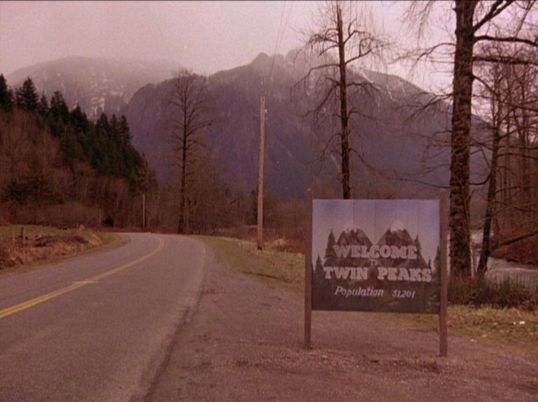
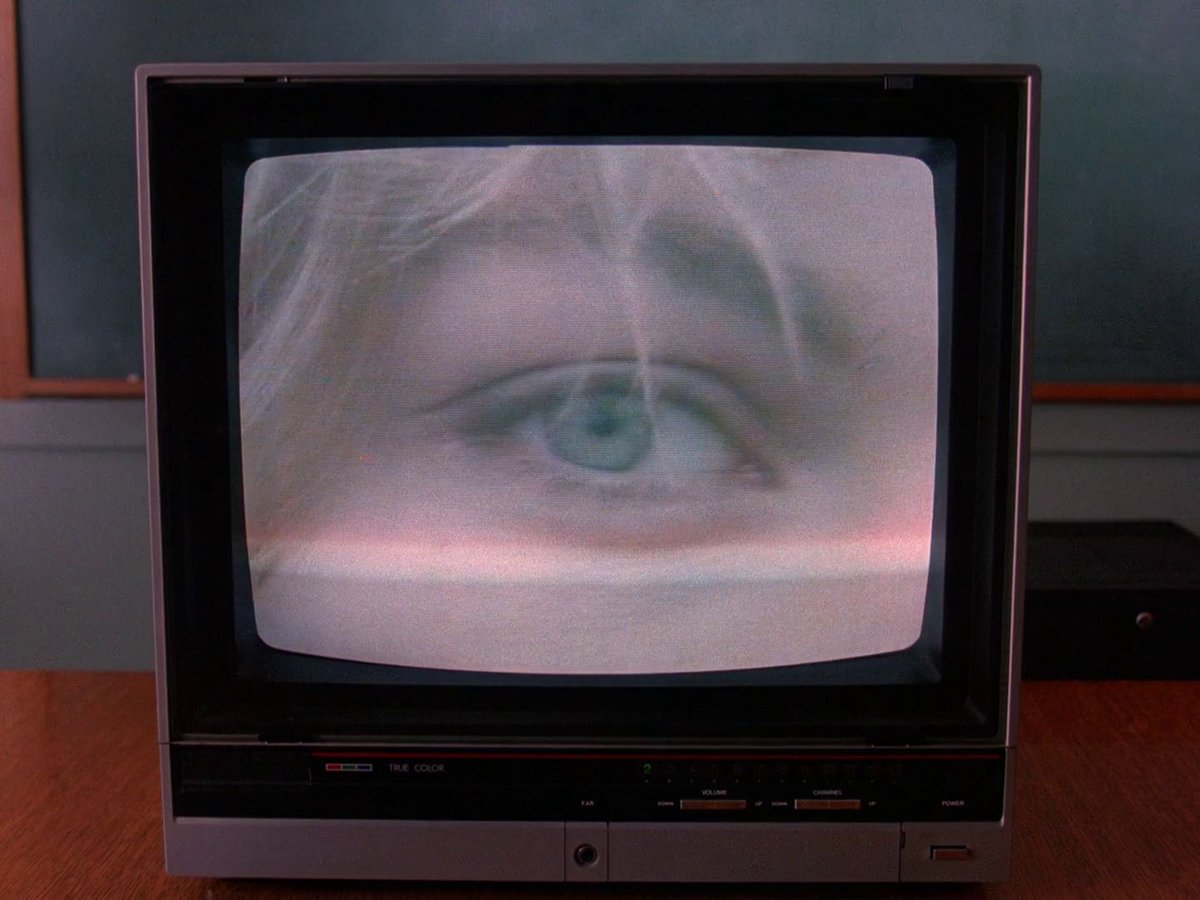
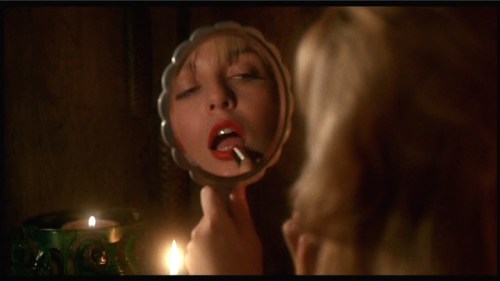
4 Shots From 4 Films: Happy Twin Peaks Day!


Happy Twin Peaks Day!

It was on this date in 1989 that Dale Cooper first arrived in the small town of Twin Peaks, Washington to help the authorities with their investigation into the death of Laura Palmer.  Here at the Shattered Lens, we’re all big fans of Twin Peaks.  Back in 2017, this site was literally a Twin Peaks fan site for a good couple of months.  As such, today is a big holiday around these parts and what better way to celebrate than with a special edition of 4 Shots From 4 Films?

So, in honor of Twin Peaks, here are….

4 Shots From 4 Films

Twin Peaks: The Pilot (1990, dir by David Lynch)

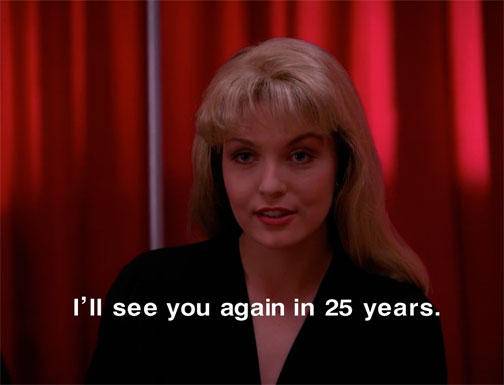
Twin Peaks 2.22 “Beyond Life and Death” (1991, dir by David Lynch)

Twin Peaks: Fire Walk With Me (1992, dir by David Lynch)

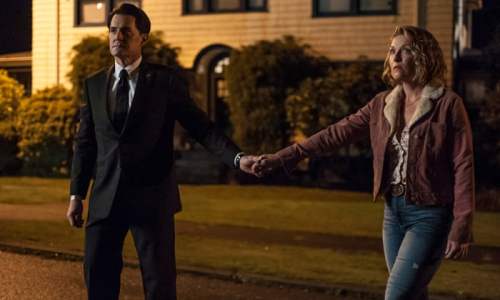
Twin Peaks: The Return Part 18 (2017, dir by David Lynch)

Happy Twin Peaks Day!

Scenes That I Love: Cooper Says Goodbye In Twin Peaks: The Return (Happy Birthday, Kyle MacLachlan!)


Happy birthday, Kyle MacLachlan!

Kyle MacLachlan is 61 years old today.  While MacLachlan has appeared in a lot of different movies and tv shows and he’s also played a lot of different characters, he will probably always be best known for playing FBI Special Agent Dale Cooper on Twin Peaks.  MacLachlan, with his combination of earnestness and darkness, was the prefect choice to play Cooper and it’s impossible to imagine Twin Peaks without him.

Of course, MacLachlan didn’t just play Dale Cooper during the third season of Twin Peaks.  He also played Cooper’s evil Doppelganger and, for the majority of Twin Peaks: The Return, he played Dougie.  Dougie could barely speak and usually had no idea what was happening around him but he still thrived in Las Vegas.  MacLachlan’s performance as Dougie was both funny and poignant.  At the same time, I do think that every fan of Twin Peaks breathed a sigh of relief when Cooper finally woke up from that coma, stopped acting like Dougie, and started acting like himself.

Today’s scene that I love comes from Part 16 of Twin Peaks: The Return.  In this David Lynch-directed scene, Cooper — who has only recently reclaimed his identity — says goodbye to Dougie’s wife and son.  Like so much of Twin Peaks; The Return, this is a scene that could be unbelievably mawkish in the hands of another actor.  However, Kyle MacLachlan plays the scene with such sincerity that it’s actually very touching.

In honor of Kyle MacLachlan’s birthday, enjoy today’s scene that I love:


A Few Final Thoughts On The Oscar Ceremony


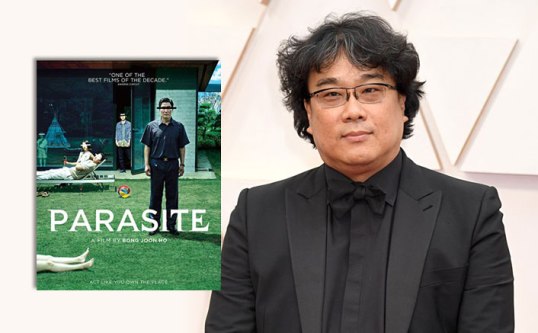
Parasite made history and Bong Joon-ho proved himself to be one of the most charming people alive.  That was the best thing about Sunday night’s Oscar ceremony.

Yes, Joaquin Phoenix and Renee Zellweger did ramble on a bit in their acceptance speeches but ….. I can’t complain.  They’re both so sincere in their spaciness that you can’t help but be a little bit charmed by them.  Plus, Renee’s a Texas Girl so I’ve got her back.

The show itself was incredibly dull. It was nice to see so many deserving winners but, beyond Parasite making history at the very end, there really weren’t any huge moments.  There were no major fashion disasters.  The speeches were all pretty much gracious.  It was the way an awards ceremony should be but let’s be honest.  One reason we watch award shows is so to see rich and famous people screw up.  When that doesn’t happen, it just turns into a bunch of people patting themselves on the back.

Best Documentary Feature went to American Factory.  The best documentary of the year was Apollo 11, which wasn’t even nominated.  The documentary’s director called on the workers of the world to unite and it felt as vacuous as 70s-era Godard.

Brad Pitt finally won an Oscar for acting.  (He already has one for producing.)  My hope was that he would drop to one knee, produce a ring, and ask Jennifer Aniston to marry him again.  Instead, he gave kind of a boring speech.  Those of us who were hoping that stoner Brad Pitt would show up tonight were a bit disappointed.  Brad shaved and washed his hair before the ceremony and was basically on his best behavior.

This was the 2nd year in a row that show didn’t have a host and …. eh.  I enjoyed it when they went hostless last year but this year, the show felt like a formless mess.  There was no one to steer the ship or to set the mood and, as a result, the ceremony felt somewhat directionless.

I get that we’re supposed to get excited whenever any former SNL cast member shows up to present an award but I always instinctively cringe whenever Will Ferrell or Maya Rudolph step out on stage.  Both of them are such attention hogs that their arrival usually means that the show is going to come to a dead halt while they run a joke into the ground.  This year, Ferrell wasn’t quite as bad as usual but Rudolph had me totally cringing.  Speaking of stage hogs, I was actually surprised at how quickly Rebel Wilson and James Corden got through their bit.  I assume they wanted to hurry up and get backstage so they could get out of their cat costumes.  (Just imagine — Rebel Wilson actually had an important supporting role in one of the best picture nominees but, instead of celebrating that, the Academy made her put on her cat costume.)

Billie Eilish won the night with her reactions to …. well, everything.

As I said, this year’s ceremony was dull.  Beyond Parasite winning and making history, this was probably the most boring ceremony since 2010.  Interestingly enough, history was made there as well, when Kathryn Bigelow won Best Director.  Why do good things always happen during boring broadcasts?

So, for next year, I hope we’ll see a return of a host, a return of tone deaf fashion choices, and hopefully a few undeserving winners, at least enough to liven up the ceremony a little.

For now, though, congratulations to the cast and crew of Parasite on winning Best Picture and making history, all in the same night!  Woo hoo!