Ghosts of Sundance Past: Minari (dir by Lee Isaac Chung)


The Sundance Film Festival is currently underway in Utah.  For the next few days, I’ll be taking a look at some of the films that have previously won awards at Sundance.

First released in 2000, Minari is a classic story of the pursuit of the American dream.

Taking place in the early 80s, the movie follows Jacob Yi (Steven Yeun), a South Korean immigrant who relocates his family from California to Arkansas.  Jacob has purchased a farm and he plans to make a fortune selling Korean produce to restaurants in Dallas.  (Dallas, I should mention, does have a very large Korean population so Jacob’s plan is not a bad one.)  Jacob is enthusiastic and confident that his plan will succeed.  His wife Monica (Han Ye-ri) is a bit less confident.  She doesn’t want to live in a mobile home and she worries about the health of her young son David (Alan Kim), who has a heart murmur.  Monica feels that her husband has dragged them out to the middle of nowhere and that he has no idea what he’s doing.  Jacob is determined to become a success and he even hires his first employee, Paul (Will Patton), a local eccentric who often walks up and down the highway with a cross on his back.

I have to admit that I was initially a bit cautious about watching Minari.  I have family from Arkansas.  When I was growing up, my family sometimes lived in Arkansas.  (When I was growing up, we moved around so much that I used to just think of Arkansas, Oklahoma, New Mexico, Louisiana, Colorado, and Texas as just being one big state that I called home.)  Arkansas is one of those states that is usually not treated particularly kindly in the movies.  For that reason, I was pleasantly surprised by Minari.  Jacob may be an outsider, as both an immigrant and a former Californian, but, for the most part, the people that he meets are kind and willing to help.  Paul is especially an interesting character.  Many movies would have treated Paul as a redneck joke but, in Minari, he’s given a certain dignity.  The cinematography is wonderful, capturing the humid beauty of not just Arkansas but the midwest in general.  Jacob and his family are 20th century pioneers, exploring what for them is a new and untouched land.

Eventually, Monica’s mother, Soon-ja (Youn Yuh-jung), comes to stay with the family.  She shares a room with David and it takes a while for David to get used to his grandmother.  (David complains that she doesn’t act like a grandmother.)  It also takes Soon-ja a while to get used to life in Arkansas.  Youn Yuh-jung won a deserved Oscar for her performance here, playing a stranger in a strange land who ultimately inspires David to find his own inner strength.  The scenes between Youn and Alan Kim are some of the strongest in the film.  Towards the end of the film, Youn has a scene that truly left me in tears.

Minari is about the pursuit of the American dream but it’s also about the strength of family.  Jacob is not always a sympathetic character but he proves himself in the end.  The film ends on an ambiguous note but I choose to believe that Jacob eventually found his fortune.

Minari won the Dramatic Grand Jury Prize and, like many so many Sundance hits in the past, it went on to be nominated for Best Picture.  It lost to Nomadland, despite Minari being a far superior film.  That’s the Academy for you.

Ghosts of Sundance Past: Waiting For The Moon (dir by Jill Godmilow)


The Sundance Film Festival is currently underway in Utah.  For the next few days, I’ll be taking a look at some of the films that have previously won awards at Sundance.

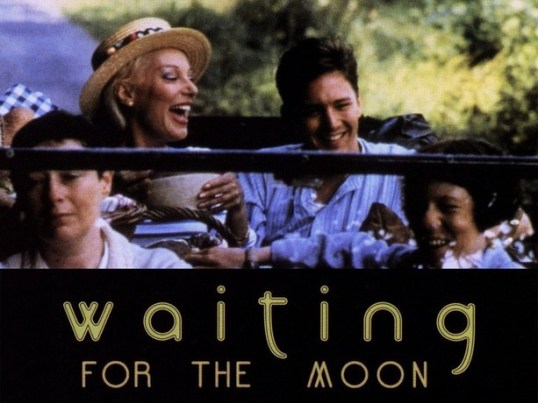
First released in 1987, Waiting For The Moon is a lowkey and fictionalized account of the relationship between Gertrude Stein (Linda Bassett) and Alice B. Toklas (Linda Hunt).

The film takes place in 1936, almost entirely at the home that Stein and Toklas shared in France.  Back in the years immediately following World War I, their home was a stopping spot for almost every writer who no longer felt at home in the conventional world.  It was the place where the members of the so-called Lost Generation met to socialize and discuss their art.  (Ernest Hemingway memorably wrote about visiting Stein and Toklas in A Moveable Feast.)  However, Waiting For The Moon takes place long after those exciting years.  Gertrude and Alice are now living a rather comfortable and settled life.  Occasionally, someone will stop by.  Hemingway (played by Bruce McGill) shows up.  Picasso stops by for a visit, though we only hear him.  But, for the most part, the film focuses on Gertrude and Alice.  The film follows them as they bicker like the old married couple that they essentially are, even if society in 1936 wasn’t willing to acknowledge it.  Alice proofreads Gertrude’s latest writing.  Gertrude waits for word from her doctor.  They talk about old times and old friends.  At one point, an aspiring writer named Henry Hopper (Andrew McCarthy) pays the two women a visit and, for a day at least, it’s like old time.  Henry is earnest and idealistic and full of plans for the future.  Unfortunately, he’s also planning on fighting in the Spanish Civil War and it doesn’t take a genius to guess that probably won’t go well.  Indeed, we learn that several of Gertrude and Alice’s old acquaintances are now fighting and dying in the Spanish Civil War.  For the so-called Lost Generation, the battle against Franco is a chance to find themselves but students of history already know how the war is going to end.  For that matter, students of history will also realize that World War II is right around the corner.  (Needless to say, the film itself offers up not a hint of the controversy that would surround Stein’s activities during the Vichy regime,)

Waiting For The Moon is a deliberately paced film, which is a polite way of saying that it’s a bit on the slow side.  That said, the scenery is beautiful and both Linda Hunt and Linda Bassett give good performances as the film’s versions of Alice and Gertrude.  Bruce McGill steals the film as the blustery Hemingway.  I’m sure Ernest would have approved.  (Could Ernest Hemingway ever be played as being anything other than blustery?)  The film captures the daydream that I think captures the fancy of many aspiring writers, the idea of being in a place where your thoughts are the center of life and all of your friends understand what it’s like to be a creative soul.

Waiting For The Moon won the Dramatic Grand Jury Prize at the 1987 Sundance Film Festival.  It’s not an easy film to find.  On Amazon, a copy on DVD runs about $52.00.  I was fortunate enough to find a copy at Half-Price Books.


Ghosts of Sundance Past: In The Company Of Men (dir by Neil LaBute)


The Sundance Film Festival is currently underway in Utah.  For the next few days, I’ll be taking a look at some of the films that have previously won awards at Sundance.

1997’s In The Company of Men is a film about two guys playing a series of very viscous jokes.

Howard (Matt Malloy) and Chad (Aaron Eckhart) are two mid-level executives who have been sent to work at a branch office for six weeks.  While Chad is talkative and aggressive, Howard is much more meek and often seems to be in awe of the far more confident Chad.  What the two men have in common is a lot of resentment and bitterness towards women.  Chad suggests that they should both date a woman at the same time and fool her into falling for both of them.  Then, they’ll both dump her at the same time.  Chad has even picked out a victim, Christine (Stacy Edwards), a deaf and introverted co-worker.

That Chad would come up with such a cruel scheme really isn’t a surprise.  From the first minute that we see Chad, we think we can tell what type of person he is.  Because this is a movie, we hold on to hope that Chad will somehow reveal that he’s not as bad as he seems but, in the end, the whole point of the film is that Chad is not only as bad as we initially think he is but he’s actually even worse.  Howard, on the other hand, comes across like a rather mild-mannered guy, the stereotypical nerdy mid-level manager who no one ever notices.  Howard could never come up with a scheme like this on his own but, once Chad suggests it, Howard agrees.  Howard is a natural follower.  He looks at Chad and he sees who he wants to be.  Chad looks at Howard and sees someone who he can easily manipulate.

Chad and Howard set their plan in motion and yes, it is difficult to watch as they both pretend to be falling in love with the sensitive Christine while making cruel fun of her behind her back.  Again, we know that at least one of the men is going to have second thoughts and try to back out of the plan.  We know this because we’re watching a movie.  We spend most of the movie hoping that Chad is going to be the one to find his conscience because Aaron Eckhart is the more charismatic of the two men and Chad is the one with whom Christine seems to be truly falling in love.  Instead, it’s Howard who falls in love with Christine while Chad remains as sociopathic as ever.  By the end of the film, Chad reveals just how manipulative he truly is and Howard discovers that Christine was not the only victim of Chad’s joke.

In The Company Of Men is not an easy film to watch.  The comments that Chad and Howard make are shockingly cruel, though one gets the feeling that they’re probably an accurate reflection of what men like Chad and Howard sound like when they’re in private.  Director Neil LaBute doesn’t make any effort to soften or excuse their misogyny.  It’s a testament to the talents of Eckhart, Malloy, and Edwards that we stick with the film.  In the end, In The Company Of Men is an unsettling portrait of misogyny and toxic masculinity, one that is made all the more disturbing by Aaron Eckhart’s charismatic performance as a truly despicable person.  The film uses Eckhart’s middle-American good looks to subversive effect and, even when he’s playing such a hateful character, there’s something undeniably fascinating about him.  You watch his performance of Chad and you’re almost desperate to find some sort of good inside of him.  It’s not there, though.  That’s what is truly frightening about In The Company Of Men.

As the 1997 Sundance Film Festival, In The Company Of Men won the Filmmaker’s Trophy.

Ghosts of Sundance Past: Longtime Companion (dir by Norman Rene)


The Sundance Film Festival is currently underway in Utah.  For the next few days, I’ll be taking a look at some of the films that have previously won awards at Sundance.

First released in 1990, Longtime Companion was one of the first mainstream feature films to deal with the early days of the AIDS epidemic.

The film follows a group of friends and lovers over the course of ten years.  The film opens with a crowded and joyous 4th of July weekend at Fire Island.  Willy (Campbell Scott) is a personal trainer who has just started a relationship with an entertainment lawyer who, due to his beard, is nicknamed Fuzzy (Stephen Caffrey).  Willy’s best friend is the personable and popular John (Dermot Mulroney).  David (Bruce Davison) and Sean (Mark Lamos) are the elder couple of the group.  Sean writes for a soap opera and one of Fuzzy’s clients, Howard (Patrick Cassidy), has just landed a role on the show.  He’ll be playing a gay character, even though everyone warns him that the role will lead to him getting typecast.  The group’s straight friend is Lisa (Mary-Louise Parker), an antique dealer who lives next door to Howard and who is Fuzzy’s sister.  The film takes it times showing us the friendships and the relationships between these characters, allowing us to get to know them all as individuals.

Even as the group celebrates the 4th, they are talking about an article in the New York Times about the rise of a “gay cancer.”  Some members of the group are concerned but the majority simply shrug it off as another out-there rumor.

The movie moves quickly, from one year to another.  John, the youngest of them, is the first member of the group to die, passing away alone in a hospital room while hooked up to a respirator.  (The sound of the respirator is one of the most haunting parts of the film.)  Sean soon becomes ill and starts to dramatically deteriorate.  It falls to David to take care of Sean and to even ghostwrite his scripts for the soap opera.  Howard’s acting career is sabotaged by rumors that he has AIDS while Willy and Fuzzy tentatively try to have a relationship at time when they’re not even sure how AIDS is transmitted.  At one point, Willy visits a friend in the hospital and then furiously scrubs his skin in case he’s somehow been infected.  When one member of the group passes, his lover is referred to as being his “longtime companion” in the obituary.  Even while dealing with tragedy and feeling as if they’ve been shunned and abandoned to die by the rest of America, the characters are expected to hide the details of the lives and their grief.

It’s a poignant and low-key film, one that was originally made for PBS but then given a theatrical release after production was complete.  Seen today, the film feels like a companion piece to Roger Spottiswoode’s And The Band Played On.  If And The Band Played On dealt with the politics around AIDS and the early struggle to get people to even acknowledge that it existed, Longtime Companion is about the human cost of the epidemic.  The film is wonderfully acted by the talented cast.  Bruce Davison was nominated for an Oscar for his sensitive performance as David.  If not for Joe Pesci’s performance in Goodfellas, it’s easy to imagine that Davison would have won.  The scene where he encourages the comatose Sean to pass on will make you cry.  Interestingly, when David gets sick himself, it happens off-screen as if the filmmakers knew there was no way the audience would have been able to emotionally handle watching David suffer any further.

Longtime Companion played at the 1990 Sundance Film Festival, where it won the Dramatic Audience Award.

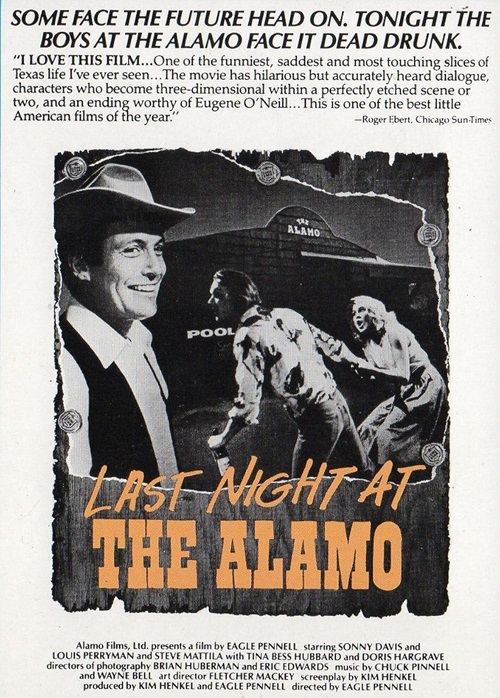
Ghosts of Sundance Past: Last Night At The Alamo (dir by Eagle Pennell)


The Sundance Film Festival is currently underway in Utah.  For the next few days, I’ll be taking a look at some of the films that have previously won awards at Sundance.

1983’s Last Night At The Alamo is the epitome of an indie film.  Filmed in black-and-white and populated with performers who possess a raw authenticity, Last Night of the Alamo takes place over the course of one long day and night.

A seedy Houston bar known as The Alamo is set to close down and the regulars come by for their final drinks.  It’s definitely a blue collar bar, a place where the conversations are loud and it seems like there’s always a possibility that a fight could break out at any minute.  Claude (Lou Perryman) shows up after getting kicked out by his wife and spends a good deal of the movie yelling and cursing into a telephone.  Ichabod (Steve Mattila), a young exterminator, spends almost the entire movie arguing with his girlfriend, Mary (Tina-Bess Hubbard).  Steve (J. Michael Hammond) is an adult who still has the personality of a high school bully.  For all the arguing and the taunting and the cursing that one hears over the course of the film, it’s also obvious that the regulars at the Alamo have formed a community of sorts.  No one is surprised when Claude starts yelling into the telephone.  That’s just Claude being Claude and he’s allowed to have his breakdown in peace.  As long as he doesn’t interrupt anyone else’s drinking, he’ll be tolerated.  It’s a very Texas attitude but then again, Last Night At The Alamo is a very Texas film.

It was written by Kim Henkel, who is probably best-known for writing the screenplay for the original Texas Chainsaw Massacre.  (Henkel also appears in the film.)  Director Eagle Pennell was one of the pioneers of the Texas film scene, making independent films about life in his home state.  (Robert Redford has said that one of the main reasons he started the Sundance Film Festival was because he was impressed with Pennell’s films and wanted to create something that would bring attention to indie filmmakers like Pennell.)  Much like many of the characters in Last Night At The Alamo, Pennell struggled with alcoholism and his promising career fizzled out as a result.  He died at the age of 49.  Legend has it that, shortly before his death, he was seen standing on a Houston streetcorner with a sign asking for either “a rich woman or a warm beer.”  Again, it’s a very Texas story.

The majority of the characters in Last Night At The Alamo look up to the bar’s best-known regular, Cowboy Regan (Sonny Carl Davis).  Cowboy is handsome and friendly, with a quick smile and a confident manner that makes him stand-out amongst the regulars at the Alamo.  He presents himself as being successful and connected and he claims that he has a friend in Austin who is going to save The Alamo from demolition.  Deep down, Cowboy is just as desperate as everyone else at the bar but he does a far better job of hiding it.  The others look up to him not so much because they believe his stories but because they want to believe them.

It’s an almost plotless film but it does a great job of capturing my home state, with its blue collar culture and its frequent embrace of hucksters like Cowboy.  Watching the film, one can see why it’s a favorite of Richard Linklater’s.  It’s a melancholy film in many regards.  Most of the characters don’t have much going for themselves.  But they do have their bar and they have the community that they bult for themselves.  The Alamo may be closing but life will continue just as surely as Ichabod and Mary will start and end every day yelling at each other.

Last Night At The Alamo was a prize winner at the 1984 Sundance Film Festival, winning the Dramatic Jury Prize.  It can be found, in all of its grainy black-and-white glory, on YouTube.

6 Things That I’m Looking Forward To In January


It’s January!

Traditionally, as far as pop culture goes, January doesn’t get much respect.  If a studio has a film that they knew isn’t going to be a hit with critics or audiences, January is where they usually dump it with the full knowledge that, as bad as it is, everyone will have forgotten about it by the time summer rolls around.  The same can often be said of publishers.  With everyone busy getting caught up on what they missed during the last few months of the previous year, chances are that they won’t notice a few bombs dropped on the cultural landscape.  That’s the theory anyways.

But, you know me!  I’m an optimist.  And I remain convinced that, even in January, there are things to which we can look forward,  And here’s six of those things!

(Why six?  Because Lisa Marie doesn’t do odd numbers!)

  1. The Oscars

Yes, it’s that time of year!  The Oscar nominations are going to be announced on January 17th!  That’s two and a half weeks from now!  Obviously, I’ve got quite a bit that I still need to watch.  Wish me luck!

2. Sundance Film Festival

The first big film festival of the year opens on January 23rd.  Which films will emerge as Oscar contenders from this year’s festival?  It’s also possible that this year’s Sundance could be the last to be held in the snowy mountains of Utah.  If Sundance does move to either Boulder or Cincinnati, this year’s festival will indeed be the end of an era.  (Quite frankly, it’s hard for me to imagine a Sundance Film Festival without snow.)

3. Wolf Man

Directed by Leigh Whannell, the latest version of the Wolf Man will be released on January 17th.  Will this Wolf Man be as full of self-pity as Lon Chaney Jr’s version was?  We’ll find out!

4, Presence

As a filmmaker, Steven Soderbergh can be hit-or-miss.  He’s directed some truly brilliant films.  He’s also directed some rather pretentious dreck.  His latest film, Presence, appears to be a horror film but, knowing Soderbergh, there will probably be some twist that will annoy me to no end.  That said, the film stars Lucy Liu and she’s someone who definitely deserves to make a comeback.  The film is due to be released on the 24th and I’m hoping for the best!

5. Screamboat

This is apparently a horror version of Steamboat Willie.  This movie is probably going to suck but I’m just curious to see whether it’s going to be merely forgettable or a full-on disaster.  Screamboat is destined to ruin some childhood memories on January 24th.  Normally, I’d assign Case to check this out for us but I don’t think he’s forgiven me for making him watch Escape From Tomorrow.

6. Back In Action

Cameron Diaz came out of retirement to star in this action comedy.  The script must have been really amazing, right?  Uhmm….right?  We’ll find out when the film is released on January 17th.

What are you looking forward to in January?  Let us know in the comments!

6 Things That I Am Looking Forward To In January of 2024


Ah, January.

Traditionally, as far as pop culture goes, January doesn’t get much respect.  If a studio has a film that they knew isn’t going to be a hit with critics or audiences, January is where they usually dump it.  The same can often be said of publishers.  Everyone is so busy getting caught up on what they missed during the last few months of the previous year, chances are that they won’t notice a few bombs dropped on the cultural landscape.  That’s the theory anyways.

But, you know me!  I’m an optimist.  And I remain convinced that, even in January, there are things to which we can look forward,  And here’s six of those things!

(Why six?  Because Lisa doesn’t do odd numbers.)

  1. The Iowa Caucus

That’s right!  It’s an election year!  And the first contest of 2024, the Iowa Presidential Caucus, is just two weeks away!  Remember how much fun we all had in 2020 when the Democrats couldn’t figure out who had actually won their caucus?  Who knows what fun this year has in store for us!  The Iowa Caucus will be held on January 15th.

(Okay, this may seem like a lame thing to look forward to but it’s January and beggars can’t be choosers.)

2. The Sundance Film Festival

While the 2023 race waits to be determined, the 2024 Oscar Race will begin at the Sundance Film Festival!  It seems like, every year, there is at least one Sundance Film that makes it into the Best Picture lineup.  In 2023, Past Lives and Magazine Dreams were huge hits at Sundance and now, it looks like Past Lives has a great chance of being nominated for Best Picture.  As for Magazine Dreams ….. well, yeah.  Which contenders will come out of this year’s festival?  We’ll find out when Sundance opens on January 18th.

3. I.S.S. — This film, about strange happenings on the International Space Station, is set to be released on January 19th.  I always enjoy a good mix of horror and science fiction.  Plus, once this film comes out, maybe YouTube will stop trying to make me watch the trailer.

4. Mean Girls — The Mean Girls musical will be released in theaters on January 12th.  I’m not really sure that we need a new version of the film when the original holds up perfectly well but whatever.  Originally, this was going to go straight to Paramount Plus but it was decided to give the film a theatrical release instead.  Normally, that would be a sign of huge confidence if not for the fact that it was given a January release.

5. The Bricklayer — For those of us wondering whatever happened to Renny Harlin, he’s got a new film set to be released on January 5th.  Hey, that’s this week!

6. The Oscar Nominations — The nominations will be announced on January 23rd and I’ve got a lot of movies that I still need to watch!  So I better get to it!

What are you looking forward to in January?

Here’s What Won At Sundance


To be absolutely honest, I didn’t really pay much attention to the Sundance Film Festival this year.  I may or may not regret that come next December.  Traditionally, it seems that at least a few Oscar contenders begin their journey at Sundance but there’s always a chance that the big Sundance success story could turn out to be something like Zolaa film that gets a lot of festival hype but doesn’t really stick around in anyone’s mind afterwards.

Today, the 2023 Sundance Film Festival’s awards winners were announced.  Time will tell whether or not the films listed below will have much of a life outside of Sundance.  Out of the films honored, Magazine Dreams sounds like the one most likely to break out.

U.S. DRAMATIC COMPETITION
Grand Jury Prize: A.V. Rockwell for “A Thousand and One”
Audience Award: “The Persian Version,” directed by Maryam Keshavarz
Directing: Sing J. Lee for “The Accidental Getaway Driver”
Waldo Salt Screenwriting Award: Maryam Keshavarz for “The Persian Version”
Special Jury Award: Acting: Lio Mehiel for “Mutt”
Special Jury Award: Ensemble: The cast of “Theater Camp,” directed by Molly Gordon and Nick Lieberman.
Special Jury Award: Creative Vision: The creative team of “Magazine Dreams,” directed by Elijah Bynum
Festival Favorite Award: “Radical,” directed by Christopher Zalla

U.S. DOCUMENTARY COMPETITION
Grand Jury Prize: “Going to Mars: The Nikki Giovanni Project,” directed by Joe Brewster and Michèle Stephenson
Audience Award: “Beyond Utopia”
Directing: Luke Lorentzen for “A Still Small Voice”
Jonathan Oppenheim Editing Award: Daniela I. Quiroz for “Going Varsity in Mariachi”
Special Jury Award – Clarity of Vision: “The Stroll,” directed by Kristen Lovell & Zackary Drucke
Special Jury Award – Freedom of Expression: “Bad Press

WORLD CINEMA DRAMATIC COMPETITION
Grand Jury Prize: “Scrapper”
Audience Award: “Shayda,” directed by Noora Niasari
Directing Award: Marija Kavtaradze “Slow”
Special Jury Award – Cinematography: Lílis Soares for “Mami Wata”
Special Jury Award – Best Performance: Rosa Marchant, “When It Melts”
Special Jury Award – Creative Vision: Sofia Alaoui for “Animalia”

WORLD CINEMA DOCUMENTARY COMPETITION
Grand Jury Prize: “The Eternal Memory”
Audience Award: “20 Days in Mariupol,” directed and produced by Mstyslav Chernov

Special Jury Prize – Directing: “Smoke, Sauna Sisterhood,” Anna Hints
Special Jury Award – Creative Vision: “Fantastic Machine”
Special Jury Award – Verité: “Against the Tide”

OTHER AWARDS
NEXT Audience Award: “Kokomo City”
NEXT Innovator Award: “Kokomo City”
Alfred P. Sloan Feature Film Prize: “The Pod Generation”

SHORTS
Short Film Grand Jury Prize: “When You Left Me on That Boulevard,” directed by Kayla Abuda Galang
Short Film Jury Award – U.S. Fiction: “Rest Stop,” directed by Crystal Kayiza
Short Film Jury Award – International Fiction: “The Kidnapping of the Bride,” Sophia Mocorrea
Short Film Jury Award – Non-Fiction: “Will You Look at Me,” directed by Shuli Huang.
Short Film Special Jury Award – International Directing: “AliEN0089,” directed by Valeria Hofmann.
Short Film Special Jury Award – U.S Directing: “The Vacation,” directed by Jarreau Carrillo

Here Are The Winners From The 2021 Sundance Film Festival


Sundance just kind of came and went this year, didn’t it?  Due to the pandemic, it was pretty much a virtual festival and it only lasted a week.  There were no celebrities posing for pictures.  There were no stories about people getting lost in the mountains of Colorado.  There was no interviews with a leathery Robert Redford pontificating about the importance of the type of indie films that could never afford to pay his salary.

Is Sundance about the films or is it about the celebrities?  This year, it was about the films and it never trended on twitter once.

That said, the prizes for this year’s Sundance Film Festival have been awarded and here they are!  Some of these films could be contenders at next year’s Oscars so read on:

(h/t to NextBestPicture)

GRAND JURY PRIZES
The U.S. Grand Jury Prize: Documentary was presented to: Ahmir “Questlove” Thompson, for Summer Of Soul (…Or, When The Revolution Could Not Be Televised)/ U.S.A. (Director: Ahmir “Questlove” Thompson, Producers: David Dinerstein, Robert Fyvolent, Joseph Patel) — During the same summer as Woodstock, over 300,000 people attended the Harlem Cultural Festival, celebrating African American music and culture, and promoting Black pride and unity. The footage from the festival sat in a basement, unseen for over 50 years, keeping this incredible event in America’s history lost – until now.

The U.S. Grand Jury Prize: Dramatic was presented to: Siân Heder, for CODA / U.S.A. (Director and Screenwriter: Siân Heder, Producers: Philippe Rousselet, Fabrice Gianfermi, Patrick Wachsberger) — As a CODA – Child of Deaf Adults – Ruby is the only hearing person in her deaf family. When the family’s fishing business is threatened, Ruby finds herself torn between pursuing her love of music and her fear of abandoning her parents. Cast: Emilia Jones, Eugenio Derbez, Troy Kotsur, Ferdia Walsh-Peelo, Daniel Durant, and Marlee Matlin.

The World Cinema Grand Jury Prize: Documentary was presented to: Jonas Poher Rasmussen, for Flee / Denmark, France, Sweden, Norway (Director: Jonas Poher Rasmussen, Producers: Monica Hellström, Signe Byrge Sørensen) — Amin arrived as an unaccompanied minor in Denmark from Afghanistan. Today, he is a successful academic and is getting married to his long-time boyfriend. A secret he has been hiding for 20 years threatens to ruin the life he has built.

The World Cinema Grand Jury Prize: Dramatic was presented to: Blerta Basholli, for Hive / Kosovo, Switzerland, Macedonia, Albania (Director and Screenwriter: Blerta Basholli, Producers: Yll Uka, Valon Bajgora, Agon Uka) — Fahrije’s husband has been missing since the war in Kosovo. She sets up her own small business to provide for her kids, but as she fights against a patriarchal society that does not support her, she faces a crucial decision: to wait for his return, or to continue to persevere. Cast: Yllka Gashi, Çun Lajçi, Aurita Agushi, Kumrije Hoxha, Adriana Matoshi, Kaona Sylejmani.

AUDIENCE AWARDS
The Audience Award: U.S. Documentary, Presented by Acura was presented to: Ahmir “Questlove” Thompson for Summer Of Soul (…Or, When The Revolution Could Not Be Televised) / U.S.A. (Director: Ahmir “Questlove” Thompson, Producers: David Dinerstein, Robert Fyvolent, Joseph Patel) — During the same summer as Woodstock, over 300,000 people attended the Harlem Cultural Festival, celebrating African American music and culture, and promoting Black pride and unity. The footage from the festival sat in a basement, unseen for over 50 years, keeping this incredible event in America’s history lost – until now.

The Audience Award: U.S. Dramatic, Presented by Acura was presented to: Siân Heder, for CODA / U.S.A. (Director and Screenwriter: Siân Heder, Producers: Philippe Rousselet, Fabrice Gianfermi, Patrick Wachsberger) — As a CODA – Child of Deaf Adults – Ruby is the only hearing person in her deaf family. When the family’s fishing business is threatened, Ruby finds herself torn between pursuing her love of music and her fear of abandoning her parents. Cast: Emilia Jones, Eugenio Derbez, Troy Kotsur, Ferdia Walsh-Peelo, Daniel Durant, and Marlee Matlin.

The Audience Award: World Cinema Dramatic was presented to: Blerta Basholli, for Hive / Kosovo, Switzerland, Macedonia, Albania (Director and Screenwriter: Blerta Basholli, Producers: Yll Uka, Valon Bajgora, Agon Uka) — Fahrije’s husband has been missing since the war in Kosovo. She sets up her own small business to provide for her kids, but as she fights against a patriarchal society that does not support her, she faces a crucial decision: to wait for his return, or to continue to persevere. Cast: Yllka Gashi, Çun Lajçi, Aurita Agushi, Kumrije Hoxha, Adriana Matoshi, Kaona Sylejmani.

The Audience Award: World Cinema Documentary was presented to: Rintu Thomas and Sushmit Ghosh, for Writing With Fire / India (Directors and Producers: Rintu Thomas, Sushmit Ghosh) — In a cluttered news landscape dominated by men, emerges India’s only newspaper run by Dalit women. Armed with smartphones, Chief Reporter Meera and her journalists break traditions on the frontlines of India’s biggest issues and within the confines of their own homes, redefining what it means to be powerful.

The Audience Award: NEXT, Presented by Adobe was presented to: Marion Hill, for Ma Belle, My Beauty / U.S.A., France (Director and Screenwriter: Marion Hill, Producers: Ben Matheny, Kelsey Scult, Marion Hill) — A surprise reunion in southern France reignites passions and jealousies between two women who were formerly polyamorous lovers. Cast: Idella Johnson, Hannah Pepper, Lucien Guignard, Sivan Noam Shimon.

DIRECTING, SCREENWRITING & EDITING AWARDS
The Directing Award: U.S. Documentary was presented to: Natalia Almada, for Users / U.S.A., Mexico (Director: Natalia Almada, Producers: Elizabeth Lodge Stepp, Josh Penn) — A mother wonders, will my children love their perfect machines more than they love me, their imperfect mother? She switches on a smart-crib lulling her crying baby to sleep. This perfect mother is everywhere. She watches over us, takes care of us. We listen to her. We trust her.

The Directing Award: U.S. Dramatic was presented to: Siân Heder, for CODA / U.S.A. (Director and Screenwriter: Siân Heder, Producers: Philippe Rousselet, Fabrice Gianfermi, Patrick Wachsberger) — As a CODA – Child of Deaf Adults – Ruby is the only hearing person in her deaf family. When the family’s fishing business is threatened, Ruby finds herself torn between pursuing her love of music and her fear of abandoning her parents. Cast: Emilia Jones, Eugenio Derbez, Troy Kotsur, Ferdia Walsh-Peelo, Daniel Durant, and Marlee Matlin.

The Directing Award: World Cinema Documentary was presented to: Hogir Hirori, for Sabaya / Sweden (Director and Screenwriter: Hogir Hirori, Producers: Antonio Russo Merenda, Hogir Hirori) — With just a mobile phone and a gun, Mahmud, Ziyad and their group risk their lives trying to save Yazidi women and girls being held by ISIS as Sabaya (abducted sex slaves) in the most dangerous camp in the Middle East, Al-Hol in Syria.

The Directing Award: World Cinema Dramatic was presented to: Blerta Basholli, for Hive / Kosovo, Switzerland, Macedonia, Albania (Director and Screenwriter: Blerta Basholli, Producers: Yll Uka, Valon Bajgora, Agon Uka) — Fahrije’s husband has been missing since the war in Kosovo. She sets up her own small business to provide for her kids, but as she fights against a patriarchal society that does not support her, she faces a crucial decision: to wait for his return, or to continue to persevere. Cast: Yllka Gashi, Çun Lajçi, Aurita Agushi, Kumrije Hoxha, Adriana Matoshi, Kaona Sylejmani.

The Waldo Salt Screenwriting Award: U.S. Dramatic was presented to: Ari Katcher and Ryan Welch, for On the Count of Three / U.S.A. (Director: Jerrod Carmichael, Screenwriters: Ari Katcher, Ryan Welch, Producers: David Carrico, Adam Paulsen, Tom Werner, Jake Densen, Ari Katcher, Jimmy Price) — Two guns. Two best friends. And a pact to end their lives when the day is done. Cast: Jerrod Carmichael, Christopher Abbott, Tiffany Haddish, J.B. Smoove, Lavell Crawford, Henry Winkler.

The Jonathan Oppenheim Editing Award: U.S. Documentary was presented to: editors Kristina Motwani and Rebecca Adorno, for Homeroom / U.S.A. (Director: Peter Nicks, Producers: Peter Nicks, Sean Havey) — Following the class of 2020 at Oakland High School in a year marked by seismic change, exploring the emotional world of teenagers coming of age against the backdrop of a rapidly changing world.

SPECIAL JURY AWARDS
A U.S. Dramatic Special Jury Award for Ensemble Cast was presented to: the cast of CODA, for CODA / U.S.A. (Director and Screenwriter: Siân Heder, Producers: Philippe Rousselet, Fabrice Gianfermi, Patrick Wachsberger) — As a CODA – Child of Deaf Adults – Ruby is the only hearing person in her deaf family. When the family’s fishing business is threatened, Ruby finds herself torn between pursuing her love of music and her fear of abandoning her parents. Cast: Emilia Jones, Eugenio Derbez, Troy Kotsur, Ferdia Walsh-Peelo, Daniel Durant, and Marlee Matlin.

A U.S. Dramatic Special Jury Award for Best Actor was presented to: Clifton Collins Jr., for Jockey / U.S.A. (Director: Clint Bentley, Screenwriters: Clint Bentley, Greg Kwedar, Producers: Clint Bentley, Greg Kwedar, Nancy Schafer) — An aging jockey is determined to win one last championship, but his dream is complicated when a young rookie shows up claiming to be his son. Cast: Clifton Collins Jr., Molly Parker, Moises Arias.

A U.S. Documentary Special Jury Award: Emerging Filmmaker was presented to: Parker Hill and Isabel Bethencourt, for Cusp / U.S.A. (Directors: Parker Hill, Isabel Bethencourt, Producers: Zachary Luke Kislevitz, Parker Hill, Isabel Bethencourt) — In a Texas military town, three teenage girls confront the dark corners of adolescence at the end of a fever dream summer.

A U.S. Documentary Special Jury Award: Nonfiction Experimentation was presented to: Theo Anthony, for All Light, Everywhere / U.S.A. (Director: Theo Anthony, Producers: Riel Roch-Decter, Sebastian Pardo, Jonna McKone) — An exploration of the shared histories of cameras, weapons, policing and justice. As surveillance technologies become a fixture in everyday life, the film interrogates the complexity of an objective point of view, probing the biases inherent in both human perception and the lens.

A World Cinema Documentary Special Jury Award: Vérité Filmmaking was presented to: Camilla Nielsson, for President / Denmark, U.S.A., Norway (Director: Camilla Nielsson, Producers: Signe Byrge Sørensen, Joslyn Barnes) — Zimbabwe is at a crossroads. The leader of the opposition MDC party, Nelson Chamisa, challenges the old guard ZANU-PF led by Emmerson Mnangagwa, known as “The Crocodile.” The election tests both the ruling party and the opposition – how do they interpret principles of democracy in discourse and in practice?

A World Cinema Documentary Special Jury Award: Impact for Change was presented to: Rintu Thomas and Sushmit Ghosh, for Writing With Fire / India (Directors and Producers: Rintu Thomas, Sushmit Ghosh) — In a cluttered news landscape dominated by men, emerges India’s only newspaper run by Dalit women. Armed with smartphones, Chief Reporter Meera and her journalists break traditions on the frontlines of India’s biggest issues and within the confines of their own homes, redefining what it means to be powerful.

A World Cinema Dramatic Special Jury Award: Acting was presented to: Jesmark Scicluna, for Luzzu / Malta (Director and Screenwriter: Alex Camilleri, Producers: Rebecca Anastasi, Ramin Bahrani, Alex Camilleri, Oliver Mallia) — Jesmark, a struggling fisherman on the island of Malta, is forced to turn his back on generations of tradition and risk everything by entering the world of black market fishing to provide for his girlfriend and newborn baby. Cast: Jesmark Scicluna, Michela Farrugia, David Scicluna.

A World Cinema Dramatic Special Jury Award: Creative Vision was presented to: Baz Poonpiriya, for One for the Road / China, Hong Kong, Thailand (Director: Baz Poonpiriya, Screenwriters: Baz Poonpiriya, Nottapon Boonprakob, Puangsoi Aksornsawang, Producer: Wong Kar Wai) — Boss is a consummate ladies’ man, a free spirit and a bar owner in NYC. One day, he gets a surprise call from Aood, an estranged friend who has returned home to Thailand. Dying of cancer, Aood enlists Boss’ help to complete a bucket list – but both are hiding something. Cast: Tor Thanapob, Ice Natara, Violette Wautier, Aokbab Chutimon, Ploi Horwang, Noon Siraphun. World Premiere

NEXT INNOVATOR PRIZE PRESENTED BY ADOBE
The NEXT Innovator Prize presented by Adobe was presented to: Dash Shaw, for Cryptozoo / U.S.A. (Director and Screenwriter: Dash Shaw, Producers: Kyle Martin, Jane Samborski, Bill Way, Tyler Davidson) — As cryptozookeepers struggle to capture a Baku (a legendary dream-eating hybrid creature) they begin to wonder if they should display these rare beasts in the confines of a cryptozoo, or if these mythical creatures should remain hidden and unknown. Cast: Lake Bell, Michael Cera, Angeliki Papoulia, Zoe Kazan, Peter Stormare, Grace Zabriskie.

SHORT FILM AWARDS PRESENTED BY SOUTHWEST AIRLINES®
Jury prizes for short filmmaking were awarded at the same ceremony. The Short Film Grand Jury Prize was awarded to Lizard / United Kingdom (Director: Akinola Davies, Jr., Screenwriter: The Davies Brothers).

The Short Film Jury Award: U.S. Fiction was awarded to The Touch of the Master’s Hand / U.S.A. (Director and Screenwriter: Gregory Barnes.

The Short Film Jury Award: International Fiction was awarded to Bambirak / U.S.A., Germany (Director and Screenwriter: Zamarin Wahdat).

The Short Film Jury Award: Nonfiction was awarded to Don’t Go Tellin’ Your Momma / U.S.A., Germany, France, Italy (Directors and Screenwriters: Topaz Jones, rubberband.).

The Short Film Jury Award: Animation was awarded to Souvenir Souvenir / France (Director and Screenwriter: Bastien Dubois). A Short Film Special Jury Award for Acting was presented to Wiggle Room / U.S.A. (Directors and Screenwriters: Sam Guest, Julia Baylis).

A Short Film Special Jury Award for Screenwriting was awarded to The Criminals / France, Romania, Turkey (Director and Screenwriter: Serhat Karaaslan).

EARLIER SUNDANCE FILM FESTIVAL AWARDS
The 2021 Alfred P. Sloan Feature Film Prize, presented to an outstanding feature film about science or technology, was presented to Sons of Monarchs. The filmmakers received a $20,000 cash award from Sundance Institute with support from the Alfred P. Sloan Foundation.

The Sundance Institute | Amazon Studios Producers Award for Nonfiction went to Nicole Salazar, for Philly D.A.
The Sundance Institute | Amazon Studios Producers Award for Fiction went to Natalie Qasabian, for Run.
The Sundance Institute | Adobe Mentorship Award for Editing Nonfiction went to Juli Vizza, and the Sundance Institute | Adobe Mentorship Award for Editing Fiction went to Terilyn Shropshire.
The Sundance Institute | NHK Award went to Meryman Joobeur, for her film Motherhood.
Minari Takes The Grand Jury Prize at Sundance


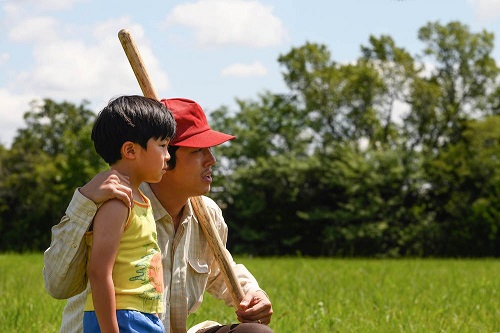
Well, another Sundance Film Festival has come to a close!  Here’s what won at this year’s festival.  If this year is like other years, a few of the films mentioned below will also be players once Oscar season begins later this year.  For instance, just from what I’ve read, I wouldn’t be surprised to see Minari‘s name come up quite a bit between now and next January.

  • U.S. Grand Jury Prize: Dramatic: “Minari” Lee Isaac Chung
  • U.S. Grand Jury Prize: Documentary: “Boys State,” Jesse Moss and Amanda McBaine
  • Alfred P. Sloan Feature Film Prize: “Tesla”
  • Adobe Mentorship Award for Editing: Carla Guttierez and Affonso Gonçalves
  • Producers Award: Huriyyah Muhammad, “Farewell Amor”
  • Short Film Grand Jury Prize: “So What If the Goats Die,” Sofia Alaoui
  • NEXT Audience Award: “I Carry You With Me,” Heidi Ewing
  • NEXT Innovator Award: “I Carry You With Me,” Heidi Ewing
  • World Cinema Documentary Special Jury Award for Editing: “Softie,” Mila Aung-Thwin, Sam Soko, and Ryan Mullins
  • World Cinema Documentary Special Jury Award for Cinematography: “Acasa, My Home,” Mircea Topoleanu and Radu Ciorniciuc
  • World Cinema Documentary Special Jury Award for Creative Storytelling: “The Painter and the Thief,” Benjamin Ree
  • Directing Award: World Cinema Documentary: Iryna Tsilyk, “The Earth Is Blue as an Orange”
  • Directing Award: U.S. Dramatic: Radha Blank, “The 40-Year-Old Version”
  • Directing Award: U.S. Documentary: Garrett Bradley, “Time”
  • World Cinema Grand Jury Prize: Documentary: Hubert Sauper, “Epicentro”
  • World Cinema Dramatic Special Jury Award for Acting: Ben Whishaw, “Surge”
  • World Cinema Dramatic Special Jury Award for Visionary Filmmaking: Lemohang Jeremiah Mosese, “This is Not a Burial, This is a Resurrection”
  • World Cinema Dramatic Special Jury Award for Best Screenplay: Fernanda Valadez and Astrid Rondero, “Identifying Features”
  • Directing Award: World Cinema Dramatic: Maïmouna Doucouré, “Cuties”
  • World Cinema Grand Jury Prize World Dramatic: “Yalda, A Night for Forgiveness,” Massoud Bakhshi
  • Audience Award: World Cinema Documentary: “The Reason I Jump”
  • Audience Award: World Cinema Dramatic: “Identifying Features”
  • Audience Award: U.S. Documentary: “Crip Camp”
  • U.S. Documentary Special Jury Award for Emerging Filmmaker: Arthur Jones, “Feels Good Man”
  • Audience Award: U.S. Dramatic: “Minari,” Lee Isaac Chung
  • U.S. Documentary Special Jury Award for Social Impact Filmmaking: Elyse Steinberg, Josh Kriegman, and Eli Despres, “The Fight”
  • U.S. Documentary Special Jury Award for Innovation in Nonfiction Storytelling: Kirsten Johnson, “Dick Johnson Is Dead”
  • U.S. Documentary Special Jury Award for Editing: Tyler H. Walk, “Welcome to Chechnya”
  • U.S. Dramatic Special Jury Award for Ensemble Cast: “Charm City Kids”
  • U.S. Dramatic Special Jury Award for Auteur Filmmaking: Josephine Decker, “Shirley”
  • U.S. Dramatic Special Jury Award for Neorealism: Eliza Hittman, “Never Rarely Sometimes Always”
  • Waldo Salt Screenwriting Award: Edson Oda, “Nine Days”
  • Directing Award: U.S. Documentary: Garrett Bradley, “Time”