I love the character actor Stuart Margolin. He’s well known for his work as Angel Martin on the James Garner TV series THE ROCKFORD FILES, but I’ll always appreciate him the most for his important performances with director Michael Winner and actor Charles Bronson in the movies THE STONE KILLER and DEATH WISH. Margolin passed away in 2022 but his legacy on film and TV live on forever!
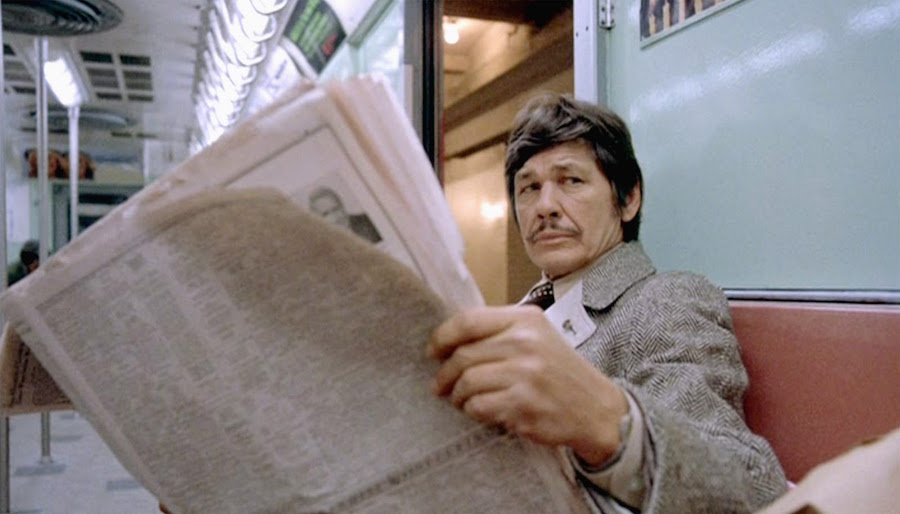
For a bit of 70’s cinema trivia, if anyone ever asks you who gave Paul Kersey his Colt revolver in the original DEATH WISH, the answer is Aimes Jainchill, played by Mr. Margolin. Join me in celebrating his legacy by watching this scene from the vigilante classic!
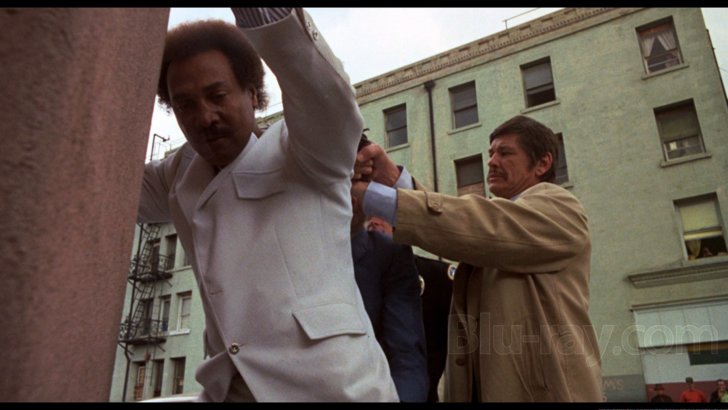
THE STONE KILLER opens in Spanish Harlem with detective Lou Torrey (Charles Bronson) following a young man, who had just shot a cop, into an abandoned building. When the young man refuses to turn himself in, and even tries to shoot Torrey, he gets blown away. In trouble with his superiors on the force, and being dragged in the press for the shooting, Torrey decides to change locations and continue his law enforcement career under his friend Les Daniels (Norman Fell) in Los Angeles. Soon after he arrives in Los Angeles, Torrey and his partner Mathews (Ralph Waite) are working a case against a drug dealer, when they arrest “Bootlace” Armitage (Eddie Firestone), a drug addict, but also a well-known hitman from New York. Torrey is delivering the “mechanic” back to New York for outstanding warrants when Armitage says that he is willing to give up some big information on “Wexton” in exchange for a reduced sentence. When Armitage is gunned down in what is obviously a professional hit, it’s clear that there is something going on that involves the name Wexton. We soon learn more as we meet mafia leader Al Vescari (Martin Balsam). As Vescari walks through a cemetery, he tells the leader of his operation, Lawrence (Stuart Margolin), of his plans to get revenge for a string of mafia killings that occurred 42 years earlier by using “stone killers,” in this case, former military men with no connection to the mob. As the film moves forward, Detective Lou Torrey and his fellow cops will eventually put the pieces together and find themselves taking on these “stone killers” and the mob!
I’ll just go ahead and say up front that I’m a big fan of THE STONE KILLER these days, but that’s because the movie has grown on me over the years with repeat viewings. When I first watched the film as a teenager in the 1980’s, I enjoyed it as a tough cop film, but it wasn’t one of my favorites. I think that part of the reason I didn’t appreciate it as much back then is the more convoluted plot of the film. Most Bronson films have simple and easy to follow plot lines, but THE STONE KILLER includes a somewhat complicated mafia assassination plan, and it also sends the cops on wild goose chases that have nothing to do with the actual story. Watching the film as an adult, I appreciate Director Michael Winner taking us with him on some of those 1970’s flavored tangents that include getting to hang out with some hippies at an ashram, as well as some unjustly accused black militants.
Even though the plot is more complicated than the average Charles Bronson film, director Michael Winner gives us some of the best action sequences of Charles Bronson’s career. There are two sequences in particular that stand out to me. After the impressive opening scenes where Torrey blows away the gun wielding young man in Spanish Harlem, it takes a while to get to the next extended action sequence, but it’s definitely worth the wait. The scene involves Detective Torrey in a car chase where he’s after one of the stone killers, Albert Langley (Paul Koslo), who’s on a motorcycle. In an era of great car chases, this is a doozy that features many amazing and dangerous stunts. The late 60’s and early 70’s are an embarrassment of riches for cinematic car chases and this one stands the test of time. The next great action sequence occurs later in the film when Detective Torrey and the cops bust the home and facility where the killers have trained for the planned massacre. Bronson is still in his physical prime in 1973, and his athletic prowess is clearly on display as he slides across floors, jumps on tables, and does anything else that is required to take down the bad guys. The film is not wall to wall action, but what’s here is as badass as it gets.
Detective Lou Torrey is a really good role for Charles Bronson. In his best roles, Bronson is tough, but you can also tell that he cares about other people. That’s definitely the case here as he consistently shows empathy for some of the people he’s after. For example, at the beginning of the film, he has to shoot the young man in Spanish Harlem in self-defense, but he later explains to his sister that he didn’t want to do it, even expressing some understanding of how the young man may have found himself in that situation. A little later while arresting a drug dealer with his partner Mathews, Torrey is clearly disgusted when his partner uses racial slurs during the arrest. Torrey then talks to the man with respect and gets the needed information to arrest the man buying the drugs. There are further examples later in the film as he deals with other drug addicts and militants. I say none of this to insinuate that Bronson’s character is weak in any way. Rather, he seems to want to do his job and arrest criminals in a professional manner. He’s also a complex character in some ways as he will bend the rules to get what he needs if he has to. He does end up punching the car thief, Jumper (Jack Colvin), a couple of times during an interview. While this is definitely not legal, in the context of this film, it’s required in order to get to the facts of the case. Bronson is actually quite great in the film.
Besides international superstar Charles Bronson, Michael Winner put together an amazing cast for THE STONE KILLER. Martin Balsam had won an Oscar a few years earlier, and he’s good here as the mafia boss with four decades worth of patience for revenge. Ralph Waite is also excellent as Bronson’s incompetent, racist partner Mathews. It’s hard to believe the guy would go on to play Papa Walton based on the ignorance he shows in both this film and in the Bronson/Winner collaboration CHATO’S LAND from the prior year. It’s fun watching both Norman Fell and John Ritter work together in this film, especially knowing that they would be making television history a few years later on the classic TV sitcom “Three’s Company.” The last two actors I want to mention are Stuart Margolin as the leader of the stone killers, Lawrence, and Paul Koslo as the bi-sexual badass musician Albert Langley. Both actors, especially Koslo, are good here and would have important roles with Bronson the next year as well. Margolin was an important character in DEATH WISH, and Koslo may have even outdone his work here the next year as a particularly slimy weasel in MR. MAJESTYK. Oh yeah, be sure to look for a short, uncredited cameo from B-movie queen Roberta Collins! I also want to shout out the musical score from Roy Budd, who also did the score for GET CARTER (1971). Thanks to Budd’s work, the opening credits are very cool and memorable.
THE STONE KILLER was marketed as Charles Bronson’s “Dirty Harry” and meant to be his breakout hit in America. Unfortunately, while the film was an international hit, the actual grosses in the United States were respectable but not as much as the filmmakers had hoped for. As such, we didn’t get any more entries in the case log of Detective Lou Torrey and Bronson would have to wait another year for his American box office breakout with DEATH WISH. But that’s okay because THE STONE KILLER has stood the test of time as an excellent 1970’s cop film, emerging in my personal rankings as a major feather in the cap of Charles Bronson’s career.
1970’s Kelly’s Heroes takes place in France during the Second World War. The American army is moving through the country, liberating it town-by-town. Private Kelly (Clint Eastwood) is a former lieutenant who was busted down in rank after leading a disastrous raid on the wrong hill. (It was the fault of the generals but Lt. Kelly was set up as a scapegoat.) When Kelly learns that the Germans are hiding a huge amount of gold in an occupied town, he gathers together a team of weary soldiers, misfits all, and plans to go AWOL to steal the gold for themselves.
Kelly’sHeroes was one of the big budget studio films that Eastwood made after finding stardom in Europe with Sergio Leone’s Spaghetti westerns. This is very much an ensemble film, in the vein of The Dirty Dozen. Indeed, Eastwood’s co-star, Telly Savalas, was inThe Dirty Dozen. Here, Savalas plays Big Joe, the sergeant who isn’t sure that he wants to put his men in danger for gold that may or may not exist. Don Rickles plays Crapshoot who is …. well, imagine Don Rickles in the middle of World War II and you have a pretty good idea of who Crapshoot is. Stuart Margolin, Harry Dean Stanton, Perry Lopez, Gavin MacLeod shows up as soldiers. Carroll O’Connor plays the bombastic general who mistakes Kelly’s attempts to go AWOL for a brilliant tactical maneuver, Like all of the senior officers in this film, O’Connor’s general is a buffoon. Kelly’sHeroes was made during the Vietnam War and, much like Patton (released the same year), it attempts to appeal to both the establishment and the counterculture by making the heroes soldiers but their bosses jerks.
And that brings us to Donald Sutherland, who plays a tank commander named Oddball. You may not have know this but apparently, there were hippies in the 40s! Actually, I don’t think that’s true but there’s really no other way to describe Oddball than as a Hollywood hippie. He’s a blissed-out, spacey guy who thinks nothing of accidnetally driving his tank through a building. The films ask us to believe that the long-haired and bearded Oddball is a World War II tank commander and Sutherland is such a likable presence that it’s temping to just go with it. Oddball was obviously included to bring in “the kids” but he does generate some needed laughs. This is a very long movie and the comedic moments are appreciated.
Kelly’sHeroes is two-and-a-half hours long and it definitely could have been shorter. Director Brian Hutton allows some scenes to drag on for a bit too long and he sometimes struggles to balance the moments of comedy with the moments of violent drama (quite a few character dies) but he does get good performances from his ensemble. Eastwood’s taciturn acting style is nicely matched with Savalas’s more expressive style and it’s hard not smile at Don Rickles, insulting everyone as if they were guests at Joe Gallo’s birthday party. The film, at times, doesn’t seem to know if it wants to be a satire or a straight heist film but the cast keep things watchable. Eastwood even gets to show a few hints of the dry sense of humor that always hid behind the perpetually bad mood that often seemed to hang over him in his early films. Whatever flaws the film may have, it was a box office success. One year after this release of Kelly’s Heroes, Eastwood would make history as Dirty Harry.
George Wendt passed away in his sleep earlier today. He was 76 years old.
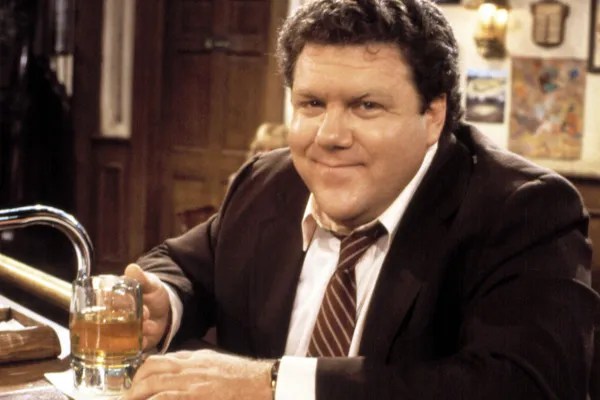
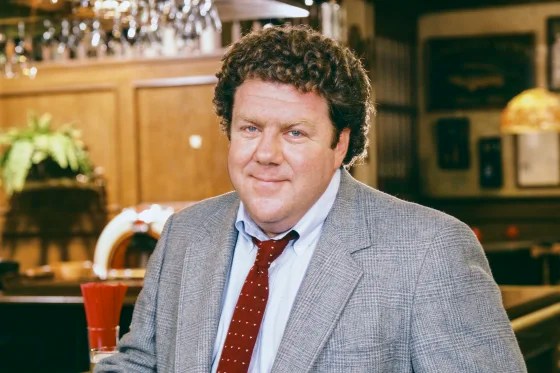
If you’re old enough to have watched Cheers when it originally aired or to have caught it in reruns, George Wendt will always be Norm Peterson, the beer-drinking accountant who spent all of his time at the show’s titular bar. One of the show’s trademarks was that, whenever he entered the bar, everyone greeted him by shouting, “Norm!” “How’s the world treating you?” a bartender would ask. “It’s a dog eat world and I’m wearing milkbone underwear,” Norm once replied.
(One of my favorite joke from the series was when Norm went into a steakhouse and everyone inside was heard to yell, “Norm!” as the door closed behind him.)
If we’re going to be really honest, Norm was probably a high-functioning alcoholic and terrible husband. (Wife Vera was often-mentioned but never seen.) Wendt was so likable in the role and was so good at delivering those one-liners that it didn’t matter. Watching the show, you never wondered why Norm was in the bar. You were just glad he was.
George Wendt was also an accomplished stage actor. (I saw him on stage when he was co-starring with Richard Thomas in 12AngryMen.) He appeared in several movies, usually playing the comedic sidekick or the hero’s best friend. His film roles often didn’t ask him to do much other than be likable but one exception was his performance in 1991’s GuiltyBySuspicion.
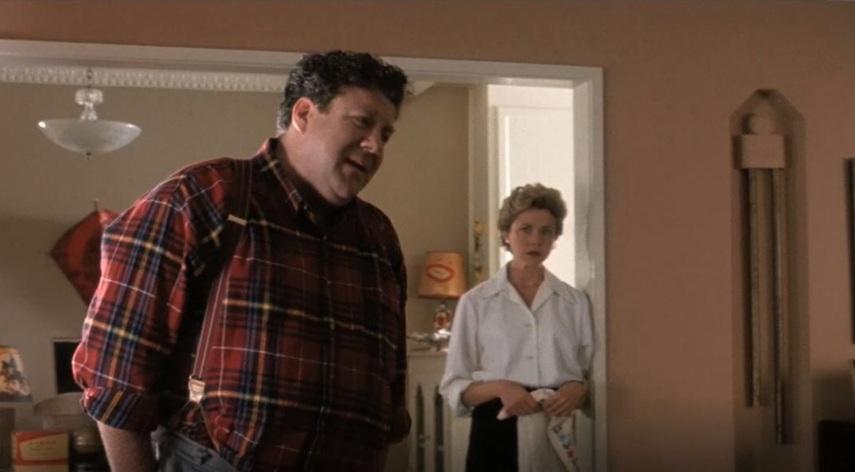
GuiltyBySuspicion is a film about the McCarthy era, starring Robert De Niro as film director David Merrill, who is threatened with being blacklisted unless he names four of his colleagues as being communists. George Wendt plays screenwriter Bunny Baxter, a childhood friend of David’s who attended a few communist rallies when he was younger, failed to mention it to the FBI, and who is now being investigated as a subversive. The studio argues that David should name Baxter because his name is already out there. When David refuses, he finds himself blacklisted and unable to make a living. Bunny Baxter, meanwhile, is offered a similar deal. Baxter can save his own career but only if he names David as a communist. Unlike David, Baxter considers betraying his friend because it’s the only way that he can ever hope to work again. “Your dead anyway,” Baxter says to David.
GuiltyBySuspicion suffers from Irwin Winkler’s plodding direction but De Niro gives a good performance, as does Martin Scorsese who is cast as a director based on Joseph Losey. The film is full of actors who would later become better-known, like Chris Cooper, Tom Sizemore, and Annette Bening. Wendt, however, gives the film’s best performance as the screenwriter who is torn between protecting his career and maintaining his integrity. The scene where he asks permission to name Merrill as a communist is powerful and it shows how good an actor George Wendt could be. Bunny Baxter is asking his best friend to allow himself to be stabbed in the back. Baxter is that desperate. That he’s played by George Wendt, an actor who was everyone’s favorite likable barfly in the 80s, makes the scene all the more powerful.
Over the next 5 days, I will discuss Charles Bronson’s DEATH WISH series in chronological order. This series has brought me countless hours of entertainment over the last 40 years, so enjoy and let me know your thoughts!
“Don’t ever make a death wish, because a death wish always comes true!” – I’ve always thought this was kind of a corny saying on the original DEATH WISH trailer, but as one of the world’s biggest Charles Bronson fans, I still hold the original DEATH WISH (1974) in extremely high regard. This is the 70’s revenge classic that made Bronson a box office superstar in his home country, while simultaneously influencing the way vengeance was depicted on screen for decades to come. DEATH WISH is one of the most underrated and influential films from a decade that was full of great films.
If you’re reading this review, I’d be about 99% positive that you know the basic story of the film. Charles Bronson plays Paul Kersey, a conscientious objector whose wife is killed and whose daughter is raped by a group of criminal thugs in New York City. When the police are incapable of providing justice, Kersey turns into a sidewalk vigilante and stalks the streets and subways of New York, luring thugs to mug him so he can shoot them with his 32-caliber Colt Police Positive pistol. Vincent Gardenia plays detective Frank Ochoa, who’s put in charge of finding the vigilante and putting an end to his one-man mission of justice.
It’s been 50 years since DEATH WISH was released into theaters and it’s hard to fathom just how controversial the film was in its time, especially since I wasn’t even 1 year old when it was released. The graphic rape scene that kicks off the events of the film, combined with the vigilante subject matter, turned off so many big stars, including Jack Lemmon, Henry Fonda and George C. Scott. This opened up the door for Charles Bronson who didn’t have any such misgivings. They just didn’t understand what a nerve the film would touch with the filmgoing public, who were tired of their cities being overrun by violent criminals. The movie became an audience participation movie unlike any others of the time with cheering in the seats every time Kersey offed another criminal. The controversial film became one of the top box office hits of the year and the biggest of Bronson’s career.
DEATH WISH was the fourth of six films directed by Michael Winner and starring Charles Bronson. In typical Winner fashion, the film has some strange touches, but the director is extremely effective in building the motivation for vigilante justice that was required for the film to thrive. He handles the action sequences well, and his cast is outstanding. Bronson & Gardenia are perfect in the lead roles, and the lovely Hope Lange has the brief, infamous role as Kersey’s brutalized wife. Stuart Margolin is especially memorable as the Arizona businessman who gives Kersey his gun. There are also a number of actors in small roles who were not well known when the movie was made who would go on to successful film careers. The biggest is Jeff Goldblum who has the most memorable role of the three muggers who attack Kersey’s wife and daughter at the beginning of the film. It’s a brief, but no holds barred performance for sure. Oscar winning actress Olympia Dukakis has a small role as a cop who expresses her frustration about the amount of leg work expected of her by Detective Ochoa. And finally, Christopher Guest has one scene as a young cop who finds the wounded vigilante and recovers his gun.
On a personal note, this film holds a special place in my heart as the first Charles Bronson film I ever saw. It was probably in 1984 or ‘85, and I stayed up with my dad to watch the late movie on our local TV station. The movie happened to be DEATH WISH. As bad things were happening to Kersey’s family at the beginning of the film, my dad told me not to worry, that “Charles would get them.” That intrigued me and let me know that Bronson had a reputation that preceded him. From that point forward, I wanted to rent a Charles Bronson film every time we went to the video store. And the rest, as they say, is history!
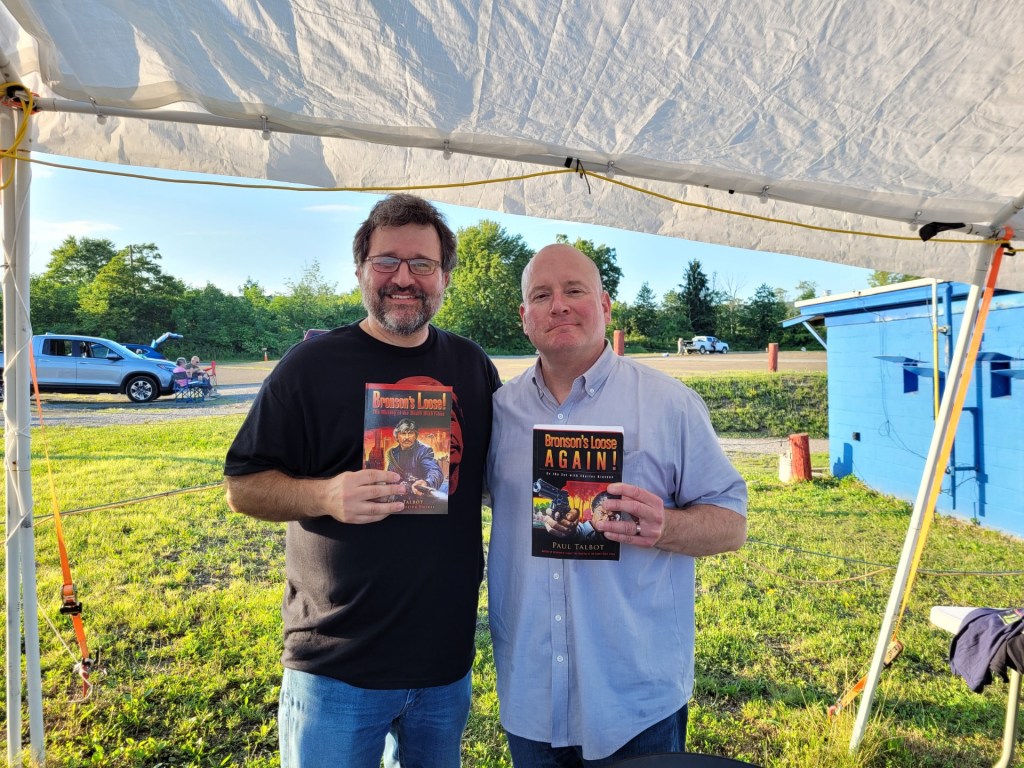
BONUS: The definitive book about the DEATH WISH film series was written by my friend, author and film historian Paul Talbot. The name of the book is BRONSON’S LOOSE: THE MAKING OF THE DEATH WISH FILMS. If you have any interest in Charles Bronson, the DEATH WISH series or Cannon Films, I can’t recommend Paul’s books more highly.
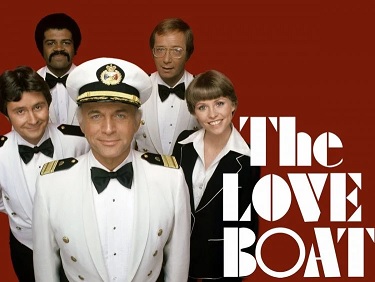
Welcome to Retro Television Reviews, a feature where we review some of our favorite and least favorite shows of the past! On Wednesdays, I will be reviewing the original Love Boat, which aired on ABC from 1977 to 1986! The series can be streamed on Paramount Plus!
Welcome aboard! We’re expecting you.
Episode 1.12 “The Old Man and the Runaway / The Painters / A Fine Romance”
(Directed by Stuart Margolin and James Sheldon, originally aired on December 24th, 1977)
Hey, this episode of The Love Boat aired on Christmas Eve! Oddly enough, unlike last week’s episode, it was not a holiday-themed episode. You really do have to wonder if there was some sort of scheduling snafu at ABC and perhaps the episodes were shown out-of-order. Then again, it could be that ABC realized that everyone would be busy getting ready for Midnight Mass on Christmas Eve so they decided to burn off a lesser episode while no one was watching.
(Doesn’t everyone spend Christmas Eve getting ready for Midnight Mass while their aunt tells them to dress more like the Virgin and less like the Magdalene? Or was that just my experience?)
Yes, this is a lesser episode of The Love Boat. It’s not a terrible episode but, at the same time, it’s not all the memorable. A big problem is that there’s not really much romance on this cruise. The show was called The Love Boat for a reason and, when there’s no love, it just doesn’t feel right.
For instance, one subplot dealt with two incompetent painters (played by Arte Johnson and Pat Morita) painting the captain’s office during the cruise. They kept screwing up the job, which led to Captain Stubing getting progressively more and more annoyed. From the start, I guessed that the punchline would be that the painters were screwing up on purpose so that they could stay on the boat and get a free cruise and …. yep, that’s exactly what it was. Johnson and Morita were a good comedy team but the story itself felt like filler.
Meanwhile, a grumpy old widower (Will Geer) discovered that he was sharing his cabin with a teenage runaway (Bayn Johnson), who had stowed away on the ship and who was planning on meeting up with her boyfriend in Mexico. Once he got over complaining about her being young and irresponsible, Geer convinced her to return to her parents. Again, it wasn’t terrible and Bayn Johnson did a good job of keeping her character from getting annoying but it felt a bit out of place on The Love Boat. Obviously, the 75 year-old man and the 16 year-old runaway weren’t going to fall in love and leave the ship arm-in-arm while the crew smiled knowingly. Instead, this was a typical generation gap story. The most interesting thing about this story is that this was the second time that a runaway managed to stowaway on the Love Boat. Does that boat not have a security team? Don’t you actually have to show your tickets to board the boat? How does these people keep sneaking aboard?
Finally, the third storyline felt a bit more like a Love Boat story. Cruise director Julie (Lauren Tewes) is super-excited when she sees that Sean McGlynn (Anson Williams) is a passenger on the cruise. Julie and Sean grew up together and Julie always had a crush on him. At first, Julie and Sean have fun hanging out but, whenever Julie tries to flirt, Sean panics and runs off. Julie worries that there’s something wrong with her (oh, Julie!) but …. nope, Sean’s a priest. Apparently, he was having a crisis of faith when he boarded the boat, which is why he didn’t tell anyone he was a priest. But, when his roommate (Tom Poston) has a heart attack, Sean delivers the last rites and his faith is restored. (Don’t worry. His roommate survives and has a surprisingly quick recovery. Doc Bricker is a miracle worker!) Anyway, Sean leaves the boat wearing his collar and Julie stays on the boat, no doubt waiting for someone else from her past to buy a ticket. It’s a bit of a shame, as Lauren Tewes and Anson Williams did make a cute couple. Then again, we all know that Julie and Gopher belong together.
Like I said, this was not a terrible episode. It just wasn’t particularly memorable. It needed just a bit more romance. After all, love is life’s sweetest reward.
Welcome to Retro Television Reviews, a feature where we review some of our favorite and least favorite shows of the past! On Wednesdays, I will be reviewing the original Love Boat, which aired on ABC from 1977 to 1986! The series can be streamed on Paramount Plus!
Love exciting and new….
Come aboard! We’re expecting you!
Episode 1.8 “Lost and Found / The Understudy / Married Singles”
(Directed by Stuart Margolin, originally aired on November 19th, 1977)
This week’s cruise is all about secrets and lies.
For instance, Durwood Moss (Steve Allen) and Maisie Nolan (Polly Bergen) are currently separated and their therapist has suggested that they try taking separate vacations. Maisie books a cabin on the cruise so Durwood books the cabin next door. As Durwood explains it, being in separate cabins counts as being on separate vacations. Not letting anyone know that they’re married (albeit unhappily so), Durwood pursues Barbie (Loni Anderson) and Maisie flirts with Jack (Joshua Plymouth). Of course, Durwood and Maisie end up realizing that they’re still in love. Fortunately, Jack and Barbie also fall in love with each other!
Meanwhile, 8 year-old Theodore Denison, Jr. (James Bond III) lies and says that he has his parents’ permission to be on the cruise by himself. Of course, it turns out that he’s actually a runaway. On the cruise, he meets Sharon and Richard Baker (Sandy Duncan and Jim Stafford), a married couple that is struggling to come to terms with the death of their son. Sharon wants to adopt Theodore and Theodore wants to be adopted. But then Theodore’s real parents show up and apologize for the fight that caused Theodore to run away in the first place. Still, Sharon and Richard at least find the courage to try to move on from their tragedy.
Finally, Connie Evans (Jo Ann Harris) is an assistant cruise director who has been assigned to the ship. Julie (Lauren Tewes) is supposed to be training Connie but it soon becomes clear that, in typical All AboutEve fashion, Connie is plotting to steal Julie’s job. Connie’s plan is … well, it’s interesting. She continually screws up the simplest of duties and then claims that she was only doing what Julie trained her to do. When she shows up for dinner in a skimpy outfit, she claims that it’s what Julie told her to wear. I guess the plan is to make Julie look like she’s bad at training people but just because someone isn’t good at training, that doesn’t mean that they’re bad at their overall job. In fact, it would seem that most people would look at Connie’s actions and say, “You should have had enough common sense to know better, even if that’s what Julie told you.” Anyway, it all works out, albeit somewhat bizarrely. The captain reprimands Connie. The crew hates Connie and goes out of its way to humiliate her. And yet, even after it become obvious that Connie has been trying to get her fired, Julie agrees to help Connie because she thinks Connie has the makings of being a great cruise director. Just how painfully nice is Julie?
This was not a bad episode. The stuff with Durwood and Maisie was a bit dull but the other two storylines worked. Sandy Duncan brought a lot of emotional sincerity to her plotline and Jo Ann Harris was hilariously conniving in the role of Connie. This episode was a cruise that I enjoyed.
Will I also enjoy the next cruise? Find out next week!
Welcome to Retro Television Reviews, a feature where we review some of our favorite and least favorite shows of the past! On Wednesdays, I will be reviewing the original Love Boat, which aired on ABC from 1977 to 1986! The series can be streamed on Paramount Plus!
Welcome aboard, it’s love!
Episode 1.4 “Message for Maureen / Gotcha / Acapulco Connection”
(Directed by Stuart Margolin, Richard Kinon, and Peter Baldwin, originally aired on October 15th, 1977)
Oh no! It’s a stowaway! I guess any television show that took place on a cruise ship would have to feature at least one storyline featuring a stowaway. It’s a bit disconcerting that The Love Boat couldn’t make it for more than four episodes before using the most obvious plotline but then again, the show ended up running for 9 seasons and a movie. So, apparently, audiences didn’t mind and I have a feeling that there will probably be many more stowaway stories to come.
The stowaway in this episode is April Lopez (played by Charo). Apparently, April became a recurring character, one who appeared in almost every season. In this, her first appearance, she sneaks onto the boat in Acapulco. The captain is not happy when she’s discovered hiding in a laundry hamper but everyone else is charmed by just how loud and talkative she is. Because there’s no available rooms, April is housed with Doc Bricker until she can be dropped off at the next port. Of course, Doc falls in love because Doc fell in love with everyone who came into his exam room. Seriously, Doc was an HR nightmare waiting to happen.
Of course, April is not the only exhausting person to be on the ship. There’s also Cyril Wolfe (Milton Berle), a nonstop practical joker whose wife (Audra Lindley) is getting sick of dealing with him and really, who can blame her? Cyril greets a total stranger with a joy buzzer. He carries around a fake, detachable hand so that he can freak people out. Cyril can’t even give it a rest during their vacation! Pretty soon, not only his wife but the crew are pretty sick of him. (Most of the people watching the show will be sick of him, too.) Do they conspire to toss Cyril overboard? They could probably get away with it, seeing as how all of the ship’s nominal authority figures are busy dealing with a stowaway who loves to sing. Somehow, Cyril survives his trip and he and his wife end up more in love than ever.
Finally, Maureen Mitchell (Brenda Benet) is a former tennis player who is now in a wheelchair. All she wants is a few days of vacation before she meets with a surgeon who might be able to help her walk again. Unfortunately, she discovers that an arrogant sportswriter named John (Bill Bixby) is also on the cruise! At first, she wants nothing to do with him but when John injures his knee and has to use a wheelchair for the rest of the cruise, the two of them fall in love….
Hold on. You know what just occurred to me? Last week’s episode featured Robert Reed and Loretta Swit as two people who don’t like each other but just happen to end up on the same cruise. This episode featured Brenda Benet and Bill Bixby as two people who don’t like each other but just happen to end up on the same cruise …. how long did The Love Boat writers last before they said, “Okay, we’re out of stories. Let’s start repeating ourselves?”
Anyway, this episode was a mixed bag. Charo and Milton Berle were not particularly subtle performers and their storylines felt as if they were designed to invite them to indulge in their worst impulses as performers. But Bill Bixby and Brenda Benet had a lot of chemistry as John and Maureen and their story actually worked as a result. (Bixby and Benet were married at the time they appeared in this episode.) Plus, the ship looked lovely. So did the ocean. That’s what really matters.
Welcome to Retro Television Reviews, a feature where we review some of our favorite and least favorite shows of the past! On Wednesdays, I will be reviewing the original Love Boat, which aired on ABC from 1977 to 1986! The series can be streamed on Paramount Plus!
Love! Was it exciting and new this week?
Episode 1.3 “Ex Plus Y / Golden Agers / Graham and Kelly”
(Directed by Adam Rafkin and Stuart Margolin, originally aired on October 8th, 1977)
The third episode of The Love Boat is all about age differences, growing together, and growing apart.
For instance, it’s love at first sight when Julie spots Jim Wright (Charles Frank). I mean, hey, his name is even “Mr. Wright!” And it turns out that, even though he looks like he’s 40, Mr. Wright is actually only 30! And he likes Julie too! The problem, however, is that Jim has been hired to serve as a tour guide for a group of elderly tourists. And those tourists (led by Edward Andrews) simply will not leave Mr. Wright alone! Every time Mr. Wright tries to spend some time alone with Julie, the old people show up. Obviously, the show means for us to sympathize with Julie and Jim but I think I’m actually on the side of the old people as far as this is concerned. I mean, they didn’t pay money so that Jim could have a vacation. They paid Jim to be their tour guide and, unless he’s going to refund their money, that’s what he needs to concentrate on. He and Julie can fall in love once Jim is off the clock.
While Julie pursues Jim, 12 year-olds Kelly (Kristy McNichol) and Graham (a very young Scott Baio) pursue their own romance. Or actually, it’s Kelly who pursues the romance. Graham likes Kelly but he’s also immature and not sure how to talk to girls so he always ends up doing or saying something silly or stupid whenever he and Kelly are on the verge of having a “real” moment. On the one hand, this was actually a fairly realistic storyline, at least by Love Boat standards. On the other hand, Baio and McNichol looked so much alike that any scene featuring the two of them was like that picture of the two Spider-Men pointing at each other. Graham also ended up with a very convoluted backstory to explain why he was traveling with a British grandmother (played by Hermoine Baddeley) despite being a kid from Brooklyn. It was one of those overly complicated and distracting things that could have been solved by simply not casting a British stage actress as Baio’s grandmother or not casting a very American actor as Baddeley’s grandson.
Finally, Robert Reed and Loretta Swit played a divorced couple who found themselves on the same cruise. At first, they dreaded seeing each other but then, eventually, they agreed that they still had feelings for each other. Surprisingly enough, the story did not end with Reed and Swit getting back together. Instead, they just grew as people and were now ready to let go of the bitterness that was holding them back in their new relationships. That was actually a pretty good story and I appreciated the realistic resolution. However, before making peace with his ex-wife, Robert Reed came across as being so angry and so bitter that it was actually kind of scary to watch. It turns out that the Love Boat has skeet shooting. If you don’t think the sight of Robert “Mr. Brady” Reed with a rifle wouldn’t be terrifying, this episode is here to prove you wrong!
I have to give this episode a mixed review. Two of the stories worked better than I was expecting but this episode suffered from the miscasting of some of the passengers. Still, the ship and the ocean looked as lovely as ever and really, that’s the important thing.
Welcome to Retro Television Reviews, a feature where we review some of our favorite and least favorite shows of the past! On Wednesdays, I will be reviewing the original Love Boat, which aired on ABC from 1977 to 1986! The series can be streamed on Paramount Plus!
It’s time to set sail on adventure and set your mind on a new romance!
Episode 1.2 “A Tasteful Affair / Oh, Dale! / The Main Event”
(Directed by Richard Kinon, Adam Rafkin, and Stuart Margolin, originally aired on October 1st, 1977)
The second episode of The Love Boat was all about fighting lovers.
For instance, one storyline — I assume it’s the one that was called “The Main Event” — features Sherman Hemsley as Maurice Marshall and LaWanda Page as his wife, Stella. From the minute that they get on the boat, Maurice and Stella are arguing but it soon becomes obvious that, like many couples who have been together for a while, arguing is just the way that they express their love for each other. The insults may be frequent but they’re always affectionate, which is kind of sweet. Anyway, while on their way to dinner in the ship’s lounge, they get stuck in an elevator. After arguing about the best way to escape from the elevator, they end up making out. Of course, when the doors to the elevator do finally open, Captain Stubing and Gopher see that the couple, rather than being dead, are instead making good use of the space. Everyone laughs. Seriously, that’s the entire story. Two people get suck in an elevator and make out. That’s it. You know, you can fool around on a moving elevator as well. You don’t have to fry the circuitry ahead of time. Just listen for the ping before the elevator doors open.
In a rather more serious storyline, Jaclyn Smith plays Janette Bradford, the wife of a wealthy but heartless man named Lucas (David Knapp). Lucas is convinced that Janette is only taking the cruise alone because she’s planning on cheating on him. Lucas hires a private investigator named Dennis Kingsley (Dennis Cole) to watch her on the boat. Dennis soon discovers that Janette is not cheating on her husband but instead, she took the cruise because she needed a break from his controlling and emotionally abusive ways. Dennis ends up falling in love with Janette and Janette with him. However, Dennis also knows that he’s going to have to tell her the truth about why he’s on the cruise. It doesn’t quite lead to heartbreak but it’s still far more serious than anything you might expect to see on a show of The Love Boat‘s reputation. Jaclyn Smith, it should be said, does a wonderful job in the role of Janette, capturing both the vulnerability of someone in an abusive relationship and also her growing determination to escape from Lucas’s control.
Unfortunately, while all of this is going on, you have to deal with John Ritter playing a guy whose lover actually is cheating on him. Ritter plays Dale. Dale wants to follow his girlfriend on the cruise for the same reason that Lucas hired Dennis to spy on Janette. Dale suspects that he’s being cheated on. However, the cruise is almost entirely sold out. There’s only one ticket left but it’s to share a cabin that’s already occupied by a woman. Since Dale is not a woman, he can’t buy the ticket. So, of course, Dale steals a blonde wig and a suitcase full of the frumpiest dresses imaginable. Can you guess where this is going? Dale gets his cabin, falls in love with his cabinmate (played, in a likable performance, by Tovah Feldshuh), and spends a lot of time changing clothes in the ship’s linen closet. Captain Stubing ends up getting a crush on the mysterious woman with the big blonde hair and the ugly dresses and yes, it’s as stupid as it sounds with a heavy dose of cringey 70s gay panic humor tossed in to boot. It doesn’t help that John Ritter gives such a frantic performance in the role that I actually got nervous watching him. “Calm down!” I wanted to say.
As you can guess, the tone is all over the place in this episode. That’s to be expected when you’re telling three stories at one time but there’s such an imbalance between Jaclyn Smith acting depressed and fragile and John Ritter doing pratfalls that it ultimately takes away from both stories. With the second episode of The Love Boat, it seems obvious that the show was still struggling to find the right balance between drama and comedy. As well, this episode suffers because the crew isn’t given much to do. The first episode was enjoyable because the main cast had a fun chemistry but, in this episode, everyone is a bystander except for Captain Stubing. Unfortunately, this episode couldn’t even treat Stubing consistently as the elevator storyline requires Stubing to be significantly smarter than the Stubing who appears in the John Ritter storyline.
Would the show ever succeed in finding and striking the right balance? We’ll see what happens next week!

 Through the Shattered Lens