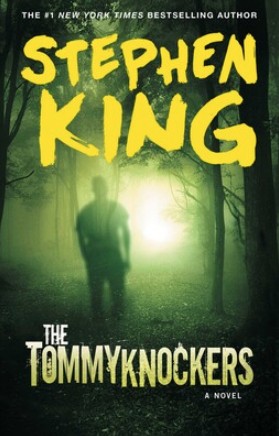
Stephen King has had addiction issues his entire adult life. He’s very open about it. In fact, there are at least three books he’s said that he doesn’t remember writing because he was using more blow than Julie on The Love Boat- the books are The Shining, Misery, and The Tommyknockers.
The plot is that a spaceship crashed long ago in Maine and it takes over the brains of the lifeforms who interact with it. The main characters are Roberta AKA Bobbi who literally stumbles on part of the ship, starting the plot because it starts infecting the town. Gard, a four alarm alcoholic/poet and Bobbi’s former lover, comes to help her and is immune to the ship’s affect because of a steel plate in his head.
As the story progresses, the ship changes the town folk both mentally and physically. The townies make all kinds of wacky and interesting inventions without knowing how they work, lose most of their teeth, and they develop pig-like faces. I told you that he did a lot of cocaine when he wrote this book.
The townies use Gard to help them dig out the ship and there are MANY chapters on the digging logistics. It’s fair to say that Gard spent most of his time in this book as an alcoholic day laborer (maybe he even did some work on my upstairs bathroom because that was done really shitty). I think that you could actually say they were entire chapters just devoted to his digging and things like that; man, Stephen really needs an editor with a spine.
A classic Stephen King plot device is that there are people who power up a haunted house and Tommyknockers uses that to an extreme! Even before I became an engineer, I wonder if Stephen understood how batteries worked? Can you imagine what he did to his kid’s Christmas toys?!
While his stories have recurring plot devices, the heroic journey for his characters changed with his personal change in fortune. The stories in Night Shift and the others from the early part of his career were all about failure: failing your loved ones and failing to maintain control over your life. In those years, the heroes could only succeed by sacrificing their life. The way to stop from harming everyone around them was through suicide because “blood calls to blood” i.e. the family curse. I think that it is clear that the Blood is alcoholism and drug abuse- it’s inherited. When he was failing in life, suicide was described as the only option because the hero was the doorway to misery and I can tell you from my childhood an alcoholic father is definitely the doorway to misery.
After 1979, his career took off and his bank account to pay for copious amounts of cocaine. However, the happy endings became the standard. Money can cure a lot problems, but blood calls to blood and the demons will always remain, but that is what made this book stand out because like his novels in the early part of his career- the hero dies. He can’t save Bobbi and this book was at a high point of addiction. It seems clear to me that it crossed his mind that he couldn’t live with his addiction and that death was the only exit.
Tommyknockers is a messy beach read that is mostly entertaining. If you’re like on a vacation with some real downtime and the Wi-Fi is broken or you’re really into aliens, give it a read.
The Shining is one of the few horror movies that still scares me.
I say this despite the fact that I’ve lost track of the number of times that I’ve watched Stanley Kubrick’s 1980 adaptation of Stephen King’s third novel. It’s a film that I watch nearly every October and it’s a film that I’ve pretty much memorized. Whenever I watch the film, I do so with the knowledge that Jack Torrance (Jack Nicholson), the caretaker of the Overlook Hotel, is eventually going to start talking to ghosts and he’s going to try to kill his wife Wendy (Shelley Duvall) and his son, Danny (Danny Lloyd). Whenever I watch this film, I know what Jack is going to find Room 237. I know about the blood pouring out the elevator like the Tampax commercial from Hell. I know what Danny means when he says, “Redrum….” I know about the twins and their request of “Come play with us, Danny.” And, of course, I know about the film’s famous ending.
Whenever I start watching this film, I know everything that is going to happen. And yet, as soon as I hear the booming beat of of Wendy Carlos’s theme music and I see the overhead shot of the mountain roads leading to the Overlook Hotel, I start to feel uneasy. Whenever Barry Nelson (played the hotel’s general manager) starts to blandly explain that a previous caretaker got cabin fever and chopped up his twin daughters, I smile because Nelson delivers the lines so casually. But I also get nervous because I know Charles (or is it Delbert) Grady is going to show up later.
(Incidentally, Barry Nelson never gets enough credit for his brilliant cameo as the friendly but guarded hotel manager. In Stephen King’s original novel, the character was a stereotypically unsympathetic middle manager, a martinet who existed largely to be told off. In Kubrick’s film, the manager is one of the most fascinating of the supporting characters.)
I still get nervous when I see Wendy and Danny, sitting in their disturbingly sterile Colorado home while Jack interviews for the caretaker job. Wendy smokes and Danny talks about how his imaginary friend, Tony, doesn’t want to go to the hotel. With her unwashed her and her tentative voice, Shelley Duvall is a far cry from the book’s version of Wendy. However, Duvall’s Wendy is also a far more compelling character, an abused woman who finds her strength when her son is put in danger. Duvall is the perfect choice for Wendy because she seems like someone who you might see in the parking lot of your local grocery store, trying to load the bags in her car and keep an eye on her young child at the same time. She seems real and her reactions remind us of how we would probably react if we found ourselves in the same situation. Wendy makes the mistakes that we would all probably make but she refuses to surrender to her fear.
Why does The Shining remain so powerful and so frightening, even after repeated viewings? Most of the credit has to go to Stanley Kubrick. Stephen King has been very vocal about his dislike of the film, claiming that The Shining was more Kubrick’s version than his. King has a point. Film is a director’s medium and few directors were as brilliant as Stanley Kubrick. (Along with The Shining, Kubrick also directed Paths of Glory, 2001, Barry Lyndon, Dr, Strangelove, Spartacus, Lolita, The Killing, A Clockwork Orange, Eyes Wife Shut, and Full Metal Jacket. Stephen King directed Maximum Overdrive.) From the minute we see the tracking shots that wind their way through the desolate mountains and the empty hallways of the Overlook, we know that we’re watching a Kubrick film. Those tracking shots also put us in the same role as the spirits in the Overlook. We’re watching and following the characters, observing and reacting to their actions without being able to interact with them. King has complained that Kubrick’s version of The Shining offers up no hope. But, honestly, what kind of hope can one have after discovering that ghosts are real and they want to kill you? Once Jack Torrance finally accepts that drink from Joe Turkel’s Lloyd and meets Phillip Stone’s Grady, there is no more room for hope. King’s book ends with the Overlook destroyed and Jack Torrance perhaps redeeming himself in his last moments. Kubrick’s film suggests that Jack Torrance never cared enough about his family to be worthy of redemption and that the evil that infected the Overlook is never going to be destroyed. In the end, not even the kindly presence of Scatman Crothers in the role of Dick Halloran can bring any real hope to the Overlook.
The Shining is unsettling because, more than being a ghost story, it’s a film about being tapped. Physically, the Torrances are trapped by the blizzard. Mentally, Jack is trapped by his addictions and his resentments. One gets the feeling that he’s deeply jealous of Danny, viewing him as someone who came along and took away all of Wendy’s attention. Wendy is trapped in a bad and abusive marriage and there’s something very poignant about the way Duvall both captures Wendy’s yearning for outside contact (like when she uses the radio to communicate with the local rangers station) and her hope that, if she’s just supportive enough, Jack will get his life together. Danny’s trapped by his psychic visions and his knowledge of what’s to come. The victims of the Overlook appear to be trapped as well. Grady’s daughters are fated to always roam the hallways, looking for someone to play with them. The Woman in 237 will always wait in her bathtub. Were these spirits evil before they died or were the twisted by the Overlook? It’s an unanswered question that sticks with you.
As I mentioned earlier, Stephen King has been very vocal about his dislike of both The Shining and its director. (King once boasted about outliving Kubrick, a comment that showed a definite lack of class on the part of America’s most commercially successful writer.) Why does King hate the Kubrick film with such a passion?
I have a theory. Both King’s second novel, Salem’s Lot, and The Shining feature a writer as the man character. In both cases, King obviously related to the main character. Ben Mears in Salem’s Lot is charming, confident, articulate, and successful. He’s a writer that everyone respects and he’s even well-known enough to have a file with the FBI. Jack Torrance, on the other hand, is a struggling writer who has a drinking problem, resents authority figures (like the hotel manager), and has issues with his father. Torrance is a much more interesting character than Ben Mears, precisely because Torrance is so flawed. (King, and I give him full credit for this, has been open about his own struggles with substance abuse and how he brought his own experiences to the character of Jack Torrance.) I’ve always suspected that, at the time that King wrote Salem’s Lot and The Shining, Ben Mears was King’s idealized version of himself while Jack Torrance, with all of his struggles and flaws, reflected how King actually felt about himself. (That the Wendy Torrance of the novel is a beautiful blonde who sticks with her husband despite his drinking problem feels like a bit of wish fulfillment on the part of King.) When Stanley Kubrick made his version of The Shining and presented Jack Torrance as essentially being a self-centered jerk who, even before arriving at the hotel, had a history of abusing his wife and son, it’s possible King took it a bit personally. Since King had poured so much of himself into Jack Torrance, it was probably difficult to see Kubrick present the character an abusive narcissist whose great novel turned out to be literally a joke. And so, Stephen King has spent the last 45 years talking about how much he hates Kubrick’s film.
King’s opinion aside, Kubrick’s The Shining is probably the most effective Stephen King adaptation ever made, precisely because Kubrick knew which parts of the book would work cinematically and which parts were best excised from the plot. As opposed to later directors who often seem intimidated by King’s fame, Kubrick was able to bring his own signature style to the story. Stanley Kubrick’s The Shining is a masterpiece and one that I look forward to revisiting this October.
4 Or More Shots From 4 Or More Films is just what it says it is, 4 shots from 4 of our favorite films. As opposed to the reviews and recaps that we usually post, 4 Shots From 4 Films lets the visuals do the talking!
Tomorrow will be the birthday of Stephen King. Normally, we honor folks on their birthday but tomorrow is also Bill Murray’s birthday so we’re going to honor King now.
In others words, it’s time for….
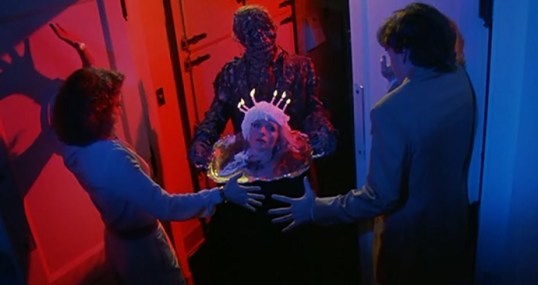
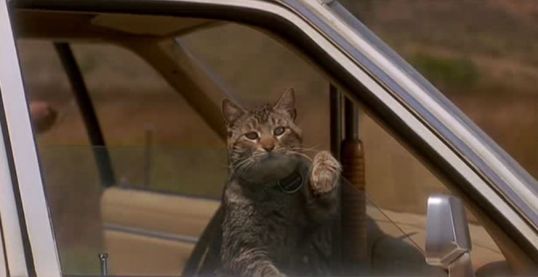
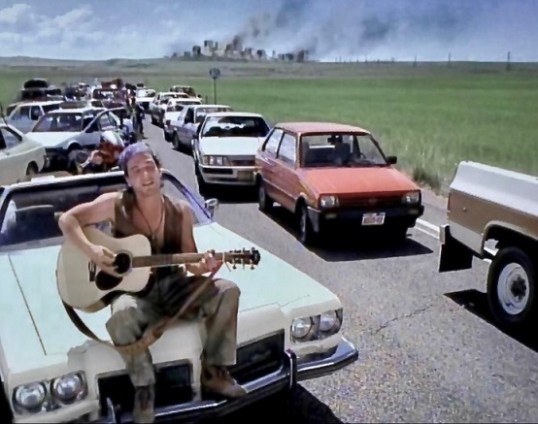
4 Shots from 4 Stephen King Films
Creepshow (1982, dir by George Romero, written by Stephen King, DP: Michael Gornick)
Maximum Overdrive (1986, dir by Stephen King, written by Stephen King, DP: Armando Nannuzzi)
Sleepwalkers (1992, dir by Mick Garris, written by Stephen King, DP: Rodney Charters)
The Stand (1994, dir by Mick Garris, written by Stephen King, DP: Edward J. Pei)
Somehow, I missed that a film version of The Long Walk is on the verge of being released.
The Long Walk is one of Stephen King’s best novels, even if it is one that he wrote under the name of Richard Bachman. In a dystopian future, a group of young men enter an annual walking contest. They have to walk a certain number of miles an hour (four in the book but apparently three in the film) and, if they fall behind or stop, they are executed by the soldiers following them. The Walk continues until there is only one survivor. The Long Walk feels like a distant cousin to The Running Man (the book, not necessarily the film adaptation).
The film version of The Long Walk was directed by Francis Lawrence, who previous directed The Hunger Games sequels, and has a cast that includes Cooper Hoffman, Charlie Plummer, Judy Greer, and Mark Hamill as the main bad guy. Who knows if the film will do justice to the book’s bleak tone. The trailer offers some hints. The film will be released on September 12th.
Welcome to Late Night Retro Television Reviews, a feature where we review some of our favorite and least favorite shows of the past! On Wednesdays, I will be reviewing Monsters, which aired in syndication from 1988 to 1991. The entire series is streaming on YouTube.
This week, Monsters comes to its conclusion.
Episode 3.24 “The Moving Finger”
(Dir by Kenny Myers, originally aired on April 26th, 1991)
Monsters comes to a close with an adaptation of a Stephen King short story.
Nerdy Howard (Tom Noonan) is shocked to discover that, every time he goes to any of the various drains in his house, a bony finger pokes out. Howard’s wife can’t see the finger but Howard becomes obsessed with it, attacking it with a corrosive liquid and eventually a hedge trimmer. No matter how much damage Howard does to it, the finger comes back, longer and stronger….
Despite the Stephen King pedigree and the presence of the usually reliable Tom Noonan, TheMovingFinger makes for a disappointing conclusion to Monsters. King’s style, and this is especially true of his short stories, often doesn’t translate well into visual adaptations. The signature inner monologues and the building sense of dread can be difficult to recreate visually. (One reason why TheShining is the best King adaptation is because Stanley Kubrick made the material his own and didn’t worry about trying to recreate all of King’s trademark bullshit literary flourishes.) Tom Noonan doesn’t have much of a character to play and the finger itself becomes less effective as the episode drags on.
Oh well! Monsters was a generally uneven show so it’s perhaps appropriate that it ended on an unsteady note. It’s the curse of the anthology format. When Monsters was good, it was really, really good. When it was bad, it was kind of boring. There were a lot of good episodes that aired during the final season but, sadly, there were a few bad ones as well. That said, the good Monsters episodes to outweigh the bad and forgettable ones.
That’s it for Monsters! Next week, something new will premiere in this time slot. What will it be? I have no idea but I look forward to finding my next show!
I’m happy to see Edgar Wright back making movies. It’s been a while since 2021’s Last Night in Soho, and this time around, he’s remaking 1987’s The Running Man. Based off the story by Stephen King, Ben Richards (Glen Powell, Twisters, Hit Man) is a man who needs some help, living in the slums with his wife (Jayme Lawson, Sinners, The Batman) and child. To earn a high stakes reward, he joins The Running Man, a tv show that puts him in the spotlight for 30 days while everyone hunts him down. Should he survive, his family will be set. The movie looks like it has a good cast, with Colman Domingo (Sing Sing) and Josh Brolin (Dune) also in the mix. Admittedly, I’m curious of what the soundtrack to this will be like, given Wright’s flair for pairing scenes with music.
The Running Man will be in theatres this November.
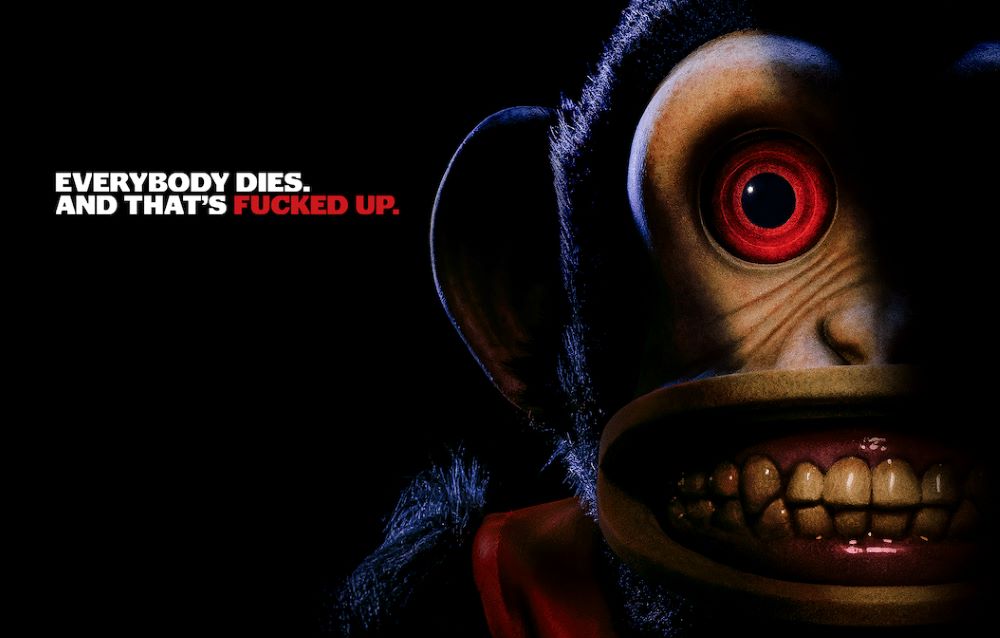
Yes, dying is quite fucked up and Osgood Perkins follow-up to his 2024 horror cult-hit Longlegs points and shows this to the audience in spades (and buckets of blood).
The Monkey, based on the Stephen King short story of the same name, tells the story of a drum-playing toy monkey which happens to cause the the deaths of random individuals when it stops playing the drums. Right from the start we see that The Monkey veers away from Perkins usual moody and atmospheric horror language and goes for the absurdist take on the genre.
Anyone who has seen the supernatural horror series Final Destination will recognize the Rube Goldberg-esque ways each kills in that series has become its signature will appreciate how truly absurd some of the kills in The Monkey turns out. To say more would be too much of a spoiler and should be experience by anyone willing to watch this film.
Osgood Perkins still brings to the table his own brand of horror comedy by exploring the ideas and themes of death’s inevitability and randomness, but also childhood trauma and how it impacts the lives of those children even to their adulthood. Where some films would be more subtle in exploring these themes, Perkins decides on drumming it on thickly which, at time, does come off as cringe.
Yet, despite the heavy-handedness of Perkins’ screenplay (he also wrote the screenplay adaptation of King’s tale), The Monkey still succeeds in delivering an early horror hit for 2025 that should be seen with a crowd. this is a film that is actually better when seen as part of a collective experience rather than with a small group.
I sent our son a text the other day and asked him if he had an answer for the question “What’s your favorite movie?” I thought I knew the answer but it turns out I was only half right. I expected his answer to be THE HATEFUL EIGHT. Rather, the answer I received back was “The Hateful Eight or Shawshank Redemption!” Since I recently wrote about the time that he and I attended THE HATEFUL EIGHT roadshow in Dallas, I decided I would write about THE SHAWSHANK REDEMPTION this time around. It doesn’t hurt that it’s one of my favorite movies as well. It also doesn’t hurt that it’s the very top rated film on the Internet Movie Database.
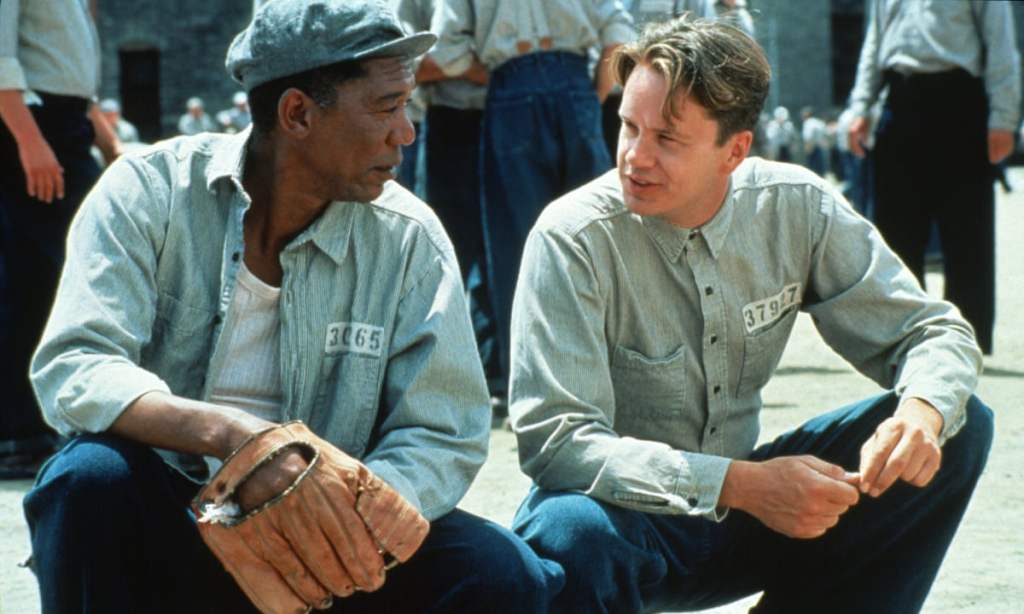
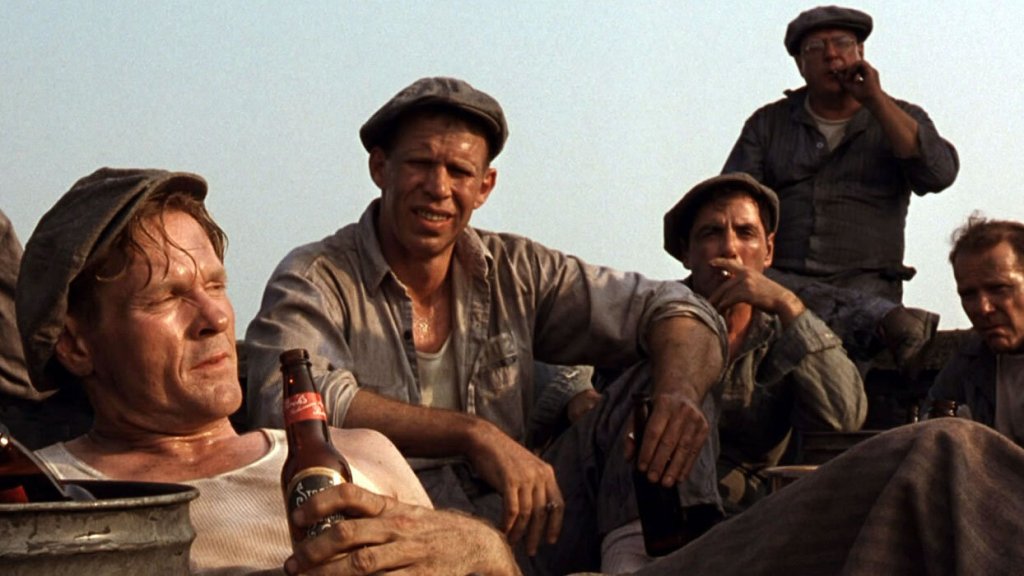
Based on Stephen King’s “Rita Hayworth and Shawshank Redemption,” the story is well known… hot shot banker Andy Dufresne (Tim Robbins) is convicted of the murder of his wife and her lover, and gets sentenced to life at the Shawshank prison. Once on the inside, we meet a variety of characters that you expect in a prison movie. We meet Warden Norton (Bob Gunton), the hypocrite who speaks of the Bible while hiding a corrupt, evil spirit. We meet Captain Hadley (Clancy Brown), the brutal chief prison guard, who rules over the inmates with intimidation and a real willingness to inflict violence and pain on anyone who shows the least bit of independence. We meet Red (Morgan Freeman), the long-time inmate who has the ability and connections to get you anything you need. We meet other inmates like Heywood (William Sadler), the inmate who seems like a jerk when you first meet him but turns out to be a pretty good fella; Tommy (Gil Bellows), the young guy who comes into prison and may know something that proves Andy’s innocence; Brooks (James Whitmore), the old man who gets released after almost a lifetime in prison, and doesn’t know how to adjust to life on the outside; and Bogs (Mark Rolston), the sadistic prisoner who wants to force himself on Andy, and is willing to kill to get what he wants. Life isn’t easy at all in Shawshank, but Andy’s intelligence and ability to prove himself useful to Warden Norton and Captain Hadley allows him to finds ways to make life more bearable for him and his friends. After nineteen years in prison, even though he maintains his innocence, it appears that Andy is content to live out his remaining years in prison. Or is he??
I’ll never forget the first time I saw the movie THE SHAWSHANK REDEMPTION. I didn’t see it until a year or two after its initial release in 1994. I was one of those guys who figured a movie that praised by the critics was probably not something that I would like that much. Plus, at the time, the title of the movie just seemed kind of weird. But I kept hearing about how great it was, so I finally decided to give it a viewing. I agree with my son, I think THE SHAWSHANK REDEMPTION is one of the most emotionally uplifting movies ever made. Why is that you might ask? My answer would be because there’s something profoundly satisfying about people who persevere through the worst times imaginable and continue to find hope where most of us would be hopeless. Prison life is shown as horrific. One prisoner is literally beaten to death by Captain Hadley on his first night in prison for crying. Andy fights off the sadistic Bogs as much as he can, but he is unable to completely fight off his advances. But no matter what he goes through, Andy Dufresne is able keep moving forward, and he does not allow the prison life to completely crush his spirit. He keeps finding ways to persevere. Andy’s actions and endurance turn simple acts like listening to Mozart or having a beer into overwhelming emotional highs for us as the audience. The film also maintains a realistic sense of humor, which might seem difficult under the circumstances. This sense of humor is found in such mundane tasks as creating a prison library, providing tax prep services for the guards, or attending multiple parole hearings over the years. These comedic moments are earned by the way the movie takes it’s time letting us really get to the know the characters and then laugh with them as the individual moments occur. And the friendship between Andy and Red is something that deeply resonates with me. I think we all would like to have that kind of friendship. These kinds of friendships aren’t built overnight, and often they require a level of shared experience that is almost impossible to find. But they find it behind Shawshank’s prison walls, and it connects them for life. In my opinion, the friendship between these two characters leads to one of the most emotionally satisfying endings to any film, ever.
Director Frank Darabont was able to obtain some of career-defining performances from his cast. As good as Tim Robbins is as an actor, in my opinion, he has never been better than he was as Andy Dufresne. And I say this knowing full well he won an Oscar for MYSTIC RIVER. He maintains his dignity against all odds and only appears to break down a time or two. Morgan Freeman is great as always as Red, but his character is so important because we see him go from a hopeless skeptic, to a man who truly has hope thanks to his friendship with Andy. Freeman seems to handle this transition effortlessly. I’m going to give a shoutout to James Whitmore as well. With a career going all the way back to the 1940’s, his performance as Brooks Hatlen is one of the more touching and heartbreaking performances of the film. I haven’t seen all of his work, but I have never seen him better than he was in THE SHAWSHANK REDEMPTION. Each additional cast member, from Bob Gunton, Clancy Brown and Mark Rolston, to Willam Sadler and Gil Bellows all have powerful moments that add to the overall effect of the film.
Looking back now, it’s hard to believe that THE SHAWSHANK REDEMPTION did not win the Academy Award for best film. It lost to FORREST GUMP when the awards were handed out in 1995. It’s even harder to believe that the film did not win a single Academy Award even though it received seven nominations. But at the end of the day, that doesn’t really matter to me. I just know that it’s a great film, and it reaches emotional heights that very few movies, if any, have ever reached before. That’s a pretty damn good legacy.
The Boogeyman is based on a short story that King wrote in 1973. Obviously, King is a big name in horror but how can any film called Boogeyman hope to top the work of Ulli Lommel?





 Through the Shattered Lens