The Films of 2024: Horizon: An American Saga: Chapter One (dir by Kevin Costner)


Horizon: An American Saga: Chapter One is the rather unwieldy title of the first part of what Kevin Costner has said will be an epic four-part movie about the settling of the American frontier.

It’s very, very long.

It has a running time of three hours, during which time a lot of characters are introduced and a lot of plotlines are initiated but, because this is the only first chapter, none of them come to a close.  In fact, as the film ends, it’s still a mystery as to how some of the characters are even related.  I watched all three hours and I took my ADD meds this morning so you can be assured that I was actually paying attention.  That said, I still struggled to keep track of who everyone was or even where they were in proximity to each other.  Indeed, it was only towards the end of the film that I realized that several years were supposed to have passed over the course of the first chapter’s running time.

That’s not to say that the film is a disaster.  While it’s not quite the nation-defining epic that Costner obviously envisioned it as being, it’s also not quite the cinematic atrocity that several critics made it out to be.  It’s a throwback of sorts, to the epic westerns of old.  As such, the film features taciturn gunslingers, a woman with a past, dangerous outlaw families, fierce Indian warriors, and a wise Indian chief who has dreamed of the coming of the white man.  The film is full of actors — like Michael Rooker, Sienna Miller, Sam Worthington, Danny Huston, Will Patton, James Russo, Dale Dickey, and Kevin Costner himself — who feel as if they belong to a different era of filmmaking.  Just about everyone in the film is heading to the settlement of Horizon, which sits in Apache territory.  Despite the efforts of the Indians to kill every settler who shows up, they keep coming.  As one army officer explains it, the Indians have made the mistake of thinking that the settlers will come to believe the land is cursed while the settlers, all of whom are full of American optimism, instead chose to believe that the previous settlers were unlucky but that the next wave of settlers will make it work.  Costner has the right visual sensibility for a western.  The film reveals a director who is obviously in love with the Western landscape and the film is at its best when it simply frames the characters against the beauty of the frontier.  But when it comes to actually telling a compelling story, he struggles.  There are a lot of moving parts to the first chapter of Horizon and the problem is not that they don’t automatically connect but instead that Costner never gives us any reason to believe that they’ll ever connect.  There are no visual clues or bits of dialogue to assure the viewer that everything they’re watching is going to eventually pay off.  Costner asks his audience to have faith in him and remember that he directed Open Range and Dances With Wolves while forgetting about The Postman.

The first hour, which features a brutal raid on the settlement by a group of Indians, is the strongest.  It really drives home the brutality of what we now call the old west.  In the style of Michael Cimino’s The Deer Hunter, Costner closely observes the individual customs of the film’s settlers and carefully introduces several appealing characters who leave the viewer feeling as if they’ve met a very special and very unique community of people.  That makes it all the more devastating when the majority of those characters are subsequently wiped out with casual cruelty in a raid led by the Indian warrior Pionsenay (Owen Crow Shoe).  (Later — much later — a tracker played by Jeff Fahey will show similar brutality while wiping out a group of Apaches.)  The first hour establishes the frontier as being beautiful but also dangerous and it also drives home the mix of determination, desperation, and even madness that led so many to follow Horace Greeley’s advice and “Go west!”  Though the film was shot in early 2023, the brutality of the raid brought to mind the terrible images of the October 7th attacks on Israel.  The subsequent scenes in which Pionesenay and his followers ridiculed those in the tribe who wanted peace mirrored the current schism that’s driving apart the worldwide Left.  The U.S. Army, for their part, arrives a day late and can only offer up not-so subtle condescension.  The surviving settlers, however, remain determined to make a home for themselves.

The second hour focuses on Hayes (played by Costner), who rides into a mining town and gets involved with a family of outlaws who are looking for the woman who shot their father.  The second hour is a bit more of a traditional western than the first hour, though some of the violence is still shockingly brutal.  (Even being comedic relief won’t save you in this film.)  Abbey Lee gives a good performance as the woman with a past and a baby and Kevin Costner is  …. well, he’s Costner.  He could play this type of role in his sleep.

The third hour is a mess, introducing a wagon train and featuring a miscast Luke Wilson as the leader of the settlers and Jeff Fahey giving a strong performance as a ruthless tracker.  The third hour meandered as a whole new set of characters were introduced and I was left to wonder why the film needed new characters when the characters from the first two hours were perfectly adequate.  It was during the third hour that I started to really get impatient with the film and its leisurely approach to storytelling.

The film ends with a montage of what we can expect from the next few chapters of Horizon and I will say that the montage actually looked pretty cool.  That’s because the montage was almost totally made up of action scenes, with none of the padding that caused Chapter One to last an unwieldy three hours despite only having 90 minutes worth of story.  Still, one has to wonder if we’ll actually get to see the next three chapters.  The first chapter bombed at the box office and didn’t exactly excite critics.  Costner is producing and financing the films himself and I doubt he’ll give up on them.  The Horizon saga will be completed but will it made it to theaters or will it just end up on streaming?  Personally, I think the whole thing would work best as a miniseries but who knows?  (If Horizon was airing on Paramount, it would probably be a Yellowstone-style hit.)  All I really do know is that Chapter Two has yet to be released.  And that’s a shame because, for all of Chapter One‘s flaws, I’d still like to see how the story turns out.

Here’s The Trailer for American Woman!


Sienna Miller is one of those extremely capable actresses who rarely seems to get the type of roles that she deserves.  She’s played a lot of girlfriends and a lot of loyal wives.  Check out Foxcatcher, The Catcher Was A Spy, and American Sniper for just a few examples.

However, the soon-to-be-released American Woman appears to give Sienna Miller a role with a bit more depth than those previous roles.  In American Woman, Miller plays Deb, a 31 year-old grandmother whose life is turned upside down when her teenage daughter vanishes, leaving Deb to raise her grandchild.  Taking place in a small Pennsylvania town, the film spans 11 years and, from what I’ve heard, it gives Miller a chance to show what she can do with a really good role.

The trailer for American Woman dropped today and, not surprisingly, it was totally overshadowed by the latest Spider-Man trailer. The trailer looks pretty good, though.  Some of the images are evocative of films like Gone Girl, Winter’s Bone, and Under the Skin.  Will the film live up to the trailer?  We’ll find out on June 14th!

Here’s the trailer for American Woman:

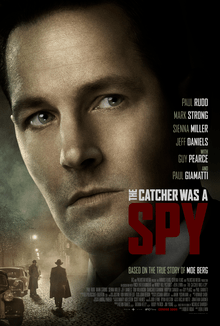
Film Review: The Catcher Was A Spy (dir by Ben Lewin)


I was so impressed with Paul Rudd’s performance in Avengers: Endgame that, last night, I decided to watch another Paul Rudd film, 2018’s The Catcher Was A Spy.

Based on a true story, The Catcher Was A Spy tells the tale of Moe Berg (Paul Rudd).  When we first meet Moe, it’s towards the end of World War II and Moe has been sent behind enemy lines to investigate just how close the Nazis are to building an atomic bomb.  Intelligence suggests that physicist Werner Heisenberg (Mark Strong) is leading the Nazi effort and, if the intelligence turns out to be true, Moe has been ordered to assassinate Heisenberg.  As Moe considers whether or not he’s actually capable of killing a man, we get flashbacks to how Moe eventually ended up working as a spy.

What we learn is that, in the 1930s, Moe Berg was a major league baseball player.  He was a catcher and, though he was never a great player, he was famous for being far more educated than the average professional athlete.  At a time when open anti-Semitism was socially acceptable among America’s upper classes, Moe Berg managed to get an Ivy League education.  Not only does he keep up with current events but he can also speak several languages.  The other players aren’t quite sure what to make of Moe, nor does Moe ever seem to make much of an effort to open up to anyone, including his girlfriend, Estella (Sienna Miller, playing yet another girlfriend in yet another biopic).

Because he can speak Japanese, Moe is selected to be a part of a delegation of players who will be sent to Japan.  While the rest of the players hang out around the hotel, Moe hangs out with an intellectual named Kawabata (Hiroyuki Sanada), discusses inevitably of war, and — for reasons that the film deliberately leaves unclear — decides to shoot a film of Tokyo Harbor.

Five years later, with the United States now at war with the Axis powers, it’s that film that leads to Moe getting a meeting with the head of the Office of Strategic Services, Bill Donovan (Jeff Daniels).  No longer a baseball player and apparently bored with coaching, Moe wants to become a spy.  Donovan notes that Moe has never married and asks him flat out if he’s gay.  Moe smiles slightly and says, “I’m good at keeping secrets.”

And indeed, he is!  Unfortunately, Moe is so good at keeping secrets that we never quite get into his head.  It’s hard not to compare this film to the superficially similar The Imitation Game.  But whereas that film made you feel as if you were seeing the world through Alan Turing’s eyes, The Catcher Was A Spy always seems to be standing outside of Moe Berg.  In the film’s final title cards, it refers to Moe as being an “enigma” and that’s pretty much the way he is throughout the entire film.  We like him because he’s played by Paul Rudd but we never really feel like we know him.  The closest the film comes to suggesting what’s going on inside the head of its main character is when Moe — who has described himself as non-religious — attends a Kol Nidrel service at a Zurich synagogue and, for a few minutes, Moe lets his guard down.  But, for the majority of the film, Moe remains unknowable.

With the exception of one battle scene, it’s also a rather low-key spy film, one that’s more in the style of Tinker, Tailor, Soldier, Spy than SPECTRE.  Again, that may be true to the actual story but, considering that it’s a film about a possibly gay Jew working to take down a homophobic, anti-Semitic war machine, it’s still hard not to regret the film’s lack of big “stand up and cheer” moments.  Clocking in at a rather brisk 97 minutes, it’s hard not to feel that there’s some big pieces missing from the film’s story.

Here’s the good news: Paul Rudd proves himself to be a thoroughly charismatic leading man in this film, showing that he can hold the audience’s attention even without special effects or a punch line.  Rudd does an excellent job playing a character who, to be honest, has very little in common with what we may think of as being a typical Paul Rudd role.  Rudd is always watchable, even while Moe Berg remains an enigma.  Hopefully, Rudd will get more opportunities in the future to show us what he’s truly capable of doing as an actor.

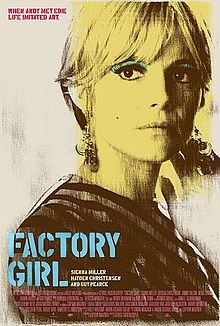
Film Review: Factory Girl (dir by George Hickenlooper)


Oh God.  Factory Girl.

Released in 2006, Factory Girl was a biopic about Edie Sedgwick, the tragic model/actress/artist who was briefly both Andy Warhol’s muse and one of the most famous women in America.  Before I talk too much about this film, I should probably admit that I’m probably the worst possible person to review a movie about Edie Sedgwick.

Why?

Allow me to repost something that I wrote when I reviewed Edie’s final film, Ciao Manhattan:

“In the late 60s, Edie Sedgwick was a model who was briefly the beautiful face of the underground.  Vogue called her a “youthquaker.”  She made films with Andy Warhol, she dated the rich and the famous and for a brief time, she was one of the most famous women in America.  But a childhood full of tragedy and abuse had left Edie fragile and unprepared to deal with the pressures of being famous.  She was fed drugs by those who claimed to care about her, she had numerous mental breakdowns, and, when she was at her most vulnerable, she was pushed away and rejected by the same people who had loved her when she was on top of the world.  Edie died because, when she asked for help, nobody was willing to listen.


Edie Sedgwick (1943 — 1971)

I guess I should explain something.  I don’t believe in reincarnation but if I did, I would swear that I was Edie Sedwick in a past life.  Of all the great icons of the past, she, Clara Bow, andVictoria Woodhull are the ones to whom I feel the closest connection. (Edie is the reason why, for the longest time, I assumed I would die when I was 28.  But now I’m 29, so lucky me.)”

(Incidentally, I wrote that two years ago and I’m still alive so, once again, lucky me.)

Anyway, my point is that I’m always going to be a hundred times more critical of a film about Edie Sedgwick as I would be about any other film.  If you’re already guessing that I didn’t particularly care for Factory Girl, you’re right.  However, there are some people whose opinions I respect and some of them love this film.

Anyway, Factory Girl is a biopic that’s structured so conventionally that it even opens with Edie (played by Sienna Miller) narrating her story to an unseen interviewer.  I can count on one hand the number of successful biopics that have featured someone telling the story of their life to an unseen interviewer.  It’s a conventional and kind of boring technique.  Anyway, the film follows all of the expected beats.  Edie arrives in New York.  Edie is spotted by Andy (Guy Pearce).  Edie makes films with Warhol.  Her famous dance in Vinyl is recreated.  Edie becomes Andy’s platonic girlfriend but then, she meets and falls in love with Bob Dylan…

Oh, sorry.  He’s not actually Bob Dylan.  According to the credits, his name is Folksinger.  He says Bob Dylan type stuff.  He rides around on a motorcycle.  He carries a harmonica.  Oh, and he’s played by Hayden Christensen.

See, the first half of Factory Girl is actually not bad.  Sienna Miller gives a pretty good performance as Edie, even if she never comes close to capturing Edie’s unforced charisma.  Despite being several years too old, Guy Pearce is also credible as Andy Warhol.  The film itself is full of crazy 60s clichés but, even so, that’s not always a terrible thing.  Some of those 60s clichés are a lot of fun, if they’re presented with a little imagination.

But then Hayden Christensen shows up as Bob Dylan and the film loses whatever credibility it may have had.  Hayden, who gave his best performance when he played a soulless and largely empty-headed sociopath in Shattered Glass, is totally miscast as a musician who once said that if people really understood what his songs were about, he would have been thrown in jail.  The film attempts to portray Dylan and Warhol as two men fighting for Edie’s soul but Christensen is so outacted by Guy Pearce that it’s never really much of a competition.  Even though the film makes a good case that Edie’s relationship with Andy was ultimately self-destructive, Guy Pearce is still preferable to Hayden Christensen trying to imitate Dylan’s distinctive mumble.

Anyway, Factory Girl doesn’t really work.  Beyond the odd casting of Hayden Christensen, Factory Girl is too conventionally structured.  In its portrayal of the Factory and life in 1960s New York, the film never seems to establish a life beyond all of the familiar clichés.  (Before anyone accuses me of contradicting myself, remember that I said that the old 60s clichés are fun if they’re presented with a little imagination.  That’s a big if.)  At no point, while watching the film, did I feel as if I had been transported back to the past.  If you want to learn about Edie Sedgwick, your best option is to try to track down her Warhol films.

Edie!

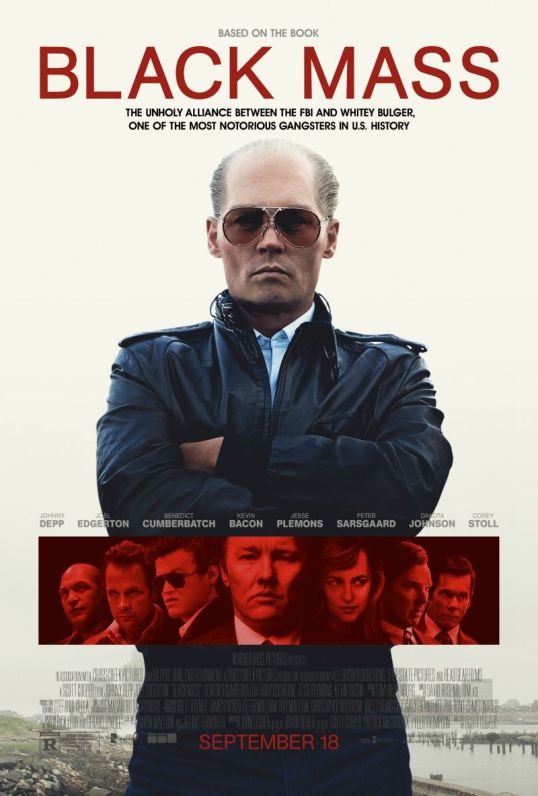
Trailer #2: Black Mass


BlackMass

One of this year’s most-anticipated films (well, at least when it comes to award season) has a new trailer.

Black Mass stars Johnny Depp in the role of the infamous gangster Whitey Bulger who, as the film’s tagline states, became the most notorious gansgter in U.S. history. This is bold claim considering other gangsters in U.S. history such as Lucky Luciano, Bugsy Siegel, Vito Genovese and Meyer Lansky to name a few.

What makes this film so interesting is the fact that we finally get to see Depp return to acting real, complex characters instead of just acting like a character these past decade. Plus, have you seen this cast supporting Depp: Benedict Cumberbatch, Kevin Bacon, Joel Edgerton, Corey Stoll and Jesse Plemons just for starters.

Black Mass is set for a September 18, 2015 release date.

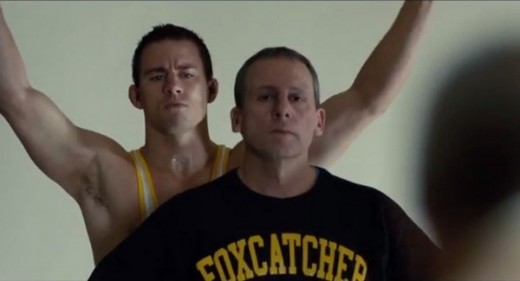
Film Review: Foxcatcher (dir by Bennett Miller)


What a long and strange trip it has been for Foxcatcher.

Originally, Bennett Miller’s latest film was scheduled to be released at the end of 2013 and it was expected to be a major player in the 2013 Oscar race.  And then it was suddenly announced that Sony Pictures would, instead, wait an extra year to release the film.  Usually, this is a sign of a film that’s not expected to live up to expectations.  (Case in point: The Monuments Men.) But, in this case, it was seen as being the exact opposite.  Sony had such faith in the Oscar prospects of Foxcatcher that they were willing to hold off a year so it wouldn’t get lost in all of the attention that was being given to American Hustle, Gravity, 12 Years A Slave, and Wolf of Wall Street.

And, in many ways, it was a smart move.  Overnight, Foxcatcher went from being that weird movie with Steve Carell to being one of the most anticipated film of 2014.

Then, during the summer, Foxcatcher premiered at Cannes and was one of the hits of the festival.  With the notable exception of the A.V. Club’s A.A. Dowd, the reviewers at Cannes were rapturous in their praise of Foxcatcher.  And, though it failed to win the Palme d’Or, it did win best director for Bennett Miller and it cemented it’s status as the Oscar front-runner.

And then, something started to happen.

There was backlash against Foxcatcher.  As more and more critics saw the film, we started to hear more and more speculation that the film would fail to live up to all of the hype.  Critics generally praised the performers but many complained that the film was too cold and detached for its own good.  At first, it was easy to say that this was partially the result of unrealistically high expectations.  But, as more and more reviews came in, it became almost fashionable to speculate that Foxcatcher would be left out of the Oscar race.

Of course, most of us who were doing the speculating were doing so without actually having seen the film for ourselves.  After all, film critics and festival goers aren’t the ones who actually vote on what films will be nominated for and win Oscars.  One need only look at the nominations for Extremely Loud and Incredibly Close to realize that.

Well, Foxcatcher has finally been released and we’ve all finally gotten a chance to see it.  I saw it last week, while I was in Fort Worth for the Christmas holidays.  And my reaction…

Well, there’s a reason why it’s taken me nearly a week to write this review.

Ultimately, Foxcatcher is a good film.  In fact, on a purely technical level, it’s probably one of the best films of the year.  If it is nominated for best picture, the nomination will not necessarily be undeserved.  Bennett Miller comes up with some hauntingly chilly images.  Steve Carell, Channing Tatum, and Mark Ruffalo all give excellent performances.  It’s a film that stays with you, a powerful depiction of a true crime.

But it’s still not an easy film to enjoy.

Those critics who complained that Miller’s approach was too cold and detached have a point.  You watch the film with a sense of dread, knowing what’s going to eventually happen.  (Though I didn’t know anything about the murder of Dave Schultz before the film, I had read the reviews and I knew that eventually Mark Ruffalo’s kind-hearted family man would end up being gunned down in front of his family.)  But Miller always keeps the characters and the story at a distance.  You watch the characters and you struggle to understand them but, by the end of the film, you’re no closer to understanding why John E. du Pont (the eccentric millionaire turned murdered, played by Steve Carell) murdered Dave Schultz than you were at the beginning.

Instead, Miller is more interested as looking at John du Pont as being an example of American exceptionalism gone crazy.  Throughout the film, characters frequently comment on the fact that the du Ponts are one of the oldest and richest families in America.  (Not coincidentally, we’re also told that they initially made their fortune by producing and selling gunpowder.)  Du Pont is an outspoken and proud American.  Along with training wrestlers on the grounds of his estate (the Foxcatcher of the title), he also frequently invites the police to use the grounds for target practice.  Though Miller couldn’t have realized it when the film was originally shot in 2013, the scenes of the obviously unstable du Pont hanging out with the cops take on an extra resonance in this time of Eric Garner and Tamir Rice.

John du Pont frequently talks about how his plan to open a world-class wrestling training facility is, at heart, a patriotic act.  The world wrestling championship, du Pont believes, belongs in America and he’s going to make sure that it gets there.  In order to achieve this goal, he hires Olympic gold medalist Mark Schultz (Channing Tatum) to be his wrestling coach.  Mark, who has always lived in the shadow of his older brother Dave (Mark Ruffalo), jumps at the chance to establish his own identity.  At first, du Pont is like the father that Mark has never had.  They even become friends.  (Du Pont, at one point, talks about discovering that all of his childhood friends had been paid to be his friend.)  Mark shows du Pont some wrestling moves.  Du Pont introduces Mark to cocaine.

But, ultimately, it becomes apparent that du Pont’s friendship with Mark was really just a ruse to get Mark to convince his older brother to come work for du Pont.  When Dave finally does join Mark at Foxcatcher, it causes Mark to turn self-destructive and du Pont to eventually turn into a murderer.

And, as I said, it’s a powerful film.  Channing Tatum gives the performance of his career and Steve Carell is frighteningly believable as John du Pont.  (One minor complaint: Carell is being promoted for best actor, even though his performance was clearly a supporting one.)  Mark Ruffalo, as well, does great work as Dave and somehow manages to make innate human decency compelling.

But the film itself is so cold and detached that, ultimately, this is a film that you end up respecting more than you end up enjoying.

Foxcatcher


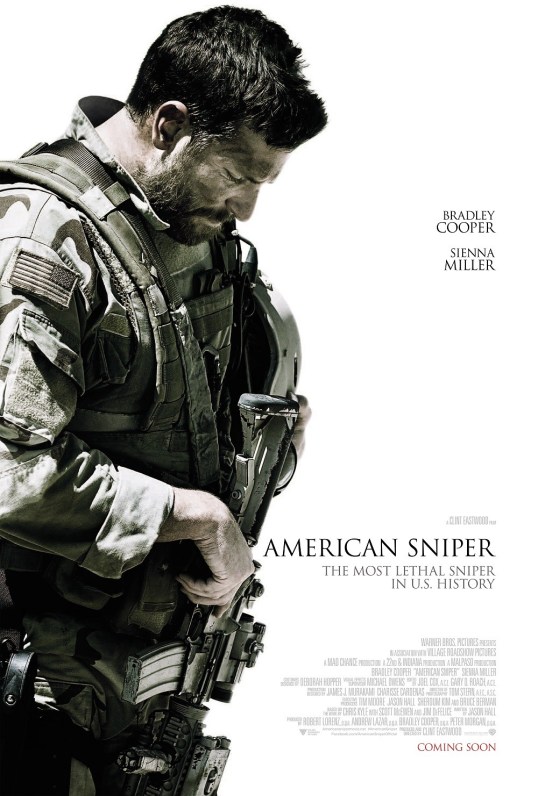
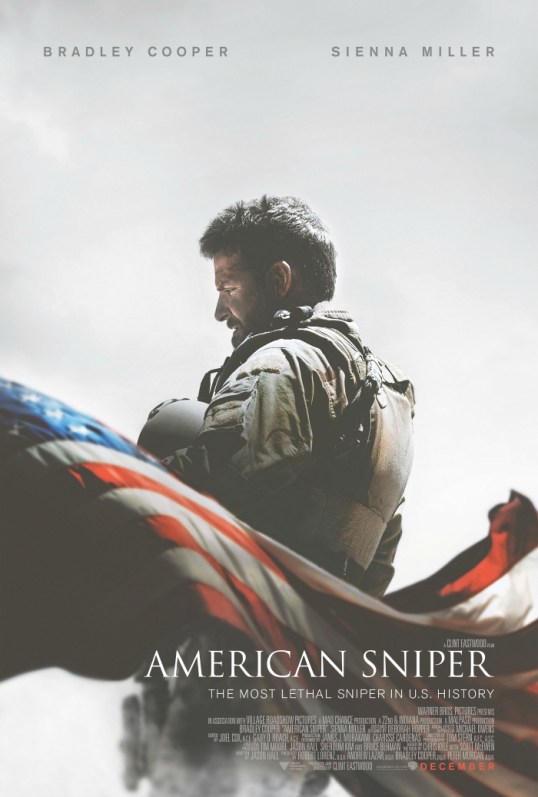
Trailer: American Sniper (2nd Official)


American Sniper

Talking to empty chairs aside, Clint Eastwood still goes down as one of the greatest living American filmmakers. This doesn’t dismiss the current slump he has been in the past couple years (Jersey Boys, Hereafter, J. Edgar just to name a few). This 2014 holiday season he’s set to release his latest film: American Sniper.

The film is an adaptation of the best-selling autobiography of the same name by former Navy SEAL sniper Chris Kyle. Steven Spielberg was initially attached to direct the film, but bowed soon after. In comes Clint Eastwood to take up the director’s chair with Bradley Cooper starring as Chris Kyle (also producer on the film).

The film has already made it’s premiere at the AFI Fest with a limited release on Christmas Day 2014.

American Sniper will  have a general release date of January 16, 2015.

Trailer: American Sniper (Official)


AmericanSniper

Warner Bros. Pictures makes it a triple-bill with the latest in a series of trailers for some of their upcoming films.

The latest to arrive is Clint Eastwood’s latest film. Eastwood adapts the Chris Kyle autobiography, American Sniper, of which Steven Spielberg was originally attached to direct until dropping out in the summer of 2013. Eastwood was announced a week later as taking on directing duties on one of the more sought after properties of the last couple years.

Bradley Cooper will star in as Chris Kyle with Sienna Miller in the role of Chris’ wife, Taya Renae Kyle.

American Sniper is set for a limited release on December 25, 2014 and going wide on January 20, 2015.