The TSL Horror Grindhouse: The Fifth Floor (dir by Howard Avedis)


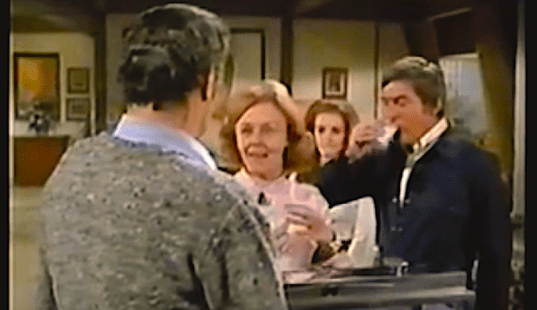
In 1977’s The Fifth Floor, Dianne Hull plays Kelly McIntyre.

Kelly is a college student by day and a disco dancer by night!  Unfortunately, after someone spikes her drink at the discotheque and she suffers an overdose, she becomes a full-time patient at a mental asylum.  Neither the head doctor (Mel Ferrer) nor the head nurse (Julia Adams, who once swam with The Creature From The Black Lagoon)  believes her claim that her drink was spiked.  Judged to be suicidal and delusional, Kelly is sent to the Fifth Floor!

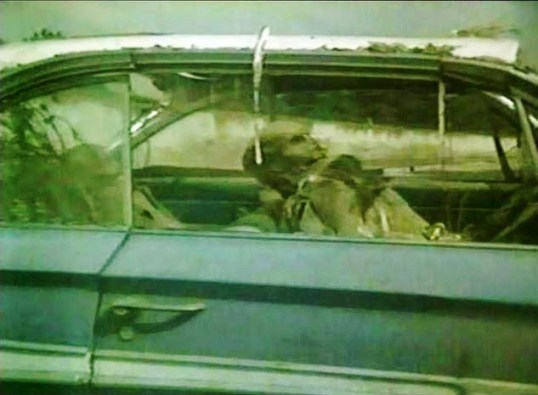
While her boyfriend (John David Carson) tries to convince the authorities that she’s not insane, Kelly adjusts to life on the Fifth Floor.  She befriend Cathy (Patti D’Arbanville).  She encourages her fellow patients to dance and enjoy themselves.  She tries to escape on multiple occasions.  She draws the unwanted attention of a male orderly named Carl (Bo Hopkins, giving a wonderfully sinister performance).  A sadist equipped with down-home country charm, Carl has got all of his co-workers convinced that he’s a great guy.  The patients, though, know that Carl is a petty authoritarian who enjoys showing off his power.  (“I’m just doing my job,” is the excuse whenever he’s challenged.)  Carl takes an obsessive interest in Kelly and soon, Kelly is not only trying to get her life back but also trying to escape from Carl’s cruel intentions.

Most film directories list The Fifth Floor as being a horror film and certainly, there are elements of the horror genre to be found in the film.  The smooth-talking and nonchalantly cruel Carl is certainly a horrific character and Kelly’s attempts to escape from the asylum capture the very primal fear of not having any control over one’s life.  That said, The Fifth Floor owes greater debt to One Flew Over The Cuckoo’s Nest than to the typical slasher film.  Kelly is a rebel who brings the patients in the ward together.  Much as in Cuckoo’s Nest, the nurses and the orderlies use the threat of electro-shock treatment to keep the patients under control.

It’s not a bad film, though it definitely has its slow spots and I do wish the film had embraced its own sordidness with a bit more style.  I’m a history nerd so I appreciated the fact that The Fifth Floor was so obviously a product of its time.  Any film that features the heroine showing off her disco moves before being taken to a mental hospital is going to hold my interest.  That said, the most interesting thing about the film are some of the familiar faces in the cast.  For instance, Earl Boen — who played so many authority figures over the course of his career and appeared as a psychiatrist in the early Terminator films — plays a patient who wears a NASA jacket.  The always intimidating Anthony James plays the most violent patient.  Michael Berryman and Tracey Walter appear as background patients.

And then you’ve got Robert Englund, cast here as Benny.  Benny is the most gentle of the patients, a prankster who befriends Kelly.  It’s always so interesting to see the type of roles that Englund played before he was cast as Freddy Krueger in A Nightmare On Elm Street.  In this film, Englund is so goofy and friendly that you actually find yourself worrying about something happening to him.  Englund’s role is small but his amiable nerdiness definitely makes an impression.

The Fifth Floor opens and ends with a title card telling us that the film is based on a true story.  Sure, it was.
Horror On TV: The Cloning of Clifford Swimmer (dir by Lela Swift)


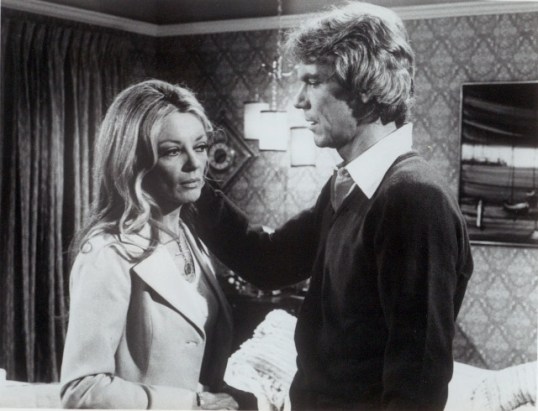
Tonight’s televised horror is The Cloning of Clifford Swimmer.  Peter Haskell stars as Clifford Swimmer, an angry jerk who is unhappy with his marriage.  He’s come up with a plan, though.  He’s going to have himself cloned and then, after leaving his clone with his family, he’ll be free to live his life.  However, Swimmer discovers that things never work that simply when it comes to creating a clone.  This is a clever story with a great twist at the end.

It originally aired on November 1st, 1974 as a part of ABC’s The Wide World of Mystery.  Unfortunately, whoever uploaded this film to YouTube has disabled playback so you’ll have to click on the link to watch it!

Horror On The Lens: The Cloning of Clifford Swimmer (dir by Lela Swift)


Today’s horror on the lens is 1974’s The Cloning of Clifford Swimmer.

This short but entertaining sci-fi film may be a bit obscure but it’s a personal favorite of mine.  Check out my review here and then be sure to enjoy the show!

October Hacks: Sweet Sixteen (dir by Jim Sotos)


1983’s Sweet Sixteen takes place in a small town in Texas.

Sherriff Dan Burke (Bo Hopkins) does his best to try to maintain the peace but it’s not always easy.  Not when a good majority of the town is prejudiced against the Native Americans living on a nearby reservation.  There’s a major archeological dig happening on the reservation, headed up by Dr. John Morgan (Patrick Macnee), but the town doesn’t care about any of the artifacts that Dr. Morgan and his team might discover.  They’re too busy harassing local activist Jason Longshadow (Don Shanks) for stepping into the wrong bar.

However, a distraction from all of the casual racism has arrived in the form of Dr. Morgan’s daughter, Melissa (Aleisa Shirley).  Soon, it seems like every teenage boy and young man in town is lusting after Melissa.  Melissa, for her part, is only fifteen years old and is struggling to deal with all of the attention.  Sometimes, she enjoys the attention.  Sometimes, she just wants to be left alone.  (Believe me, as someone who had adults hitting on her when she was 13, I could relate.)  Melissa’s birthday is coming up and her mother (Susan Strasberg) is planning on throwing a big party and inviting the whole town to come over and celebrate.  Sheriff Burke thinks it’s a great idea.  “This town could use something to celebrate.”

The only problem is that any boy who so much as looks at Melissa ends up getting brutally murdered.  When an old Native American man named Greyfeather (Henry Wilcoxin) is spotted near the scene of one of the crimes, the local redneck blame him for the murders and tragedy ensues.  Sheriff Burke has to find the real murderer and, whether he likes it or not, he’s going to get some help from his kids, Hank (Steve Antin) and Marci (Dana Kimmel).

Hank and Marci really are this film’s secret weapons.  In the past, I’ve been pretty critical of Dana Kimmel’s performance in Friday the 13th Part 3 and her insistence that her character be re-written to reflect her own religious beliefs and desire to be a good role model.  However, Kimmel is really likable (and perhaps more appropriately cast) as the fiercely intelligent but still relatively innocent Marci, who reads murder mysteries and is totally excited about the prospect of getting to solve a real murder.  Hank is perhaps a bit less enthusiastic about about crime-solving than Marci but he still helps out his sister because she’s his sister.  Awwwwww!

Sweet Sixteen is a bit of an untraditional slasher film, one that is as concerned with social issues as is it was stalking and slashing teenagers.  Perhaps that explains why it has a slightly better cast than the typical 80s slasher, with veteran actors like Patrick McNee, Susan Stasberg, and Bo Hopkins acting opposite equally capable but younger actors like Kimmel, Antin, and Aleisa Shirley.  It’s also a surprisingly likable slasher film, due to the Dana Kimmel and Steve Antin’s engaging lead performances.  Honestly, I think it’s kind of a shame that there weren’t a series of films featuring Marci and Hank solving crimes.  Dana Kimmel and Steve Antin make quite a team in this above average slasher.

The TSL Grindhouse: Beyond Desire (dir by Dominique Othin-Girard)


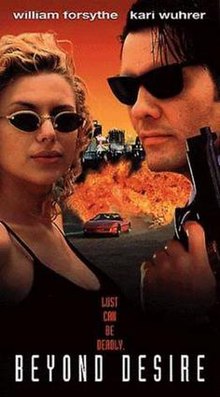
1995’s Beyond Desire tells the story of Ray Patterson (William Forsythe).  He’s spent the last 14 years in jail, convicted of a murder that he says he didn’t commit.  He likes to sing.  He’s obsessed with Elvis.  He claims that he doesn’t know how to drive because he’s been in prison for the last 14 years but he appears to be in his mid-40s so you have to kind of wonder if maybe Ray just wants other people to drive him around.  After all, Elvis never drove himself.

Perhaps because everyone is sick of listening to him as he sings Amazing Grace in his cell, Ray is released from prison.  Since he was serving his time in Nevada, this means that Ray now has to walk down a desert road and hope that someone gives him a ride.  Fortunately, for Ray, a woman named Rita (Kari Wuhrer) pulls up in fancy red car and asks him where he’s going.  Rita explains that she’s always had a fantasy about picking up someone who has just been released from prison.  Ray accepts her offer of a ride and soon, they’re at a desert motel, engaging in saxophone-scored, Vaseline-on-the-lens softcore sex.  Ray may have forgotten how to drive but apparently, he didn’t forget everything during those 14 years he spent in prison.  If nothing else, this film reveals more of William Forsythe than most viewers probably ever thought they’d see.

Soon, Ray and Rita are head to Vegas.  Of course, it turns out that Rita wasn’t quite honest about why she picked up Ray.  Rita is a high-priced escort and she works for a local crime boss named Frank (Leo Rossi).  Frank wants Ray to reveal the location of some stolen money.  Ray, meanwhile, feels that Frank is the key to clearing his name and catching the real murderer.  At first, it seems like everyone is just manipulating everyone else but Rita and Frank do eventually end up falling in love.  Can their love survive bullets and hints of betrayal?

Like many 90s crime films, Beyond Desire is one of those films that was obviously made to capitalize on the success of Quentin Tarantino.  The characters of Ray and Rita are such obvious copies of True Romance‘s Clarence and Alabama that the film comes close to turning into a self-parody.  Ray is a big Elvis fan and occasionally quotes lyrics at inopportune times.  The soundtrack itself is full of Elvis songs, though the budget apparently wasn’t big enough to actually get the rights to any of Elvis’s recordings.  Instead, we get cover versions, the majority of which feel rather wan.  The film emphasizes the garish glitz of the Vegas Strip but none of the quirky beauty of it.  Las Vegas, an adult playground sitting in the desert, is pure Americana.  That was something that was captured by Francis Ford Coppola in The Godfather, Martin Scorsese in Casino and David Lynch in Twin Peaks: The Return.  The film uses Vegas as a convenient backdrop but it has nothing to say about the location itself.

Like the majority of road movies, the film tends to meander a bit.  Ultimately, the road leads to nowhere.  That, in itself, is not necessarily a problem.  The same could be said of Tony Scott’s True Romance or any number of films directed by Wim Wenders.  Unfortunately, this film wasn’t directed by Tony Scott or Wim Wenders.  Instead, it was directed by the guy who did Halloween 5 and the end result is a film that, even when taken as a purely stylistic exercise, still feels rather empty.  It’s a shame because William Forsythe shows off a lot of quirky, bad boy charm in the role of Ray and Kari Wuhrer make Rita into a far more complex and conflicted character than one might expect.  But, unfortunately, the film itself just doesn’t live up to their performances.

Retro Television Reviews: Quarantined (dir by Leo Penn)


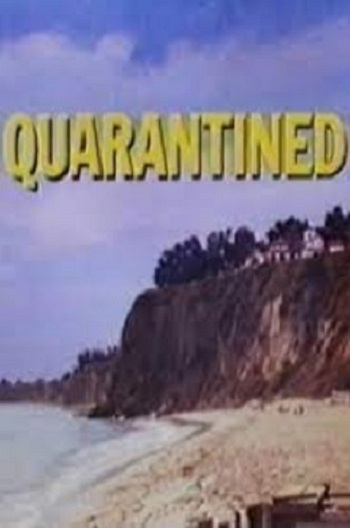
Welcome to Retro Television Reviews, a feature where we review some of our favorite and least favorite shows of the past! On Sundays, I will be reviewing the made-for-television movies that used to be a primetime mainstay. Today’s film is 1970’s Quarantined! It can be viewed on YouTube!

The John C. Bedford Clinic sits atop a cliff overlooking the ocean.  Though it may be a small hospital, it’s also widely respected.  The clinic was started by John Bedford (John Dehner) and the majority of its employees are related to him.  His three sons — Larry (Gary Collins), Bud (Gordon Pinset), and Tom (Dan Ferrone) — are all doctors and they all work at the clinic.  Bud’s wife, Margaret (Susan Howard), is a psychologist and she also works at the clinic, encouraging the older patients not to give up hope in their twilight years.  John Bedford is a stern taskmaster and his youngest son, Tom, resents always having his father and his older brothers staring over his shoulder.  John and Larry explain that they are simply treating Tom the way that they would treat any new doctor.  Tom isn’t so sure.

When the Bedfords aren’t hanging out in the tasteful ranch house that sits next to the clinic, they’re checking on their patients.  As Quarantined opens, they’ve got quite a few to deal with.  The most famous is Ginny Pepper (Sharon Farrell), a film star who has come to the clinic because she’s been suffering from back pain.  Larry quickly diagnoses her as suffering from kidney failure and announces that she’s going to need to get an immediate transplant.  Ginny is not happy to hear that and spends most of her time trying to make both Larry and Nurse Nelson (Virginia Gregg) miserable.  Of course, it eventually turns out that Ginny’s not so bad.

Meanwhile, Margaret attempts to cheer up a dying old man named Mr. Berryman (Sam Jaffe) and an eccentric man named Wilbur Mott (Wally Cox) hangs out in the hospital hallway.  Martha (Terry Moore) and Lloyd Atkinson (Madison Arnold) are at the hospital to visit their son, Jimmy (Mitch Vogel).  Unfortunately, while in Jimmy’s hospital room, Lloyd suddenly collapses and subsequently dies.  John takes one look at Lloyd and announces that Lloyd might have Cholera and, as a result, no one can leave or enter the hospital until the test results come back.

In other words, the John C. Bedford Clinic is …. QUARANTINED!

If you’re thinking this sounds a little bit dull …. well, you’re not wrong.  Quarantined has a 73-minute running time and a large cast but it really does just feel like an episode of a not particularly interesting medical drama.  It wouldn’t surprise me to discover that this movie was actually meant to serve as a pilot for a show that would have followed day-to-day life at the clinic.  Each member of the Bedford family is given a hint of characterization, just enough to suggest what type of situations they would get involved in on a weekly basis.  Larry was the straight shooter who was dedicated to saving lives.  Bud was the well-meaning middle child while Margaret was the one who encouraged the men to talk about their feelings.  Tom was the idealistic but impulsive youngest child.  John was the wise patriarch.  They’re all kind of boring.

The same can be said of Quarantined as a movie.  As directed by Leo “Father of Sean” Penn, the movie promises a lot of drama but it never really delivers and there’s something rather annoying about how casually John announces that no one is allowed to leave the clinic.  He even calls the police and has them set up road blocks around the clinic.  On the one hand, John is doing the right thing.  No one wants a cholera epidemic.  On the other hand, everyone’s so quick to accept that idea of John being a benign dictator that …. well, one can only imagine what a pain in the ass the Bedfords would have been during the COVID era.

As far as I know, there was never a TV show about the Bedford family and their clinic on a cliff.  Personally, I’m okay with that.  

Horror Film Review: Night of the Comet (dir by Thom Eberhardt)


The 1984 film, Night of the Comet, begins with the end.

The end of the world, that is!

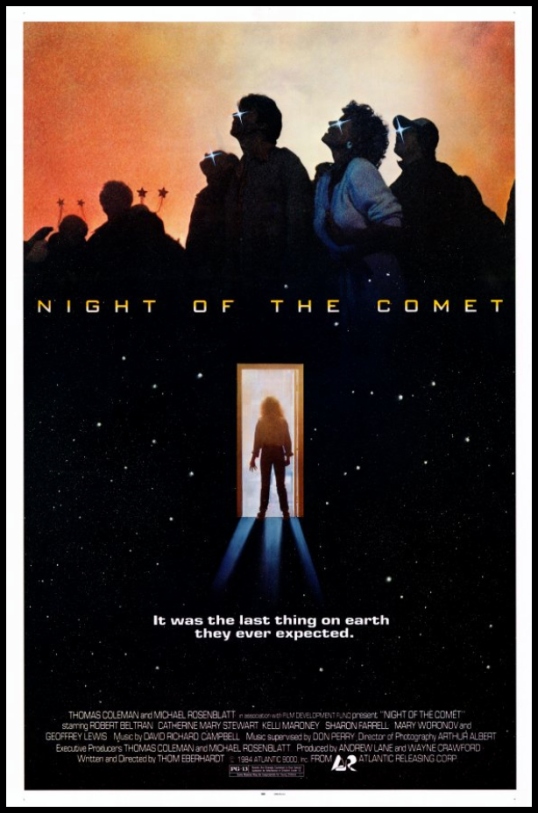
When the Earth passes through the tail of a comet, the end result is that the majority of the world’s population is reduced to red dust.  Those who are exposed to the comet but not turned immediately into dust face an even worse fate.  They are transformed into mindless zombies.  Fortunately, 18 year-old Reggie (Catherine Mary Stewart) and her 16 year-old sister, Sam (Kelli Maroney), both managed to avoid getting exposed.  Sam was in a steel shed, hiding from their abusive stepmother.  Reggie was in a theater projection room with her boyfriend.  When Reggie and Sam wake up in the morning to discover that they are two of the few people left alive on the planet, they do what anyone would do.

They go to the mall!

Which is probably the same thing that me and my sisters would have done if we had found ourselves in a similar situation.  That’s one reason why Night of the Comet holds up so well.  It’s one of the few films to be honest about how most people would probably react to the end of the world.  Instead of giving a big dramatic monologue or having a breakdown or getting into a fight about who is to blame and what it all means, Reggie and Sam try to have a little fun.  Of course, they also grab some guns while they’re at the mall.  They’re not stupid.  They know the situation is grim and they need to be prepared.  But still, there’s no reason why they shouldn’t try on all the clothes that they previously would not have been able to afford.  And why shouldn’t they treat the mall as their own personal playground?  They’re young and they’ve survived the end of the world.  They deserve to enjoy themselves.

Of course, just because Reggie and Sam survived, that doesn’t mean the world is a safe place.  Along with the zombies, there’s also a crazed group of former stockboys who now view the mall as being their own personal kingdom.  And then there’s the scientists, who claim that they’re benevolent but who are actually looking for healthy specimens on which they  can experiment.

Night of the Comet is a terrifically fun horror movie, a real treat for anyone who has ever imagined what they would do if they were among the last people on Earth.  Catherine Mary Stewart, Kelli Maroney, and Robert Beltran (who plays another survivor) brings a lot of energy to their likable roles while Mary Woronov and Geoffrey Lewis are properly menacing as the two main scientists.  The zombies, with their crazed eyes and their decaying faces, are genuinely frightening.  Director Thom Eberhardt wisely doesn’t overuse the zombies.  Indeed, the whole point of the film is that the world is now nearly empty of people, whether they’re zombies or not.  But because the zombies aren’t present all of the time, it makes it easy to forget about them and it also makes all the more frightening when they suddenly show up.

Night of the Comet is an enjoyable mix of horror and comedy, one that holds up well nearly 40 years after it was first released.

Horror On The Lens: The Cloning of Clifford Swimmer (dir by Lela Swift)


Today’s horror on the lens is 1974’s The Cloning of Clifford Swimmer.

This short but entertaining sci-fi film may be a bit obscure but it’s a personal favorite of mine.  Check out my review here and then be sure to enjoy the show!

Film Review: L.A. 2017 (dir by Steven Spielberg)


L.A. 2017 is the Steven Spielberg film about which you’ve probably never heard.

To a certain extent, that’s understandable.  Spielberg was only 24 when, in 1971, he directed L.A. 2017.  It was a film that he directed for television.  In fact, it was only his third directorial assignment.  As opposed to the huge budgets that we tend to associate with a typical Spielberg production, L.A. 2017 was made for about $300,000.  The entire film was shot in about 12 days.  In fact, with a running time of only a scant 69 minutes, L.A. 2017 hardly qualifies as a feature-length film.  L.A. 2017 has never been released on DVD or Blu-ray, making it a true oddity in Spielberg’s filmography.  Despite the fact that Spielberg has credited L.A. 2017 with opening a lot of doors for him, it’s an almost totally forgotten film.

Of course, some of that is because L.A. 2017 really isn’t a film at all.  Instead, it was an episode of a television show called The Name of the Game.  The show was about Glenn Howard (Gene Barry), a magazine publisher, and the reporters who worked for him.  L.A. 2017 was unique in that it was the show’s only excursion into science fiction.  In fact, from everything that I’ve read about the show, it appears that L.A. 2017 was nothing like any of the other episodes of The Name of the Game.  This episode was also unique because Spielberg directed it as if he was making a feature, as opposed to just another installment in a weekly series.  If not for the opening credits (which announce, among other things, that we’re watching a Robert Stack Production), one could easily imagine watching L.A. 2017 in a movie theater, perhaps as a double feature with Beneath The Planet Of The Apes.

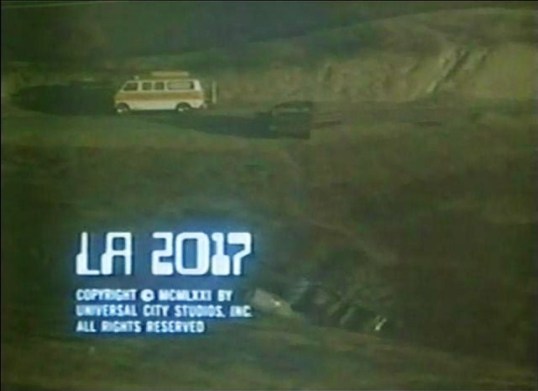
L.A. 2017 opens with Glenn driving down a mountain road in California.  He’s heading to a pollution summit and, as he drives along, he awkwardly dictates an editorial into a tape recorder.  Glenn worries that society may have already ruined the environment to such an extent that the Earth cannot be saved.  As if to prove his point, Glenn starts to cough as he’s overcome by all of the smog in the air.  His car swerves into a ditch and Glenn is knocked unconscious.

Welcome to the future

When he wakes up, he finds himself being rescued by men wearing wearing protective suits and masks.  The sky is a sickly orange and an ominous wind howls in the background.  Glenn’s rescuers take him to an underground city where he discovers that, somehow, he has traveled through time.  The year is now 2017, which in this film looks a lot like the 70s except that everyone’s now underground and the landline phones are extra bulky.  (Needless to say, watching 1971’s version of 2017 in 2019 is an interesting experience.)  It turns out that the pollution got so bad that the surface of the planet became uninhabitable.  The U.S. is now run by a corporation that is headquartered in Detroit.  (Presumably, the Corporation is a former car company.)  The U.S. is also at war with England, for some reason.  No mention is made about what’s happened to Canada but, if Detroit’s still around, I assume at least some of Canada managed to survive as well.

The …. uh, Future.

Everyone in the future drinks a lot of milk and, when they’re not listening to cheerful announcements, they’re listening to the soothing music that the Corporation provides for them.  Everyone in the future is also very friendly.  We know this because everyone keeps assuring Glenn that he’s surrounded by friends.  In fact, everyone in the future refers to one another by their first name because “it’s friendlier.”  It’s also the law.  It turns out that there’s a lot of laws in the future.  In fact, the underground cities are pretty fascist in the way that they handle things.  There are constant announcements encouraging people to pursue a career in law enforcement and anyone who disagrees with the Corporation ends up in a straight jacket.  Glenn feels that maybe he’s been brought to the future so he can start a new magazine and challenge the status quo.  The Corporation disagrees….

This is what happens when you don’t go underground in the future.

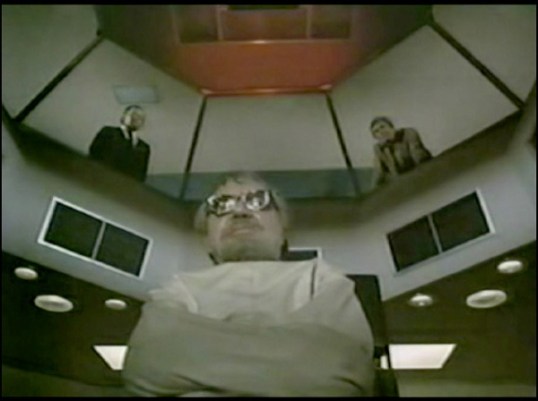
Okay, so there’s nothing subtle about L.A. 2017.  From the villainous corporation to the heavy-handed environmental message, there’s nothing here that you haven’t seen in dozens of other sci-fi films.  But the lack of subtlety doesn’t matter, largely because Spielberg directs with so much energy and with such an eye to detail that it’s impossible not to get sucked into the story.  As opposed to the somewhat complacent Spielberg who has recently given us rather bland and safe blockbusters like Lincoln, The BFG, and The Post, the Spielberg who directed L.A. 2017 was young and obviously eager to show off what he could do with even a low budget and that enthusiasm is present in every frame, from the wide-angle shots of Glenn driving his car to the scenes of Glenn looking up at the shadowy executives and scientists who are staring down at him when he’s first brought to the underground city.  As opposed to the sterile vision of so many other future-set films, Spielberg’s future feels as if it’s actually been lived in.  When Glenn finds himself in a new world, it comes across as being a real world as opposed to just a narrative contrivance.

Of course, because L.A. 2017 was just one episode in a weekly series, Glenn couldn’t remain in the future and L.A. 2017 returns Glenn to the present in the most contrived and predictable way possible.  Still, L.A. 2017 remains an entertaining example of what a young and talented director can do when he’s determined to be recognized.  Watching the film, it’s easy to draw a straight line from Spielberg doing L.A. 2017 to doing Duel and then subsequently being hired for Jaws.

Incidentally, Joan Crawford is somewhere in this film.  Crawford worked with Spielberg when he directed her in the pilot for Night Gallery and she was one of his first major supporters in Hollywood.  Apparently, in L.A. 2017, she plays one of the people staring down at Glenn when he’s first brought into the underground city.  I haven’t found her yet but she’s apparently there somewhere.

Unfortunately, L.A. 2017 has never been released on DVD or Blu-ray but it is currently available on YouTube.

Horror on TV: Kolchak: The Night Stalker 1.15 “Chopper” (dir by Bruce Kessler)


Tonight on Kolchak….

There’s a headless man riding a motorcycle, using a sword to behead members of a rival motorcycle gang!  And …. well, really what else do you need to know?  When a headless cyclists start killing people, you don’t worry about why.  There is a reason however and everyone’s favorite nervous journalist is going to find out what it is!

This episode originally aired on January 31st, 1975!

Enjoy!

http://www.youtube.com/watch?v=3raQnXP2s3s