Today would have been Max von Sydow’s 97th birthday. In today’s scene that I love, von Sydow plays a disarmingly polite assassin.
From 1975’s Three Days of the Condor:
Today would have been Max von Sydow’s 97th birthday. In today’s scene that I love, von Sydow plays a disarmingly polite assassin.
From 1975’s Three Days of the Condor:
Today, the Shattered Lens wishes a happy birthday to Dennis Quaid!
This scene that I love comes from 1983’s The Right Stuff and features Quaid as astronaut Gordon Cooper. In this scene, the famous grin is flashed when Cooper is asked to name the best pilot that he ever saw. However, Cooper surprises everyone by turning thoughtful.
Today would have been the 84th birthday of special effects maestro, Douglas Trumbull.
Today’s scene that I love come from 1968’s 2001: A Space Odyssey. The famous stargate sequence was designed by Trumbull and it remains one of the most influential science fiction moments of all time. In one of their greatest oversights, the Academy neglected to include Trumbull when they nominated the film for its special effects. As a result, the Oscar only went to Stanley Kubrick. Trumbull was not happy about that and, sadly, Kubrick and Trumbull did not speak to each other for years afterwards.
Despite not being included in the nomination, Douglas Trumbull’s work has stood the test of time.

In honor of Francis Ford Coppola’s birthday, today’s scene that I love comes from The Godfather.
In this scene, a self-pitying Johnny Fontane (Al Martino) discusses his career problems with Marlon Brando’s Vito Corleone. Johnny is losing his voice. Johnny is up for a role in a big movie but he worries that the producer will never allow him to appear in the film. Johnny says he doesn’t know what to do and he sheds a tear….
….and that’s not a smart thing to do when you’re talking to Don Corleone.
This scene contains some of the best moments of The Godfather. Al Martino was a professional singer with little acting experience. (While Johnny Fontane was a major character in Mario Puzo’s book, he only appeared in two scenes in the film version. Coppola later said that he thought the Johnny Fontane chapters were so poorly written that he would have turned down the film if he had to include too much of the character.) In order to get an effective performance out of Martino, Brando did not warn him that he would actually be slapping him. During one take, Brando got so aggressive that he knocked off Martino’s toupee and caused Robert Duvall to start laughing. It was all worth it, though. Martino was thoroughly convincing as Johnny Fontane and Marlon Brando won (but did not accept) his second Oscar for Best Actor. Coppola did not win Best Director for The Godfather (1972 was a competitive year) but he made up for it 1974 when he was honored for The Godfather Part II.
Just like yesterday’s scene, today’s scene that I love comes from 1973’s Jesus Christ Superstar.
Not surprisingly, both the musical and the film were controversial when first released. Seen today, though, it’s one of the best and most spiritually sincere films about the Passion ever made.
Carl Anderson, as the ghost of Judas, sings as if the world depends upon it.
Today’s scene that I love comes from 1973’s Jesus Christ Superstar.
There’s several reasons I love this scene but mostly it just comes down to the fact that it captures the explosive energy that comes from watching a live performance. Larry Marshall (who plays Simon Zealotes) has one of the most fascinating faces that I’ve ever seen in film and when he sings, he sings as if the fate of the entire world depends on it. That said, I’ve never been sold on Ted Neely’s performance as Jesus but Carl Anderson burns with charisma in the role of Judas.
Mostly, however, I just love the choreography and watching the dancers. I guess that’s not that surprising considering just how important dance was (and still is, even if I’m now just dancing for fun) in my life but, to be honest, I’m probably one of the most hyper critical people out there when it comes to dance in film, regarding both the the way that it’s often choreographed and usually filmed. But this scene is probably about as close to perfect in both regards as I’ve ever seen. It goes beyond the fact that the dancers obviously have a lot of energy and enthusiasm and that they all look good while dancing. The great thing about the choreography in this scene is that it all feels so spontaneous. There’s less emphasis on technical perfection and more emphasis on capturing emotion and thought through movement. What I love is that the number is choreographed to make it appear as if not all of the dancers in this scene are on the exact same beat. Some of them appear to come in a second or two late, which is something that would have made a lot of my former teachers and choreographers scream and curse because, far too often, people become so obsessed with technical perfection that they forget that passion is just as important as perfect technique. (I’m biased, of course, because I’ve always been more passionate than perfect.) The dancers in this scene have a lot of passion and it’s thrilling to watch.
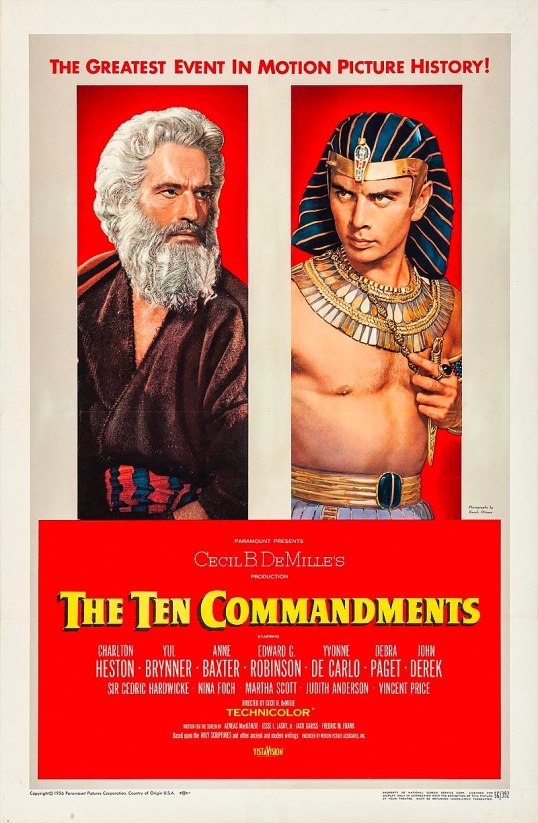
Today’s scene that I love comes from 1956’s The Ten Commandments.
Cecil B. DeMille is often unfairly dismissed as a director, just as Charlton Heston is often underrated as an actor. To me, this is one of the most powerful scenes in DeMille’s filmography. The sound of the screams is haunting. However, one must remember that, as with all the plagues that afflicted Egypt, the Pharoah was given fair warning.
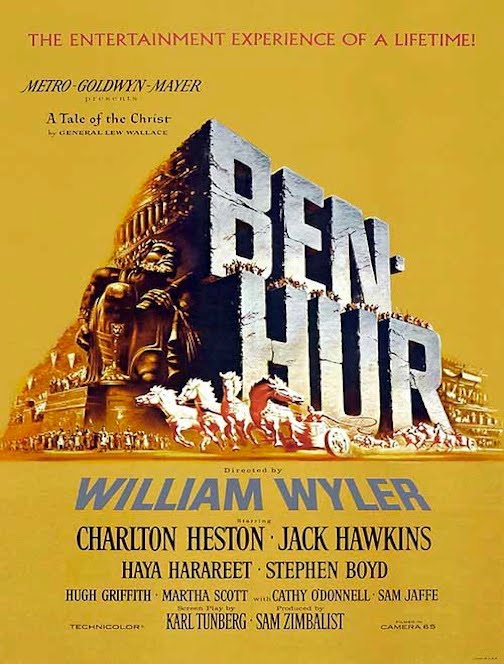
Today’s scene that I love comes from 1959’s Ben-Hur. The chariot race was one of the great action sequences of its era and its influence is still felt to this day. Rumor has it that Mario Bava was among the crew that helped to shoot the chariot race. Personally, I choose to believe that even if I can’t prove it!
Today is Christopher Walken’s 83rd birthday so it seems appropriate to share a Walken scene that I love. Without further ado, here is the classic gold watch speech from the 1994 film, Pulp Fiction:
Today, the Shattered Lens wishes a happy birthday to Italian film star, Terence Hill!
This scene that I love comes from 1973’s My Name Is Nobody. It features Terence teaching a cocky gunslinger a thing or two about how to win a slap fight.
 Through the Shattered Lens