4 Or More Shots From 4 Or More Films is just what it says it is, 4 shots from 4 of our favorite films. As opposed to the reviews and recaps that we usually post, 4 Shots From 4 Films lets the visuals do the talking!
As a photographer, I love a good silhouette shot. Here are some more of my favorites.
4 Shots From 4 Films
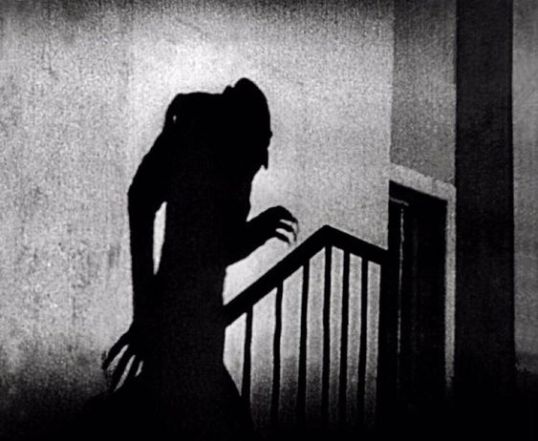
Nosferatu (1922, Dir. by F.W. Murnau)
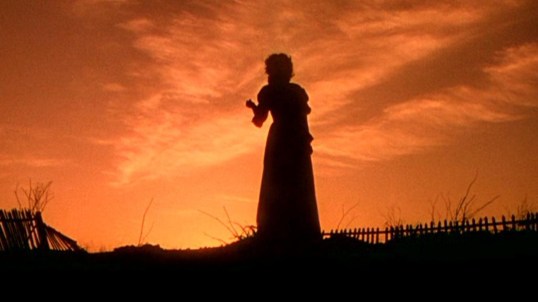
Gone With The Wind (1939, Dir. by Victor Fleming)
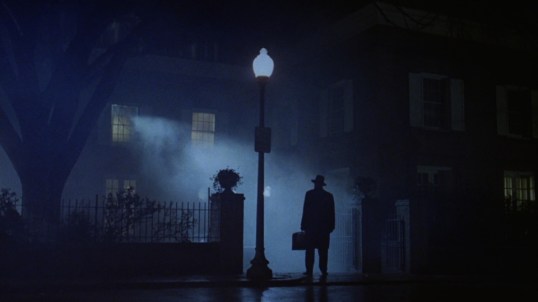
The Exorcist (1973, Dir by William Friedkin)
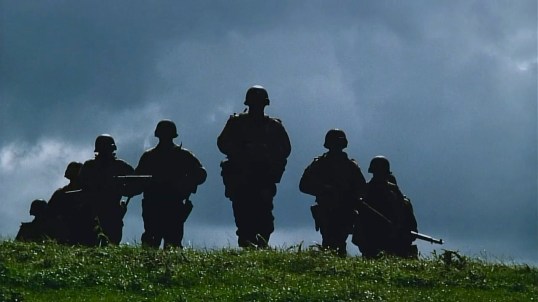
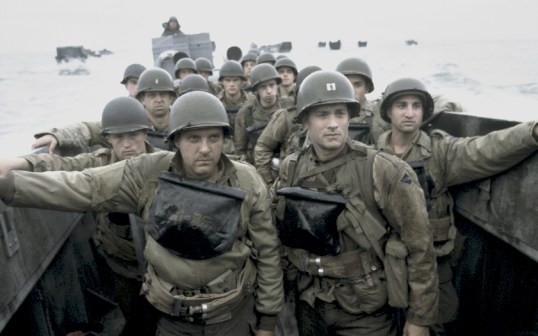
Saving Private Ryan (1998, Dir. by Steven Spielberg)
4 Shots From 4 Films is just what it says it is, 4 shots from 4 of our favorite films. As opposed to the reviews and recaps that we usually post, 4 Shots From 4 Films is all about letting the visuals do the talking.
Today, we wish a happy birthday to director Steven Spielberg! It’s time for….
6 Shots From 6 Films
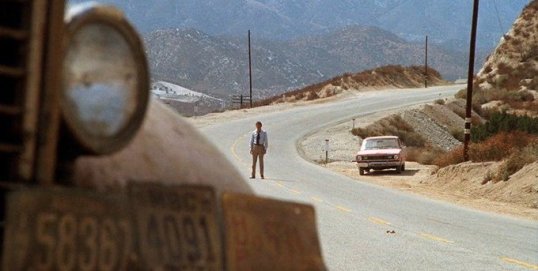
Duel (1971, dir by Steven Speilberg, DP: Jack Marta)
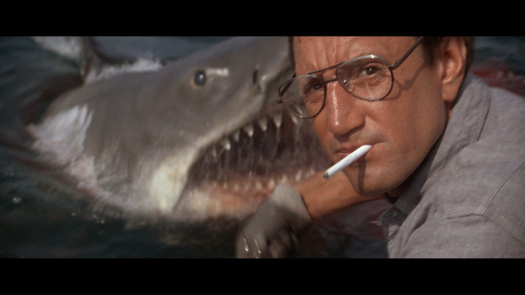
Jaws (1975, dir. by Steven Spielberg, DP: Bill Butler)
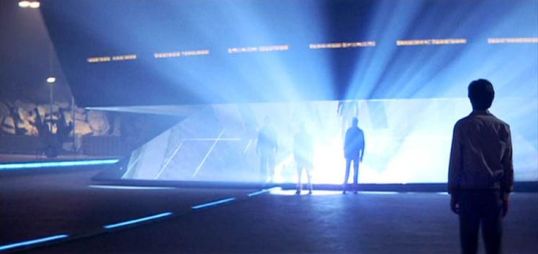
Close Encounters of the Third Kind (1977, dir by Steven Spielberg, DP: Vilmos Zsigmond)
1941 (directed by Steven Spielberg, DP: William Fraker)
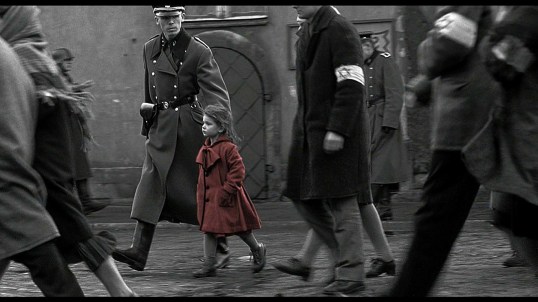
Schindler’s List (1993, dir by Steven Spielberg, DP: Janusz Kamiński)
Saving Private Ryan (1998, dir by Steven Spielberg, DP: Janusz Kamiński)
“Someday we might look back on this and decide that Saving Private Ryan was the one decent thing we were able to pull out of this whole godawful, shitty mess.” — Sergeant Horvath
Saving Private Ryan stands as a landmark achievement in war cinema, intricately weaving immersive battle scenes, rich character dynamics, and profound moral themes into a nearly three-hour exploration of World War II’s human cost. One of its most remarkable features is the opening Omaha Beach landing sequence, a meticulously crafted, over 24-minute depiction of warfare’s brutal reality. Spielberg deploys a cinema verité style with handheld cameras capturing disorientation and chaos through the soldiers’ eyes. The sound design envelops the viewer in a sensory onslaught—gunfire, shouting, explosions—creating a visceral experience that immerses audiences directly in the terror and confusion of D-Day.
The filming process drew heavily on historical accuracy, with the production shot on the coast of County Wexford, Ireland, employing amputee actors and practical effects over computer graphics to simulate violent injuries and battlefield horrors. Muted tones evoke wartime photographs, and rapid, shaky editing conveys the disorganized, frantic environment soldiers endured. Consulting WWII veterans and historians, Spielberg created a sequence that reshaped cinematic portrayals of war, influencing how future films would approach the genre’s raw immediacy and emotional weight.
The film’s narrative follows a squad led by Captain Miller on a mission to locate and bring home Private James Ryan, whose three brothers have been killed in combat. The mission is steeped in the real-life tragedy of the five Sullivan brothers who died together aboard the USS Juneau in the Pacific, prompting military policies to prevent similar familial devastation. This historical context frames the story’s ethical heart: risking several men’s lives to save one, raising enduring questions about the value of individual sacrifice within the broader war.
In Saving Private Ryan, sacrifice is portrayed ambiguously—not as the sacrifice of a single hero but as the collective cost borne by the men tasked with rescuing one individual under perilous conditions. As the squad journeys through the war-torn French countryside, the deaths, injuries, and tensions they face underscore war’s randomness and the difficulty of weighing one life against many. The narrative refuses to romanticize or simplify, instead confronting the audience with the tragic truth that countless soldiers lose their lives without recognition or purpose, while some survive against staggering odds.
Duty and camaraderie thread throughout the film, portrayed through the soldiers’ evolving relationships and personal struggles. Each grapples with loyalty not only to their mission but to their fellow men and their own moral codes.
Integral to the film’s power is Tom Hanks’s layered performance as Captain John Miller. Hanks breathes life and emotional depth into Miller, portraying him as a man shaped by civilian life—revealed poignantly when he discloses his pre-war profession as a schoolteacher—now transformed by the relentless demands of war. He embodies an officer who is both composed and vulnerable, carrying the heavy burden of leadership with quiet dignity. Hanks’s portrayal reveals the internal struggles beneath Miller’s stoic exterior: moments of doubt, moral conflict, and fatigue subtly expressed through a trembling hand or a weary gaze. This humanity makes Miller relatable, as a man trying to maintain order and purpose amid chaos.
Hanks skillfully balances Miller’s authoritative presence with warmth and empathy, particularly evident in his paternal interactions with younger soldiers, reinforcing Miller’s role as both a leader and protector. His nuanced acting delivers the complexity of a man constantly negotiating duty and compassion. In scenes of high tension or moral quandaries, Hanks conveys the weight of command while allowing glimpses into Miller’s psychological strain, deepening the film’s emotional resonance.
Following Hanks’s Miller, a standout amongst the supporting cast is Tom Sizemore’s portrayal of Technical Sergeant Mike Horvath, Miller’s steady second-in-command. Sizemore embodies the pragmatic, battle-hardened soldier whose loyalty and experience provide emotional grounding for the squad. Sizemore portrays Horvath’s weariness and quiet commitment, adding layers of realism that deepen the exploration of how war reshapes individuals. The chemistry and shared history between Miller and Horvath are palpable, illustrating the bonds that sustain soldiers through hardship and lending emotional weight to the narrative.
The film wrestles with intense moral ambiguity throughout. The mission’s premise—to risk many lives to save one—compels both characters and viewers to confront complex questions about justice, value, and the cost of war. Scenes presenting difficult choices, such as the decision to spare or execute prisoners, dramatize these ethical dilemmas and highlight the emotional burdens borne by soldiers.
Technically, the film excels, with Janusz Kaminski’s dynamic cinematography capturing both the chaos of battle and intimate moments with evocative clarity. The immersive sound design reinforces the brutal reality, stripping warfare of glamor and confronting audiences with its daunting human costs.
Despite the overwhelming destruction and loss, Saving Private Ryan offers moments of humanity and hope. The rescue mission serves as a fragile symbol of compassion in the midst of devastation, while the film’s closing reflections on memory and legacy emphasize the lasting significance of sacrifice and survival.
Saving Private Ryan stands as a monumental achievement in the war genre, combining visceral combat realism, compelling characters, and moral complexity. Through Hanks’s deeply human Captain Miller and the nuanced supporting performances, especially Sizemore’s grounded Horvath, the film explores themes of sacrifice, duty, and brotherhood with unflinching honesty. Its enduring legacy lies in its unvarnished yet empathetic portrayal of war’s cost and the profound sacrifices made by those who lived it.
4 Or More Shots From 4 Or More Films is just what it says it is, 4 shots from 4 of our favorite films. As opposed to the reviews and recaps that we usually post, 4 Shots From 4 Films lets the visuals do the talking!
4 Shots From 4 Films
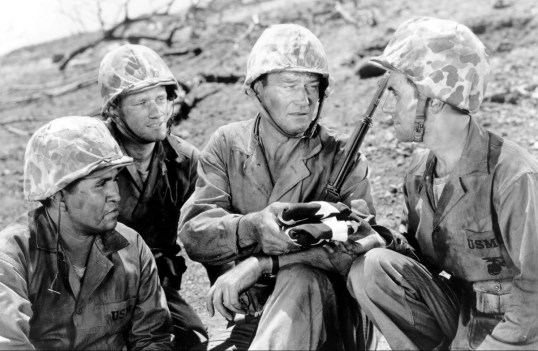
Sands of Iwo Jima (1949, Dir by Allan Dwan)
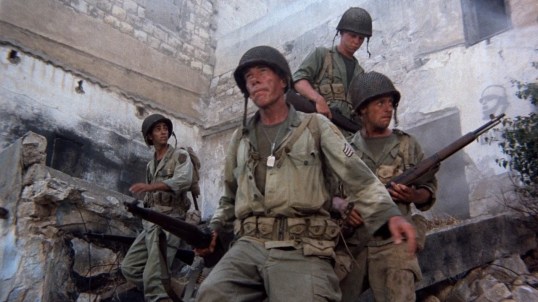
The Big Red One (1980, Dir by Sam Fuller)
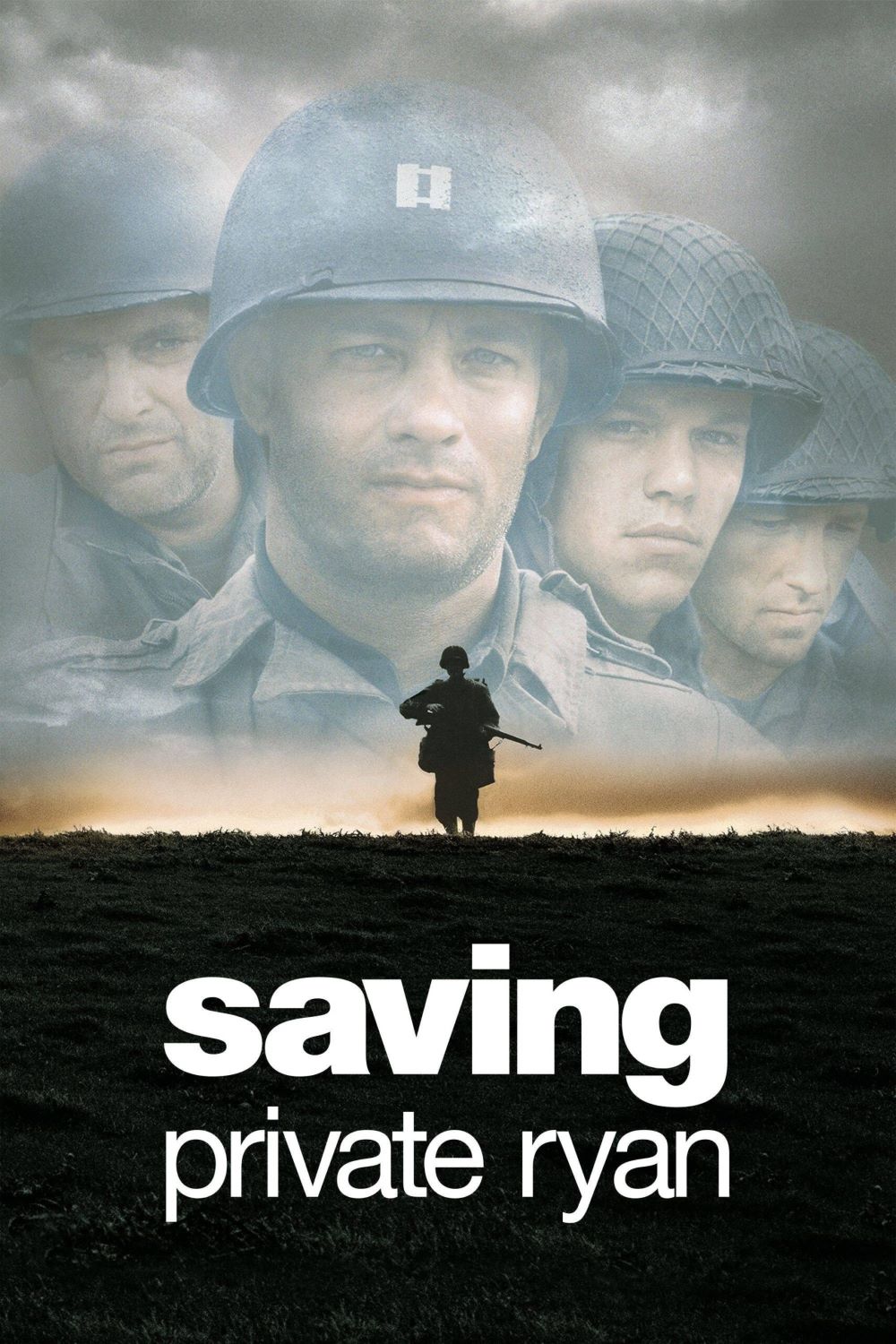
Saving Private Ryan (1998, Dir by Steven Spielberg)
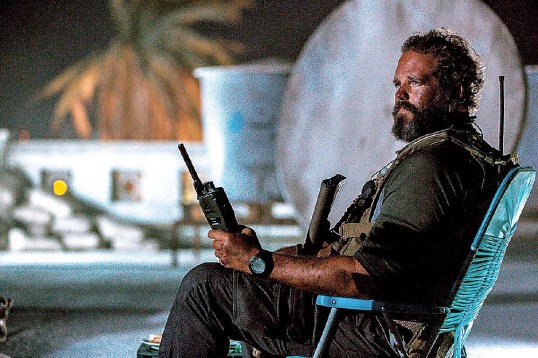
13 Hours: The Secret Soldiers of Benghazi (2016, Dir. by Michael Bay)
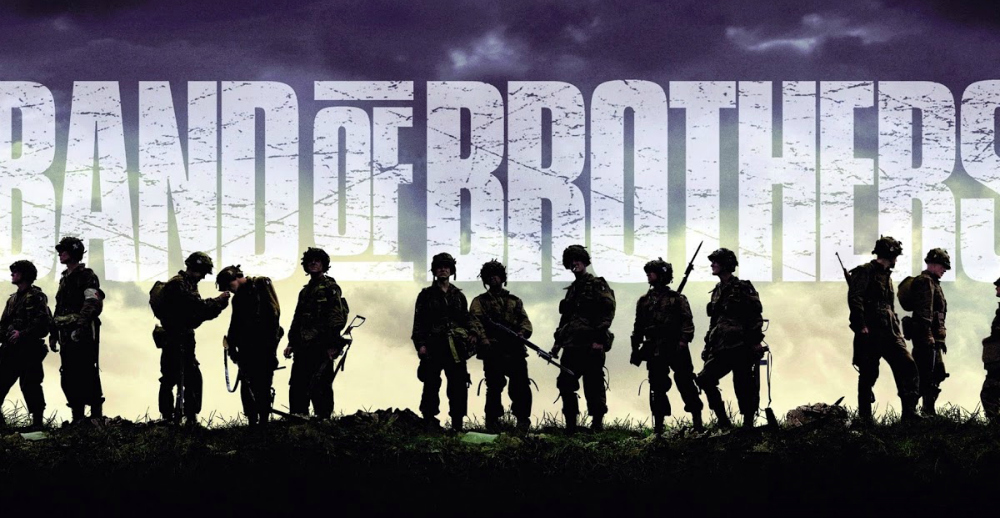
In what’s become an annual tradition in the Sandoc household since it first aired, Band of Brothers will be marathoned (and of late it’s companion series The Pacific)
The series was produced by both Steven Spielberg and Tom Hanks who years before made the equally powerful film Saving Private Ryan. That film introduced the younger generation of today about the true details of heroism and horror that was World War II. What was becoming a dry and academic exercise in schools was suddenly given life in the vivid and heartbreaking imagery as seen through the eyes of Spielberg and the personal accounts of the men of the “Greatest Generation” who went to war and survived to tell their tales.
Band of Brothers would take the accounts of Easy Company of the 501st Parachute Regiment of the 101st Airborne Division from their time at boot camp at Camp Toccoa, Georgia through training in England and then the war zones of France, the Netherlands, Belgium and, finally, Germany itself. This series wasn’t about made up soldiers and heroes, but the real ones who survived over a year of constant battle that saw some acquit themselves bravely while others failing to measure up.
The series was a production that had everyone at the top of their game. One such person was Michael Kamen who would compose the series’ orchestral score. It would be one of the last compositions he would create before his death in 2003. Nothing helped set the tone for the series more than the opening theme which accompanied the opening credits for each of the ten episodes.
In honor of Memorial Day, it is this opening theme from Band of Brothers which is the “Song of the Day.”
Today marks the 71st Anniversary of the Normandy Landings on D-Day. As the day winds down I thought it best to share one of my favorite scenes from a film that tried to capture the chaos and death of the fateful day on June 6, 1944. The film in question is Steven Spielberg’s Saving Private Ryan. This is the film which won him his second Best Director Oscar (I still think the film should’ve won Best Picture over Shakespeare In Love) and the film which helped redefine not just how war films were shot from 1998 on, but also de-glorify World War II on film.
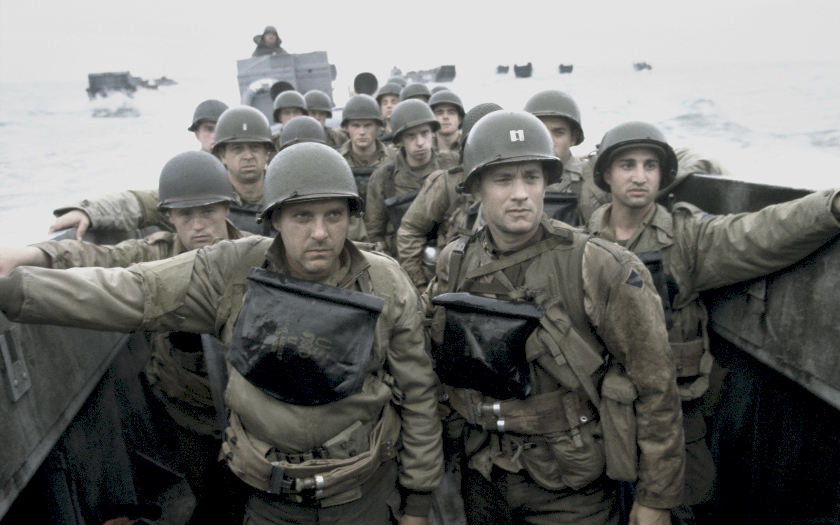
This scene showed the opening moments of the D-Day Landings on Omaha Beach in Normandy, France. It’s a scene that’s over 22-minutes in length and shows the utter chaos and destruction heaped on American troops as they attempted to land on the beach to take their objectives. While there have been war film before Saving Private Ryan that depicted war as the hell it truly is they were mostly about the Vietnam War. Rarely did we ever get a World War II-based war film which showed war in realistic fashion. Spielberg broke that taboo by making the battle scenes in his film — especially this extended opening sequence — done as realistic as possible without actually having people killed for real on-screen.
When this film first came out in the summer of 1998 no one knew what to make of it. This opening sequence became the talk of everyone who went to see the film. To say that they were shocked by what they saw was an understatement. Even now with over a decade since the film was released and people having seen this scene over and over again it still retain it’s impact. It’s not even the grand scale of the production required to film this action sequence which made this scene so memorable. It were the little things. Like a mortally wounded American GI crying out to his mother while trying to keep his blown out insides from spilling out. Then there’s the scene of another young soldier praying furiously with his rosary beads as men around him die by the score.
This scene also showed what most World War II films of the past failed to do. It showed both sides behaving barbarically. In the past, only the Germans were shown in a bad light. In Saving Private Ryan, we see that American soldiers were also prone at shooting surrendering troops and/or not mercy-killing enemy soldiers being burned alive (actions that have been well-documented by historians). This scene also showed just how courageous the young men of this generation which Tom Brokaw has called “The Greatest Generation”. Men who went off to war not for material gains, but for an idea that they had to stop evil (Nazi and Hitler) from taking all of Europe and, maybe, the world itself.
There’s a reason why Saving Private Ryan is in my list for greatest films of all-time and why this scene remains one of my all-time favorites.
With Veteran’s Day coming to a close I would just like to share a scene that encompasses the sort of people that make up the men and women of our military. While this scene is from Spielberg’s Saving Private Ryan I think the sentiment shared by Capt. Miller to his squad works just as well today as we find more and more of our country’s civilians being called in to do their military duty as part of the nation’s Reserve Force.
Yes, the military now is an all-volunteer one, but it doesn’t count those men and women who make up the reservists force. These soldiers, marines, airmen and sailors have done their tour of active duty and decided to join the reserve force on a part-time basis. They do this knowing that when the time comes they might be called to answer the call from the country’s military to take up their uniform once again and deploy to a war zone as they have done so for the past decade in both Iraq and Afghanistan. These are doctors, police men and women, lawyers, teachers, construction workers and men and women from every walk of life.
I know that it’s not popular to venerate and admire these people in today’s day and age, because to do so means people like myself and others glorify war and against peace. People have become cynical to the point that they deride these people for getting themselves in the predicament of leaving behind their families and jobs to fight for a war they might not believe in. These people don’t understand the sacrifice and will to do their duty for their country even if its leaders might fail them in the end.
It’s not just soldiers of the US I speak to about celebrating but every man and woman brave and dedicated enough to do their job either as a volunteer or as part of their nation’s conscription call. It’s these very same people who understand the real cost of war and the first to wish for peace, but until the time comes when they’re not needed anymore they will always answer the call to do their duty.
Hi and welcome to this week’s edition of Let’s Second Guess The Academy. Previously, we reconsidered the best picture nominees for both 1990 and 1994. This week, we jump forward 4 more years to consider the race for best picture of 1998.
1998 saw one of the greatest upsets in Academy history when Shakespeare in Love was named best picture over Steven Spielberg’s Saving Private Ryan. Even after more than a decade, this decision remains a controversial one. Some people — including this site’s founder — will tell you that Saving Private Ryan was robbed. Others, like my sister Megan, loved Shakespeare in Love so much that they still have the sepia-toned movie poster hanging in their house. And then there are people like me who will tell you that Shakespeare was better than Ryan but Thin Red Line was better than Shakespeare and that, finally, Elizabeth is the best of them all.
So, looking back with the benefit of hindsight (I love that word!), which of 1998’s best picture nominees would you have voted for?
And here’s the part of Let’s Second Guess The Academy that I really love — if none of the five actual nominees had been released in 1998, which other films would you have nominated in their place? You can vote for up to 5 films.
(Special thanks to my sister, Lisa Marie Bowman, who provided me with invaluable help in putting this post together.)
June 6th, 2011 is the 67th anniversary of D-Day but, if you’ve watched the nightly news, you might not know that. According to them, the only important thing about June 6th is that it’s the day a congressman admitted that he’s been using twitter and Facebook to send out pictures of his junk.
However, 67 years before Rep. Anthony Weiner admitted what everyone already knew, brave men from across the world bravely sacrificed their lives to defeat the greatest evil the world had ever known. June 6th is about honoring their memory and sorry Rep. Weiner but we’re taking the day back.

 Through the Shattered Lens