4 Shots From 4 Films is just what it says it is, 4 shots from 4 of our favorite films. As opposed to the reviews and recaps that we usually post, 4 Shots From 4 Films lets the visuals do the talking!
Controversial French director Roger Vadim was born 97 years ago today. It’s time for….
4 Shots From 4 Roger Vadim Films
And God Created Woman (1956, dir by Roger Vadim, DP: Armand Thirard)
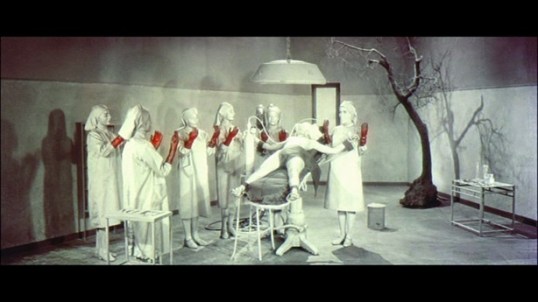
Blood And Roses (1960, dir by Roger Vadim, DP: Claude Renoir)
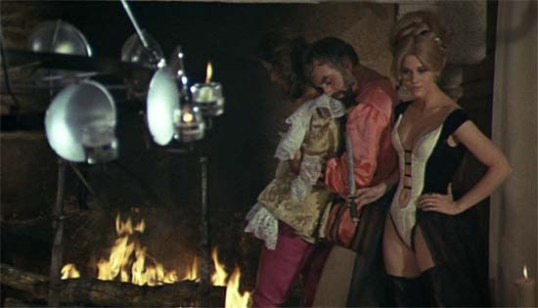
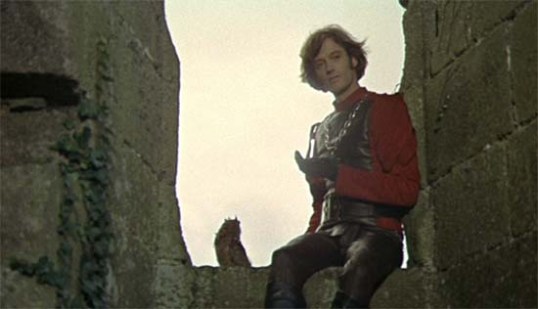
Spirits of the Dead: Metzengerstein (1968, dir by Roger Vadim, DP: Claude Renoir)
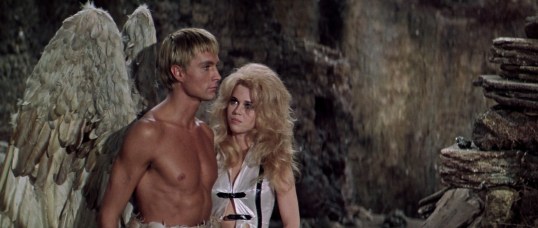
Barbarella (1968, dir by Roger Vadim, DP: Claude Renoir)
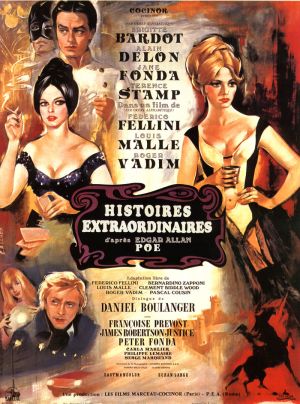
First released in 1968, Spirits of the Dead is an anthology film, one in which three famous international directors (Roger Vadim, Louis Malle, and Federico Fellini) each took a shot at adapting a short story by Edgar Allan Poe. By their very nature, anthology films tend to be uneven and that’s certainly the case with Spirits of the Dead.
Consider the first story in the film, Roger Vadim’s adaptation of Metzengerstein. Vadim was best known for his visually lavish films, the majority of which starred whoever he happened to be romantically involved with at the time. Vadim’s films were sexually charged and decadent but it was a very specific, late 60s type of decadence. They may have seemed wild when they were first released but, seen today, his films seem rather quaint (not to mention dated).
Anyway, when Vadim was hired to shoot his part of Spirits of the Dead, he was married to Jane Fonda so, of course, she stars as Countess Frederique Metzengerstein (Jane Fonda). That Countess Frederique is evil is obvious from the start. In between having tastefully shot orgies, she torments her servants. She even has one servant boy hung so that she can see if she can shoot an arrow through the rope. (Fortunately, for the servant boy, she can.) It’s an evil, spiritually empty life but, as can be seen in the picture above, her clothes are to die for.
(Though Metzengerstein appears to be taking place in the 19th century, everyone looks like they’ve just flown over from swinging London. There’s a lot of miniskirts, sideburns, and tinted glasses.)
Anyway, things change for Frederique when she meets her virtuous cousin, Wilhelm. She immediately falls into lust with him but he wants nothing to do with her and her evil ways. (Her cousin, I might add, is played by Peter Fonda, brother of Jane.) Upset over being rejected, Frederique sets his stables on fire. Wilhelm dies in the inferno.
After Wilhelm’s death, a new horse suddenly appears outside of Frederique’s castle. Convinced that Wilhelm’s spirit has inhabited it, Frederique grows obsessed with the horse. Soon, Frederique is spending all of her time riding the horse. With no more time to be evil, Frederique becomes less feared.
But, in the distance, there are always flames calling out to her…
So, let’s just start with the obvious. There is a huge ick factor to be found in Metzengerstein. Just as Frederique spends the first half of the movie in love with her cousin, Jane Fonda spends the first half of the movie pretending to be in love with Peter Fonda. Wilhelm, of course, rejects Frederique but still, it just feels undeniably … creepy. What’s odd is that it’s difficult to tell if Vadim was trying to make the audience uncomfortable or if this casting was just a case of Peter having some time to kill while visiting his sister and brother-in-law. For all the attention that he pays to the film’s lush visuals, Vadim is such a detached storyteller that it’s hard to guess what his intention was.
Jane Fonda gives a good performance as the cruel Frederique but otherwise, everyone else in the film is just a part of the scenery. That’s the thing with Metzengerstein. It’s a gorgeous film but, ultimately, it’s all scenery that adds up to nothing.
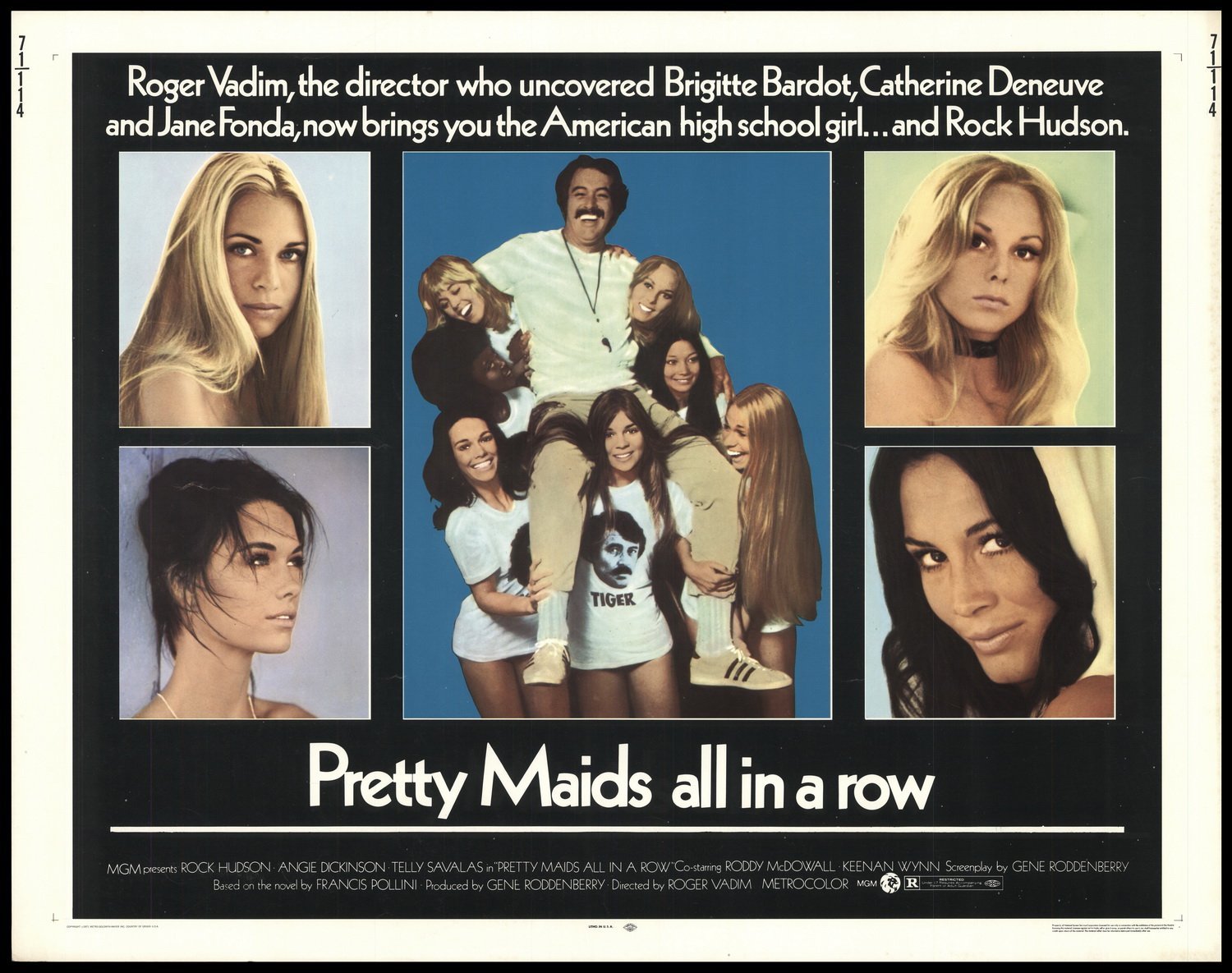
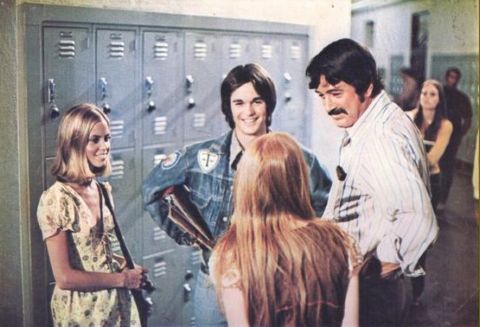
Gene Roddenberry’s post-STAR TREK career had pretty much gone down the tubes. The sci-fi series had been a money loser, and Roddenberry wasn’t getting many offers. Not wanting to be pigeonholed in the science fiction ghetto, he produced and wrote the screenplay for PRETTY MAIDS ALL IN A ROW, a black comedy skewering the sexual revolution, with French New Wave director Roger Vadim making his first American movie. The result was an uneven yet entertaining film that would never get the green light today with its theme of horny teachers having sex with horny high school students!
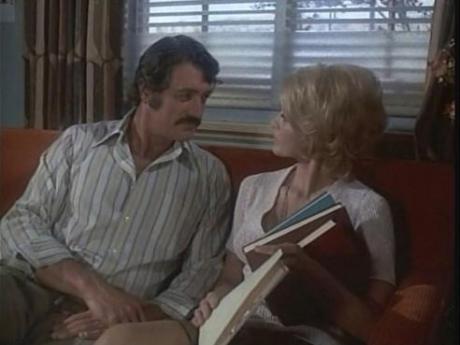
All-American hunk Rock Hudson was in the middle of a career crisis himself. After spending years as Doris Day’s paramour in a series of fluffy comedies, his box office clout was at an all-time low. Taking the role of Tiger McGrew, the guidance counselor/football coach whose dalliances with the cheerleading squad leads to murder…
I recently watched the 1972 film Ciao! Manhattan on TCM and it left me with incredibly mixed feelings. The specific reason that I was watching Ciao! Manhattan was because it was the last film to feature the legendary model and actress Edie Sedgwick. Tragically, at the age of 28, she died merely weeks after completing work on Ciao! Manhattan. And while the film is dedicated to her memory and was apparently meant to be a tribute to her, it instead feels incredibly exploitive. Watching the movie, I was aware that Edie was literally dying on screen and, as so often happened in her life, nobody was willing to step forward and help her.
In the late 60s, Edie Sedgwick was a model who was briefly the beautiful face of the underground. Vogue called her a “youthquaker.” She made films with Andy Warhol, she dated the rich and the famous and for a brief time, she was one of the most famous women in America. But a childhood full of tragedy and abuse had left Edie fragile and unprepared to deal with the pressures of being famous. She was fed drugs by those who claimed to care about her, she had numerous mental breakdowns, and, when she was at her most vulnerable, she was pushed away and rejected by the same people who had loved her when she was on top of the world. Edie died because, when she asked for help, nobody was willing to listen.
I guess I should explain something. I don’t believe in reincarnation but if I did, I would swear that I was Edie Sedwick in a past life. Of all the great icons of the past, she, Clara Bow, and Victoria Woodhull are the ones to whom I feel the closest connection. (Edie is the reason why, for the longest time, I assumed I would die when I was 28. But now I’m 29, so lucky me.) When I watched Ciao! Manhattan, I felt as if I was watching myself (or, at the very least, a close relation) on-screen.
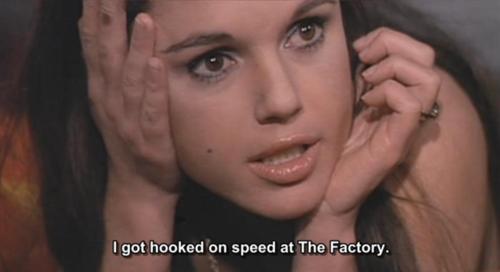
Ciao! Manhattan opens with Susan Superstar (Edie Sedgwick), standing topless on a street corner and hitchhiking. She’s picked up by an aimless drifter named Wesley (played by Wesley Hayes). Wesley gives Susan a ride back to the mansion that she shares with her mother (Isabell Jewell) and her servant, a rather disgusting guy named Geoff (Jeff Briggs). Her mother hires Wesley to help take care of Susan. It turns out that Susan used to be a world-famous model but now she spends her time sitting in an empty swimming pool, drinking and doing drugs. While Wesley and Geoff listen, Susan talks about her past in New York. While Susan talks, we see black-and-white footage of Susan (and Edie’s) past.
Ciao! Manhattan began life in 1967 as an underground parody of a spy film. When Edie had a nervous breakdown and was sent to rehab, filming was abandoned. When she was finally released in 1970, filming began again. The 1967 footage was now used for flashbacks to the wonderfully glamorous life that Susan (and Edie) had lost.
And, when viewed as a documentary of how Edie was exploited and then subsequently abandoned by everyone that she cared about, Ciao! Manhattan works. The contrast between the happy and vibrant Edie of 1967 and the barely coherent and visibly unhealthy Edie of 1970 is heartbreaking. Whereas the 1967 footage features an existence that is in constant motion, the 1970 footage shows us an existence that is slow and drenched in sadness. The film makes no effort to pretend that Susan Superstar is anyone other than Edie Sedgwick and, when Edie talks about her past, no names are changed to protect the guilty. And the film shows that, even after surviving a literal Hell, Edie Sedgwick was still a natural-born star. Even when she’s slurring her words and staring at the world with poignantly sad eyes, Edie demands and gets the audience’s attention.
When Ciao! Manhattan allows Edie to tell her own story, it works. But, unfortunately, the film spends too much time with Wesley and Geoff, who are two of the most repulsive characters that I’ve ever seen. Geoff is written to be offensive whereas the character of Wesley is done in by the very bad performance of the guy playing his role. (Wesley Hayes was reportedly not a professional actor and it certainly shows.)
This is a film that provides evidence that, even in her last days, Edie Sedgwick was a talented and unique presence and, for that, I’m glad. But, ultimately, it’s hard not to feel that Ciao! Manhattan was the final case of Edie and her tragic life being exploited for someone else’s profit.
Usually, I would end a review like this by including either a scene or the film’s trailer. But, instead, I’m going to end this review with Edie Sedgwick’s silent Warhol screen test. This is how I prefer to think of Edie Sedgwick — hopeful and curious with the promise of her entire life ahead of her.
Pretty Maids All In A Row, which — as should be pretty obvious from the trailer above — was originally released in 1971, is a bit of a historic film for me. You see, I love movies. And, as a part of that love, I usually don’t give up. Regardless of how bad a movie may turn out to be, once I start watching, I stick with it. I do not give up. I keep watching because you never know. The film could suddenly get better. It could turn out that what originally seemed like a misfire was actually brilliant satire. If you’re going to talk or write about movies, you have an obligation to watch the entire movie. That was a rule that I had always lived by.
And then, one night, Pretty Maids All In A Row popped up on TCM.
Now, I have to admit that I already knew that Pretty Maids was going to be an extremely 70s film. I knew that it was probably going to be more than a little sexist. I knew all of this because the above trailer was included on one of my 42nd Street Forever DVDs. But I still wanted to see Pretty Maids because the trailer hinted that there might be an interesting hiding underneath all of the cultural baggage. If nothing else, it appeared that it would have some sort of worth as an artifact of its time.
(If you’re a regular reader of this site, you know how much I love my cinematic time capsules.)
So, the film started. I logged onto twitter so that I could live tweet the film, using the hashtag #TCMParty. And from the moment the film started, I knew it wasn’t very good. It wasn’t just that the film’s camerawork and music were all extremely 70s. After all, I like 70s music. I don’t mind the occasional zoom lens. And random psychedelic sequences? WHO DOESN’T LOVE THOSE!? No, my dislike of the film had nothing to do with the film’s style. Instead, it had to do with the fact that there was absolutely nothing going on behind all of that style. It wasn’t even style for the sake of style (which is something that I usually love). Instead, it was style for the sake of being like every other “youth film” that came out in the 70s.
And then there was the film’s plot, which should have been interesting but wasn’t because director Roger Vadim (who specialized in stylish decadence) had no interest in it. The film takes place at Oceanfront High School, where the only rule is that apparently nobody is allowed to wear a bra. We meet one student, Ponce De Leon Harper (played by an amazingly unappealing actor named John David Carson), who is apparently on the verge of having a nervous breakdown because, at the height of the sexual revolution, he’s still a virgin.
(Because, of course, the whole point of the sexual revolution was for losers like Ponce to finally be able to get laid…)
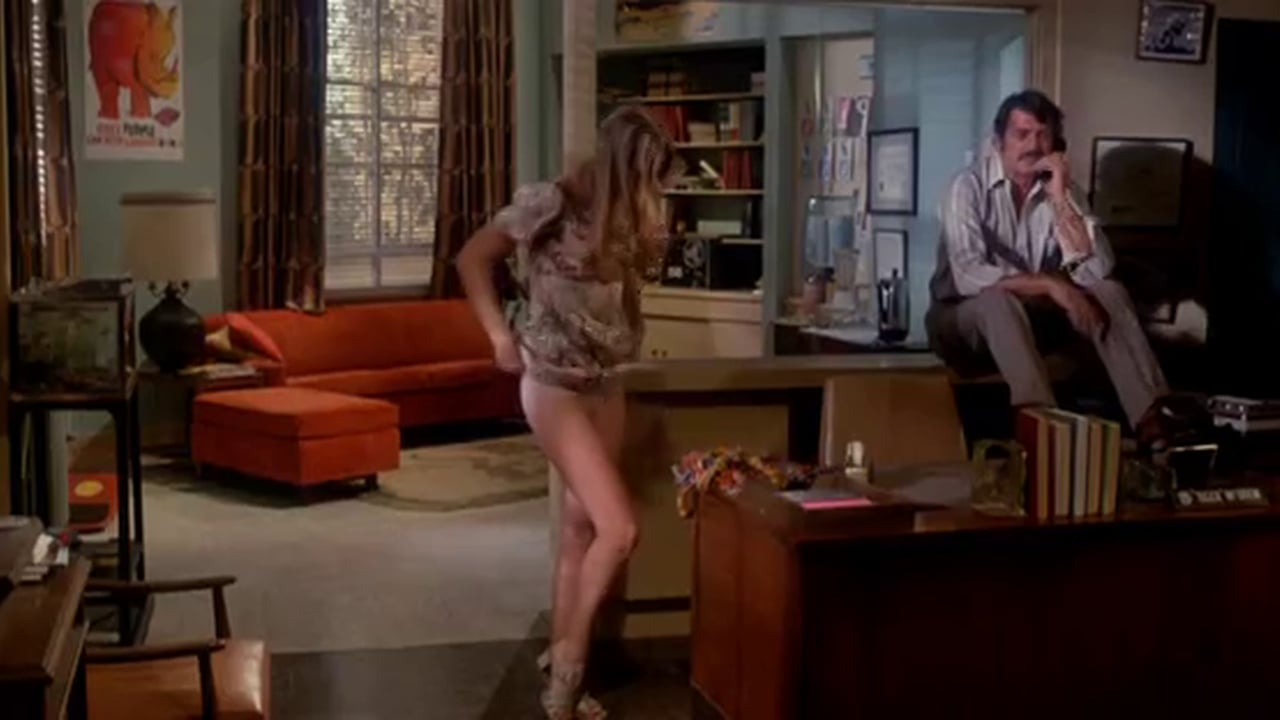
Ponce is taken under the wing of high school guidance counselor Tiger McDrew (Rock Hudson, complete with porn star mustache). Quickly figuring out exactly what Ponce needs, Tiger sets him up with a teacher played by Angie Dickinson. However, Tiger has other concerns than just Ponce. Tiger, it turns out, is a sex addict who is sleeping with nearly every female student at the school. But, American society is so oppressive and puts so much pressure on the American male that Tiger has no choice but to kill every girl that he sleeps with…
This is one of the only film I can think of that not only makes excuses for a serial killer but also presents him as being a heroic character. And, while it’s tempting to think that the film is being satirical in its portrayal of Tiger and his murders, it’s actually not. Don’t get me wrong. The film is a very broad comedy. The high school’s principal (Roddy McDowall) is more concerned with the football team than with all of the girls turning up dead at the school. The local sheriff (Keenan Wynn) is a buffoon. The tough detective (Telly Savalas) who investigates the murders gets a few one liners.
But Tiger, most assuredly, is the film’s hero. He’s the only character that the audience is expected to laugh with, as opposed to at. He is the character who is meant to serve as a mouthpiece for screenwriter Gene Roddenberry’s view on America’s puritanical culture. If only society was less hung up on sex, Tiger wouldn’t have to kill. Of course, the film’s celebration of Tiger’s attitude towards sex is not extended towards the girls who sleep with him. Without an exception, they are all presented as being empty-headed, demanding, shallow, and annoying, worthy only of being leered at by Vadim’s camera until Tiger finally has to do away with them.
(The film’s attitude towards women makes Getting Straight look positively enlightened.)
Rock and Angie
ANYWAY! I spent about 40 minutes watching this movie before I gave up on it. Actually, if you want to be technical about it, I gave up after 5 minutes. But I stuck with it for another 35 minutes, waiting to see if the film was going to get any better. It didn’t and finally, I had to ask myself, “Why am I actually sitting here and wasting my time with this misogynistic bullshit?” So, I stopped watching and I did so with no regrets.
What I had forgotten is that I had set the DVR to record the film while I was watching it, just in case I later decided to review it. So, last week, as I was preparing for this series of Back to School posts, I saw Pretty Maids All In A Row on my DVR. I watched the final 51 minutes of the film, just to see if it ever got better. It didn’t.
However, on the plus side, Rock Hudson does give a good performance in the role of Tiger, bringing a certain seedy desperation to the character. (I’m guessing that this desperation was Hudson’s own contribution and not an element of Roddenberry’s screenplay, which more or less presents Tiger as being a Nietzschean superman.). And beyond that, Pretty Maids serves as evidence as to just how desperate the Hollywood studios were to makes movies that would be weird enough to appeal to young people in the early 70s.
Watching the film, you can practically hear the voices of middle-aged studio executives.
“What the Hell are we trying to do with this movie!?” one of the voices says.
“Who cares!?” the other voice replies, “the kids will love it!”
Last year, I gave up control to the reader of the site and you know what? I kinda liked it in a sneaky, dirty little way. So I figured, why not do it again?
Here’s how it works. Earlier today, I put on a blindfold and then I randomly groped through my DVD collection until I had managed to pull out ten movies. I then promptly stubbed my big toe on the coffee table, fell down to the floor, and spent about 15 minutes cursing and crying. Because, seriously, it hurt! Anyway, I then took off the blindfold and looked over the 10 movies I had randomly selected. Two of them — Dracula A.D. 1972 and A Blade in the Dark — were movies that I had already reviewed on this site. So I put them back and I replaced them with two movies of my own choosing — in this case, Eternal Sunshine of the Spotless Mind and The Unbearable Lightness of Being.
Between now and next Sunday (March 27th), people will hopefully vote in this poll. On Sunday, I will watch and review whichever movie has received the most votes. Even if that movie turns out to be Incubus. *shudder* (Have I mentioned how much I love Eternal Sunshine of the Spotless Mind?)
Now, of course, there’s always the possibility that no one will vote in this poll and I’ll end up looking silly. Those are the risks you take when you set up an online poll. However, I have a backup plan. If nobody votes, I will just spend every day next week shopping for purses at Northpark Mall and then blogging about it. And by that, I mean blogging every single little detail. So, it’s a win-win for me.
Anyway, here’s the list of the 10 films:
1) Barbarella— From 1968, Jane Fonda plays Barbarella who flies around space while getting molested by …. well, everyone. Directed by Roger Vadim.
2) Barry Lyndon — From 1975, this best picture nominee is director Stanley Kubrick’s legendary recreation of 18th-century Europe and the rogues who live there.
3) Caligula — Yes, that Caligula. From 1979, it’s time for decadence, blood, and nudity in the Roman Empire. Starring Malcolm McDowell, Helen Mirren, Peter O’Toole, John Gielgud, John Steiner, and Theresa Ann Savoy.
4) Eternal Sunshine of the Spotless Mind — Oh my God, I love this movie. Jim Carrey breaks up with Kate Winslet and deals with the pain by getting his mind erased by Tom Wilkinson, Mark Ruffalo, Kirsten Dunst, and an amazingly creepy Elijah Wood.
5) Incubus — From 1969, this low-budget supernatural thriller not only stars a young William Shatner but it also features the entire cast speaking in Esperanto. For. The. Entire. Movie.
6) Inland Empire — If you want to give Lisa nightmares, you can vote for David Lynch’s disturbing 3-hour film about lost identity, sexual repression, human trafficking, and talking rabbits.
7) Kiss Me Deadly — From 1955, this Robert Aldrich-directed cult classic features hard-boiled P.I. Mike Hammer and a host of others chasing after a mysterious glowing box and accidentally destroying the world in the process.
8 ) Mandingo — From 1975, this infamous little film is a look at slavery, incest, and rheumatism in the pre-Civil War South. Starring James Mason, Ken Norton, Perry King, and Susan George. Supposedly a really offensive movie, one I haven’t sat down and watched yet.
9) Sunset Boulevard — From 1950, hack screenwriter William Holden ends up the kept man of psychotic former screen goddess Gloria Swanson. Directed by Billy Wilder.
10) The Unbearable Lightness of Being — From 1988, Philip L. Kaufman’s adaptation of Milan Kundera’s classic novel (one of my favorite books, by the way) features Daniel Day-Lewis, Juliette Binoche, and Lena Olin having sex and dealing with ennui. After I first saw this movie, I insisted on wearing a hat just like Lena Olin did.
Everyone, except for me, is eligible to vote. Vote as often as you want. The poll is now open until Sunday, March 27th.
(Edit: Voting is now closed but check below for the results! — Lisa)
I read earlier that film producer Dino De Laurentiis died on Wednesday. He was 91 years old and he either produced or helped to finance over a 150 movies. He started his career with Federico Fellini and went on to produce two of the iconic pop art films of the 60s, Roger Vadim’s Barbarella and Mario Bava’s Danger: Diabolik. Then in the 70s he went through the most infamous stage of his career when he produced several overblown “event” films like the 1976 remake of King Kong. However, even while De Laurentiis was devoting his time and effort to critically reviled attempts at spectacle, he was also supporting the visions of independent directors like David Lynch. In the 21st Century, De Laurentiis was probably best known for producing the Hannibal Lecter films.
De Laurentiis, born in Naples, was a Southern Italian and, not surprisingly, was one of those legendary, larger-than-life moguls who built his career walking on the thin line between the Mainstream and the Grindhouse. Hollywood is run by people who try to be De Laurentiis but De Laurentiis was the real thing.
Dino De Laurentiis, R.I.P.
(On a personal note, De Laurentiis produced one of my favorite films of all time, Bound. And I’m a fourth-Southern Italian myself. Southern Italians are the best.)








 Through the Shattered Lens