Lisa Reviews An Oscar Nominee: Moonstruck (dir by Norman Jewison)


Nominated for Best Picture of 1987, Moonstruck is a film about love, romance, New York City, and being Italian.

Loretta Castorini (Cher) is a widow and a bookkeeper who lives with her parents, Cosmo (Vincent Gardenia) and Rose (Olympia Dukakis) in Brooklyn.  When her boyfriend, Johnny (Danny Aiello), asks Loretta to marry him, Loretta says yes even though she knows that, while she likes him, she’s not really in love with him.  After he proposes, Johnny reveals that he has to go to Sicily to see his “dying” mother.  He asks Loretta to pay a visit to his estranged brother, Ronny (Nicolas Cage), and invite him to the wedding.  Loretta, a strong believer in family and the importance of following tradition, agrees.

Loretta finds Ronny working in the bakery that he owns.  Ronny is not thrilled to learn that his brother has gotten engaged.  Ronny reveals that he has a wooden hand.  He lost his real hand when he accidentally placed it in a bread slicer while having a conversation with Johnny.  After he lost his hand, Ronny’s then-fiancée left him.  Ronny has never forgiven Johnny for the loss of his hand.  “I lost my hand!  I lost my bride!”  Ronny yells to the heavens.  Loretta, however, immediately understands that Johnny actually hurt his hand to get his fiancée to break up with him.  A conversation at Ronny’s apartment leads to the two of them impulsively sleeping with each other.  The next day, Ronny promises to never bother Loretta again if she agrees to go the opera with him.

What the guilt-stricken Loretta doesn’t know is that her father is having an affair himself and it turns out that Cosmo and Mona (Rose Gilette) enjoy the opera as well.  Meanwhile, Rose finds herself tempted by a lecherous college professor named Perry (John Mahoney).

There’s a lot of stereotypes to be found in Moonstruck.  Of course, passionate Ronny loves the opera.  Of course, the simple but well-intentioned Johnny abandons his fiancée so that he can rush to Sicily to be with his “dying” mother who, it turns out, isn’t dying at all.  Of course, Loretta slaps Ronny and tells him to snap out of it.  (I should note that I’m a fourth Italian myself so I could definitely relate to some of this film.  I’ve never liked opera, though.)  Fortunately, the film’s cast is so perfectly chosen and John Patrick Shanley’s script so adroitly maintains the balance between the broad comedy and the small dramatic moments that it doesn’t matter that all of the characters are a bit stereotypical.  The film comes to a wonderful life.  It’s impossible not love these characters, flaws and all.  Cher and Olympia Dukakis deserved the Oscars that they both won for this film.  Vincent Gardenia deserved the nomination that he received.  Nicolas Cage, Danny Aiello, and John Mahoney were not nominated but they should have been.  In particular, John Mahoney is heart-breaking in his small role, playing the type of lecherous character that most films would have just portrayed as being a cardboard buffoon.  As for Nicolas Cage, Moonstruck is a film that features both his trademark eccentricity and his ability to show the real and vulnerable human being underneath all of the bluster.  Moonstruck is a film about the search for love and the glory of finding it.  It’s a wonderfully romantic film, even if almost all of that love seems to involve infidelity.  As directed by Norman Jewison, Moonstruck not only celebrates falling in love but also celebrates being lucky enough to do so in New York City.  It’s a love letter not just to its characters but to the city as well.

Moonstruck was nominated for Best Picture but it lost to a far more epic production, The Last Emperor.


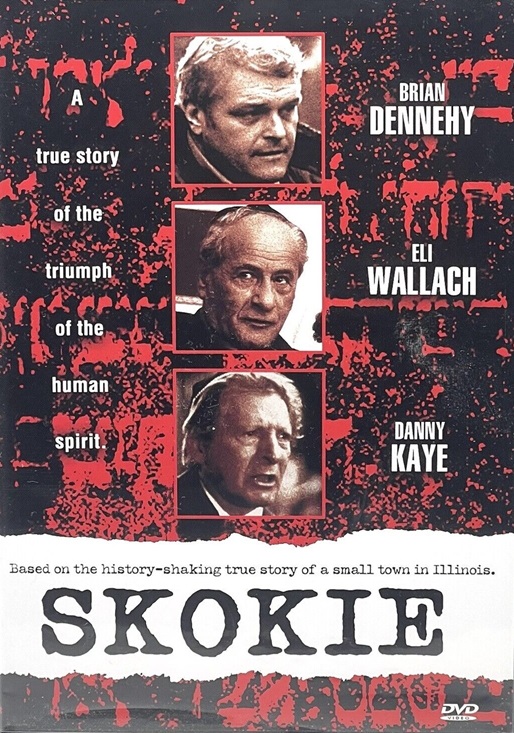
Made-For-Television Movie Review: Skokie (dir by Herbert Wise)


Skokie, a 1981 made-for-television movies, opens in a shabby Chicago office.

A group of men, all wearing brownshirts and swastika armbands, listen to their leader, Frank Collin (George Dzundza).  Collin says that they will be holding their next rally in the town of Skokie.  Collin explains that Skokie has a large Jewish population, many of whom came to the United States after World War II.  Collin wants to march through their town on Hitler’s birthday.

If not for the swastika and the brownshirt, the overweight Collin could easily pass for a middle-aged insurance salesman, someone with a nice house in the suburbs and an office job in the city.  However, Frank Collin is the head of the American National Socialist Party. a small but very loud group of Nazis who specialize in marching through towns with large Jewish populations and getting fee media attention as a result of people confronting them.  Making Frank Collin all the more disturbing is that he isn’t just a character in a made-for-television movie.  Frank Collin is a real person and Skokie is based on a true story.

The Mayor (Ed Flanders) and the police chief (Brian Dennehy) of Skokie are, needless to say, not happy about the idea of modern-day Nazis marching through their city.  Though they inform Collin that he will have to pay for insurance before he and his people will be allowed to hold their rally, they know that the courts have been striking down the insurance requirement as being a violation of the First Amendment.  While the mayor and the police chief worry about the political fallout of the rally, the Jewish citizens of Skokie debate amongst themselves how to deal with the Nazis.  Bert Silverman (Eli Wallach) and Abbot Rosen (Carl Reiner) argue that the best way to deal with Collin and his Nazis is to refuse to acknowledge them, to “quarantine” them.  As Rosen explains it, Collin is only marching to get the free publicity that comes with being confronted.  If he’s not confronted, he won’t make the evening news and his rally will have been for nothing.  However, many citizens of Skokie — including Holocaust survivor Max Feldman (Danny Kaye) — are tired to turning their back on and ignoring the Nazis.  They demand that the Nazis be kept out and that, if they do enter the city, they be confronted.

With the support of the ACLU, Collin sues for his right to march through Skokie.  The ACLU is represented by Herb Lewishon (John Rubinstein), a Jewish attorney who hates Collin and everything that he stands for but who also feels that the First Amendment must be respected no matter what.  When Lewishon is asked how he, as a Jew, can accept a Nazi as a client, Lewishon relies that his client is the U.S. Constitution.

Skokie is a thought-provoking film, all the more so today when there’s so much debate about who should and should not be allowed a platform online.  (Indeed, Collin and his Nazis would have loved social media.)  Lewishon argues that taking away any group’s First Amendment rights, regardless of how terrible that group may be, will lead to slippery slope and soon everyone’s First Amendment rights will be at risk.  Max Feldman, and others argue that the issue isn’t free speech.  Instead, the issue is standing up to and defeating evil.  The film gives both sides their say while, at the same time, making it clear that Frank Collin and his Nazis are a bunch of fascist losers.  It’s a well-acted and intelligently written movie, one that rejects easy answers.  Needless to say, at a time when so many people feel free to be openly anti-Semitic, it’s a film that’s still very relevant.

As for the real Frank Collin, he would eventually be charged with and convicted of child molestation.  After three years in prison, he changed his name to Frank Joseph and became a writer a New Age literature.  He’s looking for Atlantis but I doubt they’d want him either.

Here Are The 2015 Independent Spirit Nominations!


mara_blanchett_carol

Here are the 2015 Independent Spirit Nominations!  That’s right — Oscar season is officially here!  Soon, we will reach the point where every day, another group will be announcing their picks for the best of 2015 and the Oscar race will start to become a lot less cloudy.  Until then, we can look at the Independent Spirit Nominations and try to figure out what they all mean in the big scheme of things.

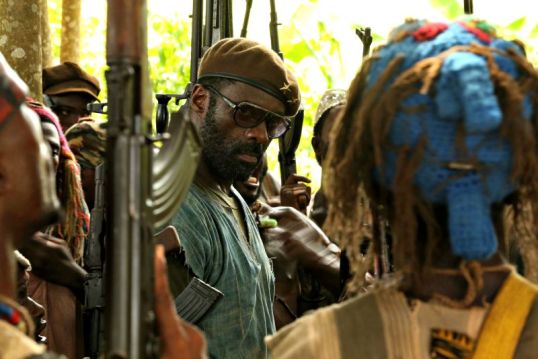
The two big indie best picture contenders — Carol and Spotlight — were nominated for multiple awards.  That’s to be expected.  If any film is going to benefit from the Spirit nominations, it will probably be Anomalisawhich is starting to look more and more like it might be a dark horse to score a best picture nominations.  As well, the Spirit nominations may serve to remind Academy members that Beasts of No Nation is one of the best films of the year.

Anyway, without further ado, here are the Spirit nominations!

Best Feature

Anomalisa
Beasts of No Nation
Carol
Spotlight
Tangerine

Best Director

Sean Baker, Tangerine
Cary Joji Fukunaga, Beasts of No Nation
Todd Haynes, Carol
Charlie Kaufman & Duke Johnson, Anomalisa
Tom McCarthy, Spotlight
David Robert Mitchell, It Follows

Best Screenplay

Charlie Kaufman, Anomalisa
Donald Margulies, The End of the Tour
Phyllis Nagy, Carol
Tom McCarthy & Josh Singer, Spotlight
S. Craig Zahler, Bone Tomahawk

Best First Feature

The Diary of a Teenage Girl
James White
Manos Sucias
Mediterranea
Songs My Brothers Taught Me

Best First Screenplay

Jesse Andrews, Me and Earl and the Dying Girl
Jonas Carpignano, Mediterranea
Emma Donoghue, Room
Marielle Heller, The Diary of a Teenage Girl
John Magary, Russell Harbaugh, Myna Joseph, The Mend

Best Male Lead

Christopher Abbott, James White
Abraham Attah, Beasts of No Nation
Ben Mendelsohn, Mississippi Grind
Jason Segel, The End of the Tour
Koudous Seihon, Mediterranea

Best Female Lead

Cate Blanchett, Carol
Brie Larson, Room
Rooney Mara, Carol
Bel Powley, The Diary of A Teenage Girl
Kitana Kiki Rodriguez, Tangerine

Best Supporting Male

Kevin Corrigan, Results
Paul Dano, Love & Mercy
Idris Elba, Beasts of No Nation
Richard Jenkins, Bone Tomahawk
Michael Shannon, 99 Homes

Best Supporting Female

Robin Bartlett, H.
Marin Ireland, Glass Chin
Jennifer Jason Leigh, Anomalisa
Cynthia Nixon, James White
Mya Taylor, Tangerine

Best Documentary

(T)error
Best of Enemies
Heart of a Dog
The Look of Silence
Meru
The Russian Woodpecker

Best International Film

A Pigeon Sat on a Branch Reflecting on Existence

Embrace of the Serpent
Girlhood
Mustang
Son of Saul

Best Cinematography

Beasts of No Nation
Carol
It Follows
Meadlowland
Songs My Brothers Taught Me

Best Editing

Heaven Knows What
It Follows
Manos Sucias

Room

Spotlight

John Cassavetes Award (Best Feature Under $500,000)

Advantageous
Christmas, Again
Heaven Knows What
Krisha
Out of My Hand

Robert Altman Award (Best Ensemble)

Spotlight

Kiehl’s Someone to Watch Award

Chloe Zhao
Felix Thompson
Robert Machoian & Rodrigo Ojeda-Beck

Piaget Producers Award 

Darren Dean
Mel Eslyn
Rebecca Green and Laura D. Smith

BeastsofNoNation

Embracing the Melodrama Part II #119: Shutter Island (dir by Martin Scorsese)


Shutter IslandThe 2010 film Shutter Island finds the great director Martin Scorsese at his most playful.

Taking place in 1954, Shutter Island tells the story of two detectives, Teddy Daniels (Leonardo DiCaprio, giving an excellent performance that, in many ways, feels like a test run for his role in Inception) and Chuck Aule (Mark Ruffalo, also excellent), who take a boat out to the Ashecliffe Hospital for The Criminal Insane, which is located on Shutter Island in Boston Harbor.  They are investigating the disappearance of inmate Rachel Solando, who has been incarcerated for drowning her three children.

Ashecliffe is one of those permanently gray locations, the type of place where the lights always seem to be burned out and the inmates move about like ghostly visions of sins brought to life.  It’s the type of place that, had this movie been made in the 50s or 60s, would have been run by either Vincent Price or Peter Cushing.  In this case, the Cushing role of the cold and imperious lead psychiatrist is taken by Ben Kingsley.  Max Von Sydow, meanwhile, plays a more flamboyantly sinister doctor, the role that would have been played by Vincent Price.

When a storm strands Teddy and Chuck on the island, they quickly discover that neither the staff nor the patients are willing to be of any help when it comes to tracking down Rachel.  As Teddy continues to investigate, he finds himself stricken by migraines and haunted by disturbing images.  He continually sees a mysterious little girl.  He has visions of his dead wife (Michelle Williams).  A horribly scarred patient in solitary confinement (Jackie Earle Haley) tells him that patients are regularly taken to a lighthouse where they are lobotomized.  When Teddy explores more of the island, he comes across a mysterious woman living in a cave and she tells him of even more sinister activity at Ashecliffe.  Meanwhile, Chuck alternates between pragmatic skepticism and flights of paranoia.

And I’m not going to share anymore of the plot because it would be a crime to spoil Shutter Island.  This is a film that you must see and experience for yourself.

This is one of Martin Scorsese’s most entertaining films, an unapologetic celebration of B-movie history. He knows that he’s telling a faintly ludicrous story here and, wisely, he embraces the melodrama.  Too many directors would try to bring some sort of credibility to Shutter Island by downplaying the film’s more melodramatic moments.  Scorsese, however, shows no fear of going over the top.  He understands that this is not the time to be subtle.  This is the time to go a little crazy and that’s what he does.

Good for him.