On this date, 111 years ago, filmmaker Robert Wise was born in Winchester, Indiana. He started his career as an editor (and was Oscar-nominated for his work on Citizen Kane) and then eventually branched out into directing. From the mid-forties to the year 2000, Wise directed every genre of film. He won two Oscars for Best Director, one for West Side Story and one for The Sound of Music. He was also the first director to helm a Stark Trek film with 1979’s Stark Trek — The Motion Picture.
Today’s scene that I love comes from Wise’s 1951 masterpiece, The Day The Earth Stood Still. In this scene, America watched as a UFO darts across the sky and eventually lands in Washington D.C. Though it’s a simple scene, it deftly captures the wonder of the moment.
59 years ago today, the first episode of Star Trek aired in America.
There’s been a lot of different StarTrek shows and crews over the decades. I have to admit that I’ve always preferred the Original Series, with Kirk sleeping with every alien he met, McCoy and Spock bickering about logic, and Scotty warning that the engines can’t take much more. The Next Generation was strong as well, especially in the later seasons. The subsequent series have been hit-and-miss for me.
I was born long after the Original Series went off the air so, like a lot of people, my real introduction to Star Trek came through watching the films. This weekend, I sat down and watched all fourteen of the Star Trek films in order, from The Motion Picture to Section 31. Here are my thoughts.
Star Trek: The Motion Picture (1979, directed by Robert Wise)
In the first Star Trek film, Voyager returns to Earth, now known as V’ger. James T. Kirk (William Shatner) returns to the Enterprise with his old crew and takes command from Decker (Stephen Collins). Spock (Leonard Nimoy) returns from Vulcan is not happy about it.
Directed by Robert Wise, the first Star Trek film feels out-of-place amongst the films that followed it. It’s long and slowly paced and it doesn’t have the sense of humor that runs through the best of the films featuring the original cast. The film favors Kirk and Spock, with the rest of the original cast being largely used as bit players. Even the costumes are different from the uniforms worn in the later films, making Star Trek: The Motion Picture feel like an entry from an alternate universe.
Despite mixed review, Star Trek: The Motion Picture made the most money of any of the pre-reboot films at the box office. Because the film itself was so expensive, it was still judged to be a box office disappointment. The Star Trek films would continue but in a new direction.
Star Trek II: The Wrath of Khan (1982, directed by Nicholas Meyer)
Featuring a character-driven script, exciting action, the best villain in the history of the franchise, and an ending that will bring tears to the eyes of the most cynical viewer, The Wrath of Khan is the film that set the standard for the Star Trek films that would follow.
Ricardo Montalban, recreating a character that he originally played in the television series, is a compelling villain as the vengeance-driven Khan. Montalban and William Shatner make for perfect rivals, two sides of the same coin. At the same time, the other members of the original cast all get their moments to shine, especially Walter Koenig as Chekhov. Kirstie Alley is the sexist Vulcan to ever appear in the franchise and even the revelation that Kirk has a son is handled effectively. Kirstie Alley, Bibi Besch, and Merritt Butrick all fit in with the original crew.
But the thing everyone remembers about The Wrath of Khan is the death of Spock. Even though the movie features plenty of hints that Spock will return (including his command of “Remember” to McCoy), it’s impossible not to get emotional when Spock sacrifices himself for the crew. “I have always been your friend.” To quote George Costanza, that was hell of a thing when Spock died. In that scene, Leonard Nimoy shows that he was the (logical) heart of the franchise. Just as Spock brought out the best in the rest of the crew, Nimoy brought out the best in his co-stars. Shatner was never better than when he was mourning Spock.
Star Trek III: The Search For Spock (1984, directed by Leonard Nimoy)
Spock’s back! It’s not a surprise. I think everyone knew, at the end of Wrath of Khan, that the Genesis Project would bring back Spock. Star Trek III isn’t bad. Christopher Lloyd reminds us of how brutal the Klingons were before their Next Generation makeover. The self-destruction of the Enterprise is a powerful moment. I just wish that a film about Spock being given a new life hadn’t featured so much death. Both the revelation that David Marcus tampered with the Genesis Project and his subsequent death feel like missteps. Robin Curtis takes over the role of Saavik and Kirstie Alley is very much missed. DeForest Kelley playing McCoy possessed by Spock was, for me, the highlight of the film.
Star Trek IV: The Voyage Home (1986, directed by Leonard Nimoy)
Returning home after rescuing Spock from the Genesis Planet, the Enterprise crew is instead sent back into the past so that they can bring two whales into the future. The Voyage Home might not be the best Star Trek film (that honor belongs to Wrath of Khan) but it is the most likable and the most entertaining. Every member of the cast gets something to do in 20th Century San Francisco. The film is full of classic moments, from Chekhov looking for the “nuclear wessels” to Scotty trying to speak to the computer. The moment with the punk on the bus is a crowd-pleaser. I always laugh at Spock’s “One damn minute, Admiral.” After the violence in The Search for Spock, The Voyage Home‘s humor, gentle sincerity, and emphasis on the efforts of the entire ensemble is a welcome development.
Star Trek V: The Final Frontier (1989, directed by William Shatner)
Leonard Nimoy got his chance to shine as the director of the previous two Star Trek films so William Shatner was allowed to direct The Final Frontier. The Enterprise crew is brainwashed by a religious fanatic (Laurence Luckinbill) who is also, improbably, Spock’s brother. Only Kirk is able to resist and confront the entity claiming to be God. “What does God need with a starship!?” Kirk demands. It’s such an obvious question that I can’t believe the entity didn’t already have an answer worked out.
The Final Frontier gets no respect and it was probably doomed as soon as Shatner was announced as director. Shatner also developed the story and it’s probably not surprising that the main theme is that Kirk was the only person on the Enterprise strong enough to not be brainwashed by the film’s fake God. Laurence Luckinbill gave a good performance as Sybok but this film really does feel like an unfortunate episode of the original television series.
Star Trek VI: The Undiscovered Country (1991, directed by Nicholas Meyer)
Star Trek VI featured the final appearance of the Original Series cast as a group and they get a send-off worthy of their legacy. Having been previously established as the Federation’s greatest enemies, the Klingons finally pursue peace. Just as only Nixon could go to China, only Kirk and the original Enterprise crew can go to the Klingons. This movie is what Star Trek was all about, with enough world-building and continuity for the hardcore fans and a story that was interesting enough to hold the attention of the casual viewers. By featuring the start of the era of peace between the Federation and the Klingons, this film also filled in some of the Next Generation‘s backstory. The Final Frontier was meant to be the final Star Trek film featuring any of the original cast and it would have been the perfect entry for Captain Kirk to go out on. Unfortunately, that didn’t happen.
Star Trek Generations (1994, directed by David Cason)
William Shatner meets Patrick Stewart as one Star Trek crew passes the torch to the new Star Trek crew. Malcolm McDowell is the latest villain with an ill-defined plan. Picard and Kirk team up to stop McDowell’s villain. They succeed but at the cost of Kirk’s life. As opposed to Spock’s death in Wrath of Khan, Kirk’s death feels pointless and tacked on for no reason other than to signify the arrival of The Next Generation to the films. Seeing Shatner and Stewart together is interesting. Stewart may have been the better actor but Shatner still dominates their scenes together. Not giving Kirk a better send-off was one of the franchise’s biggest sins.
Star Trek: First Contact (1996, directed by Jonathan Frakes)
After the disappointing Generations, Picard and his crew finally got a film worthy of them with First Contact. Not only do the Borg return but the crew goes back into their past and experience a key date in the history of the Federation. After being outshone by Shatner in Generations, Patrick Stewart takes control in this film, giving a multi-layered and commanding performance that still gives the rest of the cast room to shine. Director Jonathan Frakes not only handles the action well but he also shows that he understands what makes the characters click. This was, without a doubt, the best of the Next Generation films and one the best of the Star Trek films overall.
Star Trek: Insurrection (1998, directed by Jonathan Frakes)
Entertaining but forgettable, Insurrection features Picard pulling a Kirk and defying orders from from a superior officer (played by Anthony Zerbe) and going out of his way to save Data from being decommissioned. Insurrection feels like an extended episodes of the Next Generation television series and lacks the epic scale of First Contact. Under the direction of Jonathan Frakes, the ensemble is strong and watching them interact feels like spending time with a group of old friends. F. Murray Abraham and Anthony Zerbe make for effective villains.
Star Trek: Nemesis (2002, directed by Stuart Baird)
Just as the Original Series crew sought peace with the Klingons in The Undiscovered Country, the final Next Generation film finds Picard, Riker, and the rest seeking peace with the Romulan Empire. Tom Hardy plays a clone of Picard who is now the leader of the Romulans. Data sacrifices himself in a move that tries too hard to duplicate the death of Spock. Picard retires. Director Stuart Baird emphasizes action over the chemistry of the Next Generation cast and the end result is a disappointing finale that left critics and audiences underwhelmed.
Star Trek (2009, directed by J.J. Abrams)
I think people forget about what a big deal this Star Trek reboot was when it first came out. Today, people focus on things like Kirk being a Beastie Boys fan and they forget how exciting it was to see Chris Pine, Zachary Quinto, Karl Urban, Simon Pegg, Anton Yelchin, John Cho, and Zoe Saldana all effortlessly stepping into the roles of the younger versions of the original cast. The storyline is predictable and Eric Bana’s a bland villain but the scenes between Leonard Nimoy and Zachary Quinto were a reminder of how important Spock was and is to Star Trek.
Star Trek wasn’t perfect, of course. In retrospect, I think creating an alternate timeline was a mistake because it created a situation where, even if someone died, it was just an alternate version dying and not the version that audiences knew and cared about. The alternate timeline would also lead to one of the biggest missteps in the history of the franchise.
Star Trek Into The Darkness (2013, directed by J.J. Abrams)
After the surprising success, both critically and commercially, of his Star Trek reboot, J.J. Abrams. Robert Orci, Alex Kurtzman, and Damon Lindelof wasted most of that good will by messing around with one of the franchise’s most memorable characters.
There are some good things to be said about Star Trek Into The Darkness. I like the action sequences and the climatic battle in the film’s futuristic version of San Francisco. But casting Benedict Cumberbatch, of all people, as Khan is a misstep that can’t be overcome. That the movie brought back Khan instead of exploring “strange new worlds” exposed the weakness of Abrams entire reboot. For all the hype, did the Star Trek reboot actually have anything new or original to offer? The answer here seemed to be no.
Star Trek Beyond (2016, directed by Justin Linn)
The final (for now) Star Trek theatrical film featured a memorable villain in the form of Idris Elba and a plot that felt like it could have just as easily been an episode of the original series. In retrospect, the film is mostly memorable for featuring the announcement of the death of Ambassador Spock. (The film was released a year after the death of Leonard Nimoy.) The death of Spock, this time with no Genesis Project around to bring him back, makes this installment feel like right place to end the films. For many of us, Nimoy was Star Trek.
Stark Trek: Section 31 (2025, directed by Olatunde Osunsanmi)
Though there have been many subsequent televisions shows, there hasn’t been a Star Trek theatrical release since 2016. The next installment has been in pre-production limbo for nearly ten years. (Quentin Tarantino was supposedly attached at one time.) Instead of coming to theaters, the latest Star Trek movie came to Paramount Plus.
I debated whether or not to include Section 31 in this list, both because it was a “made-for-TV” movie and also because it was so bad that I think most Star Trek fans would rather forget about it. A mediocre heist film that wastes star Michelle Yeoh and which doesn’t feel like it belongs in the Star Trek universe, Section31 may still represent the way forward for the franchise. With theaters having never recovered from the COVID shut-downs and more and more people preferring to stream their entertainment at home, the future of the Star Trek films could very well be a collection of assembly line Paramount Plus movies.
Finally, Case turned me onto this short film:
765874: Unification (2024, directed by Carlos Baena)
A collaboration between Otoy, a VFX company, and The Roddenberry Archive, with support from Paramount, 765874: Unification is a 10-minute short film that imagines Kirk meeting Spock in the afterlife. Shatner returns as Kirk, de-aged with CGI. Just as Kirk and Spock were friends in the film, the same was true of Shatner and Nimoy in real life. (You only have to compare Nimoy’s comments about Shatner with George Takei’s endlessly bitter takes to see what true class actually is.) This short film gives both characters the finale that they deserved.
It’s possible that we may never see another true Star Trek film. Most of the original cast is gone now. Patrick Stewart will always be Picard but even he is now approaching 90. But whatever the future may hold, I’m happy for the films that Star Trek gave us.
4 Shots From 4 Films is just what it says it is, 4 shots from 4 of our favorite films. As opposed to the reviews and recaps that we usually post, 4 Shots From 4 Films lets the visuals do the talking!
59 years ago, Star Trek had its American television premiere. (It had premiered a few days earlier in Canada.) Today, we celebrate Star Trek Day!
4 Shots From 4 Films
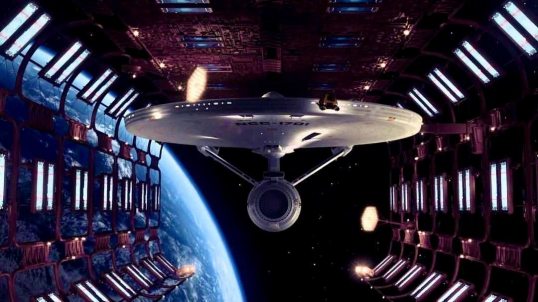
Star Trek: The Motion Picture (1979, directed by Robert Wise)
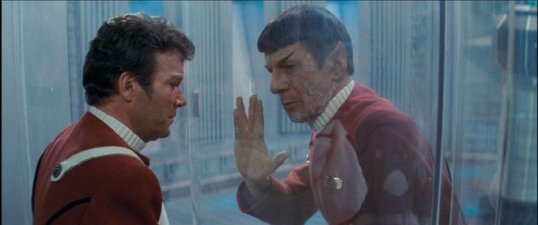
Star Trek II: The Wrath of Khan (1982, directed by Nicholas Meyer)
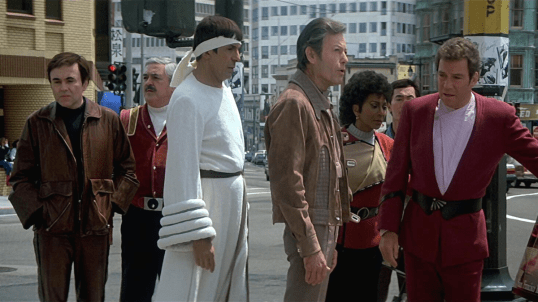
Star Trek IV: The Voyage Home (1986, directed by Nicholas Meyer)
8 Shots From 8 Films is just what it says it is, 4 shots from 4 of our favorite films. As opposed to the reviews and recaps that we usually post, 8 Shots From 8 Films lets the visuals do the talking!
My list of my favorite Best Picture winners is a fluid one. There are a few — like All About Eve, It Happened One Night, the two Godfathers — that are always on the list. I love these four films with all my heart. Then there are films like No Country For Old Men that I think about and say, “Of course that’s going on the list!” There are other films that have snuck up on me. Until I was making out this list, I didn’t realize how much I truly did like Coda.
Anyway, here’s my top 8!
8 Shots From 8 Oscar-Winning Films
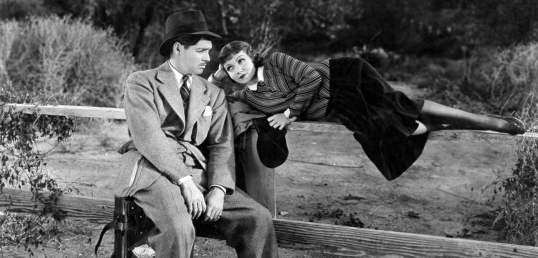
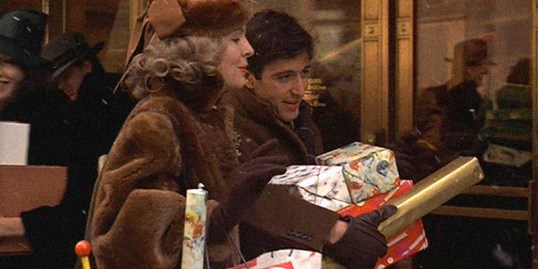
It Happened One Night (1934, dir by Frank Capra, DP: Joseph Walker)
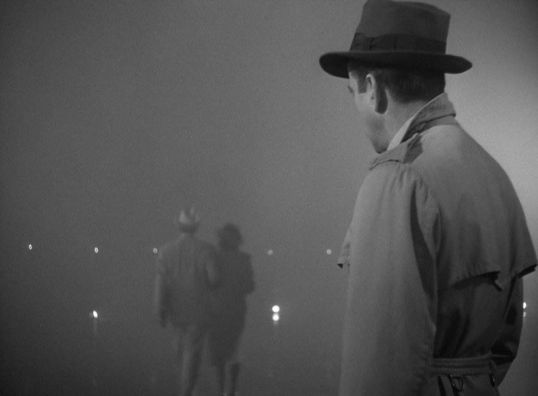
Casablanca (1942, dir by Michael Curtiz, DP: Arthur Edeson)
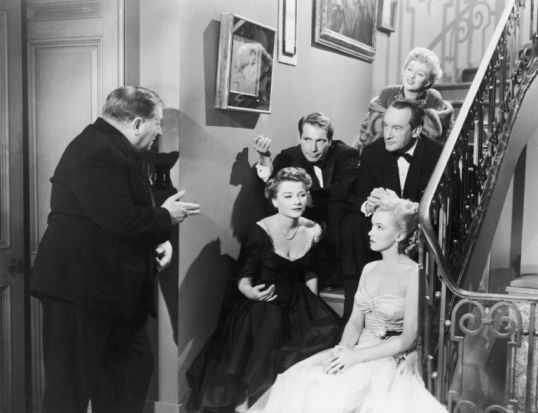
All About Eve (1950, dir by Joseph L. Mankiewicz, DP: Milton R. Krassner)
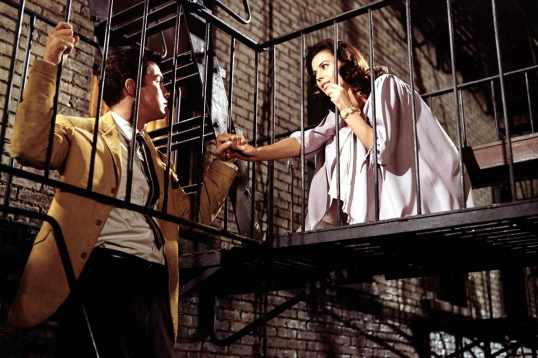
West Side Story (1961, dir by Robert Wise and Jerome Robbins, DP: Daniel L. Fapp)
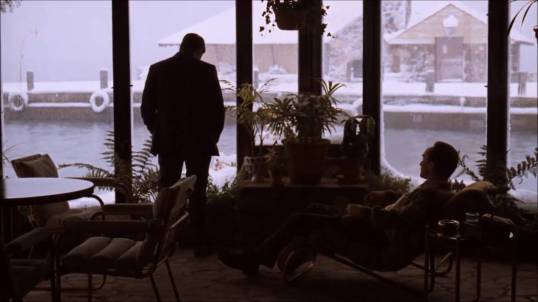
The Godfather (1972, dir by Francis Ford Coppola, DP: Gordon Willis)
The Godfather Part II (dir by Francis Ford Coppola, DP: Gordon Willis)
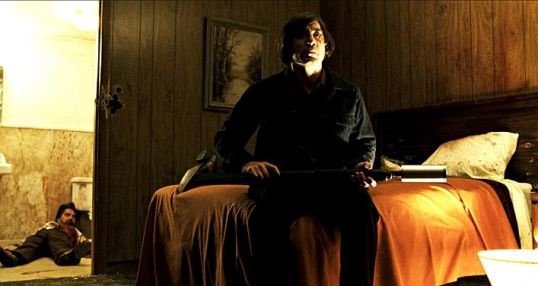
No Country For Old Men (2007, dir by Joel and Ethan Coen, DP: Roger Deakins)
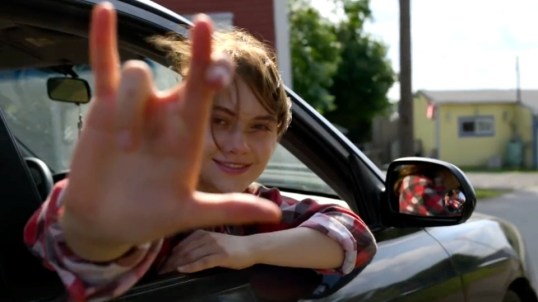
CODA (2021, dir by Sian Heder, DP: Paula Huidobro)
On this date, 109 years ago, filmmaker Robert Wise was born in Winchester, Indiana. He started his career as an editor (and was Oscar-nominated for his work on Citizen Kane) and then eventually branched out into directing. From the mid-forties to the year 2000, Wise directed every genre of film. He won two Oscars for Best Director, one for West Side Story and one for The Sound of Music. He was also the first director to helm a Stark Trek film with 1979’s Stark Trek — The Motion Picture.
Today’s scene that I love comes from Wise’s 1951 masterpiece, The Day The Earth Stood Still. In this scene, America watched as a UFO darts across the sky and eventually lands in Washington D.C. Though it’s a simple scene, it deftly captures the wonder of the moment.
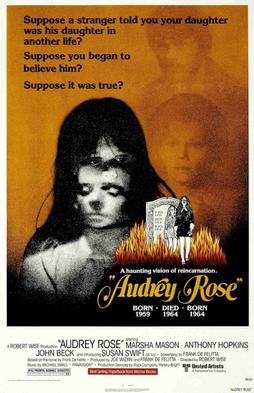
The 1977 film, Audrey Rose, tells the story of an annoying little girl named Ivy (Susan Swift), who is the daughter of annoying Janice (Marsha Mason) and annoying Bill (John Beck). Everything seems to be perfectly normal in an annoying way until, one day, they notice that they’re being followed around by an annoying man named Elliott (Anthony Hopkins). Elliott explains that Ivy is the reincarnation of his daughter, Audrey Rose, who was herself kind of annoying. Whenever Elliott says, “Audrey Rose,” Ivy going into a trance and starts screaming, which gets a bit annoying after a while. Elliott explains this is because Audrey died in a fiery car crash and was apparently reincarnated too soon after her death. Therefore, anytime Elliott shows us, Ivy relives the crash and tries to burn herself. Annoying!
To me, it seems like there’s a simple solution to all of this. Elliott could just go away or, at the very least, stop saying, “Audrey Rose” every ten seconds. Anyway, at one point, Ivy starts screaming so Elliott rushes into the apartment and makes her stop. However, Elliott is accused of attempting to abduct Ivy, arrested, and put on trial.
Elliott’s defense is that he couldn’t abduct his own daughter so therefore, if Ivy is the reincarnation of Audrey Rose, then he’s innocent. Somehow, this leads to the trial becoming about proving reincarnation. Hindu holy men are called to the stand. Elliott smirks and tells his lawyer to call Janice to the stand because he’s figured out that Janice believes him. Meanwhile, Ivy finds herself drawn towards every fire that she sees…
Audrey Rose was directed by a legitimately great director, Robert Wise. Unfortunately, Wise takes the material way too seriously. Just when you think the film is going to be an over the top possessed child flick, it suddenly turns into a turgid and serious debate about reincarnation. The movie is so busy trying to be realistic that it forgets to be fun.
There’s also a lot of yelling in Audrey Rose. In between Ivy screaming and Elliott continually calling his dead daughter’s name and Bill arguing with Janice and random characters screaming whenever Ivy gets to close to a fire, it’s easy to get a headache while watching this film.
Mason and Beck are pretty lousy in the roles of Janice and Bill. Hopkins brings an occasionally neurotic edge to the role of Elliott. You never quite trust him, even though the movie wants you to. The best performances in the film come from the performers in the minor roles, character actors like Norman Lloyd, Robert Walden, and John Hillerman. None of them are required to pretend like they’re taking their dialogue seriously and, as such, they’re a lot more fun to watch.
All in all, Audrey Rose is a fairly silly movie. For some reason (probably the presence of Hopkins), it does seem to show up on TCM fairly regularly but I wouldn’t recommend watching. If you want to see a good Robert Wise horror movie, check out The Haunting.
4 Shots From 4 Films is just what it says it is, 4 shots from 4 of our favorite films. As opposed to the reviews and recaps that we usually post, 4 Shots From 4 Films lets the visuals do the talking.
Today is Oscar Sunday! Tonight, a new film will join the exclusive list of the 90 previous best picture winners!
Sometimes, we spend so much time focusing on the winners that shouldn’t have won that we forget that some truly great films have managed to take the top prize. So, with this edition of 4 Shots From 4 Films, I’m highlighting for the four best Best Picture winners!
4 Shots From 4 Films
All About Eve (1950, dir by Joseph L. Mankiewicz)
The Godfather Saga (1972 and 1974, dir by Francis Ford Coppola)
It Happened One Night (1934, dir by Frank Capra)
West Side Story (1961, dir by Robert Wise and Jerome Robbins)
4 Shots From 4 Films is just what it says it is, 4 shots from 4 of our favorite films. As opposed to the reviews and recaps that we usually post, 4 Shots From 4 Films lets the visuals do the talking.
Today, the Shattered Lens gets a little bit spooky with….
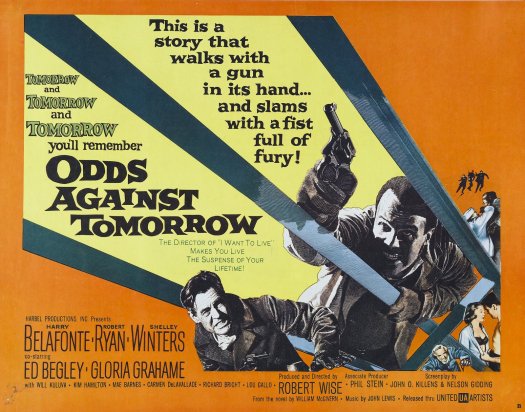
Desperate men commit desperate acts, and the three protagonists of ODDS AGAINST TOMORROW are desperate indeed in this late entry in the film noir cycle. This is a powerful film that adds social commentary to the usual crime and it’s consequences plot by tainting one of the protagonists with the brush of racism. Robert Wise, who sharpened his skills in the RKO editing room, directs the film in a neo-realistic style, leaving the studio confines for the most part behind, and the result is a starkly lit film where the shadows of noir only dominate at night.
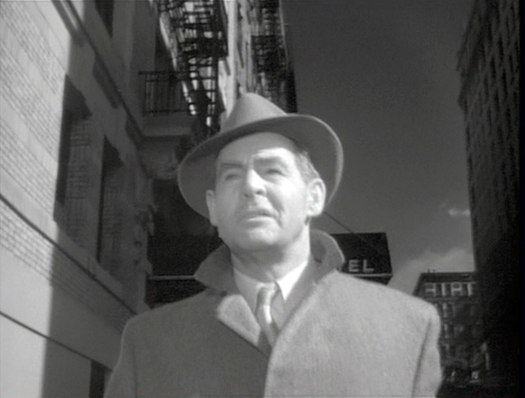
But more on Wise later… first, let’s meet our three anti-heroes. We see Earle Slater (Robert Ryan ) walking down a New York street bathed in an eerie white glow (Wise used infra-red film to achieve the effect). Slater’s a fish out of water, a transplanted Southerner drifted North, a loser and loose cannon…
80 years ago, on May 6th, 1937, the Hindenburg, a German airship, exploded in the air over New Jersey. The disaster was not only covered live by radio reporter Herbert Morrison (whose cry of “Oh the humanity!” continues to be parodied to this day) but it was also one of the first disasters to be recorded on film. Looking at the footage of the Hindenburg exploding into flame and sinking to the ground, a mere skeleton of what it once was, it’s hard to believe that only 36 people died in the disaster. The majority of those who died were crew members, most of whom lost their lives while helping passengers off of the airship. (Fortunately, the Hindenburg was close enough to the ground that many of the passengers were able to escape by simply jumping.)
Not surprisingly, there was a lot of speculation about what led to the Hindenburg (which has successfully completed 63 flights before the disaster) exploding. The most commonly accepted explanation was that it was simply an act of God, the result of either lightning or improperly stored helium. Apparently, there was no official evidence found to suggest that sabotage was involved but, even back in 1937, people loved conspiracy theories.
And really, it’s not totally implausible to think that the Hindenburg was sabotaged. The Hindenburg was making its first trans-Atlantic flight and it was viewed as being a symbol of Nazi Germany. One of the ship’s passengers, Captain Ernest Lehman, was coming to the U.S. in order to lobby Congress to give Germany helium for their airships. With Hitler regularly bragging about the superiority of German industry, the theory was that an anti-Nazi crewman or passengers planted a bomb on the Hindenburg. Since no individual or group ever stepped forward to claim responsibility, the theory continues that the saboteur must have perished in the disaster.
At the very least, that’s the theory put forward by a film that I watched earlier today, the 1975 disaster movie, The Hindenburg.
A mix of historical speculation and disaster film melodrama, The Hindenburg stars George C. Scott as Col. Franz Ritter, a veteran of the German air force who is assigned to travel on the Hindenburg and protect it from saboteurs. Ritter is a Nazi but, the film argues, he’s a reluctant and disillusioned Nazi. Just a few weeks before the launch of the airship, his teenage son was killed while vandalizing a synagogue. Ritter is a patriot who no longer recognizes his country and George C. Scott actually does a pretty good job portraying him. (You do have to wonder why a seasoned veteran of the German air force would have a gruff, slightly mid-Atlantic accent but oh well. It’s a 70s disaster film. These things happen.)
Ritter is assigned to work with Martin Vogel (Roy Thinnes), a member of the Gestapo who is working undercover as the Hindenburg’s photographer. Tt soon becomes obvious that he is as much a fanatic as Ritter is reluctant. Vogel is a sadist, convinced that every Jewish passenger is secretly a saboteur. Thinnes is chilling in the role. What makes him especially frightening is not just his prejudice but his casual assumption that everyone feels the same way that he does.
And yet, as good as Scott and Thinnes are, the rest of the cast is rather disappointing. The Hindenburg features a large ensemble of actors, all playing characters who are dealing with their own privates dramas while hoping not to burn to death during the final 15 minutes of the film. Unfortunately, even by the standards of a typical 70s disaster film, the passengers are thinly drawn. I liked Burgess Meredith and Rene Auberjonois as two con artists but that was mostly because Meredith and Auberjonois are so charming that they’re fun to watch even if they don’t have anything to do. Anne Bancroft has one or two good scenes as a German baroness and Robert Clary does well as a vaudeville performer who comes under suspicion because of his anti-Nazi leanings. Otherwise, the passengers are forgettable. Whether they die in the inferno and manage to make it to the ground, your main reaction will probably be to look at them and say, “Who was that again?”
Anyway, despite all of Ritter and Vogel’s sleuthing, it’s not much of mystery because it’s pretty easy to figure out that the saboteur is a crewman named Boerth (William Atherton). Having seen Real Genius, Die Hard and the original Ghostbusters, I found it odd to see William Atherton playing a sympathetic character. Atherton did okay in the role but his attempt at a German accent mostly served to remind me that absolutely no one else in the film was trying to sound German.
Anyway, the main problem with The Hindenburg is that it takes forever for the airship to actually explode. The film tries to create some suspense over whether Ritter will keep the bomb from exploding but we already know that he’s not going to. (Let’s be honest. If you didn’t already know about the Hindenburg disaster, you probably wouldn’t be watching the movie in the first place.) The film probably would have worked better if it had started with the Hindenburg exploding and then had an investigator working backwards, trying to figure out who the saboteur was.
However, the scenes of the explosion almost make up for everything that came before. When that bomb goes off, the entire film suddenly switches to black-and-white. That may sound like a cheap or even sensationalistic trick but it actually works quite well. It also allows the scenes of passengers and crewmen trying to escape to be seamlessly integrated with actual footage of the Hindenburg bursting into flame and crashing to the ground. The real-life footage is still shocking, especially if you’re scared of fire. Watching the real-life inferno, I was again shocked to realize that only 36 people died in the disaster.
In the end, The Hindenburg is flawed but watchable. George C. Scott was always at his most watchable when playing a character disappointed with humanity and the real-life footage of the Hindenburg disaster is morbidly fascinating.






 Through the Shattered Lens