
In 1948, one of the richest men in Georgia committed a murder.
John Wallace was a landowner, back when that title actually meant something. He was known as the boss of Meriweather County. Everyone in the county seemed to work for Wallace in one way or another. He controlled the county officials. The sheriff enforced the law only as far as John Wallace would allow him. The bootleggers had to pay Wallace for protection. When one bootlegger, a sharecropper named Wilson Turner, failed to do so, he was fired and kicked off of Wallace’s land.
Turner retaliated by stealing two of Wallace’s cows.
Wallace responded by murdering Turner.
Because Turner attempted to flee and Wallace chased after him, Wallace committed the murder not in Meriweather County but in neighboring Coweta County. What Wallace didn’t realize was that this meant the investigation didn’t fall under the jurisdiction of his hand-picked sheriff. Instead, Sheriff Lamar Potts of Coweta County headed up the investigation. John Wallace was eventually arrested by Sheriff Potts and he was eventually convicted of murdering Wilson Turner. At the time, the case drew a lot of attention both because of Wallace’s wealth but also because two of the main witnesses for the prosecution were the two black men who Wallace forced to help him dispose of Wallace’s body.
It’s an interesting story, largely because the history of America is full of men like John Wallace, people who set up their own little dictatorships. It’s often portrayed as being a Southern phenomena but John Wallace really wasn’t that much different from the crude political bosses who, for decades, dominated politics in city like New York and Chicago, the type who held onto power through a combination of intimidation and patronage. In my home state of Texas, George Berham Parr inherited the political machine that controlled Duval and Jim Wells County. Parr committed numerous crimes during his time as the “Duke of Duval” but he had important friends. He was the one who “found” the votes necessary for Lyndon Johnson to win a senate seat in 1948. (In return, Johnson got Harry Truman to pardon Parr for failing to pay his taxes.) Parr is also suspected of having been involved in at least one murder but it wasn’t until LBJ himself retired from politics that anyone truly investigated Parr’s activities. In 1974, he was again convicted of failing to pay his taxes and Parr was later found dead at his ranch. Suicide was the official police ruling.
As for the story of John Wallace, it was turned into a made-for-TV movie in 1983. Murder in Coweta County stars Andy Griffith as John Wallace and Johnny Cash as Sheriff Potts. Griffith, playing a soulless villain, is chilling as John Wallace. Wallace is all-smiles and good ol’ boy charisma whenever there’s a crowd around but, once it’s just him and his cronies, a different side comes out. Wallace thinks that he can get away with murder because he’s been able to get away with everything else. Sheriff Potts is determined to see that justice is done. Murder in Coweta County is an atmospheric Southern crime story, one that is so full of atmosphere that you can feel the humidity. While Johnny Cash was definitely a better singer than an actor, Andy Griffith’s villainous turn makes the film worth watching.

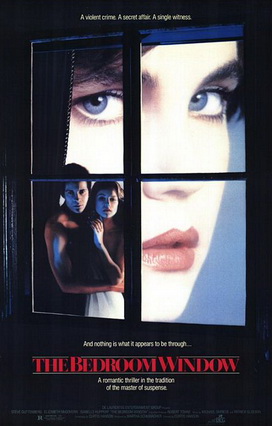 The Bedroom Window opens with quite a quandary. Sylvia (Isabelle Huppert) has just witnessed a woman named Denise (Elizabeth McGovern) being attacked by a serial rapist/killer named Carl (Brad Greenquist). The problem is that the window that Sylvia’s standing at is located in the bedroom of Terry Lambert (Steve Guttenberg). Sylvia is having an extramarital affair with Terry and she knows that there’s no way to tell the police what she saw without also exposing the affair. Terry decides that he’ll go to the police and tell them what Sylvia witnessed but he will claim to have seen it himself.
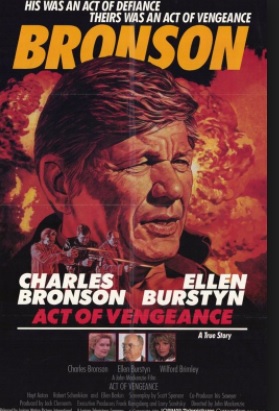 Act of Vengeance is an uncompromising look at union corruption and how it hurts the workers while benefitting the bosses.
 Through the Shattered Lens