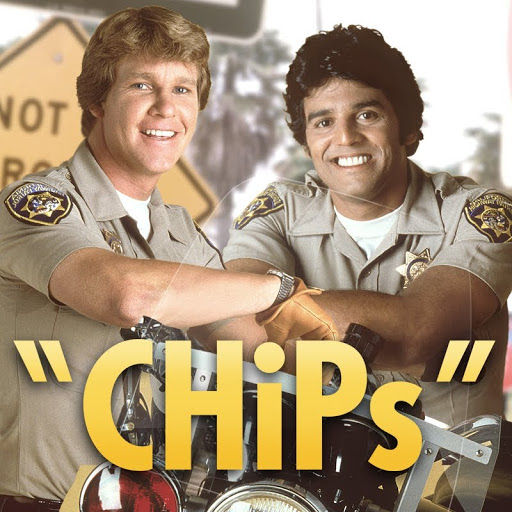
Welcome to Late Night Retro Television Reviews, a feature where we review some of our favorite and least favorite shows of the past! On Mondays, I will be reviewing CHiPs, which ran on NBC from 1977 to 1983. The entire show is currently streaming on Prime!
It’s arson and basketball on CHiPs!
Episode 4.12 “Home Fires Burning”
(Dir by Charles Bail, originally aired on February 1st, 1981)
Two arsonists (David Hayward and Michael Cavanugh) are setting RVs on fire as a part of an insurance scam. One man (Jack Kruschen) who hires the arsonists is horrified when their carelessness leads to a security guard getting seriously injured. If the guard dies, the man is looking at serious jail time! (Luckily, the guard doesn’t die and apparently, everyone just forgets about sending his boss to jail.)
Luckily, Baker is there to help track the arsonists down. Ponch, on the other hand, is busy putting together a Highway Patrol basketball team. It’s hard not to notice how much time the Highway Patrol spends on stuff like basketball, dirt bike competitions, and drag car racing. Somehow, Ponch has gone from being the department’s screw-up to now being the guy who is automatically given all of the responsibility. It’s the Ponch Show and everyone knows it.
This episode was directed by veteran stuntman Charles Bail and it does have some spectacular stunts. (A car jumping through an exploding RV was my favorite.) And let’s be honest. I could sit here and spend hours talking about CHiPs became the Ponch Show during the fourth season and how the rest of the cast was underutilized. And I would be totally correct. But the stunts and the car crashes are the main appeal of this show and this episode featured several examples of each.
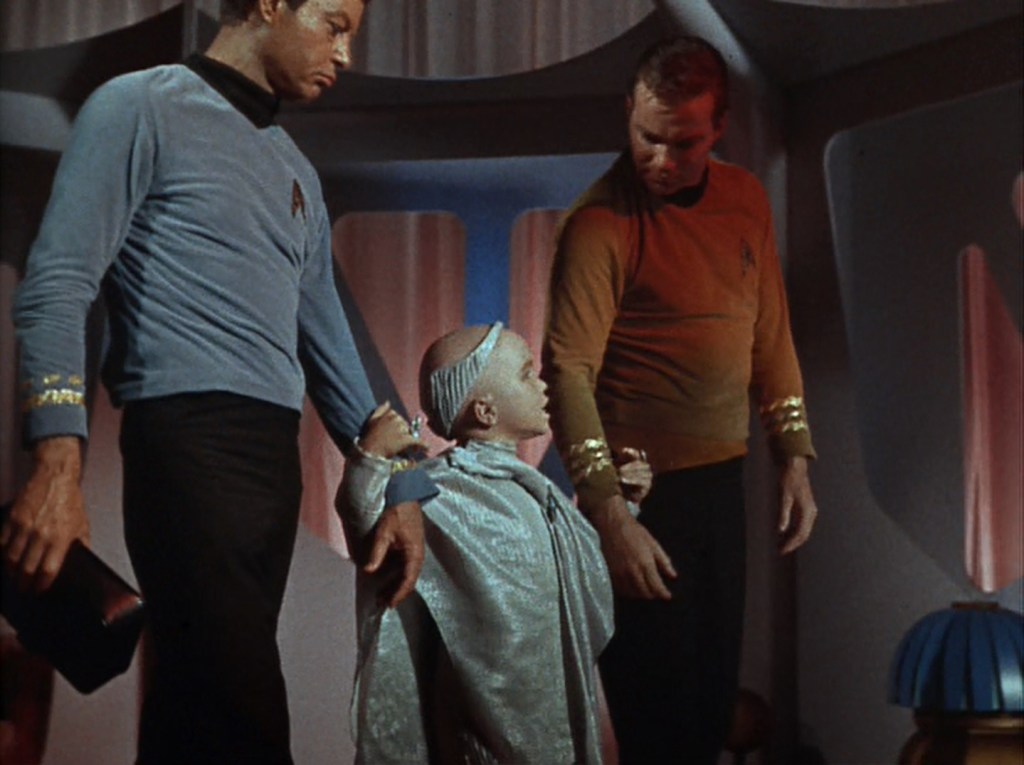
“The Corbomite Maneuver,” one of the earliest of the original STAR TREK episodes ever filmed, first aired on November 10, 1966. In this episode, the Enterprise, under Captain Kirk’s command, encounters a mysterious cube blocking its path in uncharted space. When attempts to communicate fail, the cube emits radiation, forcing the crew to destroy it. This action provokes a powerful alien vessel, the Fesarius, commanded by Balok, who accuses the Enterprise of trespassing and announces its imminent destruction. Kirk, facing a seemingly unbeatable foe, bluffs by claiming the Enterprise is equipped with a fictional “corbomite” device that would destroy any attacker. As a tense standoff takes place, Kirk’s gamble pays off when Balok blinks first and initiates contact, leading to a somewhat surprising conclusion.
I’ve watched some of the STAR TREK movies and TV shows over the years, but I’m nowhere near what someone would call a “Trekkie.” I do remember watching and liking STAR TREK II: THE WRATH OF KHAN (1982) when I was a kid, and as an adult, I enjoyed the 2009 reboot from J.J. Abrams. I recently read Ron Howard and Clint Howard’s memoir, THE BOYS, and Clint talked about how often fans would bring up his appearance in this specific episode of STAR TREK. Since today, September 8th, is “Star Trek Day,” and the original series is streaming on Paramount Plus, I decided I would see what all the fuss is about. I did think it was pretty cool when I saw that the episode was directed by Joseph Sargent, who would go on to direct a couple of my favorite movies of the early 70’s, WHITE LIGHTNING (1973) and THE TAKING OF PELHAM ONE TWO THREE (1974).
I had a lot of fun watching “The Corbomite Maneuver” for the first time today. From what I’ve read online, many consider this a really strong episode of the original series, and I can see why. The episode builds some pretty strong tension as Balok’s vessel seems so much stronger than the Enterprise, and it seems believable that the crew is really in danger. The special effects seem to be well done for the time period, with the “glowing cube” especially interesting. While there is not a lot of action in the episode, there are solid dramatics and a sense of humor rears its head from time to time. The main cast of William Shatner as Captain Kirk, Leonard Nimoy as Spock, and Deforest Kelly as Bones McCoy provide many of their classic character traits that would lead to them becoming pop culture icons. Shatner’s Kirk exudes extreme confidence amid a seemingly hopeless situation, while Nimoy’s Spock offers his unquestionable logic, and Kelley’s McCoy provides his gruff but loyal empathy. When a seven year old Clint Howard finally shows up as the real Balok in the last five minutes of the episode, I was ready. I got quite the kick out of watching Clint, whose voice is dubbed by a guy named Walker Edmiston, serve the guys a delicious drink named Tranya, a drink he truly relishes. As the episode was ending, my mouth was watering for the tasty looking alien beverage!
Happy Star Trek Day friends. I truly enjoyed joining in on the celebration for the first time in my life today!
Welcome to Retro Television Reviews, a feature where we review some of our favorite and least favorite shows of the past! On Mondays, I will be reviewing Miami Vice, which ran on NBC from 1984 to 1989. The entire show can be purchased on Prime!
This week, Gina’s in trouble again!
Episode 4.19 “Blood & Roses”
(Dir by George Mendeluk, originally aired on April 1st, 1988)
Frank Mosca (Stanley Tucci) is back!
In case you’ve forgotten, Mosca was the villain from the fourth season premiere, Contempt of Court. That episode ended with Mosca getting away with everything. This episode finds him killing a rival drug lord (Michael Wincott) and trying to kill Crockett. Because Mosca knows who Crockett and Tubbs are, it falls on Gina to go undercover. This becomes yet another episode where Gina starts to fall for the bad guy and ends up having sex with the target of a Vice investigation. As often happens with these type of episodes, Gina ends up shooting Mosca to keep him from shooting Sonny. Mosca’s body plummets down an air shaft and it’s hard not to notice that Stanley Tucci has suddenly become a mannequin with painted hair.
Stanley Tucci gave a magnetic performance as the charismatic but evil Frank Mosca. Watching Tucci, it’s easy to see why the show brought him but Mosca was such a memorable character that it’s shame that he was given a standard Miami Vice death scene. Mosca deserved to go out with a bit more style. Saundra Santiago gave a good performance as Gina but it’s hard not to notice that every time she’s at the center of an episode, it’s pretty much the same basic plot. As a character, Gina deserved better than to constantly be used as a sex toy by every bad guy she went undercover to investigate.
Watching this episode, I found myself wondering if the show’s writers remembered that Crockett was supposed to be married. Between his jealousy over Gina getting close to Mosco and a scene where he and Gina shared a brief but intense kiss, it was hard not to notice that Crockett didn’t seem to be thinking about his wife. Perhaps this episode was originally meant to air earlier in the season, before Crockett’s somewhat improbable wedding. Who knows? It’s been a while since anyone asked Crockett about Caitlin. Maybe they got a quickie divorce offscreen.
This episode was typical of season 4. It was well-made but everything just felt a bit too familiar. to be effective.
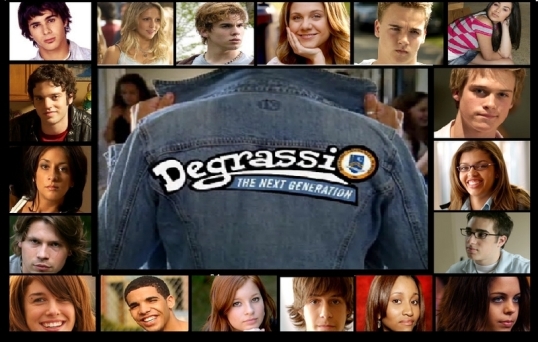
Welcome to Late Night Retro Television Reviews, a feature where we review some of our favorite and least favorite shows of the past! On Sunday, I will be reviewing the Canadian series, Degrassi: The Next Generation, which aired from 2001 to 2015! The series can be streamed on YouTube and Tubi.
This week, Emma meets Sean.
Episode 1.4 “Eye of the Beholder”
(Dir by Eleanore Lindo, originally aired on April 8th, 2002)
It’s time for the first Degrassi school dance of the year! Ashley is superexcited because she was able to talk Mr. Raditch into letting her throw a night dance. Unfortunately, that means that Manny’s parents will not allow her to go to the dance. With Toby and JT planning on staying at Toby’s to look at porn while Toby’s parents are out of the house, that means Emma will have to go to the dance all by herself! Emma is mad. Then again, Emma is always mad.
Meanwhile, a new student has shown up at school. He briefly went to the school last term but his family moved up north. Now, he’s back in Toronto and living with his brother and returning to Degrassi. He’s also having to repeat Grade 7, something that Jimmy mocks him for. He’s …. SEAN CAMERON!
Yes, this is the episode the introduces Daniel Clark as Sean Cameron. Sean would go on to become one the most important characters during the classic seasons of Degrassi: The Next Generation. A sensitive juvenile delinquent who alternated between being a brooding rebel and a petty criminal, Sean is best-remembered for eventually dating Emma Nelson but it’s often forgotten that he also dated the supercool Ellie Nash. I’ve always preferred Ellie/Sean to Emma/Sean but I’m getting ahead of myself. That’s all in the future.
What’s important for this episode is that Sean also goes to the dance by himself. And when Jimmy continues to give him a hard time, Sean grabs him and prepares to beat up on him like Kendrick Lamar preparing to drop another diss track. With Mr. Raditch approaching, Emma cools off the situation by asking Sean to dance.
In the episode’s other main storyline, Terri is shocked when Spinner asks her to the dance. Paige is shocked as well. With the overweight Terri feeling insecure (it’s her first date — ever!), Paige helps matters by telling Terri she should have some sherry to calm her nerves. Soon, Terri is drunk and, by the time she and Paige make it to the dance, she’s a giggly mess. Long story short: Terri gets sick after one dance with Spinner and, the next morning, it’s clear that Spinner is now dating Paige. This is another case where it’s hard to watch this storyline unfold without considering the future. Paige and Spinner are not only destined to become a classic Degrassi couple but, ultimately, Paige is going to become a better friend to Terri than Ashley ever was. Eventually, Terri will get her first boyfriend. Of course, he’s going to turn out to be a complete psycho who, after putting Terri in a coma, will end up shooting up the school in a totally separate episode and putting Jimmy in a wheelchair. Agck! Seriously, these students have no idea what’s waiting for them in the future.
Finally, Toby and JT get caught looking at porn. Toby’s parents then force them to look at more porn and discuss how it objectifies both men and women. When Toby tells Manny and Emma about it, Manny and Emma both chime in with “Losers.” Yep, that about sums it up.
The main problem with this episode is that I never really bought Spinner asking Terri to the dance. It’s not because Terri’s fat. (Spinner wasn’t exactly skinny himself in these early episodes.) Instead, it’s just that Spinner and Terri really didn’t have much chemistry. Even in this very early episode, Spinner and Paige just seemed to belong together. Still, the most important thing is that Sean Cameron has arrived and Degrassi will never be the same.
My wife and I spent some time with our kids this weekend. Both of them mentioned to us at different times this new documentary they had watched on Netflix called UNKNOWN NUMBER: THE HIGH SCHOOL CATFISH, from director Skye Borgman. It had blown them both away, so we decided to watch it when we got home, and it’s a doozy.
Here’s a brief summary of the events covered… in the small community of Beal City, Michigan, teenage sweethearts Lauryn Licari and Owen McKenny, both around 13 years old, begin receiving disturbing text messages from an unknown number in October 2020. The initial messages say things like Owen is breaking up with Lauryn because he doesn’t like her anymore and wants to be with the person sending the messages instead. The messages pause for a few months, but when they resume in 2021 they get way worse, spamming the kids with up to 50 messages a day over the next year or so. These texts say awful stuff: insulting Lauren’s body, describing sexual acts the sender wants to do to Owen, telling Lauryn to just kill herself, etc. The person sending the texts uses details that only someone close could know. Owen and Lauren finally tell their parents, who go to the school’s administration and from there, local sheriff Mike Main. As you can imagine, the parents’ suspicions begin falling on some of the local teenage girls, especially an excellent young athlete and popular girl named Khloe Wilson. When the sheriff’s investigation comes up empty, the case is escalated to the FBI’s cybercrimes task force and agent Bradley Peter, who is able then to apply advanced forensics techniques. The case finally begins coming to a head when agent Peter is able to link key IP addresses to one specific phone number, a number that matches a person in the community. I won’t go any further so you can discover the rest for yourself if you haven’t watched it yet.
This is one of those documentaries that may stay with me for awhile. As a father whose kids are now past the ages of the kids who were viciously harassed, I’m mostly left wondering how I would have handled a situation like this if it was happening to one of them. Here are a few thoughts I had while watching the film. First, I’ve watched my beautiful daughter struggle with issues of body image, especially in high school, and she still struggles with it today. I know firsthand the physical and emotional dangers involved with these types of issues. If someone was anonymously attacking her, I would probably explode, and I honestly don’t know what I would have done. It makes me sick just thinking about it. Second, the inadequacy of local law enforcement in many rural communities for solving crimes and punishing criminals is glaringly on display. I’ve always lived in small, rural communities, and I’ve been a victim of crimes on two separate occasions, a hit and run in 1998, and identity theft in 2005. Both times, I solved the crimes myself and passed the info on to the police. As far as I know, even though I filed the proper reports as well as the proof for the crimes, nothing ever happened to the perpetrators. In this specific case, to his credit, the sheriff did finally escalate the situation up to the FBI, but for many months, the kids had to deal with the harassment, the community had suspicions against innocent people running wild, and the parents were at their wits end. If the sheriff had not escalated the situation, this case would probably never have been solved. Finally, I’m amazed by the shit that is going on underneath the surface of the “normal people” all around us each day. I probably shouldn’t be, because my life has had its own share of drama that all but the closest people to me knew nothing about. David Lynch even plays with this theme in his weird and excellent BLUE VELVET. My wife likes to remind me that we should always be kind to people because we never know what they’re dealing with. There’s a lot of truth to that. I periodically remind her not to honk at people who cut her off in traffic because you never know who’s behind that other wheel either. At the end of the day, the craziest stories usually emerge from communities and people that we can all relate to. A place like Beal City is a lot like the places I grew up.
Overall, if you enjoy real life documentaries that explore the crazy acts that normal people are capable of, you will probably like UNKNOWN NUMBER: THE HIGH SCHOOL CATFISH. It will definitely reinforce your ongoing inability to fully trust your family, friends and neighbors!
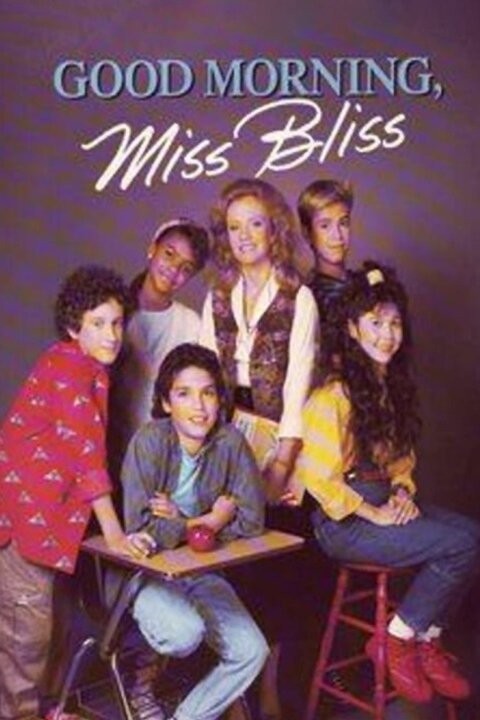
Welcome to Late Night Retro Television Reviews, a feature where we review some of our favorite and least favorite shows of the past! On Saturdays, I will be reviewing Good Morning, Miss Bliss, which ran on the Disney Channel from 1988 to 1989 before then moving to NBC and being renamed Saved By The Bell. The entire show is currently streaming on Prime!
This week, Zach takes up terrorism.
Episode 1.8 “The Boy Who Cried Rat”
(Dir by Gary Shimokawa, originally aired on February 11th, 1989)
Miss Bliss has been nominated for Indiana Teacher Of The Year because of course she has. Mr. Belding is super-excited. He is convinced that Miss Bliss’s Battle of the Eighth Grade Stars will put her over the top! What is the Battle of the Eighth Grade Stars? Miss Bliss wears silly costumes and asks historical questions. Miss Bliss can’t wait to be named Teacher of the Year.
Uh-oh, Zach Morris needs an extra week to study for his midterm so he can get the B that his father is requiring before he’ll take Zach on a ski vacation. Zach convinces Screech to set his two pet rats free in the school. As a result, the school is shut down for a week and the Best Teacher judge will not get to see Miss Bliss’s Battle of the Eighth Grade Stars. But when Zach hears that Miss Bliss is going to miss her chance to be Teacher of the Year, he feels guilty and confesses. Somehow, this leads to the school not being closed for a week. I mean, Screech was able to find one of his rats but the other one is still loose in the school. Zach confessing doesn’t change the fact that there’s still a rat infestation. Mr. Belding offers Zach and Screech a deal. If they act really enthusiastic during Miss Bliss’s Battle of the Eighth Grade Stars and they help Miss Bliss win the title of Teacher of the Year, Belding won’t give them detention. Zach agrees.
(Personally, I think it can be argued that Zach should have been expelled and that his behavior is evidence of a sociopathic personality but whatever. Miss Bliss is what matters here!)
Unfortunately, Zach and the class get too enthusiastic about the Battle of the Eighth Grade Stars. They’re so busy praising Miss Bliss that Miss Bliss fears that they’ve become distracted from studying for their midterms. Miss Bliss tells the judge that her number one concern has to be getting the kids ready for their test, not competing for a title.
So, of course, Miss Bliss wins the title.
More than any previous episode of Good Morning Miss Bliss, this episode felt like a typical installment of Saved By The Bell. Zach came up with a wacky scheme. Screech somehow got roped into it. And, in the end, no one faced any real consequences for their behavior. That said, this is also a typical Good Morning Miss Bliss episode in that Miss Bliss is again portrayed as being too good to be true and the entire school was portrayed as revolving around keeping her happy.
Personally, I don’t think Miss Bliss’s Battle of the Eighth Grade Stars was all that impressive. Teacher of the Year? STOP THE COUNT!
Only one more month of this crap left! I’ve been writing about Big Brother, on an increasingly irregular basis, over at the Big Brother Blog. I’ll be happy when Survivor and The Amazing Race return.
The Dark Side of Comedy (Hulu)
I watched a few episodes of this show because I was bored. The Dustin Diamond episode was sad. You know what wasn’t sad? The Family Matters episode, in which the only two members of the cast willing to be interviewed complained endlessly about being overshadowed by Jaleel White. I mean, admittedly, if my big chance at stardom was short-circuited by Urkel, I’d probably be bitter too but still, there comes a time when you have stop whining.
It’s Always Sunny In Philadelphia (Hulu)
I finished up the latest season. I have to admit that the trip to the dog track almost made me throw up, it got so (intentionally) disgusting. But no matter! Frank as the Golden Bachelor? Brilliant! Now, I want to see Dennis and Mac on The Amazing Race. Or maybe Charlie and Frank on The Amazing Race. Or Dee and …. well, she’d probably end up running alone. It would still make me laugh, though.
The Paper (Peacock)
From the creators of The Office …. oh, I really wanted to like this. And the show had its isolated funny moments but what it didn’t have were any characters who were, in any way, as interesting as the folks on The Office. The Paper mixed the format of The Office with the earnestness of Parks and Rec and I was pretty bored by the sixth episode. One thing that this show didn’t seem to get is that people could see themselves in The Office because everyone hates their job. Everyone could relate to Jim’s frustrations and Pam’s boredom. The Paper, on the other hand, is about people who love their job to an almost obnoxious extent and, as such, the characters just weren’t relatable. If anything they were kind of annoying. The show attempts to do a Jim-and-Pam thing with the characters played by Domhnall Gleeson and Chelsea Frei but it doesn’t work because 1) he’s her boss and 2) the two actors don’t really have much chemistry. Their scenes together felt forced. (I was happy to see Oscar Nunez again, if just because he brought so much needed cynicism to the show.) I’m a big admirer of producer Greg Daniels and the King of the Hill reboot was brilliant but, in this case, I think he overestimated that amount of nostalgia that people have for newspapers.
The Serial Killer’s Apprentice (HBOMax)
This documentary took a look at the disturbing life and crimes of Texas serial killer Dean Corll and it featured an interview with Elmer Henley, the young man who went from being Corll’s accomplice to eventually being Corll’s killer. Henley is still serving a life sentence. This documentary featured an interview with him and it made the mistake of featuring an actor playing the older Henley as he spoke on the phone in the jail. It’s an interesting story and I’m surprised that it hasn’t been turned into a cheap B-movie like so many other real-life serial killer tales have. That said, this documentary was a bit on the shallow side. Elmer Henley may have ultimately killed Corll but, before that, he helped Corll kill a lot of people. Henley is right where belongs, in prison for the rest of his life.
Welcome to Retro Television Reviews, a feature where we review some of our favorite and least favorite shows of the past! On Saturdays, Lisa will be reviewing The American Short Story, which ran semi-regularly on PBS in 1974 to 1981. The entire show can be purchased on Prime and found on YouTube and Tubi.
This week, we have an anemic adaptation of a Nathaniel Hawthorne short story.
Episode #14: Rappaccini’s Daughter
(Dir by Deszo Magyar, originally aired in 1980)
This week’s episode is an adaptation of one of Nathaniel Hawthorne’s more intriguing short stories. Giovanni (Kristoffer Tabori) is a young scholar who, in 18th Century Italy, falls in love with the beautiful and mysterious Beatrice (Kathleen Beller). Beatrice has been raised in a garden that is full of poisonous plants that have been developed by her father, Dr. Rappaccini (Leonardo Cimino). As a result, Beatrice is immune to the plants but she herself is poisonous. Giovanni falls in love with her and is willing to become poisonous himself but it ultimately turns out that everything comes with a price.
Hawthorne’s short story was not only an early example of gothic literature but it was also a well-deserved parody of the nature-loving, self-righteous transcendentalists. (The story came out at the same time as Henry David Thoreau’s Walden.) Unfortunately, this particular adaptation really doesn’t do the story justice. It moves extremely slowly and the performances are not particularly memorable. Kristoffer Tabori and Kathleen Beller have very little chemistry and, in the end, the adaptation misses the satirical nature of the story altogether. There’s a reason why Vincent Price made for an excellent Dr. Rappaccini in 1963’s Twice Told Tales.
Welcome to Late Night Retro Television Reviews, a feature where we review some of our favorite and least favorite shows of the past! On Fridays, I will be reviewing Freddy’s Nightmares, a horror anthology show which ran in syndication from 1988 to 1990. The entire series can be found on Plex!
This week, Freddy is out for revenge.
Episode 7.1 “Sister’s Keeper”
(Dir by Ken Wiederhorn, originally aired on November 20th, 1988)
Freddy’s Nightmares started with Freddy Krueger killing Deputy Blocker, the man who had led the vigilante mob that set him on fire. This episode finds Freddy seeking revenge on Blocker’s twin teenager daughters, neurotic Merit (Hili Park) and the supercool, super awesome Lisa (Gry Park). Merit is convinced hat Freddy is haunting her nightmares and, as a result, she’s a bit of an outcast at school. Lisa, on the other hand, believes that Freddy is dead and buried. Lisa is stable and popular at school and even has a jock boyfriend.
Needless to say, Merit is a bit jealous of Lisa. For me, this was the most realistic part of this episode. People are always jealous of girls named Lisa, especially when they’ve got it all together as this Lisa does. (Trust me, I know!) It’s a heavy burden to bear but it happens. Lisa, being a saint, tries to help Merit out but Merit is pretty unappreciative.
Lisa even dresses up like Merit and pretends to be Merit so that she can experience what it’s like to be her sister. Lisa discovers that her boyfriend is just as interesting in sleeping with Merit as in sleeping with her. Booo! What a creep! Even worse, Lisa discovers that Freddy is real and that he’s after both her and Merit.
Like the pilot, this episode tells one story and most of the action centers around Freddy. Freddy actually takes part in this week’s story and, even by his standards, he’s cruel. “I’ll make it gentle,” he tells the terrified Merit, a reminder that Freddy was always a far more perverse killer than the seemingly asexual Jason Voorhees or Michael Myers. This episode was a reminder of just how scary Freddy could be. Robert Englund didn’t hold up.
Merit and Lisa learn how to dream “in sync” so that they can both face Freddy at the same time. It’s a cool idea that does absolutely no good. As Lisa puts it, “It doesn’t work, you can’t make him go away!” Lisa ends up dead (boo!) while Merit is blamed for her murder. And so the episode ends.
Wow, that’s not a happy ending. Not only did Freddy triumph but supercool Lisa was killed, largely due to her sister’s incompetence. Then again, there really aren’t that many happy endings to be found when it comes to Freddy Krueger. The ending was depressing but effective and, even more importantly, it was really the only way the story could have ended.
This episode was pretty good. It’s certainly the best that I’ve seen so far. Merit and Lisa were real-played by the Park sisters and Robert Englund once again showed just how frightening he could be as Freddy Krueger. Within the confines imposed by television syndication, this was a genuinely frightening episode.
Welcome to Retro Television Reviews, a feature where we review some of our favorite and least favorite shows of the past! On Fridays, I will be reviewing St. Elsewhere, a medical show which ran on NBC from 1982 to 1988. The show can be found on Hulu and, for purchase, on Prime!
This week, things get depressing.
Episode 2.14 “Drama Center”
(Dir by David Anspaugh, originally aired on February 15th, 1984)
This week’s episode opens with a disturbing scene in which a woman, trying to get her car to start on a snowy night, is attacked and raped in the parking lot of St. Eligius. The rapist is wearing a green jacket and a ski mask.
At first, I assumed that the rapist was a random lowlife, someone who would likely never be seen again. But then Dr. Cavanero’s wealthy boyfriend tried to force himself on her and I was left wondering if maybe he would be revealed as the man in the ski mask. However, towards the end of the episode, there was scene featuring Dr. Peter White. Having been banned from working in the ER and from prescribing medicine, White is now working in the morgue and, needless to say, he spends this entire episode bitching about it. As the episode ends, we see that Peter is holding a capsule in his hand, suggesting that he is once again abusing drugs. However, I also noticed that Peter was wearing the same green jacket as the man in the ski mask!
This was a good episode, well-written and well-acted. It was also pretty depressing. Dr. Westphall brings his severely autistic, noncommunicative son Tommy (Chad Allen) to St. Eligius so that Dr. Ridley can examine him. Dr. Ridley warns Westphall that Tommy is aggressive and that Westphall might not be able to continue to care for him at home, despite the fact that Westphall’s daughter (Dana Short) is planning on forgoing her dream college to stick around and help. Westphall ends his day reading Tommy a book (“Your mom bought you this book.”) and breaking down into tears and it made me cry a little too.
Meanwhile, a TV crew followed around Dr. Craig for a documentary. Needless to say, they got in the way and they got on Craig’s nerves. The director was played by Michael Richards, who, of course, is best-known for playing Kramer on Seinfeld and then having a racist meltdown when he got heckled at a comedy club. In an episode that was, emotionally, pretty dark, it was almost a relief to get some scenes of Dr. Craig losing his temper with the documentary crew. As someone who knows William Daniels best as the kindly Mr. Feeney from countless Boy Meets World reruns, it’s been a real pleasure to Daniels as the prickly and arrogant Dr. Craig. Dr. Craig wouldn’t have had much use for the Matthews clan and all of their drama.
This was an intense and sad episode. It was St. Elsewhere at its most emotional.



 Through the Shattered Lens