Obviously, I couldn’t let Gene Kelly’s birthday without sharing a little Singin’ In The Rain.
Obviously, I couldn’t let Gene Kelly’s birthday without sharing a little Singin’ In The Rain.
Welcome to Retro Television Reviews, a feature where we review some of our favorite and least favorite shows of the past! On Fridays, I will be reviewing St. Elsewhere, a medical show which ran on NBC from 1982 to 1988. The show can be found on Hulu and, for purchase, on Prime!
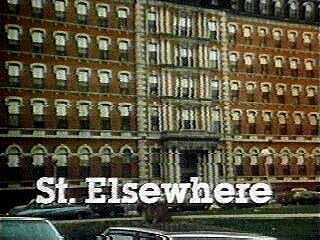
This week, Peter White faces the judgment of the medical board.
Episode 2.12 “Hearing”
(Dir by Charles Braverman, originally aired on February 1st, 1984)
At his disciplinary hearing for giving a controlled substance to an undercover officer, Dr. White lies to protect Shirley Daniels. Even though Shirley tossed him the keys to the drugs on that night, White says that he took the keys without Shirley noticing. It’s a rare case of Dr. White actually trying to help someone else. It gets Shirley off the hook but it leads to Dr. White receiving a two-year suspension from working in an ER or prescribing medicine. Westphall and Auschlander both agree that Dr. White’s career is probably over but Westphall, who has been White’s biggest supporter since he returned from rehab, says that they’ll find a place for him in the hospital.
The new X-ray tech, Lee Tovan (Robert Daniels), cannot hear. His supervisor (Raymond Singer) claims that Lee is too difficult to work with. Westphall pledges to support Lee, no matter how much his supervisor complains.
Victor meets Roberta’s wealthy parents and, to everyone’s shock (especially his), he manages to charm them. Victor also asks Dr. Craig if he can use his house for the wedding. Dr. Craig misunderstands and thinks that Victor is asking him to be his best man. Victor explains that he’s already asked his friend, “Dogger,” to be best man. Craig rolls his eyes but agrees to let Victor use the house.
Finally, Dr. Auschlander asks Fiscus to help him get some marijuana to help with his chemo side effects. Fiscus tries and fails to call his old college weed guy and then asks Luther if he knows anyone who deals drugs. Luther rightly points out that Fiscus is stereotyping him but he still manages to get Auschlander a baggie of joints. Auschlander gets high. For a first time smoker, he gets REALLY high! He also ultimately decides that marijuana is not for him.
This episode was a bit uneven. I liked the irony of White saving Shirley, just to potentially lose his own career as a result. (Saying that he stole the keys probably didn’t help his case.) Victor’s wedding storyline has been kind of dragged out more than it needs to be but it’s still entertaining to watch Dr. Craig get frustrated with him. Norman Lloyd was adorable playing stoned. But the storyline about the deaf x-ray tech was sabotaged by some very bad acting and some very heavy-handed writing. That was a shame.
Next week, Victor Ehrlich gets married!
For today’s music video of the day, we have the latest from Wolf Alice.
Enjoy!
Welcome to Late Night Retro Television Reviews, a feature where we review some of our favorite and least favorite shows of the past! On Thursdays, we will be reviewing Highway to Heaven, which aired on NBC from 1984 to 1989. The entire show is currently streaming on Amazon Prime, Tubi and other services!

Episode 4.10 “A Dream of Wild Horses”
(Dir. by Michael Landon, originally aired on December 2nd, 1987)
In this episode, traveling angel Jonathan Smith (Michael Landon), and his companion Mark Gordon (Victor French) arrive at a struggling ranch where the widow Billie Harwood (Gail Strickland) is trying to keep her late husband’s legacy alive while caring for her young son Richie (Jason Horst) and aging father Jet Sanders (Richard Farnsworth). It seems that Jet, the patriarch of the family, sort of lost his will to live when he lost his wife and then his son in law, a man he truly thought of as a son. As Jonathan and Mark arrive on the scene, the family members are all at a breaking point. Jet wishes he would just die and quit being a burden. Billie is completely overwhelmed with the ranch, and you get the feeling she’s never truly mourned the loss of her husband. And Richie, who needs someone to love him and pay attention to him, instead is mostly ignored by his family. Jonathan, Mark, a pack of wild horses, and some divine compassion turn out to be just what the family needs to find the inspiration to start putting the pieces of their lives back together.
Directed by Michael Landon, “A Dream of Wild Horses” is everything I would expect from this series. Considering this episode was in season 4, it’s possible the formula was starting to wear thin with viewers back in 1987, but I thoroughly enjoyed it. For a man like me who loves a good western, I especially enjoyed the ranch setting, the wild horses, and the presence of veteran, Oscar nominated actor Richard Farnsworth as Grandpa Jet Sanders. He’s believable as the man who’s lost his purpose in life, but he’s even better when he turns things around at the end. One of the things I like about this series is the way Jonathan always knows exactly what buttons to push to get the characters going in the right direction. From bluntly telling Grandpa that he needs to quit feeling sorry for himself, to offering the widow a shoulder to cry on, and helping both of them see how much Richie needs their love and guidance, Jonathan’s genuine compassion is something this world really does need. Skeptical viewers may even roll their eyes, but I choose to accept the episode’s inspiring messages at face value. There have been times in my own life when I just needed someone else to care, and this series leans into those types of interactions. This family was broken, and Jonathan and Mark helped turn things around for them by simply caring. Things may be more complex and nuanced in the real world, but the simple act of caring will always be powerful.

Continuing my theme of low budget, direct-to-video, B-movie action films from the early 90’s, I found a movie called COLLEGE KICKBOXERS playing on Amazon Prime.
Also known as TRAINED TO FIGHT in some circles, COLLEGE KICKBOXERS follows James Caulfield (Ken McLeod, credited as Ken Rendall Johnson for some unknown reason), a young man with martial arts skills, as he navigates his freshman year of college. Things just aren’t going so well for James his first week of school. First, his roommate Mark (Marc D. Williams), an upperclassman, isn’t very nice to him when they first meet, so it appears that their dorm room may not be a place of peace and relaxation this semester. Second, the pretty girl he sets his sights on, Kimberly (Kendra Tucker), seems much more interested in saving the whales, the ozone layer and the planet than she does in dating him. Rude! And third, to cap it all off, one day while James and Mark are working out their differences through martial arts sparring, a racist gang called the White Tigers show up and hurl some very offensive slurs at Mark, who’s black. While James doesn’t seem to like Mark much at this point, he dislikes the racist bigots even more so he defends Mark’s honor, putting himself on a collision course of pain with The White Tigers and their A-hole leader Craig Tanner (played by Matthew Ray Cohen, whose only other role in his career was “Dancer #1” in the classic erotic thriller BODY CHEMISTRY). In all fairness, this clash with racists did result in James and Mark becoming best friends so that was a pleasant and unexpected surprise.
When it looks like things can’t get much worse for James, Craig Tanner and his racists show up at the Chinese restaurant where he works and proceed to take advantage of their superior numbers and kick his ass real good. That’s when something strange happens, the annoying cook Wing (Tak-Wing Tang), who had just messed up James’ chances to score with a chick a few minutes earlier, steps in and shows himself to be a kung fu master, easily dispatching the White Tigers with moves defined by speed, grace, balance, agility, and acupunctural science. Amazed by what he has just seen, James wants some of that and begs Sifu Wing to train him so that he too can become a martial arts master. Receiving the kinds of real-life lessons from Wing that could never be learned in a college classroom, James soon finds himself putting it all on the line in a martial arts tournament that gives him the chance to win $25,000 for his now-injured bestie’s martial arts dojo for at-risk youth. As a bonus, he’ll also get the opportunity to humiliate and destroy the White Tigers once and for all!
An impartial critical assessment of COLLEGE KICKBOXERS would probably not be very kind. For starters Ken McLeod, AKA Ken Rendall Johnson, is not a very good actor. Neither are Marc D. Williams, Kendra Tucker or Matthew Ray Cohen. To be completely honest, they’re pretty bad. I think it would be fair to say that both Ken’s and Marc’s line deliveries are awkward and amateurish, that Kendra is annoying, and that Matthew is over-the-top, and not in a good way. The script is nothing to write home about either, completely relying on the cliches of the genre and the cheesiest of dialogue. In another somewhat bad sign, clocking in at just 88 minutes, it doesn’t necessarily feel like a short movie as the middle portion definitely leaves you wanting more action to show up.
With that said though, I still had a great time with COLLEGE KICKBOXERS. I think the main reason is that I just love a good underdog story where bullies, and in this case racists, get their comeuppance, and at-risk youth get their own dojos. And I really enjoyed Tak-Wing Tang’s performance as Sifu Wing! He underplays the role in a subtle and humorous way that I found really appealing. Wing also completed the action choreography, which is the true highlight of the film. McLeod isn’t great in the acting department, but he does a fine job when called upon to kick butt. To further illustrate my appreciation of Wing’s action direction, the year after this film was made, he would serve as an action choreographer for Jackie Chan’s amazing POLICE STORY III: SUPERCOP, and a couple of years after that he’d work on Chan’s DRUNKEN MASTER II. The man is talented! And finally, COLLEGE KICKBOXERS has that intangible nostalgic charm that takes me back to the early 90’s when I’d scan over my local video store’s entire inventory, an inventory that was chock full of these types of movies. I enjoyed watching them back then even if they were silly and cheesy, and watching movies like that now takes me back to that more simple and undemanding time. There’s real value in that to me!
Welcome to Retro Television Reviews, a feature where we review some of our favorite and least favorite shows of the past! On Thursdays, I will be reviewing Coming to America, which aired on CBS in 1989. Almost the entire show is currently streaming on YouTube!
Fresh off the success of the film Coming To America, Eddie Murphy served as executive producer of a series based on the film. How did that work out? Read on to find out!
Episode 1.1 “Pilot”
(Dir by Tony Singletary, originally aired on July 4th, 1989)
The pilot for Coming to America begins with the story already in progress. We get an overhead shot of New York while Prince Tariq (Tommy Davidson, speaking with an unconvincing accent) explains that he and his minder, Omar (Paul Bates), have been sent to America so that Tariq can attend college. (Tariq is established as being the younger brother of the character that Eddie Murphy played in the original film.) Tariq and Omar have rented a room from diner owner Carl Mackey (John Hancock). Carl is a curmudgeon. Tariq expects everyone to treat him like royalty. Carl grumbles about not getting to eat unhealthy food before a doctor’s visit. Tariq does an extended Stevie Wonder impersonation.
Uh-oh, Tariq’s out of money! In just nine months, he spends all of his money on movies and clothes. What can Tariq do? Maybe he and Omar can work in Carl’s diner! Uh-oh, Tariq’s started a dance party in the diner and he orders Omar to join the fun! Carl shows up at an inopportune time and Omar is fired. Can Tariq take responsibility for his actions?
“I’m a Beverly Hills Cop, you’re a Beverly Hills cop too and in 48 hours, we’re Trading Places.” Tariq says at one point and seriously, you have to wonder why they didn’t toss a reference to The Golden Child in there. Tariq is royalty so it certainly would have made more sense for him to refer to himself as being a Golden Child as opposed to being a Beverly Hills Cop. That’s the type of show this is, though. The humor is heavy-handed but it also misses way too many opportunities.
My friend from Australia, Mark, sent me the link for this pilot (it’s on YouTube) and he dared me to see how much I could watch before turning it off in disgust. I managed to get through the entire thing but it wasn’t easy. To be honest, I nearly stopped this thing as soon as Tariq’s opening narration began. When that much exposition is stuffed into the opening narration, you know that you’re about watch a disjointed mess of a program. Indeed, one could argue that calling this program disjointed is a case of me being charitable. In the end, the main problem is that, after all the build-up of Tariq being a prince, the plot itself could just as easily been the plot of a thousand other mediocre sitcoms. How many times did Lisa and Kelly have to take jobs at the Max in Saved By The Bell? Both Malibu CA and One World suggested that working at a restaurant was the best — perhaps the only! — way to learn responsibility. The Coming to America diner looks almost exactly like the City Guys diner. How is this not a Peter Engel production?
Coming to America aired once. There was never a second episode. Hence, today, we’ve started and ended a series! Next week, something new will premiere in this time slot. Hopefully, it will be better than both Malibu CA and Coming to America.
Today’s song of the day is the main theme from Peter Weir’s 1986 film, The Mosquito Coast, composed by Maurice Jarre.
I know the feeling.
Enjoy!
Welcome to Late Night Retro Television Reviews, a feature where we review some of our favorite and least favorite shows of the past! On Wednesdays, I will be reviewing 1st and Ten, which aired in syndication from 1984 to 1991. The entire series is streaming on Tubi.
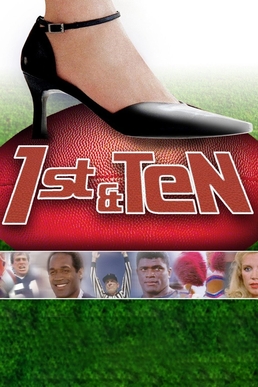
This week, Diana makes history!
Episode 1.6 “You Are Who You Eat”
(Dir by Bruce Seth Green, originally aired on December 30th, 1984)
Coach Denardo has a heart attack and is laid up in the hospital. It looks like Diane is going to have to coach the team!
Wait? What?
Listen, I’ll be the first to admit that I don’t know a lot about football but I do know that there is such a thing as an assistant coach. And there’s also coordinators. There’s a lot of coordinators and a lot of assistants and I imagine that a part of their job entails coaching whenever the head coach is in the hospital. So, I’m not really sure how this episode went from “Coach Denardo can’t coach this weekend” to “The owner is going to have to do it!”
Still, Diana ends up on the sidelines as the “first female head coach in history!” I remember that a few Super Bowls ago, they made a big deal about one of the teams having a female assistant coach and I was like, “Well, they better win or they’re never going to hire another woman.” I think the team lost. I don’t really follow football.
Anyway, Coach Denardo is on the phone with Diana for most of the game but, towards the end of the game, the connection goes down. Denardo runs out of his hospital in his hospital gown and takes a taxi to the stadium. Luckily, even without his help, Diana knew exactly which play to call and the Bulls win another game.
Yay, I guess. This episode was pretty dumb. If I was coaching a football team, I would just be like, “Have that guy run to the touchdown area and then throw him the ball.” I think we would win easily.
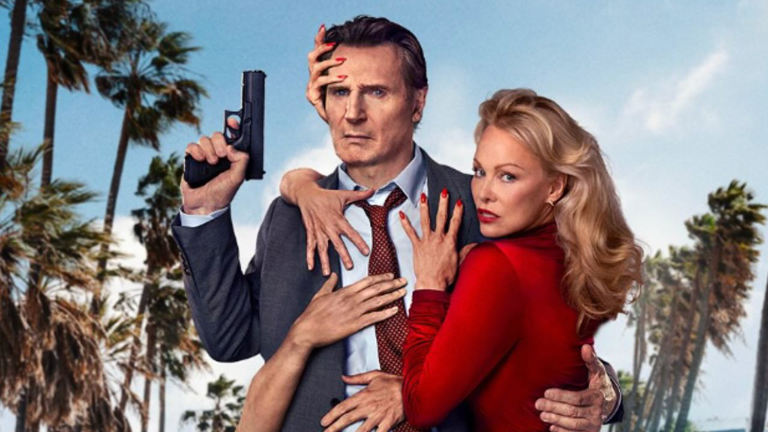
When I first saw that THE NAKED GUN was being rebooted with Liam Neeson as Frank Drebin, Jr., I must admit that I was quite skeptical. You see, the original THE NAKED GUN (1988) with Leslie Nielsen came out when I was 15 years old, and I remember watching it at the movie theater on a field trip with our high school’s Future Business Leaders of America (FBLA) club. I loved it so much! I eagerly watched THE NAKED GUN 2 1/2 (1991) and NAKED GUN 33 1/3 (1994) at the theaters as well. To be completely honest, this series is one of my favorites of my “growing into an adult” years, and I didn’t want to see it screwed up. When the trailer was released a couple of months ago my reaction was cautious optimism as I must admit it looked quite funny, and I decided that I would go watch it in the theater when it came out. Well, tonight my wife and I headed to the Cinemark in Little Rock to see what director Akiva Schaffer and his crew had come up with…
In THE NAKED GUN (2025), dedicated Detective Lt. Frank Drebin Jr. (Liam Neeson) follows in his father’s footsteps by leading Police Squad and causing an endless array of problems for Police Chief Davis (CCH Pounder). When a bank heist is staged by Sig Gustafson (Kevin Durand) in order to obtain a mysterious P.L.O.T. Device, Drebin teams up with his partner, Captain Ed Hocken Jr. (Paul Walter Hauser), and the beautiful crime novelist Beth Davenport (Pamela Anderson) to investigate. Their subsequent probe leads them to tech mogul Richard Cane (Danny Huston) and his sinister plot to use the device to revert humanity to a base barbaric state as the balls drop on New Year’s Eve. With the help of his deceased father’s spirit that’s being housed in the body of a large owl, Drebin goes all out to foil Cane’s plans while simultaneously falling in love with Beth!
I’m going to go ahead and alleviate any suspense and state that I love the new NAKED GUN movie. I laughed out loud throughout the entire film, including the end credits, and I wasn’t the only one as there were people in our showing that were laughing much louder than me. It was a fun “crowd experience,” and I’m so glad we caught it in the theater. Not every joke is funny, but in the tradition of the original series, they come so fast and furious that there’s a good chance the next joke will be hilarious. Liam Neeson does a great job as Frank Drebin, Jr., infusing the character with just the right amount of seriousness to allow the absurdity all around him to be played for laughs. I told a friend a few months ago that I’d be really impressed if Neeson was able to pull this role off, and I’m glad to report that he passes with flying colors. He doesn’t make you forget the comedic genius of Leslie Nielsen, but he’s darn good. And Pamela Anderson is perfect in the crime novelist / love interest role. I haven’t seen her in anything in a long time, but she’s truly hilarious in the film. After watching her performance, I honestly don’t think any actress could have done any better. The rest of the game cast, including Paul Walter Hauser, Danny Huston and Kevin Durand each have good moments that add to the fun. I also enjoyed some of the specific throwbacks to the original series, including brief appearances by Priscilla Presley, Weird Al Yankovic, and especially the stuffed beaver, which got a big laugh out of me, just like it did when I was 15!
Overall, I had a great time at the movie theater with THE NAKED GUN (2025). Director Akiva Schaffer delivers a hilarious, 85 minute film that’s a worthy follow-up to the original Zucker-Abrahams-Zucker / Leslie Nielsen classics. What else could you ask for?!!
 Through the Shattered Lens