October Hacks: Evil Laugh (dir by Dominick Brascia, Jr.)


“You know what they say, Sam!  Everyone wants a piece of a medical student.”

“That’s sick, Punk Rock Dan.”

So say two radio hosts towards the end of the 1986 film, Evil Laugh.

Evil Laugh is a slasher film that was directed by Dominick Brascia, the actor who appeared as Joey, the most annoying character ever, in Friday the 13th Part V.  Joey was the fat kid who got on everyone’s nerves by offering them a chocolate bar.  Eventually, he made the mistake of approach axe-crazy Vic while Vic was holding an actual axe.  “You know I’ve never chopped wood before but it looks like fun,” Joey said.  “LEAVE ME ALONE!” Vic shouted.  “Okay, Vic …. but I think you’re way out of line.”  Vic responded by burying his axe in Joey’s back and I imagine audiences cheered.  Seriously, Joey was that annoying.

Evil Laugh actually contains some references to Friday the 13th.  One of the potential victims, a medical student named Barney (Jerold Pearson) is a horror movie buff who points out that the reason that Jason keeps coming back to Camp Crystal Lake is because everyone keeps having sex.  Unfortunately, none of his friends listen to him.

Barney is one of a group of med students who are spending the weekend at an abandoned orphanage.  Years ago, an employee named Martin was falsely accused by the orphans of abusing them.  Martin’s father committed suicide from the shame and Martin went on a killing rampage before setting the place on fire.  (And yet, the building still stands without so much as a burn mark.)  A doctor has decided to reopen the orphanage and, in the tradition of Steve Christy and the counselors he got killed at Crystal Lake, he has recruited  a bunch of med students to help him get the place ready to go.  The doctor has already been killed by the time the med students arrives but they get to work anyway.

The cool thing about this movie is that there’s a cleaning montage.  Everyone really gets into cleaning.  I could relate to that.  Another cool thing about this movie is that there are a few moments when it reveals itself to have a sense of humor.  Barney is a horror fan and is constantly pointing out that everything that is happening is like something that would happen in a slasher film.  Barney’s friends are dismissive of him and, as a result, things don’t go well for them.  The deaths are all memorable.  As well, the film’s ending worked surprisingly well.  Finally, the last cool thing about this movie is that, towards the end, one character got to wear the really pretty black kimono.  As soon as the movie ended, I decided to order myself a new black kimono.

That said, I don’t want to overpraise Evil Laugh.  It had its moments and I think it can be argued that it had more “good moments” than the average low-budget, independently-made 80s slasher film.  At the same time, some of the acting truly is unfortunate and it does seem to take a while for the film to really achieve any sort of narrative momentum.  For every scene that works, there’s another one that’s just downright boring.  Evil Laugh is not an overlooked classic but, again, it has its moments.
 

The TSL Horror Grindhouse: Dreamaniac (dir by David DeCoteau)


In 1986’s Dreamaniac, Adam (Thomas Bern) is a total dork who lives with his much more popular sister, Pat (Ashlyn Gere).  Adam aspires to be a heavy metal superstar and he is very much interested in the occult.  He’s been having dreams about being visited by a sultry and mysterious woman named Lily (Sylvia Summers).  When he performs a Satanic ritual to summon her for real, Lily offers him anything that he wants.  Instead of asking her to turn him into the world’s greatest guitarist or something smart like that, Adam asks to be irresistible to women.

Seriously, Adam, if you were the world’s greatest guitarist, you would be getting laid all the time whether you were irresistible or not.  The ugliest guy in the world is still be sexy if he can play guitar.  Take a look at the Rolling Stones and its long history of ugly guitar players who all looked good as long as they were playing.  Take a look at …. oh, I don’t know.  I’m tired and I’m just trying to pad out this review because there’s not much to be said about this movie.  Let’s move on.

Anyway, Adam gets his wish but he also has to kill the women so that Lily can take their soul and …. eh, that’s stupid.  Like Adam, why would you agree to such a counter-productive agreement?  Adam was so desperate to get a girlfriend that he apparently didn’t consider that none of them would really live long enough for him to have a real relationship with them.  What an idiot.

After Adam sells his soul or whatever it is that he’s supposed to be doing with Lily, Pat throws a party at the house and a bunch of shallow sorority girls and fraternity boys come over and everyone dies one-by-one, usually right after having sex.  No one really notices that everyone at the party is dying but then again, no one in this movie really seems to like anyone else so maybe they just don’t care.

Dreamaniac kind of ticked me off, largely because the title should have been Dream Maniac instead of Dreamaniac.  I guess I would have let them even get away with something like Dreammaniac.  But Dreamaniac, with only one m, just doesn’t make sense and looking at the word makes my multi-colored eyes tear up.  This may sound like a petty complaint but there’s honestly not much to be said about Dreamaniac.  It’s one of those low-budget, shot on video horror films where the lighting is often so dark and the soundtrack so muddy that you’re never really sure what’s happening on-screen.  I dare anyone to watch this film and seriously try to tell one character a part from another.  I had no idea who half the characters were and quite frankly, I didn’t care.  This was one of David DeCoteau’s earlier films and it has none of the subversiveness that distinguished DeCoteau’s better efforts.  (Considering the harsh tone of this review, I feel like I should point out that DeCoteau has directed some truly entertaining movies.  Dreamaniac is certainly not the film that should be used to judge his overall career.)

Of course, today, DeCoteau is best known for directing the “Wrong” films for Lifetime.  And really, I think the only thing that could have saved Dreamaniac would have been Vivica A. Fox showing up and saying, “Adam, you picked The Wrong Succubus.”

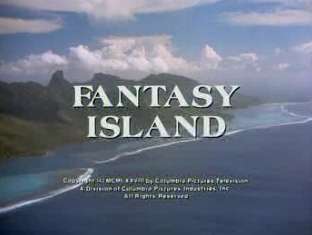
Retro Television Review: Fantasy Island 5.12 “The Magic Camera/Mata Hari/Valerie”


Welcome to Retro Television Reviews, a feature where we review some of our favorite and least favorite shows of the past!  On Tuesdays, I will be reviewing the original Fantasy Island, which ran on ABC from 1977 to 1984.  Unfortunately, the show has been removed from most streaming sites.  Fortunately, I’ve got nearly every episode on my DVR.

This week’s episode presents your erstwhile reviewer with a bit of an ethical quandary.

Episode 5.12 “The Magic Camera/Mata Hari/Valerie”

(Dir by Don Chaffey and Don Weis, originally aired on January 16th, 1982)

I don’t feel completely comfortable about reviewing this episode of Fantasy Island and I’ll tell you why.

Occasionally, Fantasy Island would broadcast an extra-long episode.  These episodes would typically feature three fantasies as opposed to the usual two.  Unfortunately, when these long episodes were syndicated, one of the fantasies would be edited out so the episode would fit into an hour-long slot.  Usually, the editing was not particularly smooth, either.  The end result would usually be an episode that seemed oddly paced and the performances of Ricardo Montalban and Herve Villechaize would often seem uneven as well.  As such, it’s neither easy nor particularly fair to review those edited episodes.  When it comes to reviewing, I always want to see the complete episode.

And yet, now that the original Fantasy Island is no longer streaming anywhere (seriously, what the Hell, Tubi?), I’m stuck using the episodes that I have on my DVR.  And that means reviewing the edited, syndicated versions of these episodes.

As you can probably guess, this is one of those edited episodes.  The Valerie fantasy was removed for syndication.  That’s a shame because Valerie featured the final televised performance of actor Christopher George, a charismatic B-movie veteran who is pretty popular around the Shattered Lens offices.  It also featured Michelle Phillips, though apparently she did not return as the mermaid who she played earlier on the show.  I’d love to review Valerie but I can’t.  And that sucks,

As for the other two fantasies, one is basically a remake of the Lillian Russell fantasy, except this time Martha Harris (Phyllis Davis) goes into the past and finds herself transformed into her great-grandmother, Mata Hari.  She gets to dance.  She gets to spy.  She gets thrown in prison and sentenced to death but, fortunately, her life is spared when the firing squad’s rifles are filled with blanks and she’s given a drug by one of the men who is in love with that makes her appear to be dead.  This was a enjoyable fantasy, mostly because of the costumes and the melodrama.

The other fantasy features Bob Denver, coming to the Island for the second week in a row.  This time, he’s a photographer who wants to take the type of pictures that the world’s greatest photographers couldn’t.  Because of the awkward way the fantasy was stated, the photographer ends up with a camera that takes pictures of the future.  At first, the photographer is really happy and uses his camera to commit a little insider trading.  But then he takes a picture of a newspaper and sees a headline announcing his death in a fiery auto accident.  Uh-oh!

Again, neither of the two fantasies is bad (though the second one does require a certain tolerance for Bob Denver that some people may not have) but it was hard for me to enjoy them knowing that I was missing out on a third fantasy.  For that reason, I assigning this episode a grade of incomplete.  If I ever get a chance to watch the complete episode, uncut, I’ll revisit this review but until then, I really can’t give an overall grade to this episode.

Finally, for those keeping track, both Julie and Tattoo join Roarke when it’s time to greet the guests.  That’s only second time that’s happened this season.

October True Crime: The Ripper (dir by Christopher Lewis)


In the 1985’s The Ripper, a straight-to-video, regional production, Richard Hartwell (Tom Schreier) is a college professor who teaches a class on Jack the Ripper.  He discusses Jack the Ripper films, though he does at one point accidentally say that Murder By Decree starred Christopher Lee as Sherlock Holmes.  (Lee did play Mycroft Holmes in The Private Life of Sherlock Holmes).  He talks about some of the conspiracy theories that surround the Ripper.  He encourages his students to try to move beyond the version of Jack the Ripper that’s been sold to them by Hollywood.  Some of his fellow professors think that it’s a strange class and I kind of agree.  I mean, can you really do an entire semester on just Jack the Ripper?

One day, while shopping at an antique store with his girlfriend, Carol (Mona Van Pernis), Richard comes across an antique ring.  Even though the ring is way too big and kind of gauche, Carol loves it.  Richard decides to secretly buy it for her.  Unfortunately — and this is quite a coincidence considering Richard’s profession — the ring once belonged to Jack the Ripper.  And, by putting the ring on his finger, Richard is allowing Jack the Ripper to come back to life in 80s Oklahoma!

Soon, local women are being murdered in ways that duplicate the grisly crimes of Whitechapel.  The police suspect that it might be one of Richard’s students.  When Richard sleeps, he’s haunted by dreams about the crimes, with the Ripper always appearing in the shadows.  When the Ripper is finally revealed, it turns out that he’s …. TOM SAVINI!?

Well, kind of.  Tom Savini does appear as Jack the Ripper towards the end of the film.  Reportedly, he flew from Philadelphia to Oklahoma and shot his big scene in one day.  For the rest of the film, though, the Ripper was played by a stand-in who was always either seen from behind or seen standing in the darkness with his face usually obscured.  The few glimpses we do get of the stand-in’s face, it’s obvious that he looks very little like Tom Savini.  (He does have a mustache and a beard but they both look like they were pasted on.)  When Savini does actually play the Ripper, he seems slightly embarrassed by the whole thing.  Tom Savini has always been a pretty good actor but, in The Ripper, he’s not given much to do other than glower at the camera with an evil look on his face.  There’s little of the humor that Savini has brought to other roles and that’s a shame because Tom Savini can be a very charming actor when he’s allowed to poke fun at his image.

That said, I have to admit that I have a weakness for low-budget, regional films.  In this case, it helps that I’ve spent enough time in Oklahoma, as both a visitor and an occasional resident, that I felt like I could immediately recognize almost every location in the film.  There’s a DIY-charm to the film, one that is evident in both the stiff but likable performances and the gore effects, which are occasionally effective and occasionally rather cheesy.  (A decapitation scene manages to be both.)  Savini, I should mention, did not work on the special effects.  This is a silly, nonsensical horror film that runs about 20 minutes too long but it’s just such a product of its time and place (i.e., Oklahoma in the mid-80s) that it’s rather fascinating as a time capsule.  I mean, this may be the only Jack the Ripper film to feature an aerobics montage.  It doesn’t get more 80s than that!

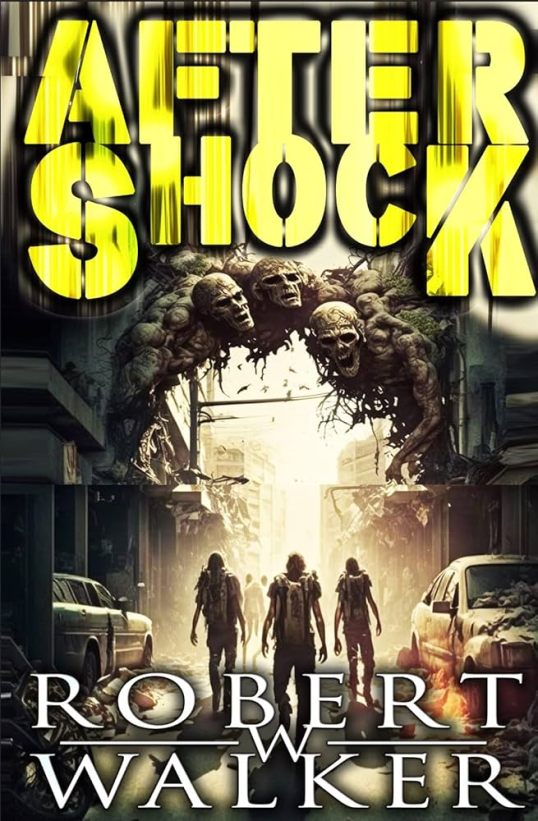
Horror Novel Review: Aftershock by Robert W. Walker


Dangerous work is being done at the Coppelmier Center For Disease Control.  In an underground lab that sits beneath a major American city, three scientists are working on creating the ultimate biological weapon.  That’s definitely not a good thing, especially when you consider that the city in question is Los Angeles and Los Angeles has a history of getting hit by earthquakes.  You would think that Dr. Leo G. Coppelmier would have understood that building his underground bio weapon lab in a place known to randomly and violently shake was a bad idea.  But Dr. Coppelmier is a wealthy genius and he wants to do things his way.

Of course, an earthquake does hit.  And, of course, a really dangerous plague is set free.  Soon, a horrifying creature with claws is killing people all over Los Angeles, removing their heads and their spinal columns and leaving the bodies in the sewers.  (Yuck!)  Could this be related to the earthquake and the mutated virus that was set free as a result?  Of course it does …. but good luck getting the powers-to-be to admit it!  The government would always rather cover up a problem than admit they played a role in creating it.

Reporter Bill Quinn is determined to discover and reveal the truth and he’s got two scientists and his best friend helping him out.  But will he be able to track down and stop the killer before the plague is spread even further?

Published in 1987, Aftershock is a quick and pulpy read, one that feels like a gory throwback to the B-movies of the 50s and 60s, the ones in which some scientist would make the mistake of trying to play God and end up getting transformed into a fly or a member of the Alligator People.  The subtext of those movies always seemed to be that it was dangerous to look for too many answers and that scientists should stop trying to change things just for the sake of changing them.  The subtext of Aftershock is not quite as reactionary, instead it just suggests that it’s dangerous to build a bioweapon lab on the San Andreas fault and I agree with that.  Aftershock is a violent and bloody tale that holds your attention and offers some genuinely frightening imagery.  Reading it today, it’s hard not think about the fact that COVID undoubtedly escaped from a lab as well.  After everything that we, as a society, have been through over the past four years, books about mad scientists and poorly-planned lab schemes hit a little bit differently nowadays.

Horror Film Review: Godzilla vs. King Ghidorah (dir by Kazuki Omori)


“Godzilla has been erased from time …. but now, King Ghidorah is here!”

Whoops!  I guess you all shouldn’t have traveled back in time and kept that dinosaur from mutating into Godzilla then!

1991’s Godzilla vs King Ghidorah was the 18th film in the Godzilla franchise and, because the Back To The Future franchise was very popular in Japan at the time that the film was made, it has a plot that revolves around time travel.  A group called The Futurians appear in 1990s Japan.  They explain that, by the year 2204, Godzilla will have destroyed all life in Japan.  However, they have a plan.  They’ve built a time machine and they will be going back to 1944 so that they can remove Godzilla from his island home before the nuclear testing begins.  For some reason, the Futurians take a few people from the 90s back with them.

After witnessing a dinosaur stepping on a World War II American army platoon, the Futurians arrange for the dinosaur to be transported to the Bering Strait, where it won’t get doused with radiation.  Meanwhile, they secretly leave behind three adorable baby dragons that, once nuclear testing begins, will end up being transformed into King Ghidorah.

It turns out that Futurians are liars!  I’m shocked too.  In 22o4, Japan is actually the most powerful country in the world and it is so economically strong that America, Russian, and Europe are dependent upon it for their survival.  The Futurians were just jealous of what a great country Japan was destined to become so they decided to get rid of Godzilla and instead allow King Ghidorah to destroy the country.

Now, if the Futurians were smart, they would have actually destroyed the dinosaur.  Instead, they just sent it to the Bering Strait.  And if the Futurians were really smart, they wouldn’t have allowed people in 1991 to know what they were doing.  To be honest, all of the mistakes made by the Futurians were self-inflicted.  By taking people from the 90s back to the past and letting them see where the dinosaur was sent, they basically ensured that those people would immediately go to the Bering Strait in 1991 and give the dinosaur a dose of radiation so that it would become Godzilla and then battle Ghidorah….

WHAT!?

Yeah, I know.  It makes no sense.  This is one of the least logical Godzilla films that I’ve ever seen and that’s saying something.  Godzilla vs Biollante was loved by critics but it was considered to be a disappointment at the box office.  For the follow-up, the producers not only brought back a classic Godzilla opponent (and I did smile when the three-headed Ghidorah showed up because he really was the most awesome member of Godzilla’s supporting cast) but they also came up with a plot that was considerably more juvenile than the previous film.  The end result is a film that makes no sense from a narrative point of view but it does at least feature a few good fights between Godzilla, Ghidorah, and a robot version of Ghidorah.  And it was also a film that did well enough at the Japanese box office to guarantee that Godzilla would return.

Previous Godzilla Reviews:

  1. Godzilla, King of the Monsters (1958)
  2. Godzilla Raids Again (1958)
  3. King Kong vs Godzilla (1962)
  4. Mothra vs. Godzilla (1964)
  5. Ghidorah: The Three-Headed Monster (1964)
  6. Invasion of the Astro-Monster (1965)
  7. Godzilla vs. The Sea Monster (1966)
  8. Son of Godzilla (1967)
  9. Destroy All Monsters (1968)
  10. All Monsters Attack (1969)
  11. Godzilla vs Hedorah (1971)
  12. Godzilla vs Gigan (1972)
  13. Godzilla vs Megalon (1973)
  14. Godzilla vs Mechagodzilla (1974)
  15. The Terror of Mechagodzilla (1975)
  16. Cozilla (1977)
  17. Godzilla 1985 (1985)
  18. Godzilla vs. Biollante (1989)
  19. Godzilla vs. Mothra (1992)
  20. Godzilla vs. Destoroyah (1995)
  21. Godzilla, Mothra, and King Ghidorah: Giant Monsters All-Out Attack (2001)
  22. Godzilla (2014)
  23. Godzilla: Planet of the Monsters (2017)
  24. Godzilla, King of the Monsters (2019)
  25. Godzilla vs Kong (2021)
  26. Godzilla Minus One (2023)

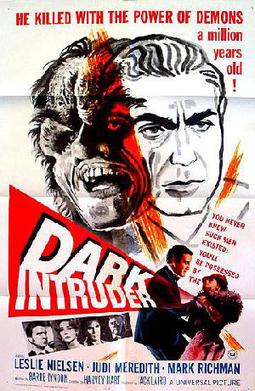
Horror Film Review: Dark Intruder (dir by Harvey Hart)


The 1965 film, Dark Intruder, takes place in San Francisco in 1890.

Murders are being committed on the foggy streets of the city that was once known as Yerba Buena.  Women are being stalked through allies and attacked by a caped figure who seems to thrive on the darkness.  At each murder, a hideous statuette is left behind.  The statuette seems to depict a winged demon emerging from the back of a man’s head.  With each murder, the demon appears to be growing closer and closer to fully escaping from the man.

The police are baffled and the press is suggesting that London’s infamous Jack the Ripper has come to California.  (Well, where else would he go?  I kid, California, I kid!  I love you, California.  Well, I love some parts of California, at least.)  As the police often due when they have a case with supernatural overtones, they turn to local socialite and bon vivant, Brett Kingsford (Leslie Nielsen).

Brett lives in a mansion, where he wakes up nearly every morning with a hangover.  He enjoys life but he’s also found time to become an expert on the occult.  He even has a giant plant in his library that perks up whenever there’s a paranormal presence nearby.  Brett is engaged to Evelyn Lang (Judi Meredith), who speaks in an annoyingly high voice.  When the police bring the statuettes to Brett, he takes them to a psychic named Chi Zeng for advice.  Chi Zeng (played by Peter Brocco, who you may have guessed was not Chinese) reveals that the statuette represent a Sumerian demon that is inhabiting the body of a human.  The demon has to commit seven murders so that it can freed from its host and then allowed to commit as many terrible acts as it wants.

Who is the demon possessing?  Brett’s friend, Robert Vandenburg (Peter Mark Richman), fears that it could be him.  Brett tries to assure Vandenburg that he has nothing to worry about but as Brett continues his investigation, he comes to realize that Vandenburg actually may have a lot to worry about….

Dark Intruder is a short film, clocking in at a little under an hour.  It was originally developed as a pilot for a television series that would have featured Leslie Nielsen solving occult crimes on a weekly basis.  Unfortunately, the series wasn’t picked up (it sounds like it would have been fun!) and Dark Intruder was given a theatrical release as part of a double feature with William Castle’s I Saw What You Did.  It’s an effective little film, full of gothic atmosphere, misty streets, and a frightening (and clawed) villain.  The murder that opens the scene seems as if it would have been quite graphic by the standards of 1966 television.  Perhaps that’s why the pilot didn’t lead to a series.

Of course, for a lot of people, the main appeal here is Leslie Nielsen, playing one of his “serious” roles.  Usually, it’s difficult to watch Nielsen’s dramatic work because it’s impossible not to be amused at his signature deadpan line delivery.  But he’s actually very good in Dark Intruder.  It helps that Brett Kingsford was written as being someone who had a sense of humor, as opposed to the stiff characters that Nielsen usually played in his dramatic roles.  Nielsen appears to be having fun in the role, which is not something you can say about most of Nielsen’s dramatic work.  Again, it’s a shame that Dark Intruder was apparently too ahead of its time for 1965.

Horror on the Lens: The Last Man on Earth (dir. by Ubaldo Ragona and Sidney Salkow)


Hi there and Happy October 8th!  For today’s treat from the ranks of horror films that have fallen into the public domain, I present to you one of the most important films in horror history.  Though it wasn’t appreciated when it was first released back in 1964, The Last Man On Earth was not only the 1st Italian horror film but George Romero has also acknowledged it as an influence on his own Night of the Living Dead.

It’s easy to be a little bit dismissive of The Last Man On Earth.  After all, the low-budget is obvious in every scene, the dubbing is off even by the standards of Italian horror, and just the name “Vincent Price” in the credits leads one to suspect that this will be another campy, B-movie.  Perhaps that’s why I’m always surprised to rediscover that, taking all things into consideration, this is actually a pretty effective film.  Price does have a few over-the-top moments but, for the most part, he gives one of his better performances here and the black-and-white images have an isolated, desolate starkness to them that go a long way towards making this film’s apocalypse a convincing one.  The mass cremation scene always leaves me feeling rather uneasy.

The film is based on Richard Matheson’s I Am Legend and no, it’s nowhere as good as the book.  However, it’s still a worthy adaptation and one that stays true to the tone of the text, including the fact that Price’s main tormenter was also once his neighbor and best friend.  This is one of those films that just hits differently in the wake of 2020’s COVID hysteria.

If you have 87 minutes to kill, please enjoy The Last Man On The Earth.

October Positivity: Whitcomb’s War (dir by Russell Doughten, Jr.)


This 1980 film takes place in the town of Hurrah, Iowa.  One of the opening scenes features Pastor David Whitcomb driving up to Hurrah and stepping out of his car to take a look at the city limits sign.  Hurrah has a population of a little over 3,000.  Apparently, almost all of them belong to the same church and everyone works for the same factory.

Unfortunately, the owner of the factor is not a member of the church.  In fact, onery old Phil Esteen (say the same quickly) is determined to shut the church down by scheduling everyone to work on Sundays.  As a result, hardly anyone is able to attend any of Pastor Whitcomb’s sermons.  The pastor finds himself preaching to a church that is full of children whose parents are working at Esteen’s factory.  When people complain about Esteen’s tactics, Esteen threatens to move his company to the nearby town of Riverton, which apparently has a river.  Phil Esteeen loves to talk about that river.

Whitcomb is upset to discover that people in his church hate Esteen and view him as being unredeemable.  Whitcomb says that’s not a good attitude.  A huge reason why people have that attitude is because there’s a group of demons living in the church basement.  (They may be demons but essentially, they just look like a bunch of community theater actors wearing red shirts.)  They’ve been tasked with making the pastor’s life difficult.  The demons have a bulky personal computer that they use to type up their evil plans and which they occasionally turn to for advice.  The computer itself is treated as being a sort of exotic oddity.  One gets the feeling that 1980 audiences were expected to look at the computer and think, “What type of twisted creature would actually travel with one of those things!?”

When the women of the church lead a protest against Esteen’s business practices, it just makes Esteen all the more determined to keep people working on Sundays.  Pastor Whitcomb realizes he’s going to have to try something different to reach Esteen and convince him to change his ways.  Can he do it?

(Personally, I think the whole problem could have been solved by the employees forming a union or all quitting at the same time or maybe the church holding more than one service during the day.  My point is that there seemed to be many potential solutions that no one in this film ever considered….)

This was one of director Russell Doughten’s do-it-yourself regional productions.  He directed and self-distributed several of these films in the 70s and 80s.  Seen today, this films are grainy time capsules of the distant past.  Doughten’s didn’t exactly make films that featured nuanced discussions of theological issues.  He was frequently a heavy-handed filmmaker, working in a genre that was specifically designed to be magnify those self-righteous impulses.  At the same time, there’s something undeniably charming about just how cheap most of his Iowa-shot films looked and just how enthusiastically they were acted by their largely amateur casts.  (And yes, the term to  remember is “enthusiastically” as opposed to “convincingly.”)  Much as with Ed Wood, Doughten’s appeal is less about his films and more about his refusal to let a lack of funds or a lack of talent stand in the way of bringing his vision to the screen.  A film like Whitcomb’s War has a ton of technical flaws but seen today, it’s definitely a time capsule of the era in which it was made.  Watching it means taking a trip to the past, to an era when computers were still exotic and even the Devil had to use a landline phone to communicate with people.

Incidentally, I did a google search and apparently, the town of Hurrah, Iowa no longer exists.  Maybe everyone moved closer to the river after all.

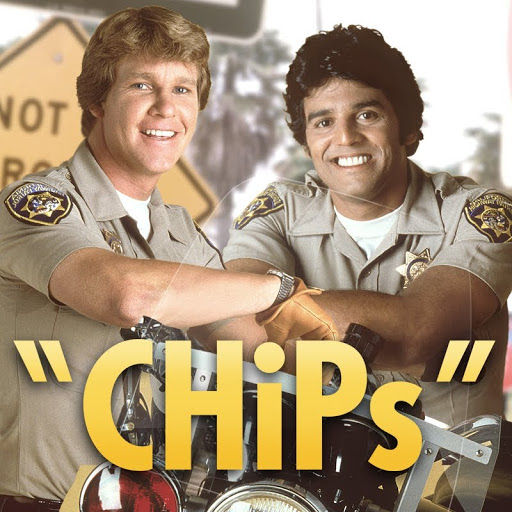
Late Night Retro Television Review: CHiPs 2.15 “MAIT Team”


Welcome to Late Night Retro Television Reviews, a feature where we review some of our favorite and least favorite shows of the past!  On Mondays, I will be reviewing CHiPs, which ran on NBC from 1977 to 1983.  The entire show is currently streaming on Freevee!

This episode was a tough one.

Episode 2.5 “MAIT Team”

(Dir by John Florea, originally aired on January 13th, 1979)

On a desolate stretch of highway, several cars sit totaled.  At least two are in flames.  A truck sits stalled in the middle of the road, the bloody body of the driver still behind the steering wheels.  A woman screams that her father is having a heart attack.  Sitting off the road, in a ditch, is an overturned police car.  Officer Sindy Cahill is unconscious in the wreckage.

This hardly a typical episode of CHiPs.  This show has featured many spectacular crashes but this episode is the first to feature fatalities.  And its not just one person who dies in the crash.  Eleven people die, including the driver of the truck and the man having a heart attack.  The sight of Ponch looking at the dead bodies is jarring because it’s not what we expect from a show like CHiPs.

And, I have to admit, it was jarring for me on a personal level.  In May, my Dad was in a serious car accident, one that ultimately involved four vehicles.  He broke his shoulder and, afterwards, had to learn how to walk again.  He spent a week in a hospital.  (That was the week that we didn’t have any power due to the storms so I couldn’t even call to get an update on his condition.)  He spent a month in a rehab facility, staying there until his insurance company kicked him out.  Severely weakened by the stress and Parkinson’s, he came home and died a month later.  I still find myself thinking about how, if he just hadn’t gone to the store that Sunday, he never would have been in that accident and he would still be alive today.  Did I say that I merely think about it?  It’s actually something that I’ve been obsessing on, even since the hospital first called me to tell me what had happened.  I had a hard time watching this episode of CHiPs and I’m having a hard time writing about it right now.

It’s a good episode, even if it is very different from the episodes that came before it.  Ponch, Jon, and a group of experts (known as the MAIT Team) attempt to determine what caused the accident.  With a lefty state senator (played by Victor Newman himself, Eric Braeden) and an insurance investigator (Michael Bell) both eager to put the blame on Cahill, it falls to the MAIT Team to figure out what caused the accident and to assign blame.  In the end, just as with my Dad’s accident, they discover that no one was truly at fault.  The setting sun reflected off a distant mirror and temporarily blinded the driver.  Cahill ended up in a ditch after she swerved to avoid him.  The other drivers were just in the wrong place at the wrong time.  Life is like that sometimes.

The emphasis here was on everyone working together to get to the truth.  Even the state senator and the insurance investigator played an important role in discovering what happened.  By being skeptical, they forced the MAIT Team to question everything and truly uncover the facts of the accident.  As this episode made clear, the MAIT Team wasn’t formed just to exonerate Cahill.  Instead, the MAIT Team was all about getting to truth, no matter what that truth might be.

Though this episode was not an easy one for me to watch, it was a good one.