Here’s Tom Jones and the Cardigans covering a classic song from The Talking Heads.
Enjoy!
Here’s Tom Jones and the Cardigans covering a classic song from The Talking Heads.
Enjoy!
In an effort to save their marriage, Tom (John Ritter) and Gina (Rachel Hunter) take a vacation in California. However, when they arrive at the home that they’re going to be renting, they are taken hostage by a group of redneck criminals led by Mr. Eddie (Eric Roberts). Mr. Eddie wants all of Tom’s money and this leads to a rather drawn-out hostage situation as Tom tries to get the better of Mr. Eddie and Mr. Eddie spends a lot of time purring threats in a thick Southern accent.
That’s plot of 2000’s TripFall. Don’t ask my why it’s called TripFall. It seems like a bit of a redundant title because a trip and a fall are pretty much the same thing. In fact, don’t even ask me what the point of the film is because there’s really not that much action or suspense. It’s mostly just Eric Roberts and the gang driving John Ritter from one location to another. I’m not a big fan of films about people being held hostage because they always seem to feature the same scene played over and over again. The hostage refuses to do something. The person holding him hostage gives a long monologue. It gets boring after a while.
TripFall is not a career highpoint for either Roberts or Ritter. It’s an action film in which there is very little action. Watching the film, I found myself thinking that it would have been more interesting if Ritter and Roberts had switched roles. Roberts could have played the likable family man for once and maybe the film could have explored the darkness behind Ritter’s goofy persona. (Comedic actors sometimes make the best villains.)
That said, it’s difficult to resist the oddness of John Ritter and Eric Roberts starring in the same movie. If there are two actors who feel as if they literally come from different planets, it’s Ritter and Roberts. Ritter is his typical goofy self, even when he’s trying to play up the drama of the situation. Roberts hisses his lines as Mr. Eddie and appears to be acting in a totally different movie from Ritter. They’re so mismatched that they become rather fascinating (if not exactly memorable) to watch.
Previous Eric Roberts Films That We Have Reviewed:
In 1976’s Grizzly, something is making a national park a lot less inviting.
Campers are turning up dead. Bloody body parts are being found buried underneath leaves. It’s obvious that a bear is to blame but reports seem to indicate that this isn’t just any bear. This is a super bear, standing 8 feet tall and capable of knocking down an observation tower and picking up a helicopter. This is the most dangerous bear known to man and the park has to be closed.
Closing the park during tourist season!? Surely not!
Does this all sound familiar? Grizzly came out a year after Jaws. In all fairness to Grizzly, there were a lot of movies that ripped-off Jaws. As a matter of fact, there are still movies ripping off Jaws. The Jaws films eventually ended up ripping off themselves with three sequels. Still, it’s hard to ignore just how blatantly Grizzly rips off Jaws. We get shots from the bear’s point of view. Christopher George plays the sheriff who keeps demanding that the park be closed down until the bear has been taken care of. Andrew Prine is the hippie bear expert. Richard Jaeckel is the crotchety old man who knows more about bears that just about anyone else in the world. In Jaws, they needed a bigger boat. In Grizzly, they need a bigger helicopter. Jaws features scenes of people fleeing from the water. Grizzly features an unintentionally funny shot of hundreds of panicked campers fleeing down the side of a mountain.
Grizzly is Jaws, without the water and without the wit. And yet, in its own grim way, it works well enough. The fact of the matter is that bears are scary and the bear in Grizzly is really, really big. The gore effects are memorably grotesque and, perhaps even more so than Jaws, Grizzly goes out of its way to establish that anyone can die. As for the actors, I’ve always enjoyed seeing Christopher George in films like this. He was one of those actors who always seemed to try to give a convincing performance, even when he was appearing in a film that no one would mistake for a classic. Richard Jaeckel and Andrew Prine also do their best to bring their characters to life.
Finally, I should mention that the film ends on a properly silly and over-the-top note. Actually, it’s not that much different from the ending to Jaws. It’s just that Jaws was made with such skill that even the silly moments worked. Grizzly was directed by William Girdler, who was no Steven Spielberg. At the end of Grizzly, I found myself shouted, “Why didn’t someone just do that in the first place!?” Then again, if they had, we never would have gotten all of those point of view shots of the bear wandering through the forest while growling like an 70s obscene phone caller.
As a final note, I defy anyone to watch Grizzly without imagining Werner Herzog narrating the bear’s activities. It cannot be done!
Ah, the 80s! Ronald Reagan was president. America was strong. Russia was weak. The economy was booming. The music was wonderful. Many great movies were released, though most of them were not nominated for any Oscars. This is the decade that tends to drive most Oscar fanatics batty. So many good films that went unnominated. So many good nominees that failed to win. Let’s dive on in!
1980
Coal Miner’s Daughter
Tess
Won: Ordinary People
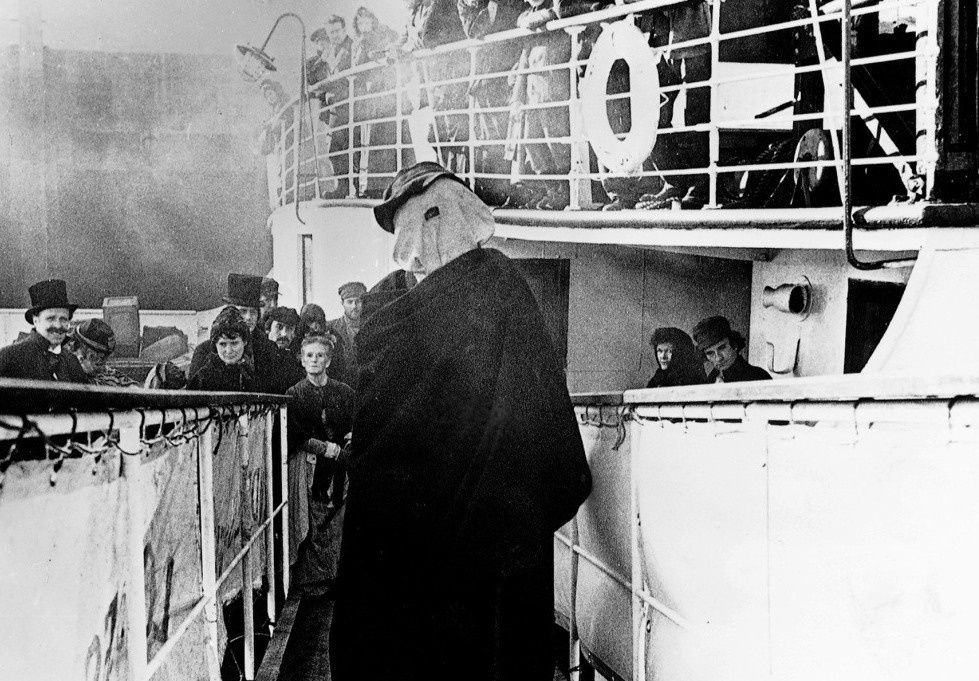
Should Have Won: Ordinary People is actually a pretty good film. It may feel more like a made-for-TV movie than a feature film but it’s well-acted and it deserves some credit for not offering up any easy solutions. A lot of people would say that the Oscar should have gone to Raging Bull but, as well-directed and acted as that film is, Jake La Motta is such an unlikable character that it’s hard for me to really get emotionally invested in his story. My vote would have gone to David Lynch’s The Elephant Man. Lynch tells an inspiring story without compromising his surreal vision.
1981
Raiders of the Lost Ark
Won: Chariots of Fire
Should Have Won: The victory of Chariots of Fire is an odd one. The music is great but the film itself isn’t particularly memorable. I really, really like Atlantic City but ultimately, my vote would go to Raiders of the Lost Ark, an adventure that doesn’t insult the intelligence of its audience.
1982
E.T. — The Extra Terrestrial
Tootsie
Won: Ganhdi
Should Have Won: Gandhi is the epitome of the type of Oscar winner that won less because of any cinematic artistry involved in the production and more because of what it was about. To be honest, though, I’m not extremely enthusiastic about any of the other nominees either. Ultimately, I guess I would have to go with E.T. It’s a bit heavy-handed but it works.
(My pick for the best of 1982 would probably be …. I don’t know. Blade Runner? Diner? There are some really good 1982 films but it’s hard to find one that just leaps out and says, “This is the best of the year!” Actually, I’d probably go with Tenebrae, despite the fact that it wasn’t released in the States until 1984 and in a heavily edited version at that.)
1983
Won: Terms of Endearment
Should Have Won: Terms of Endearment is good but I still would have voted for another Texas film, Tender Mercies. Robert Duvall, RIP.
1984
The Killing Fields
A Passage to India
Places in the Heart
Won: Amadeus
Should Have Won: While Once Upon A Time In America is my pick for the best film of 1984, Amadeus is the best of the nominees.
1985
The Color Purple
Kiss of the Spiderwoman
Won: Out of Africa
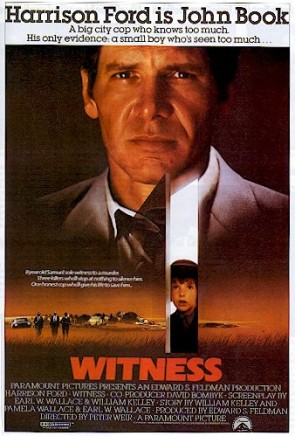
Should Have Won: Out of Africa is a pretty boring movie and Robert Redford is totally miscast as an Englishman. (To be honest, Redford is pretty much miscast as anyone but Robert Redford.) There were a lot of good films in 1985 that were not nominated: Brazil, Ran, Runaway Train, The Purple Rose of Cairo, Back to the Future, The Breakfast Club, Mask, After Hours, and quite a few more. Of the nominees, I would have gone for the beautiful and haunting Witness.
1986
Hannah and Her Sisters
Won: Platoon
Should Have Won: Here’s one of my favorite exchanges from King of the Hill. It’s Peggy and Hank’s anniversary. They have the house to themselves for the weekend. Feeling that the romance has gone out of their lives, Peggy’s depressed. Hank tries to cheer her up.
Hank: “C’mon, Peg, we’ve got the house to ourselves. Plus, I rented an R-rated movie.”
Peggy (briefly hopeful): “Really? What movie?”
Hank (pauses, looks down): “Uhmmm …. Platoon.”
Some people love Platoon and some people don’t. You can put me in the latter category. Oliver Stone achieves a dream-like intensity but good God, was Charlie Sheen ever a good actor? Of the nominees, I would vote for A Room With A View.
Among the films not nominated this year: Blue Velvet, Aliens, Ferris Bueller’s Day Off, Stand By Me, Mona Lisa, Something Wild, and Top Gun.
1987
The Last Emperor
Won: The Last Emperor
Should Have Won: How about Full Metal Jacket? Oh wait, wasn’t nominated. Robocop? Not nominated. Dirty Dancing? Not nominated. Oh well. Even if those films were nominated, I would still have voted for Hope and Glory.
1988
Rain Man
Won: Rain Man
Should Have Won: Rain Man is actually pretty good but, of the nominees, my vote goes to Dangerous Liaisons.
1989
Driving Miss Daisy
Won: Driving Miss Daisy
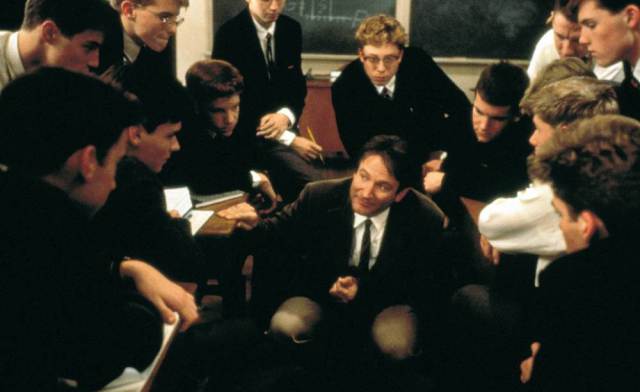
Should Have Won: This is an odd year. It’s kind of a weak line-up. Not nominated were films like Do The Right Thing, Scandal, Crimes and Misdemeanors, Enemies: A Love Story, and Henry V. Driving Miss Daisy gets criticized for obvious reasons but Jessica Tandy and Morgan Freeman both give strong performances. Born on the 4th of July has some good moments but Oliver Stone’s heavy hand eventually gets in the way and the scene where Tom Cruise-as-Ron-Kovic tracks down the parents of the soldier he accidentally killed only succeeds in making Kovic look like a selfish jerk. Dead Poets Society is, in many ways, just as heavy-handed as Born On the 4th of July but it’s also a lot more likable and I enjoyed the trio of Ethan Hawke, Robert Sean Leonard, and Josh Charles. In the end, Dead Poets Society gets my vote.
Coming up in thirty minutes — it’s time for the 90s!

Continuing our look at the Best Picture races of the past, it’s now time to enter the 50s! World War II was over. Eisenhower was President. Everyone was worried about communist spies. And the Hollywood studios still reigned supreme, even while actors like Marlon Brando and James Dean challenged the establishment.
1950
Won: All About Eve
Should Have Won: The Academy started out the decade by getting it right. While I love Sunset Boulevard and could definitely make a case for why it could have won, All About Eve was the best film nominated and one of the best films ever made.
1951
Won: An American In Paris
Should Have Won: An American In Paris was a bit of an unexpected winner. A Streetcar Named Desire swept almost all of the acting prizes (only Marlon Brando failed to take home an Oscar) but the film itself is a bit too theatrical for me. As much as I Like An American In Paris, my personal vote would have gone to A Place In The Sun.
1952
Moulin Rouge
Won: The Greatest Show on Earth
Should Have Won: Cecil B. DeMille’s The Greatest Show On Earth is often described as being the worst film to ever win best picture. I don’t know if I’d go that far but the Oscar still should have gone to either High Noon or The Quiet Man. With The Greatest Show on Earth, the Academy went for spectacle over …. well, everything else. It was not the first time the Academy did so, nor would it be the last.
1953
Won: From Here To Eternity
Should Have Won: I love both Julius Caesar and Roman Holiday but, in this case, the Academy picked the right film.
1954
Seven Brides For Seven Brothers
Won: On the Waterfront
Should Have Won: I want to say Rear Window but it wasn’t even nominated. On The Waterfront is the best made and the best acted of all the nominees but that the film’s support for “naming names” will never sit well with me. Like many of Elia Kazan’s films, it also gets a bit too heavy-handed towards the end. (One always got the feeling that Kazan didn’t trust his audience to figure out things on their own.) I’ll go with The Caine Mutiny, if just for Humphrey Bogart’s amazing performance as Queeg.
1955
The Rose Tattoo
Won: Marty
Should Have Won: This is a difficult one for me. All of the nominated films are fairly weak. The best remember films of 1955 — Rebel Without A Cause, Kiss Me Deadly, East of Eden — weren’t even nominated. Marty‘s likable but it still feels like a made-for-TV movie. I’ll go with Picnic, just for the scene where William Holden and Kim Novak dance on the dock.
1956
Friendly Persuasion
The King and I
Won: Around The World In 80 Days
Should Have Won: In a year in which all of the nominees were epic in scope, Around The World In 80 Days won because it featured a cameo from nearly everyone in Hollywood. It’s a bit of a drag to watch today, despite the charm of David Niven. Personally, of the nominated films, I would have gone with …. mock me if you will …. The Ten Commandments. As flawed as it may be, it’s still incredibly watchable and never dull. If I couldn’t vote for The Ten Commandments, I’d probably vote for Giant, just because it’s a movie about my home state.
1957
Sayonara
Won: The Bridge on the River Kwai
Should Have Won: The Bridge on the River Kwai is a worthy winner but my favorite of the nominees is definitely 12 Angry Men. And I’ll admit that I’ve always enjoyed Peyton Place as well.
1958
Gigi
Won: Gigi
Should Have Won: Gigi’s good but I would have to vote for the overheated but always entertaining melodrama of Cat On A Hot Tin Roof. Of course, the best films of the year — Vertigo and Touch of Evil — were not nominated.
1959
Room At The Top
Won: Ben-Hur
Should Have Won: I actually like Ben-Hur but I absolutely love Anatomy of a Murder. It’s one of the best courtroom films ever made and it features James Stewart at his absolute best.
Up next, in about 30 minutes — the 60s!
Here to get you in the Oscar spirit is today’s song of the day, the main title track to 1966’s The Oscar. Listening to this music, you’ll be more than ready to walk the red carpet!
Beware the Ides of March!
The scene below is from the 1953 film, Julius Caesar. This Oscar-nominated Shakespearean adaptation had a cast that was full of distinguished actors. James Mason played Brutus. The great John Gielgud played Cassius. Louis Calhern was Caesar while other roles were filled by Deborah Kerr, Greer Garson, Edmond O’Brien, George Macready, John Hoyt, Edmund Purdom. and a host of other distinguished thespians. And yet, the best performance in the film came from an actor who, at the time, no one considered to be a Shakespearean. Marlon Brando brought his method intensity to the role of Mark Antony and the result was a performance that is still electrifying today.
Here is Marlon Brando in Julius Caesar, giving one of the best performances to not win an Oscar. Remember this the next time someone defends a film or a performance by saying that it won an Oscar. Sometimes, the best does not win. Most of the time, the best cannot even be identified until several years have passed. It’s hard to argue with William Holden winning a long overdue Oscar for his work in 1953’s Stalag 17 but still, the power of Brando’s performance is impossible to deny.
American Love Story: John F. Kennedy and Carolyn Bessette (FX)
This week, I watched the first three episodes of American Love Story. Ryan Murphy is only an executive producer on this one but it is still very much shows his touch. The first two episodes were okay. The third episode was self-indulgent and felt like it could have just been 15 minutes without losing anything. In the lead roles, Sarah Pidgeon and Paul Anthony Kelly are two good-looking blanks. Daryl Hannah has spoken out about how she’s been portrayed in the miniseries and she has every right to be angry. My main issue with Ryan Murphy’s history lessons is that so many people accept them at face value without doing their own research.
Friends Like These: The Murder of Skylar Neese (Hulu)
I watched this three part crime docuseries on Sunday. It told the story of Skylar Neese, a teenage girl who was brutally murdered, for no apparent reason, by her two best friends. Though I had heard the story before, this was still sad and disturbing to watch. While one of the murderers did seem to have some guilt afterwards, the other has shown zero remorse. You really have to wonder what is happening inside some people’s minds.
Houses of Horror: Secrets of College Greek Life (Hulu)
I watched three episodes of this rather sordid docuseries on Thursday. My favorite was the fraternity that was apparently a front for a drug running operation.
Rollergames (YouTube)
On Friday, Jeff and I hung out with our friend Pat and Dani and we watched an episode of this 90s roller derby show. It was amusing, even if I had no idea what was actually going on for the majority of the show. This could very well be a future Retro Television Review.
The Simpson (Disney+)
Poochie died on his way back to his home planet.
Top of the Pops (YouTube)
Jeff, Pat, Dani, and I watched an episode of this after Rollergames. Fortunately, Jimmy Saville was not hosting.
Usually, we would celebrate the Ides of March tomorrow. But, this year, Oscar Sunday falls on March 15th. So, we’re going to pay honor to fall of the Roman Republic a day earlier than usual. From the soundtrack of 1963’s Cleopatra,, here is Cleopatra Enters Rome, composed by Alex North!
This video was directed by the man who edited the controversial 1983 film, Angst. This video was also controversial and was banned in New Zealand for being too violent. Compared to what I see whenever I scroll through my twitter timeline, this video seems incredibly tame (albeit entertaining) today.
Enjoy!
 Through the Shattered Lens