Late Night Retro Television Review: CHiPs 3.4 “High Octane”


Welcome to Late Night Retro Television Reviews, a feature where we review some of our favorite and least favorite shows of the past!  On Mondays, I will be reviewing CHiPs, which ran on NBC from 1977 to 1983.  The entire show is currently streaming on Prime!
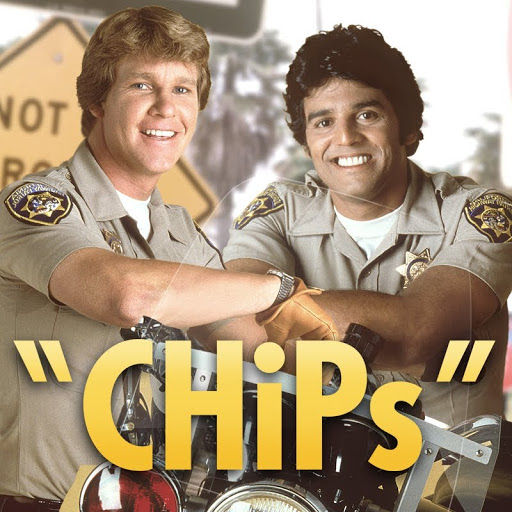
This week, CHiPs deals with the oil crisis!

Episode 3.4 “High Octane”

(Dir by John Florea, originally aired on October 6th, 1979)

Tonight’s episode of CHiPs is a real history lesson.

The episode was aired at a time when the U.S. was suffering from a shortage of gasoline.  Conflict in Iran had led to both the Shah fleeing the country and Americans being taken hostage.  Oil production fell, OPEC raised its prices, and people panicked and started to hoard gasoline.  Many states instituted odd-even gas rationing, which meant that only people with an odd-numbered license plate could purchase gas on an odd-numbered day and only people with an even-numbered license plate could purchase gas on an even-numbered day.  As so often happens when the government attempts to micromanage a crisis, this only made things worse as there were soon long lines at the pump and reports of fights breaking out between people at gas stations.  Even with the rationing, many gas stations ran out of gasoline before they could serve every customer.  If you didn’t arrive early enough, chances were that you would not be able to put gas in your car,

California was one of the many states to institute odd-even rationing and this episode of CHiPs is all about the battle over gasoline.  Two crooks are siphoning gas from independent gas stations and then reselling it to other stations.  (Their biggest customer is played by veteran screen tough guy, Aldo Ray.)  Getraer is injured when he crashes his bike while chasing the two crooks, which makes this case personal for Ponch and Baker.  Meanwhile, Ponch and Baker have to break up fights at the gas station, chase yet another guy who was caught siphoning gas from a car, and save yet another motorist who passes out from the fumes of all the gas cans that he had in the backset of his car.  Ponch even starts to date Beth (Ellen Bry), because she works at a gas station and can tell him the best time to show up to make sure that he and Baker are able to fill up their bikes.  Meanwhile, at headquarters, Harlan is giving lessons on the best way to keep unused fuel from evaporating.

Of course, it wouldn’t be CHiPs if there wasn’t also a light-hearted sports angle.  This week, everyone’s into roller hockey.  Ponch serves as the referee for the CHP-sponsored kids’ roller hockey game and everyone agrees that he’s the best referee that they’ve ever seen.  And why not?  He’s Ponch and, by the time the third season rolled around, CHiPs was definitely The Ponch Show.  Later, the adult officer play roller hockey as well.  It’s the show’s way of saying, “California’s still fun, even with the gas rationing!”

I enjoyed this episode because I’m a history nerd and it was interesting to see how the show dealt with the 1979 oil crisis while it was occurring.  It’s interesting that this episode was a bit cynical about rationing, as CHiPs was usually a show that portrayed the government and its policies as positively as possible.  In 1979, even the audiences of CHiPs was fed up with having to pay — let me check my notes to make sure I have this right — nearly a dollar a gallon for gas.

Really?  Just 90 cents for a gallon gas?  Get me a time machine.  I’m going to 1979!
Lisa Reviews An Oscar Nominee: Gravity (dir by Alfonso Cuaron)


Remember Gravity?

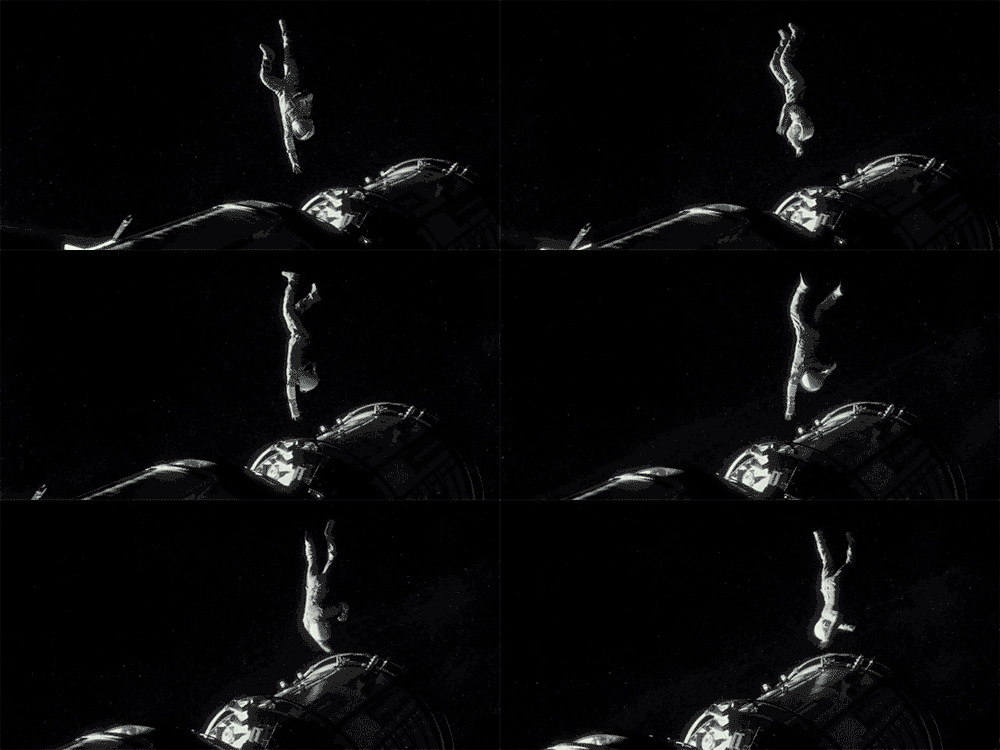
Released in 2013, Gravity is largely a two-person film.  There are a few other characters who appear at the start of the film and we hear different voices throughout the movie (including the voice of Ed Harris, cast once again as the voice of NASA) but, for the most part, this film centers on George Clooney and Sandra Bullock floating through space.  Clooney is Kowalski.  Bullock is Stone.  They’re two astronauts who are in space trying to fix the Hubble Telescope when their shuttle is struck by a wave of space debris.  When the shuttle inoperable and the rest of the crew dead, Kowalski and Stone try to figure out how to get back down to Earth.

Space, it turns out, is not as empty as we tend to assume.  Along with the space debris that caused them to get stranded in space in the first place, there’s also a lot of abandoned equipment and outposts that they can use to get back to Earth.  Unfortunately, they’ve got limited oxygen and limited time with which to reach any of that equipment and, even if they do reach it, there’s no guarantee that they’ll be able to get any of it to work.  After Kowalski sacrifices himself to help Stone reach the International Space Station, Stone alone must find a way to return to Earth before the space debris complete their orbit and again threaten to send her hurtling into space.

Gravity is one of those films that demands to not only be seen on the big screen but also to be seen in 3D.  (I say this as someone who was not exactly a fan of the post-Avatar 3D boom.  Too often, 3D felt like a distraction.  In Gravity, it feels like a key part of the story.)  The film not captures the terror of being alone in the emptiness of space but, at the same time, it also captures the beauty of having the entire universe in front of you.  It’s a visually stunning and beautiful film.  Kowalski says, at one point, that he has a hell of a view and it’s hard not to agree with him.  Space may be deadly but it’s beautiful as well.  Stone finds herself tempted to simply allow herself to spend the rest of eternity floating lifelessly in space but ultimately, she embraces life.  She refuses to give up and the film refuses to give up on her or, by extension, the rest of humanity.  Gravity celebrates the beauty of space and creation while also showing that life on Earth has its own beauty as well.  By the film’s end, one can argue that Stone has literally been reborn.

It’s a powerful film, one that is well-acted by both Bullock and George Clooney, both of whom have the star power necessary to hold our interest even when the overwhelming grandeur of space threatens to steal our attention.  (I would argue that Bullock’s performance here is far superior to her Oscar-winning turn in The Blind Side.)  Gravity received ten Oscar nominations and it won seven of them, including the Best Director award for Alfonso Cuaron.  However, it lost Best Picture to another powerful film, 12 Years A Slave.

Retro Television Review: Miami Vice 3.13 “Down For The Count: Part Two”


Welcome to Retro Television Reviews, a feature where we review some of our favorite and least favorite shows of the past!  On Mondays, I will be reviewing Miami Vice, which ran on NBC from 1984 to 1989.  The entire show can be purchased on Prime!

This week is all about justice for Zito!

Episode 3.13 “Down For The Count: Part Two”

(Dir by Richard Compton, originally aired on January 16th, 1987)

Picking up where last week’s episode ended, Down For The Count: Part Two finds almost the entire Vice Squad mourning the death of Larry Zito.  I say “almost” because, as usual, Castillo refuses to show any emotion or even look anyone in the eye.  When he first appeared, Castillo’s stoicism made him an interesting character but I have to admit that I’m starting to get a bored with the character and his refusal to speak in anything more than terse growls.  ZITO’S DEAD!  WAKE UP, CASTILLO!

Switek, needless to say, is heart-broken.  Trudy tells Gina that she had a totally meaningless one night stand with some guy she met at a club because she was depressed.  (“Did it make you feel better?” Gina asks.  “No!” Trudy wails.)  Crockett is determined to take down crooked boxing promoter Oswaldo Guzman (Pepe Serna) and prove that Zito was not a junkie but that he was instead murdered by Guzman’s goons.  As for Tubbs, he makes a few jokes.  WHAT’S WRONG WITH YOU, TUBBS!?  ZITO’S DEAD!

Crockett and Tubbs go undercover as Burnett and Cooper and, once again, I find myself wondering how they can keep successfully doing that when their cover has gotten blown over a dozen times over the course of the series.  Do criminals in Miami not talk to each other?  This time, Crockett pretends to be involved with a cable sports network that wants to make a deal to air the fights that Guzman sponsors.  When a Las Vegas gangster named Guilinni (former Warhol superstar Joe Dallesandro) shows up looking to kill Guzman, Crockett and Tubbs effortlessly manipulate both sides.  It turns out that criminals aren’t that smart.

Meanwhile, Trudy and Gina meet one of Crockett’s associates from the Vietnam War.  His name is Danny Allred (Chris Elliott) and he’s a former CIA agent who now lives in an abandoned airplane.  Danny is a codebreaker and he helps them to figure out the code that Guzman was using to keep track of all of his crooked fights.  Danny is a fun character and I hope he shows up in more episodes.  He added some moments of levity to what was otherwise a pretty grim episode.

This episode had plenty of good moments.  The scene where Crockett and Tubbs visited Zito’s apartment was both poignant and nicely-acted by both Don Johnson and Philip Michael Thomas.  The final shoot-out was violent even by the standards of Miami Vice.  That said, I’m a bit surprised that the episode didn’t revolve around Switek.  Switek gets to express his anger and argue with Internal Affairs at the start of the episode and gets to repeatedly shoot Guzman at the end of the episode but he’s largely absent for the middle part of the story.  As Switek was both Zito’s partner and his best friend, it really does seem like he should have been at the center of the entire episode.

Still, I was glad that Zito’s name was cleared and that Guzman ended up getting shot multiple times until he fell out a window.  The show’s final credits featured still shots of John Diehl as Zito.  I’m going to miss Larry.

Song Of The Day: The Golden Path by The Chemical Brothers, feat. Wayne Coyne


Today the Shattered Lens wishes a happy birthday to Wayne Coyne of the Flaming Lips.  Our song of the day is The Golden Path, a collaboration between Wayne and The Chemical Brothers.


As I walked along
The supposed golden path
I was confronted
By mysterious spectre
He pointed to the graveyard
Over on yonder hill
I paused in cosmic reflection
Confused on wondering
Of how I came to die

Hm!
I was confused
Coz if I was dead
How and why did I die
And I composed myself
And decided I should face it

Then I stood paralyzed
On the supposed golden path
And I was confronted
By powerful demon force
And there was the devil
And we spoke his words
Flowed like glowing lava from the mouth of a volcano
And I said:
Help me, Lord!!
I found myself in some kinda hell
But I did not believe in heaven and hell
World in opposites kind of reality

But I gained control of myself
And decided to press on

As I walked along
The supposed golden path
I was trembling with fear
All the lions and the wizards yet to come
I seen in the distance
Silver mountains rising high in the clouds
And a voice from above did whisper
Some shining answer from the moon

Please forgive me
I never meant to hurt you

Songwriters: Edmund John Simons / Steven Gregory Drozd / Thomas Owen Mostyn Rowlands / Wayne Michael Coyne

The Films of 2025: When It Rains In LA (dir by David M. Parks)


When it Rains In LA features Eric Roberts as Nate.

Nate is a happy man who lives in a big house and who obviously has a lot of money.  He’s even got a much younger trophy wife, a Russian named Sasha (Monroe Cline).  One day, Nate receives an odd package, a box that contains a rather hideous mask.  Nate looks at the mask and then takes a sip of tea.  He promptly drops dead.

After Nate’s funeral, the suddenly widowed Sasha flies to Los Angeles to see her friends from college.  (Or, at least, that’s how I assume she met these people.  At times, it’s difficult to really keep track of how anyone in this film actually knows anyone else.)  Though she’s just buried her husband, she still flirts with the pilot of her airplane, the likably dorky Harry (Tom Gipson).  She also meets a mysterious woman named Anna (Leslie Stratton) and doesn’t seem to notice that she’s being watched by a mysterious, bearded man (Mike Ferguson) who continually hides his face inside of his hoodie.

From the minute that Sasha lands in Los Angeles, it starts to rain.  Everyone that Sasha meets mentions how strange it is that it’s raining in Los Angeles.  Some people say the rain is probably no big deal.  Other people act as if the rain has some sort of secret meaning.  Sasha keeps her opinions to herself.

Her friends seem to be curiously unconcerned with Sasha suddenly being a widow.  One of them won’t stop talking about the death of his former lover.  They go to a club, where the bartender gives out free drinks and the owner seems to be strangely hostile.  Sasha meets Harry.  Characters appear and then disappear without anyone seeming to notice.  Everyone comments on the strangeness of rain in Los Angeles.  People start to die in brutal ways but again no one seems to really care.  It’s a slasher film where societal detachment is the biggest threat.

It’s an odd film.  The budget was obviously low and the majority of the performances are a bit amateurish but, whether it was intentional on the part of the filmmakers or not, the film often plays out like a surreal dream.  Sometimes, the film moved at an almost rushed pace and then other times, a heavy sense of ennui seems to descend over the action and the characters.  Characters repeatedly do things that don’t make any sense but they do it with such determination that it becomes rather fascinating to watch.  The film’s final moments are surprisingly effective, certainly more effective than you might expect from all the moments that came before them.  Visually, this low-budget film has moments of almost ghostly beauty.  The scenes of the rain falling in Los Angeles are effectively atmospheric and ominous.  In the end, the film qualifies almost as a work of outsider art.

And, let’s not forget, Eric Roberts is in it!  This was the first Eric Roberts film to be released in 2025.  Nate dies before the opening credits and Eric still gets top billing.  I imagine it will be the first of many.

Previous Eric Roberts Films That We Have Reviewed:

  1. Star 80 (1983)
  2. Blood Red (1989)
  3. The Ambulance (1990)
  4. The Lost Capone (1990)
  5. Love, Cheat, & Steal (1993)
  6. Love Is A Gun (1994)
  7. Sensation (1994)
  8. Dark Angel (1996)
  9. Doctor Who (1996)
  10. Most Wanted (1997)
  11. Mercy Streets (2000)
  12. Wolves of Wall Street (2002)
  13. Mr. Brightside (2004)
  14. Six: The Mark Unleased (2004)
  15. Hey You (2006)
  16. In The Blink of an Eye (2009)
  17. Enemies Among Us (2010)
  18. The Expendables (2010) 
  19. Sharktopus (2010)
  20. The Dead Want Women (2012)
  21. Deadline (2012)
  22. The Mark (2012)
  23. Miss Atomic Bomb (2012)
  24. Bonnie And Clyde: Justified (2013)
  25. Lovelace (2013)
  26. The Mark: Redemption (2013)
  27. Self-Storage (2013)
  28. This Is Our Time (2013)
  29. Inherent Vice (2014)
  30. Road to the Open (2014)
  31. Rumors of War (2014)
  32. Amityville Death House (2015)
  33. A Fatal Obsession (2015)
  34. Stalked By My Doctor (2015)
  35. Enemy Within (2016)
  36. Joker’s Poltergeist (2016)
  37. Prayer Never Fails (2016)
  38. Stalked By My Doctor: The Return (2016)
  39. The Wrong Roommate (2016)
  40. Dark Image (2017)
  41. Black Wake (2018)
  42. Stalked By My Doctor: Patient’s Revenge (2018)
  43. Clinton Island (2019)
  44. Monster Island (2019)
  45. The Savant (2019)
  46. Seven Deadly Sins (2019)
  47. Stalked By My Doctor: A Sleepwalker’s Nightmare (2019)
  48. The Wrong Mommy (2019)
  49. Exodus of a Prodigal Son (2020)
  50. Free Lunch Express (2020)
  51. Her Deadly Groom (2020)
  52. Top Gunner (2020)
  53. Deadly Nightshade (2021)
  54. Just What The Doctor Ordered (2021)
  55. Killer Advice (2021)
  56. The Poltergeist Diaries (2021)
  57. The Rebels of PT-218 (2021)
  58. A Town Called Parable (2021)
  59. Bleach (2022)
  60. My Dinner With Eric (2022)
  61. Aftermath (2024)
  62. The Wrong Life Coach (2024)

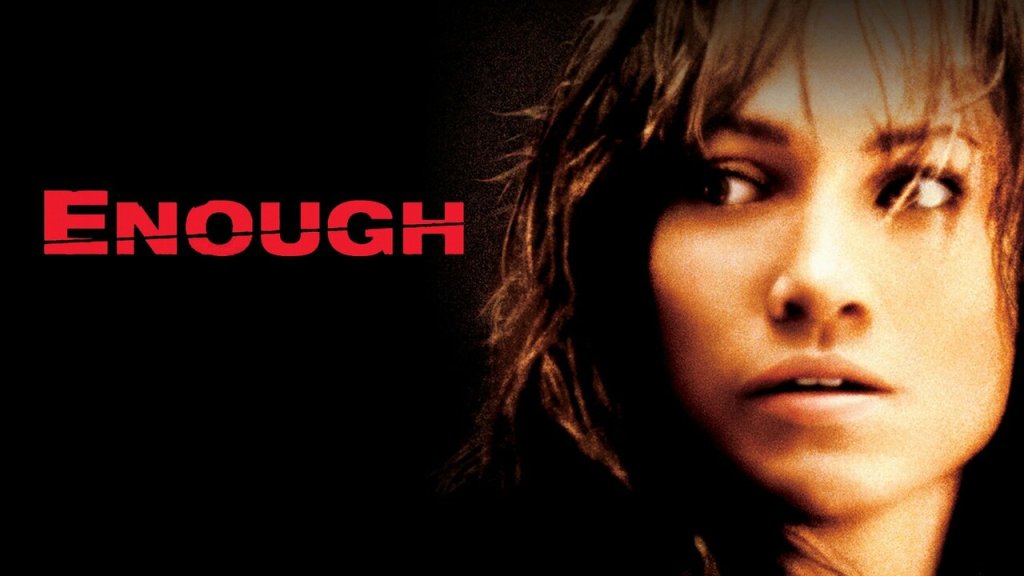
Jennifer Lopez has had ENOUGH (2002)! 


This morning I got up to make coffee for me and my wife. When I came back to our room, she had started the movie ENOUGH (2002) with Jennifer Lopez on the new projector that she bought me for Christmas. I’m not that big of a fan of Lopez, but I decided I’d go ahead and sit down to sip on my coffee prior to starting my day. I ended up watching the whole movie! 

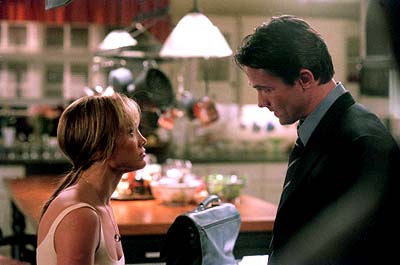
Jennifer Lopez plays Slim, a waitress in a diner in L.A., who meets a rich guy named Mitch Hiller (Billy Campbell) who impresses her when he gets rid of this rude jerk (Noah Wyle) trying to hit on her. Mitch and Slim get along famously, eventually getting married and having a cute little girl named Gracie. Everything seems perfect in their little world. Unfortunately, things aren’t what they seem, and one night Slim checks her husband’s pager. She calls the number and discovers Mitch has been cheating on her. When she confronts him about the affair, his entire countenance changes, and he begins beating the crap out of her. After the altercation, and before heading out to continue his affair, Mitch warns Slim not to leave because he refuses to live without her. With the help of her friend Ginny (Juliette Lewis) and a couple of others, Slim takes Gracie and they escape from Mitch. With all his money and connections, Mitch is able to track her down no matter where she goes. Feeling like she has no other options, Slim turns to her wealthy, estranged father, Jupiter (Fred Ward). He provides her the funds she needs to set up a new life and identity. Unfortunately, that damn Mitch tracks her down again. Narrowly escaping, Slim decides that she’s done running. She sends Gracie away with Ginny and begins training rigorously in self defense techniques. This time she’s taking the fight to Mitch with plans to end this shit once and for all. 

If you’re looking for a realistic drama about the effects of spousal abuse on the family unit and then across the larger society, ENOUGH is not the movie for you. This movie is more for the Charles Bronson crowd, where the bad guys are truly evil and the audience is in complete agreement with their need to perish. This is a formula that continues to work even if you have to completely suspend your disbelief. For example:

-Is it realistic that Mitch would be able to conceal what a complete and total asshole he is for many years from Slim, but then one night turn out to practically be the sidekick of Satan?

-Is it realistic that Mitch would be able track Slim and Gracie down time and time again, no matter where she goes across the country, even after she uses her Dad’s resources to change her identity?

-Is it realistic that Slim would be able to get enough self defense training in a short period of time to be able to confront the extremely fit Mitch at the end and kick his ass? 

While the setup is probably not the most realistic, we have to see images of Mitch beating up Slim on multiple occasions, even trying to kill her at one point. We also see him knock little Gracie to the ground and hurt her. We see him terrorizing her and anyone who tries to help her. This audience member just wanted to see Mitch pay.

I don’t really have any close connections to the main actors in ENOUGH, but they all do their jobs well enough to keep me involved. I have always been a fan of its director, Michael Apted. He’s made a few movies that I really like in CLASS ACTION (1991) with Gene Hackman, THUNDERHEART (1992) with Val Kilmer, and BLINK (1993) with Madeleine Stowe. He’s a more than competent director who knows how to get a reaction from his audience. This certainly may not reflect his best work, but he still handles the material in a professional manner. 

My final word on ENOUGH… I enjoyed the film in the same way I like the 3 piece combo at KFC, which I really do enjoy. I know it’s probably not the best stuff out there, but the classic formula still works, and I’m satisfied when it’s all gone! 

See the trailer for ENOUGH below:

Music Video of the Day: Studio 54 by TTSSFU (2024, dir by Seth Lloyd)


Today’s music video of the day brings back some memories, though admittedly the clubs of Denton could not really match the legendary reputation of Studio 54.  Still, the important thing is that everyone’s a legend to someone.

Enjoy!

Late Night Retro Television Review: Degrassi High 1.7 “Just Friends”


Welcome to Late Night Retro Television Reviews, a feature where we review some of our favorite and least favorite shows of the past!  On Sunday, I will be reviewing the Canadian series, Degrassi High, which aired on CBC and PBS from 1989 to 1991!  The series can be streamed on YouTube!

This week, Wheels breaks another heart.

Episode 1.7 “Just Friends”

(Dir by Kit Hood, originally aired on December 12th, 1989)

Heather Farrell has a crush on Wheels so Erica Farrell helps her throw a party so she can invite Wheels to their house and share a dance with him and maybe discover if he feels the same way about her that she does about him.  Of course, Wheels doesn’t feel that way about Heather and is surprised when Snake informs him that Heather obviously has a crush on him.  Still, that doesn’t stop Wheels from making out with Heather on her front porch while all of the party guests watch through the front window.

Heather has a boyfriend!

Well, no.  Actually, Wheels tells Snake that he still doesn’t like Heather like that and that making out with her is just something that happened.  He’s only interested in her as a friend.  (AGCK!  I mean, don’t get me wrong.  This is actually a lot more realistic than what happens on most high school shows but poor Heather!)  Wheels is supposed to call Heather when he gets home so that they can talk.  Of course, Wheels doesn’t call Heather and he ends up with not one but both of the Farrell twins mad at him and giving him their trademark evil eye.

(Of course, as we all know, Wheels is eventually going to be sent for prison after he runs over a kid while driving drunk so, really, the Farrell twins kind of lucked out here.)

The main problem with any episode that centers around the Farrell twins is that it’s difficult to remember which is which and neither one of them is really that interesting of a character.  I spent most of this episode trying to remember whether it was Erica or Heather who had the abortion.  I’m pretty sure it was Erica, which explains why Erica freaked out when she saw Heather making out with Wheels.  Erica doesn’t want the same thing that happened to her to happen to Heather.  But, aside from that, the Farrells have always kind of been boring characters and their party looked kind of lame as well.

Lucy was invited to the party but, instead of going, she instead went to the hospital to visit with L.D., who had just been told that she had Leukemia.  Good for Lucy!  One of the best parts of Degrassi High has been watching Lucy go from being self-centered and kind of mean to being one of the show’s most genuinely nice characters.  To the show’s credit, it’s shown her slowly becoming more emotionally mature as opposed to just having her change overnight.  It’s another example of how Degrassi High was realistic in the way that most teen shows were not and still aren’t.

Finally, Kathleen, Melanie, and Diana went to a movie but they didn’t invite their friend Maya (Kyra Levy) because Maya is in a wheelchair.  They didn’t think Maya would have been able to take the “streetcar” to the movie and the theater was not wheelchair accessible.  The next day, an angry Maya tells them that she could have gotten a ride from her mom and that they could have gone to a different theater that was accessible.  Maya angrily tells them not to assume that she can’t do things just because she’s in a wheelchair.  Good for Maya!  Myself, I’m just happy to see that Kathleen has apparently dumped the abusive Scott and is refusing to speak to him.  Good for for Kathleen!

This episode was a good example of how Degrassi High dealt realistically with being a teenager.  The Farrell twins are kind of boring but the L.D. and Maya subplots were well-handled.  This was a good episode, even if both Joey and Caitlin were noticeably absent.

Retro Television Review: Homicide: Life on the Street 2.3 “Black and Blue”


Welcome to Retro Television Reviews, a feature where we review some of our favorite and least favorite shows of the past!  On Sundays, I will be reviewing Homicide: Life On The Street, which aired from 1993 to 1999, on NBC!  It  can be viewed on Peacock.

This week, Pembleton gets a confession.

Episode 2.3 “Black and Blue”

(Dir by Chris Menaul, originally aired on January 20th, 1994)

In this week’s episode, Pembleton manipulates a man into confessing to a murder that he didn’t commit.  Pembleton does it with the full knowledge that the man is innocent and that, if the man is indicted and goes to trial, he will undoubtedly be found guilty as a result of that coerced confession.  Pembleton does it to prove a point to Giardello.

The man is Lane Staley (Isaiah Washington), who has been identified (by his grandmother, who was just trying to be helpful) as an eyewitness to the shooting of Charles Courtland Cox.  Pembleton is convinced that Cox was shot by a policeman and he only wants to interrogate Staley as a witness.  Giardello, who feels that Pembleton is to obsessed with his cop theory and who, as a proud member of the police force, does not want Pembleton to be right, insists that Pembleton treat Staley as a suspect.  Pembleton responds by going into the Box and pretending to be sympathetic to Staley’s situation.  He and Staley talk about how they’re both expected to always be polite and careful about what they say around white detectives.  Pembleton jokes that he always has to be extra polite when he comes to work.

Staley starts to open up to Pembleton and eventually admits that he was present when Cox was shot.  That’s when Pembleton starts shouting at Staley, accusing him of being responsible and basically browbeating Staley until Staley is in tears.  Pembleton makes Staley feel guilty for not doing more to protect Cox and continues to yell at him until, eventually, Staley feels that Cox’s murder was his fault.  Staley finally signs a confession, even though it’s obvious that the sobbing man is not a murderer.  Pembleton hands Giardello the confession and reminds him that’s the way that the police have been getting confessions out of young black suspects for years.

It’s a powerful moment and one that took me totally by surprise.  Andre Braugher and Yaphet Kotto both gave excellent performances in this episode.  The dynamic between Pembleton and Giardello has always been one of the more interesting parts of the show.  The fact that both of them are black and both of them are portrayed as being fully aware of the racism surrounding them brings an extra edge to their debate as to whether or not the black Cox was shot by a white policeman. (At one point, Giardello snaps at Pembleton to speak to him as respectfully as he speaks to the white lieutenants and it’s the exact type of moment that most shows would never have the courage or insight to portray.)  Pembleton is a great detective because he’s laser-focused on getting a confession, to the exclusion of worrying about anything else.  Giardello is a great lieutenant because he’s enough of a pragmatist to understand that some battles are not worth the price of victory.  In the end, Giardello comes to realize that Pembleton is right about the shooting but one still has to wonder what would have happened in Giardello hadn’t torn up Staley’s confession.  The murder of Cox would have disappeared from the headlines but the innocent Staley would have disappeared into the system.

The scenes with Pembleton and Staley were so electrifying that it made up for the fact that this is yet another episode that features Bolander feeling sorry for himself after his divorce.  Fortunately, for Bolander, he meets and befriends a young waitress named Linda (Julianne Margulies) who mentions that she plays the violin.  Bolander reveals that he plays the cello — WHAT!?  Since when has Bolander, someone who has expressed no interest in art or creativity or even music during his entire time of the show, become a cello player?  The episode ends with Bolander and Linda playing their instruments together and it’s a sweet scene but it’s still a bit hard to buy that apparently every woman in Baltimore is instantly attracted to a middle-aged, balding cop who spends all of his time talking about his divorce.  Ned Beatty was one of the great character actors but it sometimes feels like Homicide wasn’t sure what to do with his character.

But, hey, maybe Bolander will finally stop being so whiny.  That’s my hope.  This episode found Munch breaking up with his girlfriend after he accidentally gave her a carnivorous fish that ate all of her other fish.  At one point, Munch says that he can’t accept the idea of Bolander being happier than him.  Seriously, Munch, don’t jinx this.  I’ve been listening to Bolander complain nonstop for 15 episodes.  If he’s happy now, let him have it!

Next week …. life on the street continues!

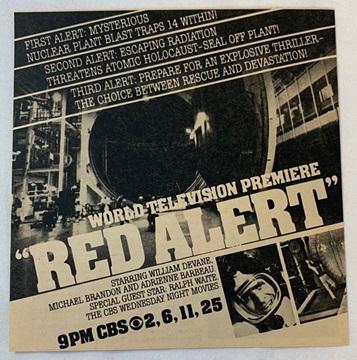
Made-For-Television Movie Review: Red Alert (dir by William Hale)


The 1977 made-for-television movie, Red Alert, opens with a man walking through a cemetery on a rainy day.  As we watch Howard Ives (Jim Siedow) move amongst the tombstones, we hear his thoughts.  He’s a sad and bitter man, wondering why he’s wasted so many years of his life at work.  He thinks about someone close to him who has died.  He’s obviously very troubled.

(Of course, any horror fans in the audience will immediately recognize Jim Siedow from his role as the Drayton Sawyer in the the original Texas Chainsaw Massacre.  He was troubled in that film as well!)

Howard works at the local nuclear power plant.  Ominously, when the film cuts to the plant, the first thing we see is a leak of very hot water.  I don’t know much about nuclear power plants but I imagine any type of leak is not a good thing.  The water leak causes the computer that runs the plant assuming that a nuclear disaster is minutes away from happening.  The compound is automatically sealed off, trapping fourteen men (including Howard), inside the reactor.  As Commander Stone (Ralph Waite) tries to keep a possible nuclear disaster from occurring, two investigators (played by William Devane and Michael Brandon) try to determined whether the accident was the result of a malfunction or of deliberate sabotage.  When the local sheriff (M. Emmet Walsh) informs them that Howard Ives’s wife has committed suicide, the investigators look into the troubled man’s history.  Eventually, the two investigators realize that the only way to prevent a nuclear disaster is by risking their lives by entering the sealed-off power plant.  The two investigators attempt to do their work under the cover of night and without causing a panic.  Needless to say, it doesn’t work.  One of them calls his wife (Adrienne Barbeau) and tells her that she needs to leave the area.  She tells her mother, who then tells her neighbor and soon the airport is crowded with people looking to get out of town.

Red Alert contrasts the intuitive approach of the two inspector with Commander Stone’s insistence that every bit of a data be fed to his computer before any decisions are made.  Stone’s hands are so tied by protocol and red tape that he stands by while the fourteen men who are trapped in the nuclear power plant die.  Wisely, though, the film doesn’t turn Stone into a cardboard villain.  He’s very much aware of what will happen if the plant suffers a core meltdown.  When one of his assistants mentions that he hasn’t been given any instructions on how to evacuate the town in case the plant does explode, Stone tells him that no plans have ever been drawn up because the plans would be useless.  There would be no way to evacuate everyone in time.

In the end, Red Alert is scary not because it deals with nuclear power but because it presents us with a world where no one — not even Devane and Brandon’s heroic investigators — seems to know what to do.  Everyone is slowed down by a combination of red tape and their own personal angst.  Devane is a strong investigator because, as a widower whose only son died in Vietnam, he has no family to worry about.  Unlike everyone else in Red Alert, he has nothing left to lose.  In the end, the film suggests that the only way to save the world is to cut yourself off from it.

Red Alert is a compelling and intelligent thriller, one that is well-acted by the entire cast and which builds up to strong conclusion.  The film’s anti-nuclear message is a bit heavy-handed but I imagine it was an accurate reflection of the fears that people were feeling at the time.  Today, the film works best as a warning about bureaucracy and depending too much on AI to make important, life-or-death decisions.  In the end, it’s human ingenuity that saves the day and that message is timeless.