Lisa Watches an Oscar Nominee: The Hustler (dir by Robert Rossen)


Hustler_1961_original_release_movie_posterFor my final Oscar-nominated film of the night, I watched the 1961 film The Hustler.

Filmed in harsh black-and-white and featuring characters who live on the fringes of conventional society, The Hustler is one of those films that’s so unremittingly bleak that it would probably be so depressing as to be unwatchable if not for the talented cast.  Paul Newman plays “Fast Eddie” Felson, a pool hustler who is talented but cocky, a guy who has the talent of a winner and the self-centered, self-pitying personality of a loser.  When we first meet Eddie, he and his manager, Charlie (Myron McCormick) have traveled all the way from Oakland to New York, all so Eddie can challenge and hopefully beat the legendary pool player Minnesota Fats (Jackie Gleason).  Eddie does get his chance to challenge Minnesota (or perhaps I should call him Mr. Fats?) and comes close to winning.  However, in the end, Eddie is too arrogant and impulsive and he ends up losing to Mr. Fats.

Defeated and humiliated, Eddie is hiding his meager possessions in a storage locker at the local bus station when he first meets Sarah Packard (Piper Laurie).  Sarah is an alcoholic and an aspiring writer.  She claims to be a part-time student but we never actually see her in class.  She walks with a pronounced limp and she has a habit of declaring the world to be “perverted, twisted, and crippled.”  Soon, she and Eddie are living together, two lost souls who support and destroy each other at the same time.  When Sarah attempts to write a short story about Eddie, Eddie responds by destroying the page and ordering her to never write about him again.  Charlie views Sarah as a destructive influence and decides that he doesn’t want to have anything else to do with Eddie.

However, Eddie soon finds a new manager.  Bert Gordon (a demonic George C. Scott) is a gambler who says that if Eddie sticks with him, Eddie will not only get rich but he’ll defeat Minnesota Fats as well.  At first, Eddie wants nothing to do with Bert but, when his own attempts at hustling lead to him getting his thumbs broken, Eddie has a change of heart.  Under Bert’s guidance, Eddie find success but he does so at the expense of what little decency that he had to begin with…

Eddie is an interesting character, one who most viewers will probably have mixed feelings about.  On the one hand, he’s a jerk.  He’s an arrogant, cocky jerk who thinks that he’s the best and who either uses or allows himself to be used by almost everyone that he meets.  Though he definitely ends up being exploited by Bert, Eddie knew what he was getting into when he made his deal with the devil.  Though he loves Sarah and she loves him, Eddie still treats her poorly.  There are just so many reasons to dislike Eddie Felson.

Except, of course, Eddie Felson is played by Paul Newman.

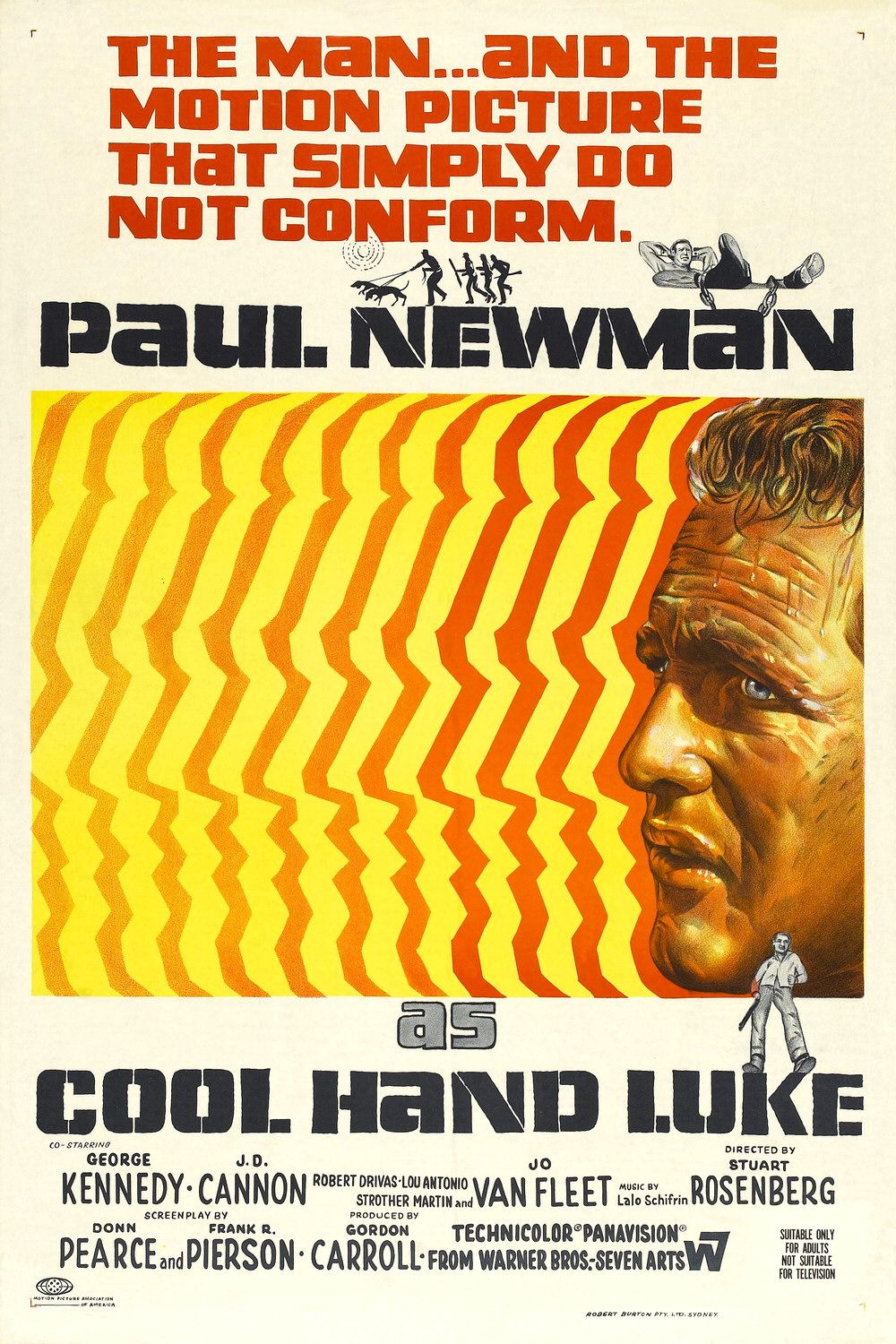
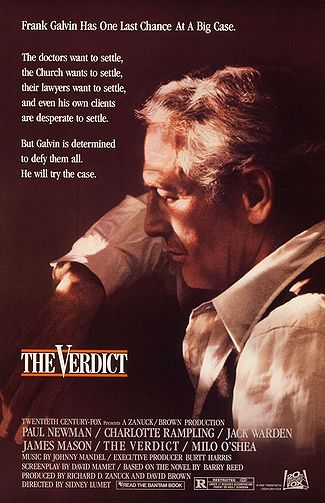
Seriously, it is possible to dislike a character played by Paul Newman?  As an actor, Newman was so charismatic and projected an innate goodness that came through even when he was playing a character who didn’t always do nice things.  As written, the character of Eddie spends the majority of the movie acting like a louse.  But, as played by Newman, Eddie becomes a wounded anti-hero, the bad boy that every girl dreams of somehow redeeming.

Ultimately, there are many reasons to see The Hustler.  Gleason and Laurie both give good performances.  George C. Scott, meanwhile, is like a force of nature.  Just listen to him as he shouts, “You owe me money!”  Director Robert Rossen finds an odd beauty in some of the sleaziest parts of New York City.  But, in the end, the main reason to see The Hustler is for Paul Newman’s amazing performance in the title role.  It’s a great performance that elevates the entire film.

I have to admit that I don’t know much about pool.  During my first college semester, I lived in a dorm that had a pool table in the front lobby.  There was always a large group of people gathered around that table, playing pool and generally looking like a bunch of hipster douchebags.  Sitting in the lobby meant having to listen to a constant soundtrack of balls clacking against each other, followed by people saying, “Such-and-such in the corner pocket” or whatever the Hell it is people say when they’re playing pool.  (To be honest, though I could hear the voices, I rarely listened to what they were actually saying.)  I don’t know if the people playing pool in the lobby were any good.  But, after seeing The Hustler, I can say that Eddie Felson would have beaten all of them.


Shattered Politics #52: Blaze (dir by Ron Shelton)


Blaze_imp

Oh those crazy Southern politicians!

As I’ve mentioned in a few other reviews, filmmakers have always loved to make movies about the crazy demagogues that we have historically tended to elect down here in the South.  Sometimes, those movies are serious and thought-provoking, like All The King’s Men.  And sometimes, like in Hold That Co-Ed, a film will attempt to play up the inherent humor in rabble rousing.  And then you’ve got films like Ada and Hurry Sundown, which are so melodramatic that those of us down South just have to shake our heads in amazement that people up North actually believe this stuff.

The 1989 film Blaze (which is currently making the rounds on cable) is a part of this cinematic tradition of films about flamboyant Southern politicians.  It’s part comedy and part melodrama and, perhaps not surprisingly, it takes place in 1950s Louisiana.

(Why isn’t that surprising? Listen, my family used to live in Louisiana.  I still visit Louisiana on a fairly regularly basis.  Louisiana is crazy.  That’s one reason why I love it.)

Blaze is based on the true story of Gov. Earl K. Long (played here by Paul Newman).  The younger brother of former Governor Huey P. Long (who himself served as the basis for the character of Willie Stark in All The King’s Men), Earl served as governor for three non-consecutive terms.  He was a flamboyant populist, in the style of his older brother, the type who campaigned as one of the “common” people and who was either extremely corrupt or extremely progressive, depending on which historian you happen to be reading.

In Blaze, Earl is nearing the end of his third term.  Because the state’s constitution does not allow a governor to succeed himself, Earl is currently campaigning for lieutenant governor, with the plan being that one of Earl’s allies will be elected governor and will then resign so that Earl can succeed him.  While this is traditionally the sort of thing that voters in Louisiana would love, Earl is struggling because some voters are angry over his support for the civil rights movement.

Earl is also struggling because he’s just met Blaze Starr (Lolita Davidovich), a much younger stripper from West Virginia.  For Earl, it’s love at first sight and soon, Blaze feels the same way.  Soon, she and Earl are going across the state together.  However, after Earl’s opponents arrange for him to be sent to a mental asylum, Blaze is forced to consider that she might be too big of a political liability to remain with the man she loves.

If that all sounds incredibly romanticized — well, it is.  After I watched Blaze, I did a little bit research on Earl and Blaze.  To say the film is fictionalized would be an understatement.  (Though, interestingly enough, Earl actually was sent to a mental asylum while serving as governor.)  But is that really a surprise?  Would audiences rather watch a movie about a corrupt, old racist who regularly cheated on his wife or would they rather watch a romanticized love story with hissable villains and moments of crowd-pleasing comedy?

As for the film itself, it’s okay.  It moves a bit too slowly for its own good and it’s never quite as enthralling as you might hope it would be, but both Paul Newman and Lolita Davidovich are well-cast and have a likable chemistry.  I related to the film’s version of Blaze Starr, mostly because we’re both redheads with big boobs who have a natural distrust of authority figures.  If you’re into Southern politics and you’re not obsessed with historical accuracy, you might enjoy Blaze.

http://www.youtube.com/watch?v=dyK-cD5ffPo


Embracing the Melodrama #31: When Time Ran Out (dir by James Goldstone)


If I had been alive in the 70s, I would have been terrified if I had ever found myself in the same general location of Paul Newman, William Holden, Ernest Borgnine, Red Buttons, Jacqueline Bisset, or Burgess Meredith.  Just based on the movies that they spent that decade appearing in, it would appear that disaster followed them everywhere.

Just consider:

Both Paul Newman and William Holden were trapped in The Towering Inferno. 

Ernest Borgnine and Red Buttons both ended up taking an unexpected Poseidon Adventure together.

Jacqueline Bisset was a flight attendant in the first Airport and nearly got killed by a mad bomber.

And finally, Burgess Meredith was a passenger on The Hindenburg.

Seriously, that’s a dangerously disaster-prone bunch of thespians!

So imagine how terrifying it must have been on the set of the 1980 film When Time Ran Out when all 6 of those actors — along with a lot of other disaster film veterans — were first gathered in one place.  People were probably running for their lives, both on-screen and off.

Lava3

When Time Ran Out takes place on an island in the South Pacific.  Shelby Gilmore (William Holden, playing yet another ruthless but essentially good-hearted businessman) owns a luxury resort that happens to be sitting dangerously close to an active volcano.  Oil rigger Hank Anderson (Paul Newman) is convinced that the volcano is about to erupt but Shelby’s son-in-law, Bob Spangler (James Franciscus), refuses to listen and claims that even if the volcano does blow, the resort will be safe.

(As a sidenote, why were William Holden’s son-in-laws always too blame in disaster movies?  First, you had Richard Chamberlain in The Towering Inferno and now, it’s James Franciscus in When Time Ran Out…)

Suspended over a volcano

Suspended over a volcano

You can just look at the film’s title (When Time Ran Out!) and guess that Bob is probably wrong.  However, Bob has other things on his mind.  First off, he’s cheating on his neurotic wife (Veronica Hamel) with a native islander (Barbara Carrera) who happens to be married to the hotel’s general manager, Brian (Edward Albert).  Brian also happens to be Bob’s half-brother and is therefore owed at least half of Bob’s fortune but nobody but Bob realizes that.

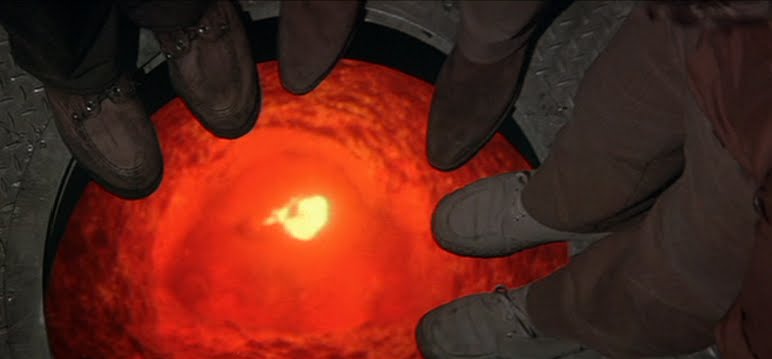
And, of course, there are other colorful guests at the hotel who will soon find themselves either fleeing from or drowning in molten lava.  There’s a white-collar criminal (Red Buttons) who is being pursued by a detective from New York (Ernest Borgnine, of course).  There’s also two retired tightrope walkers (Burgess Meredith and Valentina Cortese) and you better believe that there’s going to be a scene where one of them is going to have to walk across a plank that happens to be suspended over a river a lava…

Told ya!

Told ya!

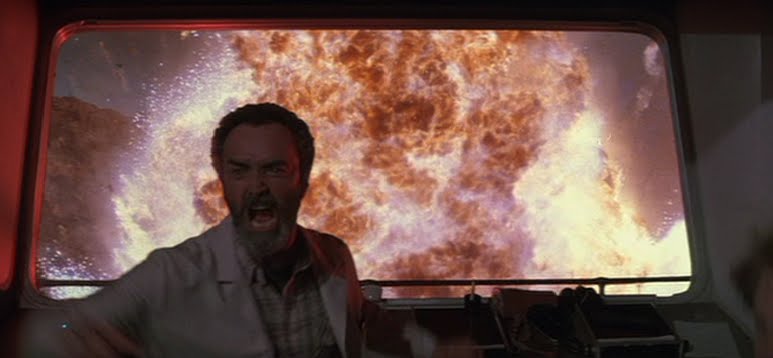
Eventually, that volcano does erupt and…well, let’s just say that When Time Ran Out is no Towering Inferno as far as the special effects are concerned.  The scene where one random fireball flies out of the volcano and heads for the resort is particularly amusing for all the wrong reasons.  Not only does the volcano apparently have perfect aim but it’s also painfully obvious that the fireball is streaking across a matte painting.  This is the type of film where, when people plunge into a river lava, they do so with heavy lines visible around their flailing bodies.  That, along with the cast’s obvious lack of interest in the material, adds up to make When Time Ran Out a film that is memorable for being so ultimately forgettable.

The Horror!

The Horror!

(It’s odd to consider that this film was directed by the same James Goldstone who directed such memorable films as Rollercoaster and Brother John.)

When Time Ran Out is something of a historical oddity because it was the last of the old 70s all-star disaster films.  (This may have been released in 1980 but it’s a 70s film through and through.)  The movie was such a monumental failure at the box office that it pretty much ended an era of disaster films.

For that reason, it also feels like an appropriate film with which to close out the 70s.  Tomorrow, we’ll continue to embrace the melodrama with the 1980s.

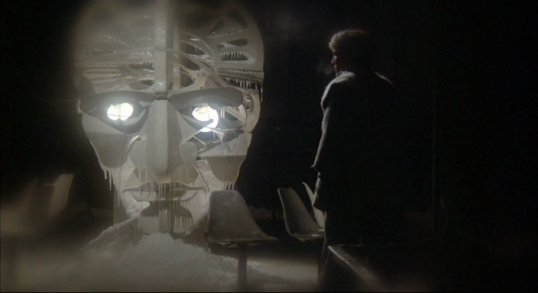
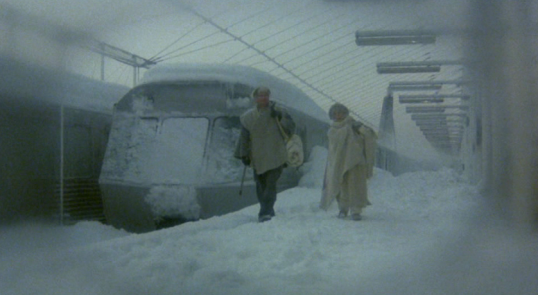
when time


Embracing the Melodrama #28: The Towering Inferno (dir by John Guillermin)


The_Towering_Inferno_1974-500x300

I have a weakness for the old, all-star disaster movies of the 1970s.  It could be because those movies remind me of how fragile life really is and encourage me to make the most of every minute.  Or maybe it’s because I have my phobias and, by watching those movies, I can confront my fears without having to deal with a real-life tornado, hurricane, tidal wave, avalanche, or fire.

Or maybe I just have a weakness of glitz, glamour, and melodrama — especially when it involves a huge cast of stars and character actors.  Yes that’s probably the reason right there.

Case in point: the 1974 best picture nominee, The Towering Inferno. 

As is the case with most of the classic disaster films, The Towering Inferno is a long and big movie but it has a very simple plot.  The world’s tallest building — known as the Glass Tower — has been built in San Francisco.  On the night of the grand opening, a fire breaks out, trapping all the rich and famous guests on the 135th floor.  Now, it’s up to the fire department to put out the fire while the trapped guests simply try to survive long enough to be rescued.  Some will live, some will die but one thing is certain — every member of the all-star cast will get at least 15 minutes of screen time and at least one chance to scream in the face of the film’s still effective special effects.

628x471

As for the people trapped by the towering inferno, we don’t really get to know them or their motivations.  (Add to that, once the fire breaks out, everyone pretty much only has one motivation and that’s to not die.)  As a result, we don’t so much react to them as characters as we do to personas of the actors who are playing them.

Steve-McQueen-in-The-Towe-001

For instance, we know that Fire Chief O’Halloran is a fearless badass and a natural leader because he’s played by Steve McQueen.  McQueen brings a certain blue collar arrogance to this role and it’s a lot of fun to watch as he gets progressively more and more annoyed with the rich people that he’s been tasked with rescuing.

We know that architect Doug Roberts is a good guy because he’s played by Paul Newman.  Reportedly, Newman and McQueen were very competitive and, in this movie, we literally get to see them go-head-to-head.  And, as charismatic as Newman is, McQueen pretty much wins the movie.  That’s because there’s never a moment that O’Halloran isn’t in charge.  Doug, meanwhile, spends most of the movie begging everyone else in the tower to exercise the common sense necessary to not die.  (Unfortunately, despite the fact that he looks and sounds just like Paul Newman, nobody in the tower feels like listening to Doug.  If Towering Inferno proves anything, it’s that most people are too stupid to survive a disaster.)

paul-newman-inferno1

The tower’s owner, James Duncan, is played by William Holden so we know that Duncan may be a ruthless businessman but that ultimately he’s one of the good guys.  Holden gets one of the best scenes in the film when, after being told that people in the building are catching on fire, he replies, “I think you’re overreacting.”

Roger Simmons is Duncan’s son-in-law and we know that he’s ultimately to blame for the fire because he’s played by Richard Chamberlain.  Roger might as well have a sign on his back that reads “Doomed.”  The same can be said of publicity executive Dan (Robert Wagner) and his girlfriend, Lorrie (Susan Flannery).

The_Towering_Inferno_1974_Faye_Dunaway_Mike_Lookinland

Faye Dunway is Susan.  She is Doug’s fiancée and she really doesn’t do much but she does get to wear a really pretty dress.  The same can be said of Susan Blakely, who plays Roger’s dissatisfied wife, and Jennifer Jones, who plays a recluse.  And good for them because if you’re going to be stuck in an inferno without much to do, you can at least take some comfort in looking good.

Then there’s Fred Astaire, who does not dance in this film.  Instead, he plays a kind-hearted con artist who ends up falling in love with Jennifer Jones.  Fred Astaire received his only Oscar nomination for his brief but likable performance in The Towering Inferno.

And finally, there’s the building’s head of security, Jernigan.  We know that he’s a murderer because he’s played by O.J. Simpson and … oh wait.  Jernigan is actually probably the second nicest guy in the whole film.  The only person nicer than Jernigan is Carlos, the bartender played by Gregory Sierra.

OJ

The real star of the film, of course, is the fire.  In the 40 years since The Towering Inferno was produced, there’s been a lot of advances in CGI and I imagine that if the film was made today, we’d be watching the fire in 3D and it would be so realistic that we’d probably feel the heat in the theater.  That said, the fire effects in The Towering Inferno are still pretty effective.  Now, I have to admit that I have a phobia (and frequent nightmares) about being trapped in a fire so, obviously, this is a film that’s specifically designed to work itself into my subconscious.  But that said, the scenes with various extras thrashing about in the flames are still difficult to watch.  There’s a scene where Robert Wagner and Susan Flannery find themselves trapped in a blazing reception area and it is pure nightmare fuel.

The Towering Inferno 9

The Towering Inferno is an undeniably effective disaster film.  At the same time, when one looks at the 1974 Oscar nominees, it’s odd to see The Towering Inferno nominated for best picture along with The Godfather Part II, Chinatown, and The Conversation.  Unlike those three, The Towering Inferno is hardly a great film.

But it is definitely an entertaining one.

toweringinferno2

Screentests I Love: James Dean and Paul Newman for East of Eden


Here’s a blast from the past:  In 1954, James Dean and Paul Newman audition for Elia Kazan’s East of Eden.  Dean, famously, was cast and earned his first posthumous Oscar nomination.  (His second nomination came for his work in Giant.)  Dean was 23 here.  Newman was 29.