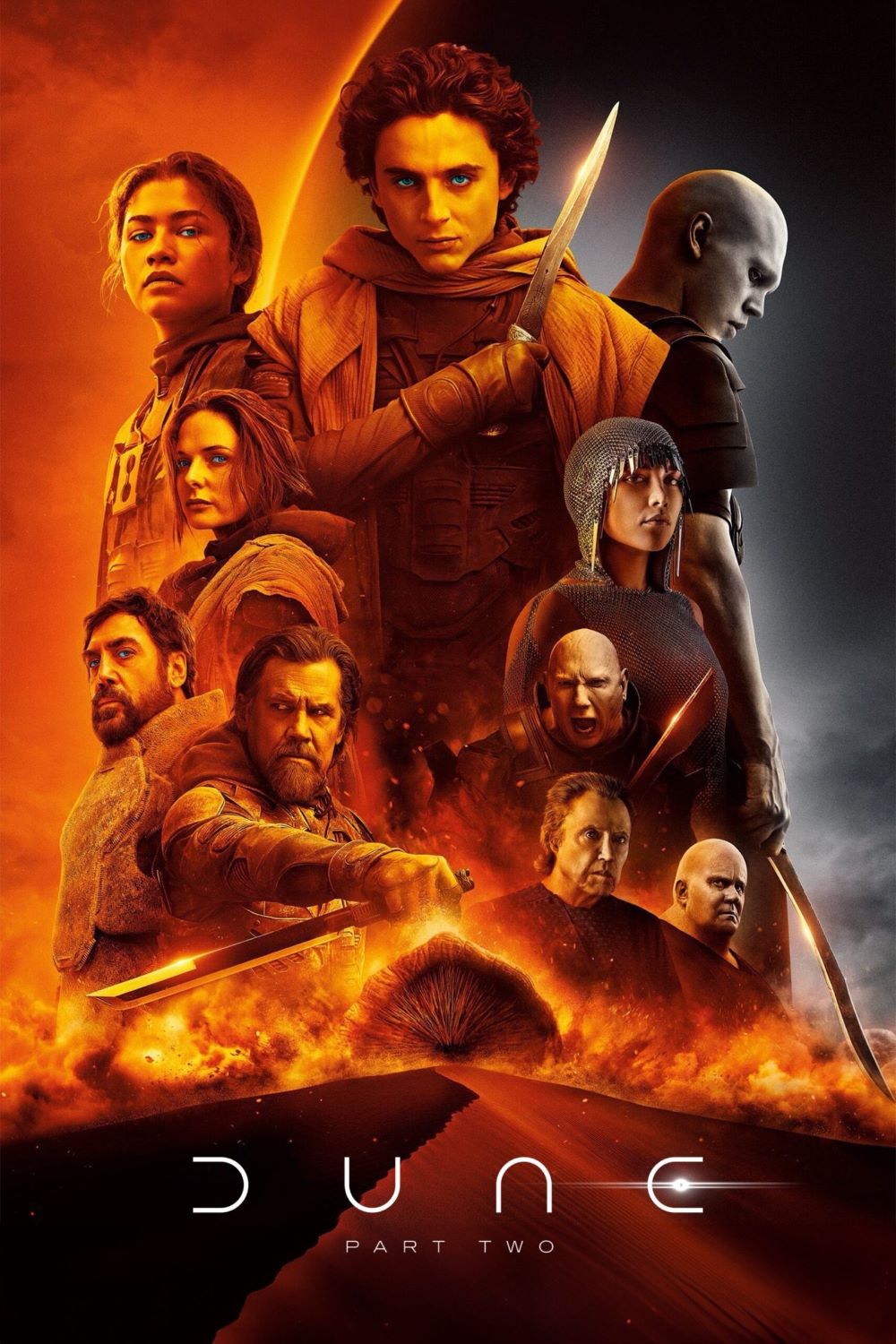
Dune: Part One (dir. by Denis Villeneuve) Review


“I said I would not harm them and I shall not. But Arrakis is Arrakis and the desert takes the weak. This is my desert. My Arrakis. My Dune.” — Baron Vladimir Harkonnen

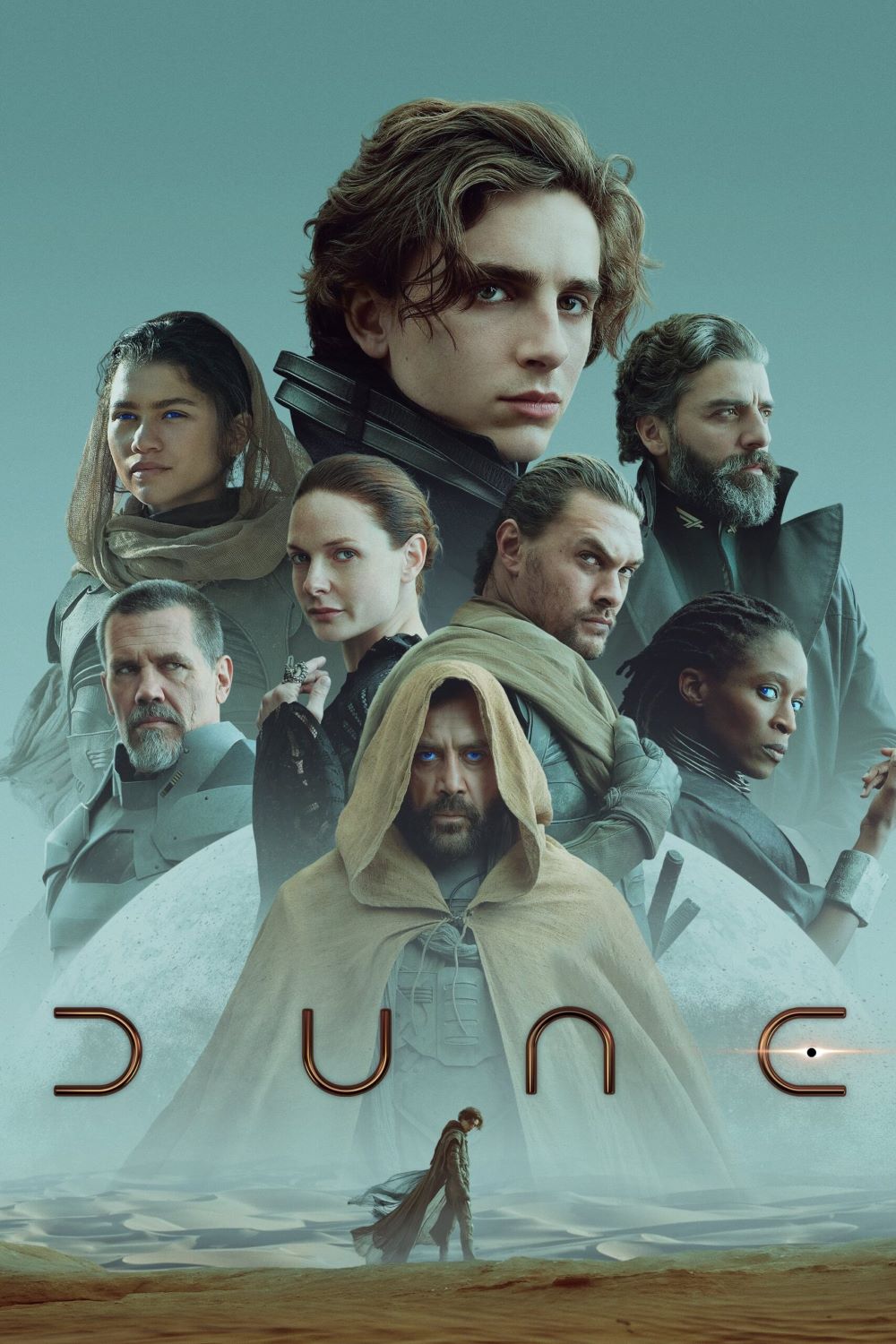
Denis Villeneuve’s Dune: Part One is one of those big, monolithic blockbusters that feels less like a movie night and more like being slowly lowered into someone else’s dream. It’s massive, deliberately paced, and sometimes emotionally chilly, but when it hits, it really hits, and you can feel a director absolutely obsessed with getting this universe right. The film adapts roughly the first half of Frank Herbert’s novel, following Paul Atreides, heir to House Atreides, as his family accepts control of the desert planet Arrakis, the only source of the spice melange that powers space travel and heightens human abilities. The setup is pure operatic space-feudalism: the Emperor orders House Atreides to take over Arrakis from their bitter rivals, House Harkonnen, in what is basically a beautifully staged death trap. Villeneuve leans into the political trap aspect; even if you’ve never read Dune, you can tell from minute one that this is not an opportunity, it’s a setup, and that sense of doom hangs over everything.

What Villeneuve really nails is the “ancient future” texture that people always talk about with Dune but rarely pull off on screen. The technology looks advanced but worn, ritualized, and heavy, from the gargantuan starships to the dragonfly-like ornithopters that rattle and pitch like actual aircraft instead of sleek sci-fi toys. The production design and Greig Fraser’s cinematography go all-in on scale: Caladan’s stormy oceans, Arrakis’s endless dunes, cavernous fortresses that make the human figures look insignificant. It’s not just pretty—it’s doing character work for the universe, selling you on the idea that people here live under forces (political, religious, environmental) that absolutely dwarf them. In theme terms, this is Villeneuve visually translating Herbert’s obsession with ecology and power structures, but he externalizes it more than the book: instead of living inside characters’ heads, you’re constantly being reminded how small they are against their environment.

All of that is backed by Hans Zimmer’s aggressive, sometimes overwhelming score, which sounds like someone trying to invent religious music for a civilization that doesn’t exist yet. It’s not subtle; there are bagpipes blaring on Caladan, guttural chants over Sardaukar warriors being ritually baptized in mud, and wailing voices that basically scream “destiny” every time Paul has a vision. But it syncs with Villeneuve’s approach: this is myth-making by way of blunt force, and the sound design and music are part of the same strategy of immersion and awe. Compared to the novel’s intricate, almost clinical tone, the film leans much harder into a mythic, quasi-religious mood. That means some of Herbert’s more sardonic or critical edges get smoothed out, but it also lets Villeneuve foreground the feeling of a civilization that already half-believes its own prophecies.

Narratively, Dune: Part One walks a weird tightrope. On one hand, this is a story about prophecies, chosen ones, and a messiah in the making, but on the other, the film quietly undercuts that fantasy. Villeneuve and his co-writers emphasize the Bene Gesserit’s centuries-long manipulation of bloodlines and myths, including seeding prophecies among the Fremen, so Paul’s “chosen one” status comes prepackaged with a lot of moral unease. That’s one of the places where Villeneuve stays very faithful to Herbert: the idea that religious belief can be engineered and weaponized. At the same time, by stripping out so much of the book’s interior commentary, the movie makes that critique more atmospheric than explicit. You feel that something is off about Paul’s destiny—the visions of holy war help with that—but you don’t hear the narrative voice outright interrogating the myth the way the novel does. It’s like Villeneuve wants the audience to experience the seduction of the messiah narrative first, and only slowly realize how poisonous it is.

Timothée Chalamet’s performance takes advantage of that approach by playing Paul as a kid who has been trained his whole life for greatness but absolutely does not want the role he’s being handed. Early on, he’s soft-spoken, almost recessive, but you see flashes of arrogance and temper, especially in the Gom Jabbar test and the later tent breakdown after his visions of a holy war in his name. Villeneuve doesn’t try to turn him into an instant charismatic leader; instead, he feels like a thoughtful, scared teenager caught in a machine that’s been running for centuries. That divergence from the source material is subtle but important: book-Paul, with all his internal analysis and mentat-like processing, comes off almost superhumanly composed. Film-Paul is less in control, more overwhelmed, which shifts the theme from “a superior mind learning to navigate fate” toward “a boy being crushed into a role he might never have truly chosen.”

The supporting cast is absurdly stacked, and the film uses them more as archetypes orbiting Paul than as fully fleshed-out characters, which is both a feature and a bug. Oscar Isaac’s Duke Leto radiates tired nobility, a man who knows he is walking into a trap but refuses to show fear because he needs his people to believe. Rebecca Ferguson’s Lady Jessica might be the most compelling presence in the movie: a Bene Gesserit trained in manipulation and control, visibly torn between her loyalty to the order and her love for her son. Ferguson gives Jessica a constant undercurrent of panic; even when she’s composed and commanding the Voice, you can feel the guilt and fear simmering underneath. In Herbert’s text, Jessica carries a heavy burden of calculation and self-critique through internal monologue; Villeneuve replaces that with rawer, more visible emotion. That choice makes Jessica more immediately relatable on screen but also shifts the theme slightly—from a cold, almost chess-like examination of breeding programs and long-term plans to a more intimate conflict between institutional programming and maternal love.

On the more purely fun side, Jason Momoa’s Duncan Idaho brings some sorely needed looseness and warmth. He’s one of the only characters who feels like he exists outside the grim political machinery, which makes his relationship with Paul read as genuinely affectionate instead of court-mandated mentorship. His big stand against the Sardaukar is shot like a mythic warrior’s last stand, and it sells Duncan as the kind of legend people would sing about after the fact. The tradeoff is that Duncan’s characterization leans into straightforward heroism; some of the book’s emphasis on the complexities and limits of loyalty gets compressed into a single grand gesture. Josh Brolin’s Gurney Halleck mostly glowers and shouts in this installment, but there’s enough there—especially in the training scene—that you get a sense of this gruff soldier-poet without the film ever stopping to spell it out. What’s missing, though, is the more overt sense of Atreides culture and camaraderie that the novel lingers on; Villeneuve sketches it, then moves on.

If the heroes lean archetypal, the villains almost go minimalistic to a fault. Stellan Skarsgård’s Baron Harkonnen is an imposing, bloated specter, more a presence than a personality; he spends a lot of time floating, brooding, and letting the makeup and lighting do the talking. In the book, the Baron is a much more talkative schemer, constantly plotting and vocalizing his nastiness, which underlines Herbert’s theme of decadence rotting the powerful from within. Here he’s closer to a horror-movie monster, which works visually but makes the political conflict feel a bit less textured. It’s a conscious trade: Villeneuve sacrifices some of Herbert’s satirical bite for a cleaner, more archetypal good-house-versus-evil-house dynamic. The Mentats, like Thufir Hawat and Piter de Vries, also get sidelined, and with them goes a lot of the book’s focus on human computation and the consequences of tech bans; the movie nods to that world-building but clearly doesn’t prioritize those themes.

Where Dune: Part One really shines is in its set-pieces that double as worldbuilding lessons. The spice harvester rescue sequence isn’t just about a sandworm attack; it’s a crash course in how dangerous Arrakis is, how unwieldy the spice operation can be, and how Paul reacts when the spice hits his system and his visions start intensifying. The hunter-seeker assassination attempt in his room does something similar for palace intrigue and surveillance, even if the staging (Paul standing unnervingly still as the device inches toward him) has rubbed some viewers the wrong way. These scenes make Arrakis feel like a living trap: environmental, political, and spiritual all at once. Compared to the novel’s detailed ecological and economic exposition, Villeneuve’s version is more experiential—you feel sandstorms and worm sign before you fully understand the larger ecological philosophy that Herbert spells out. That keeps the film more cinematic, but it also means the deeper environmental thesis is only hinted at rather than explored.

The downside of Villeneuve’s devotion to mood and worldbuilding is pacing. This is a two-and-a-half-hour movie that very much feels like “Part One,” and you can sense the absence of a conventional third-act climax. The story peaks emotionally with the fall of House Atreides—Leto’s death, Duncan’s sacrifice, Kynes’s end—but then keeps going, drifting into the deep desert with Paul and Jessica. The final duel with Jamis is thematically important—Paul’s first deliberate kill, a step toward becoming the kind of leader his visions imply—but as a closer for a blockbuster, it’s quiet and off-kilter. What’s interesting is how that duel distills one of Herbert’s key themes—the cost of survival and leadership—down to a single, intimate moment. The book wraps that in a ton of cultural detail and internal reflection; the film pares it down to body language, breath, and a few lines of dialogue. Villeneuve keeps the moral weight of the act but narrows the lens, trusting the audience to sit with what it means for Paul to cross that line without spelling it out.

If you come in as a Dune novice, the film is surprisingly navigable but not always emotionally generous. Villeneuve strips away the novel’s dense internal monologues and replaces them with visual suggestion and sparse dialogue, which keeps the movie from turning into a two-hour voiceover but also makes some motivations feel opaque. Characters like Dr. Yueh suffer the most from this approach; his betrayal happens so quickly and with so little setup that it plays more as a plot requirement than a tragic inevitability. That’s a clear case where the film discards a major thematic thread: Herbert uses Yueh to dig into ideas of conditioning, trauma, and the limits of “programmed” loyalty, but Villeneuve mostly uses him to push the plot into the Harkonnen attack. The tradeoff is understandable in a two-part film structure, but it’s a noticeable hollow spot for viewers who care about the story’s psychological underpinnings.

Still, as an opening movement, Dune: Part One feels like a deliberate choice to build the cathedral before lighting the candles. It’s more concerned with making Arrakis, its politics, and its religious machinery feel tangible than with delivering a neatly wrapped narrative. That can make it frustrating if you want a self-contained story, but it pays off in atmosphere: by the time Paul and Jessica join Stilgar’s Fremen and we get that final image of a sandworm being ridden across the dunes, you believe this is a place where myths can walk around as real people. Villeneuve stays true to Herbert’s broad thematic architecture—power, religion as control, ecology as destiny—but he discards a lot of the author’s density and interior commentary in favor of a more streamlined, sensory-driven experience. As a result, the film feels less like reading a dense political text and more like standing inside the legend that text would later be written about.

As a complete film, it’s imperfect—sometimes emotionally distant, sometimes so in love with its own scale that character beats get swallowed—but it’s also one of the rare modern blockbusters that feels handcrafted rather than committee-engineered. As an adaptation, it respects the spirit of Dune while making sharp, cinematic choices about what to emphasize and what to streamline, even if that means some beloved book moments get reduced or reconfigured. And as a foundation for a larger saga, it does exactly what “Part One” says on the label: it sets the board, crowns no clear winners, and leaves you with the distinct feeling that the real story—the dangerous one—is only just beginning.

Here’s What Won At The Golden Globes!


I didn’t watch the Golden Globes on Sunday night.  Technically, it’s because I wasn’t feeling well and I needed to get some rest.  In reality, even if I had been healthy, I don’t know that I would have watched.  A few years ago, the Golden Globes were not televised and I discovered how liberating it was to not have to pretend to care about this stupid show.

That said, the Globes are considered an Oscar precursor, despite the fact that no one’s even sure who is voting on them nowadays.  So, here’s what won on Sunday night:

BEST MOTION PICTURE, DRAMA
Frankenstein
Hamnet
It Was Just an Accident
The Secret Agent
Sentimental Value
Sinners

BEST MOTION PICTURE, MUSICAL OR COMEDY
Blue Moon
Bugonia
Marty Supreme
No Other Choice
Nouvelle Vague
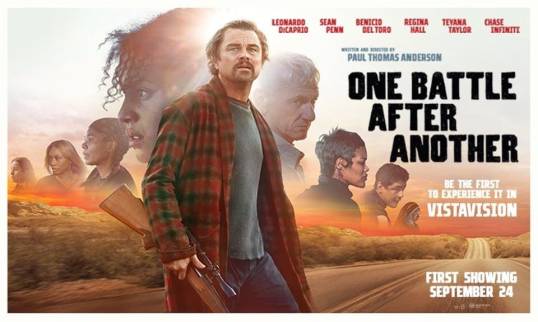
One Battle After Another

BEST DIRECTOR, MOTION PICTURE
Paul Thomas Anderson – One Battle After Another

Ryan Coogler – Sinners
Guillermo del Toro – Frankenstein
Jafar Panahi – It Was Just an Accident
Joachim Trier – Sentimental Value
Chloe Zhao – Hamnet

BEST PERFORMANCE BY AN ACTRESS IN A MOTION PICTURE, DRAMA
Jessie Buckley – Hamnet

Jennifer Lawrence – Die, My Love
Renate Reinsve – Sentimental Value
Julia Roberts – After the Hunt
Tessa Thompson – Hedda
Eva Victor – Sorry, Baby

BEST PERFORMANCE BY AN ACTRESS IN A MOTION PICTURE, MUSICAL, OR COMEDY
Rose Byrne – If I Had Legs I’d Kick You

Cynthia Erivo – Wicked: For Good
Kate Hudson – Song Sung Blue
Chase Infiniti – One Battle After Another
Amanda Seyfried – The Testament of Ann Lee
Emma Stone – Bugonia

BEST PERFORMANCE BY AN ACTRESS IN A SUPPORTING ROLE IN ANY MOTION PICTURE
Emily Blunt – The Smashing Machine
Elle Fanning – Sentimental Value
Ariana Grande – Wicked: For Good
Inga Ibsdotter Lilleaas – Sentimental Value
Amy Madigan – Weapons
Teyana Taylor – One Battle After Another

BEST PERFORMANCE BY AN ACTOR IN A MOTION PICTURE, DRAMA
Joel Edgerton – Train Dreams
Oscar Isaac – Frankenstein
Dwayne Johnson – The Smashing Machine
Michael B. Jordan – Sinners
Wagner Moura – The Secret Agent
Jeremy Allen White – Springsteen: Deliver Me from Nowhere

BEST PERFORMANCE BY AN ACTOR IN A MOTION PICTURE, MUSICAL, OR COMEDY
Lee Byung-hun – No Other Choice
Timothee Chalamet – Marty Supreme
George Clooney – Jay Kelly
Leonardo DiCaprio – One Battle After Another
Ethan Hawke – Blue Moon
Jesse Plemons – Bugonia

BEST PERFORMANCE BY AN ACTOR IN A SUPPORTING ROLE IN ANY MOTION PICTURE
Benicio Del Toro – One Battle After Another
Jacob Elordi – Frankenstein
Paul Mescal – Hamnet
Sean Penn – One Battle After Another
Adam Sandler – Jay Kelly
Stellan Skarsgård – Sentimental Value

BEST SCREENPLAY, MOTION PICTURE
Hamnet
It Was Just an Accident
Marty Supreme
One Battle After Another
Sentimental Value
Sinners

BEST ORIGINAL SCORE, MOTION PICTURE
F1: The Movie
Frankenstein
Hamnet
One Battle After Another
Sinners
Sirat

BEST ORIGINAL SONG, MOTION PICTURE
Avatar: Fire and Ash – “Dream as One”
KPop Demon Hunters – “Golden”
Sinners – “I Lied to You”
Train Dreams – “Train Dreams”
Wicked: For Good – “No Place Life Home”
Wicked: For Good – “The Girl in the Bubble”

BEST MOTION PICTURE, ANIMATED
Arco
Demon Slayer: Kimetsu No Yaiba The Movie
Elio
KPop Demon Hunters
Little Amelie or the Character of Rain
Zootopia 2

BEST MOTION PICTURE, FOREIGN LANGUAGE
It Was Just an Accident
No Other Choice
The Secret Agent
Sentimental Value
Sirat
The Voice of Hind Rajab

GOLDEN GLOBE FOR CINEMATIC & BOX OFFICE ACHIEVEMENT
Avatar: Fire and Ash
F1: The Movie
KPop Demon Hunters
Mission: Impossible — The Final Reckoning
Sinners

Weapons
Wicked: For Good
Zootopia 2

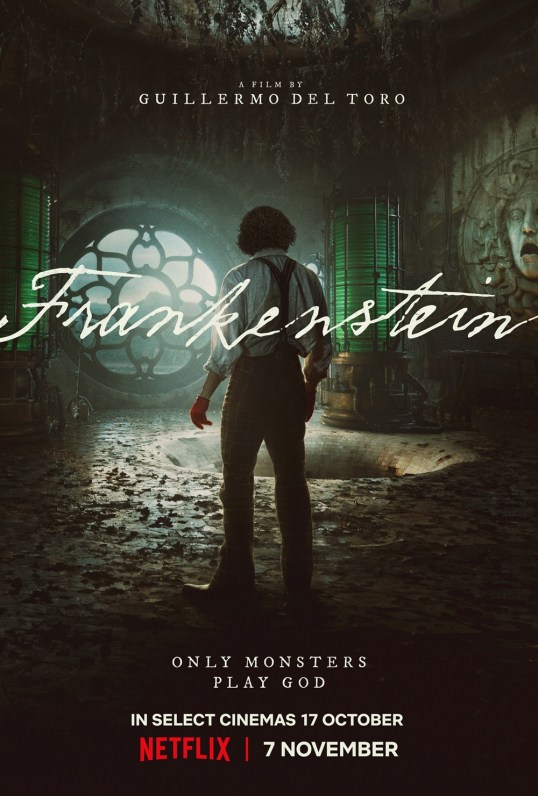
Review: Frankenstein (dir. by Guillermo Del Toro)


“An idea, a feeling became clear to me. The hunter did not hate the wolf. The wolf did not hate the sheep. But violence felt inevitable between them. Perhaps, I thought, this was the way of the world. It would hunt you and kill you just for being who you are.” — the Creature

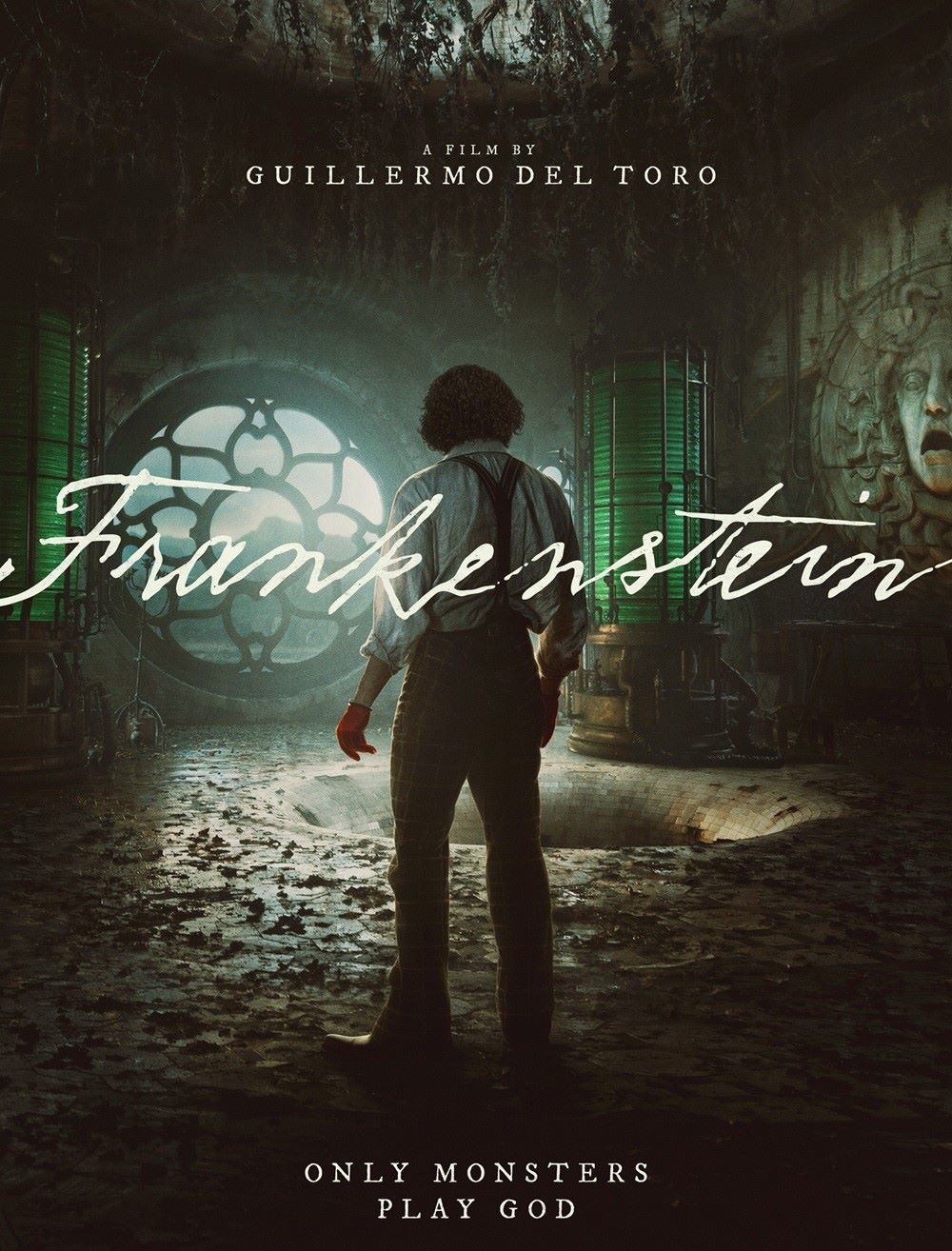
Guillermo del Toro’s long-awaited take on Frankenstein finally lumbers to life after years of speculation and teases, and it’s every bit the dark, hypnotic fever dream you’d expect from his imagination. The film, a Netflix-backed production running close to two and a half hours, stars Oscar Isaac as the guilt-ridden Victor Frankenstein and Jacob Elordi as his tragic creation. The result lands somewhere between Gothic melodrama and spiritual lament—a lush, melancholy epic about fathers, sons, and the price of neglect. It’s both a triumph of aesthetic world-building and a case study in overindulgence, the kind of movie that leaves you haunted even when it occasionally tests your patience.

From the very first frame, del Toro plunges us into a Europe steeped in rot and beauty. His world feels more haunted than alive—every misty street lamp and echoing corridor loaded with centuries of decay. Victor, introduced as both a visionary and a failed son, is shaped by years of cruelty at the hands of his domineering father, played with aristocratic venom by Charles Dance. That upbringing lingers in every decision he makes, especially when he turns to science to defy death. Del Toro shoots his laboratory scenes as though they were sacred rituals: the flicker of candlelight reflecting off glass jars, the close-up of trembling hands threading sinew into flesh. When the Creature awakens, lightning cracks like some divine act of punishment. It’s a birth scene that feels more emotional than monstrous—Elordi’s raw, wordless confusion gives it a painful tenderness that lingers longer than the horror. Del Toro discards the usual clichés of flat heads and neck bolts, opting for something far more human: an imperfect body full of scars and stitched reminders of mortality.

One of the most striking choices del Toro makes is reframing Victor and the Creature as mirror images rather than opposites. Instead of playing Victor as a simple mad scientist, del Toro paints him as a broken man desperate to reclaim the control he never had as a child. That fear and obsession ripple through the Creature, who becomes his unacknowledged shadow—an extension of Victor’s failure to love or take responsibility. The movie often frames the two in parallel shots, their movements synchronized across different spaces, suggesting that creator and creation are locked in a tragic loop. The audience watches both sides of the story—Victor’s guilt and the Creature’s anguish—without clear moral lines. This emotional split gives the film its heartbeat: the Creature isn’t a villain so much as a rejected child, articulate and lonely, begging to know why he was made to suffer.

Jacob Elordi’s performance is revelatory. He channels something hauntingly human beneath the layers of prosthetics and makeup. There’s a fragility to the way he moves—those long, uncertain gestures feel less like a monster testing its strength and more like someone trying to exist in a world that never wanted him. His eyes carry the movie’s emotional weight; the moment he sees his reflection for the first time is quietly devastating. Oscar Isaac, meanwhile, leans hard into Victor’s manic idealism, all sweat-soaked ambition and buried grief. He makes the character compelling even at his most despicable, though at times del Toro’s dialogue spells out Victor’s torment too bluntly. Still, the scenes between them—particularly their tense reunion in the frozen north—achieve the Shakespearean tragedy that del Toro clearly aims for.

Visually, Frankenstein is pure del Toro—sumptuous, grotesque, and alive in every corner of its composition. Each frame looks painted rather than filmed: flickers of gaslight reflecting on wet marble, glass jars filled with organs that seem to breathe, snow settling gently on slate rooftops. The film feels drenched in the texture of another century, yet vibrates with modern energy. Costume designer Kate Hawley, longtime collaborator of del Toro, deserves special recognition here. Her work helps define the story’s emotional tone, dressing Victor in meticulously tailored waistcoats that hint at obsession through precision, and the Creature in tattered fabrics that seem scavenged from several lives. Elizabeth’s gowns chart her erosion from warmth to mourning, using color and texture as silent narration. Hawley’s palette moves from opulent golds and creams to bleak greys and winter blues—visually tracing how ambition and grief drain the light from these characters’ worlds. The costumes, much like del Toro’s sets, feel alive with history, heavy with stories stitched into every seam.

Mia Goth gives a strong, if underused, turn as Elizabeth, Victor’s doomed fiancée. Her early scenes bring a spark of warmth to the story’s coldness; her later ones turn tragic in ways that push Victor toward his final breakdown. Minor characters—the townspeople, the academics, the curious aristocrats who toy with Victor’s discovery—carry familiar del Toro trademarks: grotesque faces, eccentric manners, glimmers of compassion buried in callousness. The composer’s score matches this tone perfectly, alternating between aching melodies on piano and surging orchestral crescendos that make even the quiet scenes feel mythic. Combined, the sound and visuals give Frankenstein a grandeur that most modern horror films wouldn’t dare attempt.

Still, not every gamble lands cleanly. Del Toro’s interpretation leans so hard into empathy that it dulls the edges of the original story’s moral conflict. Shelley’s Creature grows into a murderous intellect, acting out of vengeance as much as sorrow; here, his violence is softened or implied, as though del Toro can’t quite bring himself to stain the monster’s purity. The effect is powerful emotionally but flattens some of the tension—Victor becomes the clear villain, and the Creature, the clear victim. It fits del Toro’s worldview but leaves the viewer missing some ambiguity. The pacing also falters in the middle third. There are long, ornate monologues about divinity, creation, and guilt that blur together into a swirl of purple prose. The visuals never lose their grip, but the script occasionally does, especially when it slows down to explain what the imagery already tells us.

Those fits of overexplanation aside, del Toro’s Frankenstein stays deeply personal. The story connects directly to the themes he’s mined for years: innocence cursed by cruelty, love framed in pain, beauty stitched from the broken. The Creature isn’t just man made from corpses; he’s a kind of prayer for grace—a plea for understanding in a world defined by rejection. Victor’s failure to nurture becomes an act of spiritual cowardice rather than scientific arrogance. The parallels between them give the film its emotional voltage. Every time one character suffers, the other feels it by proxy, as if their bond transcends life and death.

By the final act, all the grand tragedy is distilled into the silence between two beings who can’t forgive each other—but can’t let go, either. The closing image of the Creature, trudging across a barren arctic plain beneath a rising sun, borders on mythic. His tear-streaked face and quiet acceptance of solitude bring the story full circle: a being born of man’s arrogance chooses forgiveness when his maker couldn’t. It’s sad, tender, and surprisingly spiritual, hinting at del Toro’s constant fascination with mercy in a cruel universe.

As a whole, Frankenstein feels like the culmination of del Toro’s career obsessions condensed into one sprawling film. It’s not perfect—it wanders, it sermonizes, and it sometimes sacrifices fear for sentiment—but it’s haunted by sincerity. You can see del Toro’s fingerprints in every gothic curve and crimson hue, and even when he overreaches, you believe in his conviction. Isaac anchors the film with burning intensity, Elordi gives it wounded humanity, and Goth tempers the heaviness with grace.

In the end, this version of Frankenstein isn’t about horror in the traditional sense. It’s not there to make you jump—it’s there to make you ache. The film trades sharp scares for bruised hearts, replacing terror with empathy. Del Toro reanimates not just flesh but feeling, dragging one of literature’s oldest monsters into our modern reckoning with parenthood, grief, and the burden of creation. It’s daring, messy, and undeniably alive. For better or worse, it’s exactly the Frankenstein Guillermo del Toro was always meant to make.

Here Are The 2025 Satellite Nominations


I’m not really sure why the Satellite Awards are a still a thing but they are.  (Peanut gallery: “Jokes on you, Lisa!  You’re still writing about them!”)  Here are their 2025 film nominations.

Best Picture (Drama)
Avatar: Fire And Ash
Frankenstein
Hamnet
One Battle After Another
Sinners
Sentimental Value
Train Dreams

Best Picture (Comedy or Musical)
Bugonia
Father Mother Sister Brother
Marty Supreme
Nouvelle Vague
Novocaine
Sorry, Baby

Best Director
Chloé Zhao – Hamnet
Guillermo del Toro – Frankenstein
Jafar Panahi – It Was Just an Accident
James Cameron – Avatar: Fire And Ash
Joachim Trier – Sentimental Value
Paul Thomas Anderson – One Battle After Another
Ryan Coogler – Sinners

Best Actor (Drama)
Joel Edgerton – Train Dreams
Leonardo DiCaprio – One Battle After Another
Michael B. Jordan – Sinners
Oscar Isaac – Frankenstein
Wagner Moura – The Secret Agent

Best Actress (Drama)
Chase Infiniti – One Battle After Another
Diane Lane – Anniversary
Jessie Buckley – Hamnet
Leonie Benesch – Late Shift
Renate Reinsve – Sentimental Value

Best Actor (Comedy or Musical)
Ethan Hawke – Blue Moon
George Clooney – Jay Kelly
Jesse Plemons – Bugonia
Liam Neeson – The Naked Gun
Timothée Chalamet – Marty Supreme

Best Actress (Comedy or Musical)
Cynthia Erivo – Wicked: For Good
Emma Stone – Bugonia
Eva Victor – Sorry, Baby
Rose Byrne – If I Had Legs I’d Kick You

Best Supporting Actor
Benicio del Toro – One Battle After Another
Jacob Elordi – Frankenstein
Paul Mescal – Hamnet
Sean Penn – One Battle After Another
Stellan Skarsgård – Sentimental Value

Best Supporting Actress
Amy Madigan – Weapons
Ariana Grande – Wicked: For Good
Elle Fanning – Sentimental Value
Inga Ibsdotter Lilleaas – Sentimental Value
Teyana Taylor – One Battle After Another
Wunmi Mosaku – Sinners

Best Original Screenplay
Eskil Vogt & Joachim Trier – Sentimental Value
Jafar Panahi – It Was Just an Accident
Noah Baumbach & Emily Mortimer – Jay Kelly
Ronald Bronstein & Josh Safdie – Marty Supreme
Ryan Coogler – Sinners

Best Adapted Screenplay
Clint Bentley & Greg Kwedar – Train Dreams
Chloé Zhao – Hamnet
Park Chan-wook, Lee Kyoung-mi, Don McKellar & Lee Ja-hye – No Other Choice
Paul Thomas Anderson – One Battle After Another
Will Tracy – Bugonia

Best Animated Feature
Arco
Elio
KPop Demon Hunters
Little Amélie or the Character of Rain
Zootopia 2

Best Documentary
2000 Meters to Andriivka
Becoming Led Zeppelin
Come See Me in the Good Light
Cover-Up
Deaf President Now!
Ocean with David Attenborough
Orwell: 2+2=5
The Alabama Solution
The Librarians
The Perfect Neighbor

Best International Film
It Was Just an Accident
Late Shift
Little Trouble Girls
No Other Choice
Sentimental Value
Sirât
The Secret Agent
The Voice of Hind Rajab

Best Cinematography
Adolpho Veloso – Train Dreams
Autumn Durald Arkapaw – Sinners
Claudio Miranda – F1: The Movie
Dan Laustsen – Frankenstein
Łukasz Żal – Hamnet
Michael Bauman – One Battle After Another

Best Editing
Affonso Gonçalves & Chloé Zhao – Hamnet
Andy Jurgensen – One Battle After Another
Kirk Baxter – A House of Dynamite
Michael P. Shawver – Sinners
Ronald Bronstein & Josh Safdie – Marty Supreme
Stephen Mirrione – F1: The Movie

Best Production Design
Avatar: Fire And Ash
Frankenstein
Hamnet
Marty Supreme
Sinners
Wicked: For Good

Best Costume Design
Kate Hawley – Frankenstein
Malgosia Turzanska – Hamnet
Miyako Bellizzi – Marty Supreme
Paul Tazewell – Wicked: For Good
Ruth E. Carter – Sinners

Best Original Score
Alexandre Desplat – Frankenstein
Hans Zimmer – F1: The Movie
Jonny Greenwood – One Battle After Another
Ludwig Göransson – Sinners
Max Richter – Hamnet
Volker Bertelmann – A House of Dynamite

Best Original Song
“Dreams as One” – Avatar: Fire And Ash
“Golden” – KPop Demon Hunters
“I Lied to You” – Sinners
“No Place Like Home” – Wicked: For Good
“The Girl in the Bubble” – Wicked: For Good
“Train Dreams” – Train Dreams

Best Makeup & Hair
Bugonia
Frankenstein
Sinners
The Smashing Machine
Tron: Ares
Wicked: For Good

Best Sound (Editing & Mixing)
Avatar: Fire And Ash
F1: The Movie
Mission: Impossible – The Final Reckoning
One Battle After Another
Sinners
Wicked: For Good

Best Visual Effects
Avatar: Fire And Ash
F1: The Movie
Frankenstein
Mission: Impossible – The Final Reckoning
Sinners
Superman

Best Ensemble
Wake Up Dead Man: A Knives Out Mystery

One Battle After Another Emerges From The Ashes Of Phoenix


The Phoenix Critics Circle has announced their picks for the best of 2025!  The winners are listed in bold.

BEST PICTURE
HAMNET
IT WAS JUST AN ACCIDENT
ONE BATTLE AFTER ANOTHER
SENTIMENTAL VALUE
SINNERS

BEST COMEDY FILM
THE BALLAD OF WALLIS ISLAND
BUGONIA
FRIENDSHIP
THE NAKED GUN
RENTAL FAMILY

BEST SCIENCE FICTION FILM
BUGONIA
COMPANION
FRANKENSTEIN
MICKEY 17
THE RUNNING MAN

BEST HORROR FILM
28 YEARS LATER
BRING HER BACK
SINNERS
THE UGLY STEPSISTER
WEAPONS

BEST ANIMATED FILM
ELIO
KPOP DEMON HUNTERS
PREDATOR: KILLER OF KILLERS
ZOOTOPIA 2

BEST DOCUMENTARY
DEAF PRESIDENT NOW!
LILITH FAIR: BUILDING A MYSTERY
ORWELL: 2+2=5
PREDATORS
THE PERFECT NEIGHBOR

BEST FOREIGN LANGUAGE FILM
IT WAS JUST AN ACCIDENT
NO OTHER CHOICE
THE SECRET AGENT
SENTIMENTAL VALUE
SIRAT

BEST ACTOR IN A LEADING ROLE
TIMOTHEE CHALAMET, MARTY SUPREME
LEONARDO DICAPRIO, ONE BATTLE AFTER ANOTHER
JOEL EDGERTON, TRAIN DREAMS
OSCAR ISAAC, FRANKENSTEIN
MICHAEL B. JORDAN, SINNERS

BEST ACTRESS IN A LEADING ROLE
JESSIE BUCKLEY, HAMNET
ROSE BYRNE, IF I HAD LEGS I’D KICK YOU
CHASE INFINITI, ONE BATTLE AFTER ANOTHER
JENNIFER LAWRENCE, DIE MY LOVE
RENATE REINSVE, SENTIMENTAL VALUE

BEST ACTOR IN A SUPPORTING ROLE
BENICIO DEL TORO, ONE BATTLE AFTER ANOTHER
JACOB ELORDI, FRANKENSTEIN
DELROY LINDO, SINNERS
SEAN PENN, ONE BATTLE AFTER ANOTHER
STELLAN SKARSGARD, SENTIMENTAL VALUE

BEST ACTRESS IN A SUPPORTING ROLE
ODESSA A’ZION, MARTY SUPREME
INGA IBSDOTTER LILLEAAS, SENTIMENTAL VALUE
AMY MADIGAN, WEAPONS
WUNMI MOSAKU, SINNERS
TEYANA TAYLOR, ONE BATTLE AFTER ANOTHER

BEST DIRECTOR
PAUL THOMAS ANDERSON, ONE BATTLE AFTER ANOTHER
PARK CHAN-WOOK, NO OTHER CHOICE
RYAN COOGLER, SINNERS
JAFAR PANAHI, IT WAS JUST AN ACCIDENT
JOACHIM TRIER, SENTIMENTAL VALUE

BEST SCREENPLAY
PAUL THOMAS ANDERSON, ONE BATTLE AFTER ANOTHER
RYAN COOGLER, SINNERS
JAFAR PANAHI, IT WAS JUST AN ACCIDENT
JOACHIM TRIER & ESKIL VOGT, SENTIMENTAL VALUE
EVA VICTOR, SORRY, BABY

BEST CINEMATOGRAPHY
MICHAEL BAUMAN, ONE BATTLE AFTER ANOTHER
AUTUMN DURALD ARKAPAW, SINNERS
ADOLPHO VELOSO, TRAIN DREAMS
KIM WOO-HYUNG, NO OTHER CHOICE

BEST SCORE
ALEXANDRE DESPLAT, FRANKENSTEIN
JONNY GREENWOOD, ONE BATTLE AFTER ANOTHER
LUDWIG GORANSSON, SINNERS
KANGDING RAY, SIRAT

BEST STUNT COORDINATION
FRANKENSTEIN
MISSION: IMPOSSIBLE – THE FINAL RECKONING
ONE BATTLE AFTER ANOTHER
SINNERS
WEAPONS

Here Are The 2025 Nominations of The Phoenix Critics Circle


Here are the 2025 nominations of the Phoenix Critics Circle!

BEST PICTURE
HAMNET
IT WAS JUST AN ACCIDENT
ONE BATTLE AFTER ANOTHER
SENTIMENTAL VALUE
SINNERS

BEST COMEDY FILM
THE BALLAD OF WALLIS ISLAND
BUGONIA
FRIENDSHIP
THE NAKED GUN
RENTAL FAMILY

BEST SCIENCE FICTION FILM
BUGONIA
COMPANION
FRANKENSTEIN
MICKEY 17
THE RUNNING MAN

BEST HORROR FILM
28 YEARS LATER
BRING HER BACK
SINNERS
THE UGLY STEPSISTER
WEAPONS

BEST ANIMATED FILM
ELIO
KPOP DEMON HUNTERS
PREDATOR: KILLER OF KILLERS
ZOOTOPIA 2

BEST DOCUMENTARY
DEAF PRESIDENT NOW!
LILITH FAIR: BUILDING A MYSTERY
ORWELL: 2+2=5
PREDATORS
THE PERFECT NEIGHBOR

BEST FOREIGN LANGUAGE FILM
IT WAS JUST AN ACCIDENT
NO OTHER CHOICE
THE SECRET AGENT
SENTIMENTAL VALUE
SIRAT

BEST ACTOR IN A LEADING ROLE
TIMOTHEE CHALAMET, MARTY SUPREME
LEONARDO DICAPRIO, ONE BATTLE AFTER ANOTHER
JOEL EDGERTON, TRAIN DREAMS
OSCAR ISAAC, FRANKENSTEIN
MICHAEL B. JORDAN, SINNERS

BEST ACTRESS IN A LEADING ROLE
JESSIE BUCKLEY, HAMNET
ROSE BYRNE, IF I HAD LEGS I’D KICK YOU
CHASE INFINITI, ONE BATTLE AFTER ANOTHER
JENNIFER LAWRENCE, DIE MY LOVE
RENATE REINSVE, SENTIMENTAL VALUE

BEST ACTOR IN A SUPPORTING ROLE
BENICIO DEL TORO, ONE BATTLE AFTER ANOTHER
JACOB ELORDI, FRANKENSTEIN
DELROY LINDO, SINNERS
SEAN PENN, ONE BATTLE AFTER ANOTHER
STELLAN SKARSGARD, SENTIMENTAL VALUE

BEST ACTRESS IN A SUPPORTING ROLE
ODESSA A’ZION, MARTY SUPREME
INGA IBSDOTTER LILLEAAS, SENTIMENTAL VALUE
AMY MADIGAN, WEAPONS
WUNMI MOSAKU, SINNERS
TEYANA TAYLOR, ONE BATTLE AFTER ANOTHER

BEST DIRECTOR
PAUL THOMAS ANDERSON, ONE BATTLE AFTER ANOTHER
PARK CHAN-WOOK, NO OTHER CHOICE
RYAN COOGLER, SINNERS
JAFAR PANAHI, IT WAS JUST AN ACCIDENT
JOACHIM TRIER, SENTIMENTAL VALUE

BEST SCREENPLAY
PAUL THOMAS ANDERSON, ONE BATTLE AFTER ANOTHER
RYAN COOGLER, SINNERS
JAFAR PANAHI, IT WAS JUST AN ACCIDENT
JOACHIM TRIER & ESKIL VOGT, SENTIMENTAL VALUE
EVA VICTOR, SORRY, BABY

BEST CINEMATOGRAPHY
MICHAEL BAUMAN, ONE BATTLE AFTER ANOTHER
AUTUMN DURALD ARKAPAW, SINNERS
ADOLPHO VELOSO, TRAIN DREAMS
KIM WOO-HYUNG, NO OTHER CHOICE

BEST SCORE
ALEXANDRE DESPLAT, FRANKENSTEIN
JONNY GREENWOOD, ONE BATTLE AFTER ANOTHER
LUDWIG GORANSSON, SINNERS
KANGDING RAY, SIRAT

BEST STUNT COORDINATION
FRANKENSTEIN
MISSION: IMPOSSIBLE – THE FINAL RECKONING
ONE BATTLE AFTER ANOTHER
SINNERS
WEAPONS

Here Are The 2025 Golden Globe Nominations


Does anyone care about the Golden Globes any more?  I remember that there was a feeling of relief when it looked like we would finally be free from having to worry about them.  Of course, the Globes are back and under new management.  They’re clawing their way back to relevancy, or at least they’re trying.

To be honest, I don’t trust the nominations below.  I think it’s all about getting people to watch their ceremony again.  Still, the Golden Globes are a thing and here are the film nominations for this year.  The winners will be revealed on January 11th.

BEST MOTION PICTURE, DRAMA
Frankenstein
Hamnet
It Was Just an Accident
The Secret Agent
Sentimental Value
Sinners

BEST MOTION PICTURE, MUSICAL OR COMEDY
Blue Moon
Bugonia
Marty Supreme
No Other Choice
Nouvelle Vague
One Battle After Another

BEST DIRECTOR, MOTION PICTURE
Paul Thomas Anderson – One Battle After Another
Ryan Coogler – Sinners
Guillermo del Toro – Frankenstein
Jafar Panahi – It Was Just an Accident
Joachim Trier – Sentimental Value
Chloe Zhao – Hamnet

BEST PERFORMANCE BY AN ACTRESS IN A MOTION PICTURE, DRAMA
Jessie Buckley – Hamnet
Jennifer Lawrence – Die, My Love
Renate Reinsve – Sentimental Value
Julia Roberts – After the Hunt
Tessa Thompson – Hedda
Eva Victor – Sorry, Baby

BEST PERFORMANCE BY AN ACTRESS IN A MOTION PICTURE, MUSICAL, OR COMEDY
Rose Byrne – If I Had Legs I’d Kick You
Cynthia Erivo – Wicked: For Good
Kate Hudson – Song Sung Blue
Chase Infiniti – One Battle After Another
Amanda Seyfried – The Testament of Ann Lee
Emma Stone – Bugonia

BEST PERFORMANCE BY AN ACTRESS IN A SUPPORTING ROLE IN ANY MOTION PICTURE
Emily Blunt – The Smashing Machine
Elle Fanning – Sentimental Value
Ariana Grande – Wicked: For Good
Inga Ibsdotter Lilleaas – Sentimental Value
Amy Madigan – Weapons
Teyana Taylor – One Battle After Another

BEST PERFORMANCE BY AN ACTOR IN A MOTION PICTURE, DRAMA
Joel Edgerton – Train Dreams
Oscar Isaac – Frankenstein
Dwayne Johnson – The Smashing Machine
Michael B. Jordan – Sinners
Wagner Moura – The Secret Agent
Jeremy Allen White – Springsteen: Deliver Me from Nowhere

BEST PERFORMANCE BY AN ACTOR IN A MOTION PICTURE, MUSICAL, OR COMEDY
Lee Byung-hun – No Other Choice
Timothee Chalamet – Marty Supreme
George Clooney – Jay Kelly
Leonardo DiCaprio – One Battle After Another
Ethan Hawke – Blue Moon
Jesse Plemons – Bugonia

BEST PERFORMANCE BY AN ACTOR IN A SUPPORTING ROLE IN ANY MOTION PICTURE
Benicio Del Toro – One Battle After Another
Jacob Elordi – Frankenstein
Paul Mescal – Hamnet
Sean Penn – One Battle After Another
Adam Sandler – Jay Kelly
Stellan Skarsgård – Sentimental Value

BEST SCREENPLAY, MOTION PICTURE
Hamnet
It Was Just an Accident
Marty Supreme
One Battle After Another
Sentimental Value
Sinners

BEST ORIGINAL SCORE, MOTION PICTURE
F1: The Movie
Frankenstein
Hamnet
One Battle After Another
Sinners
Sirat

BEST ORIGINAL SONG, MOTION PICTURE
Avatar: Fire and Ash – “Dream as One”
KPop Demon Hunters – “Golden”
Sinners – “I Lied to You”
Train Dreams – “Train Dreams”
Wicked: For Good – “No Place Life Home”
Wicked: For Good – “The Girl in the Bubble”

BEST MOTION PICTURE, ANIMATED
Arco
Demon Slayer: Kimetsu No Yaiba The Movie
Elio
KPop Demon Hunters
Little Amelie or the Character of Rain
Zootopia 2

BEST MOTION PICTURE, FOREIGN LANGUAGE
It Was Just an Accident
No Other Choice
The Secret Agent
Sentimental Value
Sirat
The Voice of Hind Rajab

GOLDEN GLOBE FOR CINEMATIC & BOX OFFICE ACHIEVEMENT
Avatar: Fire and Ash
F1: The Movie
KPop Demon Hunters
Mission: Impossible — The Final Reckoning
Sinners
Weapons
Wicked: For Good
Zootopia 2

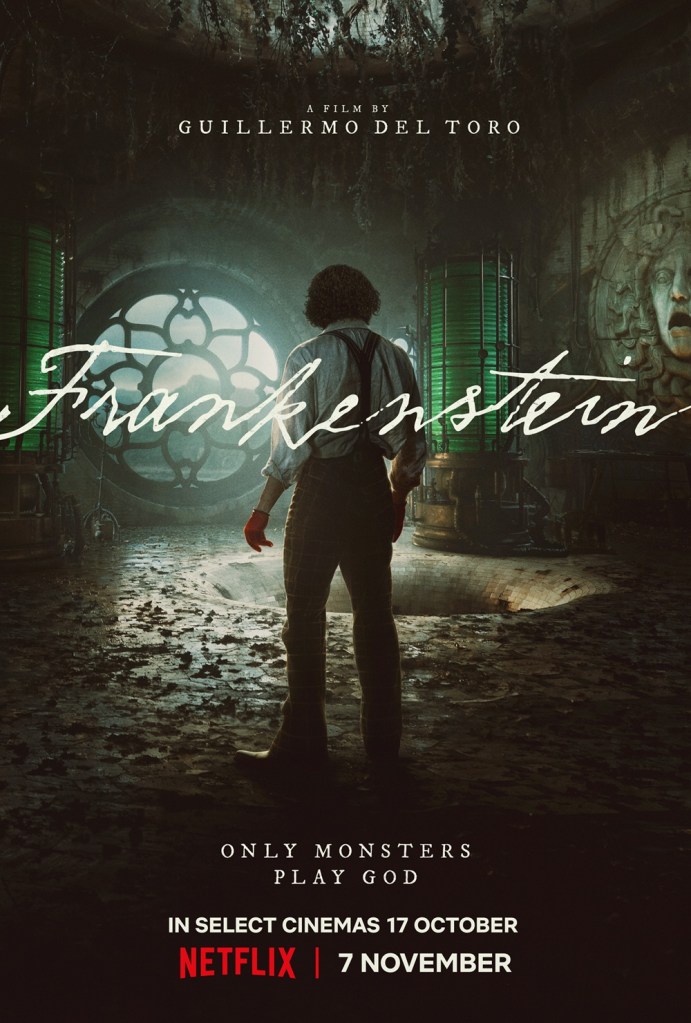
Horror Trailer: Frankenstein


The official trailer for Guillermo Del Toro’s take on the Mary Shelley’s classic gothic horror Frankenstein has finally been released.

An earlier teaser was sent out months ago, but that was mostly played off like sizzle reel of what Del Toro had been up to with this latest adaptation. This official trailer gives us a much more closer look at the type of adaptation Del Toro decided to take with Shelley’s novel of the tortured scientist and his creation.

Even though it will be show up on Netflix on November 7, 2025, I do believe that this film needs to be seen on the big screen when a select cities get them on October 17, 2025.

Miniseries Review: Moon Knight (dir by Mohamed Diab and Aaron Moorhead & Justin Benson)


No sooner had Ryan posted his essay about whether or not comic book companies like Marvel or DC actually need readers anymore then I came over here to type up my review of Moon Knight.

Why is that relevant?  Well, Moon Knight is a 6-episode miniseries based on a character who made his debut in the pages of Marvel comics.  The character has a loyal following of readers but the Disney miniseries has introduced him to a whole new group of people, many of whom have never even held a comic book, let alone read one.  I’m one of those people.  If not for the miniseries, I wouldn’t have the slightest idea who Moon Knight is because, for the most part, I’ve never been a comic book reader.  I would have to imagine that if I was a comic book reader, it would bug the Hell out of me that people who have never read a comic book are now suddenly acting as if they’re experts on all of the various costumed characters who have been published by Marvel and DC over the past few decades.  I can remember how upset I was when everyone suddenly decided that they were an expert on Dario Argento and Italian horror just because they had read some lame article on the remake of SuspiriaNo, I wanted to say, you haven’t done the work!

Unfortunately, that’s the way of the world now.  With the current pop cultural dominance of the MCU and the DCEU, everyone’s a super hero fan regardless of whether or not they’ve ever read a comic book.  And, with the explosion of social media over the past decade, everyone is now in a position to present themselves as being an expert regardless of whether they’re tweeting their own thoughts or just plagiarizing what they’ve read on Wikipedia.  It doesn’t matter whether the topic is politics, television, history, science, religion, or comic books.  Everyone now claims to be an expert and, as the old saying goes, when everyone’s an expert, no one’s an expert.  Again, if that annoys the Hell out of you, I sympathize.

Perhaps you can take some consolation in the fact that, even though I watched all six episode of Moon Knight today, I hardly feel like an expert as far as the character is concerned.  For the most part, I enjoyed Moon Knight but I would be lying if I said that I was always able to follow what was going on.  Oscar Isaac plays Marc Spector, a mercenary who is mortally wounded in Egypt but who is revived by Khonshu (voiced by F. Murray Abraham), the Egyptian God of the Moon, who tasks Spector with protecting humanity from evil or something like that.  Sometimes, however, Spector becomes Steven Grant, a mild-mannered and neurotic Brit who works in a museum gift shop and who is haunted by strange dreams.  When Grant discovers that he’s actually Spector, this leads to him meeting Spector’s wife, Layla (May Calamawy) and also having to battle Arthur Harrow (Ethan Hawke), a fanatical cult leader who is trying to get his hands on ancient scarab that will …. let him do stuff, I guess.  Harrow’s evil, Moon Knight’s good, and I guess that’s all we really need to know.  Moon Knight is basically a typical MCU “let’s all fight over the artifact” story, with the main twist being that all of the Gods are Egyptian instead of Norse and the hero has dissociative identity disorder and might actually very well be a patient at psychiatric hospital.  

With all that in mind, Moon Knight is actually pretty entertaining.  It’s biggest strength, not surprisingly, is Oscar Isaac, who appears to be having a ball playing several different versions of the same character.  When he’s Marc Spector, he gets to play at being a grim and serious action hero.  When he’s Steve Grant, he gets to play a comedic bumbler who gets the chance to prove that he’s stronger and more capable than anyone gave him credit for.  Isaac does a good job with both roles and the show is at its best when it’s just Isaac arguing with himself.  Playing a villain in an MCU production is often a thankless task but Hawke’s brings the right edge of fanaticism to Arthur Harrow and F. Murray Abraham voices Khonshu with the just the right combination of righteous indignation and weary frustration.  The show makes good use of its Egyptian setting and the fourth and fifth episodes are enjoyably surreal as they delve into the corners of Spector’s mind.

Unfortunately, the show’s conclusion leaves a bit to be desired.  After all that build-up, it all pretty much leads to a standard MCU street battle and the possibility of more Moon Knight action in the future.  That said, I enjoyed the show for what it was.  Turn off your mind, relax, and float across the Duat, as the old saying goes.

Here’s The Trailer For Moon Knight


Here’s the trailer Moon Knight!

Oscar Isaac and Ethan Hawke both should have an Oscar by now.  Well, they won’t win any for Moon Knight because it’s a miniseries.  They might get some Emmy love but eventually, everyone wins an Emmy so it’s not as big of a deal.  I mean, I’ve got an Emmy somewhere around here.  It arrived in the mail and I was like, “Cool, I guess I won something.”

My point is, Oscar Issac and Ethan Hawke should both be in a lot of stuff.  Anyway, here’s the trailer: